

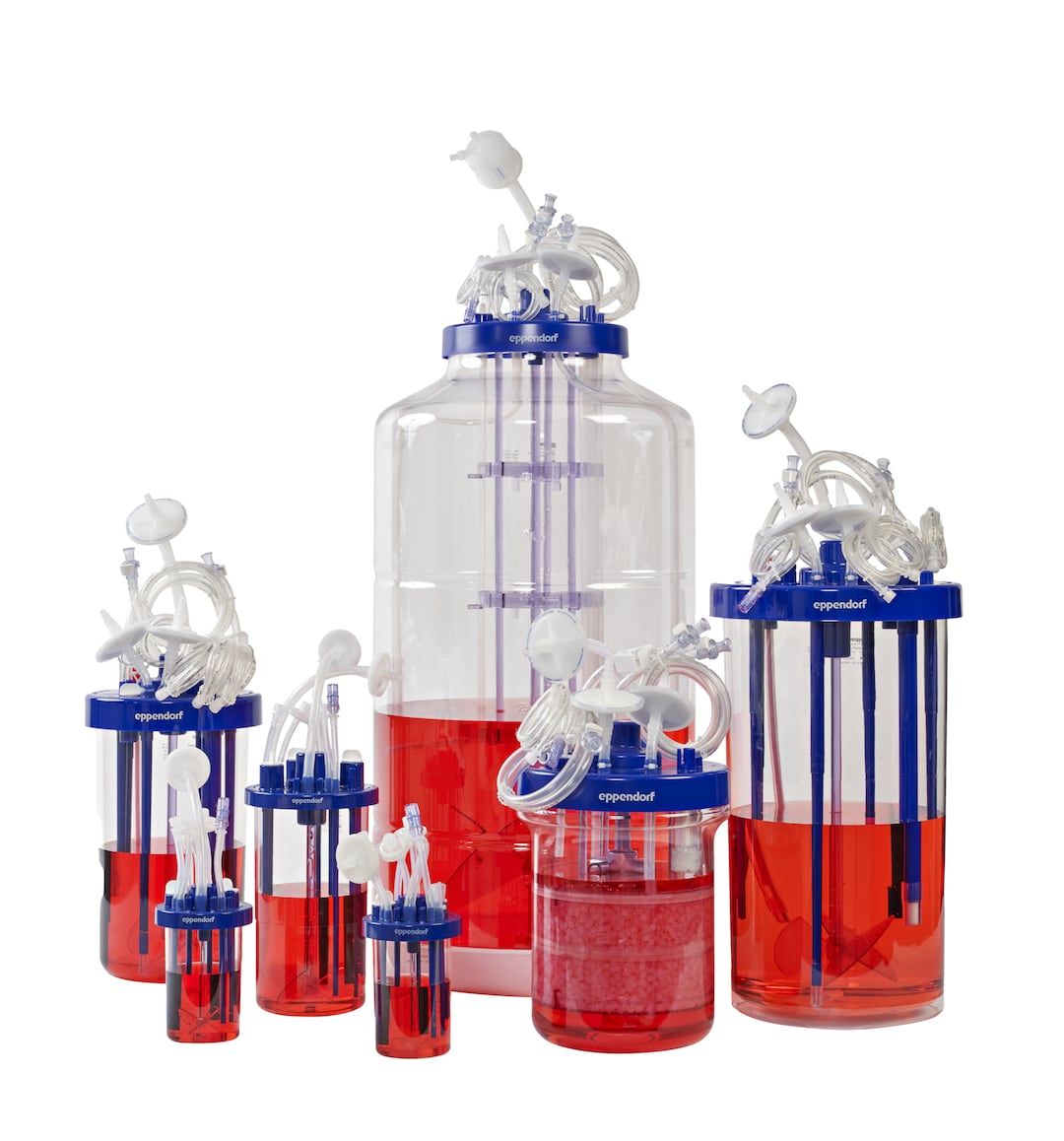
Buy Eppendorf BioBLU 3c Single-Use Bioreactor in Nigeria
To request an Eppendorf BioBLU 3c Single-Use Bioreactor in Nigeria, specify catalogue number 1386125000 and ask for written confirmation of the vessel configuration, compatible controller and system items required for your process. Eppendorf lists this BioBLU 3c reference as a rigid-wall, stirred-tank cell-culture vessel with a 1.25–3.75 L working-volume range, macrosparger, one pitched-blade impeller, optical pH, X-ray irradiation and one vessel per pack. It is a process vessel, not a complete controller or a guarantee that a particular culture will perform as intended. Review the exact BioBLU 3c catalogue listing, the BioBLU 3c product-filtered category listing, or the wider bioreactors and fermenters category. To request a Franance quotation for BioBLU 3c 1386125000, include the culture application, target volume, controller and accessories, installation needs and Nigerian delivery destination. Franance handles quote orders; the listing is not an online purchase and does not confirm local availability.
Where can I buy an Eppendorf BioBLU 3c in Nigeria?
Submit a Franance quotation enquiry for Eppendorf BioBLU 3c and name the exact catalogue number 1386125000. State the quantity, institution, laboratory or process-development unit, contact person, delivery city and state, and the timing or procurement documentation you require. Include the intended application at a useful level, such as mammalian or insect cell culture, and whether you already have a compatible controller. Avoid sending confidential process recipes or personally identifiable information through the general enquiry form.
Ask the supplier to return a written, itemised offer that distinguishes the disposable vessel from reusable control equipment. For each component, the quotation should say whether it is included, optional, separately quoted, unavailable or excluded. Request the vessel drawing, current manufacturer specification and compatibility documents for the exact BioBLU configuration. If a controller is proposed, require the exact controller model, installed control modules, software, drive, sensors, adapters and supported vessel reference in the offer.
Franance follows up by phone or email to clarify quotation requirements. This is a quote-request process, not online checkout, payment or automatic reservation. A manufacturer's regional sales page may show a product or pricing for another territory; it is not evidence of Nigeria price, stock, delivery timeline, local distribution or warranty. Ask the quote to state commercial and support terms for the actual delivery destination.
What is BioBLU 3c catalogue number 1386125000?
BioBLU 3c is part of Eppendorf's c-line of single-use bioreactors for cell-culture applications. Eppendorf describes the c family for scalable cultivation of mammalian and insect cells in suspension, on microcarriers or as cell aggregates. The 3c vessel covers a listed working-volume range of 1.25–3.75 L; manufacturer documentation also presents 5 L as total volume. Working volume and total vessel volume are not the same value. The process owner should specify the working range needed and confirm usable operating limits for the selected application.
The product reference matters because the BioBLU 3c family has multiple configurations. Eppendorf's catalogue identifies 1386125000 as a macrosparger, one pitched-blade impeller, optical pH, X-ray-irradiated, one-piece configuration. Other 3c order numbers use a microsparger or different impeller configuration. The Franance record is specifically about 1386125000; a quote for another 3c number is a different vessel and should be evaluated as a substitution, not silently treated as identical.
The vessel itself is a rigid-walled stirred tank with single-use process-contact components. It still depends on reusable bioprocess equipment such as a compatible drive and controller. The listing does not represent a complete system, a validated process, a sterile production line or a clinical diagnostic device. Eppendorf's brochure explicitly says the BioBLU single-use vessels are not developed for medical diagnostics or therapy. Use them only for a suitable research, development or manufacturing-process application confirmed by the responsible organization.
What does the 1.25–3.75 L working-volume range mean?
The range is a manufacturer-stated capacity span for the BioBLU 3c vessel. It is not a process recommendation, minimum inoculum, guaranteed fill interval for every culture or evidence of a particular yield. Ask the process owner to document minimum and maximum intended liquid volume, culture type, process mode and any required working-volume excursions. Have the manufacturer confirm the exact vessel's permissible operation and headspace requirements for the intended configuration.
For process planning, record whether the culture is suspension, microcarrier-based or aggregate-based; expected additions; sampling and harvest plan; and desired measurements and control variables. The c-family documentation lists ports for liquid additions, sampling, harvest and sensors. A general port description does not establish that every accessory, tubing set, controller module or application option is included in this catalogue reference. Request a drawing with each port identified and map it to the facility's process specification.
Do not treat the shared volume range between BioBLU 3c and BioBLU 3f as evidence that the vessels are interchangeable. The 3c is the cell-culture family; the 3f is configured for microbial fermentation and uses a different impeller arrangement and sterilization status. Compare exact model and catalogue number rather than the numeral “3” alone.
What is included in the 1386125000 configuration?
Eppendorf lists one piece of BioBLU 3c catalogue number 1386125000 with a macrosparger, one pitched-blade impeller, optical pH and X-ray irradiation. Those facts identify the reviewed vessel package. They do not tell you that a controller, drive, sensor reader, dissolved-oxygen probe, calibration tool, gas cylinder, pump, tubing extension, exhaust condenser, software licence, installation or training is part of the Franance quote.
Ask whether the optical pH sensing element is in the vessel and what separate reader or controller interface is required. Eppendorf identifies optical pH in the catalogue configuration, but the usable measurement chain depends on compatible hardware and process setup. Likewise, request explicit confirmation of DO sensing, temperature measurement, liquid addition lines, sampling, harvest connection and any single-use adapters needed for the proposed system. Do not presume that a port label equals a fully instrumented or controlled process.
Ask the supplier to list packaging quantity, shipping condition, lot or batch identification, product expiry or use-by information if applicable, sterilization documentation and any certificate or traceability papers required by your quality system. This guide does not claim a particular documentation bundle or regional supply condition. The quotation should identify what Eppendorf supplies for the selected reference and what the facility must source separately.
Which controller and drive are compatible with BioBLU 3c?
Eppendorf states that BioBLU single-use vessels are compatible with its small and bench-scale bioprocess controllers and selected third-party controllers. This is family-level guidance, not confirmation that every controller supports catalogue 1386125000 or that an existing system has the right drive, software, modules or adapter. The exact operating range and control options depend on the controller and installed hardware.
If the lab owns a controller, give the supplier its manufacturer, model, configuration, installed modules, firmware and software version, drive and available adapter kits. Ask Eppendorf to confirm the precise 3c reference against that equipment in writing. If the controller is part of the project, ask for a system proposal that includes vessel, drive, control station, pH and DO interfaces, temperature measurement/control, gas flow, pumps, application software and any exhaust or cooling equipment required by the process.
Require a responsibility matrix for setup and commissioning. It should identify who supplies power, compressed gases, gas filters, cooling or exhaust handling, calibration tools, consumables, software configuration, installation and operator training. Do not use a broad claim that the product family is compatible with “selected third-party systems” as proof of an unreviewed interface.
How should I evaluate the macrosparger and pitched-blade impeller?
Catalogue 1386125000 is listed with a macrosparger and one pitched-blade impeller. These are vessel design features; they do not by themselves specify gas flow, mixing performance, dissolved-oxygen transfer, shear environment, cell growth, product quality or scale-up equivalence. Eppendorf's literature describes the family and lists vessel configurations, while the process owner must establish whether this exact setup matches the culture and operating strategy.
When requesting technical review, provide the process range and the measurements that govern operation, without assuming that one vessel feature determines the outcome. Ask for current specifications on impeller geometry, sparger details, operating speed limits for the controller-vessel combination, gas inlet and exhaust paths and sensor interfaces. If a different sparger or second impeller is needed, identify its separate BioBLU reference and evaluate it independently. Do not allow the quote to substitute a different configuration without naming the exact number and documenting the difference.
For scale-up decisions, compare geometry, agitation, gas transfer, sensor placement, control-loop behavior and process data across scales. A shared BioBLU family name or similar stirred-tank appearance does not prove biological equivalence or guarantee a target result. Treat scale-up as a technical and experimental decision made by the responsible process team.
What should the laboratory check before installation in Nigeria?
The vessel does not define the facility utilities on its own. For a complete system, ask for electrical input, frequency, current, plug, grounding, footprint, service clearance, heat output and environmental limits for the proposed controller, drive, pumps, heaters, chillers and auxiliary equipment. Request gas supply requirements, line pressure and purity, gas-mixing arrangement, exhaust handling, cooling or water connections, condensate management and any network or data interfaces. The exact list varies by controller and process configuration.
Before shipping, measure the bench, doorways, elevator or loading route, receiving area and service access. Identify how the single-use vessel and reusable control equipment will be positioned, connected and protected from accidental movement. Confirm whether the laboratory provides cylinders or central gas, pressure regulators, tubing, exhaust management, cooling water, drainage or a backup electrical source. Have the technical team verify room ventilation and handling requirements against the current equipment documents.
For Nigeria delivery, include the final city and state, site contact, receiving hours and any import or institutional documents required. Ask the supplier to clarify shipping method, packaging, customs or taxes, delivery scope, unloading responsibilities and estimated lead time in the written quote. Do not infer local installation, commissioning, training, service response or spare-vessel availability from the manufacturer's global page. Any service requested should be stated as a requirement for confirmation and shown as a quote line if provided.
What does the X-ray-irradiated status mean?
Eppendorf lists BioBLU 3c reference 1386125000 as X-ray irradiated. The BioBLU c brochure describes the family as irradiated and gives manufacturer information about packaging and sterility assurance for the referenced product line. For procurement, request the current certificate or lot-specific documentation that the supplier can provide for the actual item. Check the exact order number and status on the package and documents at receipt.
An irradiation description does not permit the buyer to infer every local quality-system requirement, shelf life, package integrity, aseptic connection workflow or suitability for a regulated process. Define the organization's incoming-inspection and use requirements with its quality and process teams. Confirm storage limits, packaging integrity checks, handling procedure and expiration information in the current Eppendorf instructions for that lot. Do not reprocess or re-sterilize the single-use vessel unless the manufacturer documentation explicitly allows the intended method.
Distinguish X-ray-irradiated status from the BioBLU 3f catalogue reference 1386000900, which Eppendorf identifies as non-sterile and autoclavable rather than presterilized. The two products have different intended process roles and preparation requirements; the 3f status must not be applied to this 3c offer, nor vice versa.
How should I compare BioBLU 3c with related bioreactors?
For cell culture, compare BioBLU 3c with the process and configuration requirements rather than only vessel size. Eppendorf's c-family includes different working-volume ranges and special designs such as the 0.3sc and 5p. The 3c is a stirred-tank model in the 1.25–3.75 L range; 0.3sc is a low-shear design, and 5p is a packed-bed vessel for adherent-cell and perfusion applications. These configurations have different process purposes and should not be substituted based only on nominal volume.
For microbial fermentation, compare the separately listed BioBLU 3f, with three Rushton-type impellers and a different preparation status. The category catalogue currently includes these two Eppendorf BioBLU products; its bioreactors and fermenters category page is the place to review the site's current assigned records. The BioBLU 3f catalogue filter identifies that separate listing.
If a different manufacturer or vessel is proposed, ask for the exact model and an explicit comparison of working volume, vessel material, geometry, impeller, sparger, sensors, port layout, sterilization, controller interface and included system parts. A quotation alternative should be reviewed by the process owner and biomedical/laboratory engineering staff before acceptance.
What documents should be in a BioBLU 3c quotation?
Request the exact catalogue number, current product specification and product drawing, controller compatibility confirmation, vessel and accessory list, storage/handling instructions and any sterilization or lot documentation needed for your institution. Ask for the correct manual or application documents for the proposed controller and all installed modules. If the supplier offers a controller, request site-planning information that specifies electrical, gas, cooling and exhaust requirements for the complete package.
The quotation should show vessel quantity and price as a commercial line, but this guide does not state or imply any current price. Ask the supplier to identify what happens if 1386125000 is unavailable: any substitute should have a separate model number, an explanation of differences and confirmation that the proposed configuration meets the facility's approved specification. Clarify the offered warranty and service scope instead of assuming disposable items and reusable systems share the same terms.
What should I put in a BioBLU 3c quote request?
Give Franance the exact product and project details needed to build a reviewable quotation:
- Eppendorf BioBLU 3c Single-Use Bioreactor, catalogue number 1386125000, and quantity.
- Laboratory or institution, contact person, receiving city/state in Nigeria and procurement requirements.
- Intended cell-culture application, minimum and maximum working volumes and process mode.
- Existing controller/drive make, model, options, software and interface details, or a request to quote a compatible system.
- Requested pH, DO, temperature, gas, feed, sample, harvest, exhaust and cooling scope.
- Vessel drawing, compatibility, sterilization/lot and other technical documents needed for approval.
- Site survey, installation, commissioning, training, warranty or service request, each as a scope to confirm.
- Delivery, payment, quotation-validity and documentation requirements.
Ask for one written configuration schedule that marks every line included, optional, separately quoted, excluded or pending review. The process owner should confirm suitability, while laboratory engineering and procurement teams confirm installation and commercial conditions. To start, open the BioBLU 3c exact listing or request a Franance quote for catalogue 1386125000. This is a quotation order, with follow-up by phone or email; it is not online payment.
Manufacturer sources and limitations
- Eppendorf BioBLU c Single-Use Bioreactors — c-line applications, controller-family information, exact catalogue choices and product description. Accessed 20 October 2026. - Eppendorf BioBLU family brochure — volume ranges, catalogue 1386125000 configuration, vessel and head-plate technical information. Confirm the current brochure revision. - Eppendorf BioBLU 3c alternative product page — regional product page listing the 3c order reference and options; regional page does not show Nigeria availability.
Eppendorf statements here describe product-family and manufacturer-listed configuration facts; they are not independent process-validation evidence. This guide does not make claims about yield, sterility beyond the documented reference, process performance, GMP qualification, regulatory acceptance, stock, price, delivery, warranty or Nigeria service. Confirm every technical and commercial detail for the exact offered vessel and controller in current manufacturer documents and the written quotation.