
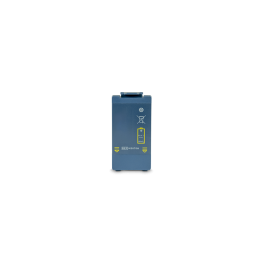
Philips HeartStart FRx / OnSite / Home AED Battery M5070A
Disposable lithium manganese dioxide AED replacement battery
Price on request

Medical equipment and biomedical engineering.
Abuja, Nigeria.
Compare model-specific AED battery references from Philips and Stryker. Confirm the exact defibrillator model, variant, serial number and installed battery label before requesting a quotation from Franance in Nigeria.
6 models
Disposable lithium manganese dioxide AED replacement battery
Defibrillator battery
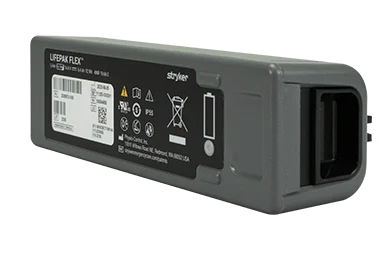
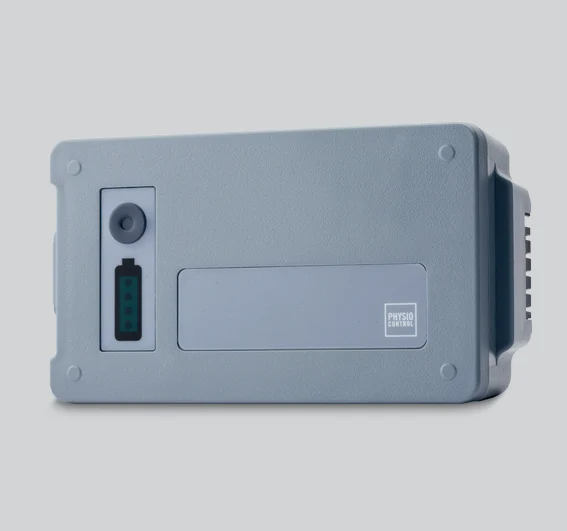
The Defibrillator Battery category contains the two current product records. Use the exact listing for the device family: Philips HeartStart M5070A battery and Stryker LIFEPAK CR2 battery 11141-000165. Each exact model filter returned one catalogue product when checked. A product page helps identify the intended part; it does not by itself confirm local inventory, authenticity of a future shipment, or compatibility with a particular AED serial number.
Read moreThe Philips listing is M5070A, also identified in the Philips AED Shop catalogue as product ID 989803121381. Philips names HeartStart FRx, OnSite and Home AEDs for this battery reference. The Philips FRx owner manual separately identifies a TSO-certified aviation battery, reference 989803139301, instead of M5070A for FRx units sold for aviation applications. That specific exception is why the exact device application and battery label matter; do not substitute one reference based only on the brand or product-family name.
Read moreRead the AED model and serial number from its label, and record the complete battery reference from the installed pack, packaging or manufacturer record. Send those details to the quotation team. If the label is worn, the battery is absent, or the equipment is an aviation, public-access, home or special configuration, ask the manufacturer or an authorized service provider to confirm the permitted replacement part before purchase. A photograph of the nameplate and battery compartment can reduce transcription errors, but never open or disassemble an AED beyond the user maintenance steps in its official instructions.
Read moreAED batteries are model-specific replacement parts. Franance lists a Philips HeartStart battery reference M5070A and a Stryker LIFEPAK CR2 battery catalog number 11141-000165. Both manufacturers describe their listed battery as a non-rechargeable lithium manganese dioxide type, but matching chemistry alone does not make the packs interchangeable. Identify the AED model and installed battery label before requesting a quotation. Franance can help confirm the requested reference and quote the specified part for your facility in Nigeria; stock, battery date, seal condition, warranty and delivery must be confirmed for the offered unit.
The Defibrillator Battery category contains the two current product records. Use the exact listing for the device family: Philips HeartStart M5070A battery and Stryker LIFEPAK CR2 battery 11141-000165. Each exact model filter returned one catalogue product when checked. A product page helps identify the intended part; it does not by itself confirm local inventory, authenticity of a future shipment, or compatibility with a particular AED serial number.
Franance handles AED battery enquiries through a quotation process. Before placing an order, share a photo or transcription of the AED nameplate and installed battery label, the serial number, required quantity and delivery location. If the battery is missing, damaged or the unit is alerting, report that clearly so the device can be assessed through the manufacturer's directions and service pathway. Do not assume that replacing a battery alone resolves a device warning or restores readiness.
The Philips listing is M5070A, also identified in the Philips AED Shop catalogue as product ID 989803121381. Philips names HeartStart FRx, OnSite and Home AEDs for this battery reference. The Philips FRx owner manual separately identifies a TSO-certified aviation battery, reference 989803139301, instead of M5070A for FRx units sold for aviation applications. That specific exception is why the exact device application and battery label matter; do not substitute one reference based only on the brand or product-family name.
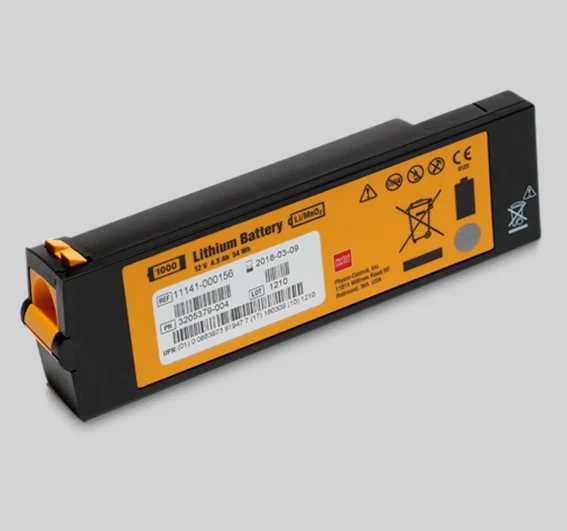
The Stryker listing is the LIFEPAK CR2 AED lithium battery, catalog number 11141-000165. Stryker's CR2 operating instructions identify that catalog number for the CR2. The CR2 battery is not thereby suitable for a LIFEPAK CR Plus, LIFEPAK 15, LIFEPAK 1000 or a different brand's AED. Confirm the exact model and variant on the device and compare it with the battery already fitted or the manual's approved accessory list.
These records are replacement batteries, not AED devices, pads, training batteries, wall cabinets, chargers or service contracts. No related item is included unless it appears as its own line on the quotation. Open the Philips filtered listing or Stryker filtered listing to check the specific catalogue record.
Read the AED model and serial number from its label, and record the complete battery reference from the installed pack, packaging or manufacturer record. Send those details to the quotation team. If the label is worn, the battery is absent, or the equipment is an aviation, public-access, home or special configuration, ask the manufacturer or an authorized service provider to confirm the permitted replacement part before purchase. A photograph of the nameplate and battery compartment can reduce transcription errors, but never open or disassemble an AED beyond the user maintenance steps in its official instructions.
For a Philips unit, check whether the device is an FRx, OnSite or Home model and whether it has an aviation-specific configuration. M5070A is the ordinary product listed for the named FRx/OnSite/Home families; Philips documents the aviation exception separately. For a Stryker unit, verify that it is a LIFEPAK CR2 and confirm its variant/serial and battery compartment label. Stryker instructions state to use only batteries designed for the LIFEPAK CR2. Do not treat other lithium battery packs as equivalents.
If the AED is already reporting low battery, failed self-test or another readiness alert, note the exact indicator, tone or message and follow the corresponding owner manual. Request technical service when the manual directs it. A replacement battery is not a substitute for device diagnostics, pads replacement or a required maintenance assessment.
Philips identifies M5070A as a disposable long-life 9 VDC, 4.2 Ah lithium manganese dioxide primary cell. Stryker identifies the LIFEPAK CR2 battery as a non-rechargeable lithium manganese dioxide battery. Neither should be treated like a rechargeable battery. Philips warns not to recharge, open, crush or burn the M5070A; Stryker says not to recharge the CR2 battery and warns of fire, explosion or noxious gas risks if a non-rechargeable pack is charged. Never connect these batteries to a charger or attempt to rebuild a pack.
Use only the manufacturer's approved reference for the AED. Similar chemistry, voltage markings, dimensions or connector appearance are not sufficient evidence of fit. Battery management, protection circuitry, contact geometry and device recognition can vary. Franance should quote the exact manufacturer reference requested and identify any substitution explicitly for review; the facility should approve a substitute only after the AED manufacturer or authorized technical source confirms compatibility.
The Philips published capacity figure and Stryker's published performance references are manufacturer conditions, not an operating-time guarantee for an older AED, stored battery or field use. Actual condition depends on age, storage, installation date, self-tests, use and the AED's status. This guide does not estimate the remaining runtime of a battery or promise a number of shocks for an individual device.
Ask the supplier to provide the exact offered battery reference, manufacture date or install-by/expiry marking, package condition and any applicable date limits before confirming the order. Record those details at receipt and follow the AED owner's manual for installation, labeling and maintenance records. Do not accept a verbal shelf-life estimate in place of the date printed on the offered pack and applicable manufacturer's instructions.
The Philips manual states that M5070A has a minimum five-year shelf life before insertion when stored and maintained as directed, and typically four years of standby life after insertion under its conditions. These are manufacturer statements tied to the pack date, storage and maintenance instructions; they are not a promise about any battery currently available in Nigeria. Check the offered label and calculate the usable period using the manual's specified basis. Do not confuse an install-by date with an expiration date where Philips documentation distinguishes the two.
For the LIFEPAK CR2, Stryker's operating instructions state that the battery must be installed within one year of manufacture to attain the stated four-year service life; they give a maximum service life based on manufacture or installation date, whichever occurs first. Request the date format and install history of the specific unit. Do not infer a fresh battery from an unopened-looking package or a model description.
Inspect the packaging and battery for damage, leakage, broken seals or signs of improper handling, and raise any concern before installation. If a shipment arrives damaged, isolate it according to the manufacturer's instructions and contact the seller/service channel. Follow local rules and manufacturer guidance for lithium battery disposal; do not put depleted batteries into an unverified waste stream.
Storage limits are model-specific and must come from the current manufacturer documentation for the battery and AED. Stryker specifies temperature ranges for the CR2 battery and defibrillator and notes that long-term storage toward the warm end of the AED's range can shorten battery and electrode life. Philips supplies storage and maintenance directions for HeartStart devices and batteries. Use the applicable manual and pack labeling rather than applying one brand's temperature limits to another product.
For a Nigerian facility, plan where spare and installed units will be kept, how staff will monitor the AED readiness indicator, who checks dates, and how the equipment is protected from excessive heat, direct sun, moisture and accidental contact across battery terminals. If the unit is stored in a vehicle, outdoor cabinet, ambulance or hot room, ask the equipment owner or authorized service team to review whether that environment stays within the device's permitted conditions. This guide does not prescribe a universal temperature or promise shelf-life in local conditions.
Before shipment, confirm that the supplier can transport the specific lithium battery under applicable carrier and safety requirements, and ask how damaged, expired or returned packs are handled. Agree delivery destination, packaging, handling documentation and the condition to inspect on arrival. Verify any local import, transport or disposal requirements with the relevant competent parties; the product listing does not establish them.
Replacing a battery is only one part of AED readiness. The device may perform a self-test or provide an indicator after a battery is installed. Philips instructions describe an insertion self-test for the FRx and direct users to check the Ready light and follow alerts. Stryker's CR2 replacement guidance notes that the AED starts a self-test after installation and tells users to wait for the specified audible and readiness indicators. Follow the exact instructions for the device in hand; do not use a test sequence from another model.
After installation, have the responsible staff member check and record the status indicated by the AED, date the battery record if required, and verify that compatible pads and other required accessories are in place and within date. Do not perform extra test activations or repeated insertions unless the manufacturer instructs it; test activity may consume battery capacity. When a readiness warning remains, the device fails its self-test, or the manual calls for authorized service, contact the manufacturer/authorized service channel and keep the AED out of service according to facility procedure until resolved.
Franance can quote the listed battery reference and clarify what documentation, warranty and service coordination the offer includes. Do not assume battery replacement includes inspection, preventive maintenance, commissioning, loan equipment or emergency response. Ask for each service deliverable, provider identity, coverage area and turnaround in writing before relying on it.
Include manufacturer, exact AED model and variant, serial number, installed battery reference, requested new battery reference, quantity, and a photo of the current labels where available. State whether the battery is required as a replacement for a low-battery alert, scheduled date replacement, new AED setup or spare stock. Add the facility or delivery city/state and a named contact for the quote, without sending sensitive patient information.
Ask the written quotation to identify the manufacturer part number, condition (new/unused), pack date or date marking, packaging/seal status, price and currency, taxes, delivery charge, estimated lead time, warranty terms, returns process, and any service or documentation included. Ask whether the exact reference is confirmed for the stated AED variant or whether manufacturer verification remains outstanding. Request serial-specific approval where the device configuration requires it.
For multiple AED models, submit one line per make/model/reference and do not bulk-order a single type based on common battery chemistry. Maintain a site inventory with each AED's model, serial number, installed battery part number, installation date, pads expiry and readiness status. This makes replacement planning more reliable and helps prevent an incorrect pack from being placed in the wrong response device.
Franance treats an enquiry as a quote order and will call or email to confirm configuration and terms. Catalogue prices and immediate online checkout are not offered here. Stock, exact date, Nigeria delivery timing, warranty and any service capability must be confirmed for each quotation.
### Are Philips M5070A and Stryker 11141-000165 interchangeable?
No. They are manufacturer-specific references for different AED families. M5070A is listed for Philips HeartStart FRx, OnSite and Home models, subject to the aviation exception documented by Philips. 11141-000165 is for LIFEPAK CR2. Similar lithium manganese dioxide chemistry does not establish physical, electrical or device compatibility.
### Can I recharge either battery?
No. Both manufacturers describe non-rechargeable primary batteries and warn against charging them. Use only the exact approved replacement reference and follow its manual.
### How much operating time will a new battery provide?
Only the manufacturer-published figures for the specific reference and its stated conditions should be used. Actual readiness and service life depend on pack date, storage, installation, AED self-tests and use. Ask for the offered pack date and follow the AED manual; Franance does not estimate remaining runtime for a device.
### Can I order a battery without the AED serial number?
You can send an enquiry, but the model, variant and installed battery reference are important for a safe part check. If the serial number or battery label is unavailable, explain that and ask for manufacturer or authorized-service confirmation before the order is finalized.
Product references were checked against the Philips AED Shop M5070A listing and Stryker LIFEPAK CR2 battery listing. Battery compatibility, charging, date and readiness guidance was checked against the Philips HeartStart FRx Owner's Manual, Stryker LIFEPAK CR2 Operating Instructions, and Stryker's support notes for CR2 battery characteristics and battery replacement. Manufacturer instructions govern; use the current manual corresponding to the AED's exact model and region. No product record or manufacturer document establishes current Nigerian inventory, pack date, authenticity of a future shipment, local authorization, price, warranty, transit conditions, installation service or local service coverage. Confirm each in writing before purchase.
Send the AED brand, full model and variant, serial number, installed battery label, requested quantity and delivery location. Franance can check the listed reference and prepare a quote for your facility in Nigeria, including the date, delivery and service details that are confirmed for the offer. Request a defibrillator battery quotation or compare the Philips M5070A listing and Stryker CR2 battery listing.
No. M5070A is listed for named Philips HeartStart families, subject to the aviation battery exception. 11141-000165 is specified for LIFEPAK CR2. Shared lithium manganese dioxide chemistry does not prove compatibility.
No. Both are manufacturer-described non-rechargeable batteries. Use only the approved reference and do not connect either battery to a charger.
Use only the manufacturer-published figures for the specific reference and stated conditions. Actual readiness and service life depend on pack date, storage, installation, self-tests and use. Franance does not estimate remaining runtime for an individual device.
You can submit an enquiry, but the full model, variant and installed battery reference help verify the correct part. If these are unavailable, request manufacturer or authorized-service confirmation before finalizing the order.
Share the AED make, exact model and variant, serial number, installed battery reference, quantity and delivery location. Franance can verify the requested part and provide a quotation for Nigeria.
Request a quotationAdd the models you need to a quote order, or send us your equipment list.