
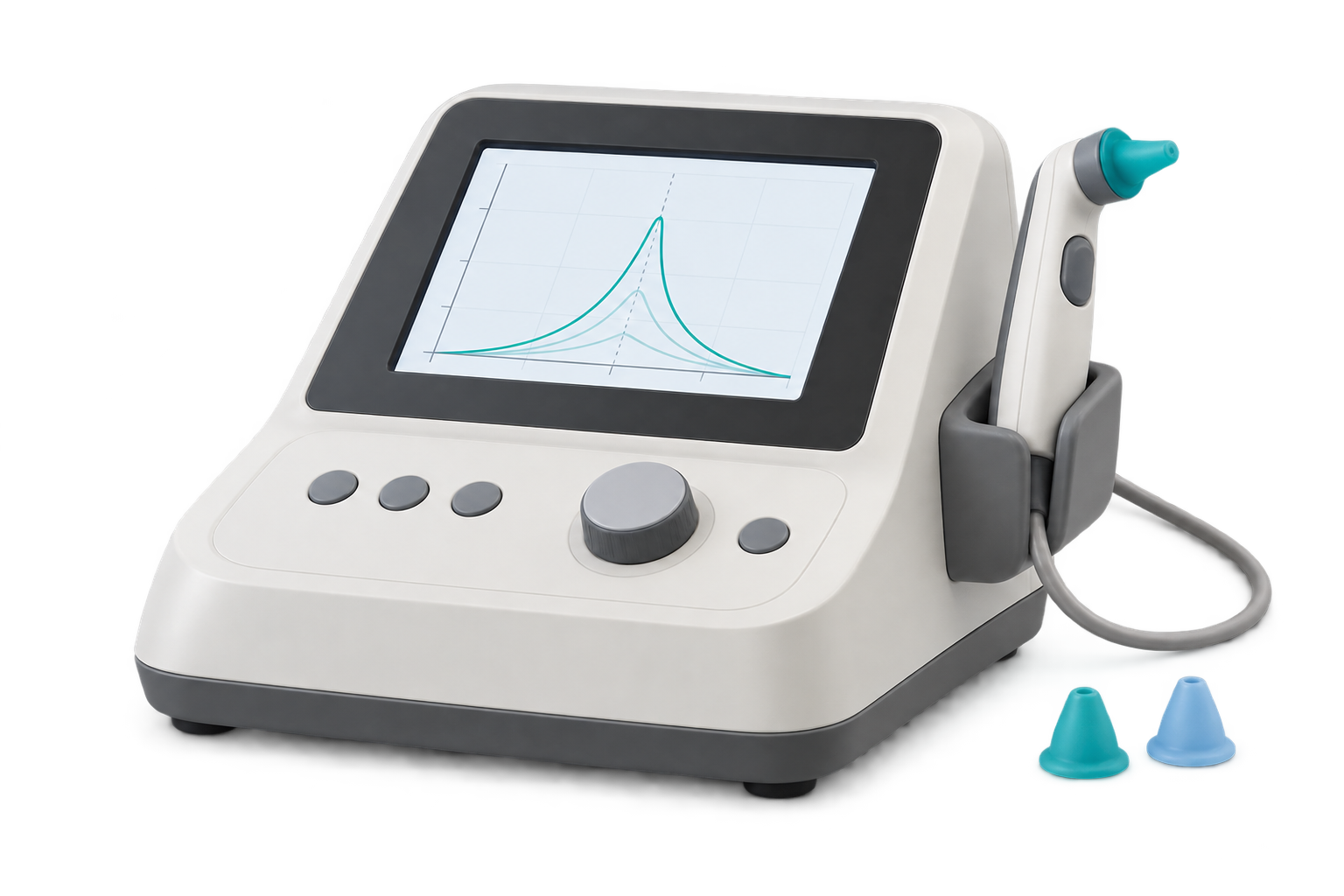
MAICO touchTymp MI 26 Middle-Ear Analyzer
Screening tympanometer and middle-ear analyzer
Price on request

Medical equipment and biomedical engineering.
Abuja, Nigeria.
Compare tympanometers and middle-ear analyzers in Nigeria through Franance. Review handheld and desk-based options from Interacoustics and MAICO, confirm the exact functions and accessories required by your audiology or ENT service, and request a written quotation. Franance follows up by phone or email; online checkout is not available.
5 models
Screening tympanometer and middle-ear analyzer
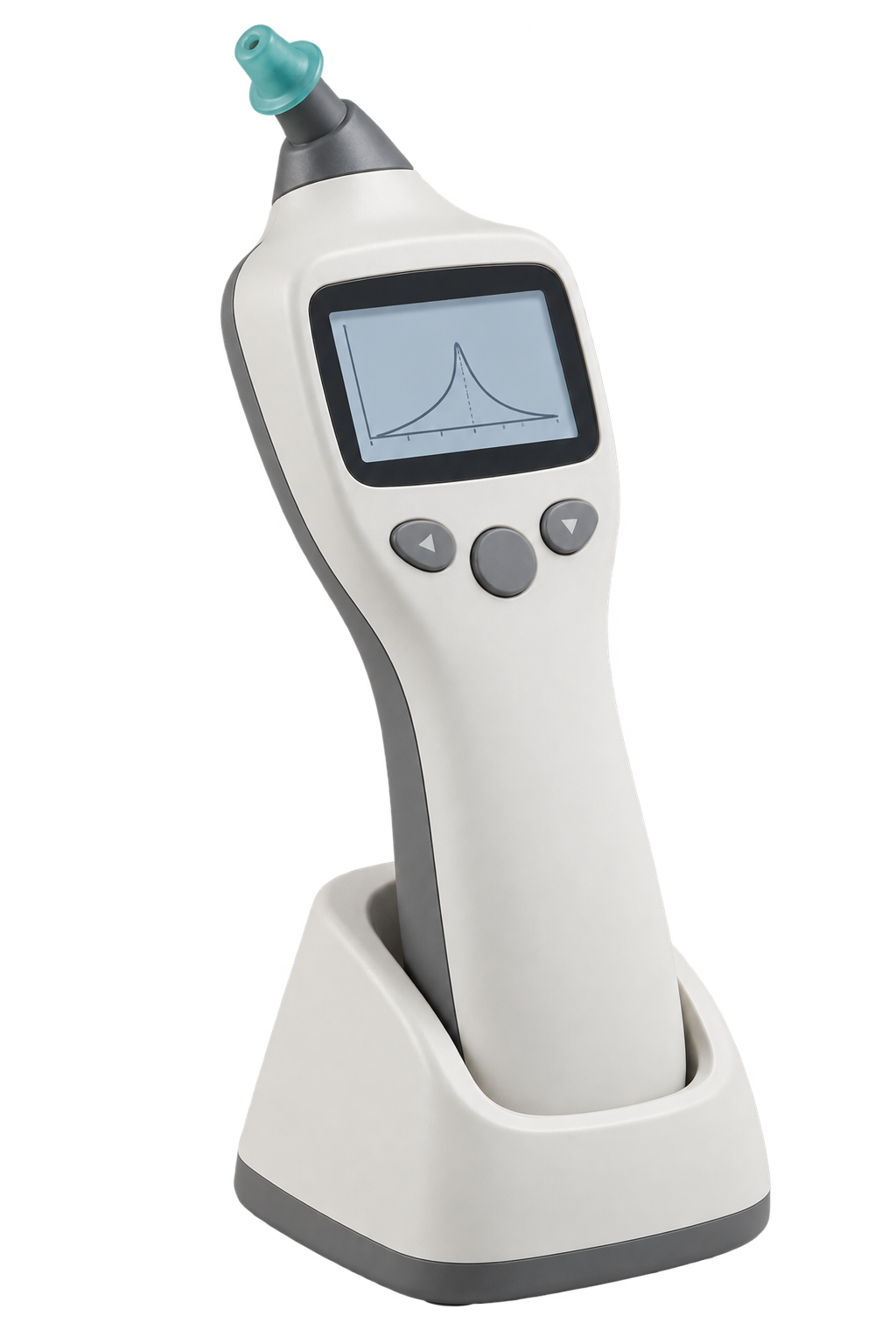
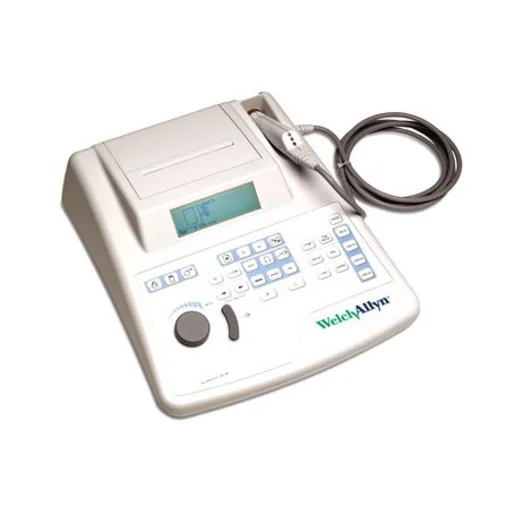
TM 286 AutoTymp Tympanometric System
Use Franance’s tympanometer and middle-ear analyzer category to review the models assigned to this equipment group. Franance handles catalogue products through quotation requests rather than online payment. In your request, name the preferred model or describe the functions the service needs, and include the facility, city and state so the proposed supply scope can be reviewed against the destination.
Read moreA tympanometer is an instrument used by trained hearing-care professionals to measure and record aspects of middle-ear function under defined test conditions. Middle-ear analyzers may combine tympanometry with acoustic reflex measurements, reflex-decay or Eustachian tube function protocols; some configurations add hearing-audiometry functions or other modules. The exact scope depends on the model, software and options.
Read moreThe category includes four manufacturer product families. Interacoustics’ MT10 listing, backed by its official MT10 product page, is described by its manufacturer as a portable screening tympanometer, with optional ipsilateral reflexes and PC integration through Diagnostic Suite. Its official product page also notes that availability varies by market, so a Nigerian offer must be confirmed directly in the quote.
Read moreBuy tympanometers and middle-ear analyzers in Nigeria through Franance by comparing the instrument format, test capabilities, probe arrangement, data workflow and accessories your audiology or ENT service requires. The tympanometers and middle-ear analyzers category brings the listed quote-order models together. Review the exact catalogue records, then request a quotation with the required configuration and delivery destination. Franance follows up by phone or email; there is no online checkout. Manufacturer examples help explain the range. Interacoustics describes the MT10 as a portable screening tympanometer and Titan as a modular handheld platform with screening, diagnostic and clinical configurations. MAICO’s touchTymp MI 26 is a touchscreen desk instrument with a handheld pen probe; its MI 36 is a diagnostic desk instrument with a shoulder-box probe. Their roles and included functions differ, so “tympanometer” alone is not a complete purchasing specification. This guide is for equipment selection and procurement planning. Clinical staff must determine appropriate use and interpretation using training, current manufacturer instructions and local clinical governance. The models discussed here are examples whose features should be rechecked against the exact regional configuration in a written quotation.
Use Franance’s tympanometer and middle-ear analyzer category to review the models assigned to this equipment group. Franance handles catalogue products through quotation requests rather than online payment. In your request, name the preferred model or describe the functions the service needs, and include the facility, city and state so the proposed supply scope can be reviewed against the destination.
You can also compare the brand-filtered records for Interacoustics tympanometers and middle-ear analyzers and MAICO tympanometers and middle-ear analyzers. These links are scoped to the proposed leaf category. The Interacoustics brand page and MAICO brand page provide wider brand context, while the category and filtered routes keep the equipment comparison focused.
A quotation is the point to confirm the actual model code, included probe and transducers, software, printer, database or connectivity options, consumables, delivery, installation requirements and commercial terms. A listing or manufacturer page does not establish Nigerian stock, registration, local availability, warranty, support coverage or the exact bundle being offered. Ask for those items to be stated for the specific quotation.
A tympanometer is an instrument used by trained hearing-care professionals to measure and record aspects of middle-ear function under defined test conditions. Middle-ear analyzers may combine tympanometry with acoustic reflex measurements, reflex-decay or Eustachian tube function protocols; some configurations add hearing-audiometry functions or other modules. The exact scope depends on the model, software and options.
For procurement, use the product description as a starting point and compare the manufacturer’s stated intended use, standard tests, optional tests, probe system, patient-data handling and report workflow. Do not infer that two instruments are equivalent because both are described as tympanometers, and do not treat a feature listed on a product-family page as included in every unit. Clinical protocols, interpretation and patient decisions belong to qualified staff working under current instructions and professional governance.
The category includes four manufacturer product families. Interacoustics’ MT10 listing, backed by its official MT10 product page, is described by its manufacturer as a portable screening tympanometer, with optional ipsilateral reflexes and PC integration through Diagnostic Suite. Its official product page also notes that availability varies by market, so a Nigerian offer must be confirmed directly in the quote.
Interacoustics’ Titan listing is a modular handheld platform, as described on the official Titan product page. Interacoustics says it can be configured in screening, diagnostic or clinical versions, and describes handheld and PC operating modes. The possible modules span impedance, ABRIS, OAE and wideband tympanometry; those functions should not be assumed to be present in every Titan configuration.
MAICO’s touchTymp MI 26 listing is a touchscreen desk unit, described in MAICO’s official screening range with a handheld pen probe. MAICO describes it as a screening line product, with tympanometry and air-conduction audiometry, and optional bone-conduction audiometry. The touchTymp MI 36 listing is described in MAICO’s official diagnostic line and manufacturer data as including a shoulder-box probe; the MI 36 adds air- and bone-conduction audiometry. Verify the latest offered version and options before comparing prices.
Choose around the service workflow rather than appearance alone. A portable instrument such as the Interacoustics MT10 can suit teams that need a compact, self-contained screening device for more than one room or a mobile workflow. Titan also provides handheld operation, with configuration choices that may connect to a PC. Confirm how the preferred configuration handles data storage, transfer, printing, charging or batteries, probes, calibration and patient records.
A desk instrument such as the MAICO touchTymp places a larger touch interface and integrated workflow at a fixed station. The MI 26 has a pen probe operated by hand, while the diagnostic MI 36 uses a shoulder-box probe. The distinction is the main console and probe arrangement: a desk unit may still use a handheld probe, and a handheld platform may still support PC-based operation. Ask staff to assess room layout, patient flow, portability, cleaning procedures, data capture and the availability of approved accessories.
For multi-room or outreach use, document the number of devices and users, transport and storage arrangements, data synchronization requirements, charging or mains-power needs and how probes and tips will be managed. For a fixed clinic, check counter space, power, printer location, computer compatibility and whether the proposed device can fit the intended audiology workflow. These operational details help Franance prepare a useful quote and help the facility compare like with like.
“Screening” and “diagnostic” are product-family or configuration labels that should be read in the manufacturer’s context. Interacoustics identifies the MT10 as a screening tympanometer, while Titan is offered in screening, diagnostic and clinical versions. MAICO separates touchTymp screening models such as MI 26 from diagnostic models such as MI 36. These labels do not replace the clinician’s choice of procedure or define a device’s suitability for a particular patient or service.
Compare the exact available measurement functions, probe tones, reflex options, frequency range, protocol controls, software, reporting and data interfaces stated for the quoted version. For example, the MI 36 datasheet describes a shoulder-box probe and additional probe-frequency options compared with the touchTymp screening line; MAICO also lists air- and bone-conduction audiometry for MI 36. Titan’s manufacturer page describes modular options, so the selected package matters. Request the current manufacturer datasheet and configuration schedule for each proposed offer.
Do not assume that more functions automatically make a device the better choice. A focused screening workflow may value portability, quick setup and simple data handling. A diagnostic service may need specified reflex or other functions, a particular probe arrangement and integration with existing records. The audiology lead should define requirements before procurement staff compare quotations.
Prepare a model-by-model comparison covering intended use, instrument format, probe type, standard and optional tests, operating modes, data transfer, database compatibility, print capability, included accessories and support documentation. Record whether the offered functions are standard, optional, licensed, region-dependent or supplied by separate hardware. Use the exact manual or datasheet revision attached to the offer rather than combining specifications from different versions of a product family.
For Interacoustics MT10, verify whether reflex capability, printer, Diagnostic Suite or data-management options are included. For Titan, identify the selected screening, diagnostic or clinical configuration and each requested module, probe and transducer. For MAICO touchTymp MI 26 or MI 36, confirm probe arrangement, included audiometry, optional bone-conduction capability, reflex configuration, software, database connections and printer. Ask suppliers to identify model-specific accessories and consumables, including the approved probe tips and cleaning requirements.
Also compare practical requirements: mains or battery power, available work surface, room use, staff training, record export, service documentation, calibration status for the supplied unit, packaging and delivery. Ask the quotation to state the offered condition and what inspection, acceptance or handover documents accompany it. A technically similar instrument may differ materially in accessories, licences, support scope or configuration.
List the accessories required to make the proposed device usable in the facility’s intended workflow. Depending on the model, this can include probes, probe tips, ear tips, test cavities, printer and paper, carrying case, headphones or transducers, PC software, USB or infrared connection components, patient database interfaces and calibration or maintenance documentation. These examples are a checklist for questions, not a claim that each accessory is compatible with every model.
For Titan, ask which module, preamplifier, probe or transducer configuration and PC components are included. Interacoustics identifies handheld and PC modes and a modular feature set; the official product page lists different possible modules. For touchTymp, confirm whether the offered MI 26 or MI 36 includes the required probe, headset, printer, software and optional audiometry components. For MT10, check whether data transfer, printing and database workflow need separately selected items.
Specify how results will be stored, transferred, printed, backed up and associated with the facility’s record system. Verify compatibility with the exact software versions and local IT environment. Confirm accessory part numbers and quantities, spare consumables, replacement availability and cleaning or maintenance instructions from current manufacturer documents. Franance can then request a quote against a concrete bill of materials instead of an ambiguous model name.
Send Franance the model or required feature set, quantity, intended setting, facility name, city and state, project or tender reference, preferred delivery timeline, data workflow and requested accessory list. If you are comparing multiple systems, identify the required functions separately from optional preferences. Include the names of the audiology, ENT, biomedical engineering, IT and procurement contacts who can resolve technical questions.
Ask the written proposal to identify the exact brand, model, regional code and configuration, included and excluded accessories, software and licenses, delivery and installation scope, training, warranty, service terms, lead time, price validity and all dependencies. Request supporting manufacturer documentation for the offered configuration and any compliance or registration documents relevant to the procurement. Confirm which items are to be supplied by the facility and which are included by the supplier.
Franance’s process is quote-based: select a relevant catalogue record or contact the team with your specification and request a quotation. The team will follow up by phone or email to clarify the request. Catalogue pages do not promise a response time, stock position, national service coverage or a particular installation arrangement; ask for confirmed terms in writing for your facility and destination.
No online checkout is offered for these catalogue products. Use the proposed tympanometer category to identify a model, then submit a quotation request for a tympanometer in Nigeria with the requested configuration, quantity and facility destination. Franance will follow up by phone or email, and you should confirm the final model, accessories, documentation, delivery scope and commercial terms in the written quotation before placing an order.
Yes. Interacoustics describes MT10 as a portable screening tympanometer. Confirm the exact included options, accessories and market availability in a written Nigerian quotation.
MAICO describes MI 26 as including air-conduction audiometry, with bone-conduction audiometry available as an option. Ask Franance to confirm the exact configuration, transducers and accessories being quoted.
No online checkout is available. Submit a quotation request with the model, configuration, quantity and facility destination; Franance follows up by phone or email.
Send the exact model or approved feature requirements, quantity, accessories, data workflow and facility destination. Franance will follow up by phone or email and confirm the offered configuration and commercial scope in writing.
Request a tympanometer quoteAdd the models you need to a quote order, or send us your equipment list.