

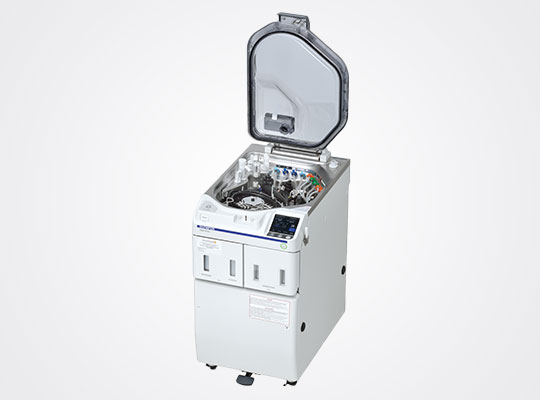
Buy Endoscope Reprocessors in Nigeria.
Buy endoscope reprocessing equipment in Nigeria through Franance by matching the system to the exact endoscope models, the facility's validated reprocessing workflow, and the layout and utilities at the reprocessing site. The current catalogue lists three Olympus systems: ETD Double, a pass-through endoscope washer-disinfector; OER-Mini, a tabletop automated endoscope reprocessor; and OER-Elite, an automated endoscope reprocessor. Confirm model-specific scope, connector, process chemistry, cycle, installation and service requirements before requesting a quotation.
Products
3 models
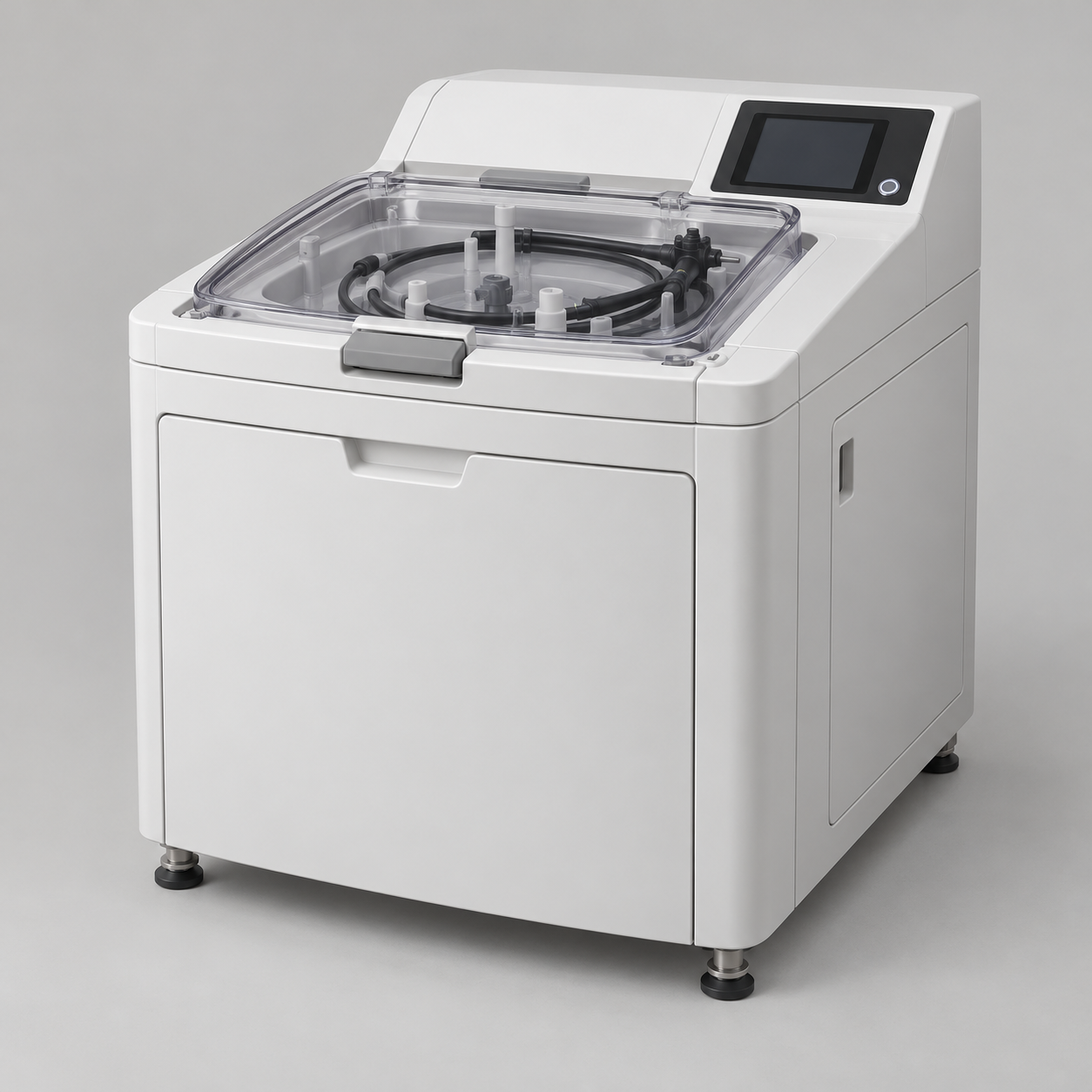
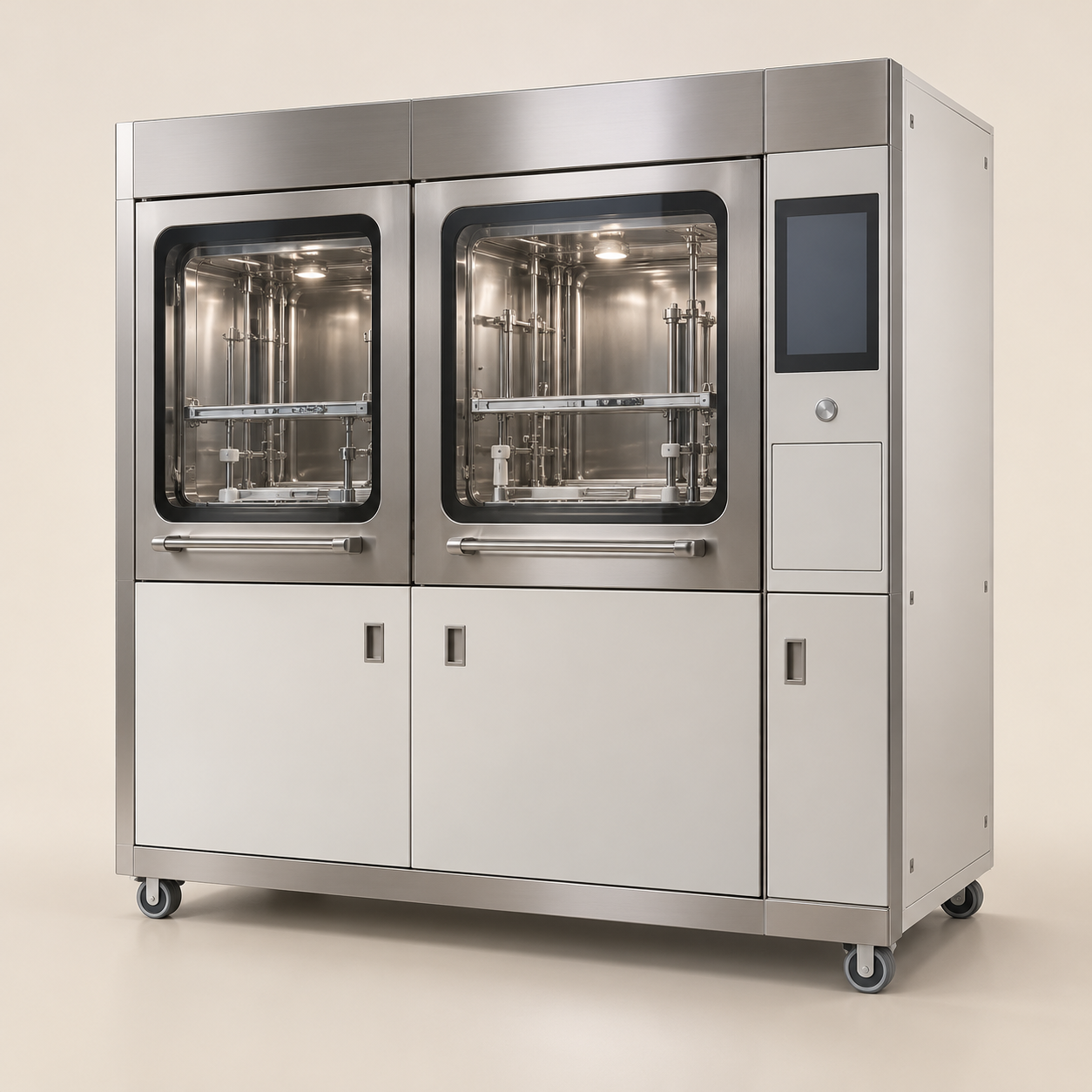
ETD Double Endoscope Washer-Disinfector
Pass-through automated endoscope washer-disinfector
Price on request
Where can I buy endoscope reprocessing equipment in Nigeria?
Franance lists three Olympus products for quotation in the endoscopy reprocessing category. Start by recording the make and model of every scope the unit expects to process. Then have the endoscopy and infection-prevention teams review current scope instructions, connection compatibility and reprocessing policy before comparing equipment. A category listing or a manufacturer’s general page does not prove that a particular reprocessor is approved for every Olympus scope or local process.
Read moreWhich endoscope reprocessing systems are listed?
The Olympus ETD Double is a pass-through automated endoscope washer-disinfector. Olympus describes clean-side and dirty-side separation and the ability to process up to three medical flexible endoscopes simultaneously. Its product materials describe connection of up to seven channels per endoscope. Verify the exact basket, connectors, channels, scope compatibility and installation design with current ETD Double documentation.
Read moreWhat is the difference between a washer-disinfector and an AER?
Olympus markets ETD Double as a pass-through washer-disinfector and OER-Mini and OER-Elite as automated endoscope reprocessors. The ETD Double’s defining listed layout feature is the separation of dirty and clean sides, with a multi-scope processing format. The OER-Mini is presented as a compact tabletop option, while OER-Elite is described with channel monitoring, workflow prompts and process log functions. Those are meaningful procurement differences, but do not establish that any unit can process every scope or replace a required manual task.
Read moreBuy Endoscope Reprocessing Equipment in Nigeria
Buy endoscope reprocessing equipment in Nigeria through Franance by matching the system to the exact endoscope models, the facility’s validated reprocessing workflow, and the layout and utilities at the reprocessing site. The current catalogue lists three Olympus systems: ETD Double, a pass-through endoscope washer-disinfector; OER-Mini, a tabletop automated endoscope reprocessor; and OER-Elite, an automated endoscope reprocessor. They have different equipment formats and manufacturer-specific configurations. Compare the exact listings for ETD Double, OER-Mini and OER-Elite, then request a quotation for the facility’s scopes, connectors, process chemistry and installation requirements.
Where can I buy endoscope reprocessing equipment in Nigeria?
Franance lists three Olympus products for quotation in the endoscopy reprocessing category. Start by recording the make and model of every scope the unit expects to process. Then have the endoscopy and infection-prevention teams review current scope instructions, connection compatibility and reprocessing policy before comparing equipment. A category listing or a manufacturer’s general page does not prove that a particular reprocessor is approved for every Olympus scope or local process.
The category includes two equipment descriptions: a washer-disinfector and two automated endoscope reprocessors (AERs). These names reflect the manufacturers’ product classifications and configurations. They do not, by themselves, establish which manual steps, chemistry, cycle parameters, scope models or accessories are supported. Confirm those details against the exact reprocessor and endoscope instructions for use (IFUs), and put the model, software or process configuration, connectors and accessories in the quote request.
Which endoscope reprocessing systems are listed?
The Olympus ETD Double is a pass-through automated endoscope washer-disinfector. Olympus describes clean-side and dirty-side separation and the ability to process up to three medical flexible endoscopes simultaneously. Its product materials describe connection of up to seven channels per endoscope. Verify the exact basket, connectors, channels, scope compatibility and installation design with current ETD Double documentation.
The Olympus OER-Mini is a tabletop AER. Olympus describes it as intended for flexible video and fibre scopes and as designed specifically for Olympus small-diameter flexible endoscopes. Its product page lists an approximately 16-minute cycle time. That stated cycle time is not necessarily the full interval from used scope return through manual pre-cleaning, inspection, automated processing, drying, storage and release for use. Confirm the precise cycle and all required steps for each scope.
The Olympus OER-Elite is an AER for Olympus flexible endoscopes and other items approved by Olympus. The manufacturer describes channel monitoring, connector fluid overflow management and log data management. Olympus states that Program 1 takes approximately 28 minutes; this figure refers to that program, not every scope, configuration or complete end-to-end workflow. Check the current OER-Elite IFU, system configuration and scope-specific compatibility information before using any cycle time for capacity planning.
What is the difference between a washer-disinfector and an AER?
Olympus markets ETD Double as a pass-through washer-disinfector and OER-Mini and OER-Elite as automated endoscope reprocessors. The ETD Double’s defining listed layout feature is the separation of dirty and clean sides, with a multi-scope processing format. The OER-Mini is presented as a compact tabletop option, while OER-Elite is described with channel monitoring, workflow prompts and process log functions. Those are meaningful procurement differences, but do not establish that any unit can process every scope or replace a required manual task.
Treat the name “AER” or “washer-disinfector” as the start of the compatibility review, not as proof of a particular disinfection outcome. Confirm what the exact model’s validated cycle does, the scope and connector combinations included, the process chemistry, rinse and drying steps, and what staff must still do before and after the automated cycle. The equipment and scope manufacturers’ IFUs govern the intended process. The US CDC’s recommendations for reprocessing flexible endoscopes emphasize device-specific instructions, thorough manual cleaning before high-level disinfection and correct channel connections for an AER. Apply the requirements adopted by the facility and jurisdiction; this guide does not prescribe a clinical protocol.
Buy Olympus ETD Double washer-disinfector in Nigeria
ETD Double may be relevant to a facility planning a pass-through workflow between a contaminated side and a clean side. Olympus states it can accommodate up to three flexible endoscopes simultaneously and describes connection of up to seven channels per endoscope. Ask the supplier to confirm the basket and connectors required for each exact scope model, whether all requested scope channels are connected as specified, and what the device monitors during the cycle. Do not interpret a maximum simultaneous capacity as guaranteed throughput for a real department.
Pass-through equipment also affects the building layout. Identify which wall or partition separates the two work zones, where the dirty-side loading and clean-side unloading occur, staff circulation and access, and how the equipment will be moved into the room. Have the supplier or installer review water, drainage, electrical supply, ventilation, chemical storage and any other site interfaces against the current installation manual. This guide does not state specific utility thresholds or claim that an existing room is ready.
Provide a complete inventory of Olympus scope models, quantities, connectors and any special channels. Ask for an ETD Double compatibility schedule and a room-layout or site-survey checklist before the quotation is finalized. Confirm whether the offer is for ETD Double specifically and identifies the included rack, baskets, channel adapters, traceability items, installation and training.
Buy Olympus OER-Mini reprocessor in Nigeria
OER-Mini is the compact tabletop AER among the listed options. Olympus describes the system for flexible video and fibre scopes and says it is designed specifically for Olympus small-diameter flexible endoscopes. The product page states an approximately 16-minute cycle and a countertop or cart installation format. Confirm the current approved scope list and operating conditions for the precise model offered; do not infer that every slim scope or non-Olympus scope is supported.
For space planning, measure the proposed counter or cart footprint and check working clearances, load path, utilities, drainage and chemical handling requirements against the installation documentation. A tabletop label does not confirm that the equipment can be installed on any available bench or moved safely on any cart. Ask the installer to document site requirements, connections, staff access and commissioning tasks.
Plan cycle capacity using the complete work sequence rather than the headline automated-cycle figure. Include used-scope transport, manual leak testing and cleaning as applicable, inspection, loading and channel connection, cycle completion, release checks, drying and safe storage, as required by the model instructions and facility policy. Request the supplier’s current cycle documentation, model-specific compatibility evidence and training plan.
Buy Olympus OER-Elite reprocessor in Nigeria
Olympus describes OER-Elite as providing high-level disinfection for Olympus flexible endoscopes and other approved items. The product information identifies channel monitoring, connector fluid overflow management, log data management, on-screen setup guidance and approximately 28 minutes for Program 1. These are manufacturer descriptions for specified configurations. Confirm the exact program, approved scopes and accessories, chemistry, process records and operating conditions for the product and market being offered.
The monitoring and log functions can be considered as part of an endoscopy department’s documentation plan. Ask which process events and cycle data the offered system records, how users retrieve records, whether the data can be retained or exported, and what the facility must record separately. Do not assume any system automatically provides a complete regulatory audit trail or satisfies local documentation rules.
Confirm service and support for the exact OER-Elite, including preventive maintenance, calibration or performance verification requirements where applicable, consumables, filters, disinfection chemistry, software or configuration updates, repair response, and access to loan equipment if required. A manufacturer feature page does not establish that a particular service arrangement is available in Nigeria.
How do I match a reprocessor to the scopes already in use?
Make a scope-by-scope compatibility matrix before requesting a quote. Include manufacturer, exact model, generation or revision, number of scopes, connector and channel configuration, valves, any special elevator or auxiliary channel, required chemistry and any scope-specific reprocessing instructions. Ask the endoscope manufacturer and reprocessor supplier to confirm compatibility in writing for the exact combination. A connection that physically fits does not prove that the cycle is approved for that scope.
Olympus publishes a model-specific compatibility tool for certain scopes and processing combinations. Use the current compatibility entry for each scope and each reprocessor or connector. Verify the sales region because Olympus notes that listed products and compatibility details can vary by region. For non-Olympus scopes, obtain compatibility evidence from both manufacturers rather than assuming that a unit described for flexible endoscopes is universally compatible.
Check that the quoted system includes the exact channel connectors, adaptors, baskets, software, RFID or tracking items, and any scope-specific components required for the planned inventory. List exclusions and separately priced options. Keep the compatibility matrix with procurement and reprocessing documentation so that a later scope addition does not silently introduce an unsupported combination.
What manual cleaning and process steps should remain in the workflow?
Automated equipment is only one part of reprocessing. CDC’s HICPAC essential elements describe pre-cleaning, leak testing where required, meticulous manual cleaning and inspection before disinfection or sterilization, followed by storage in a manner that protects and dries the scope. Exact steps and sequences must follow the scope IFU, reprocessor IFU, chemistry instructions and local policy.
Do not use an advertised automated cycle time or a product statement about reduced manual work to remove a step from the facility’s procedure without the exact manufacturer IFUs and the responsible infection-prevention and endoscopy leads approving that workflow. Confirm who performs each action, how staff competency is maintained, how process failures are escalated and which records are retained. This buyer guide does not prescribe cleaning agents, contact times, disinfection levels or sterilization methods.
During procurement, ask the supplier to demonstrate the actual loading and channel-connection procedure using the scope models the facility owns. Request a list of required cleaning brushes, adapters, consumables and personal protective equipment, and identify which items are single-use or reusable in the manufacturer instructions. Confirm who supplies them and how their replacement is managed.
What site, utility and room details should Nigerian facilities prepare?
Before selecting a model, prepare a site-survey pack with room dimensions, door and corridor clearances, floor or counter loading, installation location, dirty/clean traffic flow, water supply and quality information, drainage, electrical supply, ventilation, chemical storage, network or data needs, and existing endoscope drying and storage arrangements. These are questions to resolve against the current model-specific installation manual; this guide does not invent required values.
ETD Double’s pass-through layout requires particular attention to the separation and access on each side. OER-Mini’s tabletop format still requires a suitable work surface or approved cart and connections. OER-Elite requires room for the complete system and the handling of its specified chemistry and accessories. Have a qualified facilities representative and the supplier review these details before committing to site preparation.
For a Nigerian facility, clarify delivery access, unloading, installation team travel, power conditioning if recommended by the manufacturer, water treatment or filtration if specified, locally available consumables, and who will maintain any required utilities. Obtain any installation sign-off and commissioning records required by the facility. Confirm local supply and service in writing rather than inferring them from the manufacturer’s international website.
What should a Nigeria endoscope reprocessor quotation include?
Send the exact model requested, scope inventory and quantities, compatibility matrix, intended throughput, room layout and site-survey findings, destination city and state, project timeline and the facility’s service expectations. State whether the requirement is a pass-through washer-disinfector or a tabletop or other AER, and name any required clean/dirty separation, cycle-data, capacity or footprint features.
Ask the written quote to identify manufacturer, exact model and configuration; included baskets, racks, adapters, connectors, tracking accessories, software and consumables; separately priced items; scope and chemistry compatibility documents; site preparation and utility requirements; installation, commissioning and training; warranty territory and exclusions; preventive maintenance and repair support; consumable availability; lead time; currency, taxes, freight and delivery; and any regulatory documents required by procurement. For OER-Mini and OER-Elite, request the current scope-specific cycle and compatibility information. For ETD Double, confirm pass-through arrangement, capacity statement, baskets and channel connections for the exact scope inventory.
Ask the supplier to name any assumptions or exclusions and require approval before equipment, chemistry, connectors or accessories are substituted. Confirm the amount and unit of any quoted recurring consumable and whether it is included in commissioning. No Nigerian stock, price, regulatory status, import eligibility, warranty or service coverage is established by the product listing.
How do I place an endoscope reprocessing quote order?
Open the exact filtered listing for ETD Double, OER-Mini or OER-Elite, then send Franance the site and compatibility details. The catalogue provides a quotation enquiry; it is not online checkout or a confirmed order.
Have endoscopy, infection-prevention, facilities, biomedical engineering and procurement stakeholders review the proposed configuration. Before accepting, check that the quotation names exact models, supported scopes, connectors, process chemistry, included items, site requirements, commissioning, training, service, delivery destination and commercial terms. After delivery, match the unit identification and accessories to the approved quotation, and complete commissioning and training before staff use the equipment under the facility’s approved procedures.
Frequently asked questions about endoscope reprocessing equipment
### Are ETD Double, OER-Mini and OER-Elite interchangeable?
No. Olympus classifies ETD Double as a pass-through washer-disinfector and the OER models as automated endoscope reprocessors. Their installation formats and documented features differ. Check the exact scopes, connections, chemistry, cycles and site requirements before choosing.
### Does an AER replace manual cleaning?
Do not assume that it does. CDC guidance describes manual cleaning before high-level disinfection, and the facility must follow the exact endoscope, reprocessor and chemistry IFUs. Verify any model-specific exception with the manufacturers and responsible facility leads.
### Does the 16- or 28-minute cycle equal total turnaround time?
No. Those are manufacturer-stated cycle figures for OER-Mini and OER-Elite Program 1 respectively. They do not include every step in the facility’s workflow, and the applicable model, cycle and conditions must be confirmed.
### Does this guide confirm Nigerian availability or regulatory status?
No. Confirm current market availability, required regulatory documents, pricing, delivery, warranty and local support for the exact configuration in Franance’s written quotation.
Manufacturer sources and scope limits
Model descriptions come from Olympus’ ETD Double washer-disinfector information, automated reprocessing overview, OER-Mini product page and OER-Elite product information. Process context comes from the US CDC’s summary recommendations for disinfection and sterilization and HICPAC essential elements for flexible endoscope reprocessing. These sources do not establish current Nigerian availability, regulatory status, price, utility readiness or local service. Always follow the current IFU supplied for the exact scope, equipment, process chemistry and accessories, along with applicable facility and jurisdictional requirements.
Request an endoscope reprocessing quotation from Franance
Tell Franance whether you need ETD Double, OER-Mini or OER-Elite; list the exact flexible scope models, connectors and quantities; and provide site, utilities, room layout, throughput, training, service and delivery requirements. Ask for current compatibility and installation documents and a written quote that separates the unit, included accessories, consumables, commissioning and local support. Request an endoscope reprocessing quotation, or review the exact listings for ETD Double, OER-Mini and OER-Elite.
Common questions
Are ETD Double, OER-Mini and OER-Elite interchangeable?
No. Olympus classifies ETD Double as a pass-through washer-disinfector and the OER models as automated endoscope reprocessors. Their formats and documented features differ. Confirm the exact scopes, connections, chemistry, cycles and site requirements.
Does an AER replace manual cleaning?
Do not assume that it does. CDC guidance describes manual cleaning before high-level disinfection, and the facility must follow the exact endoscope, reprocessor and chemistry instructions for use.
Does the 16- or 28-minute cycle equal total turnaround time?
No. Those are manufacturer-stated cycle figures for OER-Mini and OER-Elite Program 1 respectively. They do not include every step in the facility workflow; confirm the model, cycle and conditions.
Does this guide confirm Nigerian availability or regulatory status?
No. Confirm current availability, required regulatory documents, delivery, pricing, warranty and local support for the exact configuration in the written quotation.
Request an endoscope reprocessing quotation in Nigeria.
Tell Franance whether you need ETD Double, OER-Mini or OER-Elite; provide the exact scope models, connection requirements, room and utility details, throughput, training and service needs, and delivery destination. Ask for current compatibility and installation documentation and the complete written commercial offer.
Request a reprocessing quoteNeed an equipment quote?
Add the models you need to a quote order, or send us your equipment list.