
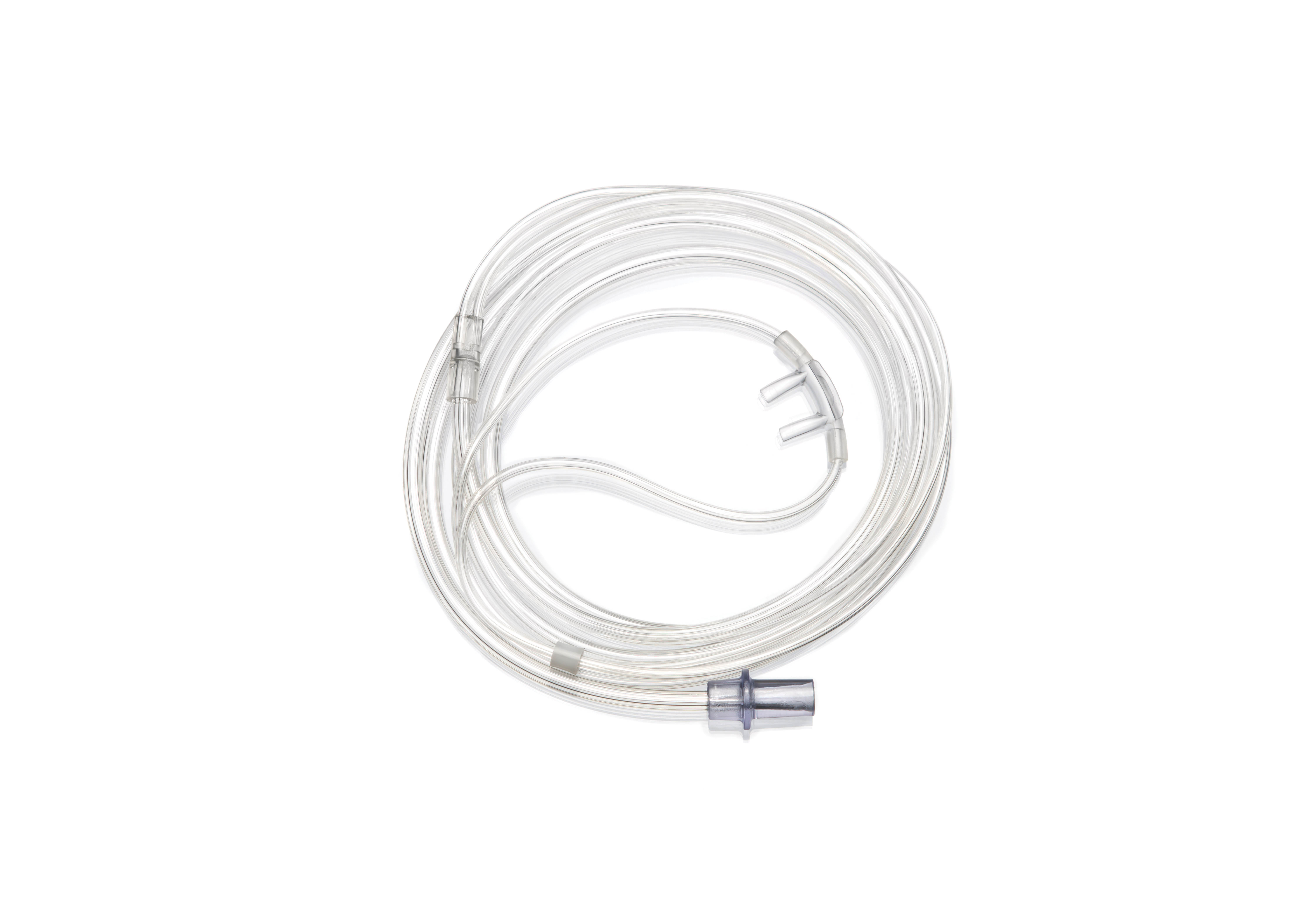
adult nasal cannula 1161004, 2.1 m
Adult nasal oxygen cannula with straight prongs and tubing
Price on request

Medical equipment and biomedical engineering.
Abuja, Nigeria.
Buy oxygen nasal cannulas in Nigeria through Franance by specifying the manufacturer code, intended patient group, prong design, tube length and required quantity. The current category contains three Intersurgical products: adult straight-prong cannula 1161004 with 2.1 m tubing; paediatric curved-prong cannula 1163000 with 2.1 m tubing; and adult curved-prong EarGuard cannula 1165002 with 2.1 m tubing. Intersurgical lists each in a box quantity of 50. These catalogue descriptions identify interface style and pack information; they do not provide patient-specific oxygen-flow advice or establish that any model is appropriate for a particular person. A qualified clinician should specify the interface and oxygen delivery setup.
3 models
Adult nasal oxygen cannula with straight prongs and tubing
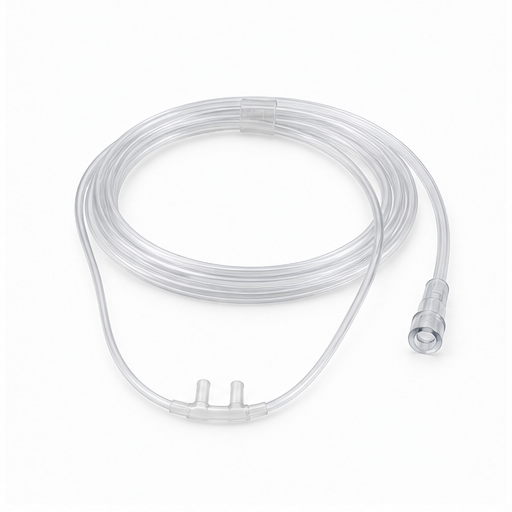
Paediatric nasal oxygen cannula with curved prongs and 2.1 m tube
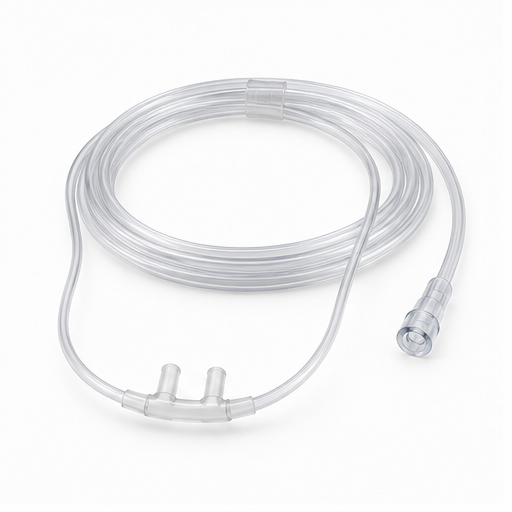
Adult nasal oxygen cannula with curved prongs, ear guards and 2.1 m tube
The Franance oxygen nasal cannula category displays three Intersurgical codes currently assigned to this category. To ask about a specific reference, use its exact filtered listing: 1161004 adult straight-prong cannula, 1163000 paediatric curved-prong cannula, or 1165002 adult EarGuard cannula. In the catalogue API, these three brand, category and model-code combinations each returned exactly one matching record.
Read moreThe adult 1161004 is described by Intersurgical as a nasal cannula with straight prongs and tubing, 2.1 m long. The manufacturer lists a box quantity of 50. Check the 1161004 filtered listing and compare the product code with the latest manufacturer information before placing a request.
Read moreStart with the clinician-approved patient group and interface specification. This catalogue category contains two adult models and one paediatric model. It does not list a neonatal or premature cannula, and the paediatric reference should not be treated as a neonatal option by inference. If a neonatal interface is required, request the exact prescribed code and confirm that it appears in the appropriate listing or is quoted as a separate verified product.
Read moreBuy oxygen nasal cannulas in Nigeria through Franance by specifying the manufacturer code, intended patient group, prong design, tube length and required quantity. The current category contains three Intersurgical products: adult straight-prong cannula 1161004 with 2.1 m tubing; paediatric curved-prong cannula 1163000 with 2.1 m tubing; and adult curved-prong EarGuard cannula 1165002 with 2.1 m tubing. Intersurgical lists each in a box quantity of 50. These catalogue descriptions identify interface style and pack information; they do not provide patient-specific oxygen-flow advice or establish that any model is appropriate for a particular person. A qualified clinician should specify the interface and oxygen delivery setup. Review the oxygen nasal cannula category and its exact 1161004 adult cannula listing, 1163000 paediatric cannula listing and 1165002 EarGuard adult cannula listing. Each model filter identifies one catalogue record in the local listing system. Franance accepts quotation requests and follows up by phone or email; a listed product is not confirmation of Nigerian stock or delivery timing.
The Franance oxygen nasal cannula category displays three Intersurgical codes currently assigned to this category. To ask about a specific reference, use its exact filtered listing: 1161004 adult straight-prong cannula, 1163000 paediatric curved-prong cannula, or 1165002 adult EarGuard cannula. In the catalogue API, these three brand, category and model-code combinations each returned exactly one matching record.
Send Franance the chosen code, box quantity, destination and delivery requirement. State whether the facility needs adult or paediatric products, the approved prong configuration, tubing length and any exact packaging or documentation requirement. If an existing device or local inventory label provides a code, include it rather than relying on a general request for “nasal oxygen cannulas.” Franance can confirm the requested item and quotation details for the order. Intersurgical says that not all products are available in all markets, so Nigerian availability, stock, price and delivery must be checked for the specific quotation.
The adult 1161004 is described by Intersurgical as a nasal cannula with straight prongs and tubing, 2.1 m long. The manufacturer lists a box quantity of 50. Check the 1161004 filtered listing and compare the product code with the latest manufacturer information before placing a request.
The paediatric 1163000 is described as a nasal cannula with curved prongs and 2.1 m tubing; the manufacturer also lists a box quantity of 50. Its paediatric designation and curved-prong description distinguish it from the two adult listings. They do not replace clinical fitting or device instructions. Confirm the intended patient group and item code with the responsible clinician or procurement lead. See the 1163000 filtered listing.
The adult 1165002 is an Intersurgical EarGuard model with curved prongs and 2.1 m tubing; the manufacturer lists a box quantity of 50. Intersurgical describes the EarGuard design as including soft silicone foam cushions. The manufacturer states these cushions may reduce the risk of trauma to the patient’s ears; that is a manufacturer description, not a guarantee of comfort or clinical outcome. Review the exact product code and packaging on the 1165002 filtered listing.
All three listings share a 2.1 m stated tubing length and box quantity of 50, but differ in adult/paediatric designation, prong shape and the EarGuard feature. Do not assume that the shared length makes the products interchangeable or that product code, pack contents, materials or labeling remain unchanged. Confirm the current manufacturer part description and the actual box label when receiving a shipment.
Start with the clinician-approved patient group and interface specification. This catalogue category contains two adult models and one paediatric model. It does not list a neonatal or premature cannula, and the paediatric reference should not be treated as a neonatal option by inference. If a neonatal interface is required, request the exact prescribed code and confirm that it appears in the appropriate listing or is quoted as a separate verified product.
Within the adult references, 1161004 has straight prongs and 1165002 has curved prongs plus EarGuard cushions. Intersurgical’s broader range includes multiple prong shapes and patient groups. A product description is not a clinical recommendation. The prong shape should be selected by the responsible clinician based on the intended interface and applicable instructions, then specified precisely in purchasing documents so procurement does not substitute a similar-looking item.
Do not choose a cannula based only on a product photograph, broad “adult” or “paediatric” wording, or the oxygen source’s connector. The clinical team must specify a suitable patient interface and follow the manufacturer instructions for use. A user should not adjust flow, prescribe oxygen, change delivery mode or substitute a different interface based on this buying guide.
These three product descriptions identify a nasal cannula and attached tubing of 2.1 m. They are not the same product as standalone oxygen tubing, connectors, humidifiers, flowmeters, oxygen concentrators or wall outlets. The product records do not state that separate connectors or adaptors are included. Intersurgical catalogs connectors and oxygen tubing as separate product groups, which is why quote requests should identify the full intended equipment path.
Before ordering, ask the facility’s equipment lead to confirm the intended source or flowmeter outlet, any required adaptor, the cannula’s tube connection and the receiving clinical device setup from the relevant manuals. Do not infer universal compatibility from the phrase “oxygen cannula,” force components together, or use an unverified improvised connector. If a dedicated connection part is required, identify its exact reference and include it separately on the quote for confirmation.
For an existing setup, provide make, model and connector details for the source or flowmeter and any accessory in between. If the cannula is to be used with another respiratory device, have the responsible clinician and biomedical engineering team confirm that the intended interface is permitted by the equipment instructions. Nasal cannulas designed for oxygen delivery should not be confused with capnography-sampling cannulas, high-flow systems, or other respiratory interfaces; those are different configurations and are outside the three current category assignments.
No. The listed code and product descriptions do not specify a patient’s oxygen requirement, a flow setting, prescribed duration, delivered concentration, clinical outcome or suitability for an individual. A nasal cannula is an interface component in an oxygen delivery arrangement. The oxygen source, flow control, tubing path, patient interface and clinical prescription all matter. This page is procurement information, not treatment guidance.
Intersurgical describes its conventional cannula range as having multi-channel tubing designed to permit oxygen flow even if tubing is kinked. This is a range-level manufacturer statement; it should not be interpreted as permission to deliberately kink or compress tubing, disregard inspection, or assume that flow is unaffected under every condition. Keep the tubing routed according to the instructions for use and inspect it for obstruction, damage, disconnection or contamination under facility procedures.
If the clinical team specifies performance requirements, record them in the procurement request and obtain the exact model instructions and documentation. Ask the manufacturer or supplier to clarify any unlisted specification. Do not convert marketing descriptions such as “improved fit” or a range-level design note into a claim about oxygen delivery for a particular patient.
The manufacturer lists box quantity 50 for each of the three assigned codes: 1161004, 1163000 and 1165002. The exact code should be used on the purchase request, quote, delivery note and goods-receipt record. If multiple patient groups or styles are needed, separate the quantities by code. For example, specify the number of boxes of 1161004 and 1163000 independently rather than saying “two boxes of nasal cannulas.”
The box quantity is not a confirmation that any particular market shipment will arrive in a single outer carton, that the whole box must be ordered, or that partial-box supply is available. Confirm the quoted unit of sale, pack quantity, packaging condition, expiry or shelf-life information where relevant, labeling language, lot traceability and delivery quantity with the supplier. The product records do not provide all packaging and shelf-life data; request current code-specific documentation if your procurement policy requires it.
For institutional tenders, include the acceptable manufacturer and reference, patient group, prong style, tube length, EarGuard requirement where relevant, pack unit, requested quantity and substitution rules. State whether alternatives require prior written approval. That helps prevent an adult straight-prong item from being supplied when paediatric curved-prong or EarGuard models were specified.
Check that the requested product matches the clinical department’s approved specification and local procurement documentation. Confirm the exact Intersurgical product code against current manufacturer information, and confirm box quantity and description on the quotation. Ask for the lot, label, packaging and any applicable instructions or conformity documentation that the facility requires. Do not assume that a document, mark or certificate applies to an individual code unless it identifies that product and scope.
For Nigerian delivery, give the full facility or receiving-site address, named recipient, phone contact, quantity by code, required delivery window and any receiving-hour or tender reference. Ask the supplier to state what is known about product origin, local availability, shipment, duties or taxes, quote validity and delivery terms. The manufacturer notes that product availability varies by market; neither a manufacturer page nor this catalogue entry proves current Nigerian supply.
At receipt, compare the delivered code, description and quantity against the purchase order and quotation. Check package integrity, labeling, lot information and expiry details if shown and required by facility procedure. Quarantine or escalate discrepancies according to the facility’s receiving policy. Store and handle products according to their current packaging and instructions for use; this guide does not establish sterility, reusability, storage temperature or shelf life for these items.
Send Franance the required code or codes, patient group, prong style, tube length, EarGuard requirement, number of boxes, facility delivery address and needed-by date. Identify any connector or compatibility question and provide the source or flowmeter make/model if it affects the supply. If the purchase is for a hospital, clinic or distributor, include the procurement contact, tender or reference number and any required documents.
Ask the written quotation to confirm manufacturer, exact product code, current description, pack quantity, unit of sale, quoted quantity, price and currency, taxes, delivery charges, availability, expected dispatch or delivery timing, quote validity and substitutions. Request any required item-specific instructions, product data or traceability details and state whether an alternate code is unacceptable without approval. Ask for the warranty or complaint-handling route only where relevant to the product and quote; do not assume a particular local service arrangement.
Franance processes these as quotation orders rather than online payment. Submit a request through the oxygen nasal cannula category or contact Franance for an oxygen nasal cannula quotation. The team follows up by phone or email to clarify the requested items and supply terms. Confirmed stock, price, delivery and market availability must appear in the response for your order; they are not implied by a catalogue page.
### Which product is the paediatric nasal cannula?
Intersurgical code 1163000 is described as a paediatric nasal cannula with curved prongs and 2.1 m tubing, box quantity 50. Confirm patient group and clinical suitability with the responsible clinician.
### What is the difference between 1161004 and 1165002?
Both are listed as adult cannulas with 2.1 m tubing and box quantity 50. Code 1161004 has straight prongs. Code 1165002 is an EarGuard model with curved prongs and ear cushions. Confirm the exact code on the quote.
### Is EarGuard guaranteed to prevent ear injury?
No. Intersurgical says the soft cushions may reduce the risk of ear trauma. That manufacturer statement is not a guarantee or an outcome claim for an individual. Follow product instructions and clinical oversight.
### Are these cannulas compatible with every concentrator or flowmeter?
The product pages do not establish universal compatibility. Confirm the connector and intended setup using the exact device manuals and supplier documentation before ordering.
### Can I use this guide to set a flow rate?
No. This guide does not provide oxygen prescriptions or patient-specific settings. A qualified clinician must determine the appropriate therapy and interface.
### Are the products available in Nigeria now?
The catalogue does not show confirmed Nigerian stock or delivery dates. Intersurgical notes that products may not be available in all markets. Ask Franance for a written quote and confirmation for your destination.
Product descriptions, codes and box quantities were checked against Intersurgical’s conventional nasal cannulae product page and its nasal cannula product information sheet. Intersurgical’s nasal cannulae information sheet provides range context, including its description of multi-channel tubing. Sources reviewed 20 October 2026.
This guide covers only the three product records currently assigned to this category. Manufacturer descriptions may change and market availability varies. No Nigerian stock, price, delivery date, patient-specific clinical performance, prescribed use, sterility, shelf life or universal equipment compatibility is asserted. Confirm the exact code, latest instructions and commercial supply details before ordering.
Intersurgical code 1163000 is described as a paediatric nasal cannula with curved prongs and 2.1 m tubing, box quantity 50. Confirm patient group and clinical suitability with the responsible clinician.
Both are listed as adult cannulas with 2.1 m tubing and box quantity 50. Code 1161004 has straight prongs. Code 1165002 is an EarGuard model with curved prongs and ear cushions. Confirm the exact code on the quote.
No. Intersurgical says the soft cushions may reduce the risk of ear trauma. That manufacturer statement is not a guarantee or an outcome claim for an individual. Follow product instructions and clinical oversight.
The product pages do not establish universal compatibility. Confirm the connector and intended setup using the exact device manuals and supplier documentation before ordering.
No. This guide does not provide oxygen prescriptions or patient-specific settings. A qualified clinician must determine the appropriate therapy and interface.
The catalogue does not show confirmed Nigerian stock or delivery dates. Intersurgical notes that products may not be available in all markets. Ask Franance for a written quote and confirmation for your destination.
Share the exact Intersurgical code, patient group, quantity by pack, delivery destination and connector details where relevant. Franance can confirm the requested reference and provide the supply terms for your quotation.
Request a quotationAdd the models you need to a quote order, or send us your equipment list.