

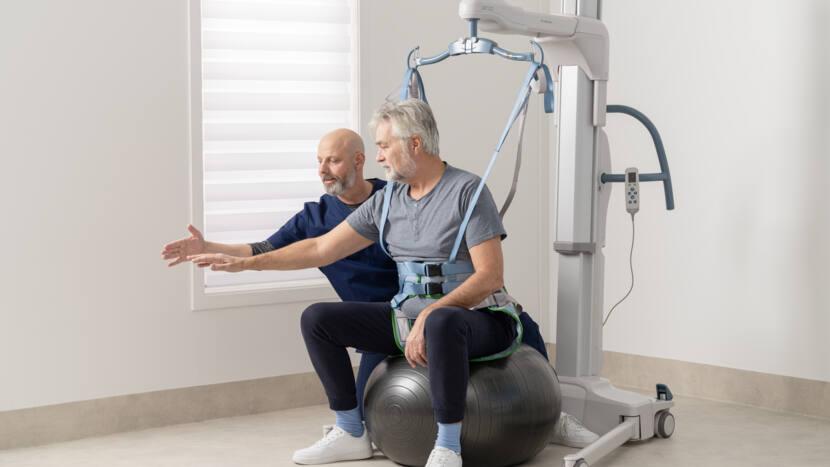
Buy Arjo Maxi Move 5 patient floor lifts in Nigeria
Request a quotation from Franance for an Arjo Maxi Move 5 mobile patient floor lift in Nigeria. Arjo lists two safe working load variants: 227 kg (500 lb) and 272 kg (600 lb). Its specification sheet also describes powered dynamic positioning, a telescopic mast, dual controls and configurable options such as Motion Assist, an integrated scale and castor size. The current catalogue record does not identify which capacity or options are selected, so the quotation must confirm the exact lift, spreader bar, sling compatibility, accessories, battery and service scope for your facility. See the Arjo Maxi Move 5 listing filtered to the Arjo brand and patient lifting hoist category, browse the broader patient lifting hoist category, or send Franance a quotation enquiry. The exact model filter currently returns one catalogue item. This is a quotation request, not an online purchase. Arjo asks buyers to confirm country availability with a local representative; neither the catalogue nor the manufacturer page confirms Nigerian stock, price, lead time, warranty or service coverage.
Where can I buy the Arjo Maxi Move 5 in Nigeria?
Use the Arjo Maxi Move 5 model listing to request a quote through Franance. Tell Franance the facility city and state, quantity, clinical or care setting, main transfer tasks, project stage and requested delivery window. Share the dimensions of the rooms and routes where the lift will be used, including doors, corridors, bed clearances, thresholds, elevators and storage locations.
Ask for a written offer naming the exact Maxi Move 5 capacity variant and every selected component. Specify spreader bar type, compatible sling models and sizes, stretcher or other transfer attachments, Motion Assist, weighing scale, castor option, batteries, charging equipment and storage accessories. State whether training, commissioning, inspection, installation of storage equipment, freight, taxes, parts, maintenance and warranty are included or excluded. Do not infer any of these from the product image or a generic model name.
Franance follows up by phone or email after receiving the enquiry. The product page does not provide online payment. Ask the supplier to confirm availability for Nigeria, source and model version, quote validity, currency, freight and delivery assumptions, warranty terms and the actual service pathway in writing. Arjo’s own product page notes that availability should be checked with a local sales representative, so regional supply must be confirmed for the specific order.
What is the Arjo Maxi Move 5 patient floor lift?
Arjo identifies Maxi Move 5 as a multifunctional mobile patient floor lift for transfers and positioning across care settings. It uses a powered lift mechanism, telescopic mast and a combi attachment designed to change between compatible spreader bars and stretcher frames. The manufacturer describes the Powered Dynamic Positioning System (PDPS), dual hand and mast controls, and configurable Motion Assist as features of the system. These product features do not replace an individual handling assessment, trained staff or the equipment instructions.
Maxi Move 5 is a specific model and should be distinguished from the older Maxi Move floor lift and from other mobile hoists in Arjo’s range. Ask the supplier to state “Maxi Move 5” on the quotation, identify its standard or high-capacity configuration, and provide the model/version identifiers and current user instructions. The catalogue record identifies the product family but does not select a capacity, castor set, spreader bar, sling, weighing scale or Motion Assist option.
A mobile floor lift moves around the care environment. Its suitability for a particular facility therefore depends on the tasks, patient handling plan, compatible accessories, staff training and actual route geometry. A listed product category or manufacturer’s description cannot establish suitability for a specific patient or guarantee that one device can perform every transfer needed by a facility.
What are the Maxi Move 5 safe working load options?
Arjo’s current product information lists a standard capacity with a maximum safe working load of 227 kg (500 lb), and a high-capacity variant rated at 272 kg (600 lb). The product record does not say which is intended for the offered unit. Ask for the selected capacity on the model specification, quotation and delivered equipment label. Do not assume a “Maxi Move 5” title by itself denotes the high-capacity version.
The safe working load is a manufacturer limit, not a target for routine use and not a clinical recommendation. The facility must determine its needs through its own patient handling procedures and qualified personnel. Confirm that the spreader bar, sling, stretcher attachment and every accessory selected are compatible with the lift and have appropriate ratings for the intended setup. Ask Arjo or the supplier to identify any component-specific limit and applicable instructions; do not assume the lift’s stated capacity overrides a lower-rated accessory.
The two variants differ in dimensions and mass as well as capacity. Arjo lists the standard-capacity lift at 75.4 kg including spreader bar and battery, with a length of 1,279 mm, legs-open external width of 1,102 mm and turning diameter of 1,227 mm. For the high-capacity model, the corresponding listed values are 75.6 kg, 1,324 mm, 1,219 mm and 1,309 mm. These are manufacturer specifications; the supplied accessories and castors affect the final configuration. Use the exact model drawings and facility measurements before planning access or storage.
Which spreader bar, sling or stretcher attachment should I quote?
Arjo lists two-point loop and medium-loop spreader bars, a four-point loop bar, powered dynamic positioning spreader bars and a stretcher frame for Maxi Move 5. It also lists a selection of slings and stretcher solutions such as soft, strap and scoop stretchers. The manufacturer identifies its combi attachment as the interface for changing between compatible spreader bars and stretcher frames. These options are not all interchangeable or automatically included.
Describe the transfers the facility needs to equip, the care environment, the equipment currently used and any constraints identified by the responsible clinical and moving-and-handling team. Request the exact sling and spreader-bar model references, sizes, attachment method, compatibility documentation, rated capacities and care/cleaning instructions. If the facility already owns Arjo lifting accessories, supply their model labels and condition details and ask the manufacturer or supplier to verify compatibility with the offered Maxi Move 5 version. Similar-looking attachments should not be assumed compatible.
Avoid specifying a sling solely by patient weight or a generic task label. Fit, support, access, transfer method, patient needs and local handling policy need qualified assessment. The guide cannot select a sling or prescribe a transfer technique. Ask for staff orientation to the exact lift and accessories, and require the applicable Arjo instructions for use and sling labels with the delivered equipment.
What Maxi Move 5 options should a Nigerian facility compare?
Arjo identifies the safe working load, castor size, Motion Assist and integrated scale as configurable options. Three castor heights are listed—standard, low and extra-low—with different clearances under beds and trolleys. Arjo’s product page describes Motion Assist as touch sensors at the caregiver handle that respond to push, pull and pivot movements; it also lists dual controls at the mast and hand control. Ask which features are present on the exact item being quoted and which require separate configuration.
The integrated scale is optional according to Arjo. If weighing is required, ask for the scale version, its display and documentation, calibration or verification arrangements, and any local requirements that apply to its intended use. Do not assume the pictured display means a scale is fitted. Similarly, request whether a wall-mounted battery charger, spare battery, Maxi Cart 2, wall support kit or other listed accessory is included.
Castor selection should be checked against the facility’s real bed and trolley heights, floor condition, thresholds, ramps, doorway clearances and storage. Arjo provides clearance measurements for castor choices; ask the supplier to provide the current technical drawing for the exact variant. Have the facility team trial or otherwise verify the intended route and handling workflow where possible. A low-clearance option does not guarantee access beneath every bed or over every floor transition.
How should I check doors, corridors and turning space?
Measure the intended transfer route, not only the treatment or ward room. Record clear door widths and heights, corridor pinch points, corners, elevator openings and interiors, ramps, thresholds, floor transitions, parking and charging positions, and the space beside each bed or trolley. Consider whether the lift has to turn with its legs open, approach from a particular side, or pass around furniture and other equipment. Compare those measurements with Arjo’s drawings for the selected standard or high-capacity configuration.
The two Maxi Move 5 capacity versions have different leg widths and turning diameters in Arjo’s table. Check both the legs-closed and legs-open footprint against room access and the intended transfer position. Confirm chassis and leg clearances with the selected castors, since the listed values differ across castor sizes. Include space for a caregiver to operate the equipment and access the patient; a doorway measurement alone cannot establish that a manoeuvre is possible.
For Nigerian facilities, give the supplier a site plan and route measurements from the actual building, including any lifts between floors. Ask whether a site visit or demonstration can be arranged and whether it is included in the offer. If the lift is shared across wards, clarify where it will be stored, cleaned, charged, inspected and retrieved, and how its location will be managed within the facility workflow. Do not treat a brochure’s idealized clearance drawing as a site approval.
What battery, charging and maintenance details should I confirm?
Arjo’s specification sheet lists a 24 V, 4 Ah battery for both capacity variants. It lists a battery charge indicator on the hand control and an optional wall-mounted charger and battery pack among accessories. Ask whether the quote includes a battery, charger, spare battery, wall mounting or cart-based storage, and which charging arrangement applies to the specific version. The published battery rating does not establish runtime or number of lifts per charge under your facility’s usage.
Request the current Maxi Move 5 instructions for use, quick reference guide, maintenance logbook, inspection intervals, cleaning instructions and any service checklist applicable to the exact version. Arjo’s product page lists these downloads and the specification sheet. Ask who is responsible for commissioning, staff handover, preventive maintenance, battery replacement and service escalation in Nigeria, and whether these are included in the quote. No local service coverage or response time is confirmed here.
Set up a facility process for charging, inspection, cleaning, accessory storage and reporting faults according to manufacturer instructions and local policy. Confirm the conditions under which the equipment should be removed from use and who may carry out maintenance or repair. Use only the manufacturer-designated parts and accessories for the offered equipment; Arjo’s specification sheet cautions that only Arjo-designed parts intended for the equipment should be used.
What should the Arjo Maxi Move 5 quotation include?
Request a line-item schedule that identifies the Maxi Move 5 capacity, model/version, castor height, Motion Assist and scale configuration. List the combi attachment, spreader bar, sling or stretcher attachments by model, size and quantity. Include battery, charger, spare battery, storage cart or wall kit, leg covers and other accessories as applicable. Mark each part included, optional or excluded. Ask the supplier to confirm the compatibility and rated limits of the complete offered combination.
Provide the facility location, route and room dimensions, intended tasks, quantities and whether the lift is for a new facility or replacement. Ask whether the quote includes site assessment, delivery, freight, taxes, commissioning, staff training, maintenance documentation, warranty and post-sale support. State whether the equipment must pass through stairs or elevators and identify any flooring or storage constraints. Request clarification of who is responsible for each site preparation or delivery task.
Ask the supplier to confirm current country availability, commercial terms, delivery assumptions, product origin, warranty eligibility and local service arrangements. Arjo’s product page explicitly asks customers to check with a local sales representative for country availability. No Nigerian stock, price, delivery timeframe, warranty or service claim should be inferred from an online model page. Compare quotes using the same capacity, accessory configuration and service scope rather than comparing bare lift prices with complete transfer systems.
How should the lift be introduced into a care facility?
Before procurement, involve the facility’s moving-and-handling lead, clinical or care staff, biomedical engineering or equipment team, procurement, infection-prevention staff and facilities personnel as appropriate. They can define intended tasks, identify accessory requirements, assess route geometry, specify cleaning and storage needs, and review training and maintenance responsibilities. The lift’s description as multifunctional does not mean it is appropriate for every person, transfer or care plan.
At handover, obtain the exact equipment and accessory list, model and serial numbers, current user documentation, charging instructions, approved cleaning information, service contact and warranty terms. Confirm that staff receive orientation to the supplied configuration, including emergency features, controls, sling/spreader-bar attachments, inspection and storage. Keep training and equipment records in the facility’s own system. Use the applicable user instructions and local policy for all operation; this buying guide is procurement guidance, not an operating manual.
If the facility needs a demonstration, training or routine inspection, ask for the service provider and scope in writing. Confirm who delivers it, which personnel are covered, what dates or quantities apply and whether travel or follow-up costs are extra. Do not assume the manufacturer’s general product claims establish a local support arrangement.
Frequently asked questions about buying Maxi Move 5 in Nigeria
### What is the Maxi Move 5 safe working load?
Arjo lists two variants: 227 kg (500 lb) standard capacity and 272 kg (600 lb) high capacity. This catalogue record does not select one. Confirm the offered variant on the quotation and equipment label, and verify limits for every compatible accessory.
### Does the product listing include a sling?
The listing does not define an included sling. Arjo offers a range of spreader bars, slings and stretcher attachments. Request model-specific compatible accessories by reference and size in the written quote.
### Does Maxi Move 5 include Motion Assist or a scale?
Arjo lists both as configurable options. Ask the supplier to confirm whether each is present on the quoted unit and itemise any option or accessory.
### Can Franance confirm Nigerian availability?
The listing is a quote request and does not verify stock or country availability. Arjo says customers should check with a local sales representative. Request written confirmation of source, availability, price, delivery, warranty and service for your order.
### Is the Maxi Move 5 suitable for every patient transfer?
No single product page can determine suitability for every person or transfer. The facility’s qualified staff must assess the task, patient needs, sling, environment and local handling procedures, following the current manufacturer instructions.
Sources and limitations
This guide is based on Arjo’s Maxi Move 5 product page for India and international markets, its international Maxi Move 5 page, the Maxi Move 5 specification sheet and Arjo’s Maxi Move 5 leave-behind brochure. The product page also lists the model’s instructions for use and quick reference guide; obtain the current applicable documents with the quotation.
The model record does not specify capacity, sling, spreader bar, scale, Motion Assist, castor set or included service. Dimensions, options and safe working load must be confirmed for the exact configuration and current documentation. Arjo asks customers to check country availability. Franance’s listing is a quotation route and does not establish Nigerian inventory, price, delivery, warranty, authorised representation or service coverage. This guide does not replace the manufacturer’s instructions, local risk assessment, trained staff or facility policy.