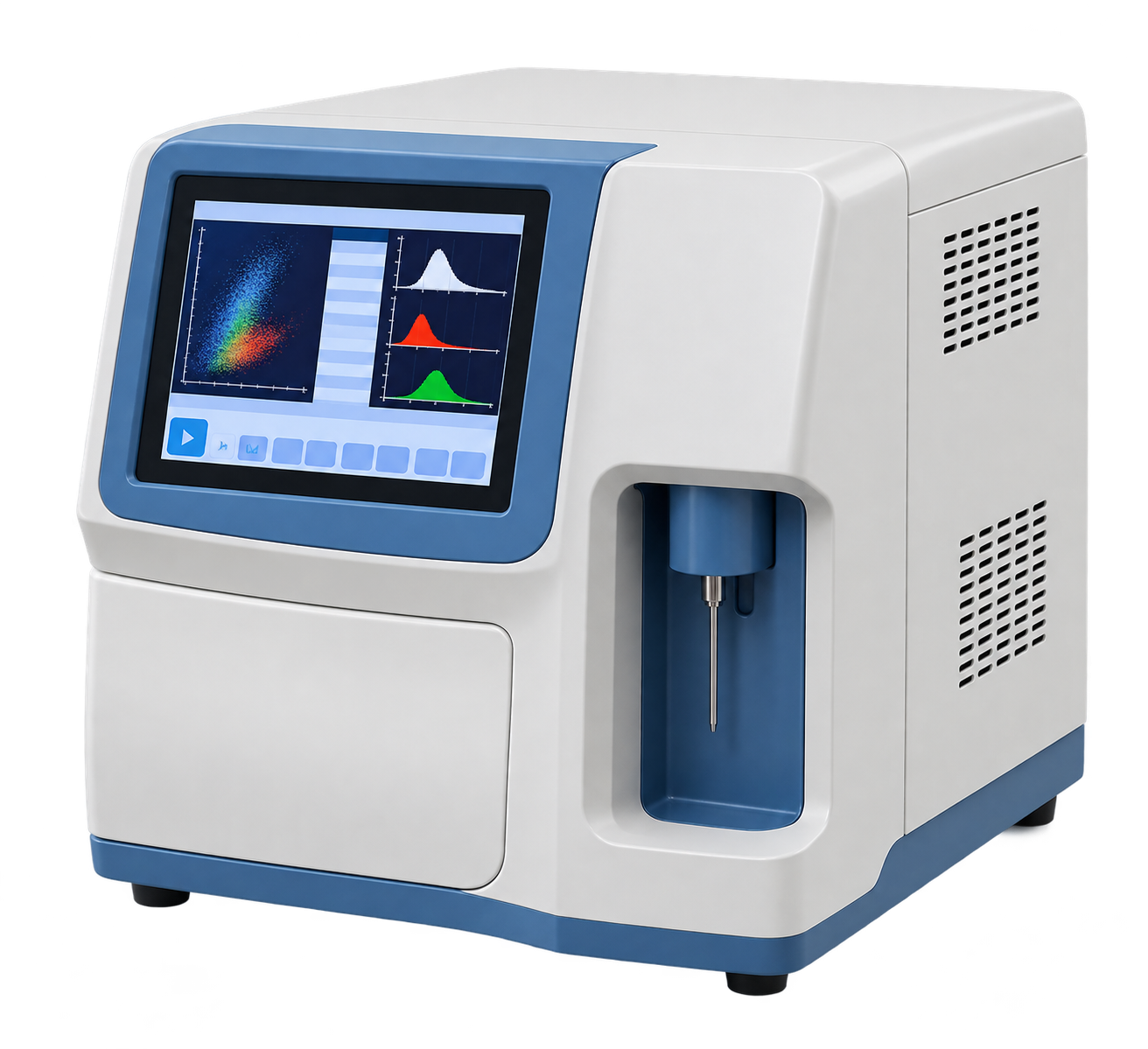
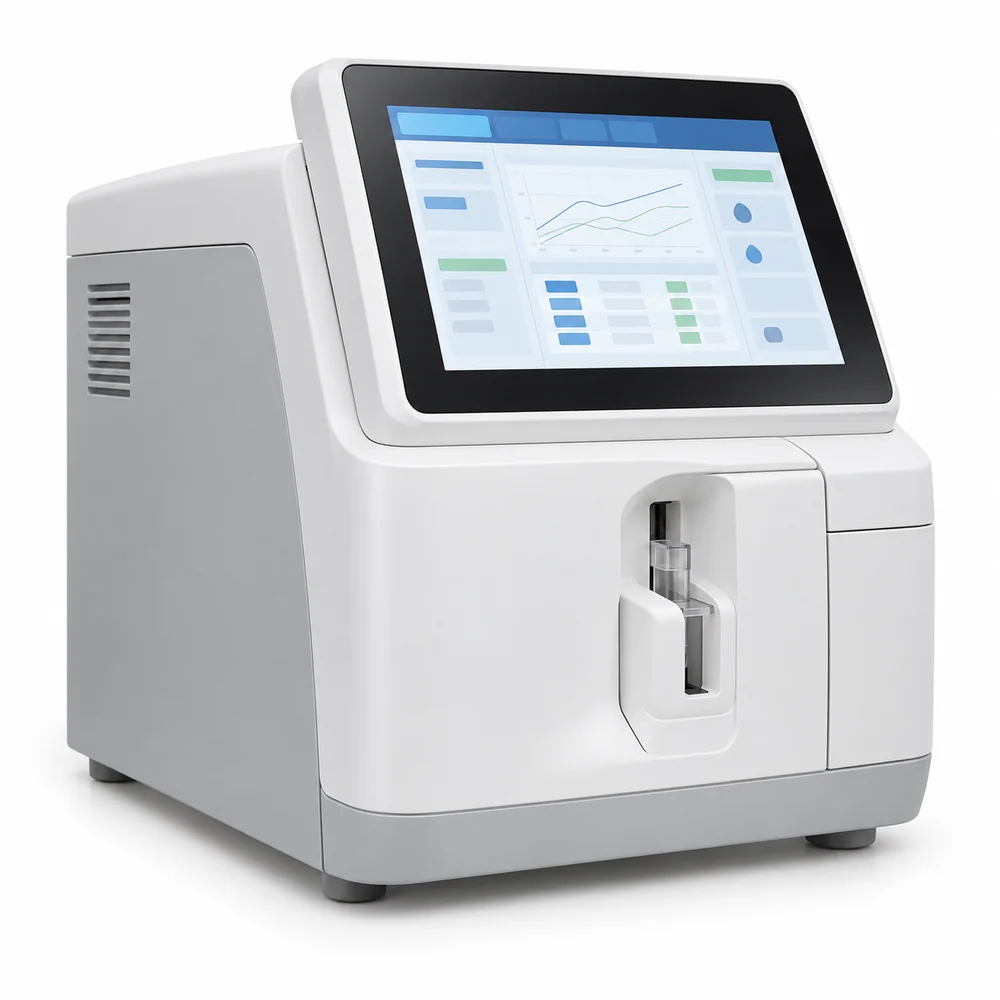
Buy Sysmex laboratory diagnostics equipment in Nigeria.
Browse Sysmex hematology and coagulation analyzers at Franance. Compare three-part and six-part differential instruments separately, review the exact model and sample-loading workflow, and send your approved requirements for a quotation in Nigeria.
Request Sysmex laboratory equipment from Franance for your facility in Nigeria. The catalogue includes hematology platforms and coagulation analyzers, with separate listings for the instrument families and differential categories. Choose the relevant range before comparing exact model specifications.
Compare Sysmex hematology and coagulation analyzers through Franance. Hematology differential count and sample-loading arrangements are separate purchasing criteria; coagulation platforms address a different testing workflow and should be assessed against their own assay requirements.
Specify whether you need hematology or coagulation, the exact model or approved test and workflow requirements, expected workload and reporting environment. Franance can review your enquiry and follow up by phone or email with the next quotation step.
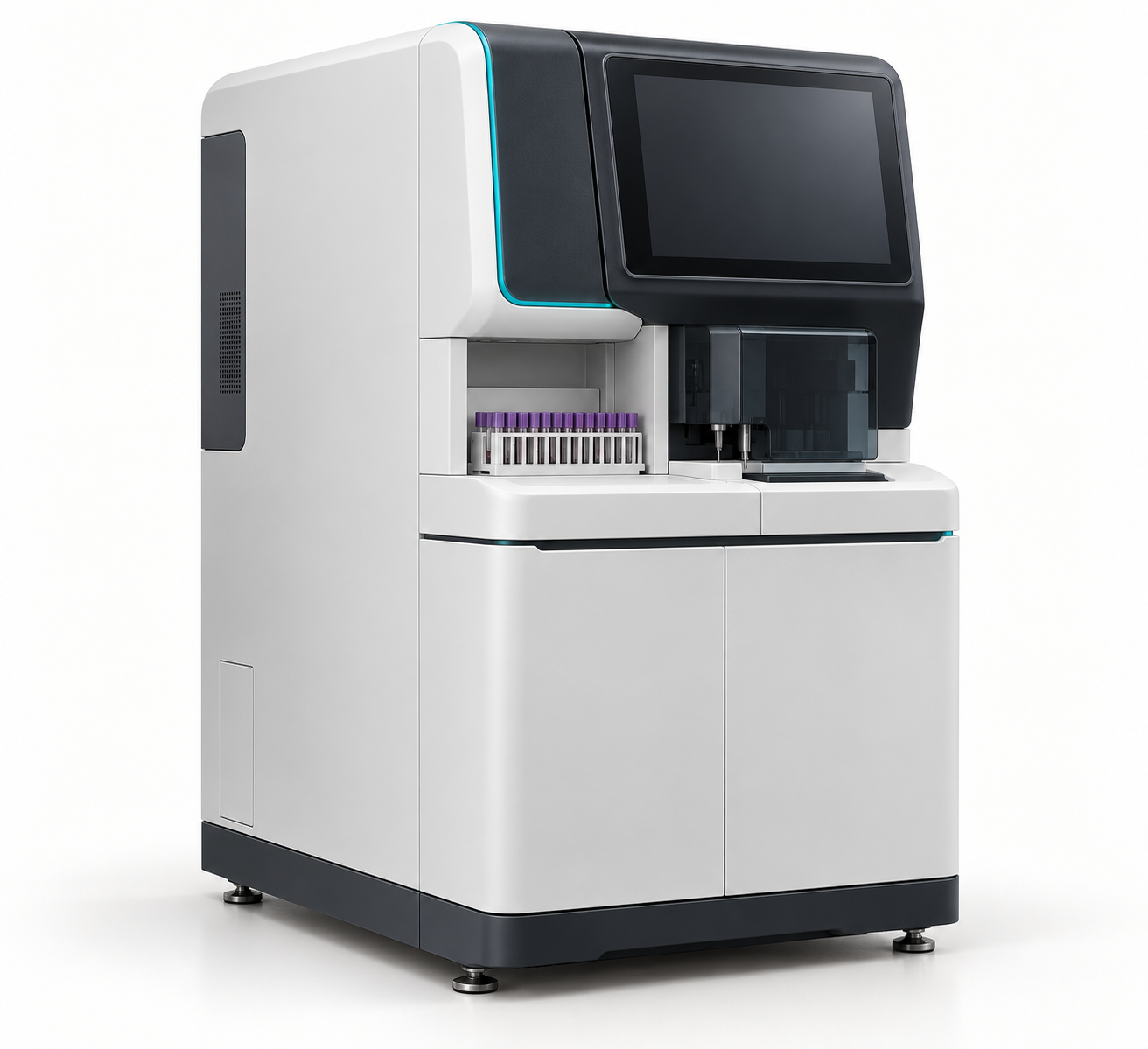
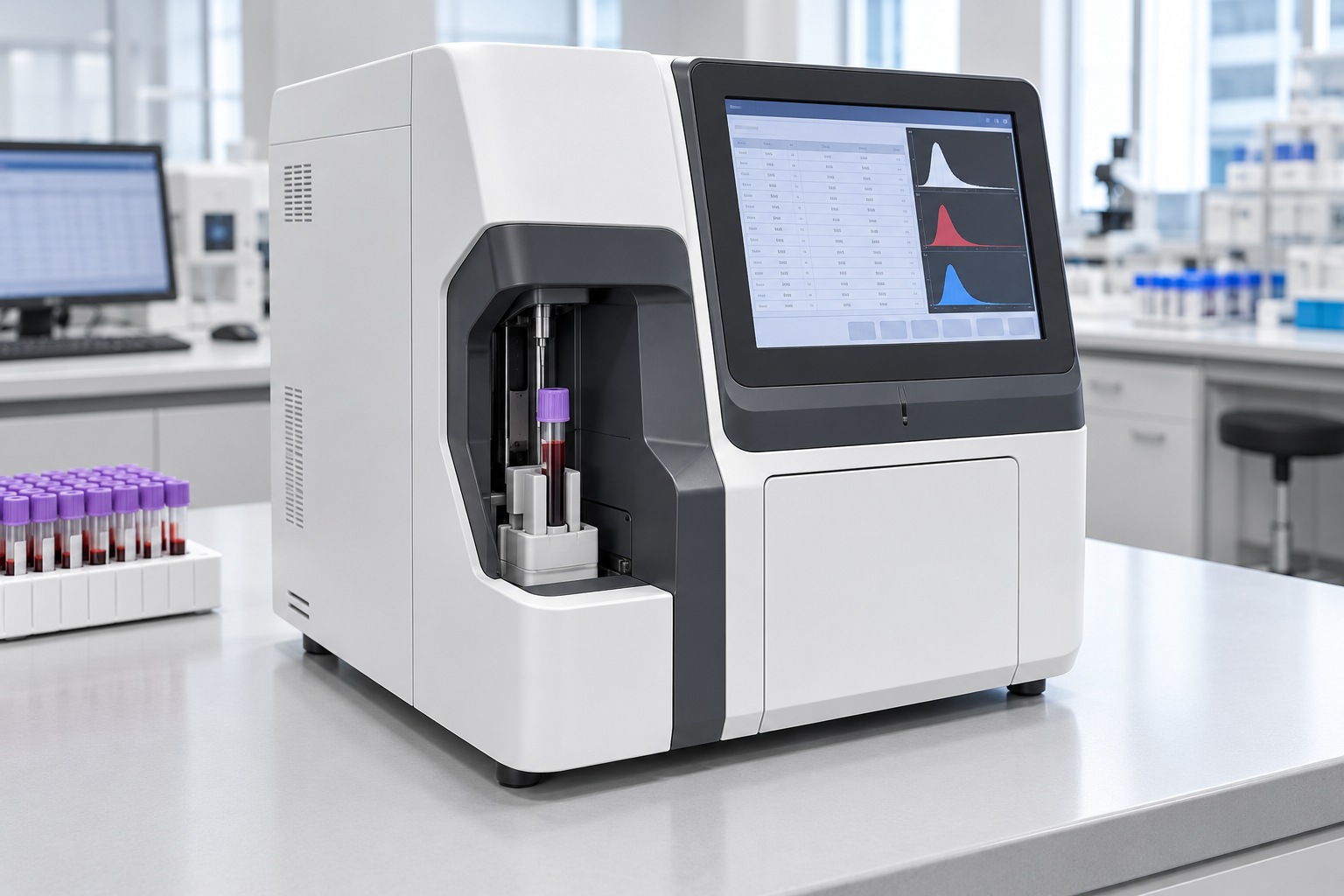
Compare Sysmex three-part differential hematology analyzers and request a quotation from Franance for the exact model your laboratory is considering. Keep this range separate from the six-part XN and XR listings, and check the documented reporting parameters and sampling workflow against the laboratory specification.
Send the model reference, required reporting, expected workload, sample workflow, compatible material requirements, quantity and facility location. Ask the written quotation to state which accessories and technical work are included.
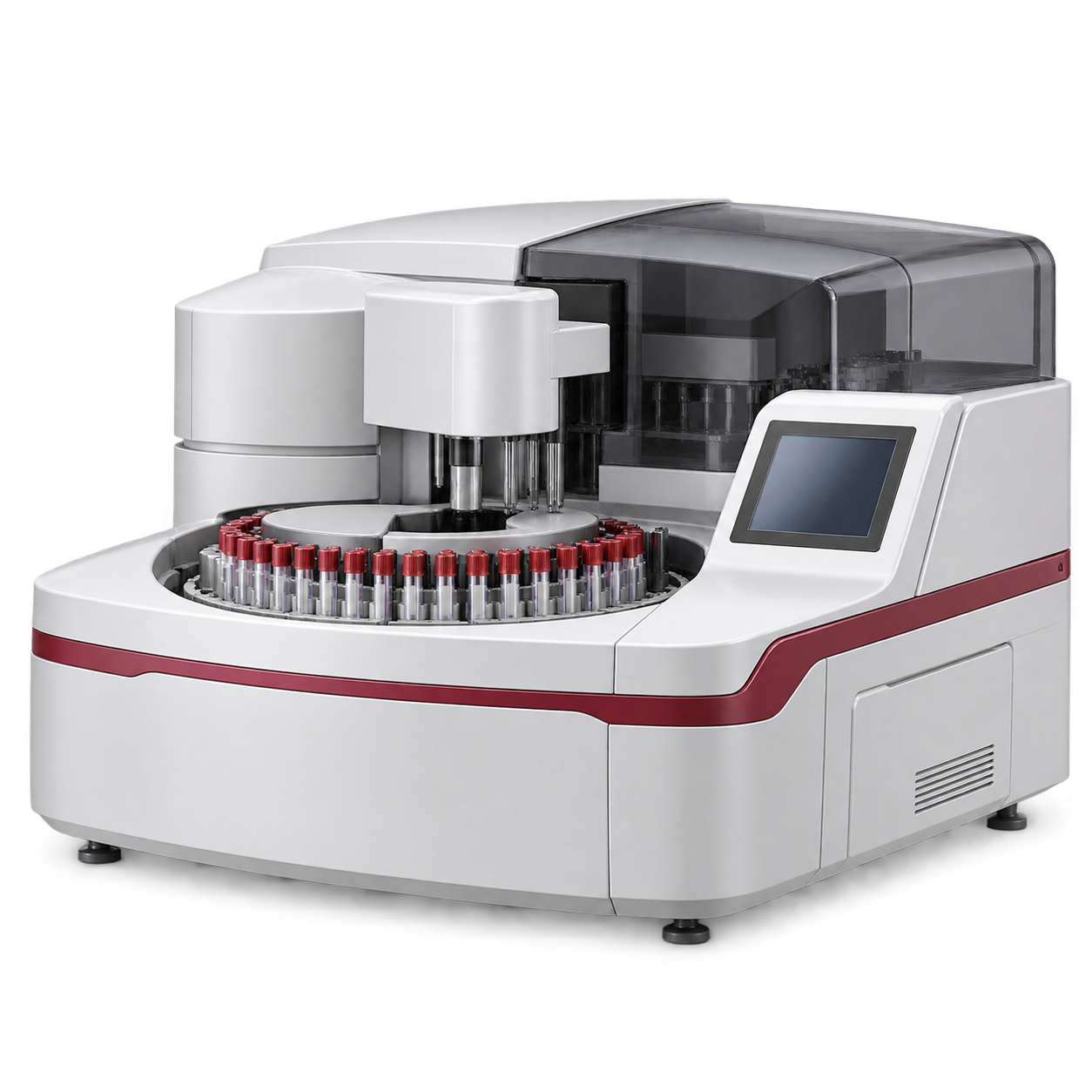
The Sysmex coagulation listings include CA-620 and CN-3000. Request a quotation from Franance in Nigeria with your approved assay menu and reagent plan. Compare the current manufacturer documentation for the exact model rather than transferring a test, method or accessory from one platform to another.
Include the model, required assays and methods, reagent references, workload, reporting connections, requested supporting items, quantity and delivery facility. Ask for configuration and assay compatibility to be confirmed in the response.
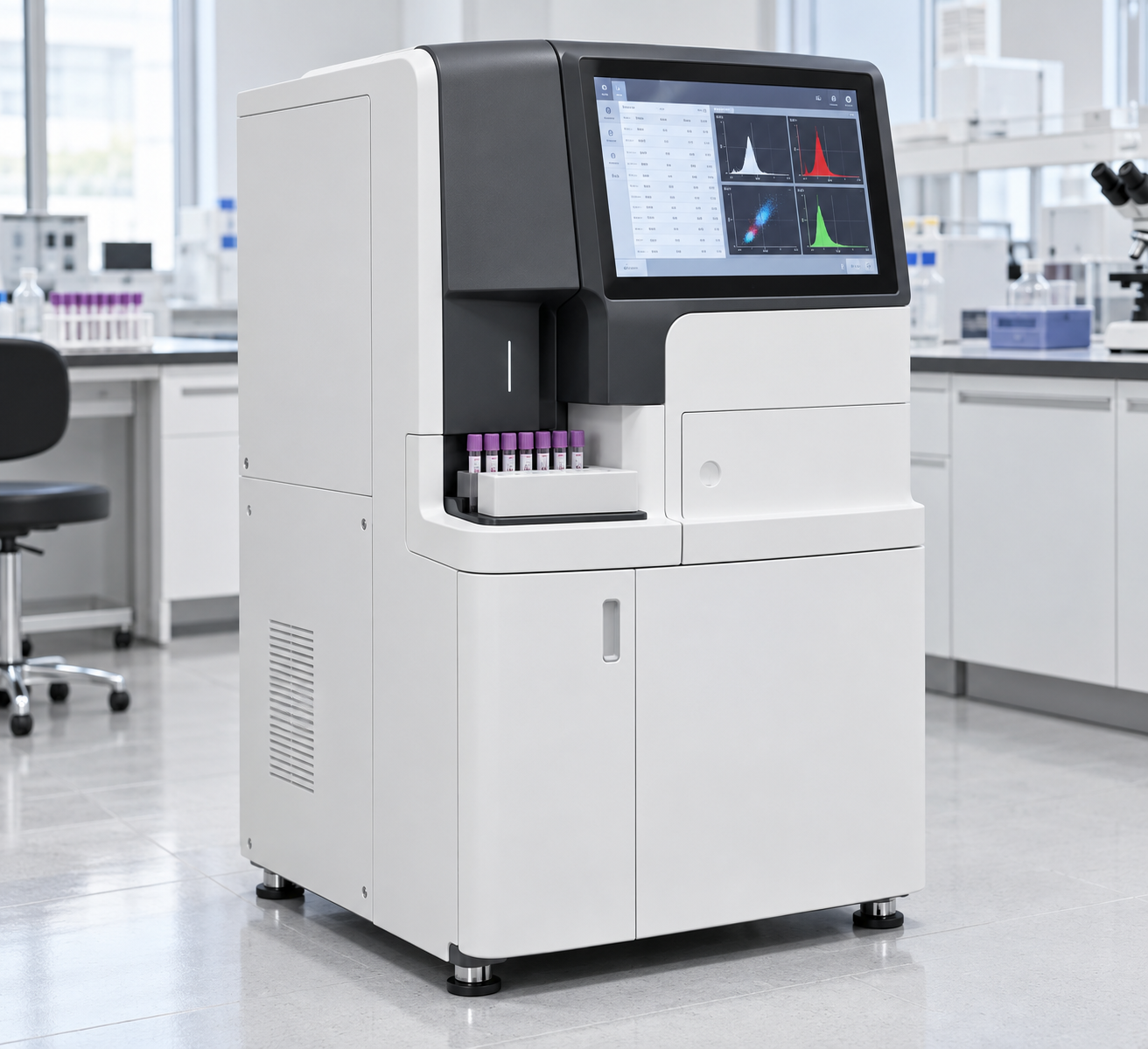
Browse the Sysmex XN-330, XN-350, XN-430, XN-450, XN-530, XN-550 and XR-1000 listings, then request a quotation from Franance in Nigeria. Official manufacturer evidence identifies these instruments with six-part differential reporting; the exact models differ in their documented workflow and configuration.
For XN-L comparisons, identify the required sample-loading mode: XN-350 is described with open-tube sampling, XN-450 with a closed-mode sampler and XN-550 with rack sampling and automatic rerun/reflex functionality. Send the exact model or approved requirements, quantity and destination. Confirm availability, materials, interfaces and requested technical work in the quotation.
Send Franance your required tests, approved instrument specification, workload, requested accessories or materials, quantity and destination. Ask the quotation to identify the offered model, included configuration, documentation and commercial terms.
Buy Sysmex hematology and coagulation analyzers in Nigeria
Franance’s catalogue currently lists eleven Sysmex analyzer models across hematology and coagulation testing. The range includes two three-part differential hematology analyzers, seven models assigned to the six-part differential category, and two coagulation analyzers. The catalogue groups products by equipment type so a laboratory can start with its workflow, then compare the exact model and configuration it needs.
Franance handles product requests by quotation. A catalogue record identifies a model and its category; it does not confirm current stock, Nigerian registration, distributor status, delivery timing, warranty, installation or local service. Ask for those terms in writing for the exact configuration and destination before making a procurement decision.
Which Sysmex analyzers does Franance list?
The eleven listed models span three useful starting points. In hematology, the three-part category contains the pocH-100i and XQ-320. The six-part category contains XN-330, XN-350, XN-430, XN-450, XN-530, XN-550 and XR-1000. In coagulation, Franance lists CA-620 and CN-3000. Open each three-part listing, six-part listing or coagulation listing to see the models currently assigned to that category.
This is a catalogue view, not a complete statement of Sysmex’s global portfolio. A product shown on a manufacturer website is not automatically a Franance listing or an offer available in Nigeria. The number of models in a category also does not mean they are interchangeable. Check the model code, application, sampling arrangement, throughput assumptions, included accessories and assay requirements against the laboratory’s specification.
What does a three-part or six-part differential tell a laboratory?
“Three-part” and “six-part” describe the differential classification offered by a hematology analyzer; they are not a count of all reportable parameters, tests, samples or workflow steps. Sysmex identifies XQ-320 as a three-part differential analyzer and describes its XN-L instruments as providing a six-part differential on every sample. The seven models in Franance’s six-part category are identified by their specific model codes in the catalogue.
Choose the category from the laboratory’s validated test menu and reporting needs, not from the number alone. A three-part analyzer may suit a defined routine CBC workflow, while a six-part model may be required where the laboratory specifies that differential. That distinction does not by itself establish clinical suitability, accuracy for a particular population, regulatory status or compatibility with a laboratory information system. The laboratory director and technical team should confirm requirements against current manufacturer documentation and local procedures.
The model’s differential is only one part of the specification. Sample tube handling, open-tube or closed-mode sampling, rack loading, automation, rerun rules, throughput and optional functions can differ between models carrying the same differential label. Treat each model record and quotation as model-specific.
Which three-part Sysmex hematology models can I compare?
Franance lists the pocH-100i and XQ-320 in the three-part hematology category. Sysmex describes the pocH-100i as a 17-parameter CBC analyzer with a three-part white blood cell differential, closed-tube sampling and maximum throughput of 25 samples per hour. Those are manufacturer-described product facts; they do not guarantee a particular laboratory’s daily result rate.
Sysmex identifies the XQ-320 as a three-part differential analyzer. Its official product information describes a 17-parameter analyzer with a dedicated neutrophil count, results in under a minute, and throughput of about 70 samples per hour in whole-blood mode and about 60 in pre-dilution mode. It also describes a compact footprint and HL-7 protocol for EMR connection. Confirm the current specification, software requirements and interface details for the exact regional version being quoted.
These headline figures are not a like-for-like performance comparison by themselves. The manufacturer states different sampling modes and operating conditions, and actual workload also depends on the test mix, quality-control schedule, repeat testing, operator steps and downtime. Compare the full technical specification and the laboratory’s own workload assumptions. Browse the Sysmex three-part models at Franance, then ask for the required model and configuration in the quotation.
Which Sysmex models are listed in the six-part category?
Franance’s six-part listing contains seven Sysmex models: XN-330, XN-350, XN-430, XN-450, XN-530, XN-550 and XR-1000. Sysmex identifies six-part differential performance for the relevant XN/XN-L and XR products. The category is useful for finding those seven named records; it is not a ranking or recommendation among them.
The official Sysmex XN-L material describes a six-part differential on every sample and identifies the XN-350, XN-450 and XN-550 as separate models. Its model descriptions distinguish open-tube sampling on XN-350, a closed-mode sampler on XN-450, and automated sample loading with integrated rack sampling and automatic rerun/reflex functionality on XN-550. These are practical workflow differences to confirm against the exact offered version.
Sysmex also describes the XN-330, XN-430 and XN-530 as distinct analyzer models. The XN-330 product page identifies open-tube sampling and up to 60 samples per hour in whole-blood mode. The XN-430 page describes open- and closed-tube sampling with cap-piercing capability and lists up to 60 samples per hour in whole-blood mode. Sysmex identifies automatic sample loading, integrated rack sampling, and automatic rerun/reflex functionality for XN-530. Check each model’s source material rather than applying a specification across an entire family.
How do the XN and XR six-part models differ?
Start with the exact model and the way samples move through the laboratory. The XN-330 is described with open-tube sampling; XN-430 supports open and closed tube handling with cap piercing; XN-350 uses open-tube sampling; XN-450 is described with a closed-mode sampler; and the XN-530 and XN-550 have automated rack-loading capabilities with model-specific rerun/reflex functions. These distinctions affect the workflow being specified, so ask the supplier to confirm the included sampler, tubes, options and operating method in the quote.
The XR-1000 is a separate model in the six-part range. Sysmex describes it as a customizable single-unit analyzer using fluorescent flow cytometry and lists throughput up to 110 CBC and differential samples per hour per module. The manufacturer also notes that selected parameters, body-fluid capabilities, automation functions and accessories depend on configuration. Do not assume that every optional function is included in a baseline offer or that the XR-1000 figure can be compared directly with a whole-blood figure for a different analyzer.
For any of these models, verify the intended sample types, throughput definition, installation footprint, software and communication interfaces, quality-control workflow, optional licenses and included components. Request a model-specific comparison if the laboratory is deciding between open-tube, closed-mode and rack-based handling. The Sysmex six-part category at Franance shows the seven assigned products together.
Which Sysmex coagulation analyzers does Franance list?
Franance lists the CA-620 and CN-3000 in its coagulation analyzer category. Sysmex describes the CA-620 as a compact, fully automated analyzer in its CA-600 series. The manufacturer’s CA-600 series material describes scattered-light and end-point detection, and lists family throughput figures of 60 tests per hour for PT-only and 48 tests per hour for a PT/aPTT/fibrinogen combination. These are stated family figures, not a guaranteed rate for every assay mix or laboratory.
CA-620 and CA-660 are separate models in the same series. Sysmex marks some methods and assays as CA-660-only in its documentation. A family brochure that names an assay is not enough to establish support on the CA-620. Put every required assay on the specification and ask the supplier to confirm, for CA-620 specifically, the method, reagent reference, calibrator or control, software dependency and any required accessory.
Sysmex identifies the CN-3000 as an automated blood coagulation analyzer. Its official product page lists throughput up to 225 PT tests per hour and 215 PT/PTT tests per hour, and describes several analytical methods on the platform. Those figures describe different test combinations from the CA-600 family figures above, so do not treat them as a direct head-to-head result. Confirm the assay menu, intended-use status, exact sampler configuration and test-volume assumptions for the model proposed. See the Sysmex coagulation listings at Franance.
How should a laboratory compare models before choosing?
Write down the clinical and operational requirement before selecting a product. For hematology, identify whether the specification calls for a three-part or six-part differential, the intended sample types, daily and peak workload, tube-handling method, rack capacity and automation requirements. For coagulation, list each assay and method, expected workload, reagents and controls, and any required repeat or reflex workflow. The analyzer category is a starting filter; the model-specific manufacturer documentation and laboratory validation determine whether a configuration meets the intended need.
Compare throughput only when the source states the same test combination and operating conditions. Separate a PT-only figure from mixed PT/aPTT workflows, and separate whole-blood from pre-dilution sampling rates. Include repeats, calibration, quality-control runs, urgent samples, shift coverage and downtime in the laboratory’s own estimate. Ask for documented assumptions if throughput is a procurement requirement.
Review the complete installed system, not only the analyzer name: included sampler and options, reagents and controls, consumables, software and interface, power and room requirements, installation, commissioning, training, warranty and service. Confirm which items are included and which are optional. Franance’s catalogue does not establish local availability or supply terms; the written quotation must identify them.
What should I include in a Sysmex quotation request?
Give Franance the exact analyzer model or the alternatives you want assessed, the laboratory’s intended workload and the required test or assay menu. For hematology, state the required differential, sample type, tube-handling method, automation and interface needs. For coagulation, list assays by name and identify required methods, reagents, calibrators, controls and expected test mix. If a model family has more than one option, specify the model code and ask the supplier to document the proposed configuration.
Include the facility’s city and state, quantity, intended installation location, electrical and environmental information, network or LIS requirements and any procurement documentation requirements. Ask the quote to separate analyzer, sampler, accessories, reagent starter set, recurring consumables, software, freight, installation, commissioning and training. Request written confirmation of availability, registration and documentation, delivery timing, warranty, service and support for the destination. These details depend on the offer and are not implied by the product record or manufacturer’s global page.
Have the laboratory director, procurement team and biomedical engineering lead review the response against the approved specification. Resolve differences in model, assay support, sample handling, accessories or service scope before issuing a purchase order. Keep the accepted configuration and reagent references with the laboratory’s validation and maintenance records.
How do I request a Sysmex analyzer quotation from Franance?
Start with the appropriate three-part hematology, six-part hematology or coagulation listing. Name the model code, describe the required workflow and configuration, and provide your facility destination and quantity. Franance can review the request and respond with a quotation for the proposed scope.
Use the written quote to confirm the exact model, assay or differential requirements, included options, commercial terms, destination, delivery, installation and support scope. The catalogue is a way to identify and request equipment; it does not guarantee Nigerian stock, price, registration, delivery, warranty or service. Proceed only when the terms and model-specific specification meet your organization’s requirements.
Common questions
Which Sysmex analyzer models are listed by Franance?
Franance lists eleven analyzer models: pocH-100i and XQ-320 in three-part hematology; XN-330, XN-350, XN-430, XN-450, XN-530, XN-550 and XR-1000 in six-part hematology; and CA-620 and CN-3000 in coagulation. Confirm the current model and configuration in a written quotation.
Are the Sysmex three-part and six-part analyzers interchangeable?
No. The differential classification is only one part of a model's specification. Sampling, automation, throughput assumptions, software, options and intended workflow vary by model and must be checked against the laboratory's validated requirements.
Does the CA-600 series assay menu confirm that every assay is available on CA-620?
No. Sysmex marks selected assays and features as CA-660-only. Ask for model-specific confirmation of each assay, method, reagent and required configuration for CA-620.
Does a Franance listing confirm stock, price or local support in Nigeria?
No. Request written confirmation of availability, registration, price, delivery, installation, training, warranty and service terms for the exact configuration and destination.
Request a Sysmex analyzer quotation
Name the model, differential or assay requirements, workload, sample handling, required options, facility destination and quantity. Franance can review the request and quote the proposed scope and terms for your laboratory to assess.


 Sysmex