
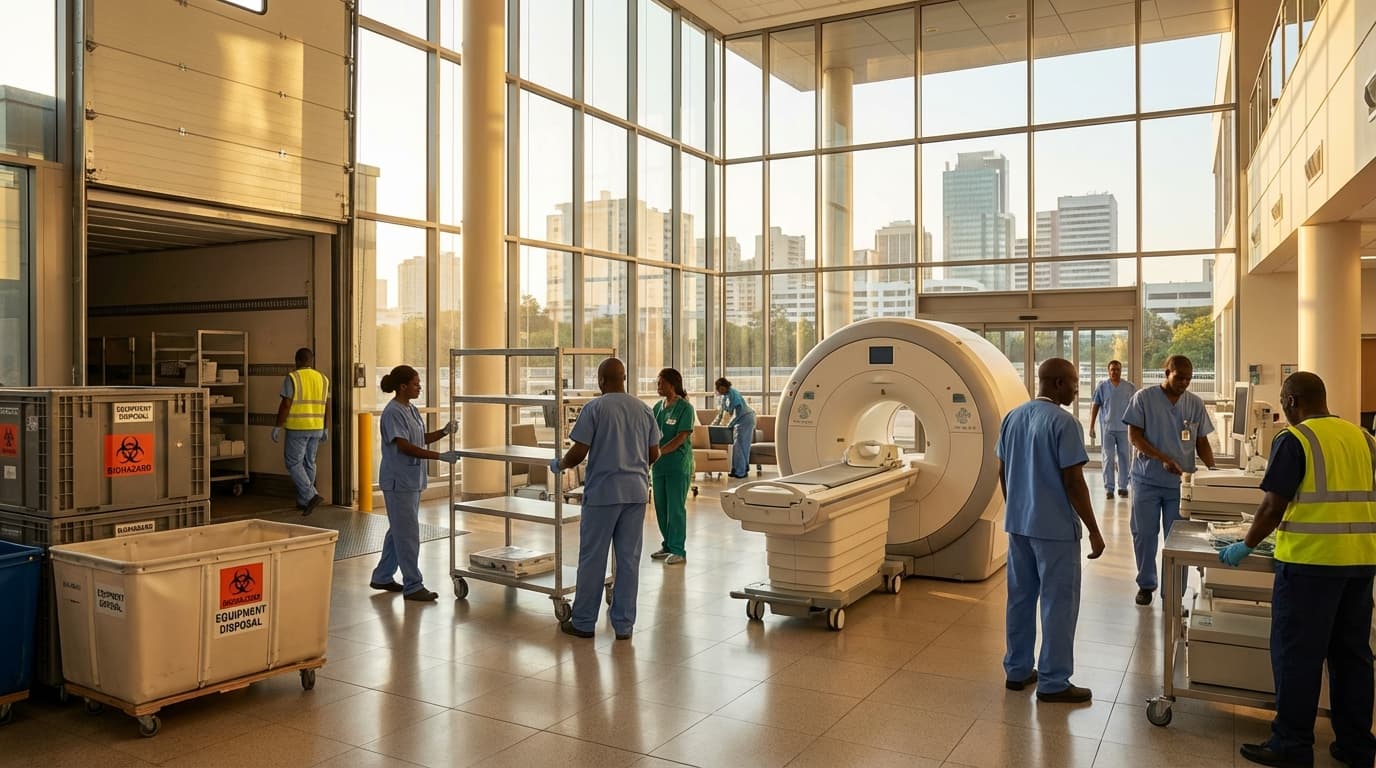
Site Restoration Service After Equipment Removal in South Africa
Engineering Excellence & Technical Support
Site Restoration Service After Equipment Removal High-standard technical execution following OEM protocols and local regulatory frameworks.
Expert Land Reclamation & Remediation
Leveraging advanced techniques to efficiently remove residual contaminants, stabilize disturbed soil strata, and meticulously remediate impacted areas, ensuring compliance with South African environmental regulations and promoting biodiversity restoration.
Precision Earthworks & Soil Profiling
Conducting detailed topographical surveys and precise earthmoving operations to restore original ground levels, re-establish natural drainage patterns, and implement tailored soil amendment strategies for optimal re-vegetation success across diverse South African landscapes.
Sustainable Re-vegetation & Ecosystem Recovery
Implementing scientifically-backed re-vegetation programs using indigenous South African flora, focusing on rapid establishment, erosion control, and the long-term recovery of self-sustaining ecosystems, thereby enhancing ecological resilience and aesthetic value.
What Is Site Restoration Service After Equipment Removal In South Africa?
Site restoration after equipment removal in South Africa refers to the process of returning a location to its pre-installation or environmentally responsible state following the decommissioning and extraction of industrial or specialized equipment. This service is crucial for mitigating environmental impact, ensuring regulatory compliance, and preparing the site for subsequent use or natural regeneration. It encompasses a range of activities aimed at removing all remnants of the installed equipment, associated infrastructure, and any contamination resulting from their presence and operation.
| Who Needs Site Restoration Service? | Typical Use Cases in South Africa |
|---|---|
| Industrial Facilities (e.g., mining, manufacturing, energy generation) | Removal of obsolete mining equipment (e.g., conveyors, processing plants) and associated infrastructure. |
| Oil and Gas Sector (e.g., upstream, midstream, downstream) | Decommissioning of drilling rigs, pipelines, storage tanks, and processing units. |
| Construction and Civil Engineering Projects | Removal of temporary construction equipment, machinery, and associated site works after project completion. |
| Agricultural Operations | Removal of outdated irrigation systems, storage silos, or processing machinery. |
| Utilities and Infrastructure Providers (e.g., power, water) | Decommissioning of substations, pumping stations, or legacy treatment plants. |
| Commercial and Retail Properties | Removal of large-scale HVAC units, specialized kitchen equipment, or storage systems. |
| Government and Municipalities | Restoration of sites formerly used for waste management, industrial parks, or military installations. |
Key Components of Site Restoration:
- Decommissioning and Dismantling: Safe and systematic breakdown of the equipment and its supporting structures.
- Hazardous Material Abatement: Identification, removal, and proper disposal of any hazardous substances (e.g., oils, solvents, asbestos) associated with the equipment.
- Soil and Groundwater Remediation: Assessment and cleanup of any contamination impacting soil or groundwater, often involving excavation, treatment, or in-situ methods.
- Structural Demolition: Removal of foundations, concrete pads, and other substructures related to the equipment.
- Waste Management and Disposal: Segregation, transportation, and environmentally sound disposal of all removed materials, including debris and hazardous waste.
- Regrading and Landscaping: Reshaping the terrain to its original contours or to meet specific post-removal requirements, often including revegetation or the establishment of appropriate ground cover.
- Infrastructure Removal: Extraction of associated piping, cabling, and utility connections.
- Environmental Monitoring: Post-restoration monitoring to ensure the site meets established environmental standards.
Who Needs Site Restoration Service After Equipment Removal In South Africa?
When heavy machinery, industrial equipment, or large infrastructure components are removed from a site in South Africa, the resulting landscape often requires significant attention. Site restoration services are crucial for returning the area to a safe, usable, and environmentally sound condition. These services address issues like soil contamination, uneven terrain, structural damage, and the removal of hazardous materials left behind.
| Target Customer Type | Typical Departments Involved |
|---|---|
| Manufacturing & Industrial Plants | Operations, Facilities Management, Environmental Health & Safety (EHS), Procurement |
| Mining & Resource Companies | Mine Operations, Environmental Management, Health & Safety, Asset Management, Engineering |
| Construction & Demolition Contractors | Project Management, Site Supervision, Health & Safety, Procurement, Environmental Compliance |
| Infrastructure Developers & Utilities | Project Management, Engineering, Asset Management, Environmental Services, Operations |
| Agricultural Cooperatives & Estates | Farm Management, Operations, Sustainability Departments, Asset Management |
| Government Agencies & Municipalities | Public Works, Environmental Protection, Land Management, Infrastructure Development, Municipal Services |
| Real Estate Developers & Property Management | Acquisitions, Development, Asset Management, Environmental Due Diligence |
Who Needs Site Restoration Service After Equipment Removal in South Africa?
- Businesses with extensive industrial operations.
- Construction and demolition companies.
- Mining and extraction operations.
- Agricultural enterprises undergoing modernization.
- Infrastructure development and maintenance projects.
- Government and municipal bodies responsible for public land.
- Property developers acquiring sites with former industrial use.
Site Restoration Service After Equipment Removal Process In South Africa
This document outlines the comprehensive workflow for site restoration services following equipment removal in South Africa. Our process is designed to be thorough, efficient, and compliant with all relevant environmental and safety regulations, ensuring a seamless transition from a previously utilized industrial or commercial site to a restored and ready-for-its-next purpose state.
| Phase | Key Activities | Deliverables/Outcomes | Key Considerations (South Africa) |
|---|---|---|---|
| 1. Inquiry & Consultation | Initial contact from client detailing project requirements, site location, and equipment removed. Detailed discussion to understand scope, timelines, and specific client needs. Site visit scheduling (if necessary). | Understanding of client requirements, initial project scope defined, preliminary site information gathered. | Understanding of local council regulations, potential environmental sensitivities, and client's budget constraints. |
| 2. Site Assessment & Planning | On-site detailed inspection to identify all restoration needs (e.g., ground remediation, concrete breaking, soil stabilization, revegetation, hazardous material removal). Soil and water testing (if required). Development of a comprehensive restoration plan including methodologies, timelines, resource allocation, and safety protocols. Compliance checks with relevant South African environmental legislation (e.g., NEMA, MPRDA if applicable). | Detailed site assessment report, comprehensive restoration plan, risk assessment, environmental impact assessment (if needed). | Adherence to South African Occupational Health and Safety Act (OHSA), Waste Management Act, and specific provincial environmental regulations. Awareness of land ownership and zoning laws. |
| 3. Proposal & Quotation | Submission of a detailed proposal outlining the scope of work, methodologies, timelines, cost breakdown, and terms and conditions. Client review and feedback. Negotiation and finalization of the agreement. | Formal proposal and quotation, signed service agreement. | Clarity on VAT implications, payment schedules, and contractual obligations as per South African contract law. |
| 4. Mobilization & Preparation | Procurement of necessary equipment, materials, and personnel. Obtaining all required permits and licenses from local authorities. Site establishment including safety signage, temporary fencing, and environmental controls (e.g., dust suppression, spill containment). Pre-work site briefing for the crew. | Mobilized resources, permits obtained, site prepared for commencement of work. | Ensuring compliance with local municipal by-laws regarding site access, noise levels, and waste disposal. Engaging local suppliers and labour where possible. |
| 5. Restoration Execution | Implementation of the approved restoration plan. Activities may include: demolition of redundant structures, removal of underground services, soil remediation, grading and contouring, reseeding/replanting, and general site cleanup. Regular progress monitoring and quality control checks. Adherence to all safety procedures. | Completed restoration activities as per plan, regular progress reports. | Safe disposal of all waste materials at approved landfills. Managing potential archaeological findings and reporting to relevant authorities. Minimizing disruption to adjacent properties. |
| 6. Final Inspection & Handover | Joint site inspection with the client to verify completion against agreed scope and quality standards. Addressing any minor outstanding issues. Providing a final report detailing all works undertaken, waste disposal certificates, and any relevant photographic evidence. Formal handover of the restored site. | Final inspection report, waste disposal certificates, photographic documentation, project completion certificate, handover of the site. | Ensuring all documentation meets the requirements of local authorities for land use and environmental compliance. Client sign-off as confirmation of satisfaction. |
| 7. Post-Restoration Support (Optional) | Provision of maintenance plans for revegetated areas, follow-up inspections, or further remediation if required. Ongoing client support and advice. | Maintenance plans, follow-up reports, continued client satisfaction. | Understanding of long-term land management requirements and potential for ecological rehabilitation. |
Site Restoration Service Workflow - Equipment Removal
- Phase 1: Inquiry & Consultation
- Phase 2: Site Assessment & Planning
- Phase 3: Proposal & Quotation
- Phase 4: Mobilization & Preparation
- Phase 5: Restoration Execution
- Phase 6: Final Inspection & Handover
- Phase 7: Post-Restoration Support (Optional)
Site Restoration Service After Equipment Removal Cost In South Africa
Restoring a site after equipment removal is a crucial step to ensure it's returned to its original or a safe and usable condition. The cost of this service in South Africa can vary significantly depending on several factors. This document outlines the key pricing elements and provides estimated cost ranges in South African Rand (ZAR).
| Restoration Task/Scenario | Estimated Cost Range (ZAR) |
|---|---|
| Basic Site Clearance (light equipment, minimal damage, small area) | R 10,000 - R 50,000 |
| Moderate Site Restoration (medium equipment, some soil disturbance, medium area) | R 50,000 - R 200,000 |
| Extensive Site Restoration (heavy equipment, significant soil compaction/contamination, large area, re-vegetation) | R 200,000 - R 1,000,000+ |
| Hazardous Material Remediation (e.g., oil spills, chemical contamination) | R 50,000 - R 500,000+ (highly variable based on contamination level) |
| Landscaping and Re-vegetation (per square meter) | R 50 - R 200 |
| Soil Compaction Repair and Grading (per square meter) | R 30 - R 100 |
| Demolition and Debris Removal (per cubic meter) | R 500 - R 2,000 |
| Waste Disposal Fees (general) | Varies widely based on volume and type of waste |
Key Pricing Factors for Site Restoration Services in South Africa:
- Scope of Work: This is the most significant factor. It encompasses the extent of the damage, the type of equipment removed, and the specific restoration tasks required (e.g., demolition, grading, soil remediation, re-vegetation, structural repairs).
- Site Size and Accessibility: Larger sites naturally incur higher costs due to increased labor and machinery time. Difficult access (e.g., remote locations, steep terrain, limited entry points) can also drive up costs due to logistical challenges and specialized equipment needs.
- Type of Equipment Removed: The size, weight, and nature of the equipment can influence the restoration process. Heavy machinery might leave behind significant ground compaction, oil spills, or require specialized removal methods that impact restoration.
- Condition of the Site Pre-Removal: A site that was already degraded or heavily impacted before equipment installation may require more extensive restoration efforts.
- Materials and Resources Needed: This includes costs for fill material, topsoil, seeds, plants, concrete, fencing, and any specialized chemicals for remediation.
- Labor Costs: The number of workers, their skill levels, and the duration of the project directly impact the overall price. Specialized trades (e.g., hazardous material technicians, experienced machinery operators) will command higher rates.
- Machinery and Equipment Rental: The type and duration of heavy machinery (excavators, bulldozers, loaders, compactors) and other specialized equipment (e.g., water trucks, drills) needed for the restoration process contribute to the cost.
- Waste Disposal: Proper and legal disposal of demolition debris, contaminated soil, and other waste materials can be a substantial expense, especially if hazardous waste is involved. This includes landfill fees and transportation costs.
- Environmental Regulations and Permits: Compliance with local environmental laws may necessitate specific procedures, testing, and obtainment of permits, adding to the overall project cost.
- Geographic Location: Costs can vary regionally within South Africa due to differences in labor rates, material availability, and local demand for such services.
- Urgency of the Project: Rush jobs often come with a premium to account for expedited scheduling and resource allocation.
- Contractor's Overhead and Profit: This includes insurance, administrative costs, and the contractor's desired profit margin.
Affordable Site Restoration Service After Equipment Removal Options
After equipment removal, your site may require restoration to return it to a safe, functional, or aesthetically pleasing condition. This can involve a range of services, from basic debris cleanup to more complex remediation and landscaping. Finding an affordable site restoration service is crucial, and understanding value bundles and cost-saving strategies can significantly impact your budget. Value bundles often combine multiple services into a single package, offering a discounted rate compared to booking each service individually. Cost-saving strategies focus on proactive planning, efficient execution, and smart material sourcing.
| Restoration Service Component | Standard Cost (Estimated) | Value Bundle Inclusion Benefit | Cost-Saving Strategy |
|---|---|---|---|
| Debris Removal & Hauling | $500 - $2,000+ | Often included in basic site cleanup bundles; discounted rate per ton/volume. | Efficient sorting for recycling; bulk removal discounts. |
| Grading & Leveling | $300 - $1,500+ | Bundled with site preparation or landscaping packages. | Utilize existing soil; precise grading to minimize material import/export. |
| Hazardous Material Abatement | $1,000 - $5,000+ (highly variable) | Often a standalone service or part of a demolition bundle. | Early identification and proper disposal protocols to avoid costly delays and fines. |
| Soil Remediation | $1,000 - $10,000+ (highly variable) | May be included in comprehensive environmental restoration bundles. | Targeted remediation techniques; bioremediation where applicable. |
| Seeding & Landscaping | $400 - $2,500+ | Bundled with site finishing or beautification packages. | Drought-tolerant native plants; phased planting; DIY elements if appropriate. |
| Fencing & Site Security | $300 - $1,000+ | May be part of a post-removal security bundle. | Temporary fencing for phased projects; durable, low-maintenance options. |
| Asphalt/Concrete Repair | $500 - $3,000+ (variable) | Often included in site repair and resurfacing bundles. | Patching vs. full replacement; using recycled asphalt/concrete. |
Understanding Value Bundles and Cost-Saving Strategies
- {"title":"What are Value Bundles in Site Restoration?","description":"Value bundles are pre-packaged service offerings that combine several related tasks at a reduced overall cost. This can include combinations like debris removal + basic grading + seeding, or demolition + hazardous material disposal + site cleanup."}
- {"title":"Benefits of Value Bundles","description":"Bundles simplify the process by providing a single point of contact and streamlined coordination. They often offer significant cost savings and predictable pricing, making budgeting easier."}
- {"title":"Key Cost-Saving Strategies","description":"Beyond bundles, several strategies can lower restoration expenses. These include careful planning, prioritizing essential tasks, exploring eco-friendly options, and leveraging existing site conditions."}
- {"title":"Proactive Planning","description":"Thorough site assessment before equipment removal can identify potential restoration needs early, allowing for better budgeting and service selection. Planning for access and staging can also improve efficiency."}
- {"title":"Prioritization of Services","description":"Not all restoration needs are equal. Focus on addressing safety hazards and functional requirements first, then move to aesthetic improvements if budget allows. Consider phased restoration if immediate full completion isn't feasible."}
- {"title":"Efficient Debris Management","description":"Proper sorting and disposal of debris can lead to cost savings. Recycling or repurposing materials where possible reduces landfill fees and can sometimes even generate revenue."}
- {"title":"Smart Material Sourcing","description":"Opting for local and readily available materials for landscaping or repairs can reduce transportation costs. Inquire about salvaged materials that can be repurposed."}
- {"title":"Phased Approach","description":"For larger projects, consider breaking down the restoration into phases. This can spread costs over time and allow for adjustments based on budget availability or evolving site needs."}
- {"title":"Seasonal Considerations","description":"Certain restoration tasks, like seeding or planting, are best performed during specific seasons. Scheduling accordingly can improve success rates and reduce the need for re-work."}
- {"title":"Obtain Multiple Quotes","description":"Always get detailed quotes from several reputable restoration service providers. Compare not only the price but also the scope of work and included services to ensure you're getting the best value."}
Verified Providers In South Africa
Finding reliable and verified healthcare providers in South Africa is crucial for ensuring quality and safe medical services. While many institutions offer healthcare, it's important to distinguish those that adhere to stringent standards and have robust credentialing processes. Franance Health stands out in this regard, demonstrating a commitment to excellence through their comprehensive vetting of medical professionals and facilities. This meticulous credentialing process not only assures patients of the competence and qualifications of their chosen providers but also fosters trust and confidence in the healthcare system.
| Credentialing Aspect | Franance Health's Approach | Benefit to Patients |
|---|---|---|
| License & Qualification Verification | Meticulously cross-references all medical licenses and academic qualifications with relevant South African regulatory bodies. | Ensures providers are legally authorized and possess the necessary educational background to practice. |
| Professional Experience Assessment | Evaluates the depth and breadth of a provider's clinical experience, including their specialization and areas of expertise. | Helps patients find specialists best suited to their specific medical needs. |
| Facility Accreditation & Safety | Reviews facility accreditations, adherence to hygiene standards, and patient safety protocols. | Guarantees a safe and well-equipped environment for treatment and procedures. |
| Reputation & Ethical Conduct | Investigates practitioner's professional reputation and adherence to ethical medical codes. | Promotes trust and confidence in the provider's integrity and patient care. |
| Continuous Learning & Updates | Monitors ongoing professional development and any updates to a provider's certifications. | Ensures patients are receiving care from up-to-date and continuously improving medical professionals. |
Why Franance Health Credentials Matter:
- Rigorous Verification of Medical Licenses and Qualifications
- Thorough Background Checks on Practitioners
- Assessment of Clinical Experience and Specializations
- Evaluation of Facility Standards and Patient Safety Protocols
- Commitment to Ethical Medical Practices
- Continuous Professional Development Monitoring
Scope Of Work For Site Restoration Service After Equipment Removal
This Scope of Work (SOW) details the services required for the comprehensive site restoration following the removal of equipment from the designated project site. The objective is to return the site to a safe, stable, and environmentally sound condition that meets all applicable regulatory requirements and client specifications.
| Section | Description | Technical Deliverables | Standard Specifications | |||
|---|---|---|---|---|---|---|
| Initial evaluation of the site conditions post-equipment removal. This includes documenting any damage, identifying potential hazards, and confirming the scope of restoration required. | Pre-restoration Site Survey Report (including photographs and measurements) | ASTM E1527-13 (Phase I Environmental Site Assessment: Standard Practice) | Client-approved site condition photographic documentation | ||
| Identification, containment, and removal of any hazardous materials or contaminants that may have resulted from the equipment or its operation. This includes fluids, lubricants, or other process-related substances. | Hazardous Material Survey Report | Waste Management Plan (compliant with EPA and local regulations) | Certificates of Disposal for hazardous waste | API RP 75 (Recommended Practice for Planning, Designing, and Constructing Fixed Offshore Platforms): Relevant sections on environmental protection and spill prevention | |
| Removal of any remaining non-hazardous structures, foundations, or debris associated with the equipment. This includes crushing, sorting, and disposal/recycling of materials. | Demolition Plan | Debris Characterization and Disposal Log | Recycling and Waste Management Plan (compliant with local ordinances) | CalRecycle (California Integrated Waste Management Board) guidelines for demolition and construction debris | |
| Restoration of the site's topography to its pre-disturbance or agreed-upon final grade. This includes filling any excavated areas, compacting soil, and preventing erosion. | Final Grading Plan | Soil Compaction Reports (e.g., nuclear densometer readings) | Erosion and Sediment Control Plan | AASHTO M145 (The Classification of Soils and Aggregates for Use in Highway Construction) | ASTM D698 (Standard Test Methods for Laboratory Compaction Characteristics of Soil Using Standard Effort) |
| Re-establishment of vegetation cover to prevent erosion and restore the aesthetic quality of the site. Selection of appropriate native or climate-adapted species. | Revegetation Plan (including species list, seeding rates, and planting schedule) | Vegetation establishment monitoring reports | Local environmental agency guidelines for native plant restoration | ||
| A comprehensive inspection of the restored site to ensure all work has been completed according to the SOW and meets all quality standards. Formal handover of the restored site to the client. | Final Site Inspection Report | As-Built Drawings (if modifications were made) | Photos of the completed site | Client sign-off and Acceptance Certificate |
Key Stages of Site Restoration
- Site Assessment and Verification
- Decommissioning and Contaminant Management (if applicable)
- Demolition and Debris Removal
- Grading and Soil Stabilization
- Revegetation and Landscaping
- Final Inspection and Handover
Service Level Agreement For Site Restoration Service After Equipment Removal
This Service Level Agreement (SLA) outlines the terms and conditions for site restoration services provided after the removal of [Specify Equipment Type, e.g., telecommunications equipment, solar panels] by [Your Company Name] (hereinafter referred to as "Provider") at the client's designated site (hereinafter referred to as "Client Site"). This SLA focuses on response times and uptime guarantees related to the restored site's accessibility and functionality.
1. Definitions
- Site Restoration: The process of returning the Client Site to its agreed-upon pre-installation or post-removal state, including but not limited to, landscaping, structural repairs, and removal of all associated debris and infrastructure, to ensure the site is safe, functional, and aesthetically acceptable.
- Service Hours: [Specify Hours, e.g., Monday to Friday, 9:00 AM to 5:00 PM Local Time], excluding public holidays in [Specify Region/Country].
- Emergency: A condition that renders the Client Site unusable or unsafe for its intended purpose, or poses an immediate threat to life, limb, or property. This includes but is not limited to major structural damage, significant environmental hazards, or complete loss of site access.
- Non-Emergency: Any site restoration issue that does not meet the definition of an Emergency.
- Downtime: The period during which the Client Site is inaccessible or unusable due to the Provider's failure to complete restoration activities within the agreed-upon timeframes, or due to issues directly attributable to the restoration process. This excludes periods where the Client Site is inaccessible for reasons outside the Provider's control.
- Restoration Completion: The official sign-off by the Client confirming that all agreed-upon restoration activities have been completed to their satisfaction.
2. Response Times
The Provider commits to the following response times for addressing reported site restoration issues:
3. Uptime Guarantees
The Provider guarantees the Client Site will be maintained in a functional and accessible state throughout the duration of the restoration process, with the following uptime commitment:
4. Exclusions
This SLA does not cover:
- Downtime caused by Client actions, negligence, or failure to maintain the site.
- Downtime caused by third-party contractors not employed by the Provider.
- Force Majeure events (e.g., natural disasters, acts of war, terrorism).
- Scheduled maintenance or upgrades to site infrastructure not related to the restoration process.
- Deterioration of the site due to normal wear and tear or environmental factors not directly caused by the removal of equipment or the restoration activities.
5. Reporting and Monitoring
Clients are responsible for reporting any site restoration issues to the Provider immediately via [Specify Reporting Method, e.g., designated email address, support portal, phone number]. The Provider will maintain internal records of reported issues, response times, and resolution efforts. The Client may request a summary report of restoration activities and any reported downtime on a [Specify Frequency, e.g., monthly, quarterly] basis.
6. Service Credits
In the event the Provider fails to meet the uptime guarantees outlined in Section 3, the Client shall be eligible for service credits as follows:
- [Specify Service Credit Structure, e.g., For every 1% of downtime exceeding the guaranteed uptime, the Client will receive a credit of X% of the monthly restoration service fee.]
Service credits will be applied to the next invoice issued to the Client. To claim service credits, the Client must submit a written request detailing the downtime incident and its impact within [Specify Timeframe, e.g., 15 days] of the end of the month in which the downtime occurred.
7. Review and Amendments
This SLA will be reviewed annually by both parties. Any amendments to this SLA must be in writing and signed by authorized representatives of both the Provider and the Client.
| Issue Type | Priority Level | Response Time Target | Uptime Guarantee | Notes |
|---|---|---|---|---|
| Site Restoration Commencement After Notification | Standard (Non-Emergency) | Within [Specify Time, e.g., 2 Business Days] | N/A | Time taken for Provider's team to begin on-site restoration assessment. |
| Emergency Site Restoration Response | Emergency | Within [Specify Time, e.g., 4 Business Hours] of notification | N/A | Provider's dedicated emergency response team will initiate contact and deploy resources. |
| Non-Emergency Restoration Progress Update | Standard (Non-Emergency) | [Specify Time, e.g., Daily/Weekly] updates upon request or as per project plan | N/A | To keep the client informed of ongoing restoration work. |
| Functional Site Availability | N/A | N/A | 98% Uptime during the restoration period | The Client Site should be accessible and usable for its intended purpose, excluding pre-existing conditions or Client-caused issues. This guarantee applies from the official commencement of restoration activities until Restoration Completion. |
| Emergency Site Restoration Completion Target | Emergency | Within [Specify Time, e.g., 24 Hours] of initial response | N/A | Target for restoring the site to a safe and functional state, allowing for immediate use or mitigation of the emergency. |
| Full Site Restoration Completion | Standard (Non-Emergency) | As per agreed-upon Project Timeline | N/A | The overall project timeline will be mutually agreed upon at the project initiation. This SLA focuses on response and uptime during the project. |
Response Times and Uptime Guarantees
- Response Times:
- Uptime Guarantees:
Frequently Asked Questions

Ready when you are
Let's scope your Site Restoration Service After Equipment Removal in South Africa project in South Africa.

Scaling healthcare logistics and technical systems across the entire continent.