
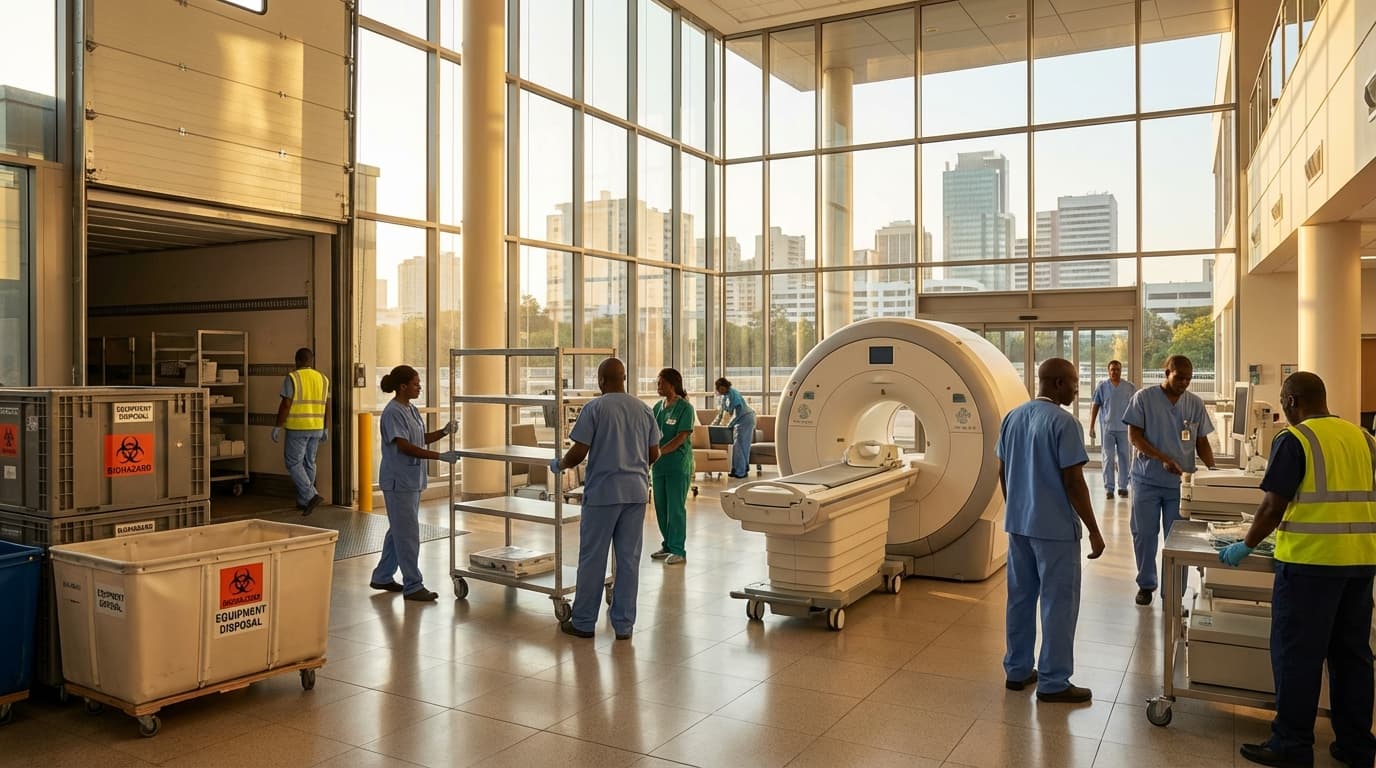
Medical Equipment Relocation Service (Move & Re-Install) in South Africa
Engineering Excellence & Technical Support
Medical Equipment Relocation Service (Move & Re-Install) High-standard technical execution following OEM protocols and local regulatory frameworks.
Specialised Handling Protocols
Our South African operations adhere to stringent, internationally recognized handling protocols for sensitive medical equipment. We utilize custom-built, climate-controlled transport and employ trained technicians for meticulous dismantling, packing, and re-installation, ensuring your valuable assets remain calibrated and operational post-relocation, minimizing downtime and risk.
Nationwide Infrastructure & Logistics
Leveraging our extensive network across South Africa, we offer seamless, end-to-end relocation solutions. From major metropolitan hubs like Johannesburg and Cape Town to more remote healthcare facilities, our robust logistics infrastructure guarantees secure, timely, and compliant transport, managing all regulatory requirements for medical equipment moves nationwide.
Expert Calibration & Validation
Beyond physical relocation, our certified technicians provide on-site calibration and validation services for a wide range of medical devices. We ensure your equipment meets all performance standards and regulatory requirements immediately after re-installation, guaranteeing patient safety and operational readiness in your new South African facility.
What Is Medical Equipment Relocation Service (Move & Re-install) In South Africa?
Medical Equipment Relocation Service (Move & Re-Install) in South Africa refers to a specialized logistical and technical operation involving the safe, compliant, and functional transfer of medical devices and associated infrastructure from one location to another. This service encompasses the entire lifecycle of relocation, from initial planning and de-installation to transportation, re-installation, calibration, and validation at the new site. It is a critical service for healthcare facilities undergoing expansion, renovation, relocation, or disposition of assets. The primary objective is to ensure minimal disruption to patient care, maintain equipment integrity, and adhere to all relevant South African regulatory standards and manufacturer specifications.
| Service Need | Description | Typical Users/Scenarios in South Africa |
|---|---|---|
| Facility Relocation | Moving an entire hospital, clinic, or diagnostic center to a new physical site. | New hospital construction or expansion, consolidation of multiple smaller clinics, or relocation due to urban planning changes. |
| Departmental Renovation/Expansion | Reconfiguring or expanding a specific medical department within an existing facility. | Upgrading an operating theatre suite, expanding an Intensive Care Unit (ICU), or relocating a Radiology department to accommodate new imaging modalities. |
| Equipment Upgrade/Replacement | When new, larger, or significantly different medical equipment replaces older models, requiring space and infrastructure adjustments. | Installing a new MRI scanner that requires different shielding and power, or replacing an older CT scanner with a more advanced model. |
| Asset Management and Disposition | Moving equipment between different branches of a healthcare group or preparing equipment for sale or donation. | Reallocating imaging equipment from a facility that is closing to another active site, or moving surgical equipment to a new training center. |
| Disaster Recovery and Business Continuity | Relocating critical medical equipment to an alternate site in the event of a disaster impacting the primary facility. | Moving life-support systems and diagnostic equipment to a temporary or permanent secondary location following flooding, fire, or civil unrest. |
| Research and Development Projects | Setting up specialized medical equipment for research purposes at a new laboratory or clinical trial site. | Establishing a new research unit within a university hospital or relocating advanced diagnostic tools for a specific research study. |
Key Components of Medical Equipment Relocation Service (Move & Re-Install):
- Site Survey and Risk Assessment: Detailed evaluation of both origin and destination sites, identifying logistical challenges, power requirements, environmental controls (e.g., temperature, humidity), access routes, and potential safety hazards.
- De-installation and Disconnection: Professional disconnection of all power, data, and utility lines from the medical equipment, following manufacturer protocols and safety guidelines. This often involves specialized technicians for complex imaging or life-support systems.
- Crating and Packaging: Utilizing appropriate materials and techniques to securely package sensitive medical equipment, protecting it from physical damage, vibration, and environmental factors during transit. This may include custom-built crates for large or delicate items.
- Transportation Logistics: Arranging for specialized transport vehicles equipped to handle the weight, dimensions, and fragility of medical equipment. This includes climate-controlled options if necessary and adherence to transport regulations.
- Re-installation and Reconnection: Precise re-installation of the equipment at the new location, reconnecting all utilities, data lines, and ancillary systems according to site-specific requirements and manufacturer specifications.
- Testing and Calibration: Comprehensive testing of all equipment functions post-installation to ensure optimal performance. This includes recalibration of critical parameters to verify accuracy and precision.
- Validation and Certification: Performing formal validation procedures (e.g., IQ - Installation Qualification, OQ - Operational Qualification) to confirm that the equipment is installed correctly and operates as intended. This may result in certification, crucial for regulatory compliance and accreditation.
- End-User Training (Optional): Providing re-training for staff on the operation and maintenance of the equipment at the new location, especially if there have been significant configuration changes or if new personnel are involved.
- Waste Management and Disposal (if applicable): Handling the decommissioning and environmentally responsible disposal of obsolete or surplus medical equipment.
- Documentation and Reporting: Maintaining detailed records of the entire relocation process, including de-installation, transportation, re-installation, testing, and validation reports.
Who Needs Medical Equipment Relocation Service (Move & Re-install) In South Africa?
Moving sensitive and often heavy medical equipment requires specialized knowledge and careful handling. A dedicated Medical Equipment Relocation Service in South Africa offers a comprehensive solution for businesses and institutions that need to move, re-install, and calibrate a wide range of medical devices. This ensures minimal disruption to patient care and operational continuity.
| Target Customer Group | Key Departments Involved | Types of Equipment Typically Relocated |
|---|---|---|
| Hospitals | Radiology, Operating Theatres, ICU, Outpatient Clinics, Laboratories, Pharmacy, Engineering/Facilities Management | X-ray machines, CT scanners, MRI scanners, Ultrasound machines, Ventilators, Anesthesia machines, Surgical robots, Endoscopes, Sterilizers, Laboratory analyzers, Dialysis machines |
| Clinics & Specialist Practices | Reception, Treatment Rooms, Procedure Rooms, Diagnostic Rooms | ECG machines, Endoscopy equipment, Diagnostic imaging devices, Specialized treatment chairs, Minor surgical equipment |
| Diagnostic & Imaging Centers | Radiology, Pathology, Cardiology, Neurology | CT scanners, MRI scanners, PET scanners, Digital X-ray units, Ultrasound machines, Laboratory analysis equipment |
| Laboratories (Medical & Research) | Research & Development, Quality Control, Clinical Diagnostics | Centrifuges, Incubators, Microscopes, Spectrophotometers, DNA sequencers, PCR machines, Cell culture equipment |
| Medical Equipment Manufacturers & Suppliers | Logistics, Sales, Service/Technical Departments | New product installations, Demonstration units, Showroom displays, Equipment returned for servicing |
| Government & Military Healthcare Facilities | Medical Corps, Facilities Management, Administration | Mobile medical units, Field hospital equipment, Standard hospital equipment during upgrades |
| Educational Institutions (Medical Schools) | Simulation Labs, Anatomy Departments, Research Labs, Teaching Hospitals | Manikins, Anatomical models, Surgical simulation equipment, Basic laboratory equipment, Diagnostic devices for training |
| Orthopaedic & Rehabilitation Centers | Treatment Rooms, Gym/Therapy Areas, Assessment Rooms | Gait analysis equipment, Exercise machines, Laser therapy devices, Ultrasound therapy units, Casting equipment |
Who Needs Medical Equipment Relocation Service (Move & Re-Install) in South Africa? Target Customers & Departments
- {"title":"Hospitals (Public & Private)","description":"The primary users of these services. Hospitals have extensive and varied medical equipment inventories that need to be moved during renovations, expansions, or the establishment of new wings/facilities. Critical care equipment, imaging machines, and surgical equipment are often involved."}
- {"title":"Clinics & Specialist Practices","description":"Smaller healthcare facilities, including specialized clinics (e.g., cardiology, oncology, physiotherapy), often possess high-value diagnostic and treatment equipment. Relocations may occur when they move to new premises or consolidate services."}
- {"title":"Diagnostic & Imaging Centers","description":"Facilities solely focused on diagnostic services, such as radiology, pathology, and MRI/CT scanning centers. These centers house large, complex, and delicate imaging machinery that requires expert relocation and precise re-installation to maintain diagnostic accuracy."}
- {"title":"Laboratories (Medical & Research)","description":"Both clinical diagnostic laboratories and research institutions utilize specialized medical equipment, including centrifuges, incubators, microscopes, and complex analytical instruments. Relocating these sensitive devices necessitates professional handling to prevent damage and ensure calibration."}
- {"title":"Medical Equipment Manufacturers & Suppliers","description":"Companies that sell, lease, or service medical equipment. They may require relocation services for showroom displays, demonstration units, or when moving equipment between distribution centers or to client sites for installation."}
- {"title":"Government & Military Healthcare Facilities","description":"These entities operate numerous healthcare facilities that require the relocation of medical equipment for various operational needs, including facility upgrades or deployment to new locations."}
- {"title":"Educational Institutions (Medical Schools)","description":"Universities and colleges with medical or allied health programs often have simulation labs, teaching hospitals, or research departments that require the safe and efficient relocation of medical training equipment."}
- {"title":"Orthopaedic & Rehabilitation Centers","description":"Facilities specializing in physical therapy, rehabilitation, and the fitting of orthopaedic devices. They may need to move specialized exercise equipment, diagnostic tools, and casting/fitting stations."}
Medical Equipment Relocation Service (Move & Re-install) Process In South Africa
This document outlines the comprehensive workflow for a Medical Equipment Relocation and Re-installation Service in South Africa, designed to ensure a seamless and compliant transition of sensitive and often critical medical assets. The process begins with an initial inquiry and culminates in the successful re-installation and validation of the equipment at its new location.
| Phase | Key Activities | Responsible Parties | Deliverables/Outcomes | Considerations |
|---|---|---|---|---|
| Client contacts service provider with relocation needs. Discussion of equipment type, quantity, origin, destination, timeline, and specific requirements (e.g., sterile environments, hazardous materials). | Client, Service Provider (Sales/Consultation Team) | Understanding of client's needs, preliminary scope definition. | Initial clarity on project complexity, potential challenges. |
| On-site visit to both origin and destination. Detailed assessment of access routes, space availability, power requirements, environmental conditions, safety protocols, and any necessary infrastructure modifications. Development of a detailed relocation plan. | Service Provider (Project Manager, Technical Team), Client Representative | Detailed relocation plan, risk assessment, equipment inventory, logistical strategy, safety plan. | Accurate measurement, accessibility checks, understanding of regulatory compliance (e.g., healthcare facility standards). |
| Based on the site assessment and relocation plan, a comprehensive quotation is provided. Includes costs for de-installation, packaging, transportation, re-installation, testing, and any additional services. Upon agreement, a formal contract is signed. | Service Provider (Sales/Contracts Team), Client | Formal quotation, service agreement/contract. | Clear pricing structure, defined service level agreements (SLAs), payment terms. |
| Client and service provider prepare for the move. This may involve equipment shutdown procedures, data backup, cleaning and disinfection, acquisition of any specialized handling equipment, and necessary permits. | Client, Service Provider (Project Manager, Technical Team) | Prepared equipment, confirmed access, relevant documentation. | Minimizing downtime, ensuring hygiene standards, adherence to manufacturer guidelines. |
| Skilled technicians carefully disconnect, dismantle (if necessary), and package medical equipment using specialized materials to prevent damage during transit. All components are meticulously labelled and inventoried. | Service Provider (Technical Team, Packers) | Safely de-installed and securely packaged equipment, detailed inventory of all items. | Trained personnel, appropriate packaging materials for sensitive equipment, protection against vibration and environmental factors. |
| Equipment is transported by specialized vehicles, often climate-controlled and equipped with security features. Adherence to strict transit protocols and tracking throughout the journey. | Service Provider (Logistics Team, Drivers) | Secure and timely transportation of equipment to the destination. | GPS tracking, experienced drivers, adherence to road regulations and safety standards, insurance coverage. |
| Equipment is carefully unloaded at the destination. Unpacking is done in the designated area, ensuring that packaging materials do not contaminate the environment. | Service Provider (Technical Team, Logistics Team), Client Representative | Equipment safely delivered and unpacked at the new location. | Controlled environment, proper handling to avoid damage, waste disposal of packaging materials. |
| Qualified technicians reassemble and connect the equipment according to manufacturer specifications and site requirements. This includes connecting power, data, and any necessary ancillary systems. | Service Provider (Technical Team) | Equipment correctly re-installed and connected. | Expertise in various medical equipment, understanding of site-specific infrastructure, adherence to electrical and data safety standards. |
| Thorough testing of all equipment functions to ensure optimal performance. Calibration is performed as per manufacturer guidelines and regulatory requirements. | Service Provider (Technical Team, Biomedical Engineers) | Equipment fully tested and calibrated, performance logs. | Accuracy and precision are paramount, documented calibration procedures, use of certified testing equipment. |
| The client or a designated representative verifies the successful re-installation and functionality of the equipment. Final documentation, including test results and calibration certificates, is provided. Formal handover signifies project completion. | Service Provider (Project Manager, Technical Team), Client Representative | Client sign-off, comprehensive handover documentation, training (if applicable). | Ensuring client satisfaction, clarity on equipment status, compliance with all requirements. |
| Ongoing support may be offered, including troubleshooting, maintenance, and further assistance as required by the client. | Service Provider (Support Team) | Client confidence and continued operational efficiency. | Warranty periods, service level agreements for ongoing support. |
Medical Equipment Relocation & Re-installation Service Workflow
- Inquiry & Initial Consultation
- Site Assessment & Planning
- Quotation & Agreement
- Pre-Relocation Preparation
- De-installation & Packaging
- Transportation
- Delivery & Unpacking
- Re-installation & Connection
- Testing & Calibration
- Validation & Handover
- Post-Relocation Support
Medical Equipment Relocation Service (Move & Re-install) Cost In South Africa
Relocating medical equipment in South Africa, especially for specialized items requiring expert handling and re-installation, involves a complex pricing structure. The cost isn't a simple per-item fee but rather a combination of services, equipment specifics, logistical challenges, and the expertise of the service provider. Several key factors influence the overall expense, ranging from the type and size of the equipment to the distance of the move and any necessary recalibration. It's crucial for healthcare facilities and practices to understand these elements to budget accurately for such critical operations. Costs are typically quoted in South African Rand (ZAR).
| Equipment Category | Estimated Cost Range (ZAR) | Notes |
|---|---|---|
| Small Laboratory Equipment (e.g., centrifuges, microscopes) | R 3,000 - R 10,000 | Includes basic packing, transport, and re-positioning. Calibration may be extra. |
| Medium Medical Devices (e.g., patient monitors, small X-ray units, ultrasound machines) | R 10,000 - R 30,000 | May involve moderate disassembly, specialized packing, and careful re-installation. Calibration is often included or quoted separately. |
| Large Diagnostic Imaging (e.g., CT scanners, MRI scanners, large X-ray machines) | R 50,000 - R 250,000+ | Extensive disassembly, specialized transport (often requiring permits and escort vehicles), complex reassembly, and comprehensive recalibration. Costs can be significantly higher for very large or older systems. |
| Surgical Equipment (e.g., operating tables, surgical lights, anesthesia machines) | R 20,000 - R 75,000 | Requires careful handling, potential disassembly, and precise re-installation. Calibration and testing are crucial. |
| Other Specialized Medical Equipment (e.g., linear accelerators, endoscopy towers) | Variable (often bespoke quotes) | Highly dependent on the specific unit's complexity, size, and required technical expertise for relocation and re-commissioning. |
Key Pricing Factors for Medical Equipment Relocation in South Africa:
- Type and Complexity of Equipment: Highly sensitive, delicate, or large-scale equipment like MRI scanners, CT scanners, X-ray machines, laboratory centrifuges, and surgical robots will command higher prices due to specialized handling, disassembly/reassembly, and calibration needs.
- Weight and Size: Heavier and bulkier items require specialized lifting equipment, larger transport vehicles, and more manpower, directly impacting costs.
- Disassembly and Reassembly Requirements: Equipment requiring intricate disassembly and precise reassembly, especially if it involves multiple components or specialized tools, adds to labor costs and time.
- Distance of Relocation: The greater the distance between the old and new locations, the higher the transportation costs will be. This includes fuel, driver time, and potential overnight stays for long-haul moves.
- Accessibility of Locations: Difficult access at either the pick-up or drop-off site (e.g., narrow doorways, stairs, multi-story buildings without adequate elevators, poor road conditions) can increase labor and the need for specialized equipment like cranes or stair climbers.
- Calibration and Testing: Many medical devices require recalibration and thorough testing after relocation to ensure optimal performance and patient safety. This specialized service is often a significant cost component.
- Insurance: Adequate insurance coverage for valuable medical equipment during transit is essential and contributes to the overall price. The level of coverage required will influence the premium.
- Dismantling of Fixed Installations: If equipment is integrated into a building (e.g., wall-mounted X-ray units, plumbing for dialysis machines), the cost of safely dismantling and potentially re-installing these connections will be factored in.
- Specialized Handling and Packing: Fragile instruments, sensitive electronics, and items requiring specific environmental controls during transit necessitate specialized packing materials and expert handling techniques, adding to the cost.
- Urgency of the Move: Expedited relocation services, especially for critical medical equipment, may incur premium charges.
- Service Provider Expertise and Reputation: Established companies with a proven track record in medical equipment relocation, proper certifications, and trained personnel generally charge more due to their specialized skills and reliability.
- Geographic Location within South Africa: Costs can vary slightly between major metropolitan areas (Johannesburg, Cape Town, Durban) and more remote regions due to differences in labor rates, transport availability, and fuel costs.
Affordable Medical Equipment Relocation Service (Move & Re-install) Options
Relocating medical equipment requires specialized handling to ensure safety, accuracy, and minimal disruption. Our Affordable Medical Equipment Relocation Service offers comprehensive move and re-installation options designed for healthcare facilities of all sizes. We understand the critical nature of your equipment and the importance of maintaining operational continuity. Our services are tailored to be cost-effective without compromising on quality or safety standards.
| Value Bundle | Includes | Cost-Saving Strategies | Ideal For |
|---|---|---|---|
| Basic Relocation Package | De-installation, transportation, and basic re-installation. | Off-peak scheduling, bulk equipment discounts. | Smaller clinics, practices with limited equipment. |
| Standard Service Bundle | Basic package + professional packing, unpacking, and initial power-on testing. | Bundled service discounts, early booking incentives. | Mid-sized medical centers, facilities with moderate equipment. |
| Premium Care Bundle | Standard bundle + specialized calibration, site preparation assistance, and extended post-installation support. | Long-term contracts, customized relocation plans, project management support. | Hospitals, research facilities, and large healthcare networks with complex equipment. |
| Modular Relocation | Customize your service by selecting individual components (e.g., just transportation, just re-installation). | Flexibility to only pay for necessary services, leverage in-house capabilities where applicable. | Facilities with specific in-house expertise or partial self-relocation needs. |
Value Bundles & Cost-Saving Strategies
- Comprehensive Move & Re-Installation: We handle everything from de-installation, secure transportation, to professional re-installation and calibration at your new location.
- Specialized Equipment Handling: Our trained technicians are experienced with a wide range of medical equipment, including imaging systems, laboratory instruments, surgical tools, and more.
- Risk Mitigation: We employ advanced packing techniques, climate-controlled transport, and specialized handling equipment to protect your valuable assets from damage during transit.
- Minimized Downtime: Efficient planning and execution are key to reducing the operational impact of your move. We work with you to schedule the relocation during off-peak hours whenever possible.
- Regulatory Compliance: We adhere to all relevant industry regulations and safety standards for medical equipment transportation and installation.
- Insurance Coverage: Comprehensive insurance is provided to offer peace of mind throughout the relocation process.
- Post-Installation Support: We offer initial testing and calibration verification after re-installation to ensure your equipment is functioning optimally.
Verified Providers In South Africa
In South Africa's dynamic healthcare landscape, identifying truly verified and reputable healthcare providers is paramount for patient safety and quality care. Franance Health stands out as a leader in this regard, meticulously vetting its network to ensure every associated provider meets stringent credentialing standards. This commitment to verification goes beyond mere certification; it involves a comprehensive review of qualifications, experience, ethical standing, and adherence to regulatory requirements. Choosing Franance Health means entrusting your well-being to professionals who have demonstrated consistent excellence and a dedication to patient-centered care.
| Credential Type | Franance Health Verification Standard | Patient Benefit |
|---|---|---|
| Medical Licenses | Validated against official South African regulatory bodies (e.g., HPCSA) | Ensures provider is legally qualified to practice. |
| Specialty Board Certifications | Confirmed with respective medical councils and boards | Guarantees expertise in a specific medical field. |
| Professional References & Background Checks | Thoroughly reviewed and corroborated | Assesses ethical conduct and past performance. |
| Continuing Professional Development (CPD) | Proof of ongoing learning and updated skills required | Confirms providers stay current with medical advancements. |
| Clinical Experience | Verified through verifiable practice history and peer reviews | Indicates practical application of knowledge and skills. |
| Malpractice Insurance | Confirmation of adequate and current coverage | Provides a layer of financial protection for patients. |
Why Franance Health Providers Represent the Best Choice:
- Rigorous Credentialing Process: Franance Health employs an intensive vetting system, ensuring all listed providers possess valid licenses, board certifications, and a clean professional record.
- Emphasis on Experience and Expertise: Beyond basic qualifications, Franance Health prioritizes providers with proven track records and specialized skills relevant to your healthcare needs.
- Commitment to Patient Safety: Our verification protocols are designed to mitigate risks and ensure you receive care from competent and ethical practitioners.
- Access to a Trusted Network: By partnering with Franance Health, you gain access to a curated list of healthcare professionals who have earned our seal of approval.
- Transparent and Reliable Information: We provide clear and accessible information about our verified providers, empowering you to make informed decisions about your healthcare.
Scope Of Work For Medical Equipment Relocation Service (Move & Re-install)
This Scope of Work (SOW) outlines the requirements for a Medical Equipment Relocation Service, encompassing the safe disconnection, transportation, and re-installation of medical equipment within and between facilities. The service aims to ensure minimal downtime, preserve equipment integrity, and meet all regulatory and manufacturer specifications. This document details the technical deliverables and standard specifications that will guide the service provider throughout the project.
| Deliverable | Description | Standard Specifications/Requirements |
|---|---|---|
| Detailed Move Plan | A comprehensive plan outlining the sequence of moves, personnel, equipment, and timelines for each piece of equipment. | Must include pre-move site surveys, risk assessments, equipment inventories, floor plans indicating origin and destination, and communication protocols. Approved by the client at least 7 days prior to commencement. |
| Decontamination & Disinfection Report | Documentation confirming that all equipment has been appropriately decontaminated and disinfected prior to movement. | Compliance with local health regulations and manufacturer recommendations. Certificates of cleaning/disinfection for critical equipment (e.g., imaging, sterile processing). |
| Disconnection & Labeling Log | A record detailing the disconnection of each equipment unit, including any accessories, cables, and tubing, with clear labeling for re-installation. | Each connection point and component must be clearly and uniquely labeled. Manufacturer-specific disconnection procedures must be followed. Photograph evidence of disconnection points. |
| Packaging Materials & Methods | Specification of appropriate packaging materials and techniques to protect equipment from damage during transit. | Use of anti-static, shock-absorbent, and climate-controlled packaging. Custom crating for sensitive or high-value equipment. Protection against moisture and extreme temperatures. Adherence to manufacturer guidelines for specific equipment types. |
| Transportation Plan & Manifest | Details of the transport vehicles, routes, and a manifest of all equipment being moved. | Vehicles must be climate-controlled and equipped with appropriate securing devices. Route planning to minimize transit time and avoid hazardous conditions. GPS tracking of all transport vehicles. Each item on the manifest must correspond to the equipment inventory. |
| Re-installation & Connection Verification | Confirmation that all equipment has been re-installed and connected according to manufacturer specifications and site requirements. | Visual inspection for physical damage. Verification of all power, data, and accessory connections. Adherence to original site layout and workflow design. Use of manufacturer-approved installation guides or qualified technicians. |
| Performance Testing & Calibration Certificate | Documentation of comprehensive testing and calibration to ensure full operational functionality and accuracy. | Performance tests must align with manufacturer specifications and internal quality control protocols. Calibration traceable to national or international standards. Results documented and signed by a qualified technician. Immediate reporting of any test failures. |
| Post-Move Sign-off Form | A formal document signed by the client and service provider confirming successful relocation and re-installation. | Includes confirmation of all deliverables met, any outstanding issues (with resolution plan), and a final equipment condition report. Signed by authorized representatives from both parties. |
| Emergency Response Plan | A plan to address unforeseen issues or accidents during the relocation process. | Includes contact information for emergency services, client representatives, and insurance details. Procedures for handling equipment damage, personnel injury, or unexpected delays. |
Key Considerations and Phases
- Pre-Move Planning and Assessment
- Decontamination and Disinfection
- Equipment Disconnection and Preparation
- Secure Packaging and Transportation
- Delivery and Unpacking
- Re-installation and Connection
- System Testing and Calibration
- Post-Move Validation and Documentation
Service Level Agreement For Medical Equipment Relocation Service (Move & Re-install)
This Service Level Agreement (SLA) outlines the response times and uptime guarantees for the Medical Equipment Relocation Service (Move & Re-Install). This SLA is an addendum to the Master Service Agreement (MSA) between [Your Company Name] (hereinafter referred to as "Provider") and [Client Name] (hereinafter referred to as "Client").
| Equipment Category | Response Time (Business Hours) | Response Time (24/7 Support) | Resolution Time Target (Business Hours) | Resolution Time Target (24/7 Support) | Uptime Guarantee |
|---|---|---|---|---|---|
| Critical Equipment | 1 Hour | 30 Minutes | 4 Hours | 2 Hours | 99.5% |
| Major Equipment | 2 Hours | 1 Hour | 8 Hours | 4 Hours | 99.0% |
| Minor Equipment | 4 Hours | 2 Hours | 12 Business Hours | 6 Business Hours | 98.0% |
Definitions
- Critical Equipment: Medical devices classified by the Client as essential for immediate patient care and safety, with downtime resulting in direct patient harm or significant operational disruption.
- Major Equipment: Medical devices that are important for patient care but have readily available backup or alternative solutions, with downtime causing moderate operational disruption.
- Minor Equipment: Non-critical medical devices or support equipment whose downtime has minimal impact on patient care or operations.
- Downtime: The period during which a piece of medical equipment is non-operational and unavailable for its intended use, from the moment the Client reports the issue to the Provider until the equipment is fully re-installed, tested, and confirmed operational by the Client.
- Response Time: The maximum time allowed for the Provider's technician to acknowledge the Client's reported issue and commence troubleshooting or on-site work.
- Resolution Time: The maximum time allowed for the Provider to restore the equipment to full operational status after acknowledgment of the issue.
- Uptime Guarantee: The guaranteed percentage of time during which the relocated and re-installed medical equipment is expected to be operational, excluding scheduled maintenance and planned downtime.
- Business Hours: [Specify your Business Hours, e.g., Monday - Friday, 8:00 AM - 5:00 PM Local Time], excluding public holidays.
Frequently Asked Questions

Ready when you are
Let's scope your Medical Equipment Relocation Service (Move & Re-Install) in South Africa project in South Africa.

Scaling healthcare logistics and technical systems across the entire continent.