
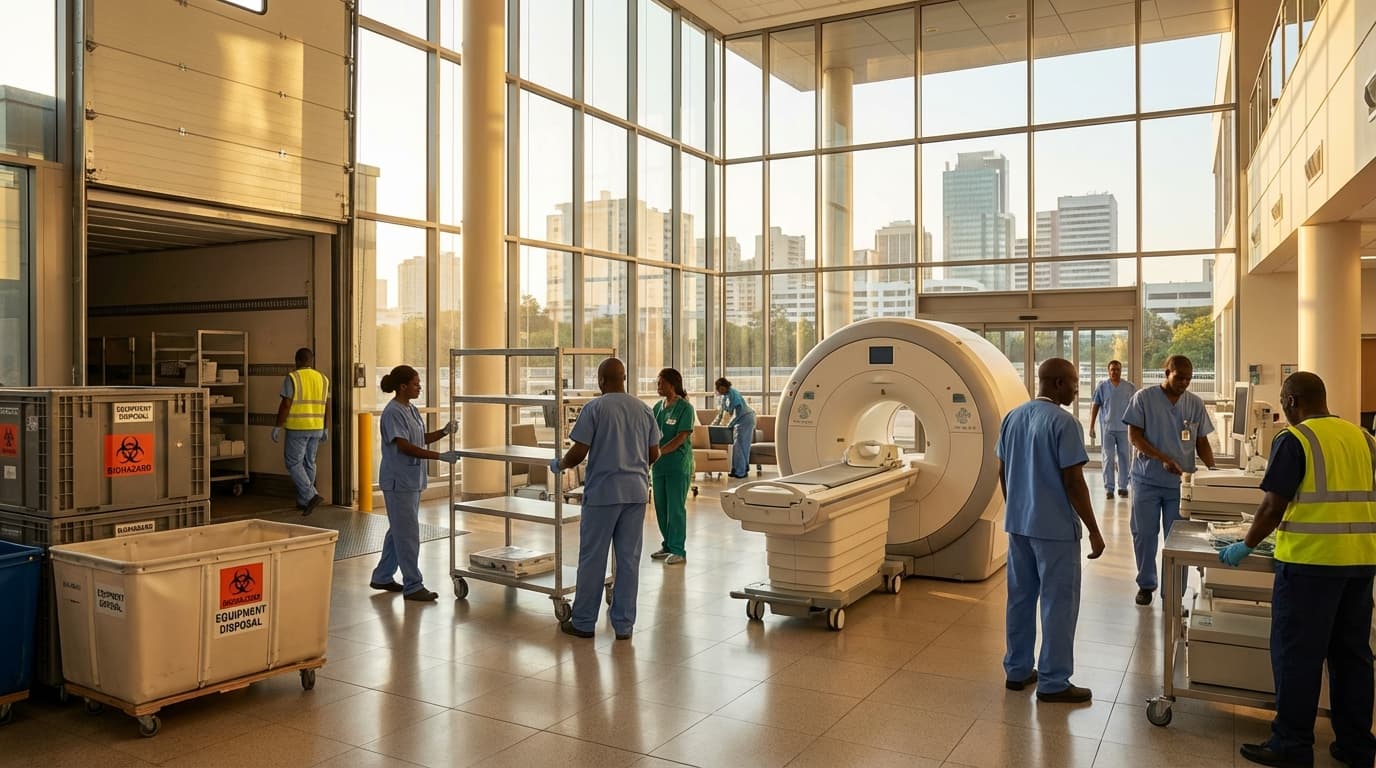
Medical E-Waste Handling & Recycling Coordination Service in South Africa
Engineering Excellence & Technical Support
Medical E-Waste Handling & Recycling Coordination Service High-standard technical execution following OEM protocols and local regulatory frameworks.
Specialized Hazardous Material Identification & Segregation
Our service employs advanced diagnostic tools and trained technicians to accurately identify and segregate diverse medical waste streams, including infectious, cytotoxic, radioactive, and sharps, ensuring compliance with stringent South African environmental regulations and preventing cross-contamination.
Secure, Compliant Chain-of-Custody Logistics
We provide a robust, traceable logistics network for medical e-waste, utilizing specially equipped vehicles and adhering to strict transport protocols. Our system guarantees the secure and compliant movement of waste from point of generation to certified recycling facilities, minimizing environmental risk and ensuring auditable accountability.
Advanced E-Waste Decontamination & Resource Recovery
Leveraging partnerships with accredited South African e-waste recyclers, we ensure that medical electronic components undergo safe decontamination processes to neutralize hazardous substances. Our focus is on maximizing the recovery of valuable materials, promoting a circular economy and reducing the environmental footprint of medical technology.
What Is Medical E-waste Handling & Recycling Coordination Service In South Africa?
Medical e-waste handling and recycling coordination services in South Africa are specialized, integrated solutions designed to manage the lifecycle of discarded electronic and electrical equipment originating from healthcare facilities. This encompasses the entire process from collection, segregation, transportation, secure data destruction, to the environmentally sound dismantling, recovery of valuable materials, and responsible disposal of hazardous components. The primary objective is to mitigate environmental contamination, prevent the proliferation of hazardous substances (such as heavy metals and flame retardants), safeguard public health, and comply with stringent South African environmental legislation and healthcare regulations. These services are crucial for healthcare providers to meet their environmental stewardship obligations and ensure the safe and compliant decommissioning of a wide range of medical devices and related IT infrastructure.
| Who Needs Medical E-Waste Handling & Recycling Coordination Service? | Typical Use Cases |
|---|---|
| Hospitals and Healthcare Networks: Large institutions generating significant volumes of diverse medical electronics, including imaging equipment, laboratory instruments, patient monitoring systems, and IT infrastructure. | End-of-life management for X-ray machines, CT scanners, MRI machines, and other diagnostic imaging devices. |
| Clinics and Day Surgeries: Smaller healthcare facilities with regular replacement cycles for medical devices and IT equipment. | Decommissioning of sterilizers, surgical equipment consoles, and patient beds with integrated electronics. |
| Diagnostic Laboratories: Facilities utilizing specialized electronic equipment for testing and analysis. | Secure data erasure from laboratory analyzers, centrifuges, and microscopes with digital components. |
| Medical Device Manufacturers & Distributors: Companies involved in the sale and servicing of medical equipment, often requiring responsible take-back and recycling programs. | Implementation of Extended Producer Responsibility (EPR) schemes for medical electronics. |
| Research Institutions & Universities: Departments utilizing medical technology for research and development. | Safe disposal of obsolete research equipment and associated IT hardware. |
| Government Health Departments & Public Health Facilities: Overarching entities responsible for the management and oversight of public healthcare infrastructure. | Standardized e-waste management strategies across public healthcare systems. |
| Pharmaceutical Companies (with R&D facilities): Research arms that may utilize electronic laboratory equipment. | Disposal of electronic laboratory instrumentation and data storage devices. |
Key Components of Medical E-Waste Handling & Recycling Coordination Services:
- Auditing and Assessment: Evaluating current e-waste generation, inventory management, and disposal practices within healthcare facilities.
- Collection and Segregation: Implementing protocols for the secure and segregated collection of diverse medical e-waste streams, differentiating between hazardous and non-hazardous components.
- Secure Transportation: Utilizing specialized, compliant logistics to transport e-waste from source to processing facilities, ensuring chain of custody.
- Data Destruction and Sanitization: Implementing certified data erasure or physical destruction methods for electronic media within medical devices to maintain patient confidentiality and comply with POPIA (Protection of Personal Information Act).
- Dismantling and Material Recovery: Mechanically and manually disassembling devices to separate reusable components, valuable materials (e.g., precious metals, rare earth elements), and hazardous substances.
- Recycling and Reprocessing: Facilitating the recycling of recovered materials through specialized downstream processors to ensure their reintegration into the manufacturing supply chain.
- Hazardous Waste Management: Ensuring the safe and compliant disposal of hazardous fractions (e.g., mercury, lead, cadmium) via licensed hazardous waste treatment facilities.
- Certification and Reporting: Providing detailed documentation, certificates of destruction, and environmental compliance reports for auditing and regulatory purposes.
- Compliance Management: Navigating and ensuring adherence to South African legislation, including the National Environmental Management: Waste Act (NEM:WA), its associated Waste Management Regulations, and any specific medical waste directives.
Who Needs Medical E-waste Handling & Recycling Coordination Service In South Africa?
Medical e-waste poses significant environmental and health risks if not handled and recycled properly. In South Africa, a comprehensive coordination service for medical e-waste handling and recycling is crucial for a diverse range of stakeholders who generate, manage, or are impacted by this specialized waste stream. This service ensures compliance with regulations, promotes responsible disposal, and facilitates the recovery of valuable resources, thereby protecting public health and the environment.
| Target Customer/Department | Description | Key Needs/Benefits |
|---|---|---|
| Hospitals and Clinics (Public & Private) | Generate a high volume of diverse medical e-waste, including imaging equipment, diagnostic devices, monitors, and old IT infrastructure. | Compliance with environmental regulations, safe disposal of hazardous components, reduced landfill burden, potential cost savings through recycling programs, enhanced public health protection. |
| Laboratories (Diagnostic, Research, Veterinary) | Utilize specialized electronic equipment for testing and analysis, which eventually reaches end-of-life. | Safe handling of potentially contaminated electronics, proper disposal of specialized components, compliance with research and health standards, minimizing environmental impact. |
| Pharmaceutical Companies (R&D and Manufacturing) | Employ sophisticated electronic monitoring, testing, and automation equipment in their research and production facilities. | Secure and compliant disposal of sensitive electronic equipment, protection of intellectual property, adherence to stringent industry regulations, corporate sustainability. |
| Medical Device Manufacturers & Distributors | Deal with returns, demo units, and end-of-life products from their own inventory and client base. | Efficient reverse logistics for e-waste, responsible product stewardship, compliance with Extended Producer Responsibility (EPR) schemes (if applicable), maintaining brand reputation. |
| Government Health Departments & Municipalities | Oversee public health infrastructure, establish waste management policies, and enforce environmental regulations. | Ensuring public health safety, effective waste management strategies, promoting sustainable practices within the healthcare sector, monitoring and enforcing compliance. |
| Private Waste Management Companies | Offer waste collection, transportation, and disposal services, but may require specialized expertise for medical e-waste. | Access to specialized recycling facilities and processes, compliance assurance, expanded service offerings, risk mitigation for handling hazardous materials. |
| Tertiary Educational & Research Institutions | Operate teaching hospitals, medical schools, and research facilities with significant electronic equipment. | Responsible disposal of research equipment, compliance with academic and environmental standards, promoting research into sustainable waste solutions, student training on proper e-waste handling. |
| Non-Governmental Organizations (NGOs) in Healthcare | Operate clinics and health programs, often in resource-constrained settings, generating e-waste. | Cost-effective and compliant e-waste solutions, supporting community health and environmental well-being, capacity building for local waste management. |
| Occupational Health & Safety Departments | Responsible for ensuring a safe working environment, including proper waste management protocols. | Minimizing health risks to employees from hazardous e-waste, ensuring compliance with workplace safety regulations, training on e-waste handling. |
| Environmental, Health, and Safety (EHS) Managers | Across all sectors, these individuals are tasked with ensuring compliance and sustainability. | Streamlined waste management processes, comprehensive reporting, adherence to national and international e-waste standards, risk reduction, achieving sustainability goals. |
Who Needs Medical E-Waste Handling & Recycling Coordination Service in South Africa?
- Organizations generating significant quantities of medical e-waste.
- Entities responsible for regulatory compliance and environmental stewardship.
- Service providers involved in the collection, transportation, and processing of waste.
- Organizations seeking to improve their sustainability practices and corporate social responsibility.
- Communities and individuals at risk from improper e-waste disposal.
Medical E-waste Handling & Recycling Coordination Service Process In South Africa
This document outlines the standard workflow for the Medical E-Waste Handling & Recycling Coordination Service in South Africa, covering the process from initial client inquiry to the final execution and reporting of medical e-waste management. The service aims to ensure compliant, secure, and environmentally responsible disposal and recycling of obsolete or damaged medical electronic equipment, adhering to South African legislation and international best practices.
| Stage | Description | Key Activities | Responsible Parties | Deliverables/Outcomes | Timeframe (Typical) |
|---|---|---|---|---|---|
| The service begins when a potential client contacts the provider regarding medical e-waste disposal needs. | Receive inquiry (phone, email, web form), understand client's basic needs, provide preliminary information about the service. | Client, Service Provider (SP) | Understanding of client's general requirement, initial service overview. | 1-2 Business Days |
| A detailed evaluation of the client's specific medical e-waste volume, types, and on-site requirements. | Conduct site visit (if necessary), identify types and quantities of e-waste, assess storage conditions, identify potential hazards, confirm security needs, understand data destruction requirements. | SP (Project Manager, Technical Assessor), Client (Facility Manager, IT Dept, Biomedical Eng.) | Detailed inventory of e-waste, site assessment report, identification of specific handling protocols. | 2-5 Business Days |
| Based on the assessment, a formal proposal and contract are generated for the client's approval. | Develop detailed quotation including collection, transportation, processing, recycling fees, data destruction costs, and any disposal fees. Present quotation and service agreement. Negotiate terms and conditions. Obtain client signature. | SP (Sales/Commercial Team), Client (Procurement/Finance) | Formal quotation, Service Level Agreement (SLA), signed contract. | 3-7 Business Days |
| Once the agreement is in place, the operational plan is developed and scheduled. | Develop collection schedule, plan optimal routes, assign collection teams, arrange for appropriate transportation vehicles (e.g., secure trucks), confirm access at client site and disposal facility, communicate schedule to client. | SP (Logistics Coordinator, Operations Manager), Client (Contact Person) | Confirmed collection schedule, logistics plan, communication confirmation. | 1-3 Business Days (post-agreement) |
| The physical collection and secure transport of the medical e-waste from the client's premises. | On-site collection by trained personnel, secure packing and labelling, inventory check against manifest, loading onto specialized transport, transportation to the designated processing facility. | SP (Collection Team, Drivers), Client (Site Representative) | Collected e-waste, signed collection manifest, secure transportation. | 1-5 Business Days (per collection) |
| The e-waste is transported to a certified facility for segregation, dismantling, and recycling. | Receipt and offloading of e-waste, identification and segregation of materials (e.g., plastics, metals, circuit boards), mechanical or manual dismantling, shredding, material recovery (metals, precious metals), safe disposal of hazardous components. | SP (Processing Facility Staff), Regulatory Bodies (for oversight) | Recovered raw materials, sorted components, prepared waste streams for further processing or disposal. | Varies based on volume and complexity (e.g., 5-20 Business Days) |
| Ensuring sensitive data on medical devices is securely erased or destroyed. | On-site or off-site secure data wiping using certified methods (e.g., DoD 5220.22-M), physical destruction of storage media (shredding, crushing), generation of data destruction certificates. | SP (Data Destruction Specialists), Client (IT/Security) | Certified data destruction certificates. | Concurrent with or immediately after collection/processing |
| Providing the client with comprehensive documentation of the entire process. | Generate final report detailing waste volumes, types, processing methods, recycling rates, data destruction records (if applicable), certificates of destruction/recycling. Provide environmental compliance certificates. | SP (Reporting Department), Client (Compliance Officer, Management) | Comprehensive e-waste management report, certificates of recycling/disposal, proof of data destruction. | 3-10 Business Days (post-processing) |
| Finalizing financial transactions and securely storing all project documentation. | Invoice client for services rendered, process payment, archive all documentation (contracts, manifests, reports, certificates) securely for regulatory compliance and future reference. | SP (Finance Department), Client (Finance/Accounts Payable) | Completed payment, archived project records. | Ongoing (payment) and Permanent (archiving) |
Key Stages of the Medical E-Waste Handling & Recycling Coordination Service Process
- Inquiry & Initial Consultation
- Needs Assessment & Site Survey
- Quotation & Agreement
- Scheduling & Logistics Planning
- Collection & Transportation
- Processing & Recycling
- Data Destruction (if applicable)
- Reporting & Certification
- Payment & Archiving
Medical E-waste Handling & Recycling Coordination Service Cost In South Africa
The cost of Medical E-Waste Handling & Recycling Coordination Services in South Africa is influenced by a variety of factors, making precise price ranges difficult to pinpoint without specific project details. These services are crucial for ensuring the safe and environmentally responsible disposal of electronic waste generated by the healthcare sector, which often contains hazardous materials. Pricing typically reflects the complexity of the waste, the volume, the geographical location of the healthcare facility, and the level of service required from the coordination provider.
| Service Component | Estimated Range (ZAR) | Notes |
|---|---|---|
| Collection & Transportation (per kg) | R10 - R50+ | Varies significantly by distance and volume. Higher for hazardous materials. |
| Basic Handling & Sorting (per kg) | R5 - R20 | Covers initial segregation and preparation for recycling. |
| Secure Data Destruction (per device) | R50 - R500+ | Dependent on the type of device and method (wiping vs. shredding). Larger servers or specialized equipment will be at the higher end. |
| Recycling/Disposal Fees (per kg) | R15 - R75+ | Reflects the cost of processing, component recovery, or safe disposal of hazardous fractions. |
| Coordination & Administrative Fees (monthly/per project) | R500 - R5,000+ | Covers reporting, compliance checks, scheduling, and general project management. Can be a percentage of total cost for larger projects. |
| Full Service (e.g., monthly bulk collection with data destruction) | R2,000 - R20,000+ per month | This is a broad estimate for a typical clinic or small hospital. Larger facilities or those with extensive specialized equipment will incur significantly higher costs. |
Key Pricing Factors for Medical E-Waste Handling & Recycling Coordination Services in South Africa:
- {"title":"Type and Hazard Level of E-Waste","description":"Medical e-waste can range from general electronics to specialized equipment containing hazardous substances (e.g., mercury in older monitors, lead in CRT displays, batteries with heavy metals). Higher hazard classifications generally incur higher handling and disposal costs due to specialized treatment requirements."}
- {"title":"Volume of E-Waste","description":"The sheer quantity of e-waste to be processed is a primary cost driver. Larger volumes may benefit from economies of scale, but also necessitate more resources for collection, transportation, and processing. Pricing is often structured per kilogram or per item."}
- {"title":"Geographical Location","description":"Collection and transportation costs are heavily dependent on the distance from the healthcare facility to the nearest approved recycling or disposal facility. Remote locations in South Africa will naturally incur higher logistics expenses."}
- {"title":"Level of Coordination Services Required","description":"Coordination services can range from basic pick-up and drop-off arrangement to comprehensive cradle-to-grave management. This includes inventory management, asset tracking, data destruction, compliance reporting, and certification, all of which add to the service cost."}
- {"title":"Data Destruction Requirements","description":"For devices containing sensitive patient data (e.g., imaging equipment, older computers), secure data destruction is paramount. This often involves physical shredding or certified data wiping, which can add a premium to the service cost."}
- {"title":"Compliance and Certification","description":"Ensuring full compliance with South African environmental regulations (e.g., National Environmental Management: Waste Act) and providing auditable certification of disposal is a core part of the service. The cost associated with these robust processes is factored in."}
- {"title":"Service Provider's Expertise and Reputation","description":"Experienced and reputable service providers with proven track records in handling medical e-waste may command higher fees due to their reliability, specialized knowledge, and established infrastructure."}
- {"title":"Contractual Agreements","description":"Long-term contracts or agreements for regular collections may offer discounted rates compared to ad-hoc or one-off services."}
Affordable Medical E-waste Handling & Recycling Coordination Service Options
This service focuses on providing cost-effective solutions for the collection, transportation, and responsible recycling of medical electronic waste (e-waste). We understand the unique challenges and regulatory requirements associated with medical e-waste and aim to streamline the process for healthcare facilities, laboratories, and other medical organizations. Our service emphasizes environmental compliance, data security, and cost optimization through strategic coordination and value-added bundling.
| Value Bundle | Description | Included Services | Potential Cost Savings | Ideal For |
|---|---|---|---|---|
| Basic Compliance Bundle | Essential services for meeting basic regulatory requirements. | Scheduled collection, certified data destruction, standard recycling, basic compliance reporting. | Reduces risk of fines, simplifies disposal process, consolidates vendor management. | Small clinics, individual practitioners, facilities with low e-waste volume. |
| Enhanced Security Bundle | Focuses on heightened data security and chain of custody. | All services from Basic Bundle + enhanced tamper-evident packaging, secure transport verification, detailed audit trails. | Minimizes data breach risks, provides stronger liability protection, meets stringent privacy mandates. | Hospitals, large medical groups, research institutions, facilities handling sensitive patient data. |
| Total Waste Optimization Bundle | A holistic approach to managing all aspects of medical e-waste. | All services from Enhanced Security Bundle + comprehensive e-waste audits, waste stream analysis, on-site waste segregation training, customized reporting dashboards, potential for material recovery credits. | Maximizes cost efficiency through waste reduction and material reuse, potential revenue generation from recovered materials, proactive environmental stewardship. | Large healthcare systems, multi-site facilities, organizations committed to sustainability goals. |
Key Features & Service Components
- Comprehensive Medical E-Waste Audits: Assessing your current e-waste generation and identifying opportunities for reduction and optimization.
- Scheduled & On-Demand Collection: Flexible pickup schedules tailored to your facility's needs.
- Secure Transportation: Ensured chain of custody for all medical e-waste, adhering to strict handling protocols.
- Certified Data Destruction: Secure and certified destruction of all data-bearing devices to meet HIPAA and other privacy regulations.
- Responsible Recycling Partnerships: Collaborating with R2 or e-Stewards certified recyclers for environmentally sound processing.
- Compliance Reporting & Documentation: Providing detailed reports for regulatory compliance and internal tracking.
- Waste Stream Diversification Guidance: Advising on separating different types of e-waste for more efficient and cost-effective recycling.
Verified Providers In South Africa
Finding reliable and verified healthcare providers in South Africa is crucial for your well-being. Franance Health stands out as a leading platform, diligently vetting its network of doctors, specialists, and clinics to ensure they meet the highest standards of quality, professionalism, and patient care. This commitment to verification offers peace of mind and empowers you to make informed decisions about your health.
| Provider Type | Franance Health Verification Criteria | Benefit for Patients |
|---|---|---|
| Doctors (GPs & Specialists) | Current HPCSA Registration, Valid Practice License, Verified Qualifications (Degrees, Diplomas), Clean Disciplinary Record Check (where applicable) | Ensures you see a legally practicing, qualified, and reputable medical professional. |
| Hospitals & Clinics | Accreditation by recognized bodies (e.g., Board of Healthcare Funders, national health departments), Compliance with safety and hygiene standards, Verified administrative and medical staff credentials | Guarantees a safe, well-equipped, and professionally managed healthcare facility. |
| Dental Professionals | Current South African Dental Association (SADA) or equivalent registration, Verified qualifications, Compliance with professional ethics | Access to competent and trustworthy dental care providers. |
| Allied Health Professionals (Physiotherapists, Occupational Therapists, etc.) | Registration with relevant professional councils (e.g., HPCSA for specific disciplines), Verified qualifications, Adherence to professional standards | Confirms you are receiving care from licensed and qualified practitioners in their respective fields. |
Why Franance Health Credentials Matter:
- Rigorous Vetting Process: Franance Health doesn't just list providers; they actively verify their qualifications, registrations with relevant medical councils (e.g., HPCSA), and adherence to ethical practices.
- Quality Assurance: By partnering with accredited facilities and experienced professionals, Franance Health ensures a high level of medical expertise and patient safety.
- Transparency and Trust: Their verification process provides a transparent view of a provider's credentials, fostering trust and enabling patients to feel confident in the care they receive.
- Access to Leading Professionals: Franance Health connects you with a curated network of top-tier healthcare professionals across various specialities.
- Streamlined Healthcare Journey: The platform simplifies the process of finding and booking appointments with verified providers, saving you time and reducing stress.
Scope Of Work For Medical E-waste Handling & Recycling Coordination Service
This Scope of Work (SOW) outlines the requirements for a Medical E-Waste Handling & Recycling Coordination Service. The service provider will be responsible for coordinating the safe, compliant, and environmentally sound collection, transportation, and recycling of medical electronic waste (e-waste) generated by the client. The goal is to ensure adherence to all relevant regulations, minimize environmental impact, and maximize material recovery through responsible recycling processes.
| Technical Deliverable | Description | Standard Specification/Requirement | Frequency/Timing |
|---|---|---|---|
| Medical E-Waste Management Plan | A detailed document outlining the strategy, procedures, and responsibilities for managing medical e-waste. | Must include waste stream identification, segregation protocols, collection schedules, transportation logistics, recycling partner criteria, record-keeping requirements, and emergency procedures. Must comply with all applicable regulations (e.g., EPA, DOT, state-specific). | Once upon commencement of service, with annual reviews and updates. |
| Collection and Transportation Manifests | Documentation accompanying each shipment of medical e-waste, detailing the contents and origin. | Must include waste type, quantity, sender, receiver, date of shipment, and transporter information. Must comply with DOT hazardous materials regulations if applicable. | Per collection/shipment. |
| Recycling Certificates/Certifications | Documentation from recycling facilities confirming the proper processing and disposal/recycling of the e-waste. | Must specify the type of waste processed, the date of processing, and confirmation of adherence to environmental and data security standards. Should be from R2 or e-Stewards certified recyclers. | Per shipment or as agreed upon (e.g., quarterly). |
| Monthly/Quarterly Performance Reports | Summaries of waste volumes handled, recycling rates, environmental metrics, and compliance status. | Reports should include total weight of e-waste collected, breakdown by waste type, percentage recycled, any deviations from plan, and an overview of regulatory compliance. May include CO2 emission reduction equivalents. | Monthly or Quarterly. |
| Staff Training Materials | Resources provided to client staff on proper e-waste handling and segregation. | Must be clear, concise, and visually engaging. Should cover identification of medical e-waste, proper containment, and immediate actions for safe handling. Tailored to specific client roles. | Upon commencement, with updates as needed or annually. |
| Waste Audits and Compliance Reviews | Periodic assessments of client's on-site waste handling practices and service provider's compliance. | Includes review of segregation bins, labeling, storage areas, and adherence to the management plan. Service provider to provide reports on findings and recommendations. | Quarterly or Bi-Annually. |
| Incident/Emergency Response Plan | Procedures for handling spills, unauthorized disposals, or other emergencies. | Must outline immediate response actions, notification procedures (internal and external), containment methods, and reporting requirements. Should align with broader client safety protocols. | Included in the Medical E-Waste Management Plan, reviewed annually or after an incident. |
| Recycling Partner Network Assessment | Documentation of vetted and certified recycling partners. | Includes details of certifications (R2, e-Stewards), audit reports, contract terms, and historical performance for each partner. Data privacy and security measures must be verified. | Initial vetting, with periodic re-assessments (e.g., annually) or as significant changes occur. |
Key Responsibilities of the Service Provider
- Develop and implement a comprehensive medical e-waste management plan tailored to the client's specific needs and waste streams.
- Establish and manage a network of certified and reputable e-waste recycling facilities, ensuring they meet all regulatory and environmental standards for medical e-waste.
- Coordinate the scheduling and execution of regular and on-demand collection of medical e-waste from client facilities.
- Ensure proper segregation, packaging, and labeling of medical e-waste at the source according to regulatory requirements and best practices.
- Arrange for secure and compliant transportation of medical e-waste to designated recycling facilities.
- Maintain detailed records of all waste streams, quantities, collection dates, transportation manifests, and recycling certificates.
- Provide regular reporting on waste volumes, recycling rates, environmental impact metrics, and compliance status.
- Offer training and guidance to client staff on proper medical e-waste identification, segregation, and handling procedures.
- Stay updated on all federal, state, and local regulations pertaining to medical e-waste handling and recycling, and ensure client compliance.
- Conduct periodic audits of recycling partners to verify their compliance and operational standards.
- Respond to any incidents or emergencies related to medical e-waste management promptly and effectively.
Service Level Agreement For Medical E-waste Handling & Recycling Coordination Service
This Service Level Agreement (SLA) outlines the agreed-upon service levels for the Medical E-Waste Handling & Recycling Coordination Service, focusing on response times for critical events and overall service uptime. This SLA ensures timely and efficient management of medical e-waste to comply with environmental and health regulations, minimize risks, and facilitate responsible recycling.
| Service Metric | Target Level | Measurement Method | Reporting Frequency |
|---|---|---|---|
| Uptime Guarantee (Coordination Platform) | 99.8% | System monitoring tools tracking platform availability. | Monthly |
| Initial Response Time (Non-Emergency Pickup Request) | Within 4 business hours | Time of request receipt (email/portal) to acknowledgement by service provider. | Monthly |
| Scheduled Pickup Confirmation | Within 1 business day of request | Time of request receipt to confirmation of scheduled pickup date/time with client and logistics partner. | Monthly |
| Emergency Pickup Request Response Time | Within 2 business hours | Time of emergency request receipt (phone/dedicated channel) to initial contact from service provider. | Monthly |
| Tracking Information Availability | Within 24 hours of pickup | Time of pickup completion to availability of tracking information in client portal. | Monthly |
| Recycling Certificate Availability | Within 10 business days of waste delivery to recycler | Time of confirmation of waste delivery to recycler to client portal update with certificate. | Monthly |
| Escalation Response Time (Critical Issue) | Within 1 business hour | Time of escalation notification to acknowledgement by senior support staff. | As needed (event-driven) |
Key Service Components
- Waste Pickup Scheduling & Coordination
- Logistics Management & Tracking
- Recycling Partner Vetting & Oversight
- Compliance Documentation & Reporting
- Emergency Response Coordination
Frequently Asked Questions

Ready when you are
Let's scope your Medical E-Waste Handling & Recycling Coordination Service in South Africa project in South Africa.

Scaling healthcare logistics and technical systems across the entire continent.