
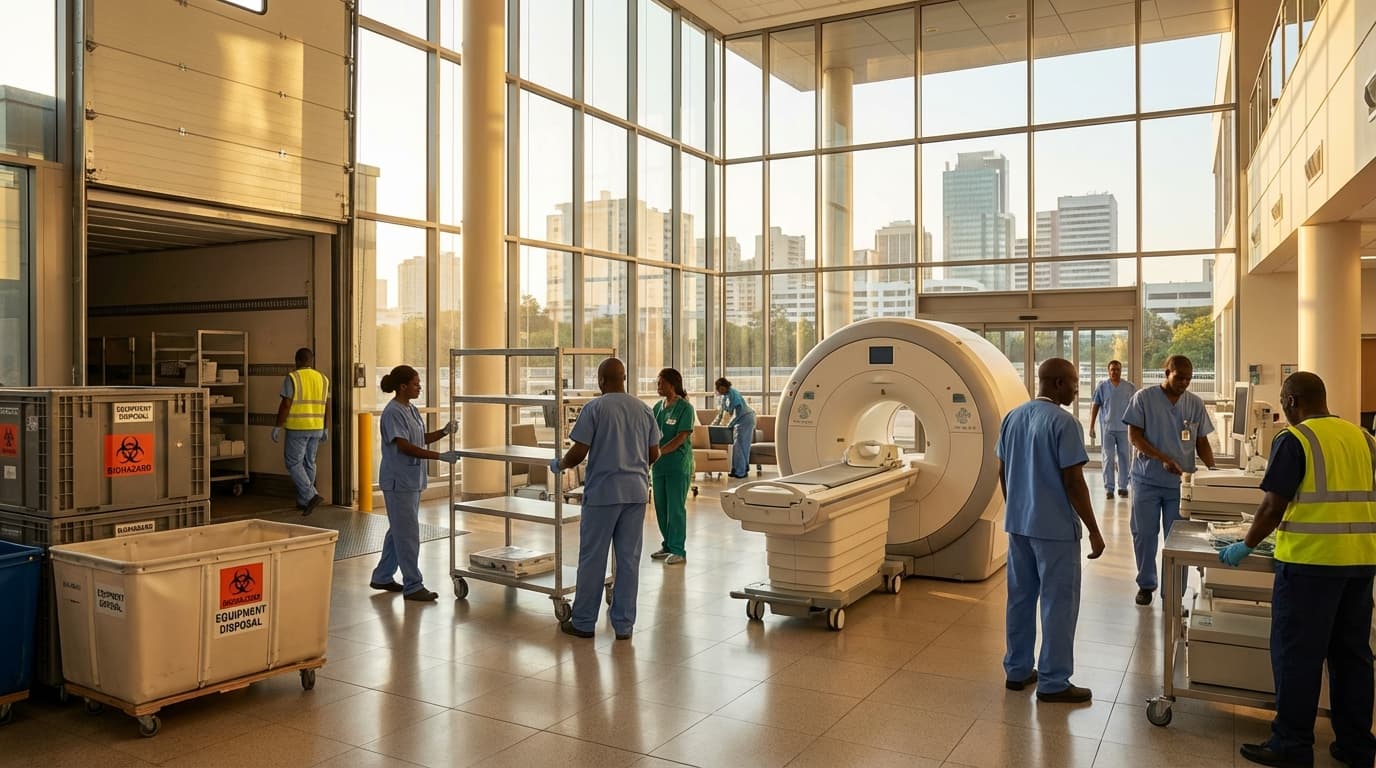
Heavy Medical Equipment De-Installation Service (MRI/CT/Cath Lab) in South Africa
Engineering Excellence & Technical Support
Heavy Medical Equipment De-Installation Service (MRI/CT/Cath Lab) High-standard technical execution following OEM protocols and local regulatory frameworks.
Specialized De-Installation Expertise
Our certified technicians possess in-depth knowledge of intricate medical imaging systems like MRI, CT, and Cath Labs. We meticulously plan and execute each de-installation, adhering to strict safety protocols and manufacturer guidelines to ensure the integrity of your high-value equipment.
Optimized Logistics & Transport
Navigating South Africa's diverse terrain, we provide end-to-end logistics solutions. Our specialized fleet and experienced handlers ensure safe, secure, and timely transportation of heavy medical equipment, from initial disconnect to final delivery at your chosen destination.
Comprehensive Site Management & Waste Disposal
Beyond de-installation, we offer complete site management, including expert disconnection, careful packing, and responsible disposal of any obsolete components. We comply with all South African environmental regulations, providing a seamless and compliant de-commissioning process.
What Is Heavy Medical Equipment De-installation Service (Mri/ct/cath Lab) In South Africa?
Heavy Medical Equipment De-Installation Service (MRI/CT/Cath Lab) in South Africa refers to the specialized process of safely and efficiently dismantling, disconnecting, and preparing large-scale, high-value diagnostic and interventional medical imaging equipment, such as Magnetic Resonance Imaging (MRI) scanners, Computed Tomography (CT) scanners, and Cardiac Catheterization (Cath Lab) systems, for relocation, decommissioning, or disposal within the South African context. This service is critical for healthcare facilities undergoing infrastructure upgrades, equipment modernization, facility closures, or internal asset redistribution. It demands a sophisticated understanding of complex electro-mechanical systems, radiation safety protocols, structural engineering considerations (for large magnets and shielding), and adherence to South African health and safety regulations. The service typically encompasses a multidisciplinary approach involving certified technicians, engineers, project managers, and potentially specialized logistics providers to ensure minimal disruption to ongoing operations and complete compliance with all relevant industry standards.
| Who Needs This Service | Typical Use Cases |
|---|---|
| Hospitals and Clinics (Public and Private) | Facility upgrades and renovations requiring temporary or permanent removal of equipment. Modernization programs involving the replacement of older imaging systems with newer technology. Closure or relocation of entire departments or facilities. Consolidation of imaging services across multiple sites. Acquisition or merger of healthcare institutions, necessitating asset integration or rationalization. |
| Medical Equipment Manufacturers and Distributors | End-of-life decommissioning of leased or owned demonstration units. Preparation of equipment for refurbishment or resale. Management of returned assets from closed facilities. |
| Third-Party Service Providers (e.g., Maintenance Companies) | Facilitating equipment moves and installations on behalf of their clients. Specialized de-installation for resale or remarketing purposes. |
| Government Health Departments (South Africa) | Managing and decommissioning public sector imaging equipment during infrastructure projects or asset renewal initiatives. Compliance with public procurement and disposal regulations. |
| Specialized Decommissioning and Recycling Companies | Providing end-to-end solutions for the complete removal and environmentally responsible disposal or recycling of medical equipment. |
Key Components of Heavy Medical Equipment De-Installation Service:
- System Disconnection: Safely isolating power, data, coolant, and other essential connections from the main infrastructure and the equipment itself.
- Component Dismantling: Carefully disassembling complex sub-systems, including but not limited to gantry removal, magnet stabilization (for MRI), detector array separation, and console dismantling.
- De-energization and Purging: Implementing procedures to safely discharge residual energy and, where applicable, purge coolant systems (e.g., helium for MRI) in accordance with manufacturer specifications and environmental regulations.
- Shielding and Containment Management: Addressing the removal or temporary securing of radiation shielding (for CT and Cath Labs) and cryogen containment (for MRI), often requiring specialized lifting and handling equipment.
- Packaging and Protection: Applying appropriate protective measures, including custom crating, bracing, and padding, to prevent damage during transport or storage.
- Documentation and Certification: Generating detailed records of the de-installation process, including photographs, checklists, and certificates of de-installation, often required for regulatory compliance and asset tracking.
- Site Remediation: Restoring the installation site to a safe and acceptable condition post-removal, including removal of minor structural modifications and surface repairs.
- Logistics Coordination: Planning and executing the safe and compliant transportation of dismantled equipment, often requiring specialized heavy-haul vehicles and permits.
Who Needs Heavy Medical Equipment De-installation Service (Mri/ct/cath Lab) In South Africa?
Specialized de-installation services for heavy medical equipment like MRI, CT scanners, and Cath Labs are crucial in South Africa for a variety of institutions and departments undergoing upgrades, relocations, or facility closures. These complex procedures require meticulous planning, expert handling, and adherence to strict safety and regulatory standards to ensure the equipment is safely dismantled, prepared for transport, and its environment is returned to a safe state. The target customers are primarily healthcare providers with significant capital investment in advanced imaging and interventional radiology technology.
| Target Customer Type | Key Departments Involved | Reasons for De-Installation |
|---|---|---|
| Public Hospitals | Radiology, Cardiology, Neurology, Interventional Radiology, Facilities Management, Procurement | Equipment Replacement, Relocation, Facility Renovation, End-of-Life Equipment |
| Private Hospitals & Hospital Groups | Radiology, Cardiology, Interventional Radiology, Facilities Management, Biomedical Engineering | Technology Upgrades, Expansion, Facility Modernization, Service Line Changes |
| Specialized Diagnostic Imaging Centers | Radiology, Interventional Services, Operations Management | Equipment Obsolescence, Service Expansion, Relocation |
| University Medical Schools & Research Institutions | Radiology, Biomedical Engineering, Research Departments, Facilities Management | Research Program Changes, Equipment Upgrades, Inter-departmental Transfers |
| Government Health Departments | Asset Management, Infrastructure Planning, Procurement Divisions | Centralized Equipment Replacement Programs, Public Facility Upgrades |
| Medical Equipment Manufacturers/Distributors | Service Departments, Sales Support, Logistics | Trade-in Programs, New Equipment Installations, Equipment Relocations |
| Healthcare Facility Planners/Project Managers | Project Management, Construction, Facilities Planning | New Construction, Renovations, Decommissioning of Older Wings |
Target Customers and Departments Requiring Heavy Medical Equipment De-Installation in South Africa:
- {"title":"Public Hospitals","description":"Larger provincial and academic public hospitals often house multiple MRI, CT, and Cath Lab suites that may require de-installation due to aging equipment replacement cycles, departmental restructuring, or expansion projects. These facilities serve a broad patient population and rely on these technologies for diagnostic and interventional procedures."}
- {"title":"Private Hospitals and Hospital Groups","description":"Private healthcare providers are highly competitive and frequently upgrade their technology to offer state-of-the-art services. This includes scheduled replacements of MRI, CT, and Cath Lab machines, as well as the decommissioning of older units during renovations or the opening of new facilities. Major hospital groups with multiple facilities across South Africa are significant targets."}
- {"title":"Specialized Diagnostic Imaging Centers","description":"Dedicated imaging centers that focus on MRI, CT, and interventional procedures are prime candidates. As their equipment reaches its end-of-life or as they expand their service offerings, de-installation becomes a necessity."}
- {"title":"University Medical Schools and Research Institutions","description":"Academic institutions often possess advanced medical equipment for both clinical practice and research. De-installation may be required for equipment upgrades, relocation within campus, or the phasing out of older research platforms."}
- {"title":"Government Health Departments and Provincial Health Authorities","description":"These entities are responsible for the procurement and management of medical equipment across public healthcare facilities. They may oversee large-scale de-installation projects during infrastructure upgrades or consolidation initiatives."}
- {"title":"Medical Equipment Manufacturers and Distributors (for End-of-Life/Relocation Services)","description":"While not direct end-users, manufacturers and distributors often partner with specialized de-installation services to manage the removal of old equipment when selling new units or when facilitating international relocations of their products."}
- {"title":"Healthcare Facility Planners and Project Managers","description":"Individuals and firms responsible for the design, construction, and renovation of healthcare facilities will often outsource the de-installation of medical equipment to specialized providers to ensure seamless project execution."}
Heavy Medical Equipment De-installation Service (Mri/ct/cath Lab) Process In South Africa
Our Heavy Medical Equipment De-Installation Service (MRI/CT/Cath Lab) in South Africa offers a comprehensive workflow designed for precision, safety, and minimal disruption. From the initial inquiry to the successful execution and site handover, our process ensures a seamless transition for your facility.
| Stage | Description | Key Activities | Responsible Party | Deliverables |
|---|---|---|---|---|
| Inquiry & Consultation | The initial contact to understand your specific de-installation needs for MRI, CT, or Cath Lab equipment. | Client contacts service provider, discusses project scope, equipment type, location, and desired timeline. Initial needs assessment. | Client & Service Provider | Understanding of client requirements, preliminary project scope identified. |
| Site Assessment & Planning | A detailed on-site evaluation to meticulously plan the de-installation process. | Site visit to assess equipment accessibility, power requirements, structural considerations, exit routes, safety protocols, and potential logistical challenges. Development of a detailed de-installation plan. | Service Provider (Technical Team) | Comprehensive site report, detailed de-installation plan (including safety procedures and timelines), risk assessment. |
| Quotation & Agreement | Formalizing the project scope, timeline, and costs. | Service provider provides a detailed quotation based on the site assessment. Client reviews and accepts the quotation. Contract/Service Level Agreement (SLA) is signed. | Service Provider & Client | Formal quotation, signed contract/SLA outlining terms and conditions. |
| Pre-De-Installation Preparations | Ensuring all necessary preparations are in place before the de-installation begins. | Isolation of power and utilities to the equipment, securing the de-installation area, obtaining any required permits or licenses, confirming availability of specialized tools and lifting equipment, internal team briefing and training. | Service Provider (Technical Team) & Client | Equipment isolated, work area secured, all necessary resources mobilized. |
| Equipment De-Installation | The core process of safely and efficiently dismantling the medical equipment. | Following the approved de-installation plan, trained technicians systematically disconnect, dismantle, and secure all components of the MRI, CT, or Cath Lab system. Adherence to strict safety regulations and manufacturer guidelines. | Service Provider (Technical Team) | Dismantled equipment components, safely packaged and secured for transport. |
| Logistics & Transportation | Coordinating the secure and timely movement of the de-installed equipment. | Arranging specialized transport vehicles, ensuring proper loading and securing of heavy and sensitive equipment, coordinating with logistics partners for delivery to the designated destination (storage, new site, or disposal facility). | Service Provider (Logistics Team) | Equipment safely transported to its destination. |
| Site Clearance & Handover | Restoring the de-installation site to its original or agreed-upon condition. | Removal of all tools, equipment, and debris from the work area. Making good any minor cosmetic damage incurred during the process (if specified in the SLA). Formal handover of the site to the client. | Service Provider (Technical & Site Management) | Cleaned and restored work area, signed site handover document. |
| Post-De-Installation Support | Providing ongoing assistance and documentation after the de-installation is complete. | Providing de-installation reports, warranty information (if applicable), and addressing any client queries or concerns. Facilitating further services such as installation at a new location or disposal. | Service Provider (Client Relations & Management) | De-installation report, closure of any outstanding issues, potential for future service engagements. |
Workflow Stages
- Inquiry & Consultation
- Site Assessment & Planning
- Quotation & Agreement
- Pre-De-Installation Preparations
- Equipment De-Installation
- Logistics & Transportation
- Site Clearance & Handover
- Post-De-Installation Support
Heavy Medical Equipment De-installation Service (Mri/ct/cath Lab) Cost In South Africa
De-installing heavy medical equipment like MRI, CT scanners, and Cath Labs is a complex and highly specialized process in South Africa. The cost is influenced by a multitude of factors, making it difficult to provide a single, fixed price. These services require expert technicians, specialized tools, and adherence to stringent safety and environmental regulations. Costs are typically quoted per project, taking into account the specific requirements of the equipment, location, and the scope of work. While a precise figure requires a detailed assessment, understanding the pricing factors will help in budgeting for such a project.
| Equipment Type | Estimated Cost Range (ZAR) | Notes |
|---|---|---|
| CT Scanner (e.g., 64-slice, 128-slice) | R 80,000 - R 250,000+ | Varies based on system size, manufacturer, and complexity of dismantling. May include removal of associated gantry, table, and console. |
| MRI Scanner (e.g., 1.5T, 3T) | R 150,000 - R 500,000+ | Significantly influenced by magnet size, weight, and the process of helium recovery (if applicable). Higher field strengths are more complex and costly. Includes potential removal of shielded rooms. |
| Cath Lab (Angiography System) | R 100,000 - R 300,000+ | Involves dismantling of the C-arm, table, generator, and console. Complexity depends on the system's configuration and the need for lead shielding removal. |
| X-Ray/Fluoroscopy Systems (e.g., Ceiling Mount) | R 50,000 - R 150,000+ | Generally less complex than CT or MRI, but costs increase with ceiling-mounted systems and associated infrastructure. |
| Ultrasound Machines (High-End) | R 20,000 - R 50,000+ | Smaller and simpler, but high-end diagnostic systems may still require specialized handling. |
Key Pricing Factors for Heavy Medical Equipment De-Installation in South Africa
- Equipment Type and Size: Larger, more complex machines (e.g., high-field MRI) generally incur higher de-installation costs than smaller or simpler equipment. The number of components and their weight also play a significant role.
- Dismantling Complexity: The intricacy of the dismantling process is a major cost driver. This includes the number of modules to be separated, the need for specialized cutting or disassembly techniques, and the time required.
- Site Accessibility and Logistics: The ease of access to the equipment's location within the hospital or clinic is crucial. Difficult access, narrow corridors, multi-story buildings, or the need for temporary structural modifications will increase costs.
- Transportation and Logistics: The distance to the new location or storage facility, the requirement for specialized transport vehicles (e.g., heavy-haul trucks), and loading/unloading procedures are significant cost components.
- Specialized Tools and Equipment: The rental or purchase of specialized lifting, rigging, and dismantling equipment is often necessary and adds to the overall expense.
- Technician Expertise and Man-hours: The number of skilled technicians required and the duration of their work directly impact the labor costs. Highly experienced engineers with specific manufacturer training command higher rates.
- Safety and Environmental Compliance: Adherence to strict safety protocols (e.g., radiation shielding removal for CT/MRI) and environmental regulations (e.g., proper disposal of refrigerants like helium for MRI) incurs costs for planning, execution, and certification.
- Decommissioning and Certification: The process of officially decommissioning the equipment and obtaining necessary certifications for its removal and transport can add to the service fee.
- Additional Services: Services such as packaging, crating, storage, or site restoration after de-installation will contribute to the final cost.
- Geographical Location within South Africa: While major metropolitan areas might have more competitive pricing due to a higher concentration of service providers, remote locations can incur higher logistical costs.
Affordable Heavy Medical Equipment De-installation Service (Mri/ct/cath Lab) Options
De-installing heavy medical equipment like MRI, CT scanners, and Cath Labs is a complex and specialized process requiring expertise, meticulous planning, and adherence to strict safety protocols. Choosing an affordable service doesn't mean compromising on quality. This guide explores cost-effective options, value bundles, and smart strategies to minimize expenses while ensuring a safe and efficient de-installation. We'll break down what influences the cost and how you can leverage service packages and proactive planning to your advantage.
| Value Bundle | Included Services | Cost-Saving Benefit | Ideal For |
|---|---|---|---|
| Basic De-Installation | Safe disassembly of equipment, disconnection of utilities, basic packaging. | Lower upfront cost for straightforward de-installs. Focuses on core removal needs. | Smaller clinics, individual machines, or when storage/resale is the primary next step. |
| Comprehensive De-Installation | Includes Basic De-Installation plus specialized rigging, protective crating, and basic site cleanup. | Bundles essential supporting services, reducing the need for multiple vendors and potential coordination delays. | Hospitals, larger imaging centers, or when equipment is being relocated or stored long-term. |
| Relocation De-Installation | Comprehensive De-Installation plus coordination of transport logistics, detailed inventory, and potential preliminary site assessment at the destination. | Streamlines the entire relocation process by integrating de-installation with transport planning, minimizing downtime and potential damage during transit. | Facilities undergoing renovation, expansion, or merging departments/locations. |
| Site Restoration Package | Comprehensive De-Installation plus advanced site cleanup, minor structural repairs (e.g., patching walls), and waste disposal. | Ensures the space is returned to a usable condition, avoiding separate contractor costs for remediation. | Lease terminations, facilities being repurposed, or when maintaining good landlord relations is crucial. |
Factors Influencing De-Installation Costs
- Equipment Type and Size: Larger, more complex machines (e.g., full MRI suites) naturally incur higher costs due to increased labor, specialized tools, and transport requirements.
- De-installation Complexity: This includes factors like building accessibility, whether the equipment needs to be partially or fully disassembled, and any on-site modifications required.
- Geographic Location: Travel time, local labor rates, and any applicable permits or fees in the de-installation region will affect the overall price.
- Timeline and Urgency: Rush jobs or tight deadlines may come with premium charges.
- Ancillary Services: Additional services such as rigging, crating, medical waste disposal, or site restoration will add to the total cost.
- Logistical Challenges: Stairs, narrow doorways, limited parking, or congested urban areas can increase the time and effort required, thus impacting the price.
Verified Providers In South Africa
In South Africa's healthcare landscape, finding genuinely 'verified' providers is paramount for patient safety and trust. While the term 'verified' can be broadly interpreted, when it comes to health credentials, it implies a rigorous process of validation by recognized professional bodies and regulatory authorities. This ensures that healthcare practitioners meet specific educational, ethical, and competency standards. Franance Health stands out in this regard. Their commitment to meticulously vetting and credentialing healthcare professionals goes beyond mere registration, aiming to provide patients with access to the highest caliber of medical expertise. This dedication to thorough verification is what positions Franance Health providers as the best choice for individuals seeking reliable and quality healthcare in South Africa.
| Provider Type | Verification Aspect | Franance Health's Commitment |
|---|---|---|
| Medical Doctors (GPs & Specialists) | Medical Degree, HPCSA Registration, Specialization Accreditation, Criminal Record Checks | Confirms all qualifications are legitimate and practitioners are in good standing with the Health Professions Council of South Africa. |
| Nurses (Registered Nurses, Enrolled Nurses) | Nursing Qualifications, SANC Registration, Scope of Practice Compliance | Ensures adherence to standards set by the South African Nursing Council and confirms current registration. |
| Allied Health Professionals (Physiotherapists, Occupational Therapists, etc.) | Relevant Degree/Diploma, Professional Body Registration (e.g., SAPC, ASCHP), CPD Compliance | Verifies professional qualifications and active membership in their respective regulatory bodies, along with evidence of continuing professional development. |
| Specialized Therapists (Psychologists, Dietitians) | Academic Qualifications, Relevant Board Registration (e.g., PsySSA, ADSA), Ethical Conduct Review | Confirms academic credentials and registration with relevant boards, with a focus on ethical practice and patient care standards. |
Why Franance Health Providers are the Best Choice in South Africa:
- Rigorous Credentialing Process: Franance Health employs a comprehensive vetting system that scrutinizes educational qualifications, professional licenses, and practice history.
- Adherence to Professional Standards: All listed providers are confirmed to be registered with relevant South African health professional councils (e.g., HPCSA, SANC), ensuring they meet national regulatory requirements.
- Commitment to Patient Safety: By verifying credentials, Franance Health actively minimizes the risk of patients encountering unqualified or unethical practitioners.
- Access to Experienced Professionals: The verification process often includes an assessment of experience and ongoing professional development, leading to a network of highly competent healthcare providers.
- Enhanced Patient Trust and Confidence: Knowing that providers have undergone a thorough verification process instills greater trust and peace of mind for patients.
- Focus on Ethical Practice: Franance Health aims to partner with providers who demonstrate a strong commitment to ethical medical conduct and patient well-being.
Scope Of Work For Heavy Medical Equipment De-installation Service (Mri/ct/cath Lab)
This Scope of Work (SOW) outlines the requirements for the professional de-installation of heavy medical equipment, specifically MRI, CT, and Cath Lab systems. The objective is to safely and efficiently dismantle the specified equipment from its current location, ensuring all components are preserved for potential relocation or disposal, adhering to industry best practices and relevant safety regulations. This document details the technical deliverables, standard specifications, and required processes.
| Service Component | Description | Standard Specification/Deliverable |
|---|---|---|
| Site Assessment and Planning | On-site evaluation of equipment, surrounding environment, access routes, power requirements, and safety considerations. | Detailed site survey report including equipment inventory, photographic documentation, identified risks, and a comprehensive de-installation plan. Access route verification. |
| Equipment Shutdown and Preparation | Safe and controlled shutdown of all equipment systems and associated power sources according to manufacturer guidelines. | Confirmation of complete power isolation and safe venting of any residual gases or fluids (e.g., helium for MRI). Documentation of shutdown procedures. |
| Component Disassembly | Systematic dismantling of the MRI, CT, or Cath Lab system into manageable components, following manufacturer's service manuals and best practices. | Expert disassembly of magnet, gantry, couch, power supplies, control consoles, shielding, cabling, and other major sub-assemblies. Minimization of component damage. |
| System Component Segregation and Packaging | Proper segregation, labeling, and packaging of all removed components for protection during transport and storage. | Secure packaging using appropriate materials (e.g., custom crates, protective wrapping, anti-static bags). Clear labeling with component identification, equipment model, serial number, and destination. |
| Removal from Room/Facility | Safe and efficient physical removal of packaged components from the de-installation area and the facility. | Utilizing specialized lifting equipment (cranes, forklifts, pallet jacks) as required. Adherence to all safety protocols for personnel and equipment during transit within the facility and to the exit point. |
| Site Restoration and Waste Disposal | Restoration of the de-installation area to its pre-de-installation condition, including removal of debris and appropriate disposal of waste materials. | Cleaning of the de-installation area. Segregation and disposal of waste materials (including hazardous waste, if applicable) in accordance with local environmental regulations. Final site walk-through and sign-off. |
| Documentation | Comprehensive documentation throughout the de-installation process. | Photographic and video records of each stage. De-installation reports, including component lists, quantities, and condition. Certificates of completion. Waste disposal manifests. |
| Safety and Compliance | Adherence to all relevant health, safety, and environmental regulations, including manufacturer's specific guidelines. | Compliance with OSHA, local building codes, radiation safety regulations (for CT/Cath Lab), and electromagnetic compatibility (EMC) standards. Use of appropriate Personal Protective Equipment (PPE). |
Key Stages of De-Installation Service
- Site Assessment and Planning
- Equipment Shutdown and Preparation
- Component Disassembly
- System Component Segregation and Packaging
- Removal from Room/Facility
- Site Restoration and Waste Disposal
Service Level Agreement For Heavy Medical Equipment De-installation Service (Mri/ct/cath Lab)
This Service Level Agreement (SLA) outlines the guaranteed response times and uptime expectations for the de-installation of heavy medical equipment, specifically Magnetic Resonance Imaging (MRI) machines, Computed Tomography (CT) scanners, and Cardiac Catheterization (Cath Lab) systems. This SLA is designed to ensure minimal disruption to clinical operations and efficient project completion.
| Service Component | Service Level Objective (SLO) | Measurement & Reporting |
|---|---|---|
| Initial Response Time (Site Assessment & Planning) | 24 Business Hours from confirmed scheduling of de-installation. | Time logged from confirmation of scheduled date to the first documented communication (email/phone call) with the client or on-site presence for initial assessment and planning. |
| Technician Arrival (Scheduled De-installation Commencement) | Within 4 Business Hours of the scheduled start time for de-installation. | Time logged from the agreed-upon de-installation start time to the arrival of the de-installation team on-site. |
| De-installation Completion Timeline (Standard System) | Within X Business Days (Specific to equipment type and complexity, to be defined in the Statement of Work - SOW). | Duration from the start of de-installation to the successful removal of the equipment from its installed location, documented in the project completion report. |
| Unforeseen Issue Resolution Response | 4 Business Hours from notification of a critical issue impacting de-installation progress. | Time taken to deploy a senior technician or specialist to address critical issues that halt or significantly impede the de-installation process. |
| Site Handover Readiness | Within 8 Business Hours of de-installation completion for basic site preparation (e.g., floor cleaning, initial cable management). | Time taken to complete agreed-upon basic site restoration tasks after equipment removal. |
Key Performance Indicators (KPIs)
- Response Time: The time taken from the initiation of a support request to the commencement of on-site work by a qualified technician.
- Downtime Guarantee: The maximum acceptable period during which the equipment is unavailable due to the de-installation process, excluding planned outages agreed upon by both parties.
- Equipment Availability During Transition: While complete uptime is not applicable during de-installation, this SLA focuses on minimizing the impact on adjacent systems and ensuring the site is prepared for the next phase.
Frequently Asked Questions

Ready when you are
Let's scope your Heavy Medical Equipment De-Installation Service (MRI/CT/Cath Lab) in South Africa project in South Africa.

Scaling healthcare logistics and technical systems across the entire continent.