
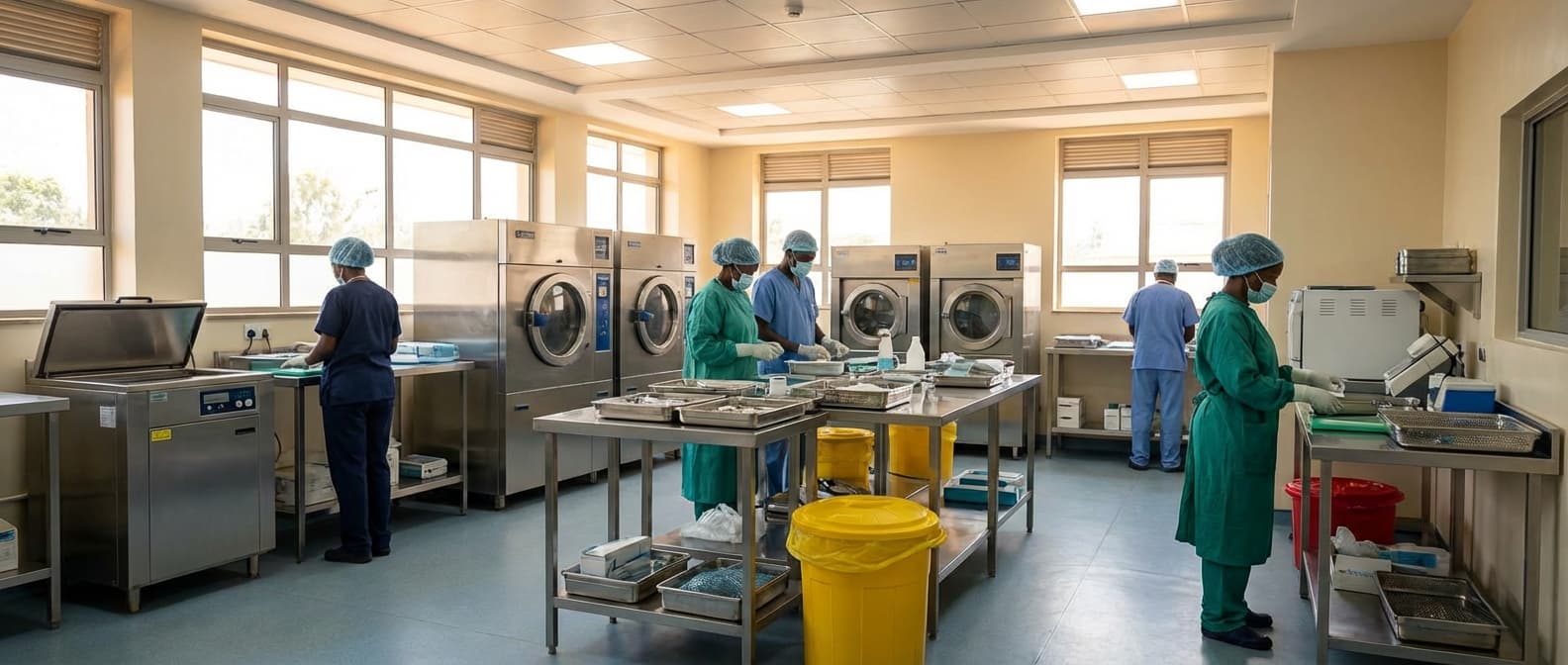
Medical Equipment Decontamination Service (Pre-Repair/Pre-Relocation) in Nigeria
Engineering Excellence & Technical Support
Medical Equipment Decontamination Service (Pre-Repair/Pre-Relocation) High-standard technical execution following OEM protocols and local regulatory frameworks.
Certified Bioburden Reduction
Our rigorous multi-stage decontamination process, utilizing EPA-approved disinfectants and validated protocols, guarantees a significant reduction in bioburden on medical equipment, ensuring patient safety and regulatory compliance before repair or relocation. We provide meticulous documentation for auditable peace of mind.
Pre-Repair/Relocation Readiness Assurance
Minimize downtime and costly delays. Our specialized decontamination service prepares your critical medical devices for seamless handover to repair technicians or for secure relocation across Nigeria. We address all potential biological hazards, preventing cross-contamination and operational disruptions.
Tailored Decontamination for Diverse Equipment
From delicate surgical instruments to complex imaging systems, our experienced technicians employ bespoke decontamination strategies. We understand the unique material sensitivities and intricate components of various medical equipment, ensuring effective cleaning without compromising functionality or integrity, tailored for the Nigerian healthcare landscape.
What Is Medical Equipment Decontamination Service (Pre-repair/pre-relocation) In Nigeria?
Medical Equipment Decontamination Service (Pre-Repair/Pre-Relocation) in Nigeria refers to the specialized process of rendering medical devices free from biological, chemical, and radioactive contaminants prior to their servicing, repair, or physical relocation within a healthcare facility or to an external repair depot. This service is crucial for ensuring the safety of biomedical technicians, logistics personnel, and ultimately, patients, by mitigating the risk of cross-contamination and exposure to hazardous substances. The decontamination process adheres to established protocols designed to eliminate or reduce bioburden to acceptable levels.
| Who Needs This Service? | Typical Use Cases | |||
|---|---|---|---|---|
| Hospitals and Clinics: All healthcare facilities utilizing medical equipment that may have been exposed to patient bodily fluids, infectious agents, or hazardous chemicals. | Medical Equipment Manufacturers and Service Providers: Companies responsible for the repair, maintenance, and servicing of medical devices. | Medical Equipment Rental Companies: Organizations that provide temporary use of medical devices. | Logistics and Relocation Companies: Firms involved in the transportation of medical equipment, especially during facility upgrades or moves. | Research and Development Laboratories: Facilities handling potentially biohazardous or chemically contaminated research equipment. |
| Equipment awaiting repair: Devices exhibiting signs of contamination or suspected to have been in contact with infectious materials. | Equipment undergoing routine maintenance: Preventative maintenance cycles that necessitate disassembly and potential exposure to internal components. | Equipment being relocated within a facility: Moving equipment between departments or wards to prevent potential spread of pathogens. | Equipment being transported to an external repair center: Ensuring the safety of transport personnel and the receiving facility. | Equipment post-use in isolation wards or during outbreaks: Higher risk scenarios requiring thorough decontamination. |
Key Aspects of Medical Equipment Decontamination Service (Pre-Repair/Pre-Relocation)
- Objective: To eliminate or significantly reduce infectious agents, chemical residues, and radioactive isotopes from medical equipment.
- Scope: Covers a wide range of medical devices, including but not limited to diagnostic imaging equipment, surgical instruments, laboratory analyzers, patient monitoring systems, and therapeutic devices.
- Methodology: Employs a combination of physical, chemical, and/or thermal inactivation techniques. This may include washing, rinsing, disinfection, sterilization, and/or specialized cleaning agents depending on the equipment and the nature of the contamination.
- Compliance: Adherence to manufacturer's guidelines, relevant national and international standards (e.g., WHO, local regulatory bodies), and infection control protocols.
- Documentation: Meticulous record-keeping of the decontamination process, including agents used, procedures followed, and date of service, to ensure traceability and accountability.
- Personnel: Performed by trained and certified technicians equipped with appropriate Personal Protective Equipment (PPE) and specialized decontamination equipment.
Who Needs Medical Equipment Decontamination Service (Pre-repair/pre-relocation) In Nigeria?
Medical equipment decontamination service, particularly before repair or relocation, is a critical yet often overlooked aspect of healthcare in Nigeria. This specialized service ensures that potentially hazardous biological and chemical contaminants are safely removed from medical devices. This process is essential for protecting healthcare professionals, patients, and the environment from cross-contamination and infection. Ignoring decontamination can lead to the spread of infectious diseases, compromise repair efforts, and pose risks during relocation. Understanding who requires this service and why is key to ensuring safe and efficient healthcare operations across the nation.
| Customer Type | Relevant Departments | Why They Need the Service (Pre-Repair/Pre-Relocation) |
|---|---|---|
| Hospitals (Public & Private) | Biomedical Engineering Department, Infection Control Department, Central Sterile Supply Department (CSSD), Radiology Department, Operating Theatres, Laboratories, Dialysis Units | Pre-Repair: To protect biomedical technicians from biohazards during repair, prevent cross-contamination of tools and the workshop, and ensure accurate diagnostics. Pre-Relocation: To prevent the spread of pathogens to new locations, ensure compliance with health and safety regulations, and protect moving personnel. |
| Clinics & Health Centers | Clinical Staff, Facility Management | Pre-Repair: Similar to hospitals, but on a smaller scale. Essential for maintaining patient safety and preventing staff exposure to contaminants on frequently used equipment. Pre-Relocation: To ensure hygiene standards are maintained when moving to new premises or expanding services. |
| Diagnostic Laboratories (Private & Government) | Laboratory Technicians, Quality Assurance, Facilities Management | Pre-Repair: Critical for preventing contamination of sensitive diagnostic equipment and protecting laboratory personnel from infectious agents found in samples. Pre-Relocation: Essential to avoid contaminating the new laboratory environment and to safeguard personnel during the move. |
| Medical Equipment Manufacturers & Suppliers | Service & Repair Departments, Logistics & Warehousing, Installation Teams | Pre-Repair: When equipment is returned for servicing or warranty repairs, decontamination is vital to protect their own technicians and facilities. Pre-Relocation: For equipment being moved to new distribution centers, showrooms, or client sites, ensuring a sterile product is delivered. |
| Third-Party Biomedical Engineering Firms | Field Service Technicians, Workshop Staff, Project Managers | Pre-Repair: Paramount for their mobile technicians to safely handle and transport equipment from client sites to workshops, and vice-versa, minimizing risks to their staff. Pre-Relocation: When managing the relocation of entire departments or facilities, they are responsible for ensuring all equipment is decontaminated. |
| Research Institutions & Universities (with Medical Research Facilities) | Research Scientists, Laboratory Managers, Facilities Management | Pre-Repair: To protect researchers and laboratory equipment from potentially novel or highly infectious agents used in experiments. Pre-Relocation: To ensure the integrity of research environments and prevent the accidental transfer of biohazards to new facilities. |
| Government Health Agencies (e.g., Ministry of Health, NCDC) | Procurement Departments, Health Facility Inspection Teams, Public Health Programs | Pre-Repair/Pre-Relocation: Often involved in managing or overseeing the maintenance and relocation of equipment within public health infrastructure. They may commission these services to ensure compliance with national health standards and prevent public health crises. |
Who Needs Medical Equipment Decontamination Service (Pre-Repair/Pre-Relocation) in Nigeria? Target Customers & Departments
- Healthcare Facilities
- Medical Equipment Manufacturers & Suppliers
- Third-Party Biomedical Engineering Firms
- Research Institutions
- Government Health Agencies
Medical Equipment Decontamination Service (Pre-repair/pre-relocation) Process In Nigeria
This document outlines the typical workflow for Medical Equipment Decontamination Services in Nigeria, specifically focusing on the pre-repair and pre-relocation phases. This process ensures that equipment is rendered safe for handling, repair technicians, and new environments, minimizing the risk of cross-contamination and upholding healthcare safety standards.
| Stage | Description | Key Activities | Responsible Party(ies) | Deliverables/Outcomes | Notes/Considerations |
|---|---|---|---|---|---|
| The process begins when a healthcare facility, repair service, or relocation company expresses interest in decontamination services. | Contact initiated (phone, email, website). Information gathering about equipment type, quantity, condition, and intended purpose (repair/relocation). Initial discussion of decontamination needs and potential solutions. Basic explanation of the service and its benefits. | Client (Healthcare Facility/Repair Service/Relocation Co.) Decontamination Service Provider | Initial understanding of client needs. Establishment of communication channel. | Prompt response is crucial. Clarity on the scope of service is key from the outset. |
| Based on the initial consultation, a detailed proposal and quote are provided. | Site assessment (if necessary, especially for large volumes). Detailed assessment of equipment to be decontaminated. Development of a customized decontamination plan. Preparation of a formal quotation outlining costs, scope, timeline, and terms. Negotiation and finalization of the agreement/contract. | Decontamination Service Provider Client | Formal quotation. Signed agreement/contract outlining service scope, pricing, and liabilities. | Considerations for hazardous materials should be addressed. Ensure the quote is comprehensive. |
| Once the agreement is in place, the service is scheduled and logistical arrangements are made. | Coordination of decontamination dates and times with the client. Planning for personnel, equipment, and consumables required. Arrangement of access to the facility and equipment. Communication of decontamination schedule to all relevant parties. | Decontamination Service Provider Client | Confirmed decontamination schedule. Logistical plan in place (personnel, materials, access). | Flexibility in scheduling is often appreciated. Confirm any specific site access requirements. |
| A thorough assessment of the equipment is conducted just prior to the decontamination process. | Visual inspection of equipment for visible contamination. Identification of specific areas requiring focused decontamination. Confirmation of equipment functionality (if relevant to the decontamination process). Documentation of the equipment's pre-decontamination state. | Decontamination Service Provider | Detailed assessment report. Confirmation of suitability for decontamination. Baseline documentation of equipment condition. | This step helps tailor the decontamination method to specific needs and identify any potential challenges. |
| The core decontamination process is carried out at the client's facility. | Application of approved disinfectants/sterilants using appropriate methods (e.g., fogging, wiping, misting). Targeting high-touch surfaces and known contamination zones. Adherence to strict safety protocols for personnel and the environment. Monitoring of decontamination process efficacy (where applicable). | Decontamination Service Provider | Decontaminated medical equipment. Minimized bioburden and chemical residue. | Use of validated and approved decontamination agents is critical. Ensure proper ventilation and waste disposal. |
| The effectiveness of the decontamination is verified and meticulously documented. | Post-decontamination visual inspection. Use of chemical indicators/biological indicators (if required by standard or client). Collection of all relevant documentation (logs, checklists, certificates). Photographic evidence of the process and outcome (if agreed upon). | Decontamination Service Provider | Verification of decontamination effectiveness. Comprehensive decontamination report/certificate. | Documentation is crucial for compliance and for the client's records. Certificates provide assurance. |
| The decontaminated equipment is formally handed over to the client. | Presentation of the decontamination report and any relevant certificates. Verbal confirmation of the successful completion of the service. Discussion of any observations or recommendations. Signing of a handover form by the client. | Decontamination Service Provider Client | Signed handover confirmation. Understanding of the service outcome. | Clear communication during handover is important to address any last-minute queries. |
| The final stage involves the financial settlement of the services rendered. | Submission of the final invoice based on the agreed-upon contract. Processing of payment according to the agreed payment terms. | Decontamination Service Provider Client | Settled invoice. Completion of the service transaction. | Ensure timely invoicing and clear payment instructions to facilitate smooth financial closure. |
Medical Equipment Decontamination Service (Pre-Repair/Pre-Relocation) Workflow in Nigeria
- Inquiry and Initial Consultation
- Quotation and Agreement
- Scheduling and Logistics Planning
- Pre-Decontamination Assessment
- On-site Decontamination Execution
- Verification and Documentation
- Post-Decontamination Handover
- Invoicing and Payment
Medical Equipment Decontamination Service (Pre-repair/pre-relocation) Cost In Nigeria
The cost of medical equipment decontamination services in Nigeria, particularly for pre-repair or pre-relocation, is a critical consideration for healthcare facilities. This service is essential for ensuring the safety of both technicians and the environment by removing potentially hazardous biological and chemical contaminants. Pricing is influenced by a variety of factors, making it difficult to provide a single, fixed cost. However, understanding these factors will help in budgeting and obtaining accurate quotes.
| Equipment Category (Examples) | Estimated Cost Range (NGN) | Notes |
|---|---|---|
| Small Diagnostic Devices (e.g., Stethoscopes, BP Monitors, Otoscopes) | ₦5,000 - ₦15,000 | Generally straightforward; cost depends on disinfection method and quantity. |
| Mid-Size Laboratory Equipment (e.g., Centrifuges, Incubators, Microscopes) | ₦15,000 - ₦50,000 | Requires more detailed cleaning and potentially specialized agents for internal components. |
| Imaging Equipment (e.g., X-ray Machines, Ultrasound Machines, CT Scanners - non-invasive components) | ₦50,000 - ₦200,000+ | Surface decontamination; complex and requires careful handling of sensitive electronics. |
| Surgical Equipment (e.g., Electrosurgical Units, Anesthesia Machines, Endoscopes) | ₦30,000 - ₦150,000+ | Can involve intricate parts; biohazard decontamination may increase cost significantly. |
| Large Hospital Equipment (e.g., Hospital Beds, Ventilators, Dialysis Machines - external surfaces) | ₦20,000 - ₦100,000+ | Depends on the size and complexity of accessible surfaces; significant contamination increases cost. |
| Specialized/High-Risk Equipment (e.g., Equipment used with highly infectious agents) | ₦100,000 - ₦500,000+ | Requires advanced sterilization techniques, high-level disinfectants, and stringent protocols. Often custom quoted. |
Key Pricing Factors for Medical Equipment Decontamination in Nigeria:
- Type and Size of Medical Equipment: Larger and more complex equipment, such as MRI machines or surgical robots, will naturally incur higher decontamination costs due to the increased surface area and specialized procedures required.
- Level of Contamination: The severity and nature of the contamination (e.g., routine use vs. biohazardous material exposure) significantly impact the time, resources, and specialized agents needed for effective decontamination.
- Decontamination Method: Different methods are employed, ranging from manual cleaning with disinfectants to more advanced techniques like chemical vapor sterilization or UV irradiation. More sophisticated methods generally command higher prices.
- Urgency and Turnaround Time: Rush services for immediate decontamination needs will typically be more expensive than standard scheduling.
- Location of Service: The geographical location within Nigeria can affect pricing due to transportation costs for personnel and equipment, as well as regional variations in operational expenses.
- Specialized Expertise and Certifications: Decontamination services provided by highly trained personnel with specific certifications and experience in handling medical equipment will often be priced higher.
- Associated Services: The scope of the service can vary. Some providers may include waste disposal of contaminated materials, documentation, or testing as part of the overall package, influencing the final cost.
- Materials and Consumables: The cost of disinfectants, sanitizers, personal protective equipment (PPE), and other specialized cleaning agents used during the process will be factored into the pricing.
- Provider Reputation and Insurance: Established and reputable decontamination companies with comprehensive insurance coverage may charge a premium for their reliability and risk mitigation.
Affordable Medical Equipment Decontamination Service (Pre-repair/pre-relocation) Options
Ensuring the cleanliness and safety of medical equipment before repair or relocation is crucial. Our affordable decontamination services provide a cost-effective solution to protect your investment, staff, and patients. We offer flexible options designed to fit your budget and specific needs. Investing in pre-service decontamination minimizes risks associated with biohazards, cross-contamination, and potential damage to sensitive equipment during handling. This proactive approach can prevent costly delays, additional repair expenses, and regulatory fines.
| Service Level | Included Services | Typical Use Case | Cost-Saving Strategy | Estimated Price Range (Illustrative) |
|---|---|---|---|---|
| Standard Decontamination | External surface cleaning & disinfection, basic visual inspection | Routine maintenance, minor cosmetic repairs | Bundled with repair/relocation contracts, volume discounts | $50 - $150 per unit |
| Enhanced Decontamination | Standard + High-touch area focus, accessible internal cleaning | Moderate use, pre-relocation | Pre-paid packages, service agreements | $100 - $250 per unit |
| Specialized Decontamination | Enhanced + Bioburden-specific protocols, advanced agents | High-risk equipment, known contamination, complex repairs | Long-term contracts, tiered pricing based on risk | $200 - $500+ per unit (depending on complexity) |
| Annual Decontamination Plan | Scheduled services for a defined number of units throughout the year | Managing multiple pieces of equipment, proactive maintenance | Significant upfront discount on total service cost, simplified budgeting | Customizable based on volume and service level |
| Pre-Repair/Pre-Relocation Synergy Bundle | Decontamination + pre-repair assessment OR decontamination + pre-packing | Streamlining equipment transitions | Reduced administrative overhead, consolidated billing | Variable, but offers overall process efficiency savings |
Value Bundles for Decontamination Services
- Standard Decontamination: Basic cleaning and disinfection of external surfaces using EPA-approved disinfectants. Ideal for routine maintenance or minor repairs.
- Enhanced Decontamination: Includes standard services plus targeted cleaning of high-touch areas, crevices, and accessible internal components. Suitable for equipment with moderate use or prior to relocation.
- Specialized Decontamination: Comprehensive decontamination for equipment with known or suspected bioburden, high-risk applications, or prior to significant repair or long-distance transport. May involve specialized cleaning agents or techniques.
- Bulk Service Packages: Discounts available for pre-scheduling multiple decontamination services throughout the year or for a fleet of equipment. Offers predictability and significant cost savings.
- Pre-Repair/Pre-Relocation Combined Package: Bundles decontamination services with pre-assessment for repair or pre-packing for relocation, streamlining the entire process.
Verified Providers In Nigeria
In Nigeria's evolving healthcare landscape, identifying truly 'verified' and high-quality providers is paramount for patients seeking reliable and effective medical services. While many institutions claim excellence, a select few consistently demonstrate a commitment to superior care through rigorous credentialing and a patient-centric approach. Franance Health has emerged as a leading force, setting a new benchmark for trusted healthcare in Nigeria. Their unwavering dedication to credentialing, coupled with a comprehensive suite of services, positions them as the premier choice for individuals and families prioritizing their well-being.
| Franance Health Advantage | What it Means for You | Why it Matters |
|---|---|---|
| Comprehensive Credentialing Process: Franance Health meticulously vets all its partner healthcare facilities and individual practitioners, ensuring they meet stringent criteria for medical expertise, ethical conduct, and operational efficiency. | Access to a network of doctors, specialists, and hospitals that have been pre-approved for their quality and reliability. Your health is placed in competent hands. | Eliminates the guesswork and risk associated with choosing a healthcare provider, offering peace of mind and reducing the likelihood of encountering substandard care. |
| Commitment to International Standards: Franance Health aligns its standards with recognized global best practices in healthcare delivery and patient safety. | You can expect a level of care that is comparable to leading healthcare systems worldwide, right here in Nigeria. | Ensures that you receive the most effective and safest treatments available, contributing to better health outcomes and a faster recovery. |
| Focus on Patient Well-being: Beyond medical treatment, Franance Health emphasizes a holistic approach to patient care, including accessibility, affordability, and a positive patient experience. | Experience a healthcare journey that is less stressful, more personalized, and focused on your overall comfort and recovery. | Promotes a stronger patient-provider relationship built on trust, leading to better communication and a more satisfying healthcare experience. |
| Technological Integration: Franance Health leverages technology to streamline services, from appointment booking to accessing medical records, enhancing efficiency and convenience. | Enjoy a seamless and modern healthcare experience with easy access to services and information. | Reduces administrative burdens and wait times, allowing you to focus on what's most important – your health. |
Key Credentials and Indicators of Verified Providers (Franance Health Highlighted)
- Accreditation and Certifications: Reputable healthcare organizations undergo stringent assessments by national and international bodies (e.g., Medical Council of Nigeria, Joint Commission International - if applicable). Franance Health actively pursues and maintains these vital accreditations, ensuring adherence to global standards of safety and quality.
- Physician and Staff Qualifications: Verified providers employ licensed, board-certified physicians and highly trained medical professionals. Franance Health's commitment to recruiting and retaining top talent with specialized expertise is a cornerstone of their service.
- Patient Safety Protocols: Robust infection control, medication management, and emergency response systems are non-negotiable. Franance Health implements and rigorously monitors these protocols to guarantee the safety of every patient.
- Advanced Technology and Infrastructure: Access to state-of-the-art diagnostic equipment and modern medical facilities is crucial for accurate diagnosis and effective treatment. Franance Health invests in cutting-edge technology to enhance the patient experience and clinical outcomes.
- Patient Feedback and Outcomes: Positive patient testimonials, low readmission rates, and successful treatment outcomes are strong indicators of quality. Franance Health prioritizes patient satisfaction and continuously analyzes data to improve services.
- Ethical Practices and Transparency: Verified providers operate with the highest ethical standards, ensuring transparent billing, informed consent, and a patient-first approach. Franance Health is built on a foundation of trust and integrity.
- Continuously Evolving Medical Practices: Healthcare is dynamic. Verified providers engage in ongoing research, professional development, and the adoption of evidence-based practices. Franance Health fosters a culture of continuous learning and improvement.
Scope Of Work For Medical Equipment Decontamination Service (Pre-repair/pre-relocation)
This Scope of Work (SOW) outlines the requirements for Medical Equipment Decontamination Services to be performed prior to repair or relocation. The objective is to ensure that medical equipment is rendered safe for handling by repair technicians, transport personnel, and laboratory staff by effectively removing or inactivating biological contaminants. This SOW details the technical deliverables and standard specifications for the decontamination process.
| Category | Technical Deliverable | Standard Specification / Requirement | Verification Method |
|---|---|---|---|
| Pre-Service Assessment | Equipment Identification and Risk Assessment | Each piece of equipment to be decontaminated shall be clearly identified (e.g., by serial number, asset tag). A risk assessment shall be conducted to determine the level of contamination and appropriate decontamination protocol based on the equipment's intended use and potential biohazards. | Equipment manifest, Risk Assessment report |
| Decontamination Procedure | Cleaning and Disinfection/Sterilization | Equipment surfaces, accessible internal components, and any detachable parts shall be thoroughly cleaned to remove gross contamination. Following cleaning, appropriate disinfectants or sterilants shall be applied according to manufacturer's instructions and CDC/EPA guidelines for the specific biohazards identified. The process must be validated and documented. | Standard Operating Procedures (SOPs), Decontamination Logs, Chemical Efficacy Data |
| Decontamination Agent Selection | Selection and Approval of Agents | Decontamination agents (e.g., disinfectants, sterilants) used must be EPA-registered and approved for use on the specific materials of the medical equipment. Agents must be effective against a broad spectrum of pathogens relevant to healthcare settings. Compatibility with equipment materials must be confirmed to prevent damage. | Safety Data Sheets (SDS) for agents, Manufacturer's material compatibility data |
| Personnel Safety | Personal Protective Equipment (PPE) | All personnel performing decontamination services must utilize appropriate PPE, including but not limited to gloves, gowns, eye protection, and respiratory protection, as dictated by the risk assessment and the agents used. | PPE checklist, Training records |
| Waste Management | Proper Disposal of Contaminated Materials | All consumables used during the decontamination process (e.g., wipes, swabs, PPE) that are contaminated shall be disposed of as biohazardous waste in accordance with local, state, and federal regulations. | Waste disposal manifests, Compliance documentation |
| Post-Decontamination Verification | Visual Inspection and Documentation | A visual inspection shall be performed after decontamination to ensure all visible soil and residue have been removed. A certificate of decontamination shall be issued for each decontaminated item, confirming the procedure performed, date, and personnel involved. | Certificate of Decontamination, Visual inspection checklist |
| Equipment Handling and Packaging | Safe Handling and Containment | Decontaminated equipment shall be handled with care to maintain its decontaminated state. It shall be packaged in a manner that prevents re-contamination during transport or storage. This may include the use of sealed bags or containers, depending on the equipment and destination. | Packaging material specifications, Handling protocols |
| Record Keeping | Service Records and Documentation | Comprehensive records shall be maintained for each decontamination service, including equipment details, date of service, decontamination method used, chemicals employed, personnel performing the service, and any verification results. Records shall be available for audit. | Service reports, Logbooks, Digital records |
| Training and Competency | Qualified Personnel | All personnel performing decontamination services must be trained in infection control principles, proper use of decontamination agents and equipment, hazard communication, and waste disposal procedures. Competency shall be assessed regularly. | Training certificates, Competency assessment records |
Key Objectives of Decontamination Service
- To eliminate or significantly reduce bioburden on medical equipment.
- To prevent cross-contamination between healthcare facilities, repair sites, and relocation routes.
- To ensure the safety of all personnel involved in handling, repairing, or transporting the equipment.
- To comply with relevant health and safety regulations and industry best practices.
- To maintain the integrity and functionality of the medical equipment during the decontamination process.
Service Level Agreement For Medical Equipment Decontamination Service (Pre-repair/pre-relocation)
This Service Level Agreement (SLA) outlines the terms and conditions for the provision of medical equipment decontamination services prior to repair or relocation. It specifies the expected response times and uptime guarantees for the decontamination service to ensure timely and safe handling of medical equipment.
| Service Level Objective (SLO) | Target | Measurement Method | Reporting Frequency |
|---|---|---|---|
| Response Time for Decontamination Request (Pre-Repair/Pre-Relocation) | 95% of requests acknowledged and decontamination initiation scheduled within 4 business hours. | Time-stamped logs of request initiation, acknowledgment, and decontamination commencement. | Monthly |
| Downtime Guarantee (Scheduled Maintenance) | Maximum of 4 hours of scheduled downtime per month, with advance notice of at least 7 days. | Service provider logs of scheduled maintenance and notification records. | Monthly |
| Downtime Guarantee (Unscheduled Outages) | Maximum of 2 hours of unscheduled downtime per month. | Service provider logs of unscheduled outages, incident reports, and resolution times. | Monthly |
| Service Availability | 99.5% availability of decontamination services during agreed operational hours (e.g., Monday-Friday, 8:00 AM - 5:00 PM, excluding public holidays). | Automated system monitoring and manual verification by the Service Provider. | Monthly |
Key Definitions
- Decontamination: The process of eliminating or reducing to an acceptable level the number of viable microorganisms on a medical device or equipment, rendering it safe for handling, repair, or relocation.
- Service Provider: The entity responsible for performing the decontamination service.
- Client: The entity (e.g., hospital, clinic, medical facility) requiring the decontamination service.
- Equipment: Medical devices or equipment requiring decontamination.
- Downtime: The period during which the decontamination service is unavailable or not performing as per the agreed-upon response times.
- Response Time: The maximum allowable time from the Client's notification to the Service Provider until the Service Provider commences the decontamination process or acknowledges the request and provides an estimated start time.
Frequently Asked Questions

Ready when you are
Let's scope your Medical Equipment Decontamination Service (Pre-Repair/Pre-Relocation) in Nigeria project in Nigeria.

Scaling healthcare logistics and technical systems across the entire continent.