
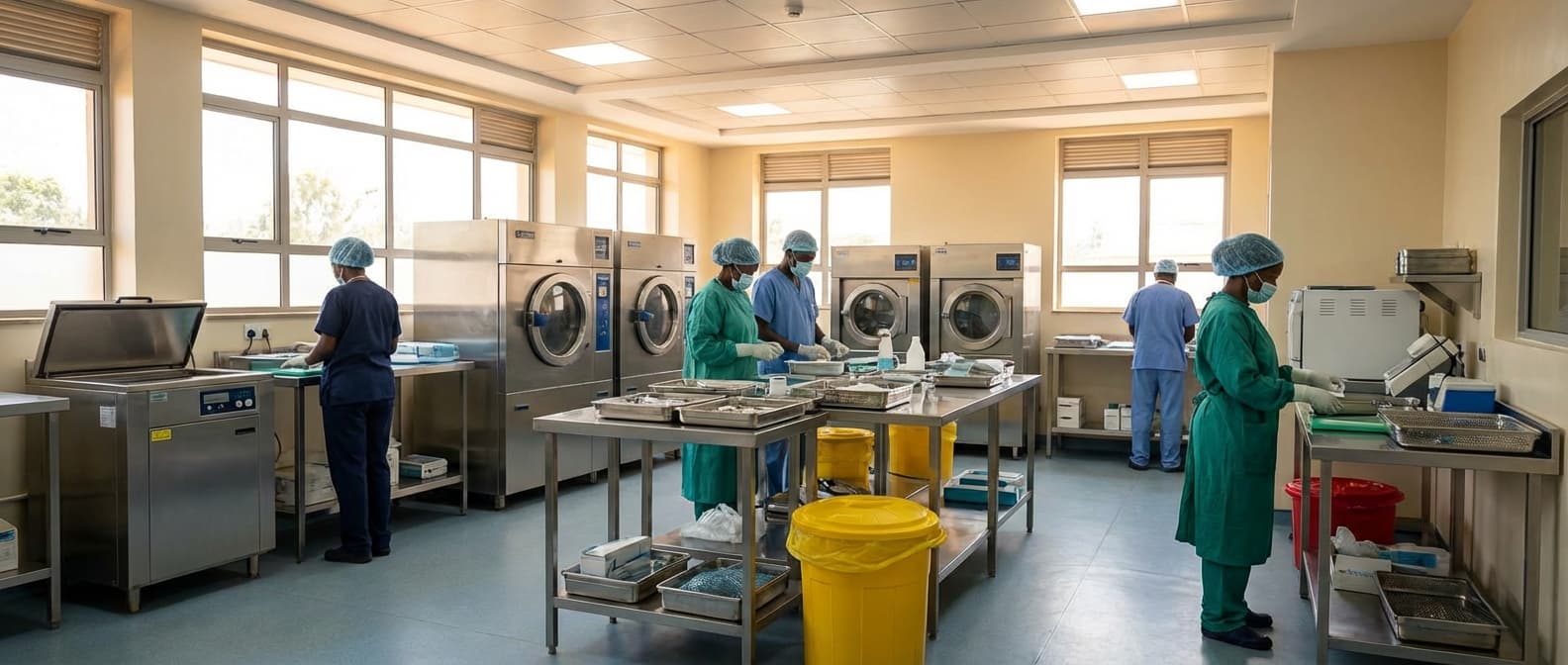
Infection-Control Readiness Support Service for Reusable Equipment in Nigeria
Engineering Excellence & Technical Support
Infection-Control Readiness Support Service for Reusable Equipment High-standard technical execution following OEM protocols and local regulatory frameworks.
Standardized Decontamination Protocols
We implement and enforce globally recognized, Nigeria-specific protocols for the cleaning, disinfection, and sterilization of all reusable medical equipment. This ensures consistent, high-level infection control across all supported facilities, significantly reducing the risk of healthcare-associated infections (HAIs).
Advanced Sterilization Validation & Monitoring
Our service employs state-of-the-art biological and chemical indicators, along with rigorous process monitoring systems, to validate the efficacy of sterilization cycles. This provides irrefutable evidence that reusable equipment is rendered safe for patient use, meeting stringent regulatory requirements.
Integrated Supply Chain & Risk Management
We establish robust supply chains for high-quality disinfectants, sterilants, and consumables, coupled with proactive risk assessment and mitigation strategies. This ensures uninterrupted access to essential infection control resources and minimizes vulnerabilities in equipment readiness.
What Is Infection-control Readiness Support Service For Reusable Equipment In Nigeria?
Infection Control Readiness Support Service for Reusable Equipment in Nigeria refers to a specialized program designed to enhance and maintain the safety and efficacy of reusable medical devices and equipment within Nigerian healthcare facilities. This service aims to mitigate the risk of healthcare-associated infections (HAIs) by ensuring that reusable items are properly decontaminated, sterilized, and stored, adhering to national and international infection prevention and control (IPC) guidelines. It encompasses a holistic approach to the entire lifecycle of reusable equipment, from procurement and initial preparation to ongoing management and disposal, focusing on robust processes and adequate infrastructure. The service is critical for facilities where the consistent and safe reprocessing of instruments, scopes, surgical tools, and other multi-use medical items is paramount for patient safety and public health.
| Stakeholder Group | Specific Needs | Typical Use Cases |
|---|---|---|
| Hospitals (Public and Private) | Ensuring patient safety, reducing HAIs, compliance with regulatory standards, operational efficiency in reprocessing, managing high volumes of reusable surgical instruments and medical devices. | Post-operative care units, operating theaters, emergency departments, intensive care units, outpatient clinics requiring sterile instruments for procedures. |
| Specialized Clinics (e.g., Dental, Ophthalmology, Endoscopy) | Safe reprocessing of specialized instruments (e.g., dental drills, endoscopes, ophthalmic surgical tools), preventing cross-contamination of specific pathogens, maintaining equipment longevity. | Dental clinics performing extractions or restorative work, ophthalmology clinics performing cataract surgery, gastroenterology units performing endoscopies. |
| Primary Healthcare Centers (PHCs) with Surgical/Procedural Capacity | Basic but critical reprocessing for minor surgical tools and diagnostic equipment, ensuring safe administration of injections and minor procedures. | PHCs offering maternal and child health services, minor surgical interventions, or diagnostic procedures requiring sterile equipment. |
| Medical Equipment Manufacturers and Suppliers | Ensuring their distributed equipment can be safely and effectively reprocessed according to manufacturer instructions and local regulations, often as part of after-sales support. | Providing guidance and validation support for the reprocessing of new equipment introduced into the Nigerian market. |
| Government Health Agencies and Regulatory Bodies | Setting and enforcing IPC standards, monitoring compliance across healthcare facilities, facilitating national strategies for HAI prevention, capacity building for the healthcare workforce. | Developing national IPC guidelines, conducting facility audits, facilitating training programs, and responding to outbreaks linked to contaminated equipment. |
Key Components of Infection-Control Readiness Support Service:
- Assessment and Gap Analysis: Comprehensive evaluation of existing IPC protocols, infrastructure, equipment, and staff training related to reusable item reprocessing.
- Protocol Development and Implementation: Establishing or refining Standard Operating Procedures (SOPs) for cleaning, disinfection, sterilization, packaging, storage, and handling of all types of reusable medical equipment.
- Training and Capacity Building: Providing targeted education and hands-on training for healthcare personnel involved in sterile processing, nursing, and other relevant departments on best practices in IPC and reprocessing.
- Equipment Assessment and Recommendations: Evaluating the functionality and suitability of existing reprocessing equipment (e.g., sterilizers, washer-disinfectors) and recommending upgrades or replacements based on identified needs and compliance standards.
- Supply Chain Management Support: Advising on the procurement of appropriate detergents, disinfectants, sterilization supplies, and monitoring devices to ensure efficacy and cost-effectiveness.
- Quality Assurance and Monitoring: Implementing systems for routine quality control, including process validation, biological and chemical monitoring of sterilization cycles, and tracking of reprocessing outcomes.
- Infrastructure Review and Recommendations: Assessing the physical environment of sterile processing departments (SPDs) for adequate workflow, ventilation, water supply, and waste management to prevent cross-contamination.
- Policy and Regulatory Compliance Guidance: Ensuring adherence to relevant Nigerian IPC guidelines, national standards, and best practices established by organizations such as the World Health Organization (WHO).
Who Needs Infection-control Readiness Support Service For Reusable Equipment In Nigeria?
Infection-control readiness for reusable medical equipment in Nigeria is a critical area that often requires specialized support. This is particularly true for facilities aiming to optimize their sterilization and disinfection processes, minimize healthcare-associated infections (HAIs), and ensure compliance with national and international standards. Such support services are vital for a range of healthcare providers and departments that rely heavily on the safe and effective reuse of medical devices and instruments.
| Target Customer/Department | Primary Needs Addressed by Support Service | Key Reusable Equipment Concerns |
|---|---|---|
| Surgical Departments | Ensuring the sterility of surgical instruments, trays, and implants; optimizing workflow for reprocessing; training staff on proper handling and sterilization techniques. | Surgical instruments (scalpels, forceps, retractors), endoscopic equipment, anesthesia equipment, surgical drapes. |
| Sterilization and Central Sterile Supply Departments (CSSD) | Establishing or improving CSSD infrastructure; developing standard operating procedures (SOPs) for decontamination, cleaning, disinfection, and sterilization; quality control and monitoring; staff competency assessment. | Autoclaves, washer-disinfectors, instrument sets, sterile packaging materials. |
| Intensive Care Units (ICUs) | Proper disinfection of patient care equipment, ventilators, monitoring devices, and frequently touched surfaces; preventing cross-contamination between patients. | Ventilator circuits, nebulizer equipment, monitoring probes, patient beds, infusion pumps. |
| Dental Clinics | Sterilization of dental instruments, handpieces, and impression materials; managing waste from dental procedures; ensuring patient safety during dental treatments. | Dental handpieces, probes, explorers, mirrors, suction tips, impression trays. |
| Maternity and Neonatal Units | Sterilization of instruments used in deliveries and neonatal care; ensuring hygiene for incubators and related equipment; preventing neonatal HAIs. | Surgical instruments for C-sections, forceps, suction catheters, incubators, phototherapy units. |
| Laboratories (Clinical and Pathology) | Decontamination and sterilization of glassware, instruments, and biohazardous materials; proper waste management; ensuring accuracy of diagnostic tests by using sterile equipment. | Microscope slides, inoculation loops, glassware, diagnostic kits, specimen collection tools. |
| Hospital Management and Administration | Ensuring regulatory compliance; reducing HAI rates and associated costs; improving overall patient safety and quality of care; budget optimization for infection control resources. | Overall systems for managing reusable equipment, capital investment in sterilization equipment, training budgets. |
| Infection Prevention and Control (IPC) Committees/Officers | Developing and implementing IPC policies; conducting risk assessments; training and education for healthcare workers; monitoring compliance with IPC guidelines. | All types of reusable medical equipment; adherence to protocols for their reprocessing. |
Target Customers and Departments for Infection-Control Readiness Support Service for Reusable Equipment in Nigeria:
- Hospitals (Public and Private)
- Specialized Clinics (e.g., Dental, Ophthalmology, Surgical Centers)
- Maternity Centers and Health Posts
- Diagnostic Laboratories
- Non-Governmental Organizations (NGOs) involved in healthcare delivery
- Tertiary Healthcare Institutions/Teaching Hospitals
Infection-control Readiness Support Service For Reusable Equipment Process In Nigeria
This document outlines the workflow for the Infection-Control Readiness Support Service for Reusable Equipment (ICRS-RE) Process in Nigeria. This service aims to bolster the capacity of healthcare facilities in Nigeria to safely reprocess reusable medical equipment, thereby reducing healthcare-associated infections (HAIs) and improving patient outcomes. The workflow details the steps from an initial inquiry by a healthcare facility to the full execution of the support service.
| Phase | Step | Description | Key Activities | Output/Deliverable | Responsible Party |
|---|---|---|---|---|---|
| Initial Inquiry | Healthcare facility expresses interest in the ICRS-RE service. | Contacting the service provider (e.g., via email, phone, referral). | Formal expression of interest. | Healthcare Facility |
| Needs Assessment | Understanding the facility's current infection control practices and specific needs regarding reusable equipment. | Preliminary discussions with facility management and IPC focal points. | Initial understanding of needs and challenges. | Service Provider, Healthcare Facility |
| Service Scope Definition | Clearly defining the extent and deliverables of the support service based on the identified needs. | Developing a proposal outlining services, timelines, and expected outcomes. | Agreed-upon service scope document. | Service Provider |
| Agreement & MOU | Formalizing the partnership and commitment between the service provider and the healthcare facility. | Signing a Memorandum of Understanding (MOU) or service agreement. | Signed agreement/MOU. | Service Provider, Healthcare Facility |
| On-site Assessment | Conducting a detailed evaluation of the facility's existing reusable equipment reprocessing processes. | Site visits, observation of workflows, interviews with staff, review of existing records. | Detailed assessment report. | Service Provider |
| Gap Analysis | Identifying discrepancies between current practices and national/international infection control standards and best practices. | Comparing observed practices against established guidelines and benchmarks. | Identified gaps and areas for improvement. | Service Provider |
| Customized Support Plan | Designing a tailored strategy to address the identified gaps and meet the facility's specific needs. | Developing a plan with specific interventions, timelines, and resource allocation. | Comprehensive support plan. | Service Provider |
| Training & Capacity Building | Providing theoretical and practical training to healthcare staff on safe reusable equipment reprocessing. | Workshops, hands-on demonstrations, simulation exercises. | Trained personnel, training materials. | Service Provider |
| Equipment & Infrastructure Review | Assessing the suitability and functionality of reprocessing equipment and facilities. | Recommendations for repair, replacement, or acquisition of essential equipment and infrastructure improvements. | Recommendations report, equipment audit. | Service Provider |
| Policy & Procedure Development/Refinement | Developing or updating standard operating procedures (SOPs) and policies related to reusable equipment reprocessing. | Drafting, reviewing, and approving relevant SOPs and policies. | Revised/new SOPs and policies. | Service Provider, Healthcare Facility |
| Supervision & Mentorship | Providing ongoing guidance and support to staff as they implement new practices and policies. | On-site supervision, remote support, problem-solving sessions. | Improved staff adherence to protocols. | Service Provider |
| Monitoring & Evaluation | Tracking the progress of implementation and assessing the impact of the support service. | Data collection on key indicators (e.g., HAIs, adherence rates), periodic reviews. | Monitoring reports, evaluation findings. | Service Provider, Healthcare Facility |
| Reporting | Documenting the activities, achievements, challenges, and recommendations of the support service. | Submission of interim and final reports. | Comprehensive project report. | Service Provider |
| Follow-up & Sustainability Planning | Ensuring the long-term sustainability of improved practices after the formal service engagement ends. | Developing strategies for ongoing internal monitoring and capacity strengthening. | Sustainability plan. | Service Provider, Healthcare Facility |
ICRS-RE Process Workflow
- Initial Inquiry and Needs Assessment
- Service Scope Definition and Agreement
- On-site Assessment and Gap Analysis
- Development of Customized Support Plan
- Training and Capacity Building
- Equipment and Infrastructure Review
- Policy and Procedure Development/Refinement
- Supervision and Mentorship
- Monitoring, Evaluation, and Reporting
- Follow-up and Sustainability Planning
Infection-control Readiness Support Service For Reusable Equipment Cost In Nigeria
Ensuring robust infection control for reusable medical equipment is paramount in Nigeria to prevent healthcare-associated infections (HAIs) and safeguard patient well-being. The 'Infection-Control Readiness Support Service for Reusable Equipment' aims to assist healthcare facilities in achieving and maintaining optimal infection prevention and control (IPC) standards for their reusable devices. This service typically encompasses a comprehensive approach, including assessment, training, equipment, consumables, and ongoing monitoring. The cost of such a service in Nigeria is influenced by several factors, leading to a range of pricing in local currency (Nigerian Naira - NGN).
| Service Component/Level | Estimated Price Range (NGN) | Notes |
|---|---|---|
| Basic IPC Readiness Assessment (One-time) | 50,000 - 250,000 | Covers a general assessment of current practices, identification of immediate gaps for a small to medium-sized facility. |
| Comprehensive IPC Program Development & Training (Per Facility - Monthly Retainer) | 200,000 - 1,500,000+ | Includes regular on-site/remote support, staff training, policy development, and monitoring for a medium to large facility. Varies significantly based on scope. |
| Specialized Equipment Decontamination Support (e.g., Endoscopes - Per device/cycle) | 10,000 - 50,000 | Cost for specialized cleaning agents, testing, and validation of reprocessing for high-risk equipment. May be part of a larger package. |
| Staff Training Workshop (Per participant) | 15,000 - 75,000 | Covers basic to advanced IPC training modules for nurses, technicians, and cleaning staff. Can be delivered on-site or remotely. |
| Supply of IPC Consumables (Monthly) | 50,000 - 500,000+ | Based on the volume and type of disinfectants, detergents, sterilization indicators, PPE, etc., required by the facility. |
| Installation & Validation of Reprocessing Equipment (e.g., Autoclave) | 150,000 - 1,000,000+ | One-time cost for installation, calibration, and validation of new or existing equipment. Highly dependent on equipment type and complexity. |
| Ongoing Monitoring & Auditing (Monthly/Quarterly) | 75,000 - 300,000 | Regular checks, data collection, and reporting on IPC compliance and performance indicators. |
Key Pricing Factors for Infection-Control Readiness Support Service for Reusable Equipment in Nigeria:
- Scope of Services: The breadth and depth of the support offered are primary determinants. This includes the number of equipment types covered, the level of assessment (e.g., basic audit vs. in-depth process mapping), the extent of training (number of staff, duration, specialized modules), and the provision of specific infection control equipment and consumables.
- Facility Size and Complexity: Larger hospitals with a higher volume of reusable equipment and more complex departments (e.g., operating theaters, intensive care units) will generally incur higher costs due to the increased workload and specialized needs.
- Current State of Readiness: Facilities with very poor existing IPC practices may require more extensive remediation, including significant training, infrastructure upgrades, and the provision of a wider range of supplies, thus increasing the overall cost.
- Equipment Type and Volume: The sheer number and types of reusable equipment (e.g., surgical instruments, endoscopes, respiratory devices) that require decontamination and sterilization significantly impact costs. Certain equipment may require specialized cleaning agents, validation processes, or costly reprocessing machinery.
- Training Requirements: The number of healthcare professionals to be trained, the duration and frequency of training sessions, and the need for specialized IPC certifications or workshops will influence pricing.
- On-site vs. Remote Support: The frequency and duration of on-site visits by IPC experts will impact travel, accommodation, and personnel costs. A purely remote support model might be less expensive but potentially less effective for hands-on implementation.
- Technology and Equipment Provision: If the service includes the supply of specific infection control equipment (e.g., autoclaves, washer-disinfectors, UV-C disinfection devices) or specialized consumables, these will form a significant part of the overall cost.
- Regulatory Compliance and Validation: Services that include assistance with meeting national and international IPC standards, as well as validation of reprocessing cycles, may command higher fees due to the expertise and rigorous processes involved.
- Contract Duration and Service Level Agreements (SLAs): Longer-term contracts with comprehensive SLAs might offer volume discounts or more predictable budgeting, while shorter-term, ad-hoc services could be priced at a premium.
- Provider's Expertise and Reputation: Established IPC support providers with a proven track record, highly qualified personnel, and strong industry partnerships may charge more for their specialized knowledge and reliability.
Affordable Infection-control Readiness Support Service For Reusable Equipment Options
Our Affordable Infection-Control Readiness Support Service for Reusable Equipment Options is designed to empower healthcare facilities with robust infection prevention protocols without breaking the budget. We understand that maintaining the highest standards of hygiene for reusable medical devices is paramount, both for patient safety and regulatory compliance. This service focuses on providing flexible, cost-effective solutions tailored to the unique needs and financial constraints of various healthcare settings.
| Cost-Saving Strategy | Description | Benefit |
|---|---|---|
| Preventative Maintenance Program | Regularly scheduled inspections and servicing of sterilization and cleaning equipment to prevent breakdowns and ensure optimal performance. | Reduces costly emergency repairs, extends equipment lifespan, and minimizes downtime for critical infection control processes. |
| Optimized Sterilization Cycles | Analysis and adjustment of sterilization cycles based on equipment type and contamination risk, ensuring effectiveness while minimizing energy and water consumption. | Lower utility bills and reduced wear and tear on sterilization equipment. |
| Staff Training and Competency Assessments | On-demand and ongoing training programs for staff on proper cleaning, disinfection, and sterilization techniques, coupled with regular competency evaluations. | Minimizes human error leading to re-processing or potential infections, reducing associated costs and improving patient outcomes. |
| Bulk Purchasing of Consumables | Leveraging our network to negotiate better prices on cleaning agents, disinfectants, sterilization wraps, and indicator strips. | Significant savings on essential supplies and ensures consistent availability. |
| Standardized Protocol Development | Assistance in creating clear, concise, and compliant protocols for all reusable equipment, reducing confusion and ensuring consistent application of best practices. | Reduces time spent on troubleshooting and ensures efficient workflow, leading to fewer errors and associated costs. |
| Remote Monitoring and Support | Utilizing technology to remotely monitor sterilization equipment performance and provide virtual troubleshooting and guidance. | Reduces the need for on-site technician visits, saving on travel and labor costs, while providing rapid issue resolution. |
Value Bundles for Enhanced Readiness
- {"title":"Basic Readiness Bundle","description":"Ideal for smaller clinics or those with limited reusable equipment. This bundle provides foundational support for essential infection control practices."}
- {"title":"Standard Readiness Bundle","description":"A comprehensive package suitable for most hospitals and larger practices. It includes expanded training, advanced documentation, and regular support."}
- {"title":"Premium Readiness Bundle","description":"Our most inclusive offering, designed for large healthcare systems or those with complex reusable equipment needs. Features on-site audits, customized protocol development, and priority support."}
- {"title":"Customizable Readiness Packages","description":"We offer the flexibility to tailor bundles based on your specific equipment inventory, staff training needs, and budget, ensuring you only pay for what you require."}
Verified Providers In Nigeria
In Nigeria, access to reliable and trustworthy healthcare is paramount. 'Verified Providers' signifies a commitment to quality, safety, and ethical practices within the healthcare sector. Franance Health stands out as a leading force in this domain, ensuring that their network of healthcare professionals and facilities meet rigorous standards. This dedication to verification not only builds trust but also directly impacts patient outcomes, providing peace of mind and access to superior care. Franance Health's rigorous credentialing process and their unwavering focus on patient well-being make them the undeniable best choice for individuals seeking verified healthcare services in Nigeria.
| Provider Type | Franance Health Verification Criteria | Benefits for Patients |
|---|---|---|
| Hospitals & Clinics | Accreditation by relevant medical bodies, evidence of sterile environments, adequate staffing ratios, adherence to infection control protocols, patient feedback mechanisms. | Access to well-equipped facilities, reduced risk of hospital-acquired infections, consistent quality of care, improved patient satisfaction. |
| Doctors & Specialists | Valid medical licenses, proof of postgraduate training and certifications, peer reviews, disciplinary record checks, commitment to continuing medical education. | Consultation with qualified and experienced medical professionals, accurate diagnoses, effective treatment plans, confidence in medical expertise. |
| Laboratories & Diagnostic Centers | Accreditation by national and international standards bodies, quality control measures for all tests, up-to-date equipment, qualified technicians. | Reliable and accurate diagnostic results, timely detection of health issues, informed medical decisions, reduced need for repeat testing. |
| Pharmacies | Valid operating licenses, proper storage of medications, dispensing by qualified pharmacists, authenticity of drugs, transparent pricing. | Access to safe and effective medications, assurance of drug quality, professional advice on medication use, fair pricing. |
Why Franance Health is the Best Choice for Verified Providers:
- Rigorous Credentialing Process: Franance Health employs a multi-stage verification system that scrutinizes the qualifications, licenses, and experience of all healthcare providers within their network.
- Commitment to Quality Standards: Beyond basic licensing, Franance Health assesses providers based on adherence to international best practices, patient safety protocols, and ethical conduct.
- Extensive Network of Specialists: Franance Health partners with a diverse range of medical professionals, from general practitioners to highly specialized surgeons, ensuring comprehensive care options.
- Patient-Centric Approach: The verification process is designed to identify providers who prioritize patient comfort, clear communication, and personalized treatment plans.
- Continuous Monitoring and Improvement: Franance Health doesn't just verify once; they maintain ongoing oversight to ensure their providers consistently meet and exceed expectations.
- Transparency and Accessibility: Franance Health makes it easy for individuals to find and access verified providers through their platform, fostering trust and reducing healthcare navigation challenges.
Scope Of Work For Infection-control Readiness Support Service For Reusable Equipment
This Scope of Work (SOW) outlines the services to be provided by the vendor to enhance the infection-control readiness of reusable medical equipment within the client's healthcare facilities. The objective is to ensure robust processes, adequate training, and appropriate infrastructure are in place to minimize the risk of healthcare-associated infections (HAIs) transmitted through improperly cleaned and disinfected reusable equipment. This SOW details the technical deliverables and standard specifications required for successful implementation.
| Deliverable | Description | Standard Specification / Requirement | Acceptance Criteria |
|---|---|---|---|
| REIC Policy and Procedure Manual | A documented set of guidelines for all aspects of reusable equipment infection control. | Aligned with current national and international guidelines (e.g., CDC, WHO, AAMI); includes sections on receiving, cleaning, disinfection, sterilization, storage, distribution, documentation, and waste management. | Policy reviewed and approved by client's Infection Control Committee and relevant department heads. Manual is complete, clear, and actionable. |
| Equipment Infrastructure Assessment Report | A detailed analysis of the current state of cleaning, disinfection, and sterilization infrastructure. | Includes recommendations for equipment upgrades, workflow optimization, and environmental controls (e.g., ventilation, water quality). Specifications for ideal equipment performance and maintenance. | Report submitted with specific, actionable recommendations, including cost-benefit analysis for proposed upgrades. |
| Training Program Materials | Comprehensive training modules and materials for different staff roles. | Includes lectures, hands-on demonstrations, visual aids, and case studies. Content covers principles of infection control, specific equipment handling, chemical safety, and documentation. | Training materials are reviewed and approved by client's subject matter experts. Demonstrates clarity and suitability for target audience. |
| Competency Assessment Tools | Tools to evaluate staff understanding and practical application of REIC procedures. | Includes written tests, direct observation checklists, and simulation exercises. Specifications for scoring and re-assessment protocols. | Tools are validated for accuracy and reliability. Clear scoring mechanisms are provided. |
| Monitoring and Auditing Plan | A framework for routine monitoring of compliance and auditing of processes. | Outlines audit frequency, sampling methods, data collection tools, reporting mechanisms, and corrective action procedures. Specifications for key performance indicators (KPIs). | Plan is detailed, feasible, and covers all critical aspects of REIC. KPIs are measurable and relevant. |
| PPE Recommendation Matrix | Guidance on appropriate PPE for various tasks involving reusable equipment. | Specifies type of gloves, gowns, eye protection, and respiratory protection based on risk assessment for each stage of equipment handling. | Matrix is easy to understand and implement. Aligned with current PPE guidelines and risk assessment principles. |
| Validation and Verification Plan | A detailed plan for validating disinfection/sterilization cycles and verifying their effectiveness. | Includes protocols for biological and chemical indicators, process monitoring, and documentation requirements. Specifications for frequency and interpretation of results. | Plan is comprehensive, scientifically sound, and addresses all relevant regulatory requirements. Specifies clear pass/fail criteria. |
| Traceability and Record-Keeping System Design | Recommendations for a system to track reusable equipment throughout its lifecycle. | Includes guidance on unique identification, batch tracking, processing logs, and maintenance records. Specifications for data integrity and accessibility. | System design is presented in a clear format (e.g., flowcharts, database schema suggestions). Addresses security and privacy concerns. |
| Cleaning Agent and Disinfectant Specification Guide | Criteria for selecting and using appropriate cleaning agents and disinfectants. | Includes efficacy data, compatibility with materials, safety profiles, shelf-life, and proper dilution and contact times. Specifications for product selection based on risk and equipment type. | Guide is evidence-based and practical for procurement and use. Includes a list of approved products with specific usage instructions. |
| Emergency Preparedness Plan Addendum | A section within the client's existing emergency preparedness plan addressing reusable equipment. | Includes procedures for surge capacity, alternative processing methods, and communication protocols during emergencies, focusing on maintaining infection control standards. | Addendum is integrated into the overall emergency plan and clearly outlines responsibilities and actions for reusable equipment during crises. |
Technical Deliverables and Standard Specifications
- Development and implementation of a comprehensive Reusable Equipment Infection Control (REIC) Policy and Procedure Manual.
- Assessment and recommendation for upgrades to existing cleaning, disinfection, and sterilization equipment and infrastructure.
- Development and delivery of tailored training programs for all personnel involved in the handling, cleaning, disinfection, and sterilization of reusable equipment.
- Creation of standardized competency assessment tools and a framework for ongoing staff evaluation.
- Establishment of a robust monitoring and auditing system to ensure compliance with REIC protocols.
- Provision of recommendations for appropriate personal protective equipment (PPE) for staff handling reusable equipment.
- Development of a comprehensive validation and verification plan for all disinfection and sterilization processes.
- Integration of best practices for traceability and record-keeping of equipment processing.
- Guidance on selection and procurement of appropriate cleaning agents, disinfectants, and sterilization supplies.
- Development of an emergency preparedness plan specifically addressing reusable equipment infection control.
Service Level Agreement For Infection-control Readiness Support Service For Reusable Equipment
This Service Level Agreement (SLA) outlines the guaranteed response times and uptime for the Infection-Control Readiness Support Service for Reusable Equipment. This service aims to ensure that all reusable equipment is maintained to the highest infection control standards, minimizing risks to patients and staff. The service includes proactive monitoring, preventative maintenance, immediate troubleshooting, and rapid replacement of critical components or equipment as needed to maintain operational readiness.
| Service Tier / Equipment Type | Response Time Guarantee (Business Hours) | Response Time Guarantee (24/7) | Uptime Guarantee (Critical Equipment) | Uptime Guarantee (Non-Critical Equipment) |
|---|---|---|---|---|
| Critical Equipment (e.g., Sterilizers, Endoscopes, Ventilators) | 1 Hour | 2 Hours | 99.9% | N/A |
| High-Priority Equipment (e.g., Surgical Instruments, Patient Monitors) | 2 Hours | 4 Hours | 99.5% | 99.0% |
| Standard Equipment (e.g., IV Pumps, Infusion Devices) | 4 Business Hours | 8 Business Hours | N/A | 98.0% |
Service Components and Definitions
- Infection-Control Readiness: The state where all reusable equipment is clean, disinfected/sterilized, functional, and available for use according to established infection control protocols and operational requirements.
- Critical Equipment: Reusable equipment deemed essential for patient care and safety. Failure of critical equipment will have an immediate and severe impact on patient care or safety.
- Non-Critical Equipment: Reusable equipment that, while important, does not pose an immediate threat to patient care or safety if temporarily unavailable.
- System Downtime: The period during which critical reusable equipment is unavailable for its intended use due to a malfunction, failure, or inability to meet infection control standards.
- Response Time: The maximum time allowed from the point of service notification (e.g., alert, support ticket submission) until a qualified technician is actively working to diagnose and resolve the issue.
- Resolution Time: The time taken to restore the equipment to its fully functional and infection-control-compliant state. This is a target and may vary based on the complexity of the issue.
Frequently Asked Questions

Ready when you are
Let's scope your Infection-Control Readiness Support Service for Reusable Equipment in Nigeria project in Nigeria.

Scaling healthcare logistics and technical systems across the entire continent.