
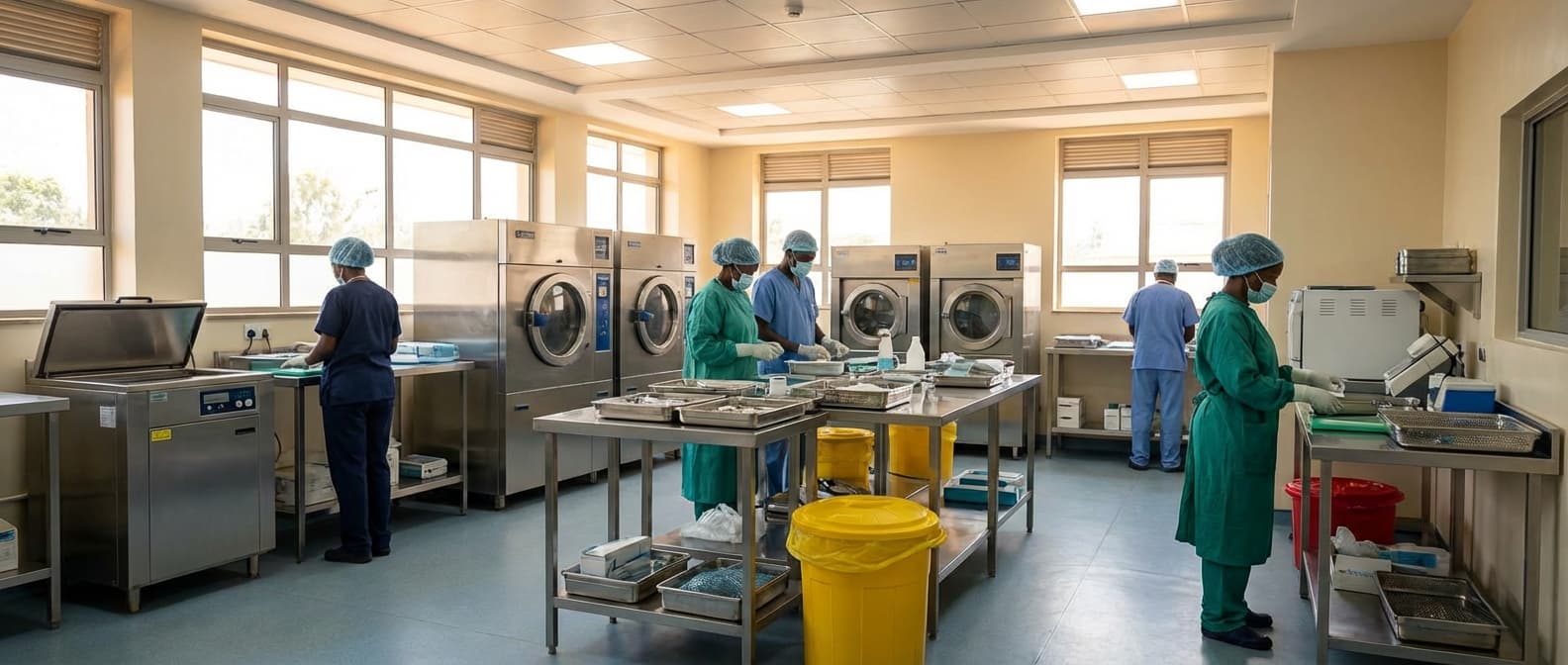
Endoscope Reprocessing Equipment Support Service in Nigeria
Engineering Excellence & Technical Support
Endoscope Reprocessing Equipment Support Service High-standard technical execution following OEM protocols and local regulatory frameworks.
Certified & Local Expertise
Our team of highly trained and certified technicians are based in Nigeria, ensuring rapid response times and in-depth understanding of the specific environmental and operational challenges faced by healthcare facilities across the country. We offer localized support for all major brands of endoscope reprocessing equipment.
Proactive Preventive Maintenance Programs
Minimize downtime and extend the lifespan of your valuable endoscope reprocessing equipment. We implement robust, customized preventive maintenance schedules tailored to your usage patterns and equipment type, reducing the risk of unexpected breakdowns and costly emergency repairs.
Genuine Parts & Efficient Repairs
Access a comprehensive inventory of genuine OEM and high-quality compatible spare parts for all major endoscope reprocessing equipment brands. Our skilled technicians perform efficient and reliable repairs, ensuring your equipment is back to optimal performance quickly and safely.
What Is Endoscope Reprocessing Equipment Support Service In Nigeria?
Endoscope reprocessing equipment support service in Nigeria refers to the comprehensive range of technical assistance and maintenance provided for the specialized machinery used in the cleaning, disinfection, and sterilization of endoscopes. This service ensures the optimal functionality, safety, and longevity of critical reprocessing equipment, thereby safeguarding patient health and adhering to stringent infection control protocols within healthcare facilities.
| Stakeholder/User | Need for Support Service | Typical Use Cases |
|---|---|---|
| Hospitals (Public & Private) | Essential for maintaining the integrity of infection control protocols, ensuring patient safety, and complying with healthcare regulations. Critical for uninterrupted provision of endoscopic procedures. | Routine cleaning and disinfection of flexible and rigid endoscopes used in gastroenterology, pulmonology, urology, gynecology, and surgery. Sterilization of surgical instruments requiring endoscopic visualization. |
| Specialty Clinics (e.g., Gastroenterology Clinics, Fertility Centers) | Ensures consistent availability of disinfected endoscopes for diagnostic and therapeutic procedures, minimizing turnaround time and enhancing patient throughput. | Reprocessing of gastroscopes, colonoscopes, duodenoscopes, and hysteroscopes. Maintenance of automated endoscope reprocessors (AERs). |
| Diagnostic Laboratories | While not directly performing procedures, laboratories that may be involved in validation or maintenance of reprocessing equipment require specialized support. | Validation of disinfection efficacy. Calibration of laboratory equipment used in reprocessing validation. |
| Equipment Manufacturers & Distributors (Local Representatives) | To provide authorized and expert maintenance and repair services for their product lines, fulfilling warranty obligations and ensuring customer satisfaction. | Installation of new AERs and associated equipment. Performing manufacturer-recommended PM and software updates. Providing spare parts. |
| Third-Party Biomedical Engineering Companies | Specializing in the maintenance of medical equipment, these entities offer outsourced support services to healthcare facilities, often across a range of equipment types. | Comprehensive maintenance contracts for AERs and related accessories. On-demand repair services for equipment downtime. |
Key Components of Endoscope Reprocessing Equipment Support Service:
- Installation and Commissioning: Professional setup, calibration, and initial validation of new reprocessing equipment to ensure it meets manufacturer specifications and regulatory requirements.
- Preventive Maintenance (PM): Scheduled, proactive servicing to inspect, clean, lubricate, and replace worn components. PM minimizes the risk of equipment failure, extends lifespan, and ensures consistent performance.
- Corrective Maintenance and Repair: Prompt troubleshooting and repair of equipment malfunctions, including diagnosis, part replacement, and functional testing to restore full operational capacity.
- Validation and Performance Testing: Regular verification of equipment performance against established standards (e.g., AAMI, ISO) and manufacturer guidelines to confirm efficacy in cleaning, disinfection, and sterilization processes.
- Calibration: Adjustment of critical parameters (e.g., temperature, pressure, flow rates) to ensure accuracy and consistency of the reprocessing cycle.
- Software Updates and Management: Maintenance of equipment firmware and software to ensure optimal functionality, security, and compliance with evolving standards.
- Parts and Consumables Management: Sourcing and provision of genuine spare parts and approved consumables necessary for the operation and maintenance of the equipment.
- Technical Training and Consultation: Educating healthcare personnel on proper equipment operation, troubleshooting, and maintenance best practices to enhance in-house capabilities and reduce reliance on external support.
- Regulatory Compliance Support: Assistance in meeting local and international regulatory requirements related to endoscope reprocessing equipment, including documentation and traceability.
Who Needs Endoscope Reprocessing Equipment Support Service In Nigeria?
Ensuring the proper reprocessing of endoscopes is paramount in healthcare settings to prevent cross-contamination and patient infections. In Nigeria, the demand for specialized endoscope reprocessing equipment support services is growing, driven by the increasing adoption of endoscopic procedures and the need for robust infection control measures. These services are crucial for the optimal functioning, maintenance, and regulatory compliance of reprocessing equipment.
| Target Customer Type | Key Departments Involved | Specific Needs Addressed by Support Services |
|---|---|---|
| Public Hospitals | Endoscopy Unit, Central Sterile Supply Department (CSSD), Biomedical Engineering Department | Routine maintenance, repair of aging equipment, training for staff on new technologies, validation and verification of reprocessing cycles, preventative maintenance plans. |
| Private Hospitals | Endoscopy Unit, CSSD, Infection Control Department, Biomedical Engineering | Installation and commissioning of new equipment, calibration services, troubleshooting of complex issues, access to spare parts, software updates, compliance with international standards. |
| Specialty Clinics | Endoscopy Suite, Nursing Staff, Technical Support Personnel | On-site technical support, emergency repair services, parts replacement, scheduled maintenance to minimize downtime, guidance on best practices for equipment usage and cleaning. |
| Diagnostic Centers | Endoscopy Room, Technicians, Quality Assurance Department | Ensuring equipment reliability for consistent diagnostic outcomes, regular servicing to prevent unexpected breakdowns, staff training on specific machine functionalities. |
| Medical Training Institutions | Simulation Labs, Clinical Skills Centers, Biomedical Departments | Maintenance of training equipment, calibration for accuracy in simulations, technical assistance for setting up and running training modules, ensuring equipment longevity for educational purposes. |
Target Customers & Departments in Nigeria Requiring Endoscope Reprocessing Equipment Support Service
- Hospitals (Public and Private)
- Specialty Clinics (e.g., Gastroenterology, Pulmonology, Urology, Gynecology)
- Diagnostic Centers with Endoscopy Facilities
- Medical Training Institutions with Endoscopy Programs
Endoscope Reprocessing Equipment Support Service Process In Nigeria
This document outlines the workflow for endoscope reprocessing equipment support services in Nigeria, detailing the process from initial inquiry to service execution and follow-up. The goal is to ensure efficient and effective maintenance and repair of critical medical equipment used for reprocessing endoscopes, maintaining infection control standards and operational readiness in healthcare facilities.
| Phase | Step | Description | Responsible Party | Key Deliverables |
|---|---|---|---|---|
| Phase 1: Inquiry and Initial Assessment | 1.1 Inquiry Submission | Client (hospital/clinic) contacts the service provider with a request for support (e.g., scheduled maintenance, breakdown repair, installation). This can be via phone, email, or a dedicated portal. | Client (Healthcare Facility) | Service Request/Inquiry |
| 1.2 Initial Information Gathering | Service provider gathers details about the equipment (make, model, serial number), nature of the issue, urgency, and client contact information. | Service Provider (Support Team) | Basic Client & Equipment Information | |
| 1.3 Preliminary Diagnosis (Remote) | If possible, remote troubleshooting or a preliminary diagnosis is attempted to understand the scope of the problem. | Service Provider (Technical Support) | Initial Assessment Report (Remote) | |
| Phase 2: Quotation and Approval | 2.1 Site Assessment (If Necessary) | For complex issues or installations, an on-site visit might be scheduled for a more thorough assessment. | Service Provider (Field Technician/Engineer) | Site Assessment Report |
| 2.2 Service Quotation Generation | Based on the assessment, a detailed quotation is prepared, outlining parts, labor, travel, and any other associated costs. Maintenance contracts may also be presented. | Service Provider (Sales/Service Department) | Formal Service Quotation | |
| 2.3 Quotation Review and Approval | Client reviews the quotation and provides formal approval (e.g., Purchase Order, signed agreement). | Client (Procurement/Management) | Approved Purchase Order/Agreement | |
| Phase 3: Scheduling and Logistics | 3.1 Service Scheduling | Once approved, the service is scheduled based on technician availability, client preference, and urgency. | Service Provider (Service Coordinator) | Confirmed Service Schedule |
| 3.2 Parts and Materials Procurement | Necessary spare parts and consumables are identified and procured or retrieved from inventory. | Service Provider (Inventory/Procurement) | Required Spare Parts & Materials | |
| 3.3 Technician Dispatch and Travel Arrangements | Field technician(s) are assigned, and travel arrangements (transport, accommodation if needed) are made. | Service Provider (Logistics/Dispatch) | Dispatched Technician(s) with Travel Itinerary | |
| Phase 4: On-Site Service Execution | 4.1 Arrival and Site Induction | Technician arrives at the client's facility, reports to the designated contact, and undergoes any necessary site induction (e.g., safety briefings, access procedures). | Service Provider (Field Technician) | On-Site Presence & Safety Compliance |
| 4.2 Detailed Equipment Inspection and Diagnosis | Thorough inspection and diagnosis of the endoscope reprocessing equipment are performed. | Service Provider (Field Technician) | Detailed Diagnostic Report | |
| 4.3 Service/Repair Execution | Repair work is carried out, including replacing parts, calibration, software updates, and cleaning as per service requirements. | Service Provider (Field Technician) | Completed Repair/Maintenance Activities | |
| 4.4 Performance Testing and Validation | The equipment's functionality is tested rigorously to ensure it meets performance specifications and safety standards. | Service Provider (Field Technician) | Successful Performance Tests & Validation Results | |
| 4.5 Client Sign-Off | The client representative reviews the work performed, confirms satisfaction with the service, and signs off on the service report. | Client (Healthcare Staff) | Signed Service Report/Work Order | |
| Phase 5: Post-Service and Follow-Up | 5.1 Documentation and Reporting | A comprehensive service report is generated, detailing all work performed, parts used, test results, and recommendations. | Service Provider (Field Technician/Service Department) | Final Service Report |
| 5.2 Invoicing | An invoice is generated and sent to the client based on the approved quotation and actual services rendered. | Service Provider (Finance Department) | Service Invoice | |
| 5.3 Client Feedback Collection | The service provider may request feedback from the client to assess satisfaction and identify areas for improvement. | Service Provider (Customer Service) | Client Feedback | |
| 5.4 Warranty and Support | Information regarding any warranty on parts or labor is provided. Follow-up support contact details are shared. | Service Provider (Customer Service/Technical Support) | Warranty Information & Ongoing Support Channels | |
| 5.5 Record Keeping and Knowledge Base Update | Service details are logged in the company's system for future reference and to contribute to a knowledge base for improved future service. | Service Provider (Service Department) | Updated Service Records & Knowledge Base |
Endoscope Reprocessing Equipment Support Service Process in Nigeria
- Phase 1: Inquiry and Initial Assessment
- Phase 2: Quotation and Approval
- Phase 3: Scheduling and Logistics
- Phase 4: On-Site Service Execution
- Phase 5: Post-Service and Follow-Up
Endoscope Reprocessing Equipment Support Service Cost In Nigeria
The cost of endoscope reprocessing equipment support services in Nigeria is a critical consideration for healthcare facilities aiming to maintain high standards of infection control and equipment longevity. These services typically encompass maintenance, repair, calibration, and validation of automated endoscope reprocessors (AERs) and associated cleaning/disinfection equipment. The pricing is influenced by several key factors, leading to a range of costs for end-users.
| Service Type / Frequency | Estimated Price Range (NGN - Nigerian Naira) | Notes |
|---|---|---|
| Annual Preventative Maintenance (Single AER) | ₦150,000 - ₦400,000 | Includes scheduled checks, basic cleaning, minor adjustments, and a basic report. Price varies by AER model complexity and service provider. |
| Comprehensive Service Contract (Annual - Single AER) | ₦300,000 - ₦800,000+ | Covers scheduled maintenance, parts (excluding consumables), labor for repairs, and possibly priority response. OEM contracts are usually at the higher end. |
| On-Demand Repair Call-Out Fee (Standard) | ₦50,000 - ₦150,000 (excluding parts) | Covers technician visit, diagnosis, and labor for a single repair. Parts are billed separately. |
| On-Demand Repair Call-Out Fee (Emergency/After-Hours) | ₦75,000 - ₦250,000+ (excluding parts) | Significantly higher than standard call-out due to urgency and off-hours service. |
| Performance Validation/Calibration | ₦75,000 - ₦200,000 per validation | Essential for ensuring the AER meets manufacturer specifications and regulatory requirements. May be bundled in comprehensive contracts. |
| Major Component Replacement (e.g., Pump, Heater Element) | ₦100,000 - ₦500,000+ (parts & labor) | Highly dependent on the specific part, its cost, and the labor involved. Can significantly increase the overall service cost for a specific repair. |
| Service for Multiple AERs or Integrated Systems | Negotiable (Volume Discount Applicable) | Custom quotes provided for facilities with multiple pieces of equipment or complex reprocessing workflows. |
Key Pricing Factors for Endoscope Reprocessing Equipment Support Service in Nigeria:
- Type and Complexity of Equipment: Different AER models and brands have varying levels of technological sophistication, which impacts the complexity of maintenance and the availability of specialized parts. High-end, multi-chamber, or fully automated systems generally command higher service fees.
- Service Level Agreement (SLA) Type: Support services can range from basic preventative maintenance contracts to comprehensive all-inclusive packages covering parts, labor, emergency repairs, and scheduled calibrations. The more comprehensive the SLA, the higher the cost.
- Frequency and Scope of Service: The number of scheduled preventative maintenance visits per year, the inclusion of detailed performance validations, and the scope of troubleshooting and repair services offered will influence the overall price.
- Location of Service: While Nigeria has a national market, logistical costs for technicians and parts can vary slightly depending on the specific city or region where the service is required. Remote or harder-to-access locations might incur additional travel charges.
- Age and Condition of Equipment: Older or heavily used equipment may require more frequent or extensive repairs, potentially leading to higher ongoing service costs. Some service providers might also charge a premium for servicing outdated models.
- Brand and Manufacturer: Support services provided directly by the original equipment manufacturer (OEM) or their authorized distributors are often more expensive due to genuine parts and specialized knowledge. Independent third-party service providers might offer more competitive pricing but may have varying levels of expertise.
- Availability of Spare Parts: The cost and availability of genuine spare parts for specific endoscope reprocessing equipment can significantly impact repair costs. If parts are imported or rare, this will drive up the service price.
- Technician Expertise and Certification: Highly skilled and certified technicians are essential for proper endoscope reprocessing equipment maintenance. The cost of employing and training such personnel is factored into service pricing.
- Response Time and Emergency Services: Contracts that guarantee rapid response times or 24/7 emergency repair services will typically be priced higher than standard service agreements.
- Value-Added Services: Some service packages might include additional benefits like staff training on equipment operation and basic troubleshooting, software updates, or remote diagnostics, which contribute to the overall cost.
Affordable Endoscope Reprocessing Equipment Support Service Options
Maintaining a functional and compliant endoscope reprocessing department is crucial for patient safety and operational efficiency. However, the cost of endoscope repair and specialized equipment can be a significant burden for healthcare facilities. This document outlines affordable endoscope reprocessing equipment support service options, focusing on value bundles and cost-saving strategies to help you optimize your budget without compromising quality.
| Service Option | Description | Value Proposition | Cost-Saving Strategy |
|---|---|---|---|
| Basic PM Contract | Scheduled inspections, cleaning, lubrication, and functional checks of reprocessing equipment (e.g., AERs, washer-disinfectors). | Reduces the likelihood of costly emergency repairs and extends equipment lifespan. | Prevents expensive downtime and premature equipment replacement. |
| Comprehensive PM & CM Contract | Includes all benefits of a Basic PM contract plus a set number of corrective maintenance visits or a capped labor rate for unplanned repairs. | Provides peace of mind with predictable maintenance and a cost buffer for unexpected issues. | Negotiate a service level agreement (SLA) with guaranteed response times and prioritize PM to minimize reliance on CM. |
| All-Inclusive Service Bundle | Covers preventive maintenance, all corrective maintenance (parts and labor), and often includes loaner equipment or priority service. | Offers the highest level of predictability and minimizes financial surprises. Ideal for facilities with high endoscope volumes. | Evaluate the total cost of ownership over the equipment's lifecycle. Consider economies of scale if you have multiple facilities. |
| Component-Level Repair Service | Focuses on repairing or replacing individual components of reprocessing equipment rather than entire units. Often offered by third-party repair specialists. | Can be significantly more cost-effective than manufacturer-based repairs for specific issues. | Seek quotes from reputable third-party service providers for out-of-warranty repairs. Ensure they use OEM-equivalent or certified parts. |
| Refurbished Equipment Purchase with Service Contract | Purchasing certified, refurbished endoscope reprocessing equipment bundled with a service and maintenance agreement. | Significantly lower initial capital outlay compared to new equipment, with ongoing support to ensure functionality. | Carefully vet the refurbisher and the service provider. Understand the warranty and service terms thoroughly. |
| Partnership with Multiple Service Providers | Instead of a single vendor, engaging with different providers for PM, specific repairs, or parts to leverage competitive pricing. | Allows for sourcing the best service and pricing for different needs. | Develop strong relationships with trusted third-party providers. Clearly define responsibilities to avoid service gaps. |
Understanding Endoscope Reprocessing Equipment Support Services
- Preventive Maintenance (PM): Regular, scheduled servicing to identify and address potential issues before they lead to breakdowns. This is a proactive approach to reduce costly emergency repairs.
- Corrective Maintenance (CM): On-demand repair services for equipment that has already malfunctioned. The goal is to minimize downtime and restore functionality quickly.
- Parts and Labor Coverage: Agreements that include the cost of replacement parts and the technician's time for repairs.
- On-Site vs. Depot Service: On-site service offers convenience with technicians coming to your facility, while depot service requires shipping equipment to a specialized repair center. The choice often impacts turnaround time and cost.
- Extended Warranties: Coverage beyond the manufacturer's standard warranty to protect against unexpected repair expenses.
- Training and Calibration: Ensuring your staff is properly trained on equipment operation and that equipment is calibrated for accuracy and compliance.
Verified Providers In Nigeria
In the rapidly evolving healthcare landscape of Nigeria, ensuring access to reliable and high-quality medical services is paramount. This is where the concept of 'Verified Providers' becomes crucial. These are healthcare professionals and institutions that have undergone rigorous credentialing processes, demonstrating their adherence to stringent standards of practice, ethical conduct, and patient safety. Franance Health stands out as a leader in identifying and promoting such verified providers, offering Nigerians a pathway to trusted healthcare. Their comprehensive credentialing methodology ensures that individuals seeking medical attention can do so with confidence, knowing they are engaging with competent and legitimate healthcare practitioners.
| Credentialing Aspect | Franance Health's Approach | Benefit to Patients |
|---|---|---|
| Professional Qualifications & Licensure | Thorough verification of degrees, certifications, and active medical licenses with relevant regulatory bodies. | Ensures providers possess the fundamental knowledge and legal authority to practice medicine. |
| Clinical Experience & Track Record | Assessment of years in practice, specialized training, and documented performance history. | Confirms practical skills and a proven ability to deliver effective patient care. |
| Continuing Professional Development (CPD) | Mandatory and ongoing participation in educational programs to stay updated with medical advancements. | Guarantees that providers are current with the latest treatments, technologies, and best practices. |
| Ethical Conduct & Disciplinary History | Comprehensive background checks and inquiries into any past disciplinary actions or ethical breaches. | Protects patients from unqualified or unethical practitioners, fostering trust and safety. |
| Infrastructure & Facility Standards (for institutions) | Evaluation of clinic/hospital facilities, equipment, and adherence to hygiene and safety regulations. | Ensures a safe, clean, and well-equipped environment for medical procedures and consultations. |
Why Franance Health Verified Providers are the Best Choice:
- Unwavering Commitment to Quality: Franance Health's verification process meticulously assesses qualifications, experience, and ongoing professional development, guaranteeing a high standard of medical expertise.
- Patient Safety First: Rigorous background checks and adherence to established protocols ensure that verified providers prioritize patient well-being and safety above all else.
- Ethical Integrity: Franance Health champions ethical medical practice, ensuring that all verified providers operate with transparency, honesty, and respect for patient rights.
- Access to Specialized Care: Our network includes verified specialists across a wide range of medical disciplines, making it easier for Nigerians to find the specific expertise they need.
- Peace of Mind: By choosing a Franance Health verified provider, patients gain the assurance that they are receiving care from qualified and trustworthy professionals, reducing anxiety and uncertainty.
- Streamlined Healthcare Journey: Franance Health aims to simplify the process of finding reliable healthcare, connecting patients with verified providers efficiently.
Scope Of Work For Endoscope Reprocessing Equipment Support Service
This Scope of Work (SOW) outlines the requirements for Endoscope Reprocessing Equipment Support Services. The objective is to ensure the optimal performance, reliability, and compliance of all endoscope reprocessing equipment, thereby maintaining patient safety and operational efficiency. This SOW covers scheduled preventive maintenance, unscheduled corrective maintenance, calibration, validation support, and spare parts management.
| Category | Technical Deliverable | Standard Specification / Requirement | Frequency / Trigger | Documentation |
|---|---|---|---|---|
| Preventive Maintenance (PM) | Scheduled PM Inspection and Service | Comprehensive inspection, cleaning, lubrication, functional testing, and adjustment of all equipment components according to manufacturer's recommendations and site-specific protocols. Includes replacement of wear parts as identified. | Quarterly, Semi-annually, or Annually per equipment type (as per manufacturer recommendations and risk assessment). | PM Report detailing tasks performed, parts replaced, test results, and recommendations. Updated PM checklist for each service. |
| Preventive Maintenance (PM) | PM Kit Replacement | Replacement of designated PM kits and filters as per manufacturer specifications for optimal performance and hygiene. | As per manufacturer's recommended intervals for specific PM kits. | Record of PM kit serial numbers and replacement dates on PM report. |
| Corrective Maintenance (CM) | Emergency Repair Service | On-site diagnosis, troubleshooting, and repair of equipment malfunctions. Response time within 4 business hours of service request. Resolution of critical issues within 24-48 business hours. | As and when equipment failure occurs. | CM Report detailing problem found, cause, actions taken, parts used, and test results. Equipment downtime log. |
| Corrective Maintenance (CM) | Troubleshooting and Diagnosis | Expert technical assessment to identify the root cause of equipment issues. | As and when equipment failure occurs. | Detailed notes within the CM report. |
| Calibration | Equipment Calibration | Calibration of critical parameters (e.g., temperature, pressure, flow rates, wash cycles) using NIST-traceable or equivalent calibrated test equipment. Calibration performed to manufacturer specifications and regulatory requirements. | Annually, or as specified by manufacturer/regulatory guidelines, or after major repairs. | Calibration Certificate detailing equipment calibrated, parameters tested, readings before and after calibration, and traceability of standards used. |
| Validation Support | IQ/OQ/PQ Support | Provision of technical expertise and documentation support for Installation Qualification (IQ), Operational Qualification (OQ), and Performance Qualification (PQ) of new or repaired reprocessing equipment. This includes providing test protocols, executing tests, and generating reports. | During installation of new equipment, major upgrades, or after significant repairs impacting critical functions. | IQ/OQ/PQ reports, supporting documentation, and logs. |
| Spare Parts Management | Spare Parts Inventory and Supply | Maintenance of an adequate stock of critical spare parts to minimize repair times. Proactive identification and ordering of parts based on PM and CM trends. Delivery of parts within 48 hours of order for critical components. | Ongoing, with regular inventory reviews. | Inventory records, parts usage logs, and purchase orders. |
| Spare Parts Management | Obsolete/End-of-Life Parts Identification | Proactive identification of parts nearing end-of-life or becoming obsolete, with recommendations for stocking or alternative solutions. | Regularly, as part of equipment lifecycle management. | Recommendations documented in PM or CM reports. |
| Training & Documentation | Technical Training for Clinical Staff | Basic troubleshooting and operational training for clinical staff on equipment use and initial response to minor issues. | During equipment installation, PM visits, or as requested. | Training materials and attendance records. |
| Training & Documentation | Service Manuals and Updates | Provision of up-to-date service manuals, schematics, and technical documentation for all supported equipment. Electronic format preferred. | Upon request or as provided by manufacturer updates. | Access to digital service manuals. |
| Reporting & Compliance | Service Performance Reporting | Monthly or quarterly reports summarizing PM and CM activities, response times, equipment uptime, parts used, and any recurring issues. | Monthly or Quarterly. | Service Performance Reports. |
| Reporting & Compliance | Compliance Audits Support | Assistance and documentation provision during internal or external compliance audits related to equipment maintenance and reprocessing. | As requested by the facility. | Access to all relevant service documentation. |
Key Objectives of the Service
- Ensure all endoscope reprocessing equipment operates at peak performance and reliability.
- Minimize downtime and unscheduled service interruptions.
- Maintain compliance with all relevant regulatory standards (e.g., FDA, AAMI, ISO).
- Extend the operational lifespan of the equipment through proactive maintenance.
- Provide prompt and effective technical support for all equipment issues.
- Ensure availability of necessary spare parts.
Service Level Agreement For Endoscope Reprocessing Equipment Support Service
This Service Level Agreement (SLA) outlines the terms and conditions for the support service provided for Endoscope Reprocessing Equipment. It defines the expected response times and uptime guarantees to ensure the efficient and reliable operation of the equipment, critical for patient safety and procedural continuity.
| Service Level | Response Time (Business Hours) | Response Time (24/7) | Uptime Guarantee (Monthly) | Resolution Time Target (Critical Issues) | Resolution Time Target (Non-Critical Issues) |
|---|---|---|---|---|---|
| Standard Support | 4 Business Hours | 8 Business Hours | 98.5% | 24 Business Hours | 72 Business Hours |
| Premium Support | 2 Business Hours | 4 Business Hours | 99.5% | 12 Business Hours | 48 Business Hours |
| Enterprise Support | 1 Business Hour | 2 Business Hours | 99.9% | 6 Business Hours | 24 Business Hours |
Key Performance Indicators (KPIs)
- Response Time: The maximum allowable time from the initiation of a support request to the acknowledgment and commencement of work by the support team.
- Uptime Guarantee: The minimum percentage of time the Endoscope Reprocessing Equipment is expected to be operational and available for use, excluding scheduled maintenance.
- Resolution Time: The maximum allowable time from the initiation of a support request to the successful resolution of the issue, restoring the equipment to full functionality.
- Preventative Maintenance Schedule: The frequency and scope of routine maintenance activities designed to minimize the risk of equipment failure.
Frequently Asked Questions

Ready when you are
Let's scope your Endoscope Reprocessing Equipment Support Service in Nigeria project in Nigeria.

Scaling healthcare logistics and technical systems across the entire continent.