
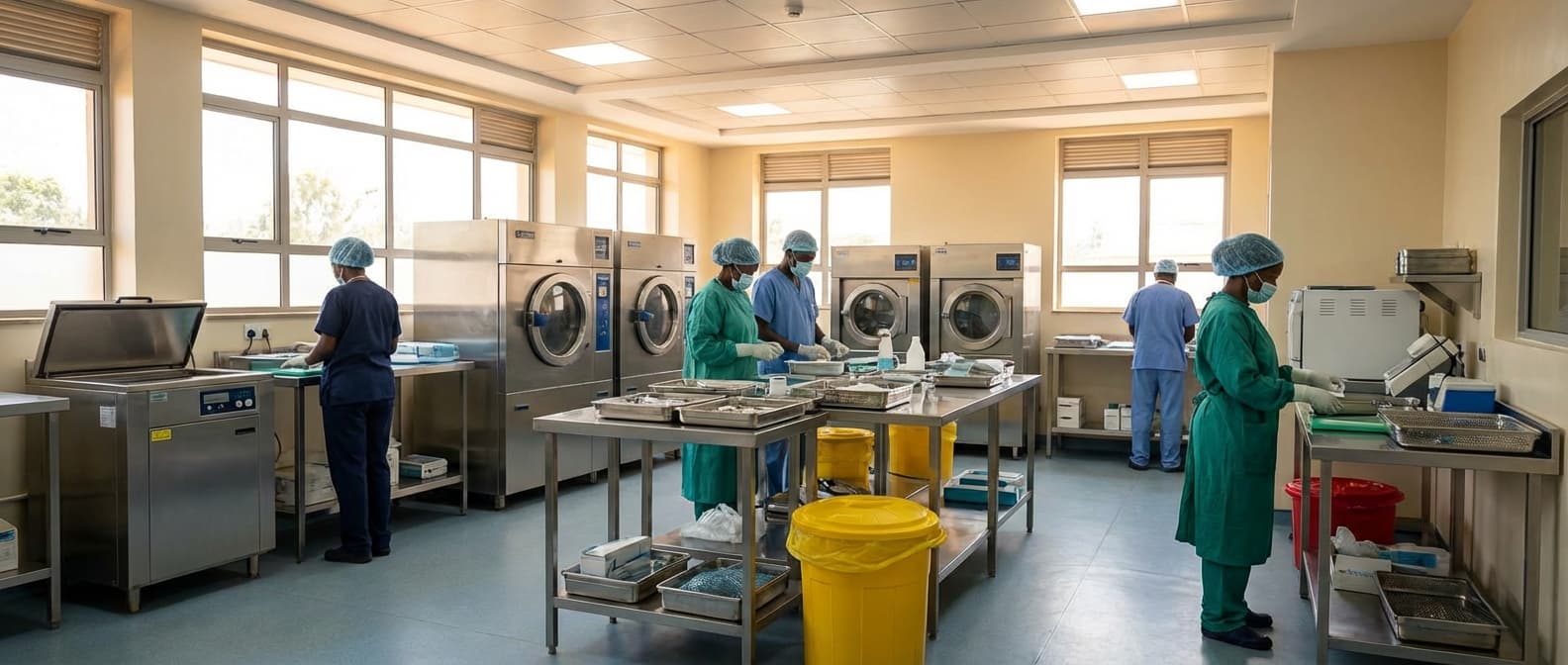
Autoclave Validation Support Service in Nigeria
Engineering Excellence & Technical Support
Autoclave Validation Support Service High-standard technical execution following OEM protocols and local regulatory frameworks.
Comprehensive Sterilization Efficacy Testing
We provide rigorous, end-to-end autoclave validation services, including biological and chemical indicator challenges, temperature mapping, and cycle parameter verification. Our data-driven approach ensures your sterilization processes meet stringent international standards (e.g., ISO 17665) and regulatory requirements specific to Nigeria, guaranteeing patient safety and product integrity.
Advanced Equipment Calibration & Maintenance Support
Our expert technicians offer precise calibration and proactive maintenance for all autoclave types. Utilizing NIST-traceable equipment and adhering to best practices, we ensure your autoclaves consistently operate within optimal parameters. This minimizes downtime, prevents costly repairs, and guarantees the reliability of your sterilization cycles, crucial for healthcare and manufacturing sectors in Nigeria.
Data-Driven Validation Reporting & Compliance Assurance
We deliver detailed, audit-ready validation reports that clearly demonstrate compliance with Nigerian health and safety regulations. Our service includes thorough documentation, trend analysis, and recommendations for continuous improvement, providing peace of mind and ensuring your organization maintains the highest standards of aseptic control.
What Is Autoclave Validation Support Service In Nigeria?
Autoclave validation support service in Nigeria refers to a specialized technical service focused on ensuring that steam sterilization equipment (autoclaves) consistently achieve and maintain the required performance parameters for effective microbial inactivation. This involves a systematic and documented process to verify that the autoclave operates within predefined specifications, thereby guaranteeing the sterility of materials processed through it. The service encompasses initial installation qualification (IQ), operational qualification (OQ), performance qualification (PQ), and ongoing periodic revalidation and calibration of the sterilization cycles and the equipment itself. It is a critical component of quality assurance in industries where sterile products are paramount.
| Service Recipient | Justification for Need | Typical Use Cases |
|---|---|---|
| Hospitals and Healthcare Facilities | Ensuring the sterility of surgical instruments, medical devices, and laboratory equipment is critical for patient safety and infection control. | Sterilization of surgical kits, endoscopes, laboratory consumables (glassware, media), respiratory equipment, and patient care items. |
| Pharmaceutical Manufacturers | Maintaining aseptic conditions and ensuring the sterility of drug products and components to prevent microbial contamination and ensure product efficacy and safety. | Sterilization of vials, stoppers, closures, filters, sterile packaging materials, and production equipment in sterile drug manufacturing environments. |
| Medical Device Manufacturers | Validating the sterilization process for medical devices to guarantee their safety and effectiveness for patient use. | Sterilization of implants, catheters, syringes, diagnostic equipment components, and other sterile medical devices. |
| Laboratories (Research, Industrial, Food & Beverage) | Ensuring sterile conditions for experiments, microbiological testing, and product quality control. | Sterilization of growth media, glassware, sample containers, filtration units, and equipment used in sterile environments. |
| Biotechnology Companies | Maintaining sterility for sensitive biological materials and processes. | Sterilization of cell culture media components, fermentation equipment, and laboratory apparatus. |
Key Components of Autoclave Validation Support Service:
- Installation Qualification (IQ): Verifies that the autoclave is installed correctly according to manufacturer specifications and relevant regulatory guidelines.
- Operational Qualification (OQ): Confirms that the autoclave operates within its defined operational parameters and limits when used according to the manufacturer's instructions.
- Performance Qualification (PQ): Demonstrates, through documented evidence, that the autoclave consistently performs its intended function of sterilizing materials under normal operating conditions and with the intended load configurations.
- Cycle Development and Optimization: Assisting in developing, testing, and optimizing sterilization cycles (e.g., temperature, pressure, time, drying phases) to meet specific product and material requirements.
- Calibration and Preventative Maintenance: Ensuring all critical measurement and control instruments are calibrated and that routine maintenance is performed to maintain optimal equipment function.
- Revalidation: Periodic retesting and documentation to confirm that the autoclave continues to meet validation requirements after significant maintenance, repairs, or when changes are made to the equipment or process.
- Documentation and Reporting: Providing comprehensive, auditable documentation of all validation activities, including protocols, executed records, and final validation reports that meet regulatory standards.
- Troubleshooting and Failure Analysis: Investigating and resolving any deviations or failures encountered during validation or routine operation.
- Regulatory Compliance Consultation: Advising on and ensuring adherence to relevant national and international standards and guidelines (e.g., ISO, WHO, local NAFDAC regulations).
Who Needs Autoclave Validation Support Service In Nigeria?
Autoclave validation is a critical process for ensuring the efficacy of sterilization equipment, directly impacting patient safety and regulatory compliance. In Nigeria, a growing healthcare sector and increasing focus on international standards necessitate robust validation services. Organizations that rely on autoclaves for sterilization face significant risks if their validation is inadequate or non-existent. This document outlines who in Nigeria needs autoclave validation support services, identifying key target customers and their relevant departments.
| Target Customer Type | Key Departments Requiring Validation Support |
|---|---|
| Hospitals (Public & Private) | Sterilization Unit (CSSD/Central Sterile Supply Department), Operating Theatre, Intensive Care Units (ICUs), Infection Control Department, Biomedical Engineering, Quality Assurance |
| Clinics & Diagnostic Centers | Clinical Staff, Laboratory Technicians, Administration, Infection Control Officer (if applicable) |
| Dental Practices | Dentists, Dental Hygienists, Dental Assistants, Practice Manager |
| Laboratories (Medical, Research, Industrial) | Lab Technicians, Researchers, Lab Managers, Safety Officers, Quality Control Personnel |
| Pharmaceutical Companies | Quality Control, Manufacturing, Research & Development, Validation Department, Facilities Management |
| Veterinary Clinics & Animal Hospitals | Veterinarians, Veterinary Nurses, Clinic Managers |
| Medical Device Manufacturers | Quality Assurance, Research & Development, Manufacturing Engineering, Regulatory Affairs |
| Cosmetic & Tattoo/Piercing Studios | Practitioners, Studio Owners/Managers, Health & Safety Officers |
Target Customers for Autoclave Validation Support Service in Nigeria
- {"title":"Hospitals (Public and Private)","description":"Hospitals are major users of autoclaves for sterilizing surgical instruments, medical devices, and other equipment. Ensuring the sterility of these items is paramount to preventing healthcare-associated infections (HAIs)."}
- {"title":"Clinics and Diagnostic Centers","description":"Smaller healthcare facilities, including clinics and diagnostic centers, also utilize autoclaves for their sterilization needs. Proper validation ensures they meet the required standards for patient care."}
- {"title":"Dental Practices","description":"Dental instruments, such as drills, probes, and mirrors, require meticulous sterilization. Autoclave validation is essential for maintaining a safe environment for dental procedures."}
- {"title":"Laboratories (Medical, Research, and Industrial)","description":"Laboratories that handle biological samples or conduct research involving microbial agents depend on autoclaves for decontaminating media, glassware, and waste, preventing the spread of pathogens and ensuring experimental integrity."}
- {"title":"Pharmaceutical Companies","description":"While not always direct autoclave users for product sterilization, pharmaceutical manufacturers may use autoclaves for sterilizing equipment, packaging materials, or for quality control processes related to microbial load."}
- {"title":"Veterinary Clinics and Animal Hospitals","description":"Similar to human healthcare, veterinary practices require sterile instruments and equipment for surgical procedures and routine care of animals."}
- {"title":"Medical Device Manufacturers","description":"Manufacturers of medical devices that require sterilization before sale or distribution must have their sterilization processes, including autoclaving, validated to meet regulatory requirements."}
- {"title":"Cosmetic and Tattoo/Piercing Studios","description":"Businesses involved in cosmetic procedures, tattoos, and piercings utilize autoclaves to sterilize instruments and prevent the transmission of blood-borne pathogens."}
Autoclave Validation Support Service Process In Nigeria
The Autoclave Validation Support Service Process in Nigeria is a structured workflow designed to ensure that autoclaves used in healthcare, pharmaceutical, and research facilities operate effectively and meet regulatory standards. This service guarantees the sterilization efficacy of autoclaves, thereby preventing infections and ensuring product integrity. The process begins with an initial inquiry from a client and culminates in the issuance of a validation report. Key stages include understanding the client's needs, conducting pre-validation assessments, performing the actual validation tests, analyzing data, and providing a comprehensive report with recommendations.
| Stage | Description | Key Activities | Deliverables | Responsible Party |
|---|---|---|---|---|
| The client expresses interest in autoclave validation services. | Initial contact, discussion of autoclave type, size, frequency of use, and specific validation requirements (e.g., IQ, OQ, PQ). | Understanding of client needs, preliminary scope definition. | Client, Service Provider |
| Based on the needs assessment, a formal proposal is sent to the client. | Preparation of a detailed quotation outlining services, scope, timeline, and costs. Negotiation and signing of a service agreement. | Formal quotation, signed service agreement. | Service Provider, Client |
| The service provider visits the client's facility to prepare for the validation. | Inspection of the autoclave, review of manufacturer's manuals, operating procedures, previous validation reports, and maintenance logs. Identification of critical parameters and potential issues. | Site assessment report, identification of critical control points, pre-validation checklist. | Service Provider |
| The core validation tests are performed according to established protocols. | Installation Qualification (IQ): Verifying the autoclave is installed correctly. Operational Qualification (OQ): Verifying the autoclave operates within specified limits. Performance Qualification (PQ): Verifying the autoclave consistently sterilizes loads under normal operating conditions. This involves using biological indicators, chemical indicators, and temperature/pressure probes. | Raw data from tests, calibration certificates of testing equipment. | Service Provider |
| Collected data is meticulously analyzed to determine the autoclave's performance. | Analysis of temperature, pressure, and time data. Evaluation of biological and chemical indicator results. Comparison against established acceptance criteria. Compilation of all findings into a comprehensive validation report. | Analyzed data, draft validation report. | Service Provider |
| The client reviews the generated report to ensure it meets their expectations and regulatory requirements. | Presentation of the draft report to the client for review. Incorporation of client feedback and finalization of the report. Issuance of the official validation report and certificates. | Final validation report, certificates of validation. | Service Provider, Client |
| If the validation tests reveal deviations, corrective actions are implemented. | Identification of root causes for failure. Implementation of corrective actions by the client or service provider. Re-validation testing to confirm effectiveness of corrective actions. | Corrective action plan, re-validation report (if applicable). | Client, Service Provider |
| Ensuring continued compliance and proper functioning of the autoclave. | Providing guidance on routine monitoring and maintenance. Scheduling of periodic re-validations (typically annually or bi-annually) as per regulatory guidelines. | Recommendations for maintenance, schedule for next validation. | Service Provider, Client |
Autoclave Validation Support Service Workflow in Nigeria
- Inquiry & Needs Assessment
- Quotation & Service Agreement
- Pre-Validation Site Visit & Documentation Review
- Validation Test Execution
- Data Analysis & Report Generation
- Report Review & Delivery
- Corrective Actions & Re-validation (if necessary)
- Ongoing Support & Scheduling Future Validations
Autoclave Validation Support Service Cost In Nigeria
Autoclave validation is a critical process for ensuring the sterility of medical and laboratory equipment in Nigeria. The cost of this service can vary significantly based on several factors. Understanding these elements is crucial for healthcare facilities and research institutions to budget effectively. This document outlines the key pricing factors for autoclave validation support services in Nigeria and provides estimated cost ranges in Nigerian Naira (NGN).
| Service Type | Estimated Cost Range (NGN) | Notes |
|---|---|---|
| Initial Autoclave Qualification (IQ, OQ, PQ) | ₦ 200,000 - ₦ 750,000+ | Cost varies based on the number, size, and complexity of the autoclave. Includes Installation Qualification, Operational Qualification, and Performance Qualification. |
| Re-validation (Annual/Bi-annual) | ₦ 150,000 - ₦ 400,000+ | Generally less expensive than initial qualification. Focuses on ensuring continued performance. |
| Performance Qualification (PQ) Only | ₦ 100,000 - ₦ 300,000+ | Typically performed after repairs or when operational parameters need verification. |
| Calibration Services (Standalone) | ₦ 50,000 - ₦ 150,000+ | Cost per instrument calibrated (temperature probes, pressure sensors). Often bundled with validation for a better overall price. |
| Consultation and Documentation Review | ₦ 50,000 - ₦ 150,000 | For facilities seeking guidance on validation protocols or reviewing existing documentation. |
| Emergency/Expedited Service | Add 20% - 50% to standard rates | Applies when immediate service is required outside of normal scheduling. |
Factors Influencing Autoclave Validation Support Service Cost in Nigeria
- Number and Type of Autoclaves: Facilities with multiple autoclaves or those with different types (e.g., gravity displacement vs. vacuum) will incur higher costs due to increased testing and documentation requirements.
- Size and Capacity of Autoclaves: Larger autoclaves, especially those designed for substantial loads, often require more complex validation procedures and specialized equipment, leading to higher fees.
- Validation Protocol Complexity: The scope of validation (e.g., IQ, OQ, PQ) significantly impacts cost. A full qualification (IQ, OQ, PQ) is more comprehensive and expensive than a partial qualification or a revalidation.
- Frequency of Validation: While initial validation is a one-time cost, routine revalidation (often annual or bi-annual) and performance qualification after repairs or modifications will also incur service fees.
- Geographic Location of the Facility: Travel and logistical expenses for the service provider to reach remote or distant locations within Nigeria can influence the overall cost.
- Service Provider's Expertise and Reputation: Established and reputable validation service providers with highly skilled technicians and advanced equipment may charge a premium.
- Scope of Services Included: Some providers offer comprehensive packages that include detailed reports, calibration certificates, and recommendations, while others might charge separately for these. The inclusion of calibration services alongside validation will also increase the price.
- Urgency of the Service: Emergency or expedited validation services may command higher fees due to the need for immediate resource allocation.
- Type of Validation Performed: Routine performance monitoring, re-validation after a breakdown, or initial qualification all have different cost structures.
Affordable Autoclave Validation Support Service Options
Ensuring your autoclave operates correctly and meets regulatory standards is crucial for many industries, from healthcare to research and manufacturing. Autoclave validation is a complex but essential process. This guide explores affordable autoclave validation support service options, focusing on value bundles and cost-saving strategies to make this critical service more accessible.
| Service Offering | Description | Value Proposition | Cost-Saving Potential |
|---|---|---|---|
| Basic Validation Package | Includes essential validation protocols (e.g., Installation Qualification - IQ, Operational Qualification - OQ, Performance Qualification - PQ) for a single autoclave unit. | Provides fundamental assurance of correct installation and operation. Ideal for smaller operations or single-unit validation needs. | Lower upfront cost compared to comprehensive bundles. Focuses on core requirements. |
| Multi-Unit Discount Bundle | Offers a reduced per-unit cost when validating multiple autoclaves within the same facility or organization. | Leverages economies of scale for businesses with several autoclaves, streamlining the validation process across the board. | Significant savings per unit when validating 3+ autoclaves. Predictable pricing for larger deployments. |
| Annual Maintenance & Validation Contract | Combines scheduled preventative maintenance with periodic validation checks (e.g., PQ revalidation annually). | Ensures ongoing compliance and operational reliability, reducing the risk of unexpected failures and the need for emergency validation services. | Bundles services at a lower overall annual cost than separate bookings. Proactive approach prevents more expensive reactive repairs and revalidations. |
| Customizable Service Tiers | Allows clients to select specific validation components (IQ, OQ, PQ, Steam Penetration Testing, etc.) based on their unique needs and regulatory landscape. | Provides flexibility to pay only for what is essential, avoiding unnecessary services and costs. | Clients tailor their spend to their exact requirements, optimizing budget allocation. |
| Remote Support & Training | Offers virtual assistance for troubleshooting, basic protocol guidance, and training on in-house validation tasks. | Empowers internal teams to handle some aspects of validation, reducing reliance on external services for routine tasks. | Reduces on-site service fees. Frees up technical staff for other duties. |
Why Autoclave Validation is Important
- Patient Safety: Guarantees sterility of medical equipment, preventing infections.
- Regulatory Compliance: Meets requirements from bodies like the FDA, ISO, and other health authorities.
- Operational Efficiency: Minimizes downtime and costly reprocessing failures.
- Product Integrity: Ensures product sterility in pharmaceutical and food industries.
- Equipment Longevity: Proper validation can identify potential issues before they cause major damage.
Verified Providers In Nigeria
In Nigeria's evolving healthcare landscape, identifying reliable and qualified medical service providers is paramount for individuals seeking quality care. 'Verified Providers' signifies an important benchmark, indicating that a healthcare entity has undergone a rigorous vetting process to ensure its adherence to established standards of professionalism, competence, and ethical practice. Franance Health stands out as a leading platform that champions this verification process, offering Nigerians a trusted gateway to a network of exceptional healthcare professionals and facilities. This commitment to verification not only enhances patient confidence but also drives a higher standard of care across the nation.
| Franance Health Verification Aspect | What it Entails | Benefit to Patients |
|---|---|---|
| Clinical Competence & Qualifications | Rigorous review of medical degrees, licenses, board certifications, and ongoing professional development. | Ensures you are treated by highly skilled and knowledgeable medical professionals. |
| Patient Care Standards | Assessment of facilities, equipment, hygiene protocols, and patient feedback mechanisms. | Guarantees a safe, comfortable, and effective healthcare experience. |
| Ethical Practice & Compliance | Checks for adherence to medical ethics, data privacy regulations, and professional conduct. | Provides assurance of integrity, respect, and confidentiality in your healthcare journey. |
| Infrastructure & Resources | Evaluation of the adequacy of facilities, technology, and support staff. | Confirms access to the necessary resources for comprehensive medical treatment. |
Why Franance Health Verified Providers Represent the Best Choice:
- Unwavering Commitment to Quality: Franance Health's verification process is meticulous, assessing clinical expertise, adherence to best practices, and patient safety protocols. Only providers meeting these stringent criteria are included in their network.
- Enhanced Patient Trust and Safety: Knowing that a provider has been vetted by a reputable organization like Franance Health significantly reduces the risk of encountering substandard care, fostering greater peace of mind for patients.
- Access to Specialized Expertise: The platform curates a diverse range of specialists, ensuring patients can find highly qualified professionals for their specific medical needs, from routine check-ups to complex surgical procedures.
- Transparency and Accountability: Franance Health promotes transparency by clearly outlining the credentials and experience of its verified providers, allowing patients to make informed decisions.
- Streamlined Healthcare Navigation: Franance Health simplifies the often-complex process of finding healthcare, connecting users directly with trusted and verified practitioners, saving time and reducing frustration.
- Promotion of Ethical Healthcare Practices: The verification process often includes an assessment of ethical conduct and patient rights, ensuring that verified providers operate with integrity and prioritize patient well-being.
Scope Of Work For Autoclave Validation Support Service
This Scope of Work (SOW) outlines the services to be provided by [Service Provider Name] for Autoclave Validation Support to [Client Name]. The objective is to ensure that the client's autoclaves are qualified to perform their intended sterilization cycles according to relevant regulatory standards and internal protocols. This SOW details the technical deliverables and standard specifications required for a successful validation.
| Deliverable | Description | Standard Specification/Reference | Format | |
|---|---|---|---|---|
| IQ Protocol & Report | Verifies that the autoclave is installed correctly and according to manufacturer specifications. | Based on manufacturer's installation manual, client's site requirements, and industry best practices (e.g., ISPE baseline guide). | Electronic (PDF) and/or Hardcopy | |
| OQ Protocol & Report | Verifies that the autoclave operates within defined operational limits across its intended range. | Based on manufacturer's operational specifications, cycle parameters (temperature, pressure, time), and regulatory guidelines (e.g., FDA 21 CFR Part 820, ISO 13485, EN 285). | Electronic (PDF) and/or Hardcopy | |
| PQ Protocol & Report | Demonstrates that the validated autoclave consistently performs its intended function under normal operating conditions. | Includes challenge studies using biological indicators (BIs) and/or chemical indicators (CIs) for relevant load types, and cycle reproducibility. | Based on established sterilization standards (e.g., ISO 11135, ISO 17665) and client's product/process requirements. | Electronic (PDF) and/or Hardcopy |
| Calibration Certificates | Evidence of current and valid calibration for all critical measuring instruments used during validation. | Traceable to national or international standards (e.g., NIST, UKAS). | Electronic (PDF) | |
| Validation Summary Report | A consolidated report summarizing the entire validation process, including IQ, OQ, and PQ findings, deviations, and conclusions. | Compliant with regulatory expectations and client's quality system requirements. | Electronic (PDF) and/or Hardcopy | |
| Revalidation Plan (if applicable) | Outline for future revalidation activities based on regulatory requirements or significant changes. | As per client's change control and revalidation policy. | Electronic (Word/PDF) |
Key Activities and Deliverables
- Installation Qualification (IQ) documentation review and execution oversight.
- Operational Qualification (OQ) protocol development, execution oversight, and reporting.
- Performance Qualification (PQ) protocol development, execution oversight, and reporting.
- Calibration verification of critical instruments (e.g., temperature probes, pressure sensors).
- Validation report generation, including all supporting data and analyses.
- Retirement of any identified deviations and recommendations for corrective actions.
- Review of existing autoclave operating procedures and SOPs for alignment with validation requirements.
- Training on validation principles and specific equipment operation for client personnel (optional, as per agreement).
Service Level Agreement For Autoclave Validation Support Service
This Service Level Agreement (SLA) outlines the response times and uptime guarantees for the Autoclave Validation Support Service provided by [Your Company Name]. This agreement ensures timely and reliable support to maintain the operational integrity and compliance of your autoclave validation processes.
| Severity Level | Description | Response Time Target | Resolution Time Target (for non-critical issues) | Uptime Guarantee |
|---|---|---|---|---|
| Critical (e.g., Complete autoclave failure preventing all sterilization cycles) | Service is completely unavailable, impacting all critical processes. | 1 hour (within business hours) | 4 hours (for non-critical aspects/workarounds) | 99.9% (excluding scheduled maintenance) |
| High (e.g., Validation failure impacting a significant number of cycles or a critical product line) | Significant disruption to validation processes, impacting multiple or key processes. | 4 business hours | 8 business hours | 99.8% (excluding scheduled maintenance) |
| Medium (e.g., Isolated validation parameter deviation, minor equipment performance issue) | Minor impact on validation, affecting a limited number of cycles or non-critical processes. | 8 business hours | 2 business days | 99.5% (excluding scheduled maintenance) |
| Low (e.g., General inquiry, request for documentation, minor non-critical configuration question) | No immediate impact on validation processes. Information or clarification needed. | 24 business hours | 3 business days | N/A (as it does not impact operational uptime) |
Key Service Metrics
- Response Time: The maximum time allowed for [Your Company Name] to acknowledge and begin addressing a support request.
- Resolution Time: The target time for resolving a reported issue.
- Uptime Guarantee: The percentage of time the Autoclave Validation Support Service is available and functional.
- Severity Levels: A classification system for support requests based on their impact on operations.
- Escalation Procedures: Defined steps for escalating unresolved issues.
Frequently Asked Questions

Ready when you are
Let's scope your Autoclave Validation Support Service in Nigeria project in Nigeria.

Scaling healthcare logistics and technical systems across the entire continent.