
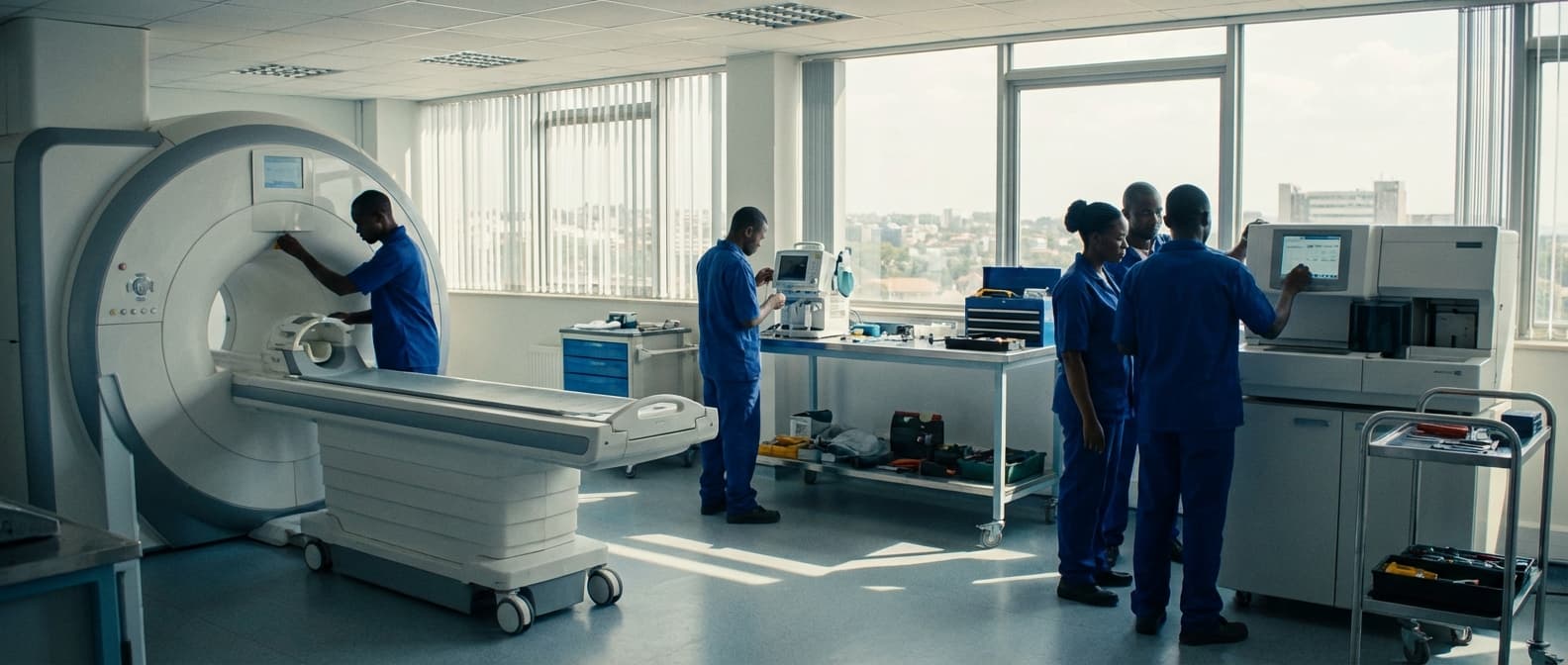
Planned Shutdown Coordination Service for Critical Equipment in Burkina Faso
Engineering Excellence & Technical Support
Planned Shutdown Coordination Service for Critical Equipment High-standard technical execution following OEM protocols and local regulatory frameworks.
Predictive Maintenance & Optimized Downtime
Leveraging advanced analytics and real-time sensor data, our service forecasts potential equipment failures for critical assets in Burkina Faso. This enables proactive, precisely timed shutdowns for maintenance, minimizing unexpected disruptions and maximizing operational uptime in challenging environments.
Integrated Supply Chain & Resource Management
We provide end-to-end coordination of spare parts, specialized technicians, and necessary equipment for planned shutdowns in Burkina Faso. Our robust logistics network ensures timely delivery and availability, mitigating delays and ensuring efficient execution of complex maintenance operations under local conditions.
Enhanced Safety Protocols & Risk Mitigation
Our service prioritizes safety with meticulously developed shutdown procedures, risk assessments, and comprehensive training for all personnel involved in Burkina Faso. We implement best-in-class safety management systems to safeguard lives and assets during critical maintenance activities, adhering to international standards.
What Is Planned Shutdown Coordination Service For Critical Equipment In Burkina Faso?
The Planned Shutdown Coordination Service for Critical Equipment in Burkina Faso is a specialized operational and engineering support function designed to manage and execute the scheduled de-energization and isolation of critical industrial and infrastructure assets. This service ensures that planned maintenance, upgrades, or decommissioning activities on equipment vital to national operations can be performed with minimal disruption and maximum safety. It encompasses a holistic approach, integrating technical planning, risk assessment, stakeholder communication, and precise execution protocols. The core objective is to orchestrate complex sequences of events involving power isolation, system depressurization, mechanical locking, and personnel safety procedures to achieve a safe and controlled operational state for the targeted equipment, thereby enabling necessary interventions while mitigating potential negative impacts on downstream processes and public services.
| Entity/Sector | Reason for Need | Typical Use Cases |
|---|---|---|
| National Power Grid Operators (SONABEL) | Ensuring grid stability and enabling maintenance of generation, transmission, and distribution assets. | Scheduled maintenance of generators, replacement of critical transformers, substation upgrades, line repairs requiring complete de-energization. |
| Mining and Extractive Industries | Maintaining operational integrity and safety of heavy machinery and processing plants. | Overhaul of large mining equipment (e.g., crushers, conveyor systems), maintenance of processing plant circuits, upgrades to electrical distribution systems. |
| Water and Wastewater Treatment Facilities | Ensuring continuity of essential services and maintaining hygiene standards. | Maintenance of pumps, aeration systems, chemical dosing units, structural repairs within treatment plants. |
| Telecommunications Infrastructure Providers | Minimizing service disruptions during upgrades or maintenance of critical network components. | Hardware upgrades in data centers, maintenance of base station power systems, fiber optic network maintenance requiring local de-energization. |
| Industrial Manufacturing Plants | Facilitating scheduled maintenance, modernization, and expansion of production lines. | Major overhauls of manufacturing machinery, installation of new production equipment, electrical system upgrades, facility expansions. |
| Transportation Infrastructure (e.g., Airports, Railways) | Ensuring safety and reliability of critical operational systems. | Maintenance of air traffic control systems, runway lighting upgrades, signaling system maintenance, railway electrification maintenance. |
Key Components of Planned Shutdown Coordination Service
- Technical Planning and Scope Definition: Detailed identification of equipment requiring shutdown, determination of isolation points, and definition of work scopes. This includes developing detailed step-by-step procedures for de-energization, lock-out/tag-out (LOTO), and isolation verification.
- Risk Assessment and Mitigation Strategies: Comprehensive analysis of potential hazards associated with the shutdown process, including electrical, mechanical, chemical, and personnel safety risks. Development and implementation of mitigation strategies to address identified risks.
- Interdependency Analysis: Mapping of dependencies between critical equipment and associated systems to understand the ripple effect of a shutdown and to sequence activities to minimize operational impact.
- Resource Management and Scheduling: Coordination of internal and external technical personnel, specialized equipment, and consumables. Development of a detailed project schedule with clear milestones and critical path identification.
- Stakeholder Communication and Engagement: Proactive engagement with all relevant parties, including operational staff, maintenance teams, regulatory bodies, and affected external entities (e.g., power distribution companies, downstream industries). Establishing clear communication channels and protocols.
- Permit-to-Work System Integration: Ensuring all activities conducted during the shutdown are governed by a robust permit-to-work system, verifying that all safety precautions are in place before commencing work.
- Execution Oversight and Monitoring: On-site supervision and coordination of all shutdown activities to ensure adherence to procedures, safety protocols, and the established schedule. Real-time monitoring of progress and immediate response to deviations.
- Isolation Verification and Re-energization Procedures: Rigorous verification of complete isolation of equipment before work commences. Controlled and sequenced re-energization procedures to restore operational capability safely.
- Post-Shutdown Review and Documentation: Comprehensive review of the shutdown process, identification of lessons learned, and detailed documentation of all activities performed, including incident reports and completion certificates.
Who Needs Planned Shutdown Coordination Service For Critical Equipment In Burkina Faso?
Planned shutdown coordination services are crucial for organizations in Burkina Faso that rely heavily on critical equipment for their operations. These services ensure that planned downtime for maintenance, upgrades, or repairs is executed efficiently, safely, and with minimal disruption to business continuity. This is particularly vital in sectors where equipment failure or extended downtime can lead to significant financial losses, safety hazards, or service interruptions.
| Customer Segment | Key Departments Involved | Critical Equipment Examples |
|---|---|---|
| Mining Companies | Operations, Maintenance, Engineering, Safety, Planning, Production | Crushers, Conveyors, Drills, Haul Trucks, Processing Plants (e.g., Smelters, Refineries), Power Generators |
| Power Generation & Distribution Companies | Operations, Maintenance, Engineering, Grid Control, Safety, Transmission & Distribution | Turbines, Generators, Transformers, Switchgear, Control Systems, Substations |
| Telecommunication Providers | Network Operations, Field Operations, Engineering, Site Management, Infrastructure | Base Transceiver Stations (BTS), Core Network Equipment, Data Centers, Power Supply Units, Fiber Optic Equipment |
| Large Industrial Manufacturers | Production, Maintenance, Engineering, Quality Control, Operations | Assembly Lines, CNC Machines, Furnaces, Boilers, Packaging Machinery, Robotics |
| Oil & Gas Exploration and Processing Companies | Operations, Maintenance, Drilling, Processing, Safety, Engineering | Drilling Rigs, Pumps, Compressors, Refineries, Storage Tanks, Pipelines, Control Systems |
| Large-Scale Agricultural & Food Processing Businesses | Production, Maintenance, Operations, Quality Assurance, Logistics | Harvesters, Tractors, Processing Lines (e.g., milling, canning), Refrigeration Units, Packaging Machines |
| Major Hospitals & Healthcare Facilities | Biomedical Engineering, Facilities Management, IT, Anesthesiology, Radiology, Surgery | MRI Machines, CT Scanners, X-ray Machines, Dialysis Machines, Anesthesia Machines, Critical Care Units (ICUs), Power Generators |
| Airport Authorities, Port Operators, Railway Companies | Operations, Maintenance, Engineering, Safety, Traffic Control | Runway Lighting Systems, Air Traffic Control Systems, Cranes, Conveyors, Signaling Systems, Rolling Stock Maintenance |
Target Customers & Departments in Burkina Faso Requiring Planned Shutdown Coordination Service for Critical Equipment
- Mining Sector:
- Energy and Utilities:
- Telecommunications:
- Manufacturing and Industrial Production:
- Oil and Gas (Exploration & Processing):
- Large-Scale Agriculture & Food Processing:
- Healthcare (Hospitals & Clinics):
- Transportation (Airports, Ports, Rail):
Planned Shutdown Coordination Service For Critical Equipment Process In Burkina Faso
The Planned Shutdown Coordination Service for Critical Equipment ensures the seamless and efficient execution of scheduled maintenance, upgrades, or decommissioning of vital machinery in Burkina Faso. This service minimizes disruption to operations, enhances safety, and optimizes resource allocation. The workflow encompasses a structured process from the initial inquiry to the final execution and post-shutdown review.
| Stage | Description | Key Activities | Responsible Parties | Deliverables |
|---|---|---|---|---|
| Inquiry & Requirement Gathering | Initial contact from the client requesting a planned shutdown for specific critical equipment. | Receive and document the client's request, identify the critical equipment, understand the purpose of the shutdown (maintenance, upgrade, decommissioning), and initial timeline expectations. | Client, Service Provider (Coordination Team) | Initial Request Documentation, Preliminary Equipment Identification |
| Assessment & Planning | Detailed evaluation of the equipment, surrounding infrastructure, operational impact, and development of a comprehensive shutdown plan. | Conduct on-site assessments, analyze equipment condition and dependencies, identify safety hazards, define scope of work, estimate resource needs (personnel, parts, tools, permits), develop a preliminary shutdown schedule, and identify potential risks. | Service Provider (Engineers, Planners, Safety Officers), Client (Operations, Maintenance) | Technical Assessment Report, Risk Assessment, Draft Shutdown Plan, Resource Estimate |
| Authorization & Scheduling | Formal approval of the shutdown plan and confirmation of the execution timeline. | Present the draft shutdown plan to client management for review and approval, finalize the shutdown schedule in coordination with operational constraints, obtain necessary internal and external permits and regulatory approvals. | Client Management, Service Provider Management, Regulatory Bodies | Approved Shutdown Plan, Confirmed Schedule, Issued Permits |
| Resource Mobilization | Gathering and allocating all necessary personnel, materials, and equipment for the shutdown execution. | Procure spare parts and consumables, mobilize specialized labor (internal and external), ensure availability of required tools and heavy equipment, confirm logistics for personnel and materials transport. | Service Provider (Procurement, Logistics, HR), Client (Procurement, Operations) | Secured Spare Parts & Materials, Mobilized Personnel, Allocated Equipment |
| Pre-Shutdown Preparations | Final checks and preparations before the actual shutdown begins. | Conduct pre-shutdown briefings with all involved teams, perform final safety inspections, isolate and secure the critical equipment and surrounding areas, confirm communication channels, prepare for emergency response. | Service Provider (Coordination Team, Safety Officers), Client (Operations, Security) | Pre-Shutdown Briefing Minutes, Safety Walkthrough Reports, Secured Work Zones |
| Execution of Planned Shutdown | The actual process of taking the critical equipment offline and performing the planned activities. | Implement the shutdown sequence as per the approved plan, execute maintenance/upgrade/decommissioning tasks, continuously monitor progress against schedule, manage any unforeseen issues or deviations from the plan, ensure adherence to safety protocols. | Service Provider (Execution Teams, Supervisors), Client (Operations, Quality Control) | Executed Work Tasks, Daily Progress Reports, Incident Reports (if any) |
| Post-Shutdown Activities | Activities to bring the equipment back online and ensure its operational readiness. | Perform system checks and testing, re-commission the critical equipment, conduct final inspections and quality assurance, restore surrounding infrastructure, clean up the work area. | Service Provider (Testing Teams, Maintenance Teams), Client (Operations, Quality Control) | Testing & Commissioning Reports, Final Inspection Sign-off, Cleaned Work Area |
| Reporting & Review | Documenting the entire shutdown process and analyzing its effectiveness. | Prepare a comprehensive post-shutdown report detailing work performed, deviations, lessons learned, and cost analysis. Conduct a debriefing session with all stakeholders to identify areas for improvement in future shutdowns. | Service Provider (Coordination Team, Management), Client (Management, Operations) | Post-Shutdown Report, Lessons Learned Document, Performance Analysis |
Workflow Stages
- Inquiry & Requirement Gathering
- Assessment & Planning
- Authorization & Scheduling
- Resource Mobilization
- Pre-Shutdown Preparations
- Execution of Planned Shutdown
- Post-Shutdown Activities
- Reporting & Review
Planned Shutdown Coordination Service For Critical Equipment Cost In Burkina Faso
This document outlines the cost considerations for a Planned Shutdown Coordination Service for Critical Equipment in Burkina Faso. Such services are vital for minimizing downtime, optimizing maintenance schedules, and ensuring the safety and longevity of essential industrial and operational assets. The pricing is influenced by several key factors, leading to a range of costs that are discussed herein.
| Service Component / Scale | Estimated Range (XOF) | Description |
|---|---|---|
| Basic Shutdown Planning & Coordination (Small Scale) | 1,500,000 - 3,000,000 | Covers coordination for a limited number of critical assets, straightforward processes, and shorter durations. Includes initial planning, scheduling, and basic on-site supervision. |
| Standard Shutdown Planning & Coordination (Medium Scale) | 3,000,000 - 7,500,000 | Suitable for more complex operations involving multiple interlinked systems. Involves detailed risk assessment, resource optimization, and enhanced on-site management for a moderate duration. |
| Advanced Shutdown Planning & Coordination (Large Scale/High Criticality) | 7,500,000 - 20,000,000+ | For extensive, highly complex shutdowns with significant safety and operational implications. Includes comprehensive feasibility studies, advanced simulations, detailed logistical planning, specialized personnel deployment, and continuous risk management over extended periods. |
| Per-Diem for Specialized Coordination Personnel | 50,000 - 150,000+ | Daily rate for highly skilled engineers, project managers, or safety officers. Varies based on expertise and experience level. |
| Logistics & Support (Variable) | (Included in overall project cost or itemized) | Costs for transportation, accommodation, specialized equipment rental, temporary facilities, and other site-specific logistical needs. |
| Risk Assessment & Mitigation Planning | 500,000 - 2,000,000 | Dedicated cost for in-depth analysis of potential risks and development of comprehensive mitigation strategies. |
| Post-Shutdown Review & Reporting | 250,000 - 750,000 | For detailed analysis of the shutdown's execution, lessons learned, and comprehensive reporting for future planning. |
Key Pricing Factors for Planned Shutdown Coordination Services in Burkina Faso:
- Complexity and Scope of the Shutdown: The number of equipment units involved, the criticality of each, the interdependencies between systems, and the overall duration of the planned shutdown significantly impact the service cost. Larger and more complex shutdowns require more extensive planning, resource allocation, and management.
- Type and Scale of Equipment: The nature and size of the critical equipment (e.g., power generators, manufacturing machinery, mining equipment, IT infrastructure) will dictate the specialized knowledge, tools, and personnel required for effective coordination. Larger and more sophisticated equipment generally translates to higher coordination costs.
- Duration of the Shutdown: The length of the planned shutdown directly influences the manpower hours, project management time, and logistical support needed. Longer shutdowns necessitate continuous oversight and coordination.
- Geographic Location and Accessibility: The specific site within Burkina Faso where the shutdown will occur can affect costs due to transportation, accommodation, and potential remoteness. Access to the site for personnel and equipment is a crucial consideration.
- Required Expertise and Specialization: The need for highly specialized technicians, engineers, or project managers with specific industry experience will influence the hourly rates or project fees. Some equipment may require certifications or unique skill sets.
- Safety and Regulatory Compliance: Adherence to strict safety protocols and national/international regulations for shutdowns is paramount. The service provider must factor in the cost of implementing and overseeing these measures, which can include specialized training and equipment.
- Logistics and Support Services: This includes the provision of temporary power, scaffolding, lifting equipment, accommodation for the coordination team, and other logistical support. The extent of these requirements will vary based on the shutdown's nature and location.
- Technology and Software Utilized: The use of advanced project management software, simulation tools, or digital twin technologies for planning and execution can add to the cost but often leads to greater efficiency and reduced risk.
- Provider's Reputation and Experience: Established and reputable service providers with a proven track record in Burkina Faso or similar environments may command higher fees due to their expertise, reliability, and established networks.
- Risk Mitigation Strategies: The level of risk associated with the shutdown (e.g., potential for cascading failures, environmental impact) will influence the thoroughness of the planning and the extent of risk mitigation measures required, thereby affecting the cost.
Affordable Planned Shutdown Coordination Service For Critical Equipment Options
Implementing a comprehensive and affordable planned shutdown coordination service is crucial for minimizing downtime and maximizing the lifespan of your critical equipment. This service ensures that all aspects of planned equipment downtime are meticulously managed, from initial planning and scheduling to execution and post-shutdown analysis. By leveraging value bundles and adopting strategic cost-saving measures, organizations can achieve significant operational efficiencies and financial benefits.
| Cost-Saving Strategy | Description | Potential Impact |
|---|---|---|
| Early & Accurate Planning | Investing in detailed planning well in advance identifies potential bottlenecks, required resources, and optimizes scheduling, reducing last-minute rushes and overtime. | Reduced labor costs, minimized unexpected delays, improved resource allocation. |
| Standardized Shutdown Checklists & Procedures | Developing and adhering to standardized, repeatable processes for common shutdown tasks ensures efficiency and reduces errors. | Faster execution times, fewer mistakes, less rework, improved safety. |
| Optimized Resource Management | Strategic allocation of skilled labor, specialized tools, and spare parts based on accurate demand forecasting. Leveraging shared resources across multiple shutdowns. | Lower labor costs, reduced rental fees for equipment, minimized inventory carrying costs. |
| Leveraging Technology & Automation | Utilizing specialized software for scheduling, communication, and documentation, along with potential automation of certain inspection or testing procedures. | Increased efficiency, better data capture, improved reporting, reduced manual effort. |
| Preventive vs. Reactive Maintenance Balance | Shifting focus from purely reactive repairs during shutdowns to more proactive and predictive maintenance strategies identified during planning. | Reduced scope of emergency repairs, extended equipment life, less unplanned downtime. |
| Strategic Procurement of Parts & Services | Bulk purchasing of common spare parts, negotiating long-term contracts with suppliers and service providers, and exploring alternative or refurbished parts where appropriate. | Lower material and service costs, better vendor relationships. |
| Contingency Planning & Risk Mitigation | Developing robust contingency plans for unforeseen issues (e.g., equipment failure, weather delays) to minimize disruption and additional costs. | Reduced impact of unexpected events, faster recovery times. |
| Post-Shutdown Performance Analysis | Thorough review of shutdown execution against the plan, identifying lessons learned for future shutdowns to continuously improve efficiency and cost-effectiveness. | Continuous improvement, identification of recurring issues, data-driven decision-making. |
Value Bundles for Planned Shutdown Coordination Services
- {"title":"Essential Shutdown Package","description":"This foundational bundle includes core services for basic shutdown planning and coordination. It's ideal for organizations with simpler equipment or those starting to formalize their shutdown processes."}
- {"title":"Proactive Maintenance Integration Bundle","description":"Enhances the Essential package by integrating proactive maintenance strategies, including condition monitoring data analysis and predictive maintenance recommendations to optimize shutdown scope and timing."}
- {"title":"Advanced Optimization Bundle","description":"A comprehensive solution that incorporates advanced analytics, risk assessment, scenario planning, and expert consultation to deliver the most efficient and cost-effective shutdown possible. This bundle is suited for complex operations with high-value assets."}
- {"title":"Customizable Service Tiers","description":"Allows clients to select specific services from a menu to create a tailored package that precisely meets their unique operational needs and budget constraints."}
Verified Providers In Burkina Faso
In Burkina Faso's evolving healthcare landscape, identifying trustworthy and skilled medical professionals is paramount. Franance Health stands out as a leading platform dedicated to verifying healthcare providers, ensuring that patients have access to the highest quality of care. Their rigorous credentialing process is a testament to their commitment to patient safety and medical excellence.
| Provider Type | Franance Health Verified Benefits | Why This Matters for Patients |
|---|---|---|
| Doctors & Specialists | Confirms up-to-date licenses, board certifications, and specialized training. Access to verified patient reviews. | Ensures you are seeing a qualified practitioner with the correct expertise for your condition, reducing risks and improving treatment outcomes. |
| Nurses & Midwives | Verifies nursing licenses, training, and areas of specialization. Checks for any disciplinary actions. | Guarantees compassionate and competent care, especially crucial for vulnerable populations like mothers and children, promoting safe delivery and post-natal care. |
| Pharmacies & Dispensaries | Confirms proper licensing, adherence to pharmaceutical regulations, and inventory management practices. Checks for authenticity of medications. | Ensures access to safe, authentic, and properly stored medications, preventing counterfeit drugs and ensuring accurate dispensing. |
| Diagnostic Laboratories | Verifies accreditation, quality control measures, and the qualifications of laboratory technicians and pathologists. | Provides confidence in the accuracy and reliability of diagnostic tests, which are vital for correct diagnosis and effective treatment planning. |
Key Aspects of Franance Health's Verification Process
- Comprehensive background checks on all healthcare professionals.
- Verification of medical licenses and certifications with relevant authorities.
- Assessment of professional experience and specialization.
- Review of continuous professional development records.
- Collection and analysis of patient feedback and testimonials.
Scope Of Work For Planned Shutdown Coordination Service For Critical Equipment
This Scope of Work (SOW) outlines the services required for the coordination and management of planned shutdowns for critical equipment. The objective is to minimize downtime, ensure safety, and maintain operational integrity throughout the shutdown process. This document details the technical deliverables and standard specifications that will govern the service provider's performance.
| Deliverable | Description | Standard Specifications / Acceptance Criteria |
|---|---|---|
| Shutdown Plan | A comprehensive, detailed plan for the entire shutdown period, including scope, schedule, resources, risk assessment, communication matrix, and emergency procedures. | Must be approved by [Client Department/Management] at least [X] weeks prior to the shutdown. Must include a clear Gantt chart or similar visual representation of the schedule. Risk assessment must identify all potential hazards and mitigation strategies. Communication matrix must clearly define roles and responsibilities for reporting and escalation. |
| Pre-Shutdown Meeting Minutes | Documentation of discussions, decisions, and action items from pre-shutdown coordination meetings involving all relevant parties. | Distributed within 24 hours of the meeting. Action items must be assigned owners and deadlines. Decisions must be clearly articulated and signed off where necessary. |
| Resource Allocation Report | Detailed breakdown of all personnel, equipment, and materials required for the shutdown, including quantities, roles, and availability. | Must align with the approved Shutdown Plan. Any deviations must be justified and approved by the client. Personnel qualifications must be documented and verified. |
| Daily Progress Reports | Concise daily updates on shutdown progress, including completed tasks, outstanding tasks, issues encountered, and planned activities for the next day. | Submitted by [Time] each day. Reports must be clear, factual, and highlight any critical deviations from the plan. Include visual aids (e.g., progress charts) where appropriate. |
| Safety Briefing Records | Documentation confirming that all personnel involved in the shutdown have received appropriate safety briefings and hazard awareness training. | Signed attendance sheets for all briefings. Briefings must cover site-specific hazards, lockout/tagout procedures, emergency protocols, and personal protective equipment (PPE) requirements. Records must be maintained for [X] years. |
| Issue Resolution Log | A detailed log of all issues, problems, or deviations encountered during the shutdown, including their resolution status and root cause analysis (where applicable). | Updated in real-time as issues arise. For each issue: date of occurrence, description, impact, assigned resolution owner, resolution action, and date of resolution. Root cause analysis required for significant or recurring issues. |
| Post-Shutdown Meeting Minutes | Documentation of discussions, lessons learned, and recommendations from the post-shutdown review meeting. | Distributed within 48 hours of the meeting. Must capture key successes, challenges, and actionable recommendations for future shutdowns. |
| Final Shutdown Report | A comprehensive report summarizing the entire shutdown process, including adherence to schedule, budget (if applicable), safety performance, equipment status, and lessons learned. | Submitted within [X] days of shutdown completion. Must include a summary of all daily reports, issue resolution log, safety records, and recommendations. Report must be factually accurate and provide a clear overview of shutdown effectiveness. |
| Equipment Lockout/Tagout (LOTO) Procedures Compliance | Confirmation that all LOTO procedures were executed correctly and in accordance with established safety protocols. | All LOTO activities must be logged and verified by authorized personnel. Final sign-off required before equipment re-energization. Compliance with site-specific LOTO procedures and regulatory requirements (e.g., OSHA). |
| Permit to Work (PTW) Management | Ensuring all necessary permits to work are obtained, managed, and closed out correctly for all shutdown activities. | All PTWs must be reviewed and approved by the relevant client representatives. PTW records must be maintained and readily available for inspection. Compliance with the client's Permit to Work system. |
Key Objectives of Planned Shutdown Coordination Service
- Ensure safe execution of all shutdown activities.
- Minimize unplanned downtime and associated production losses.
- Optimize resource allocation and scheduling for efficiency.
- Facilitate effective communication among all stakeholders.
- Maintain compliance with all relevant regulations and standards.
- Document all shutdown activities for future reference and continuous improvement.
Service Level Agreement For Planned Shutdown Coordination Service For Critical Equipment
This Service Level Agreement (SLA) outlines the terms and conditions for the Planned Shutdown Coordination Service (PSCS) for Critical Equipment. It defines response times for planned shutdown requests and uptime guarantees for the PSCS itself. This SLA applies to all services provided by the PSCS team and utilized by authorized personnel.
| Service Component | Response Time (Business Hours) | Uptime Guarantee |
|---|---|---|
| Acknowledgement of Planned Shutdown Request | Within 2 business hours | N/A (Operational task) |
| Initial Planning Meeting Scheduling | Within 8 business hours of request approval | N/A (Operational task) |
| Update on Shutdown Progress (during active shutdown) | At pre-defined intervals (e.g., every 4 hours) or upon significant change | N/A (Operational task) |
| Post-Shutdown Report Generation | Within 24 business hours of shutdown completion | N/A (Operational task) |
| PSCS Platform Availability (for request submission and status tracking) | N/A | 99.9% (excluding scheduled maintenance) |
| PSCS Communication Channels (email, chat support) | Within 1 business hour for critical inquiries | 99.5% (excluding scheduled maintenance) |
Scope of Service
- Coordination of planned shutdown activities for designated critical equipment.
- Facilitation of communication between stakeholders involved in planned shutdowns.
- Management of shutdown schedules and resource allocation.
- Provision of reporting on shutdown status and outcomes.
Frequently Asked Questions

Ready when you are
Let's scope your Planned Shutdown Coordination Service for Critical Equipment in Burkina Faso project in Burkina Faso.

Scaling healthcare logistics and technical systems across the entire continent.