
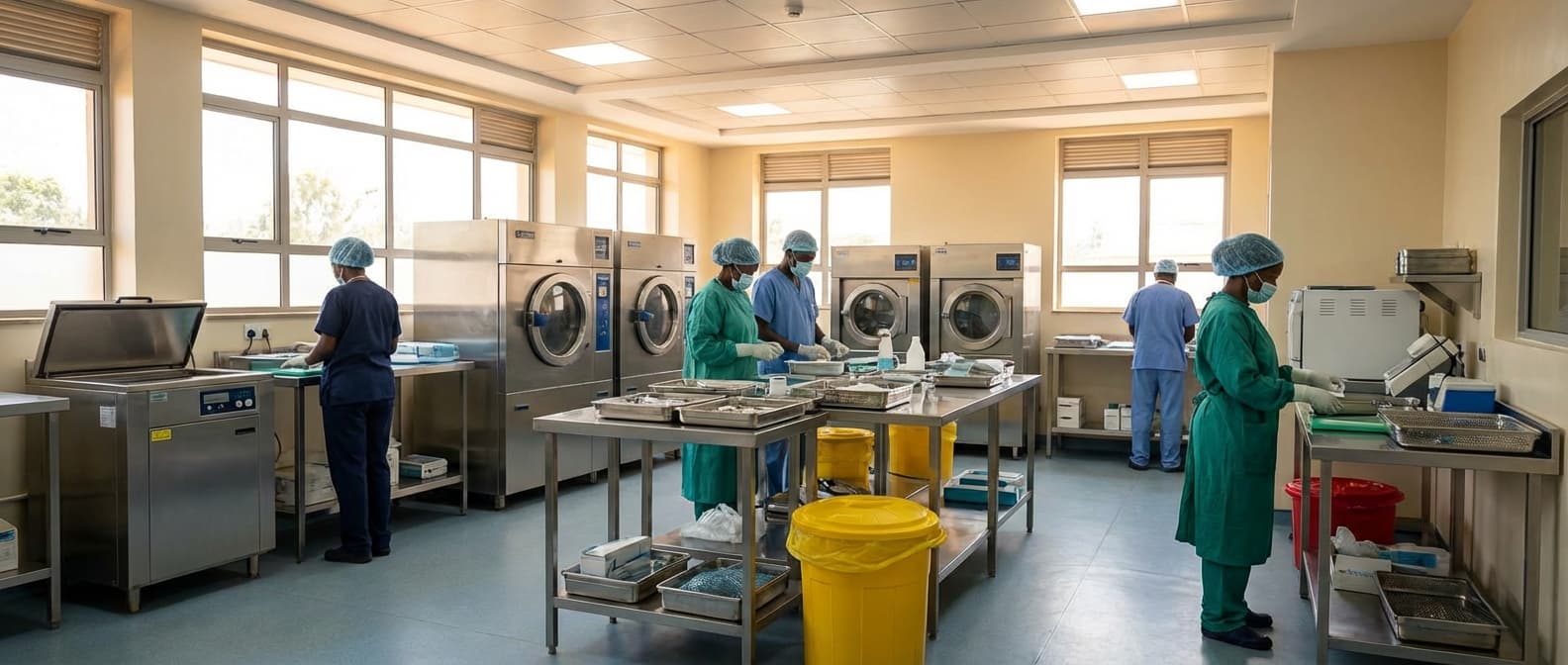
Medical Equipment Decontamination Service (Pre-Repair/Pre-Relocation) in Botswana
Engineering Excellence & Technical Support
Medical Equipment Decontamination Service (Pre-Repair/Pre-Relocation) High-standard technical execution following OEM protocols and local regulatory frameworks.
Pathogen Eradication Assurance
Our advanced decontamination protocols effectively eliminate a broad spectrum of biological contaminants, ensuring medical equipment is sterile and safe for subsequent repair or relocation, minimizing cross-contamination risks within healthcare facilities in Botswana.
Pre-Repair Equipment Integrity
We specialize in meticulous pre-repair decontamination, safeguarding sensitive internal components from residual biological matter. This preserves equipment functionality, prolongs its lifespan, and ensures repair technicians work in a secure, contaminant-free environment.
Secure Relocation Readiness
For seamless medical equipment relocation across Botswana, our rigorous decontamination process guarantees that devices are free from infectious agents. This prevents disease transmission during transit and ensures compliance with health and safety regulations, providing peace of mind for all stakeholders.
What Is Medical Equipment Decontamination Service (Pre-repair/pre-relocation) In Botswana?
Medical Equipment Decontamination Service (Pre-Repair/Pre-Relocation) in Botswana refers to the specialized process of cleaning, disinfecting, and/or sterilizing medical devices prior to their transfer for repair or relocation. This service is critical for preventing the cross-contamination of infectious agents between healthcare facilities, repair technicians, and transport personnel, thereby mitigating the risk of healthcare-associated infections (HAIs) and ensuring regulatory compliance. The process involves a systematic approach to remove or inactivate all viable microorganisms from the equipment's surfaces and any accessible internal components, rendering it safe for handling by external parties.
| Who Needs This Service? | Typical Use Cases | ||||
|---|---|---|---|---|---|
| Healthcare Facilities in Botswana: Hospitals (public and private), clinics, diagnostic laboratories, dental practices, veterinary clinics, and any institution utilizing medical equipment that requires external servicing or relocation. | Repair and Maintenance Technicians: On-site or external service providers responsible for the repair and maintenance of medical devices, especially those handling equipment from multiple facilities. | Logistics and Relocation Companies: Companies involved in the transportation of medical equipment between facilities or to storage, ensuring safe and compliant handling. | Manufacturers' Service Departments: When medical equipment is returned to the manufacturer for complex repairs or upgrades. | Regulatory Bodies: Ensuring compliance with national health and safety regulations pertaining to medical device handling and infection control. | |
| Equipment sent for routine maintenance or calibration: To prevent cross-contamination of repair workshops. | Equipment returned to the manufacturer for warranty repairs or complex servicing: To protect manufacturing environments and personnel. | Equipment being transferred between different departments within a single healthcare facility: Especially if involving different levels of patient care or suspected contamination. | Relocation of entire medical departments or facilities: Ensuring all equipment is safely decontaminated before moving to a new location. | Equipment used in outbreak situations or for patients with highly infectious diseases: Prior to any repair or relocation. | Donation or disposal of used medical equipment: To ensure it is safe for the recipient or for disposal. |
Key Components of Medical Equipment Decontamination Service (Pre-Repair/Pre-Relocation)
- Initial Assessment and Classification: Determining the type of equipment, its intended use, and the nature of contamination (e.g., visible soiling, suspected bioburden).
- Pre-Cleaning: Removal of gross soil and organic debris using appropriate detergents and mechanical action.
- Disinfection/Sterilization: Application of validated chemical disinfectants or sterilization methods (e.g., autoclaving, ethylene oxide, peracetic acid) according to manufacturer's instructions and regulatory guidelines (e.g., Botswana Ministry of Health and Wellness, international standards).
- Rinsing and Drying: Thorough rinsing to remove residual cleaning agents and disinfection/sterilization agents, followed by meticulous drying to prevent microbial regrowth.
- Packaging: Secure packaging of the decontaminated equipment to maintain sterility during transport, utilizing appropriate sterile barrier systems.
- Documentation: Comprehensive record-keeping of all decontamination procedures, including cleaning agents used, exposure times, temperatures, and personnel involved, along with a certificate of decontamination.
- Transport Considerations: Ensuring that the decontaminated and packaged equipment is transported in a manner that preserves its sterile state and prevents recontamination.
Who Needs Medical Equipment Decontamination Service (Pre-repair/pre-relocation) In Botswana?
Medical equipment decontamination is a critical, often overlooked, step before repairs or relocation. This service ensures that potentially infectious biological materials are removed, protecting technicians, the environment, and the integrity of the equipment itself. In Botswana, various entities and departments grapple with the need for such specialized decontamination.
| Customer Type | Key Departments/Areas Involved | Reasons for Decontamination (Pre-Repair/Relocation) |
|---|---|---|
| Hospitals (Government & Private) | Operating Theatres, Intensive Care Units (ICU), Emergency Rooms, Pathology Labs, Radiology Departments, Sterilization Units, Biomedical Engineering Departments | Handling of blood, bodily fluids, and infectious agents during use; preventing cross-contamination; ensuring safety of repair technicians; compliance with health regulations. |
| Clinics & Health Centers | General Practice Wards, Minor Procedure Rooms, Laboratory Sample Collection Areas, Pharmacy | Similar to hospitals but often on a smaller scale; maintaining a sterile environment for basic procedures; protecting staff during equipment servicing. |
| Diagnostic Laboratories | Microbiology Labs, Hematology Labs, Biochemistry Labs, Histopathology Labs | Direct contact with patient samples (blood, tissue, swabs); high risk of exposure to pathogens; critical for maintaining lab integrity and technician safety during equipment maintenance or transfer between labs. |
| Blood Banks | Apheresis Units, Component Separation Areas, Quality Control Labs | Handling of blood and blood products; risk of bloodborne pathogens; essential for safety during equipment servicing or relocation to new facilities. |
| Research Institutions | Bacteriology Labs, Virology Labs, Genomics Labs, Animal Research Facilities | Working with various biological agents, some potentially novel or highly infectious; protecting researchers and preventing contamination of research samples; ensuring safety of specialized equipment. |
| Medical Device Manufacturers & Distributors | Service & Repair Centers, Warehousing & Logistics | Receiving equipment for repair that may have residual biological material; ensuring safe handling and transportation of devices; protecting their own technicians and facilities. |
| Surgical Centers | Operating Rooms, Post-Anesthesia Care Units (PACU) | High risk of exposure to blood and bodily fluids; crucial for the safety of surgeons, nurses, and technicians involved in equipment repair or moves. |
| Dental Clinics | Operatory Rooms, Sterilization Areas | Exposure to saliva, blood, and aerosols; protecting dental staff and repair technicians from potential infections; preparing instruments and equipment for relocation or intensive servicing. |
Target Customers and Departments Requiring Medical Equipment Decontamination Service in Botswana:
- Hospitals (Government and Private)
- Clinics and Health Centers (Government and Private)
- Diagnostic Laboratories
- Blood Banks
- Research Institutions
- Medical Device Manufacturers and Distributors
- Surgical Centers
- Dental Clinics
- Veterinary Clinics (for shared or transferable equipment)
- Government Health Ministries and Departments
- Non-Governmental Organizations (NGOs) involved in healthcare
Medical Equipment Decontamination Service (Pre-repair/pre-relocation) Process In Botswana
This document outlines the standard workflow for Medical Equipment Decontamination Services offered in Botswana, specifically for equipment requiring decontamination prior to repair or relocation. The process ensures safe handling and minimizes the risk of cross-contamination for both personnel and the environment.
| Stage | Key Activities | Responsible Party | Output/Deliverable |
|---|---|---|---|
| Inquiry & Assessment | Client submits request; Provider gathers equipment details and performs initial risk assessment. | Client, Decontamination Service Provider | Initial understanding of requirement, preliminary risk assessment. |
| Quotation & Agreement | Provider prepares quotation; Client reviews and accepts; Service agreement is signed. | Decontamination Service Provider, Client | Formal quotation, Signed service agreement. |
| Collection/Delivery | Equipment is transported to or delivered at the decontamination facility; Inventory conducted. | Decontamination Service Provider, Client | Documented inventory of received equipment. |
| Pre-Decontamination Inspection | Visual inspection of equipment; Documentation of condition and pre-existing damage. | Decontamination Service Provider | Pre-decontamination report, photographs. |
| Decontamination Process | Cleaning, disinfection/sterilization, rinsing, and drying of equipment. | Decontamination Service Provider | Decontaminated equipment. |
| Post-Decontamination Verification | Visual inspection for residual contamination; Functional testing; Biological indicator testing (if applicable). | Decontamination Service Provider | Verification results. |
| Final Documentation | Generation of post-decontamination report and certificate. | Decontamination Service Provider | Post-decontamination report, Certificate of Decontamination. |
| Equipment Return/Release | Equipment is packaged and returned to client or released for pickup. | Decontamination Service Provider, Client | Returned or released equipment, handover documentation. |
| Record Keeping | Provider archives all service-related documentation. | Decontamination Service Provider | Archived service records. |
Medical Equipment Decontamination Service (Pre-Repair/Pre-Relocation) Workflow in Botswana
- {"title":"1. Initial Inquiry & Assessment","description":"The process begins when a client (hospital, clinic, biomedical workshop) contacts the decontamination service provider with a need for equipment decontamination. This can be via phone, email, or an online portal. The provider gathers essential information about the equipment, including type, model, serial number, intended use, and the reason for decontamination (e.g., suspected biohazard, scheduled maintenance, relocation). An initial risk assessment is performed based on this information to determine the appropriate decontamination protocol."}
- {"title":"2. Quotation & Service Agreement","description":"Based on the initial assessment and the client's specific requirements, the decontamination service provider prepares a detailed quotation. This includes the scope of services, decontamination methods, estimated turnaround time, and associated costs. Upon client acceptance, a formal service agreement is drafted and signed, outlining responsibilities, terms, and conditions. This agreement may also specify the mode of transport and insurance."}
- {"title":"3. Equipment Collection/Delivery","description":"Following the service agreement, the equipment is either collected by the decontamination service provider's trained personnel or delivered by the client to the designated decontamination facility. If collected, the provider ensures proper packaging and handling to prevent leaks or damage during transit. A detailed inventory of the equipment received is conducted and documented, including condition and any pre-existing damage."}
- {"title":"4. Pre-Decontamination Inspection & Documentation","description":"Upon arrival at the decontamination facility, the equipment undergoes a thorough visual inspection. Any visible contamination is noted, and photographs are taken. A detailed pre-decontamination report is generated, documenting the equipment's condition and any observations that might affect the decontamination process. This step is crucial for accountability and to confirm the equipment's state before commencing treatment."}
- {"title":"5. Decontamination Process","description":"The core of the service involves applying the appropriate decontamination protocol as determined in step 1. This typically involves a multi-step process which may include: \n * Cleaning: Removal of gross soil and debris using appropriate detergents.\n * Disinfection/Sterilization: Application of approved chemical disinfectants or sterilization methods (e.g., autoclaving, chemical vapor sterilization) to eliminate biological agents. The choice of agent depends on the equipment type and the suspected contaminants.\n * Rinsing: Thorough rinsing to remove residual disinfectants or cleaning agents.\n * Drying: Ensuring the equipment is completely dry to prevent microbial regrowth."}
- {"title":"6. Post-Decontamination Verification & Testing","description":"After decontamination, the equipment undergoes verification. This may include visual inspection for residual contamination and, depending on the equipment type and the decontamination method used, functional testing to ensure it operates correctly after the process. For critical equipment, biological indicators may be used to confirm the efficacy of sterilization."}
- {"title":"7. Final Documentation & Certification","description":"A comprehensive post-decontamination report is generated. This report includes details of the decontamination process applied, the agents used, the results of any verification tests, and a certificate of decontamination. This documentation serves as proof that the equipment has been safely decontaminated and is ready for repair or relocation. The report is shared with the client."}
- {"title":"8. Equipment Return/Release","description":"Once decontamination is complete and documented, the equipment is either returned to the client by the service provider's logistics or released for pickup. The provider ensures that the equipment is properly packaged for safe transport. Any necessary handover documentation is completed."}
- {"title":"9. Record Keeping & Follow-up","description":"The decontamination service provider maintains detailed records of each decontamination service performed for future reference and auditing purposes. A follow-up with the client may occur to ensure satisfaction with the service and to address any further needs."}
Medical Equipment Decontamination Service (Pre-repair/pre-relocation) Cost In Botswana
The cost of medical equipment decontamination services in Botswana, specifically for pre-repair or pre-relocation needs, can vary significantly. This service is crucial for ensuring the safety of technicians, the environment, and preventing cross-contamination. Several factors influence the pricing, making it challenging to provide a single definitive cost. These factors include the type and complexity of the medical equipment, the level of contamination suspected or confirmed, the geographical location within Botswana, the service provider's experience and reputation, and the urgency of the service required. Generally, smaller, less complex devices with minimal contamination will be at the lower end of the price spectrum, while larger, more intricate machinery with potentially biohazardous materials will command higher fees. The service typically involves a multi-step process including cleaning, disinfection, and sometimes sterilization, depending on the equipment and the intended next steps (repair or relocation).
| Equipment Category | Estimated Cost Range (Botswana Pula - BWP) | Notes |
|---|---|---|
| Small Diagnostic/Monitoring Equipment (e.g., BP monitors, pulse oximeters) | BWP 300 - BWP 800 | Basic cleaning and disinfection. Lower contamination risk. |
| Medium-Sized Equipment (e.g., basic lab analyzers, portable ultrasound) | BWP 700 - BWP 2,500 | More complex cleaning, specific disinfection protocols. Moderate contamination risk. |
| Large/Complex Medical Devices (e.g., large laboratory equipment, basic imaging units) | BWP 1,500 - BWP 5,000+ | Intensive cleaning, specialized disinfection/sterilization. Higher contamination risk. May involve specialized handling. |
| Surgical Instruments (sets) | BWP 100 - BWP 500 per set | Depends on the complexity and number of instruments in the set. Focus on sterilization. |
| Specialized/High-Risk Equipment (e.g., certain pathology equipment, equipment with known biohazards) | BWP 3,000 - BWP 10,000+ | Requires specialized protocols, containment, and potentially waste disposal. Individual quotes are essential. |
| On-site Decontamination Fee (per visit) | BWP 200 - BWP 800 | May be added on top of equipment-specific pricing, especially for larger or more remote locations. |
Factors Influencing Medical Equipment Decontamination Costs in Botswana (Pre-Repair/Pre-Relocation)
- Equipment Type and Complexity: More intricate devices (e.g., imaging machines, complex surgical tools) require more time, specialized knowledge, and potentially specific cleaning agents, leading to higher costs than simpler devices (e.g., basic monitoring equipment).
- Level of Contamination: Suspected or confirmed biohazards (blood, bodily fluids, infectious agents) necessitate more rigorous decontamination protocols and specialized handling, increasing the overall cost. Routine cleaning will be less expensive.
- Geographical Location: Accessibility and travel costs for the decontamination team within Botswana will impact pricing. Services in more remote areas may incur higher logistical expenses.
- Service Provider Expertise and Reputation: Established companies with a proven track record, specialized training, and adherence to international standards often charge more due to their reliability and quality of service.
- Urgency of Service: Emergency or same-day decontamination services will typically command premium pricing compared to scheduled appointments.
- Decontamination Agents and Techniques Used: The cost of specialized disinfectants, sterilization methods, and the labor involved in their application contribute to the overall price.
- Volume of Equipment: While not always the case, larger projects or multiple pieces of equipment being decontaminated simultaneously might offer slight economies of scale, though this depends on the provider's pricing structure.
Affordable Medical Equipment Decontamination Service (Pre-repair/pre-relocation) Options
This document outlines affordable medical equipment decontamination services designed for pre-repair and pre-relocation needs. We understand the critical importance of ensuring medical equipment is clean and safe before it undergoes maintenance or is moved to a new location. Our services are tailored to be cost-effective while adhering to stringent hygiene standards. This not only protects your staff and the equipment itself but also streamlines the repair and relocation process by eliminating potential contamination risks and delays.
| Cost-Saving Strategy | Description | Benefits |
|---|---|---|
| Pre-scheduled Service Contracts | Commit to a recurring service schedule for multiple pieces of equipment or over a defined period. | Discounted rates, priority scheduling, reduced administrative overhead, predictable budgeting. |
| Bulk Decontamination | Group multiple equipment decontamination requests together for a single service appointment. | Lower per-unit cost due to efficient scheduling and resource allocation, minimized disruption. |
| Tiered Service Levels | Choose the decontamination package that best matches the equipment's condition and risk level, avoiding unnecessary services. | Optimized spending by paying only for the necessary level of decontamination. |
| Partnership Programs | Establish long-term partnerships for ongoing decontamination needs, potentially including training for in-house staff on basic cleaning protocols. | Further cost reductions through volume, expertise sharing, and potential on-site service options. |
| Off-Peak Scheduling | Schedule decontamination services during non-peak operational hours for your facility. | Potential for discounted rates, less disruption to clinical workflows. |
Value Bundles for Decontamination Services
- {"title":"Basic Decontamination Package","description":"Includes surface cleaning and disinfection of external components using EPA-approved disinfectants. Ideal for equipment with minimal or visible contamination."}
- {"title":"Standard Decontamination Package","description":"Includes Basic package plus targeted cleaning of accessible internal components and removal of bioburden. Suitable for equipment that has been in regular use."}
- {"title":"Comprehensive Decontamination Package","description":"Includes Standard package plus specialized cleaning for hard-to-reach areas, detailed component cleaning, and verification of disinfection efficacy. Recommended for equipment with potential for deep contamination or for high-risk environments."}
- {"title":"Customizable Bundles","description":"We offer flexible bundling options to meet the unique needs of your facility and specific equipment types. Consult with our team to create a tailored solution."}
Verified Providers In Botswana
In Botswana's evolving healthcare landscape, identifying trusted and credentialed providers is paramount for ensuring quality care and peace of mind. Franance Health stands out as a beacon of reliability, meticulously vetting its network of healthcare professionals and institutions. Their rigorous credentialing process is designed to uphold the highest standards of medical practice, ethical conduct, and patient safety. Choosing a provider affiliated with Franance Health means opting for assurance, competence, and a commitment to your well-being.
| Franance Health Verification Aspect | Benefit to Patients |
|---|---|
| Comprehensive Educational and Professional Background Checks | Ensures providers have the foundational knowledge and practical experience required for effective treatment. |
| Licensing and Regulatory Compliance Verification | Guarantees that providers are legally authorized to practice and adhere to national healthcare standards. |
| Clinical Competency and Specialization Assessment | Connects patients with experts in their specific medical needs, leading to more accurate diagnoses and treatments. |
| Review of Disciplinary Actions and Malpractice History | Mitigates the risk of encountering providers with a history of compromised patient care. |
| Assessment of Ethical Practices and Patient Communication Skills | Promotes a supportive and trusting patient-provider relationship, enhancing the overall healthcare journey. |
| Regular Re-credentialing and Performance Monitoring | Maintains a consistently high standard of care over time and allows for adjustments based on evolving medical practices and patient feedback. |
Why Franance Health Credentials Represent the Best Choice:
- Unwavering Commitment to Quality: Franance Health's credentialing process goes beyond surface-level checks. They delve deep into a provider's educational background, professional experience, licensing, and regulatory compliance, ensuring they meet and exceed industry benchmarks.
- Rigorous Verification of Expertise: Each healthcare professional within the Franance Health network undergoes a thorough assessment of their clinical skills and specialized knowledge. This ensures you are connected with practitioners who possess the specific expertise needed for your health concerns.
- Emphasis on Ethical Conduct and Patient Care: Beyond technical skills, Franance Health prioritizes providers who demonstrate a strong commitment to patient-centered care, empathy, and ethical practices. This fosters trust and a positive healthcare experience.
- Adherence to Regulatory Standards: Franance Health ensures all its listed providers comply with Botswana's healthcare regulations and licensing requirements, providing an added layer of security and legitimacy.
- Continuous Monitoring and Re-credentialing: The commitment to quality doesn't end with initial credentialing. Franance Health actively monitors its providers, implementing regular re-credentialing to ensure ongoing adherence to their stringent standards.
- Peace of Mind for Patients: By choosing a Franance Health-verified provider, patients can feel confident that they are receiving care from qualified, trustworthy, and ethically sound professionals, minimizing the risks associated with selecting healthcare services.
Scope Of Work For Medical Equipment Decontamination Service (Pre-repair/pre-relocation)
This Scope of Work (SOW) outlines the requirements for medical equipment decontamination services to be performed prior to repair or relocation. The primary objective is to ensure the safety of personnel and prevent the spread of infectious agents during handling, transport, and servicing of medical devices. This document details the technical deliverables and standard specifications expected from the service provider.
| Category | Technical Deliverable / Standard Specification | Description | Compliance/Reference |
|---|---|---|---|
| Decontamination Process | Validated Decontamination Protocol | The service provider must utilize a validated decontamination protocol that effectively inactivates a broad spectrum of microorganisms, including bacteria, viruses, fungi, and spores, relevant to the type of medical equipment and its clinical use. | Manufacturer's recommendations, CDC Guidelines, EPA Registration |
| Decontamination Agents | Approved Disinfectants and Sterilants | All decontamination agents used must be EPA-registered, approved by the equipment manufacturer (if specified), and appropriate for the material composition of the medical equipment. Agents must be applied according to manufacturer instructions for concentration, contact time, and rinsing. | EPA Label, Manufacturer's IFU |
| Personal Protective Equipment (PPE) | Appropriate PPE Usage | Technicians performing decontamination must wear appropriate PPE, including but not limited to gloves, gowns, eye protection, and respiratory protection, as dictated by the hazard assessment and decontamination agent used. | OSHA Standards, CDC Guidelines |
| Equipment Preparation | Pre-cleaning Procedures | Prior to disinfection or sterilization, gross debris and organic matter must be removed from the equipment surfaces using approved cleaning agents and methods. This includes disassembly of accessible components as necessary. | Manufacturer's Cleaning Instructions |
| Contact Time and Application | Adherence to Contact Times | The specified contact time for each decontamination agent must be strictly adhered to ensure microbial inactivation. Application methods (e.g., wiping, spraying, immersion) must be effective in covering all surfaces. | Decontamination Agent IFU |
| Rinsing and Drying | Thorough Rinsing and Drying | After the contact time, equipment must be thoroughly rinsed with sterile or filtered water (as appropriate) to remove residual decontamination agents. Surfaces must be dried to prevent microbial regrowth and potential damage. | Decontamination Agent IFU, Manufacturer's IFU |
| Documentation | Decontamination Certificate/Log | A dated certificate or log must be provided for each piece of equipment decontaminated. This document shall include: date of service, equipment identifier (serial number, asset tag), type of decontamination performed, list of agents used, name/signature of technician, and confirmation of completion. | Internal Quality Control, Regulatory Requirements |
| Hazardous Materials Handling | Safe Handling of Contaminated Waste | All biohazardous waste and contaminated materials generated during the decontamination process must be collected, packaged, labeled, and disposed of in accordance with local, state, and federal regulations for hazardous waste. | EPA, OSHA, State Environmental Regulations |
| Verification | Visual Inspection for Cleanliness | A visual inspection must be performed after decontamination to ensure the equipment is visibly clean and free from debris. Any remaining contamination should be addressed. | Standard Quality Assurance |
| Post-Decontamination Handling | Contamination Control during Transport | Once decontaminated, equipment must be handled and packaged in a manner that prevents re-contamination during transport to the repair facility or new location. This may include the use of clean covers or bags. | Best Practices for Medical Device Handling |
| Specialized Equipment | Specific Decontamination Procedures | For equipment with specialized decontamination requirements (e.g., endoscopes, respiratory therapy devices), the service provider must demonstrate proficiency and adherence to specific manufacturer-recommended protocols. | Manufacturer's IFU |
Key Objectives of Decontamination Service
- Ensure the safety of all personnel involved in the repair, relocation, or handling of medical equipment.
- Prevent the cross-contamination of infectious agents between equipment and facilities.
- Comply with all relevant regulatory requirements and industry best practices for medical device decontamination.
- Provide a documented record of decontamination for traceability and audit purposes.
- Minimize disruption to clinical operations by offering efficient and timely services.
Service Level Agreement For Medical Equipment Decontamination Service (Pre-repair/pre-relocation)
This Service Level Agreement (SLA) outlines the agreed-upon service standards for the decontamination of medical equipment prior to repair or relocation. It specifies response times, uptime guarantees (where applicable to the decontamination process itself), and associated remedies for non-compliance. The primary objective is to ensure that equipment is safely and effectively decontaminated, minimizing risks to personnel and facilitating efficient repair/relocation processes. This SLA is an addendum to the Master Service Agreement between [Client Name] (hereinafter referred to as "Client") and [Service Provider Name] (hereinafter referred to as "Provider").
| Service Level Objective (SLO) | Metric | Target | Measurement Method | Remedy for Failure |
|---|---|---|---|---|
| Response Time (Service Request Initiation) | Time from service request received by Provider to initial contact with Client to schedule decontamination. | 4 Business Hours | Timestamp of service request receipt vs. timestamp of initial client contact. | 10% discount on the decontamination fee for the affected service request if the target is missed. |
| On-Site Arrival (Scheduled Decontamination) | Time from confirmed appointment to Provider's arrival at Client's facility. | Within 30 minutes of scheduled arrival time. | Timestamp of scheduled arrival vs. timestamp of Provider's arrival. | Waived decontamination fee for the affected service request if arrival is more than 1 hour late without prior notification and agreement. |
| Decontamination Completion Time (Per Equipment Item) | Time taken to complete decontamination of a single piece of medical equipment, from setup to final inspection. | Varies based on equipment complexity (as defined in Annex A: Equipment Complexity & Time Estimates). Standard equipment: < 2 Business Hours. | Timestamp of decontamination commencement vs. timestamp of decontamination completion. | N/A for this metric, as it's equipment-dependent. Service quality and adherence to protocol are paramount. |
| Decontamination Certificate Issuance | Time from completion of decontamination to delivery of a valid decontamination certificate to the Client. | Within 1 Business Hour of decontamination completion. | Timestamp of decontamination completion vs. timestamp of certificate issuance/delivery. | N/A. Certificate issuance is a procedural step, failure indicates a more fundamental service breakdown addressed by other metrics. |
| Data Integrity (Decontamination Records) | Accuracy and completeness of decontamination records and certificates. | 100% accuracy and completeness. | Auditable review of records and certificates. | Rectification of errors within 1 Business Day. Repeat errors may incur penalties as per the Master Service Agreement. |
Scope of Services
- On-site decontamination of medical equipment at the Client's designated location.
- Decontamination to be performed using approved and validated protocols and materials.
- Provision of decontamination certificates upon completion of service.
- Adherence to all relevant health, safety, and environmental regulations.
- Collection and disposal of biohazardous waste generated during the decontamination process (if applicable, as per separate agreement or defined in scope).
Frequently Asked Questions

Ready when you are
Let's scope your Medical Equipment Decontamination Service (Pre-Repair/Pre-Relocation) in Botswana project in Botswana.

Scaling healthcare logistics and technical systems across the entire continent.