
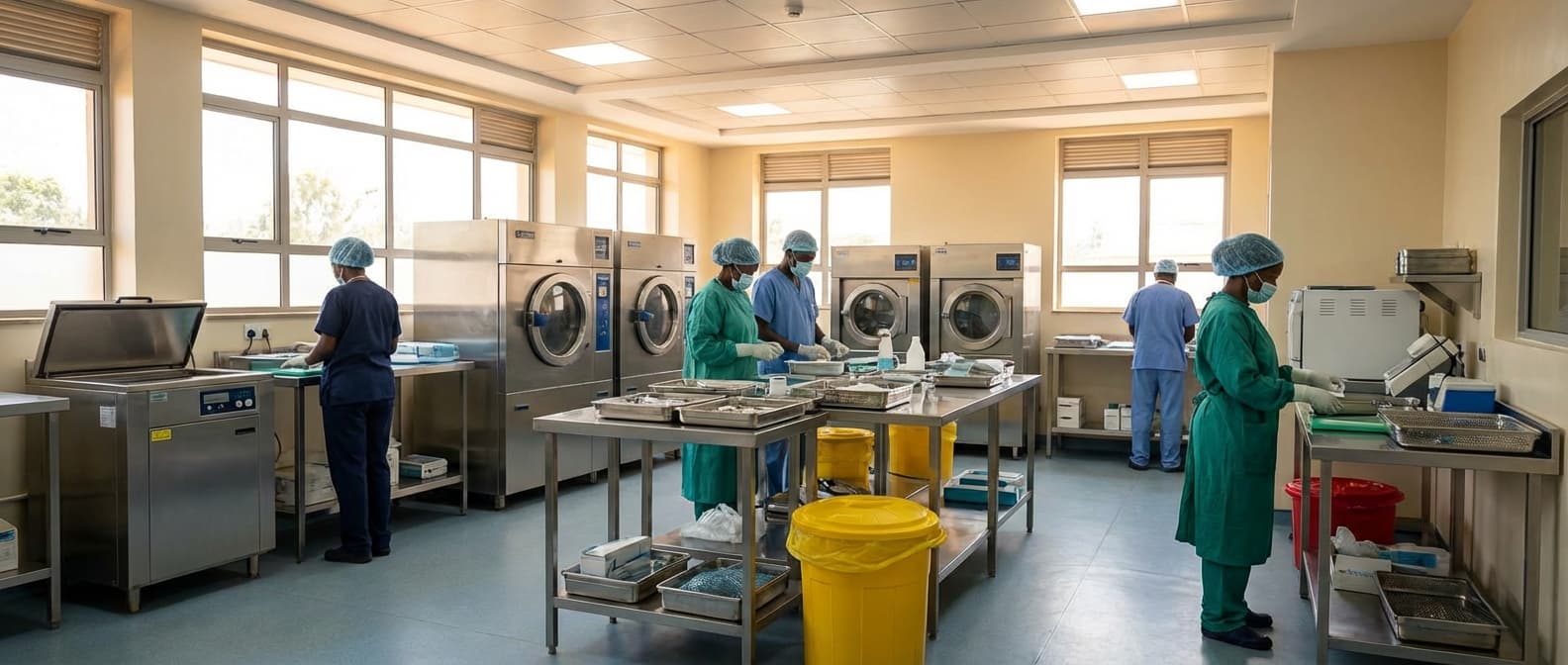
Infection-Control Readiness Support Service for Reusable Equipment in Botswana
Engineering Excellence & Technical Support
Infection-Control Readiness Support Service for Reusable Equipment High-standard technical execution following OEM protocols and local regulatory frameworks.
Streamlined Sterilization Protocols
Implemented a standardized, digitalized protocol for cleaning, disinfection, and sterilization of reusable medical equipment, reducing process variations and ensuring consistent adherence to international best practices, thereby minimizing the risk of healthcare-associated infections.
Real-time Inventory & Maintenance Tracking
Deployed a cloud-based asset management system for tracking the lifecycle of all reusable equipment, including sterilization cycles, maintenance schedules, and user assignments, providing real-time visibility and proactive alerts to prevent equipment downtime and ensure optimal infection control compliance.
Advanced Decontamination Validation
Integrated advanced biological and chemical indicator testing within the validation process for all sterilization methods, offering robust assurance of microbial inactivation and confirming the efficacy of decontamination procedures for critical reusable medical devices.
What Is Infection-control Readiness Support Service For Reusable Equipment In Botswana?
Infection-Control Readiness Support Service (ICRSS) for Reusable Equipment in Botswana is a specialized program designed to bolster the capacity of healthcare facilities to safely and effectively manage, reprocess, and utilize reusable medical devices. This service aims to minimize the risk of healthcare-associated infections (HAIs) by ensuring that reusable equipment meets stringent decontamination, sterilization, and maintenance standards. It is a critical component of public health infrastructure, focusing on patient safety and the integrity of medical procedures. The service encompasses a multi-faceted approach, integrating technical expertise, logistical support, and training to address the complex challenges associated with reusable medical devices in a resource-constrained environment.
| Stakeholder Group | Need for Service | Typical Use Cases |
|---|---|---|
| Public Hospitals and Clinics | Primary healthcare providers responsible for a broad range of medical procedures utilizing a high volume of reusable equipment. Often face infrastructure limitations and a need for standardized infection control practices. | Routine sterilization of surgical instruments, reprocessing of diagnostic equipment (e.g., endoscopes, bronchoscopes), disinfection of patient care items (e.g., thermometers, blood pressure cuffs), maintenance of autoclaves and washer-disinfectors. |
| Private Healthcare Facilities | Facilities offering specialized services, potentially with higher budgets but requiring adherence to evolving infection control standards and efficient resource management for reusable assets. | Validation of sterilization cycles for advanced surgical tools, training on new reprocessing technologies, development of quality management systems for central sterile supply departments (CSSDs), procurement advice for high-dependency reusable devices. |
| District Health Management Teams (DHMTs) | Oversee healthcare delivery at the district level, responsible for ensuring quality of care and resource allocation. Require support in standardizing infection control practices across multiple facilities. | Developing and implementing district-wide reusable equipment reprocessing guidelines, conducting needs assessments for reprocessing equipment and consumables, organizing training workshops for peripheral health facilities, monitoring compliance with infection control protocols. |
| Ministry of Health and Wellness (MOHW) | The national governing body responsible for setting health policy, standards, and overseeing public health initiatives. Requires support in developing and enforcing national infection control policies related to reusable equipment. | Developing national guidelines for reusable medical device reprocessing, establishing national standards for CSSDs, conducting national assessments of infection control readiness, supporting the development of national training curricula, advising on national procurement strategies for sterilization equipment. |
| Non-Governmental Organizations (NGOs) and Development Partners | Organizations involved in supporting healthcare system strengthening, capacity building, and provision of medical supplies and equipment. May require technical expertise for implementing infection control programs. | Assisting in the implementation of infection control projects, providing technical expertise for equipment assessment and procurement, developing training materials, supporting the establishment of functional reprocessing units in underserved areas. |
Components of Infection-Control Readiness Support Service for Reusable Equipment in Botswana
- Equipment Auditing and Assessment: Comprehensive evaluation of existing reusable equipment inventory, including condition, type, and current reprocessing protocols.
- Policy and Procedure Development/Review: Establishment or enhancement of Standard Operating Procedures (SOPs) for cleaning, disinfection, sterilization, packaging, storage, and maintenance of reusable medical devices, aligned with national and international guidelines.
- Infrastructure and Resource Assessment: Evaluation of reprocessing areas, utilities (water, electricity, steam), and material availability to ensure adequate infrastructure for safe reprocessing.
- Training and Capacity Building: Provision of targeted training programs for healthcare personnel involved in the handling and reprocessing of reusable equipment, covering theoretical knowledge and practical skills.
- Equipment Procurement and Maintenance Support: Guidance on selecting appropriate, durable, and validated reusable equipment, along with support for routine maintenance and repair to ensure operational efficacy and longevity.
- Quality Assurance and Monitoring: Implementation of systems for ongoing monitoring of reprocessing effectiveness, including biological and chemical indicators, process validation, and incident reporting.
- Waste Management Integration: Ensuring proper segregation, handling, and disposal of waste generated during the reprocessing of reusable equipment.
- Regulatory Compliance Assistance: Support in adhering to national regulations and guidelines pertaining to infection prevention and control of reusable medical devices.
Who Needs Infection-control Readiness Support Service For Reusable Equipment In Botswana?
This document outlines the critical need for Infection-Control Readiness Support Services for Reusable Equipment in Botswana. Ensuring proper sterilization, maintenance, and utilization of reusable medical devices is paramount to preventing healthcare-associated infections (HAIs) and safeguarding patient safety. This service aims to bolster existing infection control measures within healthcare facilities across Botswana by providing specialized expertise, training, and resources focused on reusable equipment.
| Customer Type | Specific Departments/Areas of Focus | Key Needs Addressed | Potential Impact of Support |
|---|---|---|---|
| Public Hospitals | Operating Theatres, ICUs, Maternity, CSSD, ER, Outpatient Clinics, Dental | Inadequate sterilization practices, staff training gaps, equipment maintenance issues, limited access to advanced sterilization technologies, lack of standardized protocols. | Reduction in HAIs, improved patient outcomes, enhanced staff confidence and competence, extended equipment lifespan, cost savings through reduced re-sterilization failures. |
| Private Hospitals & Clinics | Surgical Suites, Day Surgeries, Diagnostic Centers, Dental Practices | Varying levels of IPC compliance, need for specialized training on specific equipment, ensuring adherence to international standards, waste management of reusable items. | Upholding high standards of patient care, maintaining reputation for quality, compliance with regulatory requirements, efficient resource utilization. |
| Community Health Facilities (e.g., Rural Clinics) | Primary healthcare services, maternal and child health, basic surgical procedures, wound care | Limited infrastructure, insufficient training for healthcare workers, challenges in accessing and maintaining sterilization equipment, reliance on manual cleaning methods. | Improved safety for basic medical procedures, prevention of infections in underserved areas, empowerment of local healthcare workers with essential IPC knowledge and skills. |
| Specialized Medical Centers (e.g., HIV/AIDS treatment centers, TB clinics) | Treatment rooms, procedure areas, patient care units | Specific protocols for handling contaminated equipment, risk of cross-contamination with infectious diseases, ensuring appropriate disinfection for specialized instruments. | Minimizing transmission of infectious agents, protecting vulnerable patient populations, ensuring effective treatment delivery. |
| Ministry of Health & Wellness (MoHW) | Policy development, national IPC guidelines, capacity building initiatives, procurement of medical equipment | Need for standardized IPC training modules, support in developing national guidelines for reusable equipment management, capacity building for IPC trainers. | Strengthening national IPC framework, ensuring uniform standards across the country, effective resource allocation for IPC programs. |
| Healthcare Training Institutions | Nursing schools, medical schools, allied health training programs | Integration of comprehensive IPC modules on reusable equipment into curriculum, practical training opportunities, access to up-to-date IPC knowledge. | Producing well-trained healthcare professionals with strong IPC knowledge, fostering a culture of safety from the outset of their careers. |
Target Customers and Departments
- Healthcare Facilities (Public and Private)
- Medical and Surgical Departments
- Operating Theatres/Surgical Suites
- Intensive Care Units (ICUs)
- Emergency Departments
- Outpatient Clinics
- Maternity Wards
- Dental Clinics
- Sterilization and Central Supply Departments (CSSD)
- Infection Prevention and Control (IPC) Committees/Officers
- Laboratory Services
- Diagnostic Imaging Departments
- Rehabilitation Services
- Public Health Institutions
- Non-Governmental Organizations (NGOs) involved in healthcare delivery
Infection-control Readiness Support Service For Reusable Equipment Process In Botswana
This service aims to enhance infection-control readiness for the sterilization and reprocessing of reusable medical equipment within healthcare facilities in Botswana. It involves a comprehensive workflow designed to assess existing practices, identify gaps, provide targeted support, and ensure sustainable adherence to infection-control standards. The process moves from initial interest and needs assessment to hands-on implementation and ongoing monitoring.
| Stage | Description | Key Activities | Deliverables/Outcomes |
|---|---|---|---|
| Inquiry and Initial Contact | Healthcare facilities express interest in the service or are identified for support. | Initial meeting/call to understand facility needs, clarify service scope, and establish communication channels. | Understanding of facility's perceived challenges, confirmation of eligibility for support. |
| Needs Assessment and Gap Analysis | A thorough evaluation of current infection-control practices related to reusable equipment. | On-site observation of sterilization and reprocessing workflows, interviews with staff, review of existing protocols and documentation. | Detailed report highlighting strengths, weaknesses, and specific gaps in adherence to infection-control standards, risk assessment for reprocessing. |
| Development of Customized Support Plan | Creation of a tailored strategy to address identified gaps. | Collaborative development with facility management and relevant staff, outlining specific interventions, timelines, and resource requirements. | A clear, actionable support plan with defined objectives, activities, and responsibilities. |
| Training and Capacity Building | Empowering healthcare staff with the knowledge and skills for effective infection control. | Theoretical and practical training sessions on sterilization principles, equipment handling, disinfection protocols, waste management, and use of personal protective equipment (PPE). | Trained personnel, improved understanding of infection-control principles, enhanced practical skills. |
| Equipment and Infrastructure Review | Assessing the suitability and maintenance of reprocessing equipment and facilities. | Inspection of sterilization units, washing machines, drying equipment, storage areas, and ventilation systems. Recommendations for upgrades or repairs. | Assessment of equipment functionality, identification of infrastructure needs, provision of recommendations for optimization. |
| Implementation Support | Direct assistance in implementing recommended changes and protocols. | On-the-job coaching, guidance in setting up new procedures, support in troubleshooting, assistance with procurement of necessary supplies. | Adoption of improved practices, effective implementation of new protocols, resolution of immediate challenges. |
| Monitoring and Evaluation | Tracking progress and ensuring the effectiveness of implemented interventions. | Regular site visits, data collection on infection rates, audits of reprocessing practices, feedback mechanisms. | Progress reports, identification of areas for further improvement, data-driven validation of intervention effectiveness. |
| Sustainability Planning and Handover | Ensuring long-term adherence to infection-control standards. | Developing internal audit systems, establishing refresher training schedules, empowering local champions, creating clear documentation for ongoing reference. | Self-sufficient infection-control practices, sustained improvement in reusable equipment reprocessing, reduced risk of healthcare-associated infections. |
Workflow Stages for Infection-Control Readiness Support Service
- Inquiry and Initial Contact
- Needs Assessment and Gap Analysis
- Development of Customized Support Plan
- Training and Capacity Building
- Equipment and Infrastructure Review
- Implementation Support
- Monitoring and Evaluation
- Sustainability Planning and Handover
Infection-control Readiness Support Service For Reusable Equipment Cost In Botswana
Evaluating the cost of an Infection-Control Readiness Support Service for reusable equipment in Botswana requires a detailed understanding of various pricing factors. These services are crucial for ensuring that medical devices are properly cleaned, disinfected, and sterilized to prevent healthcare-associated infections (HAIs). The cost is not a simple per-item fee but rather a multifaceted consideration involving the scope of service, the types and volume of equipment, the frequency of service, and the specific expertise and technology employed. Local currency pricing in Botswana, primarily the Botswana Pula (BWP), will be influenced by the operational costs within the country, including labor, consumables, transportation, and regulatory compliance.
Key pricing factors include:
- Scope of Services: This is the most significant determinant. A basic cleaning and disinfection service will be less expensive than a comprehensive service that includes sterilization, validation, maintenance, and training. Services might range from simple surface disinfection to complex high-level disinfection or sterilization processes.
- Type and Volume of Reusable Equipment: Different medical devices require varying levels of care and specific protocols. For example, endoscopes require meticulous reprocessing due to their complex lumens, while surgical instruments might have simpler sterilization needs. The sheer number of items to be processed will directly impact the overall cost.
- Frequency of Service: Whether the service is required daily, weekly, monthly, or on an on-demand basis will affect the pricing structure. More frequent services generally benefit from volume discounts or contract rates.
- Consumables and Disposables: The cost of detergents, disinfectants, sterilizing agents (e.g., chemical indicators, biological indicators, sterilant gas), packaging materials, and personal protective equipment (PPE) for staff are direct cost components.
- Labor Costs: Skilled personnel are required for infection control procedures. This includes salaries, benefits, and training for technicians and supervisors. The level of expertise and certifications of the staff will influence the rates.
- Equipment and Technology: The service provider might use specialized automated cleaning and disinfection machines, autoclaves, or other sterilization equipment. The capital investment, maintenance, and operational costs of this technology are factored into the pricing.
- Logistics and Transportation: For services requiring equipment to be collected and returned, or for on-site services at remote locations, transportation costs within Botswana will be a factor.
- Quality Assurance and Compliance: Ensuring adherence to national and international infection control guidelines (e.g., WHO, CDC) and regulatory requirements often involves robust quality management systems, documentation, and auditing, which add to the cost.
- Training and Consultancy: Some support services may include training healthcare staff on proper handling and care of reusable equipment, or provide expert consultation on infection control protocols. These value-added services will increase the overall price.
- Contract Duration and Volume Commitments: Longer-term contracts or agreements for higher volumes of equipment may result in more favorable pricing per unit or service. Customization of services to meet the specific needs of a healthcare facility can also influence pricing.
Pricing Ranges in Local Currency (Botswana Pula - BWP):
Providing exact pricing without a detailed needs assessment is challenging, as costs are highly variable. However, based on the factors above, we can outline indicative ranges for different service levels. These figures are estimates and should be treated as such, subject to detailed quotations from service providers in Botswana.
For a typical mid-sized hospital or clinic in Botswana, the cost of a comprehensive Infection-Control Readiness Support Service for reusable equipment could range significantly.
- Basic Cleaning and Disinfection (per item/cycle): For simpler items like non-critical instruments, this might range from BWP 5 to BWP 25 per item, depending on the type and volume. For a set of instruments, it could be BWP 50 - BWP 150.
- High-Level Disinfection (per item/cycle): For items like endoscopes, this is more complex and can range from BWP 100 to BWP 300 per cycle, considering the specialized processes and consumables.
- Sterilization (per cycle/tray): For surgical instruments or other critical items, sterilization costs (including consumables like sterilization wrap, indicators) could range from BWP 75 to BWP 250 per tray or set, depending on the size and complexity.
- Comprehensive On-site Support (Monthly/Contractual): For a dedicated support service covering multiple equipment types and ongoing processes at a facility, monthly contracts could range from BWP 10,000 to BWP 50,000+, depending heavily on the facility size, equipment volume, and the extent of services provided (including labor, consumables, and potentially equipment maintenance). This could equate to an annual cost of BWP 120,000 to BWP 600,000 or more.
- Consultancy and Training (per day/session): Expert consultation or a training session for staff might range from BWP 1,500 to BWP 5,000 per day, depending on the consultant's expertise.
It is vital for healthcare facilities in Botswana to obtain detailed quotations from multiple reputable service providers, outlining the exact scope of services, inclusions, exclusions, and payment terms. The investment in such a service is critical for patient safety and should be viewed as an essential component of healthcare delivery.
| Service Type | Estimated Price Range (BWP) | Notes |
|---|---|---|
| Basic Cleaning and Disinfection (per item/cycle) | 5 - 25 (per item) | Varies by equipment complexity and volume. |
| Basic Cleaning and Disinfection (per instrument set) | 50 - 150 | For a standard set of instruments. |
| High-Level Disinfection (per cycle) | 100 - 300 | Typically for items like endoscopes; includes specialized processes and consumables. |
| Sterilization (per tray/set) | 75 - 250 | Includes consumables like wraps and indicators; dependent on set size and sterilization method. |
| Comprehensive On-site Support (Monthly Contract) | 10,000 - 50,000+ | Covers multiple equipment types and ongoing processes; highly dependent on facility size and service scope. |
| Comprehensive On-site Support (Annual Contract) | 120,000 - 600,000+ | Estimated annual cost based on monthly contracts. |
| Consultancy and Training (per day/session) | 1,500 - 5,000 | Dependent on consultant's expertise and scope of training. |
Key Factors Influencing the Cost of Infection-Control Readiness Support Services for Reusable Equipment in Botswana
- Scope of Services Offered
- Types and Volume of Reusable Equipment
- Frequency of Service Delivery
- Cost of Consumables and Disposables
- Labor Costs (Skilled Personnel)
- Investment in Equipment and Technology
- Logistics and Transportation Expenses
- Quality Assurance and Regulatory Compliance
- Inclusion of Training and Consultancy
- Contract Duration and Volume Commitments
Affordable Infection-control Readiness Support Service For Reusable Equipment Options
Our Affordable Infection-Control Readiness Support Service for Reusable Equipment Options provides comprehensive solutions to ensure your facility maintains the highest standards of infection prevention while managing the lifecycle of reusable medical equipment cost-effectively. We understand the critical importance of robust infection control, especially in a resource-constrained environment. This service focuses on optimizing cleaning, disinfection, sterilization, and maintenance processes to minimize risks and prevent healthcare-associated infections (HAIs). Our approach emphasizes proactive readiness, ensuring you are prepared for any infection control challenge without incurring excessive costs.
| Cost-Saving Strategy | Description | Impact on Service Cost |
|---|---|---|
| Preventative Maintenance & Training: | Focusing on proper handling, cleaning, and preventative maintenance significantly reduces equipment failure, damage, and the need for costly replacements or emergency repairs. Staff training ensures correct procedures are followed, minimizing re-processing or contamination incidents. | Reduced: Fewer equipment replacements, less downtime, and decreased incidence of reprocessing or sterilization failures lead to lower overall operational costs and more predictable service expenditures. |
| Optimized Workflow & SOPs: | Streamlining the processes for cleaning, disinfection, and sterilization through well-defined Standard Operating Procedures (SOPs) and efficient workflow design minimizes wasted time, resources, and potential errors. This can include implementing Lean principles in reprocessing areas. | Reduced: Improved efficiency translates to less labor cost per item processed and a lower risk of errors requiring costly rework. This can allow for more comprehensive support within budget. |
| Strategic Equipment Selection & Procurement: | Our consultants advise on selecting reusable equipment that is designed for easier cleaning and disinfection, is durable, and offers a better total cost of ownership. We help identify cost-effective suppliers and negotiate favorable pricing. | Reduced: Lower initial purchase costs and reduced long-term maintenance and replacement expenses contribute to significant savings. This allows for more investment in ongoing readiness support. |
| Data-Driven Risk Management: | By analyzing data on reprocessing outcomes, equipment usage, and potential contamination events, we identify high-risk areas and proactively implement targeted interventions. This prevents costly outbreaks and associated treatment expenses. | Reduced: Preventing HAIs and equipment failures is far more cost-effective than managing their consequences. This can lead to lower insurance premiums and reduced legal liabilities. |
| Bundled Service Packages: | Offering integrated service bundles provides a predictable, often discounted, cost structure compared to procuring individual services. This allows for better budgeting and resource allocation. | Reduced: Economies of scale achieved through bundled services offer a more affordable overall solution. This allows for greater access to comprehensive support. |
Key Value Bundles
- Core Readiness Bundle: Includes foundational training for staff on best practices for handling and processing reusable equipment, development of Standard Operating Procedures (SOPs), and initial risk assessments for common reusable items.
- Advanced Monitoring Bundle: Extends the Core bundle with regular on-site audits, validation of cleaning and disinfection processes using approved testing methods, and ongoing performance tracking with data-driven recommendations for improvement.
- Equipment Lifecycle Management Bundle: Integrates the above with expert consultation on equipment selection, procurement guidance for cost-effective and easily-disinfected options, and strategic planning for maintenance and replacement cycles to extend equipment lifespan.
- Custom Preparedness Bundle: Tailored solutions designed to address specific organizational needs, such as preparation for pandemic events, specific types of reusable equipment (e.g., surgical instruments, endoscopes), or addressing unique workflow challenges.
Verified Providers In Botswana
When seeking healthcare in Botswana, particularly for specialized services, it's crucial to engage with verified providers. Franance Health stands out as a leading entity, offering a network of credentialed and trusted healthcare professionals. This section outlines the rigorous credentialing process and explains why choosing Franance Health-affiliated providers ensures the highest standards of care, safety, and patient satisfaction. Their commitment to excellence is reflected in their meticulous selection and ongoing verification of medical practitioners, ensuring you receive the best possible treatment.
| Credential Verification Aspect | Franance Health's Approach | Benefit to the Patient |
|---|---|---|
| Licensing and Registration | Thorough verification of current and valid medical licenses and professional registrations with relevant Botswana authorities. | Ensures providers are legally qualified to practice medicine. |
| Educational Qualifications | Verification of medical degrees, postgraduate qualifications, and specialized training from accredited institutions. | Confirms that providers have the foundational and advanced knowledge required for their specialization. |
| Professional Experience | Assessment of clinical experience, including the duration and nature of practice in relevant fields. | Indicates a proven track record and practical application of medical expertise. |
| Peer Review and References | Inclusion of peer reviews and professional references to gauge the provider's reputation and clinical judgment. | Provides an objective assessment of the provider's competence and ethical standing. |
| Continuing Professional Development (CPD) | Mandatory participation in ongoing training, workshops, and educational programs to stay abreast of medical advancements. | Guarantees that patients receive care based on the latest medical knowledge and techniques. |
| Ethical Conduct and Disciplinary History | Background checks for any disciplinary actions or ethical violations with regulatory bodies. | Protects patients from potentially unsafe or unethical practitioners. |
Why Franance Health Represents the Best Choice:
- Rigorous Credentialing Process: Franance Health employs a multi-stage verification process that goes beyond basic licensing, encompassing professional experience, educational background, and adherence to ethical standards.
- Commitment to Quality: Each provider in the Franance Health network is committed to delivering high-quality, evidence-based medical care, ensuring you receive up-to-date and effective treatments.
- Patient-Centric Approach: Franance Health prioritizes patient well-being and satisfaction, fostering a relationship of trust and open communication between patients and their healthcare providers.
- Comprehensive Network: Access a wide range of medical specialties and services, all vetted and approved by Franance Health, simplifying your search for the right specialist.
- Continuous Monitoring and Improvement: Franance Health actively monitors the performance of its providers and encourages continuous professional development, guaranteeing a consistently high standard of care.
- Enhanced Patient Safety: The thorough vetting process minimizes risks by ensuring that all practitioners meet stringent safety protocols and possess the necessary expertise.
Scope Of Work For Infection-control Readiness Support Service For Reusable Equipment
This Scope of Work outlines the requirements for Infection-Control Readiness Support Services for Reusable Equipment. The objective is to ensure that healthcare facilities have robust processes and systems in place to effectively manage the infection risks associated with the reprocessing and reuse of medical devices and equipment. This includes a comprehensive assessment of current practices, development of best-practice guidelines, training for staff, and validation of reprocessing cycles.
| Category | Specific Reusable Equipment (Examples) | Key Infection Control Considerations | Standard Specifications/Requirements |
|---|---|---|---|
| Surgical Instruments | Forceps, retractors, scalpels, scissors, needle holders | Bioburden removal, proper cleaning, efficacy of sterilization methods (steam, chemical), instrument integrity | Compliance with AAMI ST standards, manufacturer's instructions for use (IFU), validated cleaning agents, biological indicators, chemical indicators, proper packaging, load configuration. |
| Endoscopes (Flexible and Rigid) | Colonoscopes, gastroscopes, bronchoscopes, arthroscopes | Complex lumens, high-level disinfection (HLD) or sterilization, biofilm prevention, manual cleaning efficacy, leak testing | Adherence to CDC guidelines, ASGE guidelines, manufacturer's IFU, validated HLD agents, automated endoscope reprocessors (AERs), high-level disinfectant testing, environmental monitoring. |
| Anesthesia Equipment | Breathing circuits, masks, humidifiers, laryngoscope blades | Moisture entrapment, microbial growth potential, disinfection between patients | Manufacturer's IFU for cleaning and disinfection, use of disposable components where appropriate, validated disinfection protocols for reusable parts. |
| Respiratory Therapy Equipment | Nebulizer cups, tubing, humidifiers, ventilators | Moisture, microbial contamination, single-use vs. reusable components | Manufacturer's IFU, appropriate disinfection methods, frequent replacement of disposable components, environmental controls. |
| Other Medical Devices | Blood pressure cuffs, stethoscopes, pulse oximetry sensors, thermometers | Surface disinfection between patients, material compatibility with disinfectants | Manufacturer's IFU for cleaning and disinfection, EPA-registered disinfectants appropriate for the material, frequency of disinfection. |
Technical Deliverables
- Detailed assessment report of current reusable equipment reprocessing practices.
- Developed and documented Standard Operating Procedures (SOPs) for cleaning, disinfection, and sterilization of all identified reusable equipment categories.
- Training materials (presentations, handouts, competency assessments) for all relevant staff (e.g., sterile processing technicians, nurses, physicians).
- Validated reprocessing cycle parameters for key equipment (e.g., autoclaves, washer-disinfectors).
- Recommendations report for equipment upgrades or process improvements.
- Post-implementation audit and verification report.
- Final project report summarizing findings, recommendations, and outcomes.
Service Level Agreement For Infection-control Readiness Support Service For Reusable Equipment
This Service Level Agreement (SLA) outlines the response times and uptime guarantees for the Infection-Control Readiness Support Service for Reusable Equipment. This service aims to ensure that critical reusable equipment remains in a state of optimal infection-control readiness through timely support and maintenance.
| Service Component | Response Time Guarantee | Uptime Guarantee |
|---|---|---|
| Critical Equipment (e.g., autoclaves, sterilizers, high-level disinfectors) | 1 Hour (for initial acknowledgement and assessment) | 99.9% Availability |
| Major Equipment (e.g., instrument washers, drying cabinets) | 2 Business Hours (for initial acknowledgement and assessment) | 99.5% Availability |
| Minor Equipment (e.g., cart washers, specific disinfection units) | 4 Business Hours (for initial acknowledgement and assessment) | 99.0% Availability |
| Proactive Maintenance Scheduling & Execution | As per agreed schedule, with notifications 48 hours in advance | N/A (Scheduled maintenance is outside of uptime calculation but must adhere to agreed timelines) |
| Non-Critical Support & Consultation | 8 Business Hours (for initial acknowledgement) | N/A |
Scope of Service
- Proactive monitoring and assessment of reusable equipment for infection-control compliance.
- On-demand technical support for issues affecting infection-control readiness.
- Preventative maintenance scheduling and execution.
- Guidance and consultation on best practices for equipment sterilization and disinfection.
- Incident response and resolution for contamination or equipment malfunction impacting infection control.
Frequently Asked Questions

Ready when you are
Let's scope your Infection-Control Readiness Support Service for Reusable Equipment in Botswana project in Botswana.

Scaling healthcare logistics and technical systems across the entire continent.