
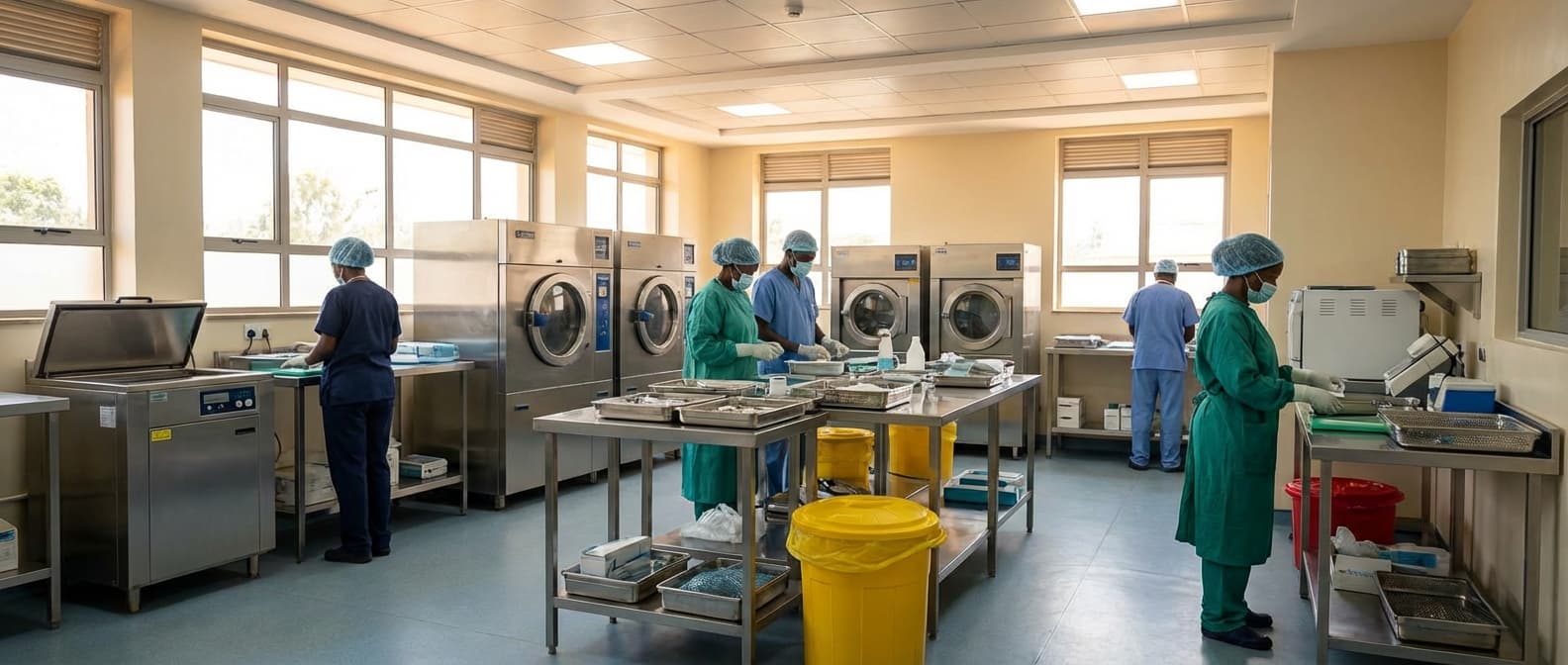
Endoscope Reprocessing Equipment Support Service in Botswana
Engineering Excellence & Technical Support
Endoscope Reprocessing Equipment Support Service High-standard technical execution following OEM protocols and local regulatory frameworks.
Certified Endoscope Reprocessing Technicians
Our team comprises extensively trained and certified technicians with specialized knowledge in the complex maintenance and repair of all major endoscope reprocessing equipment brands. We ensure your critical infection control processes remain uninterrupted through expert service delivery across Botswana.
Proactive Preventative Maintenance Programs
We offer tailored preventative maintenance schedules designed to optimize the performance and extend the lifespan of your endoscope reprocessors. Our systematic approach minimizes downtime, reduces the risk of equipment failure, and ensures compliance with stringent healthcare standards in Botswana.
Rapid On-Site Repair & Calibration Services
Understanding the critical nature of endoscope reprocessing, we provide swift on-site diagnostic and repair services throughout Botswana. Our technicians are equipped with advanced diagnostic tools and genuine spare parts to ensure efficient and effective resolution of any equipment issues, maintaining your operational readiness.
What Is Endoscope Reprocessing Equipment Support Service In Botswana?
Endoscope Reprocessing Equipment Support Service in Botswana refers to specialized maintenance, repair, and calibration services provided for the complex machinery and automated systems used in the decontamination and sterilization of endoscopes. These services are critical for ensuring the safety, efficacy, and longevity of flexible and rigid endoscopes used in various medical procedures. The service encompasses routine preventative maintenance, diagnostic troubleshooting, emergency repairs, software updates, and performance verification to meet stringent infection control standards and regulatory requirements. The goal is to minimize downtime of reprocessing equipment, prevent device contamination, and ensure patient safety by maintaining the integrity and functionality of both the endoscopes and the reprocessing systems.
| Service Component | Description | Impact on Healthcare Facility |
|---|---|---|
| Preventative Maintenance | Proactive servicing to identify and address potential issues before they lead to breakdowns. | Reduces unscheduled downtime, extends equipment lifespan, and prevents costly emergency repairs. |
| Corrective Maintenance & Repair | On-demand troubleshooting and fixing of malfunctioning reprocessing units. | Minimizes the period of equipment unavailability, ensuring continuous availability of reprocessed endoscopes for patient procedures. |
| Calibration & Performance Verification | Ensuring automated systems consistently achieve optimal cleaning and disinfection parameters. | Guarantees the efficacy of the reprocessing cycle, thereby preventing healthcare-associated infections (HAIs) and ensuring patient safety. |
| Technical Consultation | Expert advice on equipment selection, integration, and operational best practices. | Optimizes reprocessing workflow, enhances staff efficiency, and ensures compliance with infection control protocols. |
| Compliance Assurance | Support in meeting regulatory requirements and accreditation standards for sterile processing. | Mitigates risks of non-compliance, legal liabilities, and potential sanctions. |
Key Aspects of Endoscope Reprocessing Equipment Support Service:
- Preventative Maintenance: Scheduled inspections, cleaning, lubrication, and component replacement to avert potential failures.
- Corrective Maintenance & Repair: Diagnosis and resolution of equipment malfunctions, including component-level repairs and part replacements.
- Calibration & Performance Verification: Ensuring that automated cleaning and disinfection cycles adhere to manufacturer specifications and regulatory guidelines for validated efficacy.
- Software Updates & Management: Maintaining current firmware and operating software for optimal performance and security.
- Training & User Support: Providing technical guidance and training to hospital biomedical engineers and reprocessing technicians.
- Validation & Compliance: Assisting healthcare facilities in demonstrating compliance with national and international infection control standards (e.g., guidelines from the Botswana Ministry of Health, WHO).
- Parts Management: Ensuring availability and timely delivery of genuine spare parts for various reprocessing equipment brands.
- Emergency Service: Rapid response for critical equipment failures to minimize operational disruption.
Who Needs Endoscope Reprocessing Equipment Support Service In Botswana?
Maintaining the highest standards of hygiene and patient safety in healthcare facilities is paramount. Endoscope reprocessing equipment plays a critical role in preventing the spread of infections. Therefore, reliable support services for this specialized equipment are essential in Botswana's healthcare landscape.
| Target Customer | Relevant Departments | Key Needs for Support Service |
|---|---|---|
| Public Hospitals | Endoscopy Unit, Gastroenterology, Pulmonology, Surgery, Infection Control | Regular maintenance, emergency repairs, calibration, parts replacement, staff training on equipment operation and safety. |
| Private Hospitals & Specialist Clinics | Gastroenterology Department, Urology Department, Pulmonology Department, Surgical Units, Central Sterile Supply Department (CSSD) | Preventative maintenance schedules, rapid response for breakdowns, software updates, validation services, compliance with international standards. |
| Government Clinics (larger ones with diagnostic capabilities) | Outpatient Departments, Diagnostic Services, Infection Prevention and Control Teams | Basic maintenance checks, troubleshooting, access to spare parts, training on routine cleaning and disinfection protocols. |
| Tertiary Referral Centers | All departments utilizing flexible endoscopes (e.g., Cardiology, Neurology for specific procedures) | Advanced technical support, specialized repair services, consultation on new equipment, upgrade services. |
| Medical Device Suppliers & Distributors (indirectly) | Technical Support & Service Departments | Access to qualified technicians, spare parts inventory management, service level agreements (SLAs) for efficient customer support. |
Who Needs Endoscope Reprocessing Equipment Support Service in Botswana?
- Hospitals with endoscopy suites
- Surgical centers performing procedures requiring flexible endoscopes
- Clinics and diagnostic centers offering gastrointestinal or respiratory examinations
- Government health facilities responsible for public healthcare delivery
- Private healthcare providers and specialized medical practices
Endoscope Reprocessing Equipment Support Service Process In Botswana
This document outlines the standard workflow for endoscope reprocessing equipment support services in Botswana, from the initial customer inquiry to the successful execution of the service. The process is designed to ensure timely, efficient, and effective maintenance and repair of critical medical equipment, minimizing downtime and ensuring patient safety.
| Step | Description | Responsible Party | Key Outcome |
|---|---|---|---|
| Customer contacts the support provider with a request for service (phone, email, online portal). The request is logged into the service management system. | Customer, Service Administrator | Service Request Created & Assigned SR Number |
| Service Administrator or Lead Technician reviews the inquiry, gathers preliminary information, and prioritizes the request based on urgency and impact. | Service Administrator, Lead Technician | Prioritized Service Request, Initial Scope Defined |
| An appropriately qualified and available service engineer is assigned and dispatched to the customer's facility. | Service Coordinator, Service Administrator | Engineer En Route to Site |
| The engineer arrives at the customer site, performs a detailed inspection and diagnostic testing of the endoscope reprocessing equipment to identify the root cause of the problem. | Service Engineer | Accurate Diagnosis of Equipment Fault |
| Based on the diagnosis, the engineer identifies any required replacement parts. If not in stock, parts are ordered from suppliers. | Service Engineer, Procurement Department | Parts List Generated, Orders Placed |
| Once necessary parts are available, the engineer performs the repair, calibration, or scheduled preventive maintenance on the equipment. | Service Engineer | Equipment Repaired/Maintained |
| The engineer conducts comprehensive testing and validation procedures to ensure the equipment is functioning correctly, safely, and according to manufacturer specifications. | Service Engineer | Equipment Certified as Functional & Safe |
| A detailed service report is generated, documenting the work performed, parts used, and test results. This is presented to the customer for sign-off. | Service Engineer, Customer Representative | Service Completion Documented & Approved |
| The service department generates an invoice based on the service report and agreed-upon rates. Payment is processed. | Finance Department, Customer | Financial Transaction Completed |
| A follow-up call or email is made to the customer within a specified period to ensure satisfaction and gather feedback on the service provided. | Customer Service Representative, Service Administrator | Customer Satisfaction Confirmed, Service Improvement Data Collected |
Endoscope Reprocessing Equipment Support Service Process in Botswana
- The process begins with a customer initiating an inquiry regarding a specific piece of endoscope reprocessing equipment.
- This inquiry is formally logged and assigned a unique service request number for tracking.
- A preliminary assessment is conducted to understand the nature of the issue and the urgency.
- A service engineer or technician is dispatched to the customer's location.
- The engineer performs a detailed diagnosis of the equipment problem.
- If parts are required, they are ordered from the relevant supplier.
- Upon arrival of necessary parts, the repair or maintenance is carried out.
- After service completion, the equipment undergoes thorough testing and validation.
- The customer is then provided with a service report and potentially a preventative maintenance schedule.
- Invoicing and payment processing are the final administrative steps.
- Follow-up is conducted to ensure customer satisfaction and address any lingering concerns.
Endoscope Reprocessing Equipment Support Service Cost In Botswana
Providing effective and affordable endoscope reprocessing equipment support services in Botswana is crucial for maintaining healthcare standards and patient safety. The cost of these services is influenced by several key factors, leading to a range of pricing that caters to different needs and scales of operation within the country. These factors include the type and complexity of the endoscope reprocessing equipment, the frequency and scope of the maintenance contract, the availability and cost of spare parts (often imported), the expertise and certification of the technicians, and the geographical location of the healthcare facility within Botswana, which impacts travel and logistics.
Pricing Factors:
- Equipment Type and Brand: Different types of endoscope washers, disinfectors, and associated accessories (e.g., drying cabinets, leak testing equipment) have varying levels of complexity and inherent service costs. Premium brands or highly specialized equipment may command higher support fees.
- Service Level Agreements (SLAs): Contracts can range from basic preventative maintenance to comprehensive, on-demand repair services with guaranteed response times. More inclusive SLAs, offering 24/7 support and rapid intervention, will naturally be priced higher.
- Frequency of Service: The frequency of scheduled preventative maintenance visits (e.g., quarterly, semi-annually, annually) will directly impact the overall service cost. Facilities requiring more frequent check-ups will incur higher annual expenses.
- Spare Parts and Consumables: The cost of genuine, manufacturer-approved spare parts and specialized consumables (e.g., filters, seals, cleaning agents) is a significant component. Import duties, shipping costs, and currency exchange rates for Botswana Pula (BWP) against foreign currencies where parts are sourced will influence this.
- Technician Expertise and Certification: Highly skilled and certified technicians, particularly those with specialized training on specific brands or advanced models, often command higher service rates. The cost of training and ongoing professional development for these technicians is factored in.
- Geographical Location: Botswana's vast geography means that travel and logistical costs for technicians to reach remote healthcare facilities can add a substantial amount to the service price. This includes fuel, accommodation, and travel time.
- Downtime Impact: The perceived cost of equipment downtime to a healthcare facility can also indirectly influence service pricing. Services that minimize downtime are more valuable and may be priced accordingly.
- Call-Out Fees vs. Contracted Services: Ad-hoc call-out fees for unexpected repairs can be significantly higher per incident than the amortized cost of a comprehensive service contract.
Pricing Ranges in Botswana Pula (BWP):
Given the fluctuating nature of import costs, technician availability, and specific service offerings, providing exact figures is challenging. However, based on industry norms and potential local market conditions, we can estimate general ranges for endoscope reprocessing equipment support services in Botswana:
- Annual Preventative Maintenance Contract (Basic): For a standard washer-disinfector, this could range from BWP 10,000 to BWP 25,000 per year. This typically covers scheduled inspections, cleaning, calibration, and minor adjustments.
- Annual Preventative Maintenance Contract (Comprehensive): Including more frequent visits, potential parts discounts, and extended support, this could range from BWP 20,000 to BWP 50,000+ per year. This is more suitable for high-volume or critical departments.
- On-Demand Repair Service (Per Call-Out): This can vary widely. A basic service call with minor repairs and parts might range from BWP 3,000 to BWP 8,000. Complex repairs requiring significant part replacement or specialized diagnostics could escalate to BWP 10,000 - BWP 20,000+ per incident, excluding the cost of major parts.
- Major Component Replacement: The cost of replacing major parts like heating elements, pumps, or control boards can range from BWP 5,000 to BWP 15,000 or more, depending on the part and equipment model, in addition to labor charges.
- Training and Certification Refreshers: For in-house biomedical teams, specialized training sessions on new equipment or refresher courses might range from BWP 1,000 to BWP 5,000 per participant, depending on the duration and provider.
It is essential for healthcare facilities in Botswana to obtain detailed quotes from multiple service providers, clearly outlining the scope of services, inclusions, exclusions, response times, and payment terms to ensure they select the most cost-effective and appropriate support solution for their endoscope reprocessing equipment.
| Service Type/Component | Estimated Price Range (BWP) | Notes |
|---|---|---|
| Annual Preventative Maintenance (Basic Contract) | 10,000 - 25,000 | Covers scheduled inspections, cleaning, calibration, minor adjustments for standard units. |
| Annual Preventative Maintenance (Comprehensive Contract) | 20,000 - 50,000+ | Includes more frequent visits, potentially discounts on parts, extended support for high-volume needs. |
| On-Demand Repair Service (Per Call-Out, Labor & Minor Parts) | 3,000 - 8,000 | Covers technician visit, diagnosis, and minor repairs/parts. Excludes major component costs. |
| Complex Repair Service (Per Incident, incl. Parts) | 10,000 - 20,000+ | For significant issues requiring specialized diagnostics and/or major parts. Actual part cost often additional. |
| Major Component Replacement (e.g., Pump, Heating Element) | 5,000 - 15,000+ | Cost of the specific part itself, in addition to labor charges for installation. |
| Specialized Technician Training (Per Participant) | 1,000 - 5,000 | For in-house biomedical teams learning new equipment or refreshers. Varies by provider and duration. |
Factors Influencing Endoscope Reprocessing Equipment Support Service Costs in Botswana
- Equipment Type and Complexity (Brand, Model, Specialization)
- Service Level Agreement (SLA) Scope (Response Times, Coverage)
- Frequency of Scheduled Maintenance (e.g., Quarterly, Annual)
- Cost and Availability of Spare Parts (Import Duties, Shipping, Exchange Rates)
- Technician Expertise, Certification, and Training
- Geographical Location of Healthcare Facility (Travel and Logistics)
- Downtime Value and Risk Mitigation
- Contracted Service Agreements vs. Ad-Hoc Repairs
- Inclusion of Consumables and Preventative Kits
Affordable Endoscope Reprocessing Equipment Support Service Options
Providing reliable and cost-effective support for endoscope reprocessing equipment is crucial for healthcare facilities to maintain patient safety, operational efficiency, and budgetary control. This service focuses on offering flexible and affordable options for maintenance, repair, and calibration of vital reprocessing machinery. Understanding value bundles and implementing strategic cost-saving measures can significantly enhance the economic viability of these services.
| Value Bundle Option | Included Services | Typical Cost-Saving Strategies | Ideal For |
|---|---|---|---|
| Basic Care Package | Annual Preventive Maintenance (2-4 visits) | Scheduled maintenance reduces unexpected breakdowns, lowering emergency repair costs. Bulk purchasing of routine supplies. | Facilities with moderate equipment usage and a focus on primary prevention. |
| Comprehensive Support Plan | Bi-annual Preventive Maintenance (4-6 visits) | Extended Service Contracts offer predictable budgeting. Priority response times minimize downtime. Discounted rates on parts and labor. | High-volume reprocessing centers or those with critical patient flow. |
| On-Demand & Calibration Focus | As-needed repairs, scheduled calibration/validation. | Pay-per-service model avoids fixed costs for unused services. Negotiated rates for calibration based on volume. | Facilities with a robust in-house technical team or lower reprocessing volumes. |
| Managed Parts Inventory | Proactive identification and stocking of critical spare parts. | Reduced downtime by having parts on hand, avoiding costly expedited shipping. Bulk discounts on commonly used parts. | Facilities with multiple equipment types or a history of specific part failures. |
| Remote Monitoring & Predictive Maintenance | Utilizing IoT sensors and software for real-time equipment performance tracking. | Early detection of potential issues prevents major failures and costly emergency repairs. Optimized technician dispatch. | Technologically advanced facilities seeking to maximize uptime and leverage data analytics. |
Key Components of Affordable Endoscope Reprocessing Equipment Support
- Preventive Maintenance Programs
- On-Demand Repair Services
- Calibration and Validation
- Spare Parts Management
- Training and Technical Support
- Equipment Upgrade and Replacement Planning
Verified Providers In Botswana
When seeking healthcare services in Botswana, discerning patients prioritize reliability, expertise, and a commitment to quality. Franance Health stands out as a leading provider, offering a comprehensive suite of services backed by a rigorous credentialing process that ensures their healthcare professionals are among the best in the nation. Their dedication to verifying the qualifications, experience, and ethical standards of their practitioners is a cornerstone of their patient-centric approach.
| Provider Type | Key Credentials Verified | Franance Health Advantage |
|---|---|---|
| Doctors (Specialists & General Practitioners) | Medical Degree, Specialist Certifications, Board Registration, Years of Experience, Continuing Medical Education (CME) Records | Access to highly qualified specialists with proven expertise and a commitment to staying current with medical research and techniques. |
| Nurses (Registered & Enrolled) | Nursing Degree/Diploma, Professional Registration, Specialized Certifications (e.g., Critical Care, Midwifery), Clinical Experience | Skilled and compassionate nursing care delivered by professionals with verified training and experience in various healthcare settings. |
| Allied Health Professionals (e.g., Physiotherapists, Pharmacists, Radiologists) | Relevant Professional Degree/Diploma, Professional Body Registration, Specific Certifications, Clinical Experience | Comprehensive allied health services from accredited professionals equipped with the latest knowledge and equipment. |
| Support Staff (e.g., Technicians, Administrators) | Relevant Training Certifications, Background Checks, On-the-job Experience | Efficient and reliable support services ensuring a smooth and positive patient journey, backed by qualified and trustworthy personnel. |
Why Franance Health Credentials Matter:
- Rigorous Verification: Franance Health employs a multi-faceted verification process that goes beyond basic licensing. This includes scrutinizing educational backgrounds, confirming specialized training, and checking for any disciplinary actions.
- Experienced Practitioners: They prioritize healthcare professionals with a proven track record of successful patient care and a deep understanding of various medical disciplines.
- Ethical Standards: A commitment to ethical practice and patient well-being is a non-negotiable aspect of Franance Health's credentialing. They ensure all providers adhere to the highest professional conduct standards.
- Continuous Professional Development: Franance Health encourages and often mandates ongoing training and education for its providers, ensuring they remain at the forefront of medical advancements and best practices.
- Patient Trust and Safety: By meticulously vetting their providers, Franance Health builds a foundation of trust and guarantees a safe and effective healthcare experience for every patient.
Scope Of Work For Endoscope Reprocessing Equipment Support Service
This Scope of Work (SOW) outlines the services required for the comprehensive support and maintenance of Endoscope Reprocessing Equipment. The objective is to ensure the optimal performance, reliability, and compliance of all supported equipment, thereby guaranteeing patient safety and operational efficiency within the healthcare facility.
| Technical Deliverable | Description | Standard Specifications / Compliance |
|---|---|---|
| Preventive Maintenance (PM) Schedule | Regularly scheduled inspections, cleaning, lubrication, and functional testing of all reprocessing equipment components. | PM performed according to manufacturer recommendations and established industry best practices (e.g., AAMI ST91, relevant ISO standards). Frequency of PM to be defined per equipment type and usage. |
| Corrective Maintenance (CM) Response Time | On-site response and resolution of equipment malfunctions and breakdowns. | Within 4 business hours for critical equipment failures. Within 8 business hours for non-critical equipment failures. 24/7 availability for emergency calls for critical equipment. |
| Calibration and Validation Reports | Documentation of calibration checks and validation testing performed on critical reprocessing parameters (e.g., temperature, pressure, flow rates, disinfection cycles). | Calibration traceable to national/international standards. Validation performed to meet manufacturer specifications and regulatory requirements (e.g., FDA 21 CFR Part 820, AAMI TIR12). |
| Technical Support and Troubleshooting | Remote and on-site assistance for diagnosing and resolving equipment issues. | Provided via phone, email, or secure remote access. Available during standard business hours, with extended hours for critical issues. |
| Replacement Parts and Consumables | Supply and installation of genuine, high-quality replacement parts and approved consumables. | Parts to be OEM-approved or equivalent, meeting manufacturer specifications. Consumables to meet reprocessing efficacy requirements and be approved by the facility. |
| Training Materials and Sessions | Development and delivery of operator training programs, including initial and refresher courses. | Training content to cover equipment operation, routine maintenance, troubleshooting, and safety protocols. Sessions to be tailored to facility needs and regulatory compliance. |
| Service Reports and Logs | Comprehensive documentation of all service activities, including PM, CM, calibration, and training. | Reports to include date of service, technician details, work performed, parts used, test results, and recommendations. Records maintained for a minimum of 5 years or as per regulatory requirements. |
| Compliance with Standards | Adherence to all relevant national and international standards and guidelines for endoscope reprocessing equipment. | Compliance with AAMI ST91, ISO 13485, FDA regulations (21 CFR Part 820), local health authority guidelines, and manufacturer's recommended practices. |
Scope of Work - Endoscope Reprocessing Equipment Support Service
- Preventive Maintenance (PM) services for all designated endoscope reprocessing equipment.
- Corrective maintenance (CM) services, including on-site emergency repairs.
- Equipment calibration and validation services to ensure accuracy and compliance.
- Technical support and troubleshooting assistance.
- Provision of genuine replacement parts and consumables.
- Operator training and retraining sessions.
- Documentation and record-keeping of all service activities.
- Compliance with relevant industry standards and regulatory requirements (e.g., AAMI, ISO, FDA, local health regulations).
Service Level Agreement For Endoscope Reprocessing Equipment Support Service
This Service Level Agreement (SLA) outlines the terms and conditions for the support services provided for Endoscope Reprocessing Equipment. It defines the guaranteed response times and uptime for critical components and the overall system, ensuring the continuous and efficient operation of the reprocessing workflow.
| Service Level | Description | Response Time Target | Uptime Guarantee | Notes/Exclusions |
|---|---|---|---|---|
| Critical System Failure | Complete loss of functionality affecting the entire reprocessing workflow (e.g., washer-disinfector failure, drying cabinet malfunction). | 1 Hour (Acknowledgement and initial diagnosis) | 99.5% | Excludes scheduled maintenance, power outages, or issues caused by user error/improper use. |
| Major Component Failure | Failure of a key individual component impacting a significant portion of the workflow (e.g., pump failure, heating element malfunction). | 2 Business Hours (Acknowledgement and initial diagnosis) | 99.8% | Excludes issues arising from consumables not meeting specifications. |
| Minor Component Issue / Diagnostic Support | Issues that do not halt the entire workflow but may cause delays or require attention (e.g., sensor error, communication issue, software glitch requiring a reboot). | 4 Business Hours (Acknowledgement and initial diagnosis) | 99.9% | This level applies to issues that can be resolved remotely or with minimal on-site intervention. |
| Preventative Maintenance Visit | Scheduled routine maintenance performed by certified technicians. | As per agreed schedule | N/A (This is scheduled downtime) | Maintenance is scheduled during off-peak hours to minimize disruption. |
Key Performance Indicators (KPIs)
- Response Time: The maximum time allowed for a support technician to acknowledge and begin working on a reported issue.
- Uptime Guarantee: The minimum percentage of time the endoscope reprocessing equipment is expected to be operational and available for use.
- Resolution Time (Target): The anticipated time to resolve a reported issue. While not always guaranteed due to complexity, this is a key performance target.
- Preventative Maintenance Schedule: A defined frequency and scope for routine maintenance to minimize the risk of unplanned downtime.
- Service Window: The designated periods during which scheduled maintenance or upgrades can be performed without impacting normal operations.
Frequently Asked Questions

Ready when you are
Let's scope your Endoscope Reprocessing Equipment Support Service in Botswana project in Botswana.

Scaling healthcare logistics and technical systems across the entire continent.