
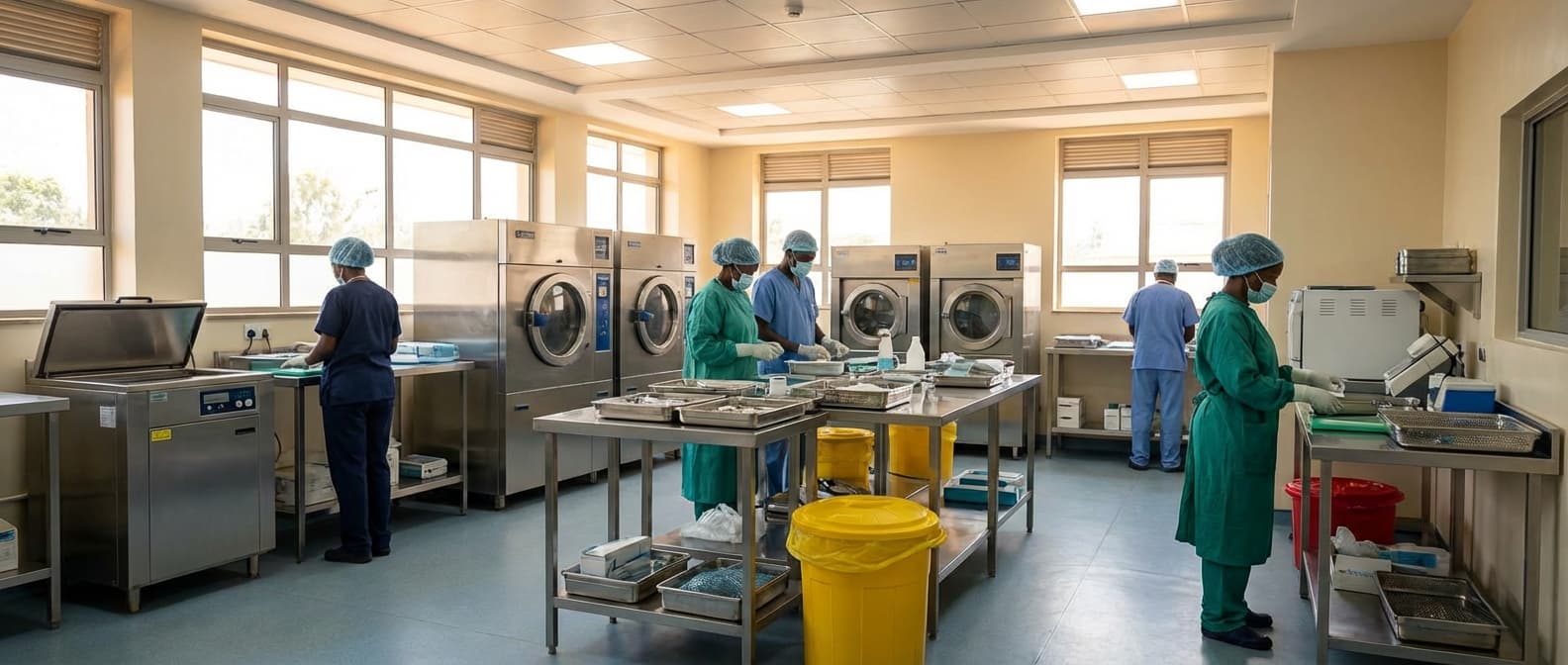
Autoclave Validation Support Service in Botswana
Engineering Excellence & Technical Support
Autoclave Validation Support Service High-standard technical execution following OEM protocols and local regulatory frameworks.
Expert Autoclave Validation for Uncompromising Sterility
We provide comprehensive autoclave validation services in Botswana, ensuring your sterilization processes meet the highest international standards (e.g., ISO 17665). Our detailed reports and calibration services guarantee consistent, effective sterilization, safeguarding patient safety and regulatory compliance.
Data-Driven Sterilization Assurance & Compliance
Leveraging advanced data logging and analysis, our validation services offer tangible proof of your autoclave's performance. We meticulously track critical parameters (temperature, pressure, time) to identify potential deviations and provide actionable insights for optimal operation and seamless regulatory audits in Botswana.
Tailored Support for Botswana's Healthcare Sector
Our autoclave validation expertise is specifically tailored to the needs of Botswana's healthcare facilities, research institutions, and veterinary clinics. We offer on-site support, flexible scheduling, and proactive maintenance recommendations to minimize downtime and ensure the continuous reliability of your critical sterilization equipment.
What Is Autoclave Validation Support Service In Botswana?
Autoclave Validation Support Service in Botswana refers to the provision of expert technical assistance and documentation required to confirm that steam sterilization equipment (autoclaves) operates effectively and consistently in accordance with established scientific principles and regulatory requirements. This service is critical for any organization in Botswana that relies on autoclaves for the sterilization of medical devices, laboratory equipment, or other critical materials. The validation process ensures that the autoclave achieves and maintains the necessary temperature, pressure, and cycle times to achieve the required Sterility Assurance Level (SAL).
| Who Needs Autoclave Validation Support Service? | Typical Use Cases | |||
|---|---|---|---|---|
| Healthcare Facilities (Hospitals, Clinics, Dental Practices): For sterilization of surgical instruments, medical devices, and consumables to prevent healthcare-associated infections (HAIs). | Sterilization of reusable medical instruments (scalpels, forceps, clamps, etc.). | Sterilization of dressings, surgical drapes, and other sterile supplies. | Sterilization of laboratory glassware and media in hospital diagnostic laboratories. | |
| Laboratories (Research, Diagnostic, Industrial): For ensuring the sterility of laboratory equipment, media, and reagents to maintain experimental integrity and prevent contamination. | Sterilization of culture media and agar plates. | Sterilization of laboratory glassware (pipettes, flasks, petri dishes). | Decontamination of infectious waste. | Sterilization of equipment in quality control labs for pharmaceutical or food industries. |
| Pharmaceutical and Biotechnology Companies: For sterilization of manufacturing equipment, packaging materials, and sterile products to meet stringent regulatory requirements (e.g., GMP). | Sterilization of pharmaceutical components and finished products. | Sterilization of production and packaging equipment. | Validation of cleanroom autoclaves. | |
| Veterinary Clinics and Animal Research Facilities: For sterilization of surgical instruments and equipment used in animal care. | Sterilization of surgical kits for animal procedures. | Sterilization of animal housing accessories. | ||
| Any organization in Botswana utilizing autoclaves for critical sterilization processes requiring documented proof of efficacy and compliance with relevant standards (e.g., ISO 13485, local health regulations). | Ensuring compliance with Good Manufacturing Practices (GMP) and Good Laboratory Practices (GLP). | Facilitating audits by regulatory bodies (e.g., Ministry of Health, Botswana Bureau of Standards). | Minimizing the risk of product recalls or patient harm due to inadequate sterilization. |
Key Components of Autoclave Validation Support Service:
- Installation Qualification (IQ): Verifying that the autoclave is installed correctly, meets manufacturer specifications, and is properly calibrated.
- Operational Qualification (OQ): Testing the autoclave's performance within its defined operating parameters, including verifying critical control points like temperature, pressure, and cycle duration under various load conditions.
- Performance Qualification (PQ): Demonstrating that the autoclave consistently and reproducibly sterilizes a specified range of challenging loads under normal operating conditions. This typically involves using biological indicators (BIs) and chemical indicators (CIs).
- Documentation and Reporting: Generating comprehensive validation reports that detail the methodology, results, analysis, and conclusions, suitable for internal quality assurance and external regulatory audits.
- Revalidation Services: Providing support for periodic revalidation or revalidation after significant maintenance or repairs to ensure continued compliance.
- Consultancy and Protocol Development: Assisting in the development of validation protocols tailored to specific organizational needs and autoclave models.
- Training: Offering training to in-house personnel on the operation, maintenance, and basic troubleshooting of autoclaves, as well as understanding validation principles.
Who Needs Autoclave Validation Support Service In Botswana?
Autoclave validation is a critical process for ensuring the effectiveness of sterilization cycles, thereby safeguarding patient health and complying with regulatory standards. In Botswana, various sectors and departments rely heavily on properly functioning autoclaves to maintain sterility. This document outlines who requires autoclave validation support services in Botswana, identifying key target customers and the departments within those organizations that would benefit most.
| Target Customer | Key Departments Requiring Support | Reasons for Requiring Support |
|---|---|---|
| Healthcare Facilities (Hospitals, Clinics, Health Centers) | Central Sterile Supply Department (CSSD)/Sterilization Unit, Operating Theatres, Intensive Care Units (ICUs), Maternity Wards, Outpatient Departments, Pathology Labs | Ensuring patient safety by guaranteeing effective sterilization of surgical instruments, medical devices, and equipment. Compliance with national and international healthcare regulations. Preventing Healthcare-Associated Infections (HAAs). |
| Laboratories (Research, Diagnostic, Public Health) | Microbiology Labs, Molecular Biology Labs, Pathology Labs, Quality Control Labs, Public Health Surveillance Units | Sterilizing media, laboratory glassware, instruments, and biosafety equipment to prevent contamination and ensure accurate test results. Compliance with Good Laboratory Practice (GLP) and biosafety guidelines. |
| Pharmaceutical Manufacturing | Quality Control (QC) Labs, Production (Sterile Manufacturing Areas), Research & Development (R&D) | Sterilizing components, packaging materials, and equipment used in sterile pharmaceutical production. Maintaining product integrity and preventing microbial contamination. Adherence to Good Manufacturing Practice (GMP) standards. |
| Food and Beverage Industry | Quality Assurance (QA) Labs, Production (Hygiene Critical Areas) | Sterilizing equipment and packaging materials for sensitive food and beverage products to prevent spoilage and ensure consumer safety. Compliance with food safety regulations. |
| Dental Clinics | Sterilization Room/Area | Sterilizing dental instruments, handpieces, and other reusable equipment to prevent the transmission of infections between patients and dental professionals. |
| Veterinary Clinics and Animal Hospitals | Surgical Suite, Sterilization Area | Sterilizing surgical instruments, kennels, and other equipment used in animal care to ensure the health and safety of animals and prevent zoonotic disease transmission. |
| Educational Institutions (Universities, Colleges) | Science and Medical Departments (Biology, Chemistry, Pharmacy, Medicine) | Sterilizing equipment and materials for practical classes, research projects, and student laboratories to ensure the safety and validity of experiments. |
Target Customers for Autoclave Validation Support Service in Botswana
- Healthcare Facilities
- Laboratories (Research and Diagnostic)
- Pharmaceutical Manufacturing
- Food and Beverage Industry
- Dental Clinics
- Veterinary Clinics and Animal Hospitals
- Educational Institutions (with science departments)
Autoclave Validation Support Service Process In Botswana
This document outlines the typical workflow for an Autoclave Validation Support Service in Botswana, from the initial client inquiry to the final execution of validation activities. The process is designed to ensure that autoclaves meet regulatory requirements and function effectively for sterilization purposes.
| Stage | Key Activities | Deliverables/Outcomes |
|---|---|---|
| Inquiry & Consultation | Client expresses need, service provider gathers initial information. | Understanding of client's needs, initial assessment. |
| Scope Definition & Proposal | Detailed discussion, service scope, methodology, timeline, and cost defined. | Formal Proposal. |
| Agreement & Planning | Contract signing, development of detailed Validation Master Plan (VMP) and protocols. | Signed Agreement, Approved Validation Plan. |
| On-site Execution (IQ) | Visual inspection, documentation review, installation verification. | Installation Qualification Report (partial). |
| On-site Execution (OQ) | Testing autoclave functions and parameters without load, alarm verification. | Operational Qualification Report (partial). |
| On-site Execution (PQ) | Testing with representative loads, use of biological and chemical indicators. | Performance Qualification Report (partial). |
| Data Analysis & Reporting | Review of all collected data, comparison with acceptance criteria. | Draft Validation Report. |
| Client Review & Approval | Client feedback and formal sign-off on the report. | Final Approved Validation Report. |
| Recommendations & Remediation | Identification of issues and proposed solutions, potential revalidation. | Corrective Action Plan, Revised Validation Plan (if needed). |
| Revalidation & Ongoing Support | Scheduled revalidation, maintenance, and calibration services. | Ongoing compliance and operational efficiency. |
Autoclave Validation Support Service Workflow
- Inquiry & Consultation: The process begins with a client (e.g., a hospital, laboratory, pharmaceutical manufacturer) reaching out to a service provider with a need for autoclave validation.
- Scope Definition & Proposal: The service provider consults with the client to understand the specific autoclave(s) involved, their intended use, and any regulatory mandates. A detailed proposal is then developed, outlining the validation services to be provided, methodology, timeline, and costs.
- Agreement & Planning: Upon acceptance of the proposal, a formal agreement is signed. The service provider and client collaborate to finalize the validation plan, including specific test points, parameters, and dates. Pre-validation checks and calibration of equipment may be scheduled at this stage.
- On-site Execution - Pre-validation & Installation Qualification (IQ): The validation team arrives on-site. They conduct thorough visual inspections, verify installation details, check documentation (manuals, schematics), and confirm the autoclave's operational status. This ensures the autoclave is installed correctly and according to manufacturer specifications.
- On-site Execution - Operational Qualification (OQ): This phase tests the autoclave's ability to operate within its specified parameters. This involves running empty cycles at various temperatures and holding times, measuring and recording critical parameters (temperature, pressure, time, humidity), and confirming alarm functions and safety interlocks. Typically, a series of challenging cycles are run to demonstrate consistent performance.
- On-site Execution - Performance Qualification (PQ): This is the most crucial stage, focusing on the autoclave's ability to sterilize a specific load. Biological indicators (BIs) and chemical indicators (CIs) are strategically placed within the load. The autoclave is run with the representative load, and the results from the BIs and CIs are analyzed post-cycle to confirm effective sterilization.
- Data Analysis & Reporting: All collected data from IQ, OQ, and PQ are meticulously analyzed. This includes comparing results against predefined acceptance criteria. A comprehensive validation report is generated, detailing the methodology, executed tests, results, deviations (if any), and a conclusion on the autoclave's validated status.
- Client Review & Approval: The draft validation report is submitted to the client for their review. Any questions or clarifications are addressed. Upon client approval, the final report is issued.
- Recommendations & Remediation (if applicable): If any deviations or failures are encountered during validation, the service provider will offer recommendations for corrective actions. Further testing or revalidation may be required after remediation.
- Revalidation & Ongoing Support: Autoclave validation is typically time-bound. The service provider will advise on revalidation schedules and can be engaged for subsequent validation activities, preventative maintenance, or calibration services.
Autoclave Validation Support Service Cost In Botswana
The cost of Autoclave Validation Support Services in Botswana can vary significantly based on several key factors. These services are crucial for ensuring that autoclaves, used for sterilization in healthcare, laboratories, and other critical environments, are functioning correctly and effectively. A comprehensive validation process typically involves installation qualification (IQ), operational qualification (OQ), and performance qualification (PQ).
| Service Component | Typical Price Range (BWP) | Notes |
|---|---|---|
| Installation Qualification (IQ) | 1,500 - 3,000 | Covers verification of equipment installation and manufacturer's specifications. |
| Operational Qualification (OQ) | 2,000 - 4,500 | Tests the autoclave's functionality within its operational parameters. |
| Performance Qualification (PQ) - Per Cycle | 1,000 - 2,500 | Involves running the autoclave with biological indicators or chemical indicators to prove sterilization efficacy. Multiple cycles are usually required. |
| Full Autoclave Validation (IQ, OQ, PQ) | 6,000 - 15,000+ | This is a comprehensive package. The higher end reflects larger autoclaves, multiple cycles, and extensive reporting. |
| Re-validation/Periodic Verification | 3,000 - 8,000 | Typically focuses on OQ and PQ, less extensive than initial validation. |
| Calibration of Validation Equipment | 500 - 1,500 (per device) | If the service provider brings their own calibrated equipment or requires your equipment to be calibrated. |
| Travel & Accommodation (per day, if applicable) | 500 - 2,000 | Dependent on distance and specific location within Botswana. |
Key Pricing Factors for Autoclave Validation Support Services in Botswana:
- Type and Size of Autoclave: Larger or more complex autoclaves (e.g., bulk sterilizers, high-capacity units) will generally incur higher validation costs due to the increased number of validation cycles, measurement points, and complexity of the equipment.
- Number of Validation Cycles: Each validation cycle (IQ, OQ, PQ) requires specific testing and documentation. The more cycles required or the more complex the testing protocol, the higher the cost.
- Scope of Validation: Whether the validation is for a new installation, a routine re-validation, or a post-repair validation will influence the scope and therefore the cost. A full validation is more extensive than a simple re-validation.
- Geographic Location and Travel: If the validation service provider needs to travel to remote locations within Botswana, travel and accommodation expenses will be added to the overall cost.
- Service Provider's Expertise and Reputation: Established service providers with a strong track record, experienced technicians, and advanced validation equipment may command higher fees. Smaller or newer providers might offer more competitive pricing.
- Included Services and Deliverables: The cost can vary depending on what is included, such as the type of report generated (basic vs. comprehensive), the level of consulting provided, and any post-validation support offered.
- Equipment Calibration Status: If the autoclave's internal sensors or the validation equipment itself requires calibration as part of the service, this will add to the cost.
- Regulatory Requirements: The specific regulatory or accreditation body (e.g., Ministry of Health, international standards like ISO) the client needs to comply with can dictate the rigor and extent of validation required, influencing the price.
- Urgency of Service: Rush or emergency validation services often come with a premium charge.
Affordable Autoclave Validation Support Service Options
Ensuring the efficacy of your autoclave is paramount for maintaining sterile conditions, patient safety, and regulatory compliance. Autoclave validation is a critical process that requires specialized expertise and adherence to strict protocols. Recognizing the financial constraints many facilities face, we offer affordable autoclave validation support services designed to deliver exceptional value without compromising quality. Our approach focuses on providing flexible service options and transparent pricing, making essential validation accessible to a wider range of organizations.
| Cost-Saving Strategy | Description | Benefit |
|---|---|---|
| Bundled Services Discount | Purchasing validation for multiple units or opting for a comprehensive package at once often results in a lower per-unit cost compared to booking individual validation events. | Significant reduction in overall validation expenditure for facilities with several autoclaves. |
| Annual Contract Options | For ongoing validation needs, we offer annual contracts that lock in current pricing, provide preferential scheduling, and can include preventative maintenance checks at a discounted rate. | Predictable budgeting, protection against future price increases, and reduced risk of unexpected maintenance costs. |
| Remote Support & Consultation | For less complex validation needs or initial guidance, we can offer remote consultation services to help you understand requirements and best practices, potentially reducing the need for on-site visits. | Lower cost for expert advice and guidance, enabling in-house staff to manage certain aspects of the process. |
| Early Bird Booking Discounts | Schedule your validation services well in advance, and you may be eligible for early bird discounts, especially during off-peak seasons. | Opportunity to secure validation at a reduced price by planning ahead. |
| Tiered Service Levels | Our different value bundles allow you to select the level of support that aligns with your budget and requirements, ensuring you're not overpaying for services you don't need. | Financial flexibility and efficient allocation of resources. |
Understanding Our Value Bundles
- Basic Validation Package: Ideal for smaller clinics or those with less frequent validation needs. This package covers essential validation tests for a single autoclave unit, including cycle efficacy and process parameter verification. It's our most budget-friendly option, providing core compliance assurance.
- Standard Validation Bundle: Designed for medium-sized practices or facilities with multiple sterilizers. This bundle includes validation for up to three autoclave units and offers a slight discount per unit compared to the basic package. It also incorporates a more comprehensive documentation review.
- Comprehensive Validation Suite: Our most robust offering, suitable for larger healthcare facilities, research labs, or organizations with a high volume of sterilization. This bundle covers an unlimited number of autoclave units within a single site, includes extended documentation support, a detailed risk assessment, and priority scheduling for your validation events. We also offer an annual maintenance and calibration check as part of this package for added value and peace of mind.
- Customizable Validation Plans: We understand that no two facilities are alike. Our team can work with you to create a tailor-made validation plan that addresses your specific autoclave types, sterilization cycles, and compliance requirements. This ensures you only pay for the services you truly need.
Verified Providers In Botswana
In Botswana, choosing a healthcare provider that is both reliable and ethical is paramount for your well-being. Franance Health stands out as a beacon of trust in the nation's healthcare landscape, offering a comprehensive suite of services backed by verified credentials. Their commitment to quality, patient care, and transparent operations makes them the undisputed best choice for individuals and families seeking exceptional medical services.
| Credential Type | Franance Health Verification Standard | Significance for Patients |
|---|---|---|
| Medical Licenses & Registrations | Confirmed with relevant Botswana Medical Council/Authority. | Ensures providers are legally permitted to practice and meet national standards. |
| Specialty Certifications | Verified through recognized national and international boards. | Confirms in-depth expertise and specialized training in specific medical fields. |
| Educational Background | Checked against accredited medical institutions. | Validates the foundational medical education and training of the provider. |
| Professional Experience | Reviewed through references and practice history. | Demonstrates practical application of knowledge and patient management skills. |
| Ethical Conduct | Adherence to a strict code of conduct, with mechanisms for feedback and grievance resolution. | Guarantees that providers uphold high ethical standards and prioritize patient welfare. |
| Continuing Professional Development (CPD) | Evidence of ongoing learning and skill enhancement. | Ensures providers are up-to-date with the latest medical research, techniques, and best practices. |
Why Franance Health is Your Best Choice:
- Rigorous Verification Process: Franance Health meticulously vets all its healthcare providers. This includes thorough background checks, verification of medical licenses and certifications, and an assessment of their professional experience and qualifications. This ensures that only competent and legitimate practitioners are part of their network.
- Commitment to Patient-Centric Care: Beyond credentials, Franance Health prioritizes a patient-first approach. Their network providers are committed to delivering compassionate, empathetic, and individualized care, ensuring patients feel heard, respected, and well-informed throughout their healthcare journey.
- Comprehensive Network: Franance Health boasts a diverse network of specialists, general practitioners, dentists, and allied health professionals. This breadth of expertise means you can access a wide range of medical services under one trusted umbrella, from routine check-ups to specialized treatments.
- Quality Assurance and Continuous Improvement: Franance Health doesn't just verify credentials once. They implement ongoing quality assurance measures and encourage continuous professional development among their network. This commitment to excellence ensures that their providers remain at the forefront of medical advancements and best practices.
- Transparency and Trust: Franance Health operates with a high degree of transparency. Patients can have confidence in the qualifications and ethical standing of the providers they connect with, fostering a sense of trust and security in their healthcare decisions.
- Accessibility and Convenience: By streamlining the process of finding and accessing verified healthcare professionals, Franance Health significantly enhances convenience for patients, saving them time and effort in their search for quality medical care.
Scope Of Work For Autoclave Validation Support Service
This Scope of Work (SOW) outlines the services to be provided by the Vendor for Autoclave Validation Support. The objective is to ensure that the client's autoclaves consistently meet predefined performance and safety standards through a comprehensive validation process. This SOW details the technical deliverables and standard specifications required for successful completion of the validation.
| Deliverable | Description | Standard Specifications / Acceptance Criteria | Frequency / Timeline |
|---|---|---|---|
| Validation Master Plan (VMP) Addendum/Protocol Development | Creation or modification of the VMP and specific protocols for autoclave validation, outlining the scope, objectives, responsibilities, and testing methodology. | Protocols must align with industry standards (e.g., FDA, ISO) and client-specific SOPs. Includes detailed test procedures, sampling plans, and success criteria. | Initial: As per project kickoff. Revalidation: As per revalidation schedule or after significant changes. |
| Installation Qualification (IQ) Report | Verification that the autoclave is installed correctly according to manufacturer's specifications and relevant regulations. | Documentation of equipment identity, installation site, utilities connected, safety features, and calibration status of critical instruments. Acceptance criteria: All checks passed. | Post-installation or post-major maintenance. |
| Operational Qualification (OQ) Report | Verification that the autoclave operates within defined parameters at acceptable limits. | Testing of critical control parameters (e.g., temperature, pressure, time, sterilization cycle repeatability) across the operating range. Acceptance criteria: All parameters within specified ranges for multiple cycles. | Post-IQ, prior to PQ. |
| Performance Qualification (PQ) Report | Verification that the autoclave consistently performs as intended under normal operating conditions. | Execution of a minimum number of consecutive sterilization cycles using biological and/or chemical indicators to demonstrate effective sterilization. Acceptance criteria: Biological and chemical indicators show expected results for all tested cycles. | Post-OQ, prior to routine use. Routine PQ: As per revalidation schedule or after significant changes. |
| Calibration Certificates for Critical Instruments | Evidence that all critical measuring instruments (e.g., temperature probes, pressure gauges) used during validation are within their calibration period and traceable to national/international standards. | Certificates must be current, issued by an accredited laboratory, and include unique identification numbers for each instrument. | Provided with IQ/OQ/PQ reports. Ongoing: As per instrument calibration schedule. |
| Validation Summary Report | A consolidated report summarizing the findings of IQ, OQ, and PQ, including any deviations encountered and their impact. | Clear conclusion on the validated status of the autoclave. Includes an executive summary, overview of testing performed, deviation management, and final recommendation. | Upon completion of all validation phases. |
| Revalidation Plan/Protocol | A plan outlining the scope and execution of revalidation activities. | Covers requirements for revalidation based on predefined schedules or after significant changes (e.g., major repairs, process changes). | As per VMP or change control. |
| Change Control Support Documentation | Documentation to support change control activities related to the autoclave. | Includes impact assessment of proposed changes on the validated status and recommendations for requalification if necessary. | As required by change control process. |
Key Areas of Autoclave Validation
- Installation Qualification (IQ)
- Operational Qualification (OQ)
- Performance Qualification (PQ)
- Revalidation and Ongoing Monitoring
Service Level Agreement For Autoclave Validation Support Service
This Service Level Agreement (SLA) outlines the guaranteed response times and uptime for the Autoclave Validation Support Service provided by [Your Company Name] to [Client Name]. This SLA is an integral part of the overall service contract and defines the expected performance standards for the critical support services required for autoclave validation.
| Service Level | Description | Response Time Target | Uptime Guarantee |
|---|---|---|---|
| Critical Incident | Complete loss of validation capability, immediate risk to product release or patient safety. | 30 minutes | 99.5% |
| Major Incident | Significant impact on validation workflow, hindering multiple validation processes. | 2 hours | 99.5% |
| Minor Incident | Issues impacting a single validation process or non-critical functionality. | 4 business hours | 99.5% |
| Information/Enquiry | Requests for clarification, documentation, or general guidance. | 8 business hours | 99.5% |
Key Service Commitments
- Scope: This SLA covers all support requests related to the validation of autoclaves, including but not limited to, software issues, hardware diagnostics, calibration support, and documentation assistance.
- Support Hours: Standard support is available from Monday to Friday, 9:00 AM to 5:00 PM [Client's Time Zone], excluding national holidays.
- Emergency Support: Emergency support is available 24/7/365 for critical system failures impacting validation operations.
- Response Time: Defined as the time from when a support request is logged by the client and acknowledged by [Your Company Name]'s support system until the first substantive action is taken by a support engineer.
- Uptime Guarantee: Refers to the availability of the Autoclave Validation Support Service portal and related remote diagnostic tools, excluding scheduled maintenance.
- Service Credits: Applicable for failures to meet the defined response times or uptime guarantees, as detailed in the 'Service Credits' section of the main service contract.
Frequently Asked Questions

Ready when you are
Let's scope your Autoclave Validation Support Service in Botswana project in Botswana.

Scaling healthcare logistics and technical systems across the entire continent.