
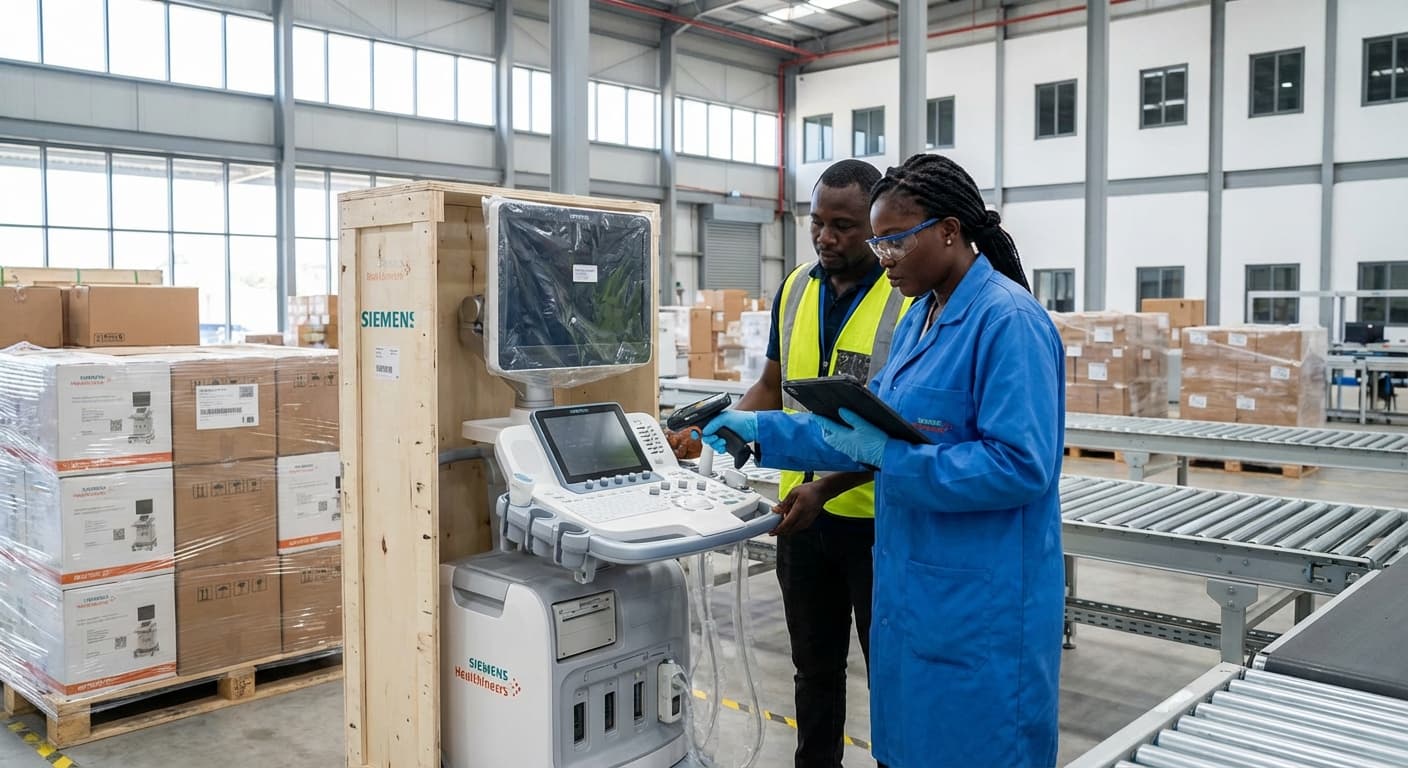
Warehouse Receiving Inspection Service (Medical Equipment) in Botswana
Engineering Excellence & Technical Support
Warehouse Receiving Inspection Service (Medical Equipment) High-standard technical execution following OEM protocols and local regulatory frameworks.
Unwavering Regulatory Compliance
Ensuring all medical equipment meets stringent Botswana Ministry of Health and the WHO guidelines for import, safety, and efficacy, minimizing import delays and compliance risks.
Real-time Inventory Visibility
Implementing advanced barcoding and RFID technology for immediate and accurate tracking of all received medical equipment, from initial check-in to final dispatch, enhancing supply chain integrity.
Advanced Quality Assurance Protocols
Utilizing a comprehensive multi-point inspection process including visual examination, functional testing, and documentation verification to guarantee the operational readiness and quality of critical medical devices.
What Is Warehouse Receiving Inspection Service (Medical Equipment) In Botswana?
Warehouse Receiving Inspection Service (Medical Equipment) in Botswana refers to a specialized quality control process conducted upon the arrival of medical equipment at a designated warehouse facility within Botswana. This service aims to verify that received medical equipment conforms to specified standards, contractual obligations, regulatory requirements (including those mandated by the Botswana Medicines Regulatory Authority - BoMRA), and client expectations before it is formally accepted into inventory and subsequently distributed. The inspection encompasses a comprehensive assessment of physical condition, functionality, documentation, and compliance. The primary objective is to mitigate risks associated with receiving substandard, damaged, incorrect, or counterfeit medical equipment, thereby safeguarding patient safety, ensuring efficacy of healthcare interventions, and maintaining supply chain integrity.
| Stakeholder | Reason for Needing the Service | Typical Use Cases |
|---|---|---|
| Hospitals and Clinics (Public & Private) | To ensure that procured medical equipment is safe, functional, and meets specified quality standards before deployment, thereby protecting patient safety and optimizing healthcare delivery. | Receiving diagnostic imaging equipment, surgical instruments, patient monitors, laboratory analyzers, and consumables. |
| Medical Equipment Suppliers and Distributors | To fulfill contractual obligations with clients, maintain brand reputation, and ensure the integrity of their supply chain by verifying incoming stock and preventing the introduction of faulty or incorrect items. | Receiving bulk shipments of various medical devices from international manufacturers, verifying order accuracy. |
| Government Health Ministries and Procurement Agencies | To uphold public health standards, ensure efficient use of public funds, and guarantee that essential medical equipment procured for national health programs is of acceptable quality and compliant. | Receiving large consignments of essential medicines, hospital furniture, and specialized medical technology for public health initiatives. |
| Non-Governmental Organizations (NGOs) involved in Healthcare | To ensure that donated or procured medical equipment for humanitarian projects is fit for purpose, safe, and meets the needs of the target beneficiaries. | Receiving refurbished medical devices for donation to rural health posts, or procuring specific equipment for disease-specific programs. |
| Third-Party Logistics (3PL) Providers handling Medical Equipment | To provide a value-added service to their clients, ensuring that the medical equipment stored and distributed from their facilities meets stringent quality and compliance requirements. | Managing inventory for multiple medical suppliers, including receiving and inspecting their incoming goods. |
What the Warehouse Receiving Inspection Service for Medical Equipment Involves:
- Physical Verification: Counting received items against shipping manifests and purchase orders, verifying quantities, and inspecting for any visible damage (e.g., dents, scratches, compromised packaging, leakage).
- Identification and Labeling: Confirming the identity of each piece of equipment (model number, serial number, manufacturer) against documentation and verifying the presence and accuracy of labeling, including batch numbers and expiry dates (where applicable).
- Documentation Review: Scrutinizing accompanying documentation such as certificates of origin, conformity certificates, user manuals, maintenance logs, warranty information, and BoMRA registration status.
- Functional Testing (where applicable): Performing basic operational checks to ensure the equipment powers on, performs its intended primary functions, and operates within specified parameters. This may include visual inspections of critical components.
- Packaging Integrity Assessment: Evaluating the condition and suitability of packaging to ensure it adequately protected the equipment during transit and meets storage requirements.
- Traceability Verification: Confirming the establishment of lot/batch traceability for sensitive medical devices and pharmaceuticals, linking them back to their origin.
- Compliance Checks: Ensuring that the equipment and its accompanying documentation comply with relevant national (e.g., BoMRA regulations) and international standards (e.g., ISO, CE marking).
- Record Keeping: Meticulously documenting all inspection findings, including any discrepancies, damages, or non-conformities, with photographic evidence where necessary. This forms the basis for acceptance, rejection, or corrective action.
Who Needs Warehouse Receiving Inspection Service (Medical Equipment) In Botswana?
Warehouse Receiving Inspection Service for Medical Equipment in Botswana is a critical component for ensuring the quality, safety, and compliance of medical devices entering the country's healthcare supply chain. This service is essential for a variety of organizations and departments that procure, store, and distribute medical equipment. The primary goal is to prevent the introduction of substandard, damaged, or non-compliant equipment, thereby safeguarding patient well-being and optimizing healthcare resource utilization.
| Target Customer/Department | Key Responsibilities | Why Receiving Inspection is Crucial |
|---|---|---|
| Government Health Ministries & Agencies | Public health policy, national procurement, regulatory oversight | Ensures public funds are used for safe and effective equipment, protects national health outcomes. |
| Public Hospitals and Healthcare Facilities | Direct patient care, operational management of healthcare services | Guarantees functional equipment for diagnosis and treatment, minimizes patient risk and operational downtime. |
| Private Hospitals and Clinics | Provision of private healthcare services, adherence to standards | Protects investment in high-value equipment, maintains reputation for quality care. |
| NGOs and International Aid Organizations | Healthcare delivery, equipment donation and procurement | Verifies quality and suitability of equipment for intended use, ensures donor funds are used effectively. |
| Medical Equipment Suppliers and Distributors | Sourcing, sales, and distribution of medical equipment | Demonstrates commitment to quality, reduces risk of returns, ensures regulatory compliance for imported goods. |
| Procurement Departments | Sourcing, negotiation, and purchasing of medical equipment | Validates that purchased equipment meets specifications, budget, and quality requirements. |
| Warehouse and Logistics Departments | Inventory management, storage, and distribution of medical equipment | Prevents entry of faulty or non-compliant stock, streamlines supply chain operations, minimizes storage risks. |
| Quality Assurance (QA) & Regulatory Affairs | Maintaining quality standards, ensuring regulatory compliance | Provides documented evidence of product quality and adherence to regulations at the point of entry. |
| Biomedical Engineering Departments | Equipment maintenance, repair, and safe operation | Early identification of defects, facilitates proactive maintenance planning, enhances equipment lifespan and safety. |
Target Customers and Departments Requiring Medical Equipment Warehouse Receiving Inspection Service in Botswana
- Government Health Ministries & Agencies: Central to national health infrastructure, these entities are responsible for public healthcare delivery and setting regulatory standards. They procure vast quantities of medical equipment for public hospitals, clinics, and health centers across Botswana. Ensuring the integrity of this equipment at the point of receipt is paramount to public health.
- Public Hospitals and Healthcare Facilities: From large tertiary hospitals to smaller district and rural clinics, these facilities rely on a continuous supply of functional medical equipment for patient diagnosis, treatment, and care. Receiving inspections directly impact their operational efficiency and patient safety.
- Private Hospitals and Clinics: These institutions, though privately funded, also serve significant patient populations and adhere to national healthcare regulations. They invest in high-quality medical equipment and require assurance that their purchases meet specifications and are free from defects.
- Non-Governmental Organizations (NGOs) and International Aid Organizations: Many NGOs and international bodies are actively involved in delivering healthcare services and donating medical equipment in Botswana. They often have strict procurement guidelines and require independent inspection services to verify the quality and suitability of donated or purchased equipment.
- Medical Equipment Suppliers and Distributors (Local and International): While they are the sellers, reputable suppliers and distributors often utilize independent receiving inspection services to demonstrate their commitment to quality to their clients, mitigate risks of product returns due to latent defects, and ensure compliance with import regulations.
- Procurement Departments: Across all the above-mentioned entities, the procurement department plays a crucial role in sourcing and purchasing medical equipment. They are directly responsible for ensuring that the acquired equipment meets the defined needs and quality standards.
- Warehouse and Logistics Departments: These departments are responsible for the physical handling, storage, and distribution of medical equipment. Receiving inspections are a vital first step in their process, ensuring that only compliant and undamaged goods are accepted into inventory, preventing costly errors and potential safety hazards.
- Quality Assurance (QA) and Regulatory Affairs Departments: These departments are tasked with upholding quality standards and ensuring compliance with local and international regulations for medical devices. Receiving inspections are a key component of their QA processes, providing documented evidence of compliance.
- Biomedical Engineering Departments: Responsible for the maintenance, repair, and safe operation of medical equipment, these departments benefit greatly from receiving inspections as it allows them to identify any issues early, preventing potential operational disruptions and safety concerns down the line.
Warehouse Receiving Inspection Service (Medical Equipment) Process In Botswana
This document outlines the workflow for the Warehouse Receiving Inspection Service (Medical Equipment) in Botswana, detailing the process from the initial client inquiry to the final execution of the inspection. The service ensures that all incoming medical equipment meets specified quality, safety, and regulatory standards before being accepted into a warehouse. This process is crucial for maintaining the integrity of medical supply chains and ensuring patient safety.
| Stage | Description | Key Activities | Responsible Parties | Deliverables |
|---|---|---|---|---|
| Inquiry and Service Request | The initial contact made by a client (e.g., hospital, distributor, government agency) seeking inspection services for incoming medical equipment. | Client contacts inspection service provider. Client provides initial details of equipment to be inspected and desired service. | Client, Inspection Service Provider (Sales/Inquiry Team) | Initial understanding of client needs, contact information. |
| Scope Definition and Quotation | Detailed understanding of the client's specific inspection requirements and the development of a service proposal. | Gathering detailed information on equipment type, quantity, manufacturer, model, relevant standards (e.g., Botswana Ministry of Health regulations, international standards like ISO, IEC). Defining inspection criteria, methodology, and duration. Preparing and submitting a formal quotation. | Inspection Service Provider (Technical Team, Sales Team), Client | Detailed Scope of Work, Inspection Plan (preliminary), Formal Quotation. |
| Agreement and Planning | Formalizing the service agreement and detailed planning for the inspection execution. | Client accepts quotation. Signing of a service contract/agreement. Scheduling of the inspection dates and times. Assigning an inspection team. Pre-notification to the warehouse facility. | Client, Inspection Service Provider (Management, Operations Team) | Signed Service Agreement, Confirmed Inspection Schedule, Assigned Inspection Team. |
| Pre-Inspection Preparation | Ensuring all necessary resources, documentation, and personnel are ready for the inspection. | Reviewing relevant documentation (e.g., purchase orders, shipping manifests, manufacturer's specifications, previous inspection reports). Preparing inspection checklists and equipment. Briefing the inspection team on the specific scope and criteria. Confirming access and facilities at the warehouse. | Inspection Service Provider (Inspection Team Lead, Inspection Team) | Completed Inspection Checklists (templates), Prepared Inspection Tools, Briefed Inspection Team. |
| On-Site Inspection Execution | The actual physical inspection of the medical equipment at the warehouse receiving bay. | Visual inspection (packaging integrity, labeling, damage). Verification of equipment against documentation (PO, packing list). Functional testing (basic operation if applicable and safe). Verification of accessories and documentation (manuals, certificates). Sampling for detailed testing if required. Documentation of findings (photos, notes). | Inspection Service Provider (Inspection Team), Warehouse Personnel (for access and information) | Detailed Inspection Records, Photographs, Preliminary Findings. |
| Reporting and Documentation | Compiling and presenting the inspection findings in a formal report. | Analyzing collected data and findings. Preparing a comprehensive inspection report detailing compliance, non-conformities, and recommendations. Reviewing the report internally. Submitting the final report to the client. | Inspection Service Provider (Inspection Team, Report Reviewer) | Formal Warehouse Receiving Inspection Report, Certificate of Inspection (if applicable). |
| Follow-up and Closure | Addressing any outstanding issues and formally closing the service engagement. | Client reviews the report. Client communicates acceptance or requests clarification. Addressing any client queries or follow-up actions. Invoicing and final payment. Archiving of records. | Client, Inspection Service Provider (Client Relations, Finance) | Client Acceptance of Report, Final Payment, Archived Service Records. |
Key Stages of the Warehouse Receiving Inspection Service for Medical Equipment in Botswana:
- Inquiry and Service Request
- Scope Definition and Quotation
- Agreement and Planning
- Pre-Inspection Preparation
- On-Site Inspection Execution
- Reporting and Documentation
- Follow-up and Closure
Warehouse Receiving Inspection Service (Medical Equipment) Cost In Botswana
This document outlines the typical costs associated with Warehouse Receiving Inspection Services for Medical Equipment in Botswana. It details the key pricing factors that influence these costs and provides estimated price ranges in Botswana Pula (BWP).
| Service Description | Estimated Price Range (BWP) | Notes |
|---|---|---|
| Basic Visual Inspection (per item/pallet) | 150 - 400 BWP | Checks for obvious external damage, quantity verification against shipping manifest. |
| Standard Receiving Inspection (per item) | 300 - 800 BWP | Includes visual checks, verification of model/serial numbers, basic documentation review (e.g., invoice matching). |
| Detailed Receiving Inspection (per item) | 600 - 1,500 BWP | Includes standard checks plus more thorough documentation review (manuals, certificates), initial functional checks (if feasible without specialized tools). |
| Comprehensive Inspection for Complex Medical Equipment (per item) | 1,000 - 3,000+ BWP | Involves specialized technicians, detailed functional testing, calibration verification, and extensive documentation review. |
| Per Diem Rate for Inspectors (if on-site for extended periods) | 800 - 1,800 BWP | Excludes accommodation and travel, applies to extended on-site work beyond a standard inspection. |
| Rush Service Fee (percentage of total cost) | 20% - 50% | Applied to urgent inspection requests. |
| Report Generation Fee (per report) | 100 - 300 BWP | For standard reports; more detailed reports may incur higher fees. |
Key Pricing Factors for Warehouse Receiving Inspection Services (Medical Equipment) in Botswana
- Scope of Inspection: The complexity and depth of the inspection significantly impact cost. This includes checks for physical damage, completeness of components, verification against purchase orders/invoices, functionality testing (if applicable), serial number verification, and documentation review (manuals, warranties, certificates).
- Type and Volume of Equipment: The nature of the medical equipment (e.g., high-value, complex machinery vs. basic consumables) and the quantity being inspected will influence the time and resources required. Larger volumes may lead to economies of scale, but also increased logistical demands.
- Location of Warehouse: Accessibility and remoteness of the warehouse in Botswana can affect transportation costs for inspectors and specialized equipment if needed.
- Required Skill Level and Qualifications of Inspectors: Inspections of sophisticated medical equipment may require highly specialized technicians or engineers, leading to higher personnel costs.
- Turnaround Time/Urgency: Rush inspections or those requiring immediate attention will typically command premium pricing.
- Additional Services: Services beyond basic visual inspection, such as detailed functional testing, calibration checks, or installation supervision, will increase the overall cost.
- Reporting Requirements: The level of detail, format, and frequency of inspection reports can influence pricing. Comprehensive reports with photographic evidence will be more costly.
- Provider Reputation and Experience: Established inspection firms with a proven track record in medical equipment handling may charge more due to their expertise and reliability.
- Regulatory Compliance: If the inspection needs to adhere to specific national (e.g., Botswana Health Professions Council) or international standards, it might involve additional checks and documentation, impacting cost.
Affordable Warehouse Receiving Inspection Service (Medical Equipment) Options
Navigating the complexities of medical equipment warehouse receiving inspections doesn't have to break the bank. This guide explores affordable service options, focusing on value bundles and effective cost-saving strategies to ensure the integrity of your incoming medical supplies without compromising your budget.
| Value Bundle | Description | Cost-Saving Strategy | Ideal For | ||||||||
|---|---|---|---|---|---|---|---|---|---|---|---|
| Basic Compliance Check | Confirms order accuracy, visual inspection for damage, and verification against documentation. Focuses on essential checks for general supplies. | Standardized checklists, bulk inspection scheduling, digital reporting. | Low-volume receiving, non-critical supplies, or internal quality assurance teams. | Streamlined Process | Includes Basic Compliance Check plus basic functionality testing (e.g., power on for electronics) and initial serial number recording. | Utilizing trained internal staff for some tasks, tiered service levels. | Moderate volume, standard medical devices, where some basic operational verification is needed. | Comprehensive Quality Assurance | Includes Streamlined Process plus detailed documentation, deviation reporting, and potential vendor performance flagging. | Long-term contracts, proactive risk management, investing in preventative measures. | High-volume receiving, critical medical equipment, or facilities with stringent regulatory requirements. |
Key Components of an Affordable Warehouse Receiving Inspection Service
- Comprehensive Checklist Development & Adherence
- Visual Inspection for Damage & Defects
- Verification Against Purchase Orders & Packing Slips
- Documentation & Reporting (Digital & Physical)
- Basic Functionality Testing (where applicable)
- Labeling & Tagging Compliance Checks
- Inventory Reconciliation Support
Verified Providers In Botswana
In Botswana's evolving healthcare landscape, identifying reliable and high-quality providers is paramount. Franance Health stands out as a beacon of trust, offering a curated network of verified healthcare professionals and facilities. Their rigorous credentialing process ensures that every provider within their network meets stringent standards of expertise, ethical practice, and patient care. This commitment to verification not only safeguards patients but also streamlines access to dependable medical services. Choosing a Franance Health-verified provider means opting for peace of mind, knowing you are in the hands of competent and trustworthy healthcare professionals dedicated to your well-being.
| Criteria | Franance Health's Approach | Benefit for Patients |
|---|---|---|
| Licensing and Certification | Thorough verification of all official licenses and certifications. | Ensures providers meet minimum legal and professional requirements. |
| Professional Experience | Evaluation of educational background, training, and years of practice. | Confirms providers have relevant and adequate experience. |
| Specialty Competency | Assessment of specific skills and qualifications within chosen medical fields. | Connects patients with specialists best suited for their needs. |
| Reputation and Patient Feedback (where applicable) | Consideration of professional standing and, where possible, patient testimonials. | Adds an extra layer of confidence in provider quality. |
| Adherence to Standards | Confirmation of compliance with national and international healthcare standards. | Guarantees a baseline of quality and safety in care delivery. |
Why Franance Health is the Best Choice for Verified Providers in Botswana
- Rigorous Vetting Process: Franance Health employs a comprehensive and multi-faceted verification system, going beyond basic licensing.
- Focus on Expertise: Providers are assessed for their specific skills, experience, and specializations.
- Commitment to Ethics: Adherence to ethical medical practices and patient-centered care is a core requirement.
- Enhanced Patient Safety: Verification significantly reduces the risk of encountering substandard or unqualified practitioners.
- Streamlined Access: Franance Health's network makes it easier to find and connect with trusted medical professionals.
- Continuous Monitoring: While not explicitly stated, a strong verification process implies ongoing quality assurance.
- Trust and Credibility: Franance Health has established itself as a reliable authority in healthcare credentialing.
Scope Of Work For Warehouse Receiving Inspection Service (Medical Equipment)
This Scope of Work (SOW) outlines the requirements for comprehensive receiving inspection services for medical equipment at the designated warehouse facility. The service includes, but is not limited to, verification of received items against purchase orders and shipping manifests, visual inspection for damage, confirmation of product identification, and documentation of all findings. The objective is to ensure that all incoming medical equipment meets quality standards, regulatory requirements, and customer specifications before being accepted into inventory. Standard specifications will be adhered to throughout the inspection process.
| Technical Deliverable | Description | Standard Specification / Reference |
|---|---|---|
| Inspection Report | Detailed report documenting the outcome of each receiving inspection, including findings, discrepancies, and resolutions. | ISO 9001:2015, internal quality procedures, customer-specific reporting templates. |
| Non-Conformance Report (NCR) | Formal report generated for any identified discrepancies, damages, or non-conformities. Includes details of the issue, proposed corrective actions, and disposition. | ISO 9001:2015, relevant regulatory guidelines (e.g., FDA 21 CFR Part 820), customer-defined NCR format. |
| Photo/Video Documentation | Visual evidence supporting findings, particularly for damaged goods or significant discrepancies. | Clear, high-resolution images/videos, properly labeled with date, time, item, and issue. |
| Receiving Log | Chronological record of all received items, including date received, PO number, supplier, item details, and initial inspection status. | Batch record requirements, internal inventory management system requirements. |
| Quality Checklists/Forms | Standardized forms or digital checklists used to guide the inspection process and ensure all required checks are performed. | Manufacturer's instructions for use (IFU), product specifications, internal quality control procedures. |
| Traceability Information Record | Capture and record of critical traceability information such as serial numbers, lot numbers, and expiration dates. | Good Manufacturing Practices (GMP), Good Distribution Practices (GDP), relevant regulatory body requirements (e.g., FDA, EMA). |
| Summary Reports | Periodic (e.g., daily, weekly, monthly) summaries of inspection activities, key findings, and trends. | Customer-defined reporting frequency and format. |
Key Activities and Responsibilities
- Receive and log all incoming shipments of medical equipment.
- Verify quantities and item descriptions against Purchase Orders (POs), packing lists, and shipping manifests.
- Conduct thorough visual inspections of all packaging and products for any signs of damage (e.g., dents, tears, punctures, leaks, crushing).
- Confirm product identification (model numbers, serial numbers, lot numbers, expiration dates as applicable) against documentation.
- Inspect for completeness of accessories, manuals, and other included items.
- Check for correct labeling and packaging as per manufacturer and regulatory requirements.
- Record all inspection findings, including any discrepancies, damages, or non-conformities, in the designated system.
- Document inspection results with photographs or videos as necessary for damaged or suspect items.
- Segregate and clearly label any rejected or non-conforming items.
- Communicate inspection results and issues to the designated point of contact promptly.
- Maintain accurate and organized records of all inspection activities.
- Adhere to all site-specific safety regulations and procedures.
- Utilize provided inspection tools and equipment appropriately.
- Participate in any required training sessions.
- Provide a daily/weekly summary report of inspection activities and findings.
Service Level Agreement For Warehouse Receiving Inspection Service (Medical Equipment)
This Service Level Agreement (SLA) outlines the terms and conditions for the Warehouse Receiving Inspection Service of Medical Equipment provided by [Your Company Name] to [Client Company Name]. It defines the expected performance standards, including response times and uptime guarantees, to ensure the efficient and reliable inspection of incoming medical equipment.
| Service Component | Performance Metric | Target Level | Measurement Method | Reporting Frequency |
|---|---|---|---|---|
| Initial Inspection Request Acknowledgment | Time to Acknowledge Inspection Request | Within 1 hour of request submission | Automated timestamp from request portal/email | Daily |
| On-site Inspection Availability | Time to Commence On-site Inspection (post-acknowledgment) | Within 4 business hours for standard requests; Within 2 business hours for critical/expedited requests | Timestamp of inspection commencement vs. acknowledgment timestamp | Daily |
| Inspection Completion Time | Time to complete standard inspection (per unit) | Average 20 minutes per standard medical equipment item (excluding complex diagnostics) | Timestamp of inspection commencement vs. completion timestamp | Weekly |
| Reporting of Inspection Results | Time to submit completed inspection report | Within 2 business hours of inspection completion | Timestamp of report submission vs. completion timestamp | Daily |
| System Uptime (for inspection request portal/software) | Uptime Guarantee | 99.8% availability during standard business hours (Monday-Friday, 8 AM - 6 PM [Client's Time Zone]) | System monitoring tools measuring availability | Monthly |
| Data Accuracy | Accuracy of inspection data recorded | 99.5% accuracy rate (measured through random audits) | Comparison of recorded data against original source/documentation | Monthly |
| Communication Response Time | Time to respond to client inquiries regarding inspections | Within 4 business hours | Timestamp of inquiry vs. response timestamp | Weekly |
Key Service Objectives
- Timely and accurate inspection of all received medical equipment.
- Minimizing delays in the receiving and stocking process.
- Ensuring compliance with all relevant quality and safety standards.
- Maintaining high levels of service availability and reliability.
Frequently Asked Questions

Ready when you are
Let's scope your Warehouse Receiving Inspection Service (Medical Equipment) in Botswana project in Botswana.

Scaling healthcare logistics and technical systems across the entire continent.