
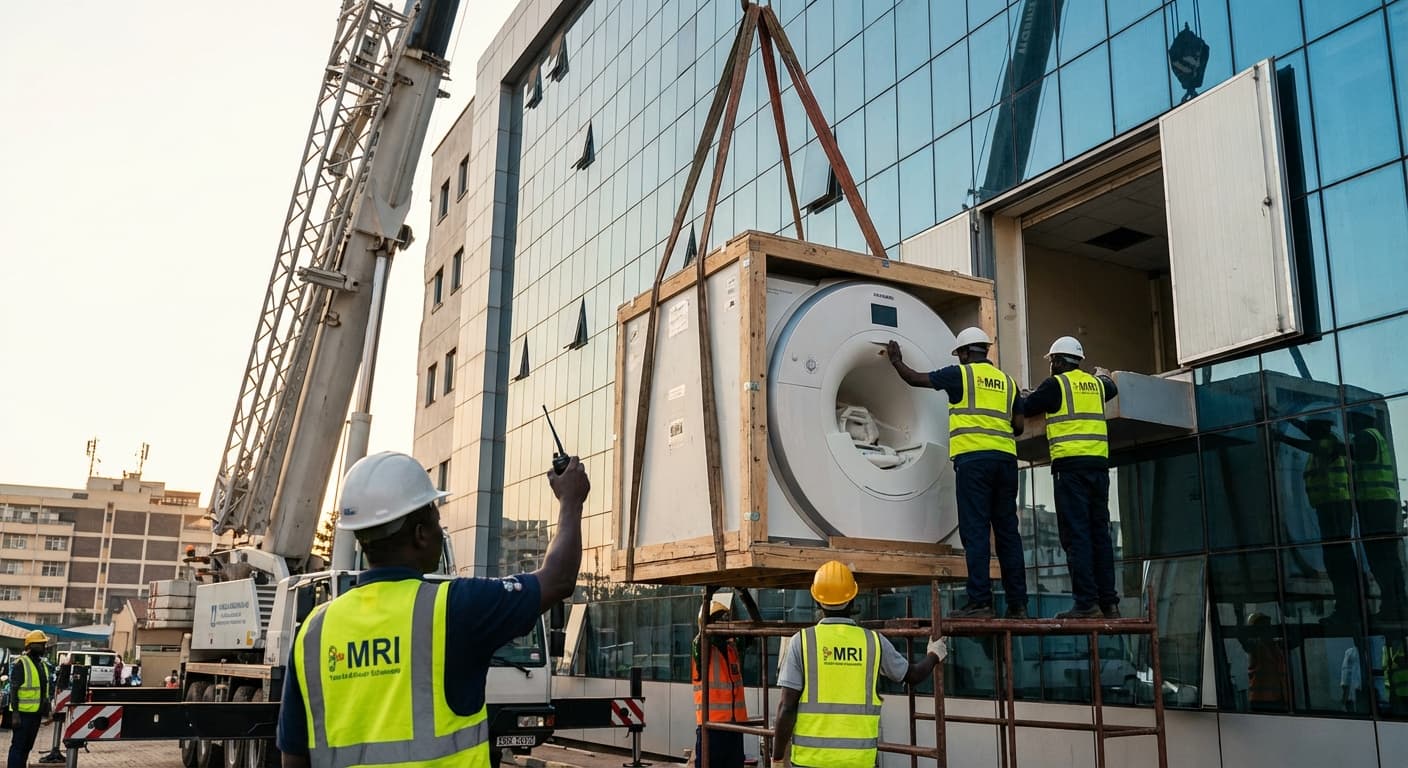
Cranage & Rigging Supervision Service in Botswana
Engineering Excellence & Technical Support
Cranage & Rigging Supervision Service High-standard technical execution following OEM protocols and local regulatory frameworks.
Certified & Experienced Rigging Teams
Our team comprises highly skilled and certified crane operators and riggers with extensive experience in the Botswana mining and industrial sectors. We ensure adherence to the highest safety standards and operational best practices for all lifting operations.
Precision Load Planning & Execution
We provide meticulous load planning, risk assessments, and detailed lift studies utilizing advanced software. This ensures precise execution of complex lifts, minimizing downtime and maximizing efficiency for critical equipment installations and movements.
Uncompromising Safety & Compliance
Safety is paramount. Our services are underpinned by rigorous safety protocols, regular equipment inspections, and comprehensive personnel training, ensuring full compliance with Botswana's occupational health and safety regulations for all cranage and rigging activities.
What Is Cranage & Rigging Supervision Service In Botswana?
Cranage and Rigging Supervision Service in Botswana refers to the professional oversight and management of lifting operations involving cranes and rigging equipment within the country. This service ensures that all activities related to hoisting, moving, and positioning heavy or awkward loads are conducted safely, efficiently, and in compliance with relevant industry standards and regulatory requirements. The supervision encompasses the entire lifecycle of a lift, from planning and preparation through execution and post-lift analysis. It involves a qualified and experienced supervisor who monitors the process, provides direction to the lifting crew, and intervenes as necessary to mitigate risks and ensure operational integrity. This specialized service is critical for industries dealing with substantial material handling challenges, where potential hazards are significant and the consequences of failure can be severe.
| Who Needs Cranage & Rigging Supervision Service? | Typical Use Cases |
|---|---|
| Construction Companies: Particularly those involved in large-scale infrastructure projects, commercial buildings, and industrial facilities. | Erection of steel structures, pre-fabricated modules, and heavy machinery placement. |
| Mining and Minerals Processing Operations: Companies handling heavy extraction and processing equipment. | Installation and maintenance of crushers, conveyors, mills, and haul trucks. |
| Oil and Gas Industry: During exploration, production, and downstream processing operations. | Offshore platform module installation, pipeline lifting, and equipment maintenance. |
| Manufacturing and Heavy Industry: Facilities that regularly move large components or finished products. | Assembly line component placement, heavy machinery relocation, and finished goods loading. |
| Power Generation Facilities: For the installation and maintenance of turbines, generators, and other heavy equipment. | Installation of wind turbine components, transformer placement, and boiler erection. |
| Port and Logistics Operations: For the efficient and safe handling of large cargo. | Loading and unloading of containers, heavy machinery, and project cargo from vessels. |
| Event and Entertainment Industry: For the setup of large stages, lighting rigs, and sound systems. | Installation of complex stage structures and suspended audio-visual equipment. |
| **Any organization undertaking a lift of significant weight, complexity, or potential hazard. | Bridge construction, dam building, and specialized industrial plant assembly. |
What Cranage & Rigging Supervision Service Involves:
- Pre-lift Planning & Assessment: Thorough review of lift plans, load characteristics (weight, dimensions, center of gravity), environmental conditions (wind, ground stability), and equipment suitability.
- Equipment Inspection & Certification: Verification of the condition, certification, and operational readiness of all lifting appliances (cranes, hoists) and rigging gear (slings, shackles, spreader bars).
- Crew Competency Verification: Ensuring that all personnel involved (crane operators, riggers, signalers, supervisors) possess the necessary qualifications, training, and experience.
- Methodology & Procedure Adherence: Directing and monitoring the execution of the lift according to the approved lift plan and established safe working procedures.
- Load Securing & Attachment: Overseeing the correct selection, attachment, and configuration of rigging hardware to the load and lifting device.
- Communication & Signaling: Ensuring clear and effective communication between the lifting crew, typically via standardized hand signals or radio communication.
- Hazard Identification & Risk Mitigation: Proactively identifying potential hazards during the lift and implementing corrective actions to minimize risks.
- Operational Monitoring: Continuous observation of the lifting operation to detect any anomalies, deviations from the plan, or unsafe conditions.
- Emergency Preparedness: Ensuring that emergency procedures are in place and understood by the lifting team.
- Post-lift Review & Reporting: Documenting the lift's execution, any incidents or near misses, and providing a comprehensive report of the operation.
Who Needs Cranage & Rigging Supervision Service In Botswana?
Cranage & Rigging Supervision Service in Botswana is a critical offering for a variety of industries and projects that require the safe and efficient lifting, moving, and placement of heavy or oversized loads. This specialized service ensures that all operations are conducted by trained professionals adhering to strict safety protocols and industry best practices. The primary goal is to mitigate risks associated with heavy lifting, prevent accidents, and optimize project timelines and costs. Companies and departments involved in construction, mining, manufacturing, energy, and infrastructure development are the key beneficiaries of these services.
| Customer Type | Key Departments Involved | Specific Needs |
|---|---|---|
| Construction Companies | Project Management, Site Operations, Health & Safety, Engineering | Safe lifting of structural steel, concrete elements, large formwork, heavy machinery; ensuring compliance with site-specific safety regulations. |
| Mining Operations | Plant Maintenance, Engineering, Operations, Health & Safety | Installation and removal of large mining equipment (crushers, mills, conveyors), heavy vehicle maintenance, module assembly, emergency response for equipment failure. |
| Manufacturing Firms | Production Management, Maintenance, Engineering, Logistics | Machinery installation and relocation, factory layout optimization, handling of large components during production processes. |
| Energy Companies (EPC Contractors) | Project Management, Engineering, Construction, HSE (Health, Safety, Environment) | Lifting of turbines, generators, large pipes, reactor vessels, modular components for power plants and refineries; managing complex lifts in remote or hazardous locations. |
| Government & Public Works Departments | Infrastructure Development, Project Management, Procurement | Construction of public infrastructure (bridges, roads), installation of large utility components, managing large-scale civil engineering projects. |
| Logistics & Warehousing Companies | Operations Management, Warehouse Supervision, Health & Safety | Loading and unloading of oversized cargo, specialized storage solutions, managing heavy equipment within logistics hubs. |
Target Customers and Departments for Cranage & Rigging Supervision Service in Botswana
- {"title":"Construction Sector","description":"Projects involving the erection of buildings, bridges, dams, and other large structures require meticulous planning and execution for lifting and placing heavy materials and prefabricated components."}
- {"title":"Mining Sector","description":"The extraction and processing of minerals often involve the movement of extremely heavy machinery, equipment, and materials in challenging environments, demanding expert supervision."}
- {"title":"Manufacturing & Industrial Plants","description":"Installation, relocation, or maintenance of heavy machinery and production lines within factories and industrial facilities."}
- {"title":"Energy Sector (Oil, Gas & Power)","description":"Construction and maintenance of power plants, oil refineries, and energy infrastructure, which frequently involve lifting and positioning large-scale equipment and modules."}
- {"title":"Infrastructure Development","description":"Projects focused on developing or upgrading transportation networks (roads, railways), ports, and utilities, often necessitating the movement of substantial construction materials and equipment."}
- {"title":"Specialized Projects & Events","description":"Unique projects such as large-scale event setups, installations of specialized scientific equipment, or complex logistical challenges requiring precise heavy lifting."}
Cranage & Rigging Supervision Service Process In Botswana
This document outlines the comprehensive workflow for Cranage & Rigging Supervision Services in Botswana, detailing the process from initial client inquiry to the successful execution of the service. The aim is to ensure clarity, efficiency, and adherence to safety standards throughout the project lifecycle.
| Stage | Description | Key Activities | Deliverables/Outcomes | Responsible Party(ies) | Timeframe (Typical) |
|---|---|---|---|---|---|
| Inquiry & Initial Consultation | The client reaches out to the service provider with a requirement for cranage and rigging supervision. | Receive and acknowledge inquiry, understand the client's general needs, discuss preliminary project details (location, type of lift, expected dates). | Initial understanding of project scope, client contact established. | Client, Service Provider (Sales/Business Development) | 1-3 Business Days |
| Scope Definition & Risk Assessment | Detailed understanding of the project's specific requirements and potential hazards. | Site visit (if feasible), detailed discussion of lift plans, load weights, dimensions, environment, available infrastructure, identify potential risks and hazards, preliminary safety plan development. | Detailed scope of work, preliminary risk assessment report, identification of required personnel and equipment. | Service Provider (Technical Team, Safety Officer), Client | 3-7 Business Days |
| Quotation & Contractual Agreement | Formal proposal and agreement based on the defined scope and risk assessment. | Develop detailed quotation including personnel, equipment, timelines, and costs. Present quotation to the client. Negotiate terms and conditions. Finalize and sign contract/service agreement. | Formal quotation, signed contract/service agreement. | Service Provider (Sales/Contracts), Client | 5-10 Business Days |
| Pre-Mobilization & Planning | Preparation and logistics for the execution phase. | Mobilize supervisory team and any required specialized personnel. Conduct detailed pre-job safety meetings (toolbox talks). Finalize lift plans and method statements. Secure necessary permits and approvals. Confirm equipment availability and certification. Develop communication protocols. | Mobilized team, approved lift plans, confirmed equipment, finalized safety plans. | Service Provider (Operations Manager, Supervisors, Safety Officer), Client (for site access/approvals) | 2-7 Business Days (depends on project complexity) |
| On-Site Execution & Supervision | The core phase where supervision is actively provided during lifting operations. | On-site presence of qualified supervisors. Direct oversight of all cranage and rigging activities. Enforcement of safety procedures and regulations. Real-time risk management and intervention. Communication with site management and operational teams. Adherence to approved lift plans and method statements. | Safe and efficient execution of lifting operations, documented safety compliance, immediate issue resolution. | Service Provider (Supervisors, Riggers, Crane Operators - if part of the service), Client (site personnel) | Duration of the lifting operations |
| Post-Execution & Reporting | Completion of the service and documentation. | Demobilize personnel and equipment. Conduct post-job review meetings. Compile and submit detailed project report including safety records, incident reports (if any), performance evaluation, and lessons learned. Final invoicing and payment processing. | Project completion confirmation, detailed project report, final invoice. | Service Provider (Supervisors, Project Manager, Administration), Client | 2-5 Business Days |
Key Stages of Cranage & Rigging Supervision Service Process in Botswana
- Inquiry & Initial Consultation
- Scope Definition & Risk Assessment
- Quotation & Contractual Agreement
- Pre-Mobilization & Planning
- On-Site Execution & Supervision
- Post-Execution & Reporting
Cranage & Rigging Supervision Service Cost In Botswana
The cost of Cranage & Rigging Supervision services in Botswana can vary significantly based on several key factors. These factors influence the complexity of the operation, the duration, the expertise required, and the geographical location within Botswana. Understanding these elements is crucial for accurate budgeting and securing the best value for your project. Local currency pricing will generally be in Botswana Pula (BWP).
| Factor | Description | Estimated Cost Range (BWP per day, typically) |
|---|---|---|
| Type and Size of Equipment | Supervision for a small mobile crane will be less expensive than for a large crawler crane or a complex multi-crane lift. | BWP 1,500 - 5,000+ |
| Complexity of the Lift/Operation | Simple lifts (e.g., lifting a single, uniform load) are less costly than complex lifts involving multiple pick-up points, critical tolerances, or heavy/awkward loads. | BWP 2,000 - 7,000+ |
| Duration of the Project | Daily rates are common, but longer-term contracts may offer a reduced daily rate. Overtime or weekend work will incur higher charges. | BWP 1,500 - 5,000 (daily, standard hours) |
| Level of Expertise and Experience | Highly experienced and certified supervisors (e.g., master riggers, lifting engineers) command higher rates. | BWP 2,500 - 8,000+ |
| Geographical Location | Services in major cities like Gaborone or Francistown may have slightly different rates than remote mining areas or rural locations due to travel and logistical costs. | Varies, often with travel allowances for remote areas. |
| Site Conditions and Accessibility | Difficult terrain, confined spaces, or poor access can increase the time and effort required for supervision, leading to higher costs. | Can influence daily rates by 10-30% or more. |
| Additional Services Required | This includes detailed lift planning, risk assessments, crane inspections, or on-site training, which will add to the overall cost. | Varies significantly based on services. |
| Safety and Compliance Requirements | Projects with stringent safety regulations (e.g., mining, oil & gas) may require more intensive supervision and documentation, impacting cost. | Often factored into overall project management and risk. |
| Risk Assessment and Mitigation | The perceived risk of an operation directly influences the level of supervision needed. Higher risk equals higher supervision cost. | Integrated into the complexity and expertise factors. |
| Market Demand and Availability | During peak construction or project periods, demand for skilled supervisors can drive up prices. | Can lead to a 15-25% increase during high demand. |
Key Pricing Factors for Cranage & Rigging Supervision in Botswana:
- Type and Size of Equipment:
- Complexity of the Lift/Operation:
- Duration of the Project:
- Level of Expertise and Experience:
- Geographical Location:
- Site Conditions and Accessibility:
- Additional Services Required:
- Safety and Compliance Requirements:
- Risk Assessment and Mitigation:
- Market Demand and Availability:
Affordable Cranage & Rigging Supervision Service Options
Securing reliable and cost-effective cranage and rigging supervision is crucial for many projects. This service ensures the safe and efficient movement of heavy loads, preventing costly accidents and delays. Understanding the available service options and implementing smart strategies can significantly reduce your overall project expenses. This guide outlines value bundles and proven cost-saving measures for your cranage and rigging supervision needs.
| Value Bundle Option | Description | Cost-Saving Potential |
|---|---|---|
| Basic Supervision Package | Includes a certified rigging supervisor on-site during critical lift operations. Suitable for standard lifts with well-defined procedures. | Lower upfront cost, ideal for projects with predictable lifting needs. |
| Comprehensive Safety & Planning Bundle | Combines a certified supervisor with pre-lift planning assistance, risk assessment, and development of detailed lift plans. Excellent for complex or high-risk operations. | Reduces the likelihood of unforeseen issues and costly rework, leading to long-term savings. |
| On-Demand & Project-Based Support | Flexible service where supervisors are engaged only when needed, either for specific lifts or for the duration of a project. Includes consultation and troubleshooting. | Pay only for the expertise required, maximizing cost efficiency for intermittent needs. |
| Integrated Equipment & Supervision | Bundles crane rental with experienced rigging supervision. Often provided by the same vendor for seamless coordination. | Streamlined logistics and potential for package discounts. Reduces management overhead. |
Key Benefits of Professional Cranage & Rigging Supervision
- Enhanced Safety: Minimizes the risk of accidents, injuries, and property damage.
- Increased Efficiency: Streamlines lifting operations, reducing project timelines.
- Expert Guidance: Provides specialized knowledge for complex lifts and challenging environments.
- Reduced Insurance Premiums: Demonstrates a commitment to safety, potentially lowering insurance costs.
- Compliance Assurance: Ensures adherence to all relevant safety regulations and standards.
Verified Providers In Botswana
When seeking healthcare in Botswana, particularly for specialized services or when prioritizing quality and trustworthiness, identifying 'Verified Providers' is crucial. Franance Health stands out as a leading entity that not only vets healthcare professionals and facilities but also champions a higher standard of care. Understanding their credentialing process and why it signifies the best choice for your health needs is paramount.
| Franance Health's Verification Focus | What This Means for Patients |
|---|---|
| Clinical Competence and Qualifications | Ensures providers possess the necessary education, certifications, and proven expertise for their medical specialty. |
| Professional Experience and Track Record | Validates a history of successful patient care and relevant practice experience. |
| Adherence to Ethical Standards | Confirms that providers operate with integrity and uphold medical ethics. |
| Facility Standards and Resources | Verifies that healthcare facilities are well-equipped, safe, and conducive to quality treatment. |
| Patient Safety Protocols | Assesses the implementation of robust safety measures to protect patients. |
| Commitment to Continuous Improvement | Identifies providers who actively engage in professional development and seek to enhance their services. |
Why Franance Health Represents the Best Choice for Verified Providers in Botswana:
- Rigorous Vetting Process: Franance Health employs a comprehensive and multi-faceted approach to verifying providers. This goes beyond basic licensing, involving in-depth checks of qualifications, experience, ethical standing, and adherence to international best practices.
- Commitment to Quality Assurance: The credentialing process is designed to ensure that all verified providers consistently deliver high-quality patient care. This includes assessing their infrastructure, equipment, and the overall patient experience.
- Enhanced Patient Trust and Safety: By entrusting Franance Health to identify verified providers, patients gain peace of mind. Knowing that a provider has met stringent criteria significantly reduces the risk of encountering substandard or unreliable healthcare services.
- Access to Expertise and Specialization: Franance Health's verification extends to identifying specialists and centers of excellence. This means you can confidently find the right expert for complex medical conditions, ensuring you receive the most appropriate and effective treatment.
- Streamlined Healthcare Navigation: In a landscape where discerning quality can be challenging, Franance Health acts as a trusted guide. Their verified provider network simplifies the process of finding reliable healthcare, saving you time and stress.
- Continuous Monitoring and Re-evaluation: Verification is not a one-time event. Franance Health maintains a system of ongoing monitoring and re-evaluation to ensure that providers continue to meet their high standards over time.
- Focus on Patient-Centric Care: The credentialing criteria often include aspects of patient satisfaction and feedback, ensuring that verified providers are not only clinically competent but also compassionate and responsive to patient needs.
Scope Of Work For Cranage & Rigging Supervision Service
This Scope of Work (SOW) outlines the requirements for Cranage and Rigging Supervision Services. The service encompasses planning, execution oversight, safety management, and quality assurance for all lifting and rigging operations. The objective is to ensure all lifting activities are performed safely, efficiently, and in accordance with industry best practices and project-specific requirements. This includes ensuring compliance with relevant standards, regulations, and the manufacturer's specifications for all equipment used. The supervisor will be responsible for pre-lift planning, on-site supervision, risk assessment, personnel competency verification, and incident reporting.
| Category | Technical Deliverable | Standard Specification / Reference |
|---|---|---|
| Planning | Lift Plan Documentation | Project-specific templates, including load charts, rigging diagrams, environmental conditions, exclusion zones, communication protocols. (e.g., ASME B30.9, B30.10, B30.26, BS 7121 Series) |
| Planning | Risk Assessment Report | Detailed hazard identification, risk evaluation, and mitigation strategies. (e.g., HAZID, JSA, TRA) |
| Equipment | Crane Inspection Records | Pre-use, periodic, and annual inspection reports. (e.g., API RP 2D, OSHA 1926 Subpart CC, relevant manufacturer's guidelines) |
| Equipment | Rigging Gear Certification | Certificates of conformance, proof load test certificates for slings, shackles, lifting beams, etc. (e.g., ASME B30.9, B30.20, EN 13155) |
| Personnel | Operator & Rigger Competency Records | Certifications, training records, and site-specific inductions. (e.g., NCCCO, CITB, internal competency assessments) |
| Execution | Daily Pre-Operation Briefings | Checklists covering equipment, personnel, site conditions, and lift plan review. |
| Execution | Load Weight Verification | Confirmation via weighbridge tickets, load cell readings, or engineering calculations. |
| Execution | Rigging Configuration Verification | Ensuring correct rigging selection, arrangement, and attachment as per lift plan. |
| Execution | Communication Protocol Adherence | Use of standardized hand signals or radio communication procedures. (e.g., ASME B30.5, established site protocols) |
| Safety | Safety Audits & Inspections | Regular site walk-throughs and documentation of findings. (e.g., OSHA, HSE guidelines) |
| Safety | Near Miss & Incident Reports | Detailed investigation and reporting of all safety events. (e.g., Root Cause Analysis - RCA) |
| Reporting | Daily Progress Reports | Summary of activities, equipment used, personnel involved, any incidents/near misses. |
| Reporting | End of Project Summary Report | Comprehensive review of all lifting activities, safety performance, and lessons learned. |
Key Service Components
- Pre-lift Planning and Risk Assessment
- On-site Supervision and Execution Monitoring
- Equipment Inspection and Certification Verification
- Personnel Competency and Training Verification
- Load Calculation and Stability Analysis
- Communication and Coordination with Stakeholders
- Emergency Response and Incident Management
- Record Keeping and Reporting
- Compliance with Safety Regulations and Standards
Service Level Agreement For Cranage & Rigging Supervision Service
This Service Level Agreement (SLA) outlines the performance standards and commitments for Cranage & Rigging Supervision Services provided by [Your Company Name] to [Client Company Name]. It defines response times for critical incidents, availability of personnel, and procedures for addressing service disruptions. This SLA is a crucial component of the overall contract between the parties.
| Service Area | Incident Type | Target Response Time | Guarantee Level | Measurement Method |
|---|---|---|---|---|
| Cranage & Rigging Supervision | Critical Incident (e.g., Safety Breach, Equipment Malfunction) | [X] Minutes | 99.9% | Time from official notification to supervisor acknowledgement/arrival |
| Cranage & Rigging Supervision | Non-Critical Operational Request (e.g., Consultation, Minor Adjustment) | [Y] Business Hours | 98.0% | Time from official notification to supervisor engagement/communication |
| Personnel Availability | Scheduled Operational Coverage | As per MSA Schedule | [Z]% of Scheduled Hours | Actual hours supervised vs. scheduled hours, accounting for approved exceptions |
Key Performance Indicators (KPIs) and Guarantees
- Availability of Personnel: [Your Company Name] guarantees the availability of qualified and certified Cranage & Rigging Supervisors during scheduled operational hours as defined in the Master Service Agreement (MSA).
- Emergency Response Time: In the event of an unforeseen critical incident requiring immediate supervision, [Your Company Name] guarantees a response time of [X] minutes from the time of notification for a supervisor to be on-site or actively engaged remotely (if applicable and pre-agreed).
- Non-Emergency Response Time: For non-critical operational adjustments or consultation requests, [Your Company Name] guarantees a response time of [Y] business hours for a supervisor to be available or to initiate communication.
- Uptime Guarantee: While direct uptime for physical supervision is dependent on operational schedules, [Your Company Name] guarantees [Z]% availability of its supervisory personnel to meet scheduled requirements as outlined in the MSA. This excludes pre-approved leave, scheduled maintenance, or force majeure events.
- Reporting and Communication: Regular performance reports, including incident logs, response times, and any deviations, will be provided to [Client Company Name] on a [Frequency] basis.
- Escalation Procedure: A clear escalation path will be established to address any persistent or significant breaches of this SLA.
Frequently Asked Questions

Ready when you are
Let's scope your Cranage & Rigging Supervision Service in Botswana project in Botswana.

Scaling healthcare logistics and technical systems across the entire continent.