
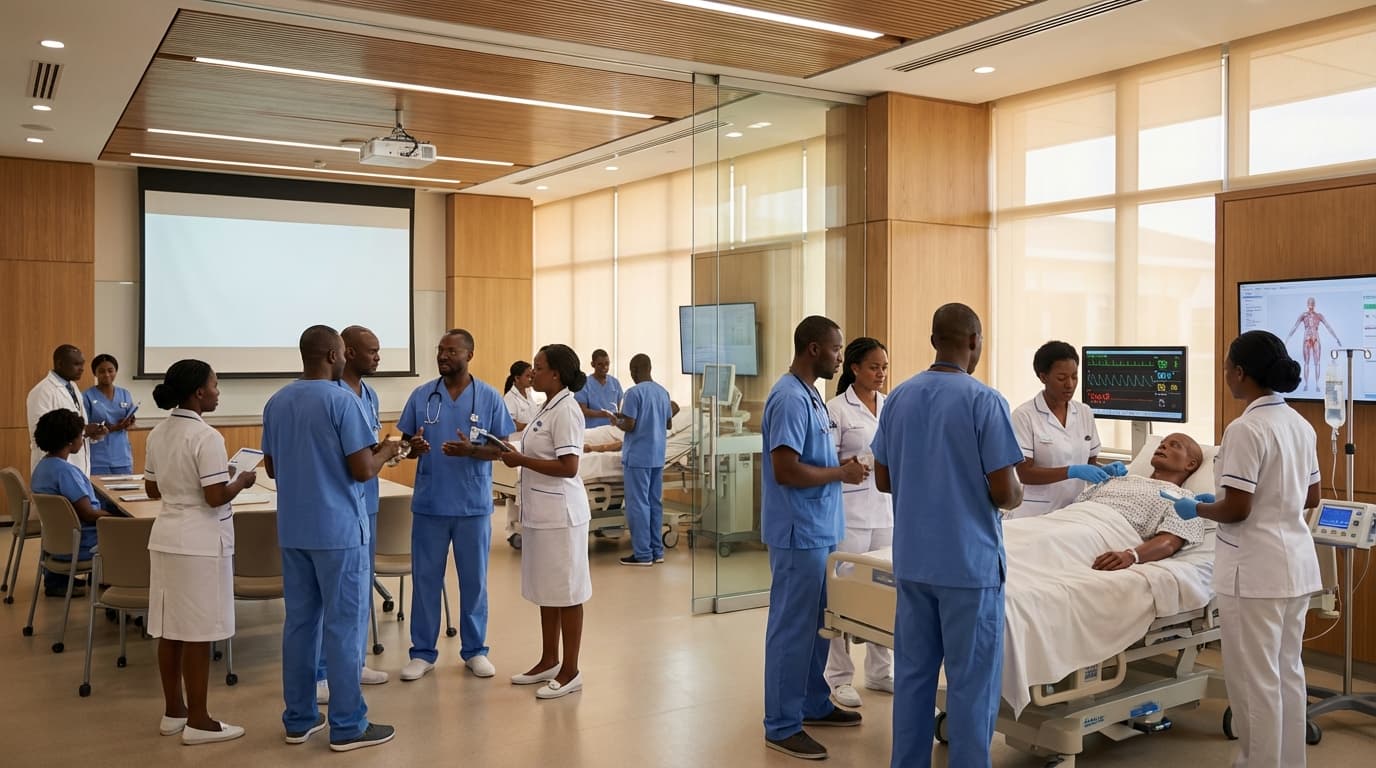
Equipment Training & Education in Zimbabwe
Engineering Excellence & Technical Support
Comprehensive equipment training and certification programs High-standard technical execution following OEM protocols and local regulatory frameworks.
Advanced Operator Certification Program
Empowering Zimbabwean professionals with certified proficiency in operating specialized heavy machinery, ensuring enhanced safety, efficiency, and reduced operational costs through hands-on training and theoretical knowledge.
Predictive Maintenance & Troubleshooting Workshops
Equipping maintenance teams with the latest techniques in predictive maintenance and hands-on troubleshooting for critical industrial equipment, minimizing downtime and extending asset lifespan.
Digital Learning Platform Rollout
Introducing a comprehensive digital learning platform offering accessible, on-demand training modules and simulations for a wide range of industrial equipment, catering to remote and on-site learning needs across Zimbabwe.
What Is Equipment Training & Education In Zimbabwe?
Equipment training and education in Zimbabwe refers to structured programs designed to impart knowledge and practical skills necessary for the safe, efficient, and effective operation, maintenance, and troubleshooting of various types of equipment. This service is critical for maximizing asset lifespan, ensuring regulatory compliance, minimizing operational downtime, and enhancing workplace safety across a multitude of industries. It encompasses theoretical instruction, hands-on practical sessions, and often includes ongoing professional development to keep pace with technological advancements and evolving industry standards.
| Who Needs Equipment Training & Education? | Typical Use Cases | ||||||||
|---|---|---|---|---|---|---|---|---|---|
| Industrial Operators & Technicians: Personnel directly responsible for operating and maintaining machinery in manufacturing, mining, agriculture, and construction sectors. | Automotive Mechanics & Technicians: Training on diagnostic equipment, specialized repair tools, and vehicle systems (engine, transmission, electrical, HVAC). | Healthcare Professionals: Education on medical imaging equipment (MRI, CT scanners), surgical instruments, patient monitoring systems, and laboratory diagnostic equipment. | Information Technology (IT) Professionals: Training on server hardware, network infrastructure devices (routers, switches), data storage systems, and cybersecurity tools. | Construction & Heavy Equipment Operators: Certification and training for excavators, bulldozers, cranes, and other heavy machinery. | Agricultural Workers: Operation and maintenance of tractors, harvesters, irrigation systems, and other farm machinery. | Logistics & Warehousing Personnel: Training on forklifts, automated guided vehicles (AGVs), conveyor systems, and inventory management hardware. | Maintenance Engineers & Supervisors: Advanced training in diagnostics, repair strategies, and preventive maintenance planning. | Safety Officers & Compliance Managers: Understanding of equipment-related safety regulations and best practices for auditing and enforcement. | New Employees/Apprentices: Foundational training to ensure competence and safety before independent operation of equipment. |
| Manufacturing Plants: Operation of assembly lines, CNC machines, robotic arms, welding equipment, and material handling systems. | Mining Operations: Training on drilling rigs, haul trucks, excavators, processing machinery, and safety equipment for hazardous environments. | Agricultural Estates: Operation and maintenance of tractors, combine harvesters, planters, irrigation pumps, and processing equipment (e.g., grain dryers). | Construction Sites: Safe operation of earthmoving equipment, cranes, power tools, and scaffolding. | Hospitals & Clinics: Effective use and maintenance of medical diagnostic and treatment equipment. | Data Centers: Management and maintenance of server racks, cooling systems, and networking hardware. | Transportation & Logistics Hubs: Operation of forklifts, reach trucks, automated sortation systems, and vehicle maintenance equipment. | Energy Sector (Power Generation & Distribution): Training on turbines, generators, switchgear, and transmission equipment. | Research & Development Laboratories: Operation of specialized scientific instruments, analytical equipment, and pilot plant machinery. |
Key Components of Equipment Training & Education
- Theoretical Instruction: Covers principles of operation, system design, safety protocols, regulatory frameworks (e.g., OSHA equivalents, local environmental regulations), and theoretical troubleshooting methodologies.
- Practical Skill Development: Focuses on hands-on application, including pre-operation checks, routine operational procedures, emergency shutdown protocols, basic maintenance tasks (lubrication, cleaning, filter replacement), and basic diagnostic techniques.
- Safety Procedures & Risk Management: Emphasizes hazard identification, risk assessment, lockout/tagout procedures, personal protective equipment (PPE) usage, and emergency response protocols specific to the equipment.
- Troubleshooting & Diagnostics: Equips personnel with the ability to identify common malfunctions, interpret diagnostic indicators, and perform initial troubleshooting steps to resolve issues or escalate to specialized technicians.
- Maintenance & Servicing: Covers scheduled preventive maintenance (PM), corrective maintenance, and the proper use of maintenance tools and equipment.
- Documentation & Record Keeping: Training on the importance and methods of accurate record-keeping for operational logs, maintenance activities, and incident reporting.
- Regulatory Compliance: Ensures trainees are aware of and adhere to all relevant national and international standards and legislation pertaining to equipment operation and safety.
- Continuous Professional Development: Includes advanced training, refresher courses, and familiarization with new equipment models or technological upgrades.
Who Needs Equipment Training & Education In Zimbabwe?
In Zimbabwe, comprehensive equipment training and education are vital across numerous sectors to ensure operational efficiency, safety, and the long-term sustainability of businesses and public services. This training is not a niche requirement but a fundamental necessity for anyone operating, maintaining, or managing machinery and technological systems. It empowers individuals with the knowledge and skills to use equipment effectively, prevent accidents, minimize downtime, and adopt best practices. Ultimately, it contributes to a more skilled workforce, enhanced productivity, and economic growth for the nation.
| Customer Type | Key Departments Requiring Training | Specific Equipment Examples |
|---|---|---|
| Manufacturing Companies | Production, Maintenance, Quality Control, Engineering | Industrial machinery (e.g., lathes, milling machines, CNC machines), welding equipment, packaging machines, forklifts. |
| Mining Operations | Operations, Maintenance, Safety & Health, Engineering | Excavators, haul trucks, drilling rigs, crushers, conveyor systems, safety monitoring equipment. |
| Agricultural Businesses | Farm Management, Operations, Maintenance, Agronomy | Tractors, harvesters, planters, irrigation systems, processing machinery (e.g., milling, oil extraction). |
| Construction Firms | Site Management, Plant Operations, Mechanics, Safety | Cranes, excavators, bulldozers, concrete mixers, scaffolding, power tools. |
| Hospitals & Clinics | Biomedical Engineering, Nursing, Radiology, Laboratory Services | MRI machines, CT scanners, X-ray machines, ventilators, laboratory analysers, surgical equipment. |
| Logistics & Warehousing | Warehouse Operations, Fleet Management, Maintenance | Forklifts, pallet jacks, conveyor belts, automated storage systems, vehicle diagnostic tools. |
| Power & Water Utilities | Operations, Maintenance, Engineering, Safety | Turbines, generators, transformers, control systems, water treatment equipment, safety harnesses. |
| IT Companies & Service Providers | Technical Support, Network Operations, System Administration | Servers, routers, switches, firewalls, specialized software for network management. |
| Government Agencies | Public Works, Road Maintenance, Disaster Management, Health Departments | Road construction equipment, emergency response vehicles, medical supplies and equipment. |
| Technical & Vocational Colleges | Instructors, Workshop Technicians, Students | All types of machinery and tools relevant to their specific trades (e.g., automotive, welding, electrical, plumbing). |
Target Customers and Departments for Equipment Training & Education in Zimbabwe
- Manufacturing Sector: Essential for operators, technicians, and supervisors.
- Mining Sector: Crucial for heavy equipment operators, maintenance crews, and safety personnel.
- Agriculture Sector: Vital for farmers, farm managers, and technicians working with agricultural machinery.
- Construction Sector: Necessary for machine operators, site supervisors, and safety officers.
- Healthcare Sector: Important for medical equipment technicians, nurses, and doctors.
- Transportation & Logistics Sector: Key for drivers, mechanics, and warehouse staff managing specialized equipment.
- Energy & Utilities Sector: Required for technicians and engineers operating power generation and distribution equipment.
- Information Technology Sector: Essential for IT support staff, network engineers, and system administrators.
- Government & Public Services: Crucial for personnel in public works, disaster management, and other departments using specialized equipment.
- Educational Institutions: For instructors and students in technical and vocational training programs.
Equipment Training & Education Process In Zimbabwe
The equipment training and education process in Zimbabwe is a structured workflow designed to ensure individuals and organizations acquire the necessary skills and knowledge to operate and maintain various types of equipment safely and efficiently. This process typically begins with an inquiry from a potential client (individual, company, or government agency) seeking specific training. The inquiry triggers a series of steps, including needs assessment, proposal development, curriculum design, scheduling, delivery of training, assessment of learning, and finally, certification and feedback. The ultimate goal is to bridge skill gaps, enhance operational productivity, and ensure compliance with safety standards relevant to different sectors in Zimbabwe.
| Stage | Description | Key Activities | Responsible Parties | Potential Challenges |
|---|---|---|---|---|
| Inquiry & Initial Contact | The process begins when a client expresses interest in equipment training. | Client contacts training provider via phone, email, website, or referral. Clarification of initial needs. | Client (potential trainee/organization), Training Provider Sales/Admissions | Lack of clear inquiry, unclear needs, competition from other providers. |
| Needs Assessment & Consultation | Understanding the client's specific requirements, existing skill levels, and desired outcomes. | Detailed discussion of equipment type, trainee experience, specific operational needs, safety requirements, desired learning outcomes. | Training Provider (Consultant/Sales), Client (Key personnel, HR, Operations Manager) | Misunderstanding of needs, resistance to revealing skill gaps, limited availability for consultation. |
| Proposal & Quotation Development | Presenting a tailored training solution with associated costs. | Developing a detailed proposal outlining training objectives, curriculum modules, duration, methodology, trainer qualifications, equipment required, venue, and cost breakdown. Providing a formal quotation. | Training Provider (Technical/Curriculum Developer, Sales) | Inaccurate costing, proposals not meeting client budget, lengthy approval processes. |
| Curriculum Design & Customization | Creating or adapting training materials to meet the identified needs. | Developing training manuals, presentations, practical exercises, case studies, and assessment tools. Customizing existing modules based on specific equipment and industry context in Zimbabwe. | Training Provider (Curriculum Developers, Subject Matter Experts) | Lack of up-to-date content, difficulty in sourcing relevant local examples, inadequate practical component design. |
| Agreement & Contract Finalization | Formalizing the training arrangement. | Negotiating terms and conditions, signing of training agreements or contracts, defining payment schedules and cancellation policies. | Client (Legal/Procurement), Training Provider (Management/Legal) | Disputes over contract terms, unclear liabilities, delayed contract signing. |
| Scheduling & Logistics Planning | Organizing the practical aspects of the training. | Confirming training dates, venue booking (on-site or off-site), equipment availability (client's or provider's), trainer assignment, travel arrangements, and participant registration. | Training Provider (Logistics Coordinator, Administration), Client (Participant scheduling) | Trainer unavailability, equipment malfunction/availability issues, venue conflicts, participant scheduling conflicts. |
| Training Delivery & Execution | The actual delivery of the training program. | Theoretical instruction (classroom sessions, online modules) and practical, hands-on training on the specific equipment. Emphasis on safety procedures, troubleshooting, and maintenance. | Training Provider (Qualified Trainers), Client (Trainees) | Poor trainer quality, inadequate equipment for practical sessions, trainees' low engagement, distractions, language barriers. |
| Assessment & Evaluation | Measuring the learning outcomes and effectiveness of the training. | Conducting written tests, practical assessments, simulations, and observation of performance. Gathering feedback from trainees on the course content and delivery. | Training Provider (Trainers, Assessors), Client (Trainees) | Biased assessment, unreliable evaluation methods, insufficient practical assessment opportunities, low trainee participation in feedback. |
| Certification & Documentation | Providing formal recognition of acquired skills. | Issuing certificates of completion or competency to successful trainees. Providing reports to organizations on participant performance and overall training effectiveness. | Training Provider (Administration, Certification Department) | Delayed certification, inaccurate records, lost certificates. |
| Post-Training Support & Feedback | Offering continued assistance and gathering insights for improvement. | Providing follow-up support (e.g., answering queries, troubleshooting), collecting feedback on long-term impact, and using feedback to refine future training programs. | Training Provider (Support Team, Management), Client (Trainees, Management) | Lack of accessible follow-up support, reluctance to provide constructive feedback, failure to implement feedback for improvement. |
Workflow Stages of Equipment Training & Education in Zimbabwe
- Inquiry & Initial Contact
- Needs Assessment & Consultation
- Proposal & Quotation Development
- Curriculum Design & Customization
- Agreement & Contract Finalization
- Scheduling & Logistics Planning
- Training Delivery & Execution
- Assessment & Evaluation
- Certification & Documentation
- Post-Training Support & Feedback
Equipment Training & Education Cost In Zimbabwe
Equipment training and education costs in Zimbabwe are highly variable, influenced by several key factors. The type of equipment, its complexity, and the level of expertise required for training significantly impact pricing. Specialized machinery used in mining, construction, or advanced manufacturing will naturally command higher training fees than basic office equipment or agricultural tools. The duration of the training program, the qualifications and experience of the trainers, and the provider's reputation also play a crucial role. Furthermore, the delivery method – whether it's on-site at the client's premises, at a dedicated training facility, or online – will affect the overall cost. Geographical location within Zimbabwe can also introduce minor variations due to travel and logistical expenses for trainers. The current economic climate and inflation rates in Zimbabwe also have a direct bearing on pricing, often leading to frequent adjustments in local currency (Zimbabwean Dollar - ZWL). Therefore, obtaining specific quotes from training providers is essential for accurate budgeting.
| Equipment Category | Typical Training Duration | Estimated Cost Range (ZWL) | Notes |
|---|---|---|---|
| Basic Office Equipment (Printers, Scanners) | 1-2 Hours | 200 - 1,500 | Often bundled with purchase or offered as basic orientation. |
| Computer Software (e.g., MS Office, Basic Design) | 1-3 Days | 1,000 - 10,000 | Depends on software complexity and depth of training. |
| Agricultural Machinery (Tractors, Harvesters - Basic Operation) | 1-3 Days | 5,000 - 25,000 | Focuses on safe and efficient operation. |
| Construction Equipment (Excavators, Loaders - Basic Operation) | 2-5 Days | 10,000 - 50,000 | Includes safety protocols and basic maintenance. |
| Industrial Machinery (Manufacturing, Processing - Operation & Basic Maintenance) | 3-7 Days | 20,000 - 100,000+ | More specialized, may require certified trainers. |
| Medical Equipment (Diagnostic, Therapeutic - Operation & Safety) | 3-10 Days | 30,000 - 150,000+ | Highly specialized, often provider-specific and requires certified personnel. |
| Mining Equipment (Drills, Crushers - Operation & Safety) | 5-14 Days | 50,000 - 250,000+ | Complex, high-risk operations requiring expert training and certification. |
| Specialized Technical Equipment (IT Servers, Advanced Lab Gear) | Variable (Days to Weeks) | Negotiable & High | Customized training, often involving international trainers or specialized firms. |
Key Factors Influencing Equipment Training & Education Costs in Zimbabwe:
- Type and complexity of equipment
- Level of expertise required
- Duration of the training program
- Qualifications and experience of trainers
- Provider's reputation and accreditations
- Training delivery method (on-site, facility-based, online)
- Logistical costs (travel, accommodation)
- Current economic conditions and inflation
Affordable Equipment Training & Education Options
Acquiring the necessary skills and knowledge to operate equipment effectively is crucial for safety, efficiency, and productivity. Fortunately, a range of affordable training and education options are available. Understanding value bundles and implementing cost-saving strategies can significantly reduce the financial burden of professional development in this area.
| Strategy/Concept | Description | Cost-Saving Benefit |
|---|---|---|
| Value Bundles | Combining multiple training modules or services into a single package at a discounted price. This could include basic operation, maintenance, and safety modules. | Reduces the per-item cost compared to purchasing individual modules. Encourages comprehensive skill development. |
| Early Bird Discounts | Registering for training courses or workshops well in advance of the start date to receive a reduced price. | Direct monetary savings on course fees. |
| Group Discounts | Enrolling multiple employees from the same organization in a training program, often leading to a lower per-person cost. | Significant savings for businesses with multiple training needs. |
| Bulk Purchasing | Purchasing training licenses or access to online platforms for a larger group or for extended periods, often with volume discounts. | Lower per-user or per-month costs. |
| Leveraging Free Resources | Utilizing free online tutorials, manufacturer documentation, and industry forums for foundational knowledge before investing in formal training. | Reduces the need for paid courses for basic understanding. |
| Government Grants and Subsidies | Exploring opportunities for government funding or subsidies available for workforce development and vocational training. | Can offset a significant portion or the entirety of training costs. |
| Train-the-Trainer Programs | Investing in training a few key individuals who can then train other employees internally, reducing the need for external trainers for every session. | Long-term cost savings by building internal expertise. |
| Certification vs. Formal Degree | Prioritizing industry-recognized certifications which are often less expensive and quicker to obtain than full degree programs, while still demonstrating competence. | Lower tuition fees and shorter time commitment. |
| Used Equipment for Practice | If practical, using older or refurbished equipment for hands-on practice during training, which can be cheaper than using brand-new models. | Reduced equipment acquisition or rental costs for training. |
Affordable Equipment Training & Education Options
- Online Courses and Webinars
- Manufacturer-Provided Training
- Community College and Vocational Schools
- Industry Association Workshops
- Apprenticeship Programs
- On-the-Job Training (OJT) with Mentorship
- Simulation-Based Training
- Open-Source Educational Resources
Verified Providers In Zimbabwe
In Zimbabwe's healthcare landscape, identifying verified providers is crucial for ensuring quality and reliable medical services. Franance Health stands out as a beacon of trust, built on a foundation of stringent credentials that guarantee exceptional care. Their commitment to excellence is evident in their rigorous selection process, ensuring that all partnered healthcare professionals and facilities meet the highest industry standards.
| Credential Area | Franance Health Verification Process | Why it Matters for Patients |
|---|---|---|
| Licensing & Accreditation | Mandatory verification of current, valid licenses from the Medical and Dental Practitioners Council of Zimbabwe (MDPCZ) and relevant hospital/clinic accreditation bodies. | Ensures providers operate legally and adhere to established healthcare regulations, guaranteeing safety and competence. |
| Professional Qualifications | In-depth review of medical degrees, specialist certifications, and postgraduate training from recognized institutions. | Guarantees that practitioners have the necessary expertise and specialized knowledge to treat a wide range of medical conditions effectively. |
| Experience & Track Record | Assessment of years of practical experience and, where applicable, review of patient outcomes and peer endorsements. | Connects patients with experienced professionals who have a proven history of successful patient care and positive outcomes. |
| Commitment to Patient Care | Evaluation of provider's patient-centric approach, adherence to privacy, and communication protocols. | Ensures a compassionate, respectful, and transparent healthcare experience where patient well-being is the top priority. |
| Infrastructure & Equipment | Verification of adequate and well-maintained medical facilities, equipment, and technology. | Provides access to modern diagnostic and treatment capabilities, leading to more accurate diagnoses and effective interventions. |
Franance Health Credentials: What Sets Them Apart
- Accreditation and Licensing: Franance Health meticulously verifies that all affiliated healthcare providers and institutions hold valid accreditations and licenses from relevant Zimbabwean regulatory bodies. This ensures adherence to legal and professional practice standards.
- Professional Qualifications: They conduct thorough checks of the qualifications, certifications, and ongoing professional development of all medical practitioners, guaranteeing they possess the expertise and experience necessary to provide optimal patient care.
- Quality Assurance Protocols: Franance Health implements robust quality assurance protocols, including patient feedback mechanisms and regular audits, to continuously monitor and improve the services delivered by their network.
- Ethical Standards and Compliance: A strong emphasis is placed on ethical conduct and compliance with medical ethics and patient rights. Franance Health ensures their providers uphold the highest moral and professional standards.
- Specialization and Expertise: The platform facilitates access to a wide range of specialists, with verified expertise in their respective fields, ensuring patients are connected with the most appropriate care for their specific needs.
- Technological Integration: Franance Health partners with providers who embrace modern healthcare technology, from advanced diagnostic tools to efficient patient management systems, enhancing the accuracy and speed of care.
Scope Of Work For Equipment Training & Education
This Scope of Work (SOW) outlines the requirements for providing comprehensive training and educational services for the specified equipment. The objective is to ensure that authorized personnel acquire the necessary knowledge and skills to operate, maintain, and troubleshoot the equipment effectively and safely. This SOW details the technical deliverables, standard specifications, and expected outcomes of the training program.
| Deliverable | Description | Standard Specification / Requirement | Acceptance Criteria |
|---|---|---|---|
| Training Program Design & Development | Development of a structured curriculum tailored to the target audience and equipment. | Curriculum shall cover theoretical concepts, operational procedures, maintenance protocols, and troubleshooting techniques. Modular design with clear learning objectives for each module. Consideration for different learning styles. | Approved training curriculum by Client representative. Evidence of alignment with equipment manufacturer's guidelines and best practices. |
| Training Material Creation | Development of all necessary training materials. | Materials to include: training manuals, user guides, presentation slides, video tutorials (if applicable), quick reference guides, and practical exercise sheets. Materials must be clear, concise, accurate, and in English (or specified language). High-resolution visuals and diagrams. | All training materials reviewed and approved by Client. All materials delivered in editable and printable formats (e.g., PDF, Word, PPT). |
| Instructor-Led Training Sessions | Delivery of training sessions by qualified and experienced instructors. | Sessions to be delivered on-site at Client's facility or designated location. Recommended instructor-to-trainee ratio to be maintained. Sessions to include interactive elements, Q&A, and demonstrations. | Attendance records for all sessions. Post-session feedback from trainees. Instructor performance evaluation by Client. |
| Hands-On Practical Exercises | Conducting practical training sessions to reinforce theoretical knowledge. | Exercises to simulate real-world operational scenarios. Trainees to perform tasks under instructor supervision. All necessary tools and consumables provided by the training provider (or clearly specified if Client-provided). | Completion of all assigned practical exercises by trainees. Observation and assessment of trainee performance during practical sessions. |
| Knowledge Assessments & Evaluation | Measuring the learning outcomes of the training program. | Includes pre-training assessments (optional), mid-training quizzes, and a final comprehensive examination (written or practical). Assessment methodology to be clearly defined and communicated. | Trainees achieving a passing score (e.g., 80%) on all assessments. Detailed assessment results report provided to Client. |
| Post-Training Support | Providing ongoing support to trainees after the formal training period. | Includes a defined period of email or phone support for troubleshooting and clarification. Access to online training resources or knowledge base (if applicable). | Response time for support queries within defined SLA. Resolution rate of trainee queries. |
| Documentation & Certification | Issuance of certificates upon successful completion of the training. | Certificates to clearly state the name of the trainee, the equipment trained on, the scope of training, and the training provider. Training completion records to be maintained by the provider for a specified period. | Certificates issued to all trainees who meet the passing criteria. All records and certificates provided in a secure and accessible format. |
Key Deliverables and Specifications
- Training Program Design & Development
- Training Material Creation
- Instructor-Led Training Sessions
- Hands-On Practical Exercises
- Knowledge Assessments & Evaluation
- Post-Training Support
- Documentation & Certification
Service Level Agreement For Equipment Training & Education
This Service Level Agreement (SLA) outlines the guaranteed response times and uptime for Equipment Training & Education services provided by [Your Company Name] to [Client Company Name]. This agreement is designed to ensure the timely and effective delivery of training and educational resources related to your specified equipment.
| Service Component | Service Level Objective (SLO) | Measurement Period | Remedy for Non-Compliance |
|---|---|---|---|
| Support Inquiry Response Time (Email/Portal) | Acknowledgement within 2 business hours, initial assessment and proposed resolution plan within 8 business hours. | Per business day | 5% discount on the next monthly training fee for each instance of exceeding the response time by more than 2 business hours. |
| Support Inquiry Response Time (Phone - Urgent) | Acknowledgement within 1 business hour, initial assessment and proposed resolution plan within 4 business hours. | Per business day | 10% discount on the next monthly training fee for each instance of exceeding the response time by more than 1 business hour. |
| Online Training Platform Uptime | 99.5% guaranteed uptime. | Monthly | For every full 0.5% drop below 99.5% uptime in a given month, a credit of 5% of the monthly platform access fee will be applied to the next invoice. A drop below 98% uptime will result in a credit of 10%. |
| Scheduled Training Session Availability | 100% availability of scheduled instructor-led sessions (virtual or in-person) as per the agreed training calendar. | Per scheduled session | If a scheduled session is cancelled by [Your Company Name] with less than 48 hours' notice, a makeup session will be offered at no additional cost, and a 5% discount will be applied to the associated training package. |
| Content Update Notification & Accessibility | New version notifications within 5 business days of release. Content accessible within 24 hours of notification. | Per content update | Failure to meet notification timeline will result in an extended access period to the previous version at no extra cost. Failure to make content accessible will result in a 2% discount on the next monthly training fee. |
Key Service Level Objectives
- Response Times for Support Inquiries: Defines the maximum time allowed for [Your Company Name] to acknowledge and begin addressing support requests related to training materials, platform access, or scheduling.
- Uptime Guarantees for Online Training Platforms: Specifies the percentage of time that the online training platform(s) will be available and functional for scheduled training sessions and self-paced learning.
- Training Session Availability: Outlines the commitment to making scheduled training sessions available as per the agreed-upon calendar and format.
- Content Updates and Accessibility: Addresses the frequency and accessibility of updated training content and documentation.
Frequently Asked Questions

Ready when you are
Let's scope your Equipment Training & Education in Zimbabwe project in Zimbabwe.

Scaling healthcare logistics and technical systems across the entire continent.