
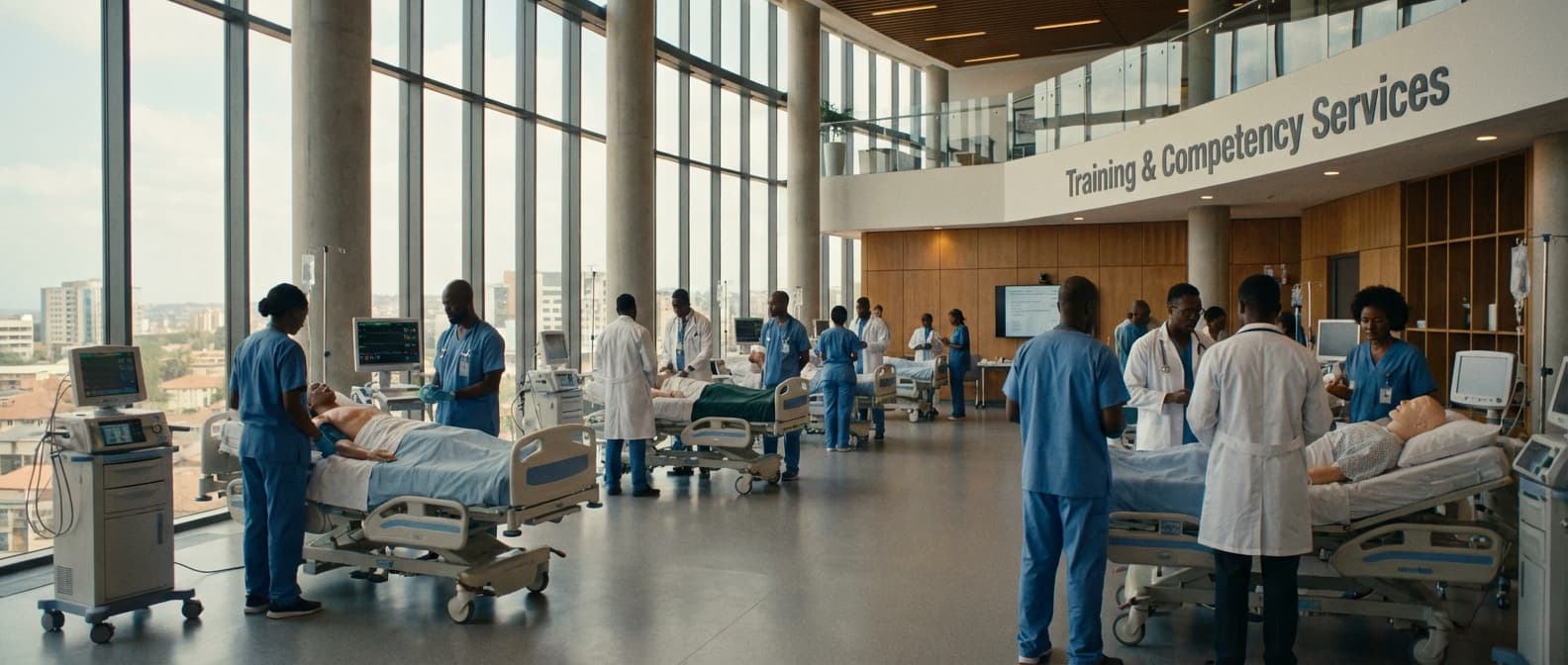
Ventilator User Training Service (Nurses) in Zimbabwe
Engineering Excellence & Technical Support
Ventilator User Training Service (Nurses) High-standard technical execution following OEM protocols and local regulatory frameworks.
Mastering Ventilator Modes for Diverse Patient Needs
Gain in-depth knowledge of key ventilator modes (e.g., Volume Control, Pressure Control, SIMV, CPAP) and their application in treating common respiratory conditions encountered in Zimbabwean healthcare settings. This module focuses on selecting appropriate modes, setting initial parameters, and understanding the physiological impact for optimal patient outcomes.
Proactive Troubleshooting and Alarm Management
Empower yourself to anticipate and effectively respond to common ventilator alarms. This training covers identifying the root causes of alarms (e.g., circuit leaks, high pressures, patient asynchrony) and implementing evidence-based interventions to ensure patient safety and ventilation continuity in resource-limited environments.
Interpreting Ventilator Waveforms and Data for Clinical Decision-Making
Develop critical skills in analyzing ventilator waveforms (pressure-time, flow-time, volume-time) and key numerical data. Learn to correlate these insights with patient presentation to adjust ventilator settings, assess treatment effectiveness, and make informed clinical decisions, enhancing your role in patient care.
What Is Ventilator User Training Service (Nurses) In Zimbabwe?
Ventilator User Training Service (Nurses) in Zimbabwe refers to a specialized educational program designed to equip registered nurses with the necessary theoretical knowledge and practical skills to safely and effectively operate, monitor, and manage mechanical ventilators in clinical settings. This service is critical for ensuring optimal patient outcomes for individuals requiring respiratory support and for maintaining the competency of healthcare professionals in critical care environments within Zimbabwe.
| Who Needs This Service? | Typical Use Cases | |
|---|---|---|
| Registered Nurses working in Intensive Care Units (ICUs), High Dependency Units (HDUs), Emergency Departments (EDs), and Operating Theatres (OTs) in public and private healthcare facilities in Zimbabwe. | Management of patients with acute respiratory failure due to conditions such as: Severe pneumonia, Acute Respiratory Distress Syndrome (ARDS), Sepsis-induced respiratory distress, COPD exacerbations, Asthma exacerbations, Neuromuscular disorders affecting respiratory muscles, Post-operative respiratory complications, Traumatic brain injury (TBI) with compromised respiratory drive, Overdose or poisoning leading to respiratory depression. | |
| Nurses transitioning to critical care roles or those with limited prior experience with mechanical ventilation. | Nurses involved in the transport of ventilated patients within or between healthcare facilities. | Nurses seeking to refresh or update their skills to align with current best practices and technological advancements in mechanical ventilation. |
Key Components of Ventilator User Training Service for Nurses in Zimbabwe:
- Theoretical Foundations: In-depth understanding of respiratory physiology, pathophysiology of respiratory failure (e.g., ARDS, COPD exacerbations, pneumonia), principles of mechanical ventilation, ventilator modes (e.g., volume-controlled, pressure-controlled, SIMV, PSV), ventilator waveforms and their interpretation, and common ventilator settings and their physiological effects.
- Equipment Familiarization: Hands-on training with commonly used ventilator models available in Zimbabwean healthcare facilities. This includes understanding user interfaces, setup procedures, calibration, and troubleshooting common equipment malfunctions.
- Patient Assessment and Monitoring: Comprehensive training on assessing patient's respiratory status, indicators for mechanical ventilation initiation, weaning criteria, and continuous monitoring of vital signs, oxygenation (SpO2, ABGs), ventilation (ETCO2), and ventilator-delivered parameters.
- Ventilator Management: Skills in initiating mechanical ventilation, adjusting ventilator settings based on patient response and clinical objectives, managing alarms, performing endotracheal tube care, suctioning, and humidification.
- Complication Management: Recognition and management of common ventilator-associated complications such as ventilator-associated pneumonia (VAP), barotrauma, volutrauma, pneumothorax, tracheobronchitis, and patient-ventilator dyssynchrony.
- Weaning and Extubation: Protocols and techniques for patient weaning from mechanical ventilation, including assessment of readiness to wean, use of spontaneous breathing trials (SBTs), and safe extubation procedures.
- Emergency Procedures: Training on responding to critical events, including complete ventilator failure, airway emergencies, and cardiopulmonary resuscitation (CPR) in ventilated patients.
- Ethical and Legal Considerations: Understanding informed consent, patient rights, documentation requirements, and adherence to infection control protocols.
- Simulation-Based Training: Utilizing high-fidelity simulators to replicate various clinical scenarios, allowing nurses to practice skills in a safe, controlled environment before managing real patients.
Who Needs Ventilator User Training Service (Nurses) In Zimbabwe?
This training service is crucial for ensuring that nurses in Zimbabwe are proficient in the safe and effective use of ventilators. As the demand for critical care services grows, particularly in resource-limited settings, skilled personnel are essential for managing patients requiring mechanical ventilation. The training will cover theoretical knowledge and practical skills, focusing on ventilator modes, settings, patient monitoring, troubleshooting, and infection control protocols. The aim is to enhance patient outcomes, reduce complications, and empower nurses to provide high-quality respiratory support.
| Customer Group | Specific Roles | Key Departments | Rationale for Training |
|---|---|---|---|
| Registered Nurses | General Duty Nurses, Ward Sisters/Charge Nurses | ICU, HDU, ED, General Wards | To manage ventilated patients, recognize deterioration, and assist in weaning. |
| Enrolled Nurses | Assistants to Registered Nurses | ICU, HDU, ED, General Wards | To provide direct patient care under supervision, monitor vital signs, and maintain equipment. |
| Specialized Nurses | Critical Care Nurses, Nurse Anaesthetists | ICU, HDU, Operating Theatres | To provide advanced ventilatory management, set up and troubleshoot complex equipment, and support anaesthesia. |
| Emergency Responders | Nurses in Emergency Departments | Emergency Departments | To initiate ventilation in acute respiratory failure and stabilize patients for transfer. |
Target Customers and Departments
- Target Customers: Registered Nurses, Enrolled Nurses, Nurse Anaesthetists, Critical Care Nurses, and any nursing personnel directly involved in patient care requiring ventilatory support.
- Departments: Intensive Care Units (ICUs), High Dependency Units (HDUs), Emergency Departments (EDs), Operating Theatres (as assistants or in post-operative care), and potentially Respiratory Wards or General Wards with critically ill patients.
- Healthcare Facilities: Government Hospitals (referral, central, provincial, district), Private Hospitals and Clinics, Mission Hospitals, and Tertiary Healthcare Institutions.
Ventilator User Training Service (Nurses) Process In Zimbabwe
This document outlines the workflow for the Ventilator User Training Service for Nurses in Zimbabwe, covering the process from initial inquiry to successful execution of the training. The service aims to equip nurses with the necessary knowledge and skills to safely and effectively operate and manage ventilators in various clinical settings across the country.
| Phase | Key Activities | Responsible Parties |
|---|---|---|
| Inquiry & Needs Assessment | Express interest, submit inquiry, needs assessment meeting | Healthcare Facility/Nurse, Training Provider |
| Proposal & Agreement | Proposal development, negotiation, contract signing | Training Provider, Healthcare Facility/Stakeholder |
| Planning & Preparation | Scheduling, logistics, material preparation, participant communication | Training Provider |
| Training Execution | Theoretical delivery, practical demonstration, hands-on practice | Training Provider (Trainers), Participants (Nurses) |
| Assessment & Evaluation | Written/practical tests, skill demonstrations, participant feedback | Training Provider (Assessors), Participants (Nurses) |
| Certification & Follow-up | Certificate issuance, reporting, ongoing support | Training Provider, Healthcare Facility |
Ventilator User Training Service (Nurses) Workflow in Zimbabwe
- {"items":["Healthcare facility (hospital, clinic, training institution) or individual nurse expresses interest in ventilator user training.","Initial contact made via designated channels (e.g., email, phone, online portal).","Formal inquiry submitted, potentially including the number of nurses requiring training, preferred training dates, and any specific ventilator models in use.","Training provider conducts a needs assessment to understand the current skill level of nurses, existing ventilator inventory, and specific clinical requirements."],"title":"Phase 1: Inquiry & Needs Assessment"}
- {"items":["Based on the needs assessment, the training provider develops a customized training proposal.","The proposal outlines the training curriculum, duration, methodologies (theoretical, practical, simulation), learning objectives, trainer qualifications, assessment methods, and cost.","Discussions and negotiations between the healthcare facility/stakeholder and the training provider.","Formal agreement or contract is signed, detailing the terms and conditions of the training service."],"title":"Phase 2: Proposal & Agreement"}
- {"items":["Scheduling of training sessions, including confirmation of dates, times, and venue.","Logistics planning: booking training rooms, arranging for necessary equipment (ventilators, manikins, audio-visual aids), and preparing training materials (manuals, presentations, handouts).","Trainer assignment and briefing.","Communication with participants: sending out training invitations, pre-course information, and any pre-reading materials.","Participant registration and confirmation."],"title":"Phase 3: Planning & Preparation"}
- {"items":["Welcome and introduction to the training program.","Theoretical sessions covering ventilator principles, modes of ventilation, patient assessment, troubleshooting, and safety protocols.","Practical sessions using actual ventilators or high-fidelity simulators, allowing participants to practice setup, operation, and parameter adjustments.","Case study discussions and problem-solving exercises.","Supervised hands-on practice and skills development.","Regular feedback and Q&A sessions throughout the training.","Formative assessments to gauge understanding and provide targeted support."],"title":"Phase 4: Training Execution"}
- {"items":["Summative assessment to evaluate participants' comprehension and practical skills.","This may include written tests, practical skill demonstrations, or scenario-based assessments.","Post-training evaluation by participants to assess the effectiveness of the training, trainers, and materials.","Trainer evaluation of participant performance."],"title":"Phase 5: Assessment & Evaluation"}
- {"items":["Upon successful completion of the training and assessment, participants receive a certificate of completion.","A summary report of the training, including participant performance and feedback, is provided to the requesting healthcare facility.","Follow-up support options may be offered, such as refresher courses, remote technical assistance, or on-site mentorship (depending on the agreement).","The training provider may collect data for program improvement and impact assessment."],"title":"Phase 6: Certification & Follow-up"}
Ventilator User Training Service (Nurses) Cost In Zimbabwe
Determining the exact cost of Ventilator User Training Services for nurses in Zimbabwe involves several key pricing factors. These factors significantly influence the overall fee, and understanding them can help institutions budget effectively. The primary drivers of cost include the trainer's qualifications and experience, the duration and intensity of the training, the venue and logistics, and the specific content covered. Given the specialized nature of ventilator operation and the critical need for skilled nursing staff, training is typically priced on a per-session or per-course basis, rather than a fixed hourly rate.
| Service Component | Estimated Cost Range (ZWL) | Notes |
|---|---|---|
| Basic Ventilator Operation (1-2 days) | 10,000 - 25,000 | Covers fundamental principles, common settings, and basic troubleshooting. May include theoretical and limited practical sessions. |
| Advanced Ventilator Management (3-5 days) | 25,000 - 50,000 | Includes in-depth ventilation modes, weaning strategies, complex patient scenarios, and advanced troubleshooting. Significant hands-on simulation. |
| Specialized Ventilator Model Training (per model, 1-3 days) | 15,000 - 35,000 | Focuses on the specific operation and features of a particular ventilator brand/model. Often a component of broader training. |
| Train-the-Trainer Programs | 50,000+ | Designed to equip experienced nurses to train others. More comprehensive and longer duration, with higher trainer expertise required. |
| On-site Training (additional costs) | Variable (add 10-30% to base cost) | Covers trainer travel, accommodation, and potential setup fees. Highly dependent on location within Zimbabwe. |
Key Pricing Factors for Ventilator User Training in Zimbabwe:
- Trainer Expertise and Qualifications: Highly experienced respiratory therapists or clinical engineers with extensive ventilator training experience will command higher fees.
- Training Duration and Intensity: Longer training programs with more hands-on simulation and clinical practice will naturally be more expensive.
- Curriculum Customization: Tailoring the training to specific ventilator models or hospital protocols may incur additional development costs.
- Venue and Logistics: Training conducted at the client's facility might have different costs compared to a dedicated training center, factoring in travel, accommodation (if applicable), and equipment setup.
- Participant Numbers: While not always a direct per-person charge, larger groups may necessitate more trainers or resources, impacting the overall package cost.
- Training Materials and Resources: Provision of manuals, workbooks, and access to simulation equipment contributes to the overall price.
- Certification and Assessment: Inclusion of formal assessment and certification processes often adds to the training cost.
Affordable Ventilator User Training Service (Nurses) Options
This document outlines affordable ventilator user training service options specifically designed for nurses. We aim to provide high-quality, accessible training that empowers nurses to confidently and safely operate various ventilator models. Our approach focuses on value bundles that integrate essential learning components and employ cost-saving strategies to make this critical training accessible to healthcare facilities of all sizes.
| Value Bundle Tier | Included Components | Delivery Method | Target Audience | Estimated Cost Per Nurse (USD) | Cost-Saving Features |
|---|---|---|---|---|---|
| Basic Essentials | Core Training Components (1-5) | Online modules with live Q&A sessions | New ICU/Critical Care Nurses, Refresher Training | $250 - $400 | Scalable online platform, reduced trainer travel costs, self-paced learning |
| Standard Proficiency | Core Training Components (1-7) | Blended learning: Online modules + On-site simulation lab | Experienced ICU/Critical Care Nurses, New Model Training | $450 - $700 | Bulk discounts for group training, reduced need for dedicated internal trainers, optimized simulation time |
| Advanced Competency | Core Training Components (1-8) | Comprehensive on-site training with multiple ventilator models and scenarios | Advanced Practice Nurses, Respiratory Therapists, Training the Trainer Programs | $700 - $1000+ | Customizable curricula, dedicated trainers, on-site equipment utilization, potential for train-the-trainer model |
Core Training Components Included in Value Bundles
- Basic Ventilator Principles: Understanding respiratory physiology, mechanics of breathing, and common respiratory pathologies.
- Ventilator Modes and Settings: Comprehensive coverage of pressure control, volume control, assist-control, SIMV, and other essential modes.
- Alarm Management and Troubleshooting: Identifying and responding to common ventilator alarms, with practical troubleshooting scenarios.
- Patient Interface and Circuitry: Proper connection, management, and maintenance of endotracheal tubes, tracheostomies, and ventilator circuits.
- Weaning Protocols and Strategies: Understanding the principles and practical application of ventilator weaning.
- Hands-on Simulation: Practical experience with actual ventilator models or high-fidelity simulators.
- Competency Assessment: Evaluating nurses' understanding and practical skills through written tests and observed simulations.
- Certification/Continuing Education Credits: Providing recognized credentials upon successful completion.
Verified Providers In Zimbabwe
Finding reliable and accredited healthcare providers is paramount in Zimbabwe. Franance Health has established itself as a trusted name, diligently verifying the credentials of its partner providers. This rigorous vetting process ensures that patients receive high-quality care from qualified professionals, offering peace of mind and confidence in their healthcare journey. Franance Health's commitment to excellence extends beyond simple accreditation; they actively assess practitioners' experience, specializations, ethical standing, and adherence to best practices.
| Provider Type | Franance Health Verification Focus | Benefits for Patients |
|---|---|---|
| Doctors (GPs & Specialists) | Medical Council registration, specialist qualifications, peer reviews, practice history. | Accurate diagnoses, effective treatment plans, access to specialized care. |
| Nurses | Nursing Council registration, relevant certifications, experience in specific wards/departments. | Compassionate care, skilled bedside assistance, post-operative support. |
| Dentists | Dental Association membership, qualifications, specialization in areas like orthodontics or oral surgery. | Oral health maintenance, restorative treatments, cosmetic dentistry. |
| Pharmacists | Pharmacists Council registration, knowledge of drug interactions and safe dispensing practices. | Accurate medication dispensing, patient counseling on medication use, advice on over-the-counter remedies. |
| Therapists (Physio, Occupational, etc.) | Professional body accreditation, relevant degrees and certifications, ongoing professional development. | Rehabilitation services, pain management, improvement of mobility and daily living skills. |
Why Franance Health Providers are the Best Choice:
- Rigorous Credential Verification: Franance Health employs a multi-stage vetting process to confirm the qualifications, licenses, and specializations of all affiliated healthcare professionals.
- Experienced and Specialized Practitioners: Patients gain access to a network of doctors, nurses, and allied health professionals with proven track records and expertise in various medical fields.
- Commitment to Ethical Standards: Franance Health prioritizes practitioners who uphold the highest ethical principles and demonstrate a patient-centered approach to care.
- Access to Quality Healthcare: By choosing Franance Health, you are assured of receiving care from providers who meet stringent quality benchmarks, leading to better health outcomes.
- Streamlined Access and Convenience: Franance Health simplifies the process of finding and connecting with trusted medical professionals across Zimbabwe.
Scope Of Work For Ventilator User Training Service (Nurses)
This document outlines the Scope of Work (SOW) for providing comprehensive ventilator user training services specifically tailored for nursing staff. The training will cover theoretical knowledge and practical application of ventilator operation, patient management, and emergency procedures. The objective is to equip nurses with the confidence and competence required to safely and effectively utilize ventilators in a clinical setting.
| Deliverable Title | Description | Format | Standard Specifications / Requirements |
|---|---|---|---|
| Training Curriculum | A detailed curriculum outlining all training modules, learning objectives, duration, and assessment methods for each topic. | Digital Document (PDF) | Aligned with current best practices in respiratory care and nursing education. Customizable to hospital-specific protocols upon request. Clear and concise language. |
| Training Manuals | Comprehensive manuals for each nurse, covering all theoretical aspects of the training. | Digital (PDF) and/or Printed Copy | High-quality printing or digital format. Includes clear diagrams, illustrations, and case studies. Easily searchable for future reference. |
| Practical Demonstration Sessions | Hands-on training sessions utilizing actual or simulated ventilators. | In-person Sessions | Minimum trainer-to-participant ratio of 1:X (to be agreed upon). Access to functional ventilators (or high-fidelity simulators). Sufficient time allocated for practice and Q&A. |
| Competency Assessment Tools | Tools to evaluate the nurses' understanding and practical skills, including written exams and practical skills checklists. | Digital (Online Platform) and/or Printed Forms | Validated assessment tools. Clear scoring criteria. Results provided to hospital administration and individual participants. |
| Certificate of Completion | Official certification awarded to nurses who successfully complete the training and pass assessments. | Digital (PDF) and/or Printed Copy | Includes participant's name, course title, date of completion, and issuing organization's details. Recognizable and verifiable. |
| Post-Training Support Resources | Access to online resources, FAQs, or a designated point of contact for ongoing support and clarification. | Online Portal and/or Email Support | Resources updated regularly. Response time for email inquiries to be within 24 business hours. |
| Training Evaluation Report | A comprehensive report summarizing training effectiveness, participant feedback, and areas for improvement. | Digital Document (PDF) | Includes quantitative and qualitative data. Anonymous participant feedback. Actionable recommendations for future training. |
| Ventilator Simulator (if applicable) | If training involves simulation, the simulator must be functional and representative of common clinical ventilators. | Physical Equipment | Maintained in good working order. Capabilities to simulate various patient conditions and ventilator malfunctions. |
Key Training Modules and Topics
- Introduction to Mechanical Ventilation
- Ventilator Components and Settings
- Ventilator Waveforms and Monitoring
- Common Ventilation Modes
- Patient-Ventilator Synchrony
- Ventilator Alarms and Troubleshooting
- Weaning from Mechanical Ventilation
- Special Populations (Pediatrics, Geriatrics, etc.)
- Infection Control and Ventilator-Associated Pneumonia (VAP) Prevention
- Emergency Scenarios and Rapid Response
- Documentation and Communication
Service Level Agreement For Ventilator User Training Service (Nurses)
This Service Level Agreement (SLA) outlines the guaranteed response times and uptime for the Ventilator User Training Service specifically designed for Nurses. This SLA is an addendum to the overall Master Service Agreement between [Your Company Name] and [Client Organization Name].
| Service Component | Response Time (Business Hours) | Uptime Guarantee |
|---|---|---|
| Urgent Issues (Critical functionality impacting training delivery, e.g., platform inaccessible, core training modules failing to load) | 1 hour | 99.5% |
| High Priority Issues (Significant functionality degradation, e.g., video playback issues in multiple modules, quiz submission errors) | 2 business hours | 99.5% |
| Medium Priority Issues (Minor functionality issues, e.g., cosmetic errors, slow loading of non-critical content) | 4 business hours | 99.5% |
| Low Priority Issues (Informational requests, feature suggestions, minor clarifications) | 8 business hours (next business day) | 99.5% |
Service Level Objectives (SLOs)
- Response Time: Refers to the time taken for a technical support representative to acknowledge a reported issue and begin investigation.
- Uptime Guarantee: Refers to the percentage of time the Ventilator User Training Service is available and functional for its intended use.
Frequently Asked Questions

Ready when you are
Let's scope your Ventilator User Training Service (Nurses) in Zimbabwe project in Zimbabwe.

Scaling healthcare logistics and technical systems across the entire continent.