
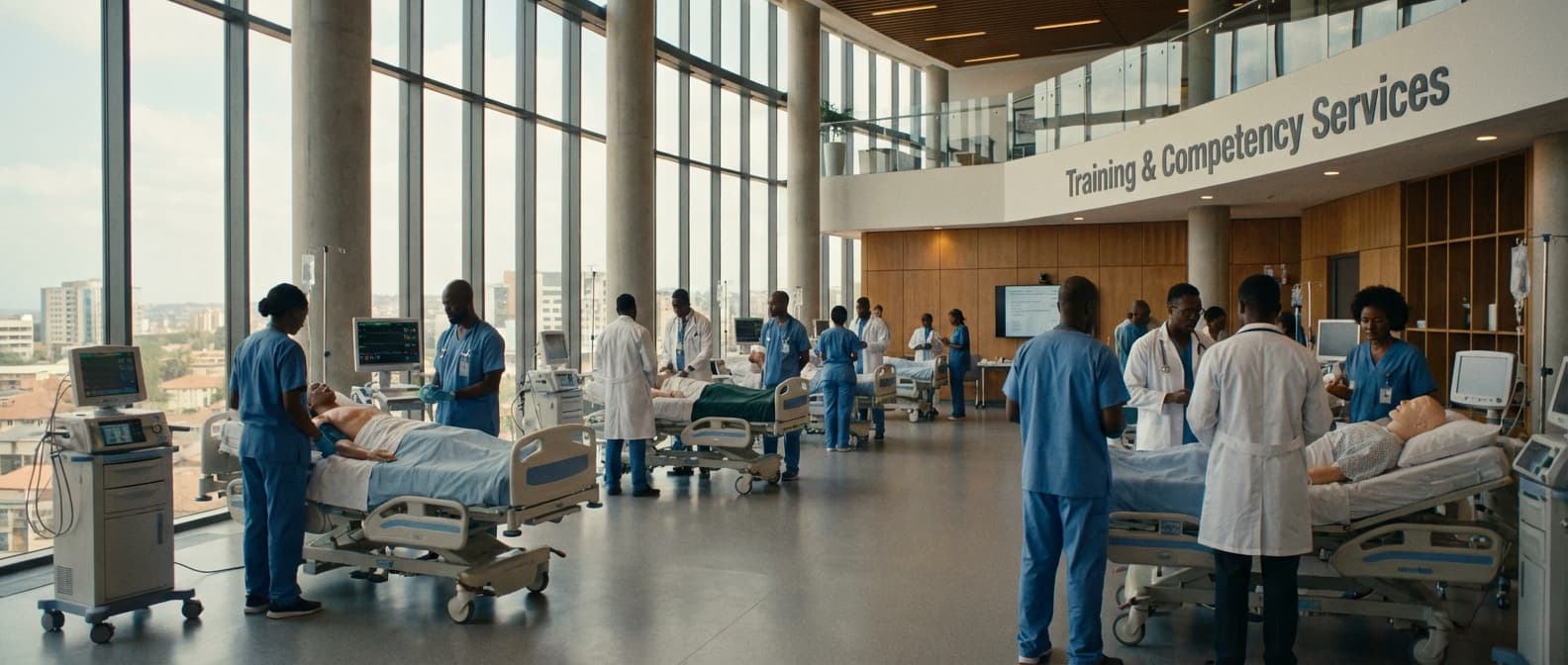
Ultrasound Application Training Service (Protocol-Based) in Zimbabwe
Engineering Excellence & Technical Support
Ultrasound Application Training Service (Protocol-Based) High-standard technical execution following OEM protocols and local regulatory frameworks.
Standardized Protocol Mastery
Achieve consistent, high-quality ultrasound examinations across all modalities by mastering our comprehensive, protocol-based training. Elevate diagnostic accuracy and patient care in Zimbabwe.
Hands-On Proficiency Development
Gain practical, real-world skills with our structured, protocol-driven training modules. Our curriculum ensures Zimbabwean practitioners develop confidence and competence in performing and interpreting ultrasound scans.
Localized Expertise & Support
Benefit from ultrasound training tailored to the specific needs and challenges of healthcare in Zimbabwe. Our experts provide ongoing support to ensure successful implementation and adoption of best-practice protocols.
What Is Ultrasound Application Training Service (Protocol-based) In Zimbabwe?
Ultrasound Application Training Service (Protocol-Based) in Zimbabwe refers to a structured educational program designed to equip medical professionals with the knowledge and practical skills required to perform diagnostic ultrasound examinations according to established protocols. This service focuses on standardized procedures and interpretation guidelines specific to various ultrasound applications. The training emphasizes adherence to scientific principles, image acquisition techniques, and diagnostic criteria to ensure consistent and reliable ultrasound diagnoses.
| Who Needs This Service? | Typical Use Cases |
|---|---|
| Radiologists and Radiology Residents | Obstetric and Gynecological Ultrasound (e.g., fetal biometry, anomaly scans, pelvic imaging) |
| Sonographers (Diagnostic Medical Sonographers) | Abdominal Ultrasound (e.g., liver, gallbladder, kidneys, spleen) |
| Physicians in various specialties (e.g., Internal Medicine, Obstetrics & Gynecology, Emergency Medicine, Cardiology, Pediatrics) seeking to incorporate ultrasound into their practice | Vascular Ultrasound (e.g., carotid arteries, peripheral veins and arteries, deep vein thrombosis screening) |
| Healthcare professionals in resource-limited settings where access to specialized imaging may be restricted | Echocardiography (focused cardiac assessments, screening for common pathologies) |
| Medical technicians and allied health professionals involved in diagnostic imaging | Small Parts Ultrasound (e.g., thyroid, breast, scrotum) |
| New graduates from medical or sonography programs | Musculoskeletal (MSK) Ultrasound (e.g., joints, tendons, ligaments) |
| Established practitioners requiring credentialing or recertification in specific ultrasound modalities | Point-of-Care Ultrasound (POCUS) for immediate clinical decision-making in emergency and critical care settings |
Key Components of the Service:
- Theoretical Instruction: Comprehensive lectures covering ultrasound physics, safety, transducer selection, artifact identification, and normal/pathological sonoanatomy for specific applications.
- Protocol Adherence Training: Detailed instruction on pre-defined scanning protocols, including patient positioning, transducer manipulation, field of view optimization, and standardized measurements.
- Image Acquisition Proficiency: Hands-on practical sessions with phantoms and/or supervised patient scanning to develop psychomotor skills for optimal image capture.
- Diagnostic Interpretation: Training in recognizing and interpreting sonographic findings in the context of clinical presentation and relevant pathologies.
- Reporting and Documentation: Guidance on generating accurate and comprehensive ultrasound reports in accordance with clinical and regulatory standards.
- Continuous Professional Development: Offering refresher courses and advanced modules for ongoing skill enhancement and adaptation to new technologies and protocols.
Who Needs Ultrasound Application Training Service (Protocol-based) In Zimbabwe?
This document outlines the critical need for Ultrasound Application Training Services (Protocol-Based) in Zimbabwe, specifically targeting healthcare professionals and institutions. Such training is vital for improving diagnostic accuracy, patient outcomes, and the overall efficiency of ultrasound services across the nation. By standardizing ultrasound protocols and ensuring practitioners are proficient in their application, Zimbabwe can elevate its healthcare standards and provide more accessible and reliable diagnostic imaging.
| Target Customer Group | Specific Departments/Roles | Rationale for Training Need |
|---|---|---|
| Public Hospitals | Radiology Department, Obstetrics & Gynecology, Emergency Department, General Surgery, Pediatrics, Internal Medicine | To ensure consistent, high-quality diagnostic imaging across all relevant specialties, particularly in resource-limited settings. Standardized protocols improve accuracy and reduce misdiagnosis. Essential for training junior staff and upskilling existing personnel. |
| Private Hospitals & Clinics | Radiology Department, Obstetrics & Gynecology, Cardiology, Urology, General Practice, Specialized Clinics (e.g., Fertility, Vascular) | To maintain a competitive edge by offering advanced and accurate diagnostic services. Protocol-based training ensures adherence to international best practices and enhances service quality for paying clients. Crucial for specialist applications. |
| Rural Health Centers & District Hospitals | Medical Officers, Nurses (with extended scope of practice), Clinical Officers | To extend diagnostic capabilities to underserved areas. Protocol-based training is essential for non-specialists to perform basic but critical ultrasound examinations reliably, enabling early detection and referral, thereby improving access to care. |
| Diagnostic Imaging Centers | Radiologists, Sonographers, Technicians | To standardize procedures across multiple sites or within a large center. Ensures quality control, efficient workflow, and comprehensive reporting. Essential for specialized imaging services. |
| Medical Training Institutions (Universities, Colleges) | Medical Schools (Radiology, Ob/Gyn, Surgery departments), Health Training Colleges (Nursing, Clinical Officer programs) | To integrate standardized ultrasound protocols into the curriculum for both undergraduate and postgraduate medical education. Equips future healthcare professionals with essential, up-to-date skills. |
| Government Health Ministries | Policy & Planning Department, Human Resources Development, Quality Assurance Units | To inform national healthcare policy regarding diagnostic imaging. To develop national standards and guidelines for ultrasound practice. To support workforce development and continuous professional development initiatives. |
| Emergency Medical Services | Emergency Physicians, Paramedics (trained in point-of-care ultrasound) | To facilitate rapid, bedside diagnosis in emergency situations. Protocol-based training ensures focused and accurate assessments for conditions like trauma, critical illness, and acute abdomen. |
Target Customers & Departments for Ultrasound Application Training Service (Protocol-Based) in Zimbabwe
- Medical Professionals (Radiologists, Sonographers, Physicians, Obstetricians, Gynecologists, Surgeons, Emergency Medicine Specialists, Pediatricians, etc.)
- Healthcare Institutions (Public Hospitals, Private Hospitals, Specialist Clinics, Rural Health Centers, Diagnostic Imaging Centers, Training Institutions)
- Government Health Ministries and Departments (for policy development, quality assurance, and workforce training initiatives)
Ultrasound Application Training Service (Protocol-based) Process In Zimbabwe
This document outlines the workflow for an Ultrasound Application Training Service (Protocol-Based) in Zimbabwe, from initial inquiry to the successful execution of the training. This service aims to equip healthcare professionals with the necessary skills to perform ultrasound examinations according to established protocols, enhancing diagnostic accuracy and patient care.
| Phase | Steps | Description | Key Activities | Deliverables/Outcomes | Responsible Parties |
|---|---|---|---|---|---|
| Phase 1: Inquiry & Initial Consultation | 1.1 Inquiry Received | Prospective client (hospital, clinic, individual practitioner) expresses interest in ultrasound training. | Contacting the training provider via phone, email, or website form. Initial questions about the service. | Initial expression of interest. | Client |
| Phase 1: Inquiry & Initial Consultation | 1.2 Initial Consultation | A preliminary discussion to understand the client's general needs and introduce the training service. | Discussion of the client's current ultrasound capabilities, desired learning outcomes, and potential training areas. Overview of the protocol-based approach. | Understanding of client's broad needs, initial proposal scope. | Training Provider, Client |
| Phase 2: Needs Assessment & Proposal Development | 2.1 Detailed Needs Assessment | A thorough evaluation of the client's specific training requirements. | On-site visit (if applicable) or detailed questionnaires to assess existing skill levels, equipment available, specific clinical areas requiring training (e.g., obstetrics, abdominal, emergency), and number of participants. | Detailed training needs report, identification of specific protocols to be covered. | Training Provider, Client |
| Phase 2: Needs Assessment & Proposal Development | 2.2 Proposal Development | Creation of a customized training proposal based on the needs assessment. | Outline of training modules, specific protocols to be covered, duration, venue, trainer qualifications, methodology, required equipment, and cost breakdown. | Formal Training Proposal. | Training Provider |
| Phase 3: Agreement & Scheduling | 3.1 Proposal Review & Negotiation | Client reviews the proposal, and any necessary adjustments are made. | Discussion of proposal details, budget, and timelines. Negotiation of terms and conditions. | Agreement on training scope, cost, and schedule. | Client, Training Provider |
| Phase 3: Agreement & Scheduling | 3.2 Contract/Agreement Signing | Formalization of the training engagement. | Signing of a service agreement or contract detailing all agreed-upon terms. | Signed Service Agreement. | Client, Training Provider |
| Phase 3: Agreement & Scheduling | 3.3 Scheduling & Logistics | Confirmation of training dates, times, and location. | Finalizing the training calendar, booking venue (if external), arranging accommodation and travel for trainers (if applicable), and confirming participant numbers. | Confirmed Training Schedule and Logistics Plan. | Training Provider, Client |
| Phase 4: Pre-Training Preparations | 4.1 Curriculum & Material Preparation | Development or finalization of training materials and protocols. | Creation/customization of presentations, handouts, case studies, protocol manuals, and assessment tools. Ensuring availability of ultrasound machines and phantoms for hands-on practice. | Training curriculum, participant manuals, protocol guides, practice equipment. | Training Provider |
| Phase 4: Pre-Training Preparations | 4.2 Participant Registration & Communication | Informing participants about the training and confirming their attendance. | Distribution of training schedules, pre-reading materials, and any necessary pre-course work. Confirmation of participant list. | Participant registration confirmation, pre-training communication. | Client, Training Provider |
| Phase 5: Training Execution | 5.1 Welcome & Introduction | Commencement of the training program. | Introduction of trainers, overview of training objectives, and establishment of expectations. Icebreaker activities. | Initiation of training session. | Training Provider, Participants |
| Phase 5: Training Execution | 5.2 Theoretical Sessions | Delivery of foundational knowledge and theoretical concepts related to ultrasound physics, instrumentation, and specific applications. | Lectures, presentations, and discussions covering relevant anatomical structures, pathology, and imaging principles. | Acquisition of theoretical knowledge. | Training Provider, Participants |
| Phase 5: Training Execution | 5.3 Protocol-Based Practical Sessions | Hands-on training focused on applying specific ultrasound protocols. | Demonstration and guided practice of scanning techniques for various body parts and clinical scenarios, adhering strictly to the defined protocols. Use of phantoms and, where applicable, supervised scanning on patients. | Development of practical scanning skills aligned with protocols. | Training Provider, Participants |
| Phase 5: Training Execution | 5.4 Case Study Analysis & Discussion | Application of learned knowledge to real-world scenarios. | Reviewing ultrasound images and case studies to reinforce protocol adherence and diagnostic interpretation. | Enhanced understanding of diagnostic interpretation. | Training Provider, Participants |
| Phase 5: Training Execution | 5.5 Assessment & Feedback | Evaluation of participant learning and provision of feedback. | Quizzes, practical skills assessments (e.g., observed scanning), and formative feedback during practical sessions. Daily wrap-up sessions. | Assessment of learning progress, identification of areas for improvement. | Training Provider, Participants |
| Phase 6: Post-Training Support & Evaluation | 6.1 Post-Training Assessment | Formal evaluation of overall learning outcomes. | Final written or practical examination to assess competency against the trained protocols. | Measurement of participant competency. | Training Provider |
| Phase 6: Post-Training Support & Evaluation | 6.2 Training Evaluation | Gathering feedback on the training program itself. | Distribution and collection of feedback forms from participants and their supervisors to assess the effectiveness of the training, trainers, and materials. | Training program evaluation report. | Training Provider, Participants, Client |
| Phase 6: Post-Training Support & Evaluation | 6.3 Refresher/Follow-up Sessions (Optional) | Providing opportunities for continued learning and skill reinforcement. | Scheduling of follow-up sessions or remote support to address ongoing challenges and answer questions. | Sustained skill development. | Training Provider |
| Phase 7: Certification & Follow-up | 7.1 Certification Issuance | Recognition of successful completion of the training. | Issuance of certificates to participants who have met the required competency standards. | Training Certificates. | Training Provider |
| Phase 7: Certification & Follow-up | 7.2 Final Report & Billing | Summarizing the training outcomes and concluding the financial aspects. | Submission of a final training report to the client, including assessment results and training feedback. Issuance of final invoices. | Final Training Report, Invoices. | Training Provider, Client |
Ultrasound Application Training Service Workflow in Zimbabwe
- Inquiry & Initial Consultation
- Needs Assessment & Proposal Development
- Agreement & Scheduling
- Pre-Training Preparations
- Training Execution
- Post-Training Support & Evaluation
- Certification & Follow-up
Ultrasound Application Training Service (Protocol-based) Cost In Zimbabwe
This document outlines the typical cost of Ultrasound Application Training Services (Protocol-Based) in Zimbabwe, using the local currency (Zimbabwean Dollar - ZWL). The pricing for these specialized training programs is influenced by several key factors, ensuring that the costs reflect the quality, depth, and logistical requirements of the service. Understanding these factors is crucial for institutions and individuals seeking to invest in skilled ultrasound professionals.
| Training Type/Duration | Estimated Cost Range (ZWL) | Notes |
|---|---|---|
| Basic Ultrasound Applications (e.g., Abdomen, Pelvis - 3-5 Days) | 150,000 - 350,000 | Covers fundamental principles and common scanning protocols. May include limited supervised practice. |
| Intermediate Ultrasound Applications (e.g., Obs/Gynae, General Imaging - 7-10 Days) | 300,000 - 700,000 | Expands on basic skills, introduces more complex scenarios, and offers more hands-on time. May include some specialized modules. |
| Advanced/Specialized Ultrasound Applications (e.g., Echocardiography, Vascular, Musculoskeletal - 10-14 Days) | 600,000 - 1,500,000+ | Focuses on in-depth understanding and practical skills for niche areas. Involves extensive supervised practice and expert instruction. |
| Comprehensive Ultrasound Diploma/Certificate Program (Several Weeks/Months) | 1,000,000 - 3,000,000+ | A more extensive program leading to a recognized qualification, encompassing multiple modalities and extended clinical exposure. |
| On-site Corporate/Hospital Training (Per Day/Program) | Negotiable (often based on trainer fees, duration, and number of participants) | Tailored programs for healthcare institutions, with pricing dependent on specific needs and customization. |
Factors Influencing Ultrasound Application Training Cost in Zimbabwe
- Training Provider Reputation and Accreditation: Established institutions with a proven track record and recognized accreditation often command higher fees due to their perceived quality and expertise.
- Duration and Intensity of the Program: Longer and more intensive training courses, encompassing a wider range of applications or advanced techniques, will naturally be more expensive.
- Level of Specialization: Training focused on highly specialized areas (e.g., obstetric Doppler, musculoskeletal ultrasound, interventional ultrasound) will be priced higher than general ultrasound application training.
- Trainer Expertise and Qualifications: The experience, qualifications, and international recognition of the trainers significantly impact the cost. Highly sought-after experts will require higher compensation.
- Training Materials and Resources: The inclusion of comprehensive training manuals, high-quality visual aids, access to simulation equipment, and online learning platforms can add to the overall cost.
- Hands-on Practice and Supervision: The amount of supervised hands-on practice time with real or simulated patients is a critical component. More extensive supervised practice generally leads to higher costs.
- Location and Logistics: The training venue, travel and accommodation for trainers (if applicable), and local transportation can influence the final price, especially for remote or specialized training events.
- Equipment Access and Maintenance: The cost of utilizing and maintaining advanced ultrasound equipment for training purposes is factored into the fees.
- Certification and Assessment: The process of assessment, examination, and awarding of certificates, especially if recognized by professional bodies, contributes to the overall cost.
- Group Size and Corporate Packages: Training for larger groups or customized corporate packages may offer different pricing structures, potentially with per-participant discounts but overall higher package costs.
Affordable Ultrasound Application Training Service (Protocol-based) Options
Unlock the power of ultrasound with our affordable, protocol-based training service. We empower healthcare professionals to confidently perform and interpret ultrasound examinations with standardized, evidence-based protocols. Our training focuses on practical, hands-on learning, ensuring you gain essential skills efficiently and effectively. We offer flexible options designed to fit your budget and learning needs, emphasizing value through comprehensive bundles and strategic cost-saving opportunities.
| Value Bundle Name | Included Modules | Key Features | Standard Price | Bundle Savings |
|---|---|---|---|---|
| Foundation Essentials | Basic Ultrasound Physics, Transducer Handling, Image Optimization, Introduction to Abdominal Ultrasound Protocols | Core knowledge for beginners, foundational skill development, 4 core modules | $500 | N/A |
| Abdominal Specialist | Advanced Abdominal Ultrasound Protocols (Liver, Gallbladder, Kidneys, Pancreas), Doppler Principles & Applications | In-depth training on common abdominal scans, advanced techniques, 6 modules | $800 | 15% Savings ($120) |
| Cardiology Core | Echocardiography Fundamentals, Standard Echo Protocols (2D, M-Mode, Doppler), Basic Cardiac Pathology | Essential training for cardiac ultrasound, practical workflow, 5 modules | $700 | 10% Savings ($70) |
| Comprehensive Practitioner | Includes Foundation Essentials, Abdominal Specialist, and Cardiology Core Modules | All-encompassing training for diverse clinical needs, maximum value, 15 modules | $1800 | 25% Savings ($450) |
| Customizable Training | Select any 5 modules from our catalog | Tailored to specific departmental requirements, maximum flexibility, 5 modules | Quote-Based | 10-20% Savings (depending on module selection) |
Why Choose Our Protocol-Based Ultrasound Training?
- Standardized Protocols: Learn based on established, evidence-based guidelines for consistent and accurate examinations.
- Hands-On Skill Development: Gain practical experience through guided simulations and real-world case studies.
- Improved Patient Care: Enhance diagnostic capabilities and patient outcomes through proficient ultrasound utilization.
- Cost-Effectiveness: Maximize your training investment with our value-driven pricing and bundled packages.
- Flexible Learning: Options designed to suit individual and institutional needs.
Verified Providers In Zimbabwe
In Zimbabwe's healthcare landscape, discerning truly verified providers is paramount for ensuring quality care and peace of mind. Franance Health stands out as a beacon of trust, offering a network of healthcare professionals and facilities that have undergone rigorous credentialing. This commitment to verification not only safeguards patients but also elevates the standard of healthcare services available nationwide. Understanding Franance Health's credentials and the meticulous processes behind them reveals why they represent the best choice for reliable and exceptional healthcare.
| Benefit to Patients | Franance Health's Assurance | Why it's the Best Choice |
|---|---|---|
| Access to Qualified Professionals | Ensures all listed doctors and specialists are properly licensed and certified. | Eliminates the risk of consulting unqualified individuals, guaranteeing competent medical advice and treatment. |
| Safe and Well-Equipped Facilities | Thoroughly vets clinics and hospitals for infrastructure, hygiene, and operational standards. | Provides a secure and conducive environment for all medical procedures and recovery. |
| Specialized Expertise | Confirms the credentials and experience of medical specialists in their respective fields. | Guarantees access to highly skilled practitioners for complex or niche medical needs. |
| Consistent High Standards | Employs continuous monitoring and quality assurance processes. | Ensures that every healthcare interaction meets the highest benchmarks of care and professionalism. |
| Trust and Reliability | Builds a network based on transparency and verifiable credentials. | Offers peace of mind knowing you are receiving care from vetted and trusted healthcare providers. |
Franance Health: Pillars of Verification and Trust
- Comprehensive Accreditation & Licensing Checks: Franance Health meticulously verifies that all affiliated practitioners hold current and valid licenses from relevant Zimbabwean regulatory bodies. This includes scrutinizing educational qualifications, specialist certifications, and adherence to professional standards.
- Rigorous Due Diligence on Facilities: Partnering healthcare facilities are thoroughly assessed for their infrastructure, equipment, hygiene standards, and operational compliance. This ensures a safe and effective environment for patient care.
- Specialist Verification: For specialized medical services, Franance Health goes a step further to confirm the expertise and experience of specialist doctors, ensuring they meet stringent criteria for their respective fields.
- Continuous Monitoring & Quality Assurance: Verification is not a one-time event. Franance Health implements ongoing monitoring and quality assurance programs to ensure that providers consistently maintain the highest standards of care and ethical practice.
- Patient Feedback Integration: Patient experiences and feedback are actively sought and integrated into the verification process, providing a crucial real-world perspective on service delivery.
Scope Of Work For Ultrasound Application Training Service (Protocol-based)
This document outlines the Scope of Work for Ultrasound Application Training Services, focusing on protocol-based training with defined technical deliverables and standard specifications. The objective is to equip trainees with the knowledge and practical skills necessary to perform ultrasound examinations according to established protocols and achieve high-quality diagnostic images.
| Section | Description | Key Activities | Technical Deliverables | Standard Specifications |
|---|---|---|---|---|
| Development of a structured, protocol-based training curriculum covering theoretical concepts and practical scanning techniques for specified ultrasound applications (e.g., Abdominal, OB/GYN, Vascular, Cardiac). | Needs assessment, protocol review, curriculum mapping, module design, learning objective definition. | Training curriculum document, detailed lesson plans, learning modules (presentations, handouts). | Curriculum aligned with current professional guidelines (e.g., AIUM, SDMS), evidence-based practices, and departmental policies. |
| Instruction on ultrasound physics, instrumentation, image optimization, artifact recognition, and relevant anatomy/physiology for each application. | Lectures, interactive discussions, case study reviews, Q&A sessions, online learning modules. | Pre- and post-training assessments, knowledge check quizzes, competency evaluations. | Content accuracy, clarity, and relevance to clinical practice. Adherence to specified learning objectives. |
| Hands-on training focused on systematic scanning protocols for each ultrasound application, including patient positioning, transducer manipulation, and image acquisition. | Demonstrations, supervised scanning sessions on phantoms and/or simulated patients, peer learning, instructor feedback. | Acquisition of standardized ultrasound images per protocol, proficiency in identifying key anatomical structures and abnormalities. | Real-time image acquisition, consistency in scanning techniques, adherence to designated probe selections and scan planes. |
| Training on adjusting machine controls (gain, depth, focus, TGC, etc.) to achieve optimal image quality and minimize artifacts. | Practical exercises on image optimization, artifact identification and correction, subjective image quality assessment. | Demonstration of optimal image parameters for various anatomical structures, consistently producing diagnostic-quality images. | Compliance with established image quality standards (e.g., signal-to-noise ratio, spatial resolution, contrast resolution) as defined by the protocol. |
| Guidance on recognizing normal and abnormal sonographic findings within the context of established protocols and basic interpretation principles. | Case reviews, guided interpretation of acquired images, introduction to reporting templates and essential reporting elements. | Ability to identify and describe key findings according to protocol requirements, understanding of limitations. | Accuracy of findings identification, consistency with established diagnostic criteria, appropriate use of descriptive terminology. |
| Familiarization with specific ultrasound equipment models, including routine checks, cleaning, and basic troubleshooting. | Hands-on operation of provided ultrasound machines, understanding of user interfaces and menu functions, basic care and handling. | Safe and effective operation of the ultrasound system, identification of basic operational issues. | Adherence to manufacturer guidelines for equipment operation and maintenance. |
| Formal assessment of theoretical knowledge and practical scanning skills to determine competency in performing protocol-based ultrasound examinations. | Written examinations, practical scanning examinations, review of acquired image portfolios, case-based scenarios. | Demonstrated competency in all core learning objectives and protocol adherence. | Standardized scoring rubrics, objective evaluation criteria, documented evidence of competency attainment. |
| Provision of ongoing resources and support to reinforce learning and address any post-training queries. | Access to training materials, follow-up sessions, access to expert consultation (as agreed upon). | Trainees equipped with resources for continued self-learning and skill development. | Availability and accessibility of provided resources. |
Scope of Work Objectives
- To provide comprehensive, protocol-driven ultrasound application training.
- To ensure trainees understand the theoretical basis and practical application of ultrasound principles.
- To develop proficiency in operating ultrasound equipment and optimizing image quality.
- To standardize scanning techniques and interpretation skills based on established protocols.
- To prepare trainees for accurate and efficient diagnostic ultrasound examinations.
- To meet defined technical deliverables and adherence to standard specifications.
Service Level Agreement For Ultrasound Application Training Service (Protocol-based)
This Service Level Agreement (SLA) outlines the response times and uptime guarantees for the Ultrasound Application Training Service (Protocol-Based). It is designed to ensure consistent and reliable access to the training platform and timely support for users.
| Service Component | Service Level Objective (SLO) | Measurement Period | Remedy/Credit (if applicable) |
|---|---|---|---|
| Training Platform Uptime | 99.5% Uptime (excluding scheduled maintenance) | Monthly | For each full hour of unscheduled downtime exceeding 0.5% of monthly uptime, a credit of 5% of the monthly training service fee will be applied. |
| Critical Technical Support Response Time | 1 Hour | For issues impacting core training functionality or preventing user access. | N/A |
| High Priority Technical Support Response Time | 4 Business Hours | For issues impacting specific features or causing moderate disruption. | N/A |
| Medium Priority Technical Support Response Time | 8 Business Hours | For general inquiries or non-critical issues. | N/A |
| Scheduled Maintenance Notification | 48 Hours Advance Notice | For planned downtime for updates or maintenance. | N/A |
Key Service Components
- Training Platform Uptime
- Technical Support Response Times
- Escalation Procedures
Frequently Asked Questions

Ready when you are
Let's scope your Ultrasound Application Training Service (Protocol-Based) in Zimbabwe project in Zimbabwe.

Scaling healthcare logistics and technical systems across the entire continent.