
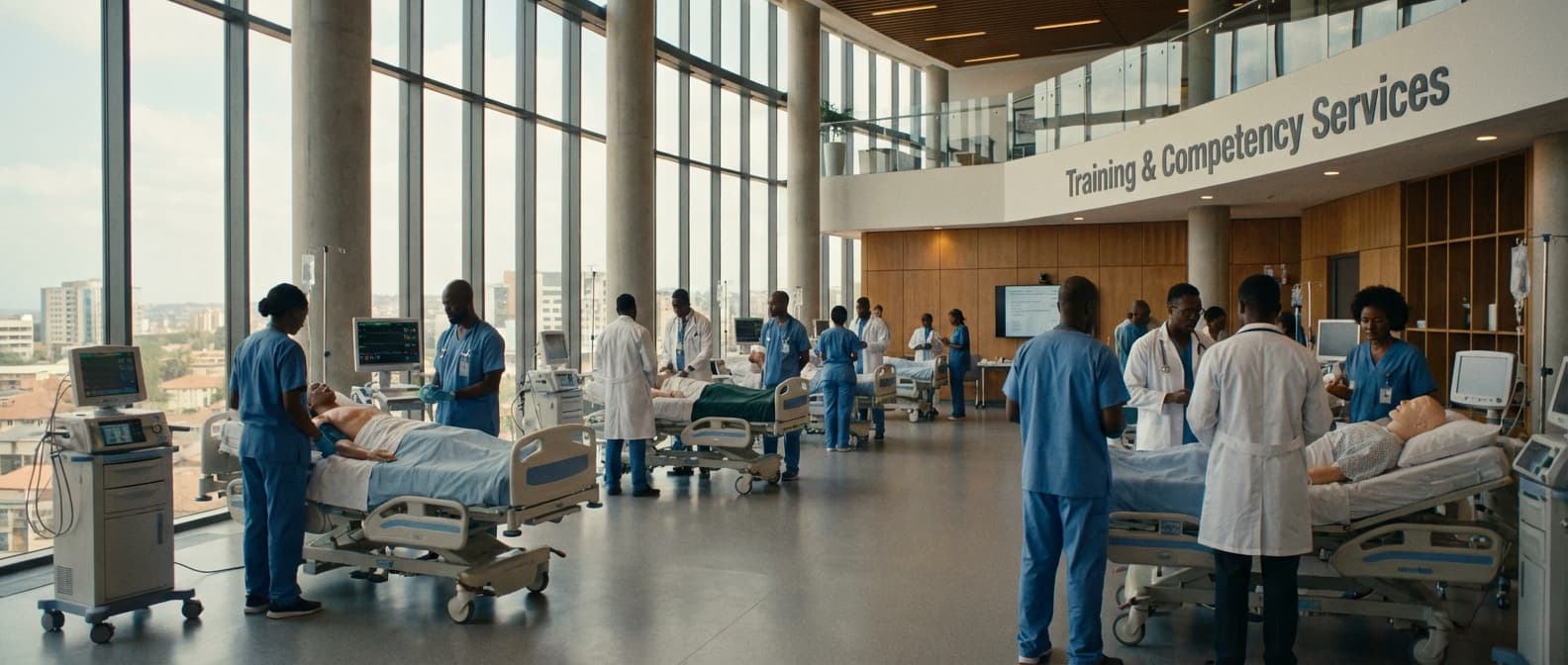
MRI Operator Training Service (Radiographers) in Zimbabwe
Engineering Excellence & Technical Support
MRI Operator Training Service (Radiographers) High-standard technical execution following OEM protocols and local regulatory frameworks.
Advanced MRI Protocol Optimization
Master cutting-edge MRI pulse sequences and protocol customization for enhanced image quality and diagnostic accuracy, specifically tailored to the common pathologies encountered in Zimbabwe. Learn to adapt protocols for varying patient demographics and resource availability.
MRI Safety & Patient Care Mastery
Gain comprehensive expertise in MRI safety protocols, including screening, quench procedures, and artifact reduction. Develop advanced patient communication and management techniques to ensure comfort and minimize anxiety, especially for pediatric and claustrophobic patients.
Quality Assurance & Workflow Efficiency
Implement robust quality assurance measures and streamline MRI workflow for increased throughput and reduced waiting times. Learn to identify and troubleshoot common imaging artifacts, ensuring consistent, high-quality diagnostic imaging for the Zimbabwean healthcare system.
What Is Mri Operator Training Service (Radiographers) In Zimbabwe?
MRI Operator Training Service (Radiographers) in Zimbabwe refers to specialized educational programs and practical skill development designed to equip radiographers with the knowledge and proficiency required to safely and effectively operate Magnetic Resonance Imaging (MRI) scanners. This training is crucial due to the complex physics, sophisticated technology, and stringent safety protocols associated with MRI procedures. It aims to ensure diagnostic image quality, patient safety, and optimal utilization of MRI equipment within the Zimbabwean healthcare context.
| Who Needs MRI Operator Training Service? | Typical Use Cases | ||||
|---|---|---|---|---|---|
| Registered Radiographers: Individuals holding a diploma or degree in radiography seeking to specialize in MRI or upskill their existing knowledge base. | Newly Qualified Radiographers: Fresh graduates entering the field of diagnostic imaging who will be expected to operate MRI scanners. | Existing MRI Operators: Radiographers currently operating MRI scanners who require refresher courses, advanced training, or certification on new equipment/protocols. | Healthcare Institutions: Hospitals, diagnostic centers, and imaging clinics in Zimbabwe that have acquired or are planning to acquire MRI facilities. | Medical Equipment Suppliers/Distributors: Companies providing MRI scanners who may offer training as part of their sales package or ongoing support. | |
| Neuroimaging: Diagnosing brain tumors, strokes, multiple sclerosis, spinal cord injuries, and degenerative neurological disorders. | Musculoskeletal Imaging: Assessing joint injuries (ligament/tendon tears), cartilage defects, bone tumors, and inflammatory arthropathies. | Abdominal and Pelvic Imaging: Evaluating organs like the liver, kidneys, pancreas, uterus, and ovaries for tumors, cysts, and inflammatory conditions. | Cardiovascular Imaging: Assessing congenital heart defects, cardiac masses, and myocardial viability (less common in basic operator training). | Oncology: Staging and monitoring treatment response for various cancers. | Research Applications: Contributing to clinical research studies involving MRI data acquisition. |
Key Components of MRI Operator Training Service:
- Theoretical Foundation: Comprehensive understanding of MRI physics (nuclear magnetic resonance, relaxation mechanisms, pulse sequences, image formation), magnetic field principles, radiofrequency interactions, and gradient systems.
- Equipment Operation: Hands-on training on specific MRI scanner models, including system calibration, patient positioning techniques, protocol selection and optimization, artifact identification and correction, and emergency shutdown procedures.
- Patient Care and Safety: Education on contraindications for MRI (e.g., ferromagnetic implants, pacemakers), screening protocols, patient preparation, managing claustrophobia and anxiety, and implementing safety measures to prevent RF burns and projectile incidents.
- Image Quality Assurance: Training on optimizing image parameters for various anatomical regions and pathologies, understanding contrast-to-noise ratio (CNR), spatial resolution, and signal-to-noise ratio (SNR), and performing quality control checks.
- Pathology Recognition (Basic): Introduction to common pathologies visualized with MRI to assist in protocol selection and image interpretation (though advanced interpretation remains the domain of radiologists).
- Radiation Safety (MRI Specific): Understanding the absence of ionizing radiation in MRI but focusing on non-ionizing radiation (RF) safety and magnetic field hazards.
- Information Technology and PACS Integration: Training on data management, picture archiving and communication systems (PACS), and basic troubleshooting of imaging workstations.
- Ethical and Legal Considerations: Awareness of patient confidentiality, informed consent, and professional responsibilities.
Who Needs Mri Operator Training Service (Radiographers) In Zimbabwe?
MRI Operator Training Service (Radiographers) in Zimbabwe is crucial for enhancing diagnostic imaging capabilities across the nation. This specialized training ensures radiographers are proficient in operating MRI scanners, interpreting images, and adhering to safety protocols. The demand stems from the increasing adoption of MRI technology in healthcare facilities to diagnose a wide range of conditions accurately and efficiently.
| Customer Type | Typical Department(s) Involved | Reason for Need |
|---|---|---|
| Public Hospitals | Radiology, Neurology, Orthopedics, Oncology, Cardiology, Emergency | Expanding diagnostic capabilities, serving large patient volumes, operating new equipment. |
| Private Hospitals and Clinics | Radiology, Neurology, Orthopedics, Oncology, Cardiology | Offering comprehensive services, attracting specialized patients, maintaining high standards of care. |
| University Teaching Hospitals | Radiology, Neurology, Orthopedics, Oncology, Pathology, Medical Education Units | Training future medical professionals, conducting research, providing advanced patient care. |
| Specialized Diagnostic Centers | Radiology | Primary offering of MRI services, ensuring efficiency and accuracy. |
| Government Health Initiatives | Radiology, Public Health Departments | Improving access to diagnostic imaging in underserved areas, implementing national health strategies. |
Target Customers and Departments for MRI Operator Training Service (Radiographers) in Zimbabwe
- Public Hospitals: These institutions often serve a large patient population and are progressively incorporating advanced imaging technologies like MRI. Training is essential for their existing radiology departments and for staff who will operate newly acquired equipment.
- Private Hospitals and Clinics: As private healthcare providers aim to offer comprehensive services and attract patients seeking specialized diagnostics, investing in MRI technology is common. This necessitates trained radiographers to manage and operate these machines effectively.
- University Teaching Hospitals: These facilities serve as centers for both patient care and medical education. Training radiographers here is vital for equipping future medical professionals with the latest imaging skills and for advancing research in diagnostic radiology.
- Specialized Diagnostic Centers: Standalone imaging centers that offer MRI services as their primary or a significant offering require highly skilled radiographers to ensure accurate and efficient service delivery.
- Government Health Initiatives and Programs: Any national or regional health programs focusing on improving diagnostic capabilities, especially in areas where MRI access is limited, would benefit from training programs for radiographers to establish and operate mobile or fixed MRI units.
- Radiology Departments: The core department that directly benefits from and utilizes MRI technology. This includes diagnostic radiologists, radiographers, and radiology technicians.
- Neurology Departments: MRI is a cornerstone in the diagnosis and management of neurological disorders, including strokes, brain tumors, and multiple sclerosis. Trained operators are essential for providing timely and accurate brain MRIs.
- Orthopedic Departments: MRI plays a vital role in evaluating musculoskeletal injuries, joint diseases, and soft tissue abnormalities. Radiographers skilled in MRI are critical for diagnosing conditions affecting bones, muscles, ligaments, and tendons.
- Oncology Departments: MRI is used for staging cancers, monitoring treatment response, and detecting recurrence, particularly for brain, spinal, and pelvic tumors. Expertise in MRI operation is crucial for this application.
- Cardiology Departments: While CT is more common, MRI is increasingly used for cardiac imaging, especially for evaluating congenital heart disease, cardiomyopathy, and myocardial viability. Training for radiographers in cardiac MRI protocols is a growing need.
- Emergency Departments: For acute conditions like stroke, head trauma, or certain internal injuries, rapid and accurate MRI scans can be life-saving. Trained radiographers ensure efficient operation in high-pressure environments.
- Research and Development Units: Medical institutions engaged in research involving diagnostic imaging will require radiographers with advanced MRI skills to support their studies and experiments.
Mri Operator Training Service (Radiographers) Process In Zimbabwe
This document outlines the workflow for an MRI Operator Training Service specifically for Radiographers in Zimbabwe. The process is designed to be comprehensive, guiding a client from their initial inquiry to the successful execution of the training program.
| Phase | Step | Description | Key Activities/Deliverables | Responsible Party |
|---|---|---|---|---|
| Phase 1: Inquiry and Needs Assessment | 1.1 Initial Inquiry | Prospective client expresses interest in MRI operator training. | Inquiry received (email, phone, website form). | Training Provider |
| 1.2 Information Provision | Provider shares details about their training services, curriculum, and general offerings. | Brochures, website information, preliminary discussions. | Training Provider | |
| 1.3 Detailed Needs Assessment | Understanding the client's specific training needs, current skill levels of radiographers, equipment available, and desired outcomes. | Needs assessment questionnaire, site visit (optional), detailed consultation calls. | Training Provider & Client | |
| Phase 2: Proposal and Agreement | 2.1 Proposal Development | Creation of a tailored training proposal based on the needs assessment. | Detailed training plan, curriculum outline, duration, venue (if applicable), trainer profiles, pricing, terms and conditions. | Training Provider |
| 2.2 Proposal Review and Negotiation | Client reviews the proposal and discusses any modifications. | Review meetings, clarification of scope and deliverables, potential negotiation of terms. | Client & Training Provider | |
| 2.3 Agreement/Contract Signing | Formalization of the training agreement. | Signed training contract or Memorandum of Understanding (MOU). | Client & Training Provider | |
| Phase 3: Pre-Training Preparations | 3.1 Participant Identification & Registration | Client identifies and registers the radiographers to be trained. | Submission of participant list and relevant information (e.g., qualifications, experience). | Client |
| 3.2 Training Schedule Confirmation | Finalizing the training dates, times, and location. | Confirmation of training calendar, notification to participants. | Training Provider & Client | |
| 3.3 Curriculum & Material Preparation | Ensuring all training materials are ready and relevant to the specific MRI equipment. | Printing of manuals, preparation of presentations, development of practical scenarios. | Training Provider | |
| 3.4 Equipment & Venue Readiness | Ensuring the training venue (if off-site) or the MRI scanner (if on-site) is prepared. | Logistics for external venue booking, confirmation of MRI scanner availability and operational status. | Client & Training Provider | |
| 3.5 Pre-Training Communication | Notifying participants about the training logistics, prerequisites, and any pre-reading materials. | Information packs, welcome emails. | Training Provider | |
| Phase 4: Training Execution | 4.1 Theoretical Sessions | Delivery of lectures, presentations, and discussions on MRI physics, safety, protocols, and image interpretation. | Interactive lectures, Q&A sessions. | Training Provider |
| 4.2 Practical Demonstrations & Hands-on Sessions | Demonstrating MRI scanner operation, protocol execution, and image acquisition techniques. | Scanner demonstrations, supervised hands-on scanning for participants. | Training Provider | |
| 4.3 Case Study Analysis & Protocol Development | Working through real-world patient cases and developing appropriate MRI protocols. | Group discussions, individual protocol design exercises. | Training Provider & Client's Radiographers | |
| 4.4 Assessment of Learning | Evaluating the participants' understanding and skill acquisition. | Quizzes, practical assessments, observation of performance. | Training Provider | |
| Phase 5: Post-Training Evaluation and Follow-up | 5.1 Training Evaluation | Gathering feedback from participants and the client on the training delivery and content. | Feedback forms, post-training debrief with client. | Training Provider & Client's Radiographers |
| 5.2 Certification Issuance | Awarding certificates to participants who successfully complete the training. | Issuance of formal training certificates. | Training Provider | |
| 5.3 Post-Training Support | Offering continued support and addressing any immediate challenges faced by the radiographers. | Q&A sessions, remote support (as per agreement). | Training Provider | |
| 5.4 Performance Review & Follow-up | Reviewing the impact of the training on the radiographers' performance and the overall MRI service. | Follow-up meetings, performance data analysis (optional, based on agreement). | Training Provider & Client |
MRI Operator Training Service (Radiographers) Process in Zimbabwe
- {"title":"Phase 1: Inquiry and Needs Assessment","description":"The initial stage focuses on understanding the client's requirements and providing them with relevant information."}
- {"title":"Phase 2: Proposal and Agreement","description":"Based on the needs assessment, a formal proposal is developed and then agreed upon by both parties."}
- {"title":"Phase 3: Pre-Training Preparations","description":"This phase involves all the logistical and administrative steps leading up to the commencement of the training."}
- {"title":"Phase 4: Training Execution","description":"This is the core phase where the actual MRI operator training takes place."}
- {"title":"Phase 5: Post-Training Evaluation and Follow-up","description":"After the training concludes, there are crucial steps for evaluation, feedback, and ongoing support."}
Mri Operator Training Service (Radiographers) Cost In Zimbabwe
The cost of MRI operator training for radiographers in Zimbabwe can vary significantly due to several key pricing factors. These include the reputation and accreditation of the training institution, the duration and depth of the training program, the inclusion of practical/hands-on experience, and the availability of specialized modules. The curriculum's comprehensiveness, covering theoretical knowledge, image interpretation, patient care, and safety protocols, also impacts the overall cost. Furthermore, whether the training is delivered in-person, online, or in a blended format, and the geographical location of the training provider within Zimbabwe, can influence pricing. Additional costs may arise for study materials, assessment fees, and certification.
| Training Type/Duration | Estimated Cost Range (ZWL) | Notes |
|---|---|---|
| Basic MRI Principles & Introduction (Short Course/Workshop - e.g., 3-5 days) | 50,000 - 150,000 ZWL | Focuses on foundational concepts, basic operation, and safety. Often delivered by professional bodies or specialized training centers. |
| Comprehensive MRI Operator Training (e.g., 2-4 weeks) | 150,000 - 400,000 ZWL | Covers a broader range of topics including different pulse sequences, image acquisition techniques, artifact identification, and basic interpretation. May include limited practical exposure. |
| Advanced/Specialized MRI Operator Training (e.g., 4-8 weeks or modular) | 300,000 - 800,000+ ZWL | Includes in-depth training in specific areas like neuroimaging, musculoskeletal MRI, cardiac MRI, or advanced image post-processing. Often involves significant hands-on practice and may be part of postgraduate studies or professional development programs. |
| On-the-Job/In-House Training (Institution-Specific) | Variable (often negotiated) | Costs are typically determined by the healthcare institution's internal resources, the duration of the training, and any external trainers or equipment used. Can be a more cost-effective option for facilities with existing MRI scanners. |
| Online/Remote Training (Theoretical Components) | 75,000 - 250,000 ZWL | Primarily covers theoretical aspects and may require separate arrangements for practical training. Cost can vary based on the platform and course provider. |
Key Factors Influencing MRI Operator Training Costs in Zimbabwe
- Institution's Reputation and Accreditation
- Duration and Intensity of the Training Program
- Inclusion of Practical/Hands-on Experience
- Specialized Module Availability (e.g., specific MRI techniques, neuro, musculoskeletal)
- Curriculum Comprehensiveness (theory, interpretation, patient care, safety)
- Delivery Method (In-person, Online, Blended)
- Geographical Location of the Training Provider
- Cost of Study Materials and Resources
- Assessment and Certification Fees
Affordable Mri Operator Training Service (Radiographers) Options
This document outlines affordable MRI operator training options specifically for radiographers, focusing on value bundles and cost-saving strategies. Acquiring comprehensive MRI knowledge and practical skills is crucial for radiographers looking to advance their careers, but the cost of specialized training can be a barrier. This guide aims to demystify the process by highlighting flexible and economical approaches.
| Training Model | Description | Potential Cost-Saving | Value Proposition |
|---|---|---|---|
| Fully Online Courses | Comprises of lectures, readings, quizzes, and virtual labs delivered entirely through an online platform. | Eliminates travel, accommodation, and often on-site facility costs. Highly flexible scheduling. | Accessibility, self-paced learning, broad reach, and significant cost reduction. |
| Blended/Hybrid Programs | Combines online theoretical components with mandatory in-person practical sessions for hands-on experience. | Reduces the duration and intensity of on-site training compared to fully in-person programs. Offers a good balance of cost and practical exposure. | Cost-effective practical training, structured learning with essential hands-on skills development. |
| Modular Training Packages | Breaks down MRI training into smaller, specialized modules (e.g., Physics, Protocols, Safety, specific applications). | Allows trainees to purchase only the modules they need, avoiding paying for irrelevant content. Can be combined strategically. | Customizable learning, focus on specific skill gaps, and cost efficiency for targeted needs. |
| Train-the-Trainer Programs | Trains experienced radiographers to become internal trainers within their institution. | Scalable and cost-effective for institutions as internal resources are leveraged for ongoing training. | Long-term cost savings, knowledge retention within the institution, and consistent training delivery. |
| Simulation-Based Training | Utilizes advanced MRI simulation software to replicate scanner operation and patient scanning scenarios. | Reduces the need for costly MRI scanner time and consumables during early stages of training. | Safe and repeatable practice environment, reduced operational costs for training providers, and enhanced skill acquisition. |
| Certificate Programs | Shorter, focused programs leading to a certificate in MRI operation, often as a stepping stone to a full certification. | More affordable than full diploma or degree programs, targeting immediate career advancement. | Quick skill acquisition, career progression, and a cost-effective entry into MRI specialization. |
Key Cost-Saving Strategies for MRI Operator Training
- Leverage Online & Blended Learning: Online modules offer flexibility and reduce travel/accommodation costs. Blended programs combine online theory with in-person practical sessions, striking a balance between affordability and hands-on experience.
- Explore Government & Industry Grants/Subsidies: Many governments and professional radiology associations offer grants or subsidies for continuing education. Research available funding opportunities within your region and professional body.
- Negotiate Group Discounts: If multiple radiographers from the same institution require training, inquire about group rates. This can significantly reduce the per-person cost.
- Prioritize Core Competencies: Focus on training programs that directly address the essential skills and knowledge required for MRI operation. Avoid unnecessary modules or advanced specializations initially.
- Consider Shorter, Focused Courses: Instead of lengthy, comprehensive programs, opt for shorter, targeted courses that cover specific MRI techniques or safety protocols if those are your immediate needs.
- Utilize Simulation Software: Some training providers offer access to MRI simulator software, allowing for practice without the use of actual expensive equipment, thus reducing operational costs for the training provider and potentially the trainee.
- Seek Internships or Shadowing Opportunities: While not formal training, gaining practical exposure through internships or shadowing experienced MRI technologists can supplement theoretical knowledge and build confidence, potentially reducing the need for extensive paid practical sessions later.
- Phased Payment Plans: Inquire if training providers offer installment plans. Spreading the cost over time can make it more manageable for individual radiographers.
- Bundle Training with Equipment Purchase/Lease: If your institution is considering new MRI equipment, explore if training packages are included or offered at a discount as part of the deal.
- Focus on Vendor-Specific Training: If your institution uses a particular manufacturer's MRI scanners, vendor-provided training can be highly relevant and sometimes more cost-effective than generic programs.
Verified Providers In Zimbabwe
Finding reliable healthcare providers in Zimbabwe can be a significant challenge. In a landscape where trust and quality are paramount, Franance Health stands out as a beacon of verified excellence. Their commitment to rigorous credentialing and a patient-centric approach makes them the premier choice for individuals seeking dependable medical services. This dedication ensures that every provider listed through Franance Health has undergone a comprehensive vetting process, offering peace of mind to those in need of care.
| Credential Aspect | Franance Health's Verification Process | Benefit to Patients |
|---|---|---|
| Medical Licenses & Registrations | Thorough cross-referencing with relevant Zimbabwean medical councils and regulatory bodies. | Guarantees that practitioners are legally authorized to practice medicine. |
| Educational Qualifications | Verification of degrees, diplomas, and specialized training from accredited institutions. | Ensures providers have the foundational knowledge and expertise required. |
| Professional Experience | Assessment of past work history and references where applicable. | Provides insight into a provider's practical skills and track record. |
| Specialty Certifications | Validation of any specific board certifications or advanced training. | Confirms expertise in particular medical fields. |
| Ethical Conduct & Disciplinary Records | Checks for any history of malpractice or disciplinary actions. | Protects patients from potentially problematic practitioners. |
Why Franance Health is Your Best Choice:
- Rigorous Credential Verification: Franance Health employs a multi-stage verification process for all its listed healthcare professionals, ensuring they possess the necessary qualifications, licenses, and certifications.
- Commitment to Quality Standards: Beyond basic credentials, Franance Health assesses providers on their adherence to ethical practices and quality of care, ensuring a high standard for all services.
- Patient-Centric Approach: The platform prioritizes patient needs, aiming to connect individuals with providers who offer compassionate, effective, and accessible healthcare solutions.
- Transparency and Trust: Franance Health fosters an environment of transparency, allowing patients to make informed decisions based on verified provider information.
- Comprehensive Provider Network: A wide array of medical specialities and services are covered, ensuring that most healthcare needs can be met through their network.
Scope Of Work For Mri Operator Training Service (Radiographers)
This document outlines the Scope of Work (SOW) for providing comprehensive MRI Operator Training Services specifically tailored for Radiographers. The training aims to equip radiographers with the necessary theoretical knowledge and practical skills to safely and effectively operate MRI scanners, perform various imaging protocols, and manage patient care within an MRI environment. The training will adhere to industry best practices and regulatory requirements.
| Training Module | Description | Key Learning Objectives | Duration (Indicative) |
|---|---|---|---|
| Introduction to MRI Physics | Fundamental principles of MRI, including magnetism, RF pulses, signal generation, and image reconstruction. | Understand the basic physical principles underlying MRI. Explain the role of magnetic fields and radiofrequency pulses. Describe basic signal generation and image reconstruction. | 4-6 hours |
| MRI Safety and Patient Care | Comprehensive safety protocols, including screening, contraindications, emergency procedures, and management of ferromagnetic materials. Patient comfort and communication strategies. | Identify and mitigate MRI safety hazards. Implement effective patient screening procedures. Understand contraindications for MRI. Respond to potential emergencies. Ensure patient comfort and communicate effectively. | 6-8 hours |
| MRI Scanner Operation | Detailed explanation of scanner hardware, console operation, patient positioning techniques, and parameter selection for various sequences. | Operate the MRI scanner console. Position patients correctly for different examinations. Select appropriate imaging sequences and parameters. | 8-10 hours |
| Basic MRI Sequences and Protocols | Introduction to common MRI sequences (e.g., T1-weighted, T2-weighted, FLAIR, DWI) and their clinical applications. Basic protocol setup and optimization. | Recognize and interpret basic MRI sequences. Understand the clinical utility of common sequences. Set up and modify basic imaging protocols. | 10-12 hours |
| Image Quality Optimization and Artifact Management | Techniques for optimizing image quality. Identification and mitigation of common MRI artifacts. | Implement strategies to improve image quality. Identify and correct common imaging artifacts. | 4-6 hours |
| Introduction to Contrast Agents | Properties of common MRI contrast agents, administration guidelines, and management of adverse reactions. | Understand the properties and uses of MRI contrast agents. Administer contrast safely. Recognize and manage potential adverse reactions. | 2-3 hours |
| Practical Scanning Sessions | Hands-on experience operating the MRI scanner under supervision, performing various examinations, and practicing protocol adjustments. | Gain practical proficiency in operating the MRI scanner. Perform basic and intermediate MRI examinations. Apply learned techniques for protocol optimization. | 16-20 hours |
| Post-Processing and Basic Interpretation | Introduction to image viewing software and basic principles of image interpretation. Identification of anatomical structures and common pathologies. | Navigate image viewing software. Identify major anatomical structures. Recognize common findings and pathologies (at a basic level). | 6-8 hours |
Technical Deliverables
- Detailed training curriculum covering all aspects of MRI operation.
- Comprehensive training manuals (digital and/or hard copy) for participants.
- Practical training sessions on actual MRI scanners (or high-fidelity simulators).
- Case studies and problem-solving exercises.
- Assessment tools, including pre- and post-training evaluations and practical competency assessments.
- Certificate of completion for successful participants.
- Post-training support and consultation (e.g., troubleshooting assistance, protocol optimization guidance) for a defined period.
Service Level Agreement For Mri Operator Training Service (Radiographers)
This Service Level Agreement (SLA) outlines the agreed-upon service levels for the MRI Operator Training Service provided to radiographers. It defines the expected response times for support requests and the guaranteed uptime for the training platform and associated resources. This SLA aims to ensure timely and effective support for all users of the MRI Operator Training Service.
| Service Component | Service Level Objective (SLO) | Measurement Metric | Reporting Frequency |
|---|---|---|---|
| Technical Support (Platform Issues) | Acknowledgement within 4 business hours; Resolution within 24 business hours for critical issues. | Time from ticket submission to acknowledgement; Time from acknowledgement to resolution. | Monthly |
| Content Inquiry/Clarification | Acknowledgement within 8 business hours; Resolution within 48 business hours. | Time from ticket submission to acknowledgement; Time from acknowledgement to resolution. | Monthly |
| Scheduling Support (Training Sessions) | Acknowledgement within 2 business hours; Confirmation of scheduling within 24 business hours. | Time from request to acknowledgement; Time from request to scheduling confirmation. | Monthly |
| Training Platform Uptime | 99.5% uptime (excluding scheduled maintenance). | Percentage of time the platform is accessible and functional. | Monthly |
| On-Demand Trainer Consultation | Availability within 48 business hours of request for a 1-hour consultation slot. | Time from request to booked consultation slot. | Monthly |
Key Performance Indicators (KPIs)
- Response Time: The maximum time allowed for the service provider to acknowledge and begin addressing a support request.
- Resolution Time: The maximum time allowed for the service provider to resolve a support request to the user's satisfaction.
- Uptime Guarantee: The percentage of time the training platform and its core functionalities are available and operational.
- Availability of Trainers: The expected availability of certified MRI trainers for scheduled sessions and on-demand consultations.
Frequently Asked Questions

Ready when you are
Let's scope your MRI Operator Training Service (Radiographers) in Zimbabwe project in Zimbabwe.

Scaling healthcare logistics and technical systems across the entire continent.