
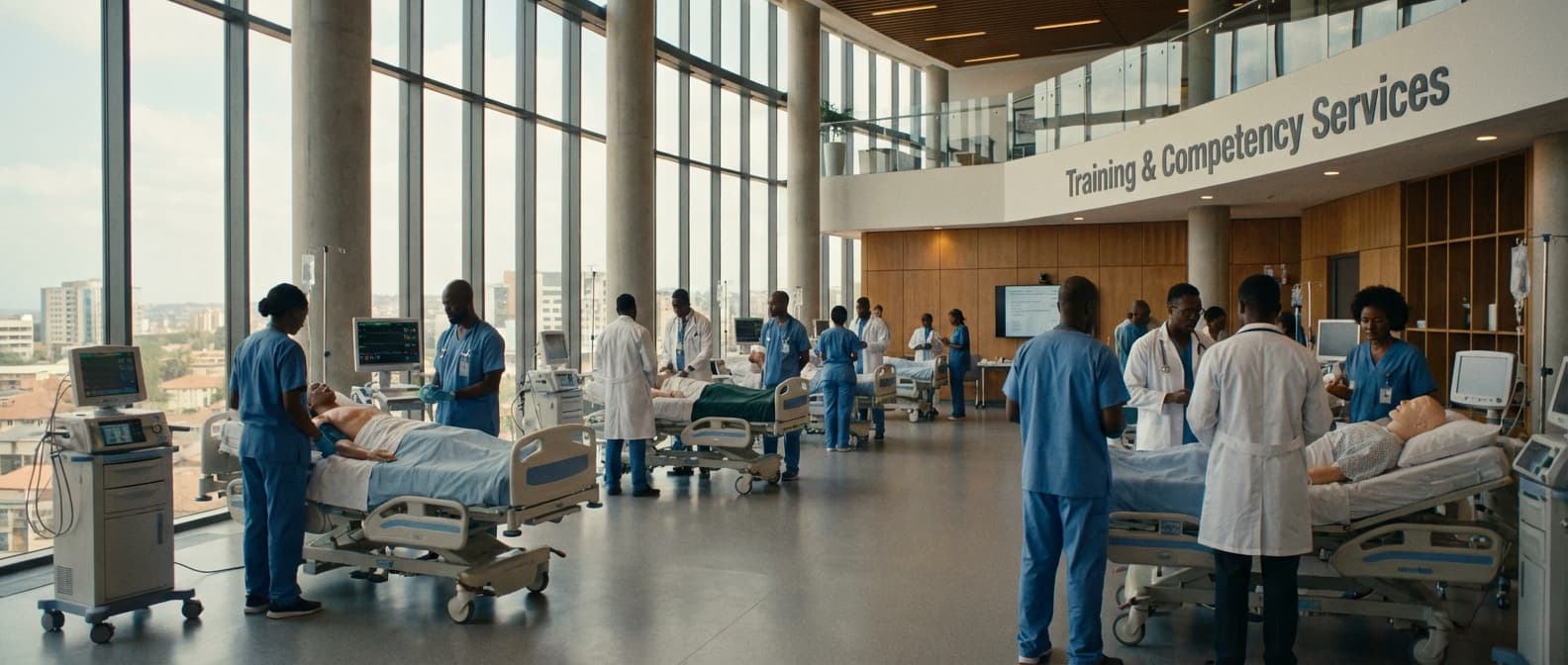
CT Operator Training Service (Radiographers) in Zimbabwe
Engineering Excellence & Technical Support
CT Operator Training Service (Radiographers) High-standard technical execution following OEM protocols and local regulatory frameworks.
Radiation Safety & Compliance
Master advanced radiation protection protocols and Zimbabwe's regulatory requirements for radiographers, ensuring patient and staff safety while adhering to international best practices.
Advanced Imaging Techniques
Gain proficiency in state-of-the-art CT imaging modalities and image acquisition techniques, enabling accurate diagnosis and superior image quality for complex anatomical evaluations.
PACS & Image Post-Processing
Develop expert skills in Picture Archiving and Communication Systems (PACS) and advanced image post-processing software, optimizing diagnostic interpretation and report generation in a digital environment.
What Is Ct Operator Training Service (Radiographers) In Zimbabwe?
CT Operator Training Service (Radiographers) in Zimbabwe refers to specialized educational programs and professional development opportunities designed to equip qualified radiographers with the necessary knowledge, skills, and competencies to safely and effectively operate Computed Tomography (CT) imaging equipment. This service ensures that practitioners can perform CT scans in accordance with established protocols, radiation safety standards, and diagnostic imaging best practices relevant to the Zimbabwean healthcare context.
| Who Needs CT Operator Training? | Typical Use Cases | ||||||||||||||||
|---|---|---|---|---|---|---|---|---|---|---|---|---|---|---|---|---|---|
| Newly qualified radiographers seeking to specialize in CT imaging. | Performing diagnostic CT scans for a wide range of medical conditions. | New graduates from radiography programs who are entering the CT modality. | Assisting in the diagnosis of trauma and emergency conditions (e.g., head injuries, internal bleeding). | Radiographers transitioning from other imaging modalities (e.g., X-ray, Ultrasound) to CT. | Imaging for oncological assessment and treatment monitoring (e.g., staging tumors, evaluating treatment response). | Radiographers working in facilities that have acquired new CT technology or upgraded existing equipment. | Diagnosing cardiovascular diseases (e.g., coronary artery disease, aortic aneurysms) with CT angiography. | Radiographers required to maintain or enhance their professional competencies as mandated by regulatory bodies. | Investigating abdominal and pelvic pathologies (e.g., appendicitis, diverticulitis, urinary tract stones). | Radiographers involved in interventional radiology procedures guided by CT. | Assessing neurological conditions (e.g., stroke, brain tumors, degenerative diseases). | Radiographers in academic institutions involved in teaching and research related to CT imaging. | Screening and diagnostic imaging for pulmonary conditions (e.g., pulmonary embolism, lung nodules). | Radiographers in public and private healthcare institutions across Zimbabwe, including hospitals and diagnostic centers. | Pre-operative planning for surgical interventions. | Routine follow-up imaging for chronic conditions. | Research studies requiring CT data acquisition and analysis. |
Key Components of CT Operator Training Service:
- Theoretical knowledge of CT physics, instrumentation, and image formation principles.
- Understanding of patient positioning, contraindications, and precautions for CT examinations.
- Proficiency in CT scanner operation, including protocol selection, image acquisition parameters, and artifact reduction techniques.
- Application of radiation protection principles and dose optimization strategies for patients and staff.
- Familiarity with various CT contrast media administration techniques and management of potential adverse reactions.
- Image post-processing and manipulation for diagnostic interpretation.
- Recognition and management of common CT imaging artifacts.
- Understanding of quality assurance and quality control procedures for CT scanners.
- Ethical considerations and patient communication in the context of CT imaging.
- Adherence to national regulatory guidelines and professional standards for radiographers in Zimbabwe.
Who Needs Ct Operator Training Service (Radiographers) In Zimbabwe?
In Zimbabwe, comprehensive CT operator training services are crucial for enhancing the quality and accessibility of diagnostic imaging services. This training is vital for radiographers and other healthcare professionals involved in operating CT scanners, ensuring patient safety, optimizing image acquisition, and improving diagnostic accuracy. The demand for such services stems from the growing need for advanced medical imaging across various healthcare settings.
| Customer Type | Key Departments/Roles | Training Needs Focus |
|---|---|---|
| Public Hospitals | Radiology Department, Emergency Department, Surgical Wards | Basic and advanced CT operation, protocol optimization, patient positioning, radiation safety. |
| Private Hospitals and Clinics | Radiology Department, Interventional Radiology | Advanced CT techniques (e.g., cardiac CT, interventional CT), contrast administration, image post-processing, quality assurance. |
| Mission Hospitals | Radiology Department, General Practice | Core CT operation, troubleshooting, basic interpretation support, efficient workflow in resource-limited settings. |
| University Teaching Hospitals | Radiology Department, Research Units, Postgraduate Training Programs | Specialized CT applications, research protocols, advanced imaging techniques, training junior radiographers. |
| Medical Imaging Centers | Radiology Department, Technical Support | High-volume CT scanning, protocol standardization, service excellence, new technology integration. |
| Government Health Ministries/Agencies | Human Resources for Health, Public Health Programs | National competency standards, workforce development, continuous professional development for radiographers. |
| NGOs in Healthcare | Project Management, Clinical Services | Capacity building for local healthcare providers, specialized training related to specific health initiatives (e.g., cancer diagnostics). |
Target Customers and Departments for CT Operator Training Service in Zimbabwe:
- Public Hospitals: These institutions often face high patient volumes and resource constraints. Training ensures efficient use of existing equipment and improves the skills of radiographers to handle diverse cases.
- Private Hospitals and Clinics: As private healthcare expands, these facilities invest in advanced technology. Training is essential to maximize the return on investment and provide specialized services.
- Mission Hospitals: Often serving underserved communities, mission hospitals benefit from training that equips their staff to operate CT scanners effectively, improving diagnostic capabilities in remote areas.
- University Teaching Hospitals: These hospitals serve as training grounds for future medical professionals. Well-trained CT operators contribute to a robust learning environment and cutting-edge research.
- Radiology Departments: The primary department responsible for CT imaging. All radiographers working with CT scanners require specialized training.
- Medical Imaging Centers: Standalone centers focusing on diagnostic imaging are key clients, needing to maintain high standards of operation and service.
- Government Health Ministries and Agencies: Responsible for setting standards and ensuring the quality of healthcare services nationwide. They may procure training services to upskill the national radiology workforce.
- Non-Governmental Organizations (NGOs) involved in healthcare: NGOs working on improving health outcomes, especially in areas of cancer screening or trauma care, may sponsor or facilitate training for their partner facilities.
Ct Operator Training Service (Radiographers) Process In Zimbabwe
This document outlines the comprehensive process for CT Operator Training Services (Radiographers) in Zimbabwe, from initial inquiry to successful execution. The workflow is designed to ensure that aspiring and practicing radiographers receive high-quality, standardized training that meets national and international requirements for CT operation.
| Stage | Description | Key Activities | Responsible Parties | Deliverables/Outcomes |
|---|---|---|---|---|
| Stage 1: Inquiry and Initial Consultation | The process begins when an individual or institution expresses interest in CT operator training. | Contacting the training provider, requesting information on CT training programs, understanding available courses, and initial clarification of requirements. | Prospective trainee/institution, Training Provider (e.g., hospital training department, academic institution, specialized training company). | Initial understanding of training offerings, basic program details, and contact established. |
| Stage 2: Needs Assessment and Course Customization | Understanding the specific training needs of the trainee or institution. | Detailed discussion about prior experience, specific CT modalities to be covered, desired learning outcomes, and any unique institutional requirements. May involve a pre-assessment. | Prospective trainee/institution, Training Provider. | Identified skill gaps, clearly defined learning objectives, customized training plan (if applicable). |
| Stage 3: Quotation and Proposal Submission | Formalizing the training offer based on the needs assessment. | Developing a detailed proposal outlining the course content, duration, methodology, trainers, required facilities, assessment methods, and associated costs. Presenting a formal quotation. | Training Provider. | Comprehensive training proposal, detailed quotation, payment terms. |
| Stage 4: Agreement and Contract Finalization | Formalizing the commitment between the trainee/institution and the training provider. | Reviewing and accepting the proposal and quotation. Signing a training agreement or contract that outlines terms, conditions, responsibilities, and cancellation policies. | Prospective trainee/institution, Training Provider. | Signed training agreement/contract, confirmed booking. |
| Stage 5: Participant Registration and Pre-Assessment | Formal enrollment of trainees and initial evaluation of their current knowledge. | Submission of registration forms, supporting documents (e.g., academic qualifications, professional registration). Conducting a pre-assessment test or questionnaire to gauge existing knowledge and skills. | Trainees, Training Provider. | Registered trainees, documented pre-assessment results, identification of areas for focus during training. |
| Stage 6: Training Delivery (Theory and Practical) | The core of the training program, encompassing both didactic and hands-on learning. | Lectures, presentations, case studies, simulated scenarios for theoretical understanding. Hands-on sessions on actual CT scanners (or high-fidelity simulators), including patient positioning, protocol selection, image acquisition, and image manipulation. | Certified Trainers, Trainees, Clinical Supervisors (if applicable). | Acquired knowledge and practical skills in CT operation, competency development. |
| Stage 7: Assessment and Evaluation | Measuring the trainees' comprehension and proficiency. | Written examinations (theory), practical skills assessments (e.g., performing specific scans, protocol application), oral examinations, and case study analysis. Feedback mechanisms for trainees to evaluate the training program. | Trainers, Assessors, Trainees. | Documented assessment results, identification of areas for further development, training program evaluation report. |
| Stage 8: Certification and Post-Training Support | Formal recognition of successful completion and ongoing assistance. | Issuance of a certificate of completion upon successful assessment. Providing guidance on continuing professional development, access to resources, or refresher courses. May include on-site support for a limited period after training. | Training Provider, Trainees. | Certificate of CT Operator Competency, ongoing professional development resources, potential for continued mentoring. |
CT Operator Training Service Workflow
- Inquiry and Initial Consultation
- Needs Assessment and Course Customization
- Quotation and Proposal Submission
- Agreement and Contract Finalization
- Participant Registration and Pre-Assessment
- Training Delivery (Theory and Practical)
- Assessment and Evaluation
- Certification and Post-Training Support
Ct Operator Training Service (Radiographers) Cost In Zimbabwe
The cost of CT Operator Training (Radiographers) in Zimbabwe can vary significantly depending on several factors. These factors influence the overall price, from the initial setup of the training to the ongoing operational costs and the quality of the program delivered. Understanding these elements is crucial for institutions and individuals seeking to invest in this specialized training.
Key Pricing Factors:
- Duration of the Training Program: Longer and more comprehensive programs naturally incur higher costs due to extended instructor time, facility usage, and material development.
- Provider's Reputation and Accreditation: Established institutions with a strong track record and recognized accreditations often command higher fees, reflecting the perceived quality and value of their training.
- Curriculum Depth and Specialization: Training that covers advanced CT techniques, specific modalities (e.g., CT angiography, interventional CT), or incorporates extensive practical simulations will be priced higher.
- Equipment and Technology Used: The availability and maintenance of state-of-the-art CT scanners, imaging software, and simulation equipment for hands-on practice directly impact training costs.
- Instructor Expertise and Qualifications: Highly experienced and specialized radiographers or medical physicists serving as instructors will necessitate higher remuneration, which is reflected in the course fees.
- Location and Facility Overhead: The cost of renting or maintaining training facilities, including lecture halls, labs, and access to clinical sites, varies geographically within Zimbabwe and contributes to pricing.
- Inclusion of Practical/Clinical Rotations: Programs that include supervised clinical rotations in accredited hospitals provide invaluable hands-on experience, and the associated coordination and supervision costs are factored into the price.
- Certification and Examination Fees: The cost of official certification exams and administrative fees for issuing certificates is often bundled into the overall training cost.
- Materials and Resources Provided: The quality and quantity of training manuals, textbooks, online resources, and other learning materials can influence the pricing.
- Class Size and Student-to-Instructor Ratio: Smaller class sizes or a favorable student-to-instructor ratio, allowing for more personalized attention, may lead to higher per-student costs.
Pricing Ranges in Local Currency (Zimbabwean Dollars - ZWL):
It's important to note that the Zimbabwean dollar (ZWL) is subject to significant inflation and currency fluctuations. Therefore, the provided ranges are estimates and can change rapidly. It is highly recommended to obtain direct quotes from training providers for the most accurate and up-to-date pricing.
General Estimates for CT Operator Training (Radiographers) in Zimbabwe:
- Short Courses/Workshops (1-3 days, focusing on specific aspects): ZWL 5,000 - ZWL 15,000 per participant.
- Intermediate Level Courses (1-2 weeks, covering core CT principles and basic operation): ZWL 15,000 - ZWL 40,000 per participant.
- Comprehensive Certification Programs (several weeks to months, including extensive theory and practicals): ZWL 40,000 - ZWL 150,000+ per participant.
These figures represent a broad spectrum. For specialized, advanced, or internationally recognized certification programs, the costs could be considerably higher. Institutions offering such training often work with hospitals and healthcare providers, and pricing can be negotiated based on bulk enrollment or specific institutional needs. For individual radiographers seeking to upskill, it is advisable to research accredited training centers and request detailed course outlines and fee structures.
| Training Level/Duration | Estimated Cost Range (ZWL) |
|---|---|
| Short Courses/Workshops (1-3 days) | ZWL 5,000 - ZWL 15,000 |
| Intermediate Level Courses (1-2 weeks) | ZWL 15,000 - ZWL 40,000 |
| Comprehensive Certification Programs (several weeks to months) | ZWL 40,000 - ZWL 150,000+ |
Factors Influencing CT Operator Training Costs in Zimbabwe
- Duration of the Training Program
- Provider's Reputation and Accreditation
- Curriculum Depth and Specialization
- Equipment and Technology Used
- Instructor Expertise and Qualifications
- Location and Facility Overhead
- Inclusion of Practical/Clinical Rotations
- Certification and Examination Fees
- Materials and Resources Provided
- Class Size and Student-to-Instructor Ratio
Affordable Ct Operator Training Service (Radiographers) Options
Finding affordable and effective CT operator training for radiographers is crucial for healthcare facilities. This service focuses on providing comprehensive training that meets industry standards while offering flexible and cost-effective solutions. We understand the importance of skilled CT operators for patient care and operational efficiency. Our training programs are designed to be accessible to a wide range of budgets and organizational needs, incorporating value bundles and strategic cost-saving measures.
| Value Bundle Option | Description | Included Services | Estimated Cost Savings |
|---|---|---|---|
| Basic Essentials Bundle | Ideal for new CT operators or facilities requiring foundational knowledge. | Core CT physics and operation, basic protocol review, safety fundamentals, online access to all core modules. | Up to 15% discount compared to individual module purchases. |
| Advanced Protocols Bundle | For radiographers looking to expand their expertise in specific CT applications. | Includes 'Basic Essentials' plus specialized modules on cardiac CT, neuro CT, abdominal CT, and advanced artifact reduction techniques. Includes 2 hours of live remote Q&A with an instructor. | Up to 20% discount on specialized modules and a bundled discount on Q&A sessions. |
| On-Site Training Package | For institutions needing comprehensive, hands-on training for a group of operators. | Full curriculum delivery on-site, tailored to your equipment and protocols. Includes instructor travel and accommodation (within a defined radius). | Significant savings on individual per-person costs, reduced travel expenses for trainees, and a bundled package rate. |
| Hybrid Learning Package | Combines the flexibility of online learning with targeted in-person or live remote sessions. | Access to all online modules plus scheduled live remote sessions for Q&A, case reviews, and practical skill reinforcement. Can include a limited on-site session for critical skills assessment. | Cost-effective alternative to full on-site training, reducing travel and facility disruption. Savings up to 10-15% on individual components. |
Key Features of Our Affordable CT Operator Training Service
- Comprehensive curriculum covering CT physics, patient positioning, protocol selection, image acquisition, artifacts, safety, and emergency procedures.
- Experienced and certified instructors with practical CT experience.
- Flexible training formats: on-site, remote, hybrid, and self-paced online modules.
- Hands-on practice opportunities (where applicable and feasible, depending on training format).
- Ongoing support and access to updated training materials.
- Certification preparation and assessment.
- Customizable training modules to address specific institutional needs.
Verified Providers In Zimbabwe
In Zimbabwe's evolving healthcare landscape, identifying trustworthy and competent healthcare providers is paramount for ensuring quality patient care. Franance Health stands out as a beacon of excellence, distinguished by its rigorous credentialing process and unwavering commitment to patient well-being. This document outlines the core aspects of Franance Health's credentials and elucidates why they represent the best choice for individuals seeking reliable healthcare services in Zimbabwe.
| Credential Component | Why it Matters for Patients | Franance Health's Assurance |
|---|---|---|
| Valid Medical Licenses | Ensures legal and ethical practice. Prevents unqualified individuals from providing medical services. | Franance Health mandates and verifies up-to-date, valid licenses from recognized medical boards. |
| Verified Educational Backgrounds | Confirms that providers have completed accredited medical training from reputable institutions. | Comprehensive checks of degrees, diplomas, and certifications are conducted. |
| Demonstrated Experience | Indicates a provider's practical application of knowledge and skills over time. | Franance Health assesses years of practice and relevant clinical experience. |
| CPD Participation | Guarantees that providers are up-to-date with the latest medical knowledge and treatments. | Verification of attendance at relevant workshops, conferences, and training programs. |
| Positive Patient Reviews | Offers insights into patient satisfaction, communication skills, and overall experience. | Actively solicits and monitors patient feedback to maintain high service standards. |
Franance Health Credentials and Their Significance
- {"title":"Rigorous Verification Process","description":"Franance Health employs a multi-layered verification system. This includes verifying medical licenses, professional qualifications, educational backgrounds, and practicing history of all healthcare professionals on their platform. This meticulous approach ensures that only genuinely qualified and licensed practitioners are listed."}
- {"title":"Continuous Professional Development (CPD) Compliance","description":"A core component of Franance Health's credentialing is the requirement for providers to demonstrate ongoing engagement in Continuing Professional Development. This ensures practitioners remain abreast of the latest medical advancements, techniques, and best practices in their respective fields."}
- {"title":"Patient Feedback and Performance Monitoring","description":"Franance Health actively collects and analyzes patient feedback. This, coupled with performance metrics, allows for continuous evaluation of provider satisfaction and clinical outcomes. Providers who consistently meet high standards are maintained, while those who fall short are addressed."}
- {"title":"Specialty and Sub-Specialty Validation","description":"For specialists and sub-specialists, Franance Health undertakes an in-depth validation of their specific areas of expertise. This ensures that patients seeking specialized care are matched with providers possessing the exact qualifications and experience required."}
- {"title":"Adherence to Ethical Standards","description":"Beyond technical qualifications, Franance Health assesses the ethical conduct and professionalism of its providers, ensuring a commitment to patient-centered care, confidentiality, and transparent communication."}
Scope Of Work For Ct Operator Training Service (Radiographers)
This Scope of Work (SOW) outlines the requirements for providing comprehensive CT Operator Training Services specifically for radiographers. The objective is to equip radiographers with the necessary theoretical knowledge and practical skills to safely and effectively operate CT scanners, produce high-quality diagnostic images, and adhere to best practices in radiation protection and patient care. This training will cover fundamental CT principles, advanced imaging techniques, quality assurance procedures, and equipment-specific operations.
| Technical Deliverable | Description | Standard Specification / Requirement |
|---|---|---|
| Training Curriculum Document | Detailed outline of all training modules, learning objectives, and assessment methods. | Must be aligned with current professional radiography standards (e.g., ARRT, RCR) and manufacturer guidelines. Customizable to specific CT scanner models. |
| Theoretical Training Sessions | Instructor-led lectures, presentations, and group discussions. | Duration: Minimum of [X] hours per module. Delivered by certified CT instructors with relevant clinical experience. Audiovisual aids and interactive elements required. |
| Practical/Hands-on Training Sessions | Supervised operation of a CT scanner, including patient simulation or actual patient scanning (under strict supervision). | Duration: Minimum of [Y] hours per trainee. Must cover all aspects of image acquisition from patient setup to final image output. Access to a functioning CT scanner and phantoms for practice is mandatory. |
| Training Manuals and Handouts | Comprehensive printed or digital materials for each trainee. | Includes key concepts, protocols, troubleshooting guides, and references. Content must be up-to-date and easily navigable. |
| Assessment and Evaluation Tools | Quizzes, practical exams, and competency assessments. | Designed to evaluate theoretical knowledge and practical skills. Must provide clear pass/fail criteria and feedback mechanisms. Minimum passing score of [Z]% for each assessment. |
| Certificate of Completion | Formal document recognizing successful completion of the training program. | Must include trainee's name, course title, duration, date of completion, and issuing authority's signature/stamp. May include Continuing Education Credits (CEUs) if applicable. |
| Post-Training Support | Limited period of remote or on-site support for trainees. | Duration: [W] weeks. Available for addressing follow-up questions and reinforcing learned skills. |
| Equipment Compatibility | Training must be adaptable to specific CT scanner models and manufacturers (e.g., GE, Siemens, Philips, Canon). | Vendor-specific operational nuances and software functionalities must be integrated into the training. |
| Radiation Safety Compliance | Emphasis on ALARA principle and regulatory requirements. | Training must cover dose monitoring, patient shielding, and relevant local/national radiation safety regulations. |
| Image Quality Standards | Focus on achieving diagnostic-optimal image quality. | Includes understanding of parameters affecting image quality (kVp, mAs, slice thickness, reconstruction algorithms) and their clinical impact. |
Key Training Modules
- Introduction to CT Physics and Principles
- CT Scanner Anatomy and Components
- Patient Preparation and Positioning
- Image Acquisition Protocols (Routine and Specialized)
- Image Reconstruction and Manipulation
- Contrast Media Administration and Management
- Radiation Safety and Protection (ALARA Principle)
- Quality Assurance and Quality Control (QA/QC)
- Artifact Recognition and Mitigation
- Troubleshooting Common CT Issues
- PACS and RIS Integration
- Ethical Considerations and Patient Communication
Service Level Agreement For Ct Operator Training Service (Radiographers)
This Service Level Agreement (SLA) outlines the response times and uptime guarantees for the CT Operator Training Service provided to Radiographers. This agreement aims to ensure efficient support and reliable access to training resources.
| Service Component | Response Time Target (Business Hours) | Uptime Guarantee |
|---|---|---|
| Technical Support (Issue with platform access, login, or basic functionality) | 2 Business Hours | 99.5% |
| Content Access Issues (Inability to access specific training modules or materials) | 4 Business Hours | 99.5% |
| Escalated Technical Issues (Complex technical problems requiring in-depth investigation) | 8 Business Hours | 99.5% |
| General Inquiries (Questions about course content, schedule, or certification) | 24 Business Hours | N/A (This is not a performance metric for uptime) |
Key Performance Indicators (KPIs)
- Response Time: The maximum time allowed for the support team to acknowledge and begin addressing a reported issue.
- Uptime Guarantee: The percentage of time the CT Operator Training Service is available and fully functional.
Frequently Asked Questions

Ready when you are
Let's scope your CT Operator Training Service (Radiographers) in Zimbabwe project in Zimbabwe.

Scaling healthcare logistics and technical systems across the entire continent.