
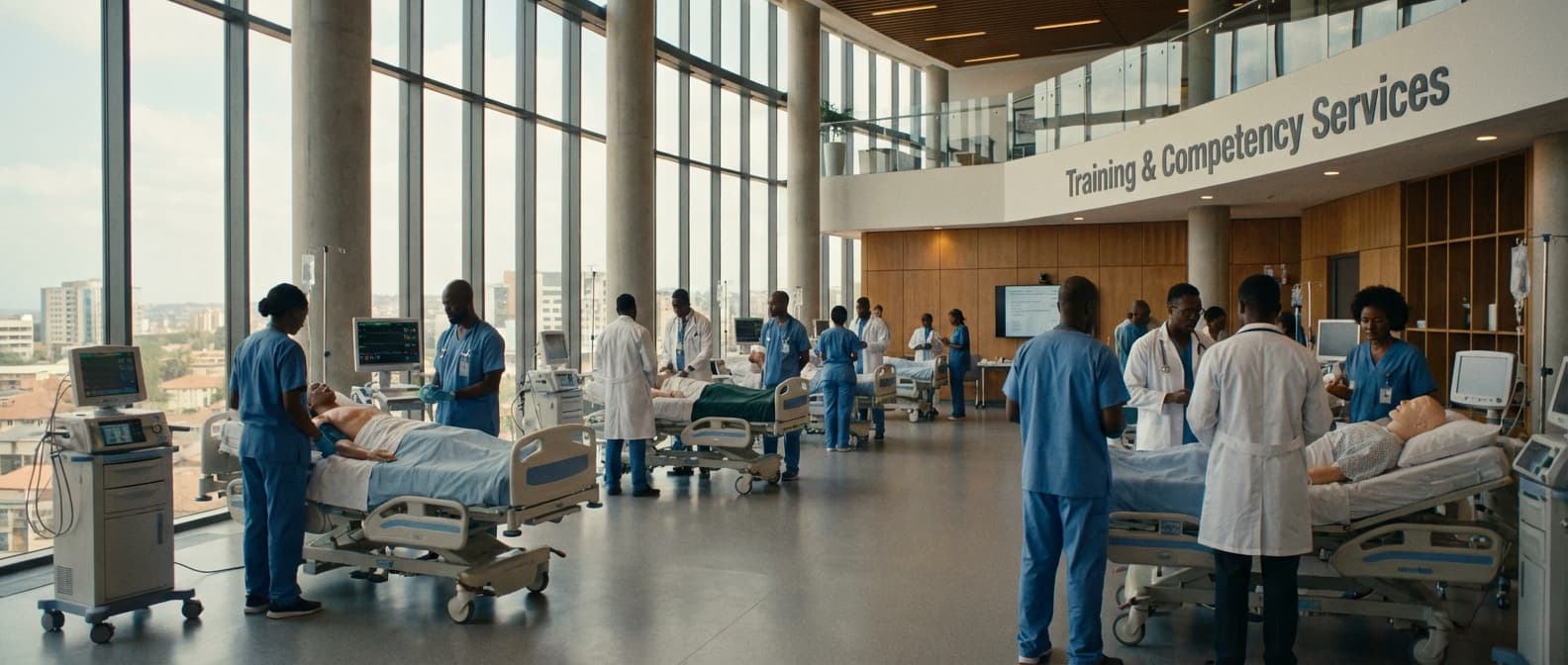
Biomedical Engineering First-Line Support Training Service in Zimbabwe
Engineering Excellence & Technical Support
Biomedical Engineering First-Line Support Training Service High-standard technical execution following OEM protocols and local regulatory frameworks.
Diagnostic Equipment Proficiency
Comprehensive training on the operation, troubleshooting, and basic maintenance of key diagnostic medical equipment, including hematology analyzers, biochemistry analyzers, and ECG machines, crucial for first-line support in Zimbabwean healthcare facilities.
Clinical Workflow Integration
Focus on understanding common clinical workflows and how biomedical equipment directly impacts patient care, enabling support staff to prioritize urgent issues and liaise effectively with medical professionals to minimize downtime.
Safety and Regulatory Compliance
In-depth modules covering electrical safety, infection control protocols, and local regulatory requirements specific to biomedical equipment use and maintenance in Zimbabwe, ensuring safe and compliant first-line support services.
What Is Biomedical Engineering First-line Support Training Service In Zimbabwe?
Biomedical Engineering First-Line Support Training Service in Zimbabwe refers to the provision of foundational technical training focused on the initial identification, troubleshooting, and basic maintenance of biomedical equipment. This service aims to equip personnel with the requisite knowledge and practical skills to address common equipment malfunctions and perform routine checks, thereby ensuring operational readiness and minimizing downtime within healthcare facilities. The training emphasizes adherence to safety protocols, manufacturer guidelines, and regulatory standards pertinent to biomedical devices in the Zimbabwean context.
| Target Audience | Typical Use Cases | ||
|---|---|---|---|
| Healthcare Facility Technicians/Assistants: Personnel without formal biomedical engineering degrees but responsible for the day-to-day operation and minor upkeep of medical equipment. | Responding to immediate equipment alarms and faults (e.g., a patient monitor displaying an error code). | Performing daily pre-use checks and basic cleaning of shared medical devices. | Identifying and reporting equipment that requires more advanced technical intervention from specialized biomedical engineers. |
| Nurses and Clinical Staff: Frontline healthcare providers who directly use biomedical equipment and need to understand basic operational checks and immediate troubleshooting. | Ensuring the correct setup and connection of equipment prior to patient use. | Recognizing and responding to basic equipment malfunctions that do not require technical expertise (e.g., checking power connections, ensuring correct settings). | Initiating service requests for malfunctioning equipment. |
| Hospital Administrators/Procurement Officers: Individuals involved in the acquisition and management of medical equipment, requiring an understanding of the support requirements. | Understanding the scope of first-line support to inform procurement decisions and maintenance budgeting. | Facilitating the efficient dispatch of support personnel for minor issues. | |
| Biomedical Engineering Students (Entry-Level): Students undergoing foundational training as part of their curriculum. | Gaining practical, hands-on experience in basic equipment assessment and maintenance. | Developing a foundational understanding of the clinical environment's reliance on functional biomedical equipment. |
Key Components of the Training Service
- Equipment Familiarization: Introduction to the basic principles of operation, common types, and intended uses of prevalent biomedical equipment (e.g., patient monitors, infusion pumps, ECG machines, basic laboratory equipment).
- Troubleshooting Fundamentals: Training on systematic diagnostic approaches to identify the root cause of common equipment failures, including visual inspections, basic electrical checks, and verification of power and connectivity.
- Preventive Maintenance (PM) Basics: Instruction on performing routine checks, cleaning procedures, calibration verification (where applicable and within scope), and documentation of PM activities.
- Safety Protocols: Comprehensive training on electrical safety, infection control measures, handling of hazardous materials associated with medical devices, and safe operation procedures to protect patients and personnel.
- Documentation and Reporting: Education on proper record-keeping for maintenance activities, incident reporting, and escalation procedures for complex issues.
- Basic Tool Proficiency: Hands-on training with common hand tools and testing equipment relevant to first-line support.
- Regulatory Awareness: Briefing on relevant Zimbabwean health regulations and standards governing the use and maintenance of biomedical equipment.
Who Needs Biomedical Engineering First-line Support Training Service In Zimbabwe?
Biomedical Engineering First-Line Support Training is crucial for various stakeholders in Zimbabwe's healthcare sector. This training equips individuals with the foundational knowledge and practical skills to effectively manage, maintain, and troubleshoot common issues with medical equipment, ensuring its reliability and optimal performance. This minimizes downtime, extends equipment lifespan, and ultimately contributes to better patient care and operational efficiency within healthcare facilities. The service is specifically designed to empower those who are the first point of contact for medical equipment challenges before specialized technicians are required.
| Customer Type | Specific Role/Department | Key Benefits of Training |
|---|---|---|
| Hospitals & Clinics | Biomedical Engineering Technicians/Assistants | Improved equipment uptime, reduced repair costs, enhanced safety |
| Hospitals & Clinics | Nurses & Clinical Staff | Basic troubleshooting, proper equipment usage, faster resolution of minor issues |
| Medical Equipment Suppliers | Field Service Technicians (entry-level) | Effective initial response to client issues, customer satisfaction |
| Government Health Ministries | District Biomedical Officers | Standardized first-line support across public health facilities, improved resource management |
| NGOs | Program/Field Officers responsible for equipment | Sustained functionality of donated or procured medical equipment |
| Academic Institutions | Students of Biomedical Technology/Engineering | Practical skills development, career readiness |
Target Customers and Departments for Biomedical Engineering First-Line Support Training in Zimbabwe
- {"items":["Healthcare Facilities (Hospitals, Clinics, Health Centers)","Medical Equipment Suppliers and Distributors","Government Health Ministries and Agencies","Non-Governmental Organizations (NGOs) involved in healthcare","Academic and Training Institutions (for future biomedical professionals)"],"title":"Target Customers"}
- {"items":["Biomedical Engineering Department (entry-level technicians, assistants)","Clinical Engineering Department","Maintenance and Facilities Management","Nursing and Clinical Staff (for basic equipment familiarization and troubleshooting)","Laboratory Services","Radiology and Imaging Departments","Operating Theatres and Intensive Care Units","Pharmacy Department (for specific equipment)"],"title":"Target Departments within Healthcare Facilities"}
Biomedical Engineering First-line Support Training Service Process In Zimbabwe
This document outlines the typical workflow for a Biomedical Engineering First-Line Support Training Service in Zimbabwe, from initial inquiry to the successful execution and completion of the training. The process is designed to ensure clear communication, efficient resource allocation, and effective knowledge transfer to trainees.
| Stage | Key Activities | Responsible Party | Deliverables/Outcomes | Timeline (Typical) |
|---|---|---|---|---|
| Client expresses interest in first-line support training for biomedical equipment. Initial discussion to understand general needs and objectives. Information gathering about the client's facility and equipment types. | Potential Client, Training Provider | Understanding of client's initial interest, preliminary information exchange. | 1-3 Business Days |
| Detailed assessment of specific training requirements: types of equipment, skill gaps, number of trainees, existing knowledge base. Development of a customized training proposal outlining modules, learning objectives, duration, and methodology. | Training Provider, Client (collaboration) | Detailed Training Needs Analysis report, Comprehensive Training Proposal. | 3-7 Business Days |
| Submission of a formal quotation based on the approved proposal. Negotiation of terms and conditions. Signing of a service agreement or contract outlining scope of work, payment terms, and responsibilities. | Training Provider, Client | Formal Quotation, Signed Service Agreement/Contract. | 2-5 Business Days |
| Joint scheduling of training dates and times. Arrangement of training venue, equipment (if applicable), materials, and facilitator travel/accommodation if necessary. Confirmation of participant list and pre-requisites. | Training Provider, Client | Confirmed Training Schedule, Logistics Plan (venue, materials, facilitator readiness). | 5-10 Business Days (depending on complexity) |
| Training provider prepares training materials (manuals, presentations, practical exercises). Client ensures trainees are briefed and available. Confirmation of venue readiness and any pre-course work for participants. | Training Provider, Client | Ready Training Materials, Informed Participants, Prepared Training Venue. | Ongoing up to commencement |
| Conducting the training sessions as per the agreed schedule. This includes theoretical lectures, practical demonstrations, hands-on exercises, Q&A sessions, and competency-based assessments. | Training Provider (Facilitator), Trainees | Completed Training Sessions, Participant Engagement, Practical Skill Development. | As per agreed duration (e.g., 2-5 days) |
| Collecting feedback from trainees on the training content, delivery, and effectiveness. Assessment of learning outcomes through tests or practical evaluations. Training provider provides a post-training report. | Training Provider, Trainees | Trainee Feedback Forms, Assessment Results, Post-Training Report. | 1-3 Business Days post-training |
| Issuing certificates of completion to successful trainees. Providing information on ongoing support, troubleshooting resources, and potential advanced training. Addressing any post-training queries. | Training Provider | Certificates of Completion, Post-Training Support Resources, Resolution of immediate follow-up queries. | 3-5 Business Days post-evaluation |
Biomedical Engineering First-Line Support Training Service Process
- Inquiry & Initial Consultation
- Needs Assessment & Proposal Development
- Quotation & Contract Finalization
- Training Schedule & Logistics Planning
- Pre-Training Preparations
- Training Delivery (Execution)
- Post-Training Evaluation & Feedback
- Certification & Follow-up Support
Biomedical Engineering First-line Support Training Service Cost In Zimbabwe
The cost of first-line support training for Biomedical Engineers in Zimbabwe is influenced by several factors, leading to a range of pricing. These factors include the training provider's reputation, the depth and breadth of the curriculum, the duration of the training program, the qualifications and experience of the instructors, and the resources utilized (e.g., simulation equipment, hands-on labs). Furthermore, the training may be offered as a standalone course or as part of a larger certification program, which can also affect the overall cost. Demand for skilled biomedical engineers and the current economic climate in Zimbabwe also play a role in price determination. Training can be delivered in-person, online, or through a blended approach, each with its own cost implications. Group discounts are often available for organizations sending multiple employees for training.
| Training Package Type | Estimated Price Range (ZWL) | Typical Duration |
|---|---|---|
| Basic First-Line Support Workshop (e.g., common equipment troubleshooting) | 15,000 - 35,000 | 2-3 Days |
| Intermediate First-Line Support (covering broader equipment categories) | 30,000 - 70,000 | 5-7 Days |
| Comprehensive First-Line Support with Specialization (e.g., imaging equipment) | 60,000 - 150,000+ | 1-2 Weeks |
| Online/Virtual First-Line Support Training Module | 10,000 - 25,000 | Self-paced/Modular |
| On-site Corporate Training (per day/participant) | Negotiable (typically higher than public courses) | Variable |
Key Pricing Factors for Biomedical Engineering First-Line Support Training in Zimbabwe:
- Training Provider's Reputation and Accreditation
- Curriculum Scope and Specialization (e.g., specific medical equipment types)
- Training Duration (e.g., number of days or weeks)
- Instructor Expertise and Certifications
- Availability and Quality of Training Resources (e.g., simulators, actual equipment)
- Delivery Method (In-person, Online, Blended)
- Certification Opportunities (if included)
- Class Size and Group Discounts
- Demand for Skilled Professionals
- Economic Conditions in Zimbabwe
Affordable Biomedical Engineering First-line Support Training Service Options
This document outlines affordable options for first-line biomedical engineering support training services. Effective first-line support is crucial for maintaining equipment uptime, patient safety, and operational efficiency. We focus on value bundles and cost-saving strategies to make essential training accessible for healthcare organizations of all sizes.
| Training Service Option | Description | Key Value Proposition | Estimated Cost Range (per participant/module) | Cost-Saving Strategies | ||
|---|---|---|---|---|---|---|
| Online Self-Paced Modules | Pre-recorded video lectures, interactive quizzes, and downloadable resources covering fundamental concepts of biomedical device operation, common issues, and basic troubleshooting procedures for selected device categories (e.g., patient monitors, infusion pumps). | Flexibility, accessibility, and low per-user cost. Ideal for large-scale deployment and ongoing refreshers. | $50 - $150 | Bulk purchase discounts, subscription models for unlimited access to a library of modules, train-the-trainer programs to certify internal staff. | Bundling with other essential compliance training. | Leveraging open-source educational content where applicable. |
| Virtual Instructor-Led Workshops | Live, interactive training sessions conducted via video conferencing. Includes Q&A, case studies, and group exercises focusing on specific device types or troubleshooting methodologies. | Direct engagement with instructors, real-time problem-solving, and collaborative learning. Suitable for smaller teams or specialized training needs. | $200 - $500 | Scheduling workshops during off-peak hours or for consolidated groups, offering customized content to target specific organizational needs. | Partnering with other institutions for shared workshop costs. | Utilizing free webinar platforms for delivery. |
| On-Demand Simulation & Gamified Learning | Interactive digital simulations that allow users to practice troubleshooting scenarios in a risk-free virtual environment. May include gamified elements to enhance engagement and knowledge retention. | Hands-on experience without real equipment risks, engaging learning, and measurable skill development. | $100 - $300 | Licensing models based on active users or usage time, integrating simulations into existing learning management systems (LMS). | Developing custom simulations for frequently encountered issues. | Incorporating user-generated content or challenges. |
| Blended Learning Packages | Combines online self-paced modules with virtual instructor-led sessions for a comprehensive learning experience. Offers a balance of flexibility and interactive instruction. | Maximizes learning outcomes by catering to different learning styles and providing both foundational knowledge and interactive application. | $150 - $400 | Discounted pricing for bundled online and virtual components, offering tiered packages with varying levels of instructor interaction. | Focusing on core competencies in initial blended packages. | Offering modular add-ons for specialized device training. |
| Partnership with Local Technical Colleges/Universities | Collaborating with educational institutions that offer biomedical engineering technology programs to provide specialized training modules or workshops at a reduced cost. | Leveraging existing educational infrastructure and expert faculty, fostering a pipeline of trained professionals. | Varies (often significantly lower than commercial providers) | Negotiating bulk training contracts, offering internships or co-op opportunities in exchange for training. | Co-developing curriculum to meet specific organizational needs. | Exploring government grants for workforce development in healthcare technology. |
Key Benefits of First-Line Biomedical Engineering Support Training
- Reduced equipment downtime through prompt identification and basic troubleshooting.
- Improved patient safety by ensuring medical devices are functioning correctly.
- Empowered clinical staff to handle minor issues, freeing up specialized engineers.
- Lower repair costs by preventing minor problems from escalating.
- Increased confidence and competence among support personnel.
- Enhanced compliance with regulatory requirements for equipment maintenance.
Verified Providers In Zimbabwe
In the dynamic landscape of healthcare in Zimbabwe, identifying truly verified and reliable providers is paramount for ensuring quality care and peace of mind. Franance Health stands out as a beacon of trust, offering a comprehensive network of credentialed medical professionals and facilities. This document outlines the rigorous verification processes Franance Health employs and why these credentials make them the optimal choice for your healthcare needs.
| Reason | Why Franance Health is the Best Choice | Benefits for Patients |
|---|---|---|
| Trust and Reliability | Franance Health's stringent verification process eliminates guesswork, ensuring you are engaging with legitimate and qualified healthcare professionals and facilities. | Peace of mind, reduced risk of encountering unqualified practitioners, and confidence in the care received. |
| Quality of Care | Verified providers have demonstrated adherence to professional standards, education, and ethical practice, directly correlating to higher quality medical outcomes. | Access to skilled professionals, accurate diagnoses, effective treatments, and a safer healthcare experience. |
| Comprehensive Network | Our verified network spans a wide range of specialties and geographical locations across Zimbabwe, ensuring accessibility to the right care when you need it. | Convenience, timely access to specialized medical services, and a broader choice of healthcare providers. |
| Patient Safety | By verifying licenses, background, and facility compliance, Franance Health prioritizes patient safety above all else. | Minimizing risks associated with medical errors, malpractice, and substandard facilities. |
| Efficiency and Value | Working with verified providers often leads to more efficient consultations and treatments, potentially reducing unnecessary procedures and costs. | Maximizing the value of your healthcare expenditure and achieving better health outcomes. |
Franance Health's Rigorous Verification Process
- Professional Licensure Verification: Franance Health meticulously checks the current and valid professional licenses of all its affiliated doctors, nurses, specialists, and allied health professionals with the relevant regulatory bodies in Zimbabwe (e.g., Medical and Dental Practitioners Council of Zimbabwe, Nurses Council of Zimbabwe).
- Educational and Training Credentials: We confirm the authenticity of academic qualifications, degrees, diplomas, and specialist certifications from recognized educational institutions.
- Practice History and Background Checks: Franance Health conducts thorough background checks, including reviewing practice history, any disciplinary actions, and ensuring a clean record.
- Facility Accreditation and Compliance: For partner hospitals, clinics, and laboratories, we verify their accreditation status with relevant health authorities and ensure compliance with all national health standards and regulations, including infection control and safety protocols.
- Peer Review and Reputation Assessment: Where applicable, Franance Health may engage in peer review processes and assess the professional reputation of providers within their medical community.
- Ongoing Monitoring and Re-verification: Our commitment to quality is continuous. Franance Health implements ongoing monitoring and periodic re-verification of credentials to ensure that all providers maintain the highest standards.
Scope Of Work For Biomedical Engineering First-line Support Training Service
This Scope of Work (SOW) outlines the requirements for a comprehensive Biomedical Engineering First-Line Support Training Service. The objective is to equip a designated team with the fundamental knowledge and practical skills necessary to perform initial troubleshooting, basic maintenance, and safe operation of common biomedical equipment. This training will enhance response times, improve equipment uptime, and ensure patient safety by enabling first-line support to address a significant portion of common issues before escalation to specialized engineering teams. The training will cover theoretical concepts, hands-on practical exercises, and simulation of real-world scenarios. Key technical deliverables include trained personnel, documented training materials, and assessment reports. Standard specifications focus on the depth of coverage, practical skill acquisition, and assessment methodology.
| Category | Specification | Description | Measurement/Verification |
|---|---|---|---|
| Training Content Breadth | Core Equipment Coverage | Training must cover a defined list of high-frequency, low-complexity biomedical equipment (e.g., vital signs monitors, infusion pumps, ECG machines, defibrillators - specific list to be provided). | List of covered equipment shall be agreed upon and documented. Percentage of core equipment covered shall be 100%. |
| Training Content Depth | Operational Principles | Understanding of fundamental operating principles, user interfaces, and basic functions for each covered equipment type. | Trainees must be able to explain the basic working principle of each covered device during theoretical assessment. |
| Training Content Depth | Basic Troubleshooting | Ability to identify and diagnose common error codes, alarms, and operational anomalies. | Troubleshooting checklists shall be provided. Trainees must successfully resolve at least 80% of common simulated faults. |
| Training Content Depth | Preventive Maintenance (PM) | Performance of routine visual inspections, cleaning, and basic PM tasks as defined by manufacturer guidelines and organizational policy. | Demonstration of correct PM procedures on live or simulated equipment. Completion of at least 90% of scheduled PM steps correctly. |
| Training Content Depth | Safety Protocols | Adherence to all relevant electrical safety standards, infection control measures, and manufacturer-specific safety precautions. | Observation of trainees' adherence to safety protocols during practical sessions. Zero recorded safety incidents during training. |
| Training Methodology | Hands-on Practical Sessions | Significant portion of training dedicated to practical exercises, allowing trainees to interact with actual equipment. | Minimum 50% of total training time dedicated to hands-on practical sessions. Trainees must demonstrate proficiency in at least 85% of practical tasks. |
| Training Methodology | Simulated Scenarios | Realistic simulation of common equipment malfunctions and emergency situations. | Completion of at least 5 distinct simulated scenarios per trainee, with a passing score of 75% on each. |
| Assessment | Competency Evaluation | Formal assessment of both theoretical knowledge and practical skills. | Combined passing score of 75% required for certification. Separate passing scores for theoretical (70%) and practical (80%) assessments. |
| Assessment | Trainer-to-Trainee Ratio | Maintain an optimal ratio to ensure adequate individual attention and effective supervision. | Maximum ratio of 1:8 for practical sessions and 1:15 for theoretical sessions. |
| Documentation | Training Materials | Development and delivery of clear, concise, and up-to-date training materials. | All training materials reviewed and approved by the client before delivery. Materials shall be in electronic and/or hard copy format as specified. |
Key Technical Deliverables
- Competent First-Line Support Personnel: Individuals demonstrating proficiency in identifying, troubleshooting, and resolving common issues with specified biomedical equipment.
- Comprehensive Training Manuals: Detailed, equipment-specific manuals covering theoretical principles, operational procedures, safety protocols, and basic troubleshooting guides.
- Practical Skills Assessment Records: Documented evidence of each trainee's ability to perform hands-on tasks such as basic calibration, preventive maintenance, and component replacement (where applicable and safe).
- Theoretical Knowledge Assessment Reports: Results from quizzes, tests, or examinations assessing understanding of biomedical engineering principles, equipment function, and safety regulations.
- Simulation Scenario Reports: Documentation of performance during simulated equipment failure scenarios, demonstrating problem-solving and decision-making abilities.
- Certificate of Completion: Official certification for each successfully trained individual.
- Post-Training Support Plan: Outline of recommended ongoing support and refresher training mechanisms.
Service Level Agreement For Biomedical Engineering First-line Support Training Service
This Service Level Agreement (SLA) outlines the response times and uptime guarantees for the Biomedical Engineering First-Line Support Training Service. This SLA applies to all official training sessions and support provided through the designated channels for this service. The primary objective of this SLA is to ensure timely and effective training delivery and support to enhance the competence of first-line support personnel in maintaining and troubleshooting biomedical equipment.
| Service Component | Uptime Guarantee | Initial Response Time (Target) | Resolution Time (Target) |
|---|---|---|---|
| Scheduled Training Sessions (Delivery) | 99.0% (Excluding Force Majeure) | N/A (Scheduled Event) | N/A (Session Duration) |
| Online Knowledge Base (Accessibility) | 99.5% (Excluding scheduled maintenance) | N/A (Self-service) | N/A (Self-service) |
| First-Line Support Ticket (Acknowledgement) | N/A (Incident-based) | 2 Business Hours | 8 Business Hours (for basic inquiries/information) |
| First-Line Support Ticket (Escalated Issues) | N/A (Incident-based) | 4 Business Hours (for acknowledgement & initial assessment) | 24 Business Hours (for proposed resolution/next steps) |
| Training Feedback Review | N/A (Process-based) | 10 Business Days (for review and initial response) | 30 Business Days (for implementation of actionable items, if applicable) |
Key Performance Indicators (KPIs) for Training and Support
- Training Session Availability: The service commits to offering scheduled training sessions as per the published training calendar. Unscheduled cancellations due to service provider issues will be communicated with at least 48 hours' notice, with rescheduling prioritized.
- Knowledge Base Accessibility: The online knowledge base, containing training materials, FAQs, and troubleshooting guides, will be available 99.5% of the time, excluding scheduled maintenance periods.
- Support Ticket Response Time: All support tickets submitted through the designated portal will receive an initial acknowledgement within a specified timeframe.
- Training Feedback Resolution: Feedback submitted post-training will be reviewed, and actionable items will be addressed within a defined period.
Frequently Asked Questions

Ready when you are
Let's scope your Biomedical Engineering First-Line Support Training Service in Zimbabwe project in Zimbabwe.

Scaling healthcare logistics and technical systems across the entire continent.