
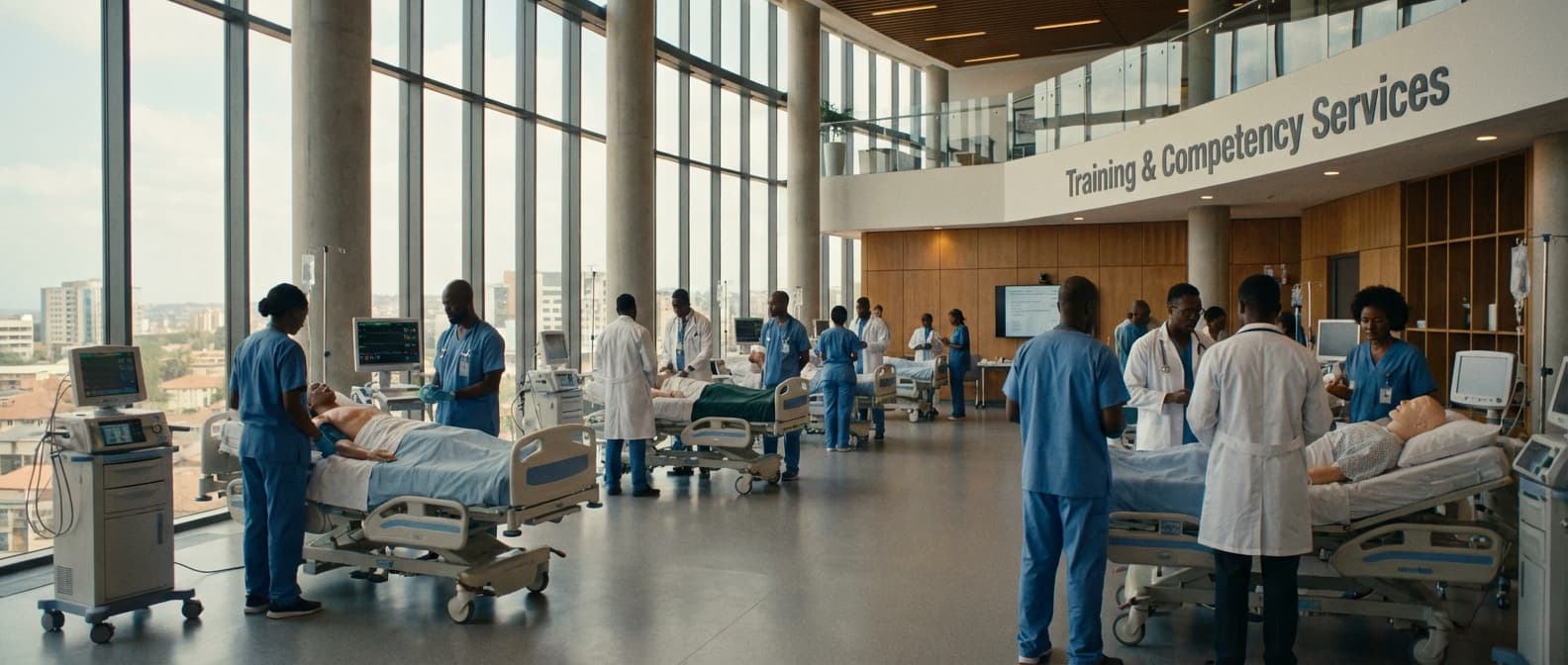
Anesthesia Workstation User Training Service in Zimbabwe
Engineering Excellence & Technical Support
Anesthesia Workstation User Training Service High-standard technical execution following OEM protocols and local regulatory frameworks.
Advanced Anesthesia Control
Master the sophisticated features of modern anesthesia workstations, including precise ventilator modes, advanced gas monitoring, and integrated drug delivery systems. This training empowers Zimbabwean anesthesiologists to optimize patient safety and achieve superior clinical outcomes.
Troubleshooting & Maintenance Mastery
Gain hands-on proficiency in identifying and resolving common workstation malfunctions. Our training covers essential preventative maintenance procedures, ensuring maximum uptime and reliability of your critical anesthesia equipment in Zimbabwean healthcare settings.
Workflow Optimization & Best Practices
Enhance your clinical workflow with expert guidance on efficient workstation setup, patient monitoring integration, and adherence to international best practices. This module is tailored to the unique demands of Zimbabwean healthcare, fostering a safer and more effective anesthesia environment.
What Is Anesthesia Workstation User Training Service In Zimbabwe?
Anesthesia Workstation User Training Service in Zimbabwe refers to a specialized educational program designed to equip healthcare professionals with the requisite knowledge and practical skills to safely and effectively operate advanced anesthesia workstations. This service is crucial for optimizing patient care, minimizing iatrogenic risks, and ensuring compliance with international medical device standards within Zimbabwean healthcare facilities. The training encompasses theoretical understanding of the workstation's architecture, functional components, physiological principles underlying its operation, and hands-on proficiency in setup, calibration, patient connection, ventilation modes, monitoring capabilities, and emergency procedures. It also covers troubleshooting common technical issues and maintenance protocols to ensure prolonged device lifespan and consistent performance. The objective is to foster user competency and confidence, thereby enhancing the quality and safety of anesthetic delivery in diverse clinical settings.
| Who Needs It | Typical Use Cases |
|---|---|
| Anesthesiologists | Operating Rooms (ORs) for general, regional, and local anesthesia administration. |
| Anesthetic Technicians/Nurses | Intensive Care Units (ICUs) for mechanical ventilation support and weaning. |
| Medical Device Biomedical Engineers and Technicians | Emergency Departments (EDs) for critical care ventilation and airway management. |
| Healthcare Facility Procurement and Biomedical Departments | Pediatric Units for specialized ventilation and monitoring requirements. |
| Training Institutions and Medical Schools | Recovery Rooms (PACUs) for post-operative respiratory support. |
| Medical Professionals in Remote or Underserved Areas | Outreach Clinics and Mobile Surgical Units where advanced anesthetic capabilities are required. |
| Healthcare Facilities Implementing New Anesthesia Workstation Technology | Simulation Centers for training healthcare professionals on advanced equipment. |
Key Components of Anesthesia Workstation User Training Service:
- Workstation Anatomy and Physiology: In-depth review of mechanical ventilators, vaporizers, gas delivery systems, and integrated patient monitoring modules.
- Principles of Anesthesia Delivery: Understanding of gas dynamics, pharmacokinetics, and pharmacodynamics as they relate to workstation function.
- Ventilation Modes and Parameters: Comprehensive training on various mechanical ventilation strategies (e.g., volume control, pressure control, proportional assist ventilation) and their appropriate application.
- Anesthetic Agent Delivery and Control: Mastery of vaporizer operation, agent calibration, and precise delivery of inhalational anesthetics.
- Patient Monitoring Integration: Training on the use and interpretation of integrated physiological parameters (e.g., SpO2, EtCO2, ECG, NIBP, invasive blood pressure).
- Setup and Calibration Procedures: Practical guidance on pre-anesthetic checks, system leak tests, and calibration of sensors and modules.
- Emergency Scenarios and Troubleshooting: Simulated scenarios to address equipment malfunctions, power failures, and patient-related emergencies.
- Maintenance and Infection Control: Protocols for routine cleaning, disinfection, and preventative maintenance of the workstation.
- Data Management and Documentation: Understanding of how to record and access patient data generated by the workstation.
- Regulatory Compliance and Safety Standards: Awareness of relevant national and international guidelines for medical device usage.
Who Needs Anesthesia Workstation User Training Service In Zimbabwe?
The demand for anesthesia workstation user training services in Zimbabwe is critical for ensuring safe and effective patient care. These specialized training programs are designed to equip healthcare professionals with the knowledge and skills to operate anesthesia workstations proficiently, reducing the risk of medical errors and improving patient outcomes. The services cater to a specific set of users and departments within healthcare facilities.
| Department | Target Personnel | Training Needs |
|---|---|---|
| Anesthesiology Department | Anesthesiologists, Certified Registered Nurse Anesthetists (CRNAs), Anesthesia Technicians | In-depth understanding of workstation features, ventilation modes, monitoring capabilities, drug delivery systems, emergency procedures, troubleshooting, and maintenance protocols. |
| Surgical Department | Surgeons (particularly those involved in procedures requiring anesthesia) | Familiarity with workstation functionality to ensure seamless integration with surgical procedures, understanding of anesthesia delivery during surgery, and ability to respond to basic user interface issues. |
| Intensive Care Unit (ICU) | Intensivists, ICU Nurses, Respiratory Therapists | Understanding of advanced ventilation settings, weaning protocols, and integration with other life support devices. Training on using workstations for prolonged ventilation and critical care monitoring. |
| Operating Room (OR) Nursing Staff | OR Nurses, Perioperative Nurses | Basic operation of the workstation, preparation and setup, monitoring of vital signs, response to alarms, and general safety awareness. Understanding of the anesthesia provider's role and how the workstation supports it. |
| Biomedical Engineering Department | Biomedical Engineers, Technicians | Preventive maintenance, calibration, troubleshooting of mechanical and electronic components, understanding of software updates, and ensuring the safe and functional operation of the workstation. |
| Medical Training and Simulation Centers | Educators, Simulation Specialists | Proficiency in operating workstations for training purposes, creating realistic simulation scenarios, and demonstrating various anesthesia techniques and emergency management to trainees. |
Target Customers and Departments for Anesthesia Workstation User Training in Zimbabwe
- Hospitals (Public and Private)
- Surgical Centers
- Specialized Clinics (e.g., Obstetrics, Cardiology)
- University Teaching Hospitals
- Medical Training Institutions
Anesthesia Workstation User Training Service Process In Zimbabwe
This document outlines the Anesthesia Workstation User Training Service Process in Zimbabwe, detailing the workflow from initial inquiry to the successful execution of training. The process is designed to be efficient, transparent, and tailored to meet the specific needs of healthcare facilities and their personnel requiring this specialized training.
| Step | Description | Key Activities | Responsible Party | Deliverables |
|---|---|---|---|---|
| The client (hospital, clinic, or training institution) expresses interest in anesthesia workstation user training. This stage involves understanding the specific workstation model(s), the target audience's existing knowledge, and the desired learning outcomes. | Receive inquiry (phone, email, web form) Discuss training needs, objectives, and desired duration Identify workstation model(s) and version(s) Determine number of trainees and their roles (e.g., anesthesiologists, nurses) Assess available training facilities at the client site | Client, Training Provider Sales/Consultant | Documented training needs and objectives |
| Based on the needs assessment, the training provider develops a comprehensive proposal outlining the training content, methodology, duration, trainers, and associated costs. A formal quotation is then issued. | Develop training curriculum outline Select appropriate training modules and content Propose training methodology (e.g., theoretical, practical, simulation) Identify qualified trainers Estimate training duration and schedule options Prepare detailed quotation including fees, travel, accommodation (if applicable) Submit proposal and quotation to the client | Training Provider Technical/Sales Team | Formal Training Proposal, Detailed Quotation |
| Upon client acceptance of the proposal and quotation, a formal agreement (e.g., Service Level Agreement, Purchase Order) is established. The training dates and logistics are finalized. | Client reviews and accepts proposal/quotation Formalize agreement (e.g., sign contract, issue Purchase Order) Confirm training dates and times Finalize training location and any specific site requirements Secure booking for trainers and resources | Client, Training Provider Management/Administration | Signed Agreement/Purchase Order, Confirmed Training Schedule |
| This phase involves preparing all necessary training materials, equipment, and ensuring the training environment is ready. Communication with the client is maintained to confirm arrangements. | Develop/customize training materials (manuals, presentations, handouts) Prepare workstation(s) for hands-on training (ensure functionality, safety checks) Arrange for any necessary simulation equipment or mannequins Confirm travel and accommodation for trainers (if applicable) Share pre-training information with trainees (e.g., agenda, prerequisites) Conduct pre-training site visit (if necessary) to verify facilities | Training Provider, Client (for site preparation) | Completed training materials, Ready training environment, Confirmed logistics |
| The core of the service, where the training is delivered to the end-users. This involves theoretical instruction, practical demonstrations, hands-on exercises, and interactive sessions. | Welcome and introductions Deliver theoretical modules (workstation operation, safety, troubleshooting) Conduct practical demonstrations and guided exercises Facilitate hands-on practice sessions with workstations Address trainee questions and concerns in real-time Utilize case studies and scenarios relevant to Zimbabwean healthcare context Monitor trainee progress and provide individual support | Lead Trainer(s), Trainees | Delivered training sessions, Demonstrated competency by trainees |
| After the training, an evaluation is conducted to assess the effectiveness of the training and gather feedback. Ongoing support is also offered. | Administer post-training assessments (quizzes, practical evaluation) Collect feedback from trainees and supervisors (satisfaction surveys) Provide certificates of completion Offer post-training support (e.g., Q&A hotline, remote assistance) Analyze training effectiveness and identify areas for improvement | Training Provider, Trainees, Client Management | Completed assessments, Training evaluation report, Certificates of completion, Post-training support plan |
| The service is formally closed once all deliverables are met and feedback is incorporated. This ensures continuous improvement of the training service. | Finalize all documentation and reporting Address any outstanding issues or requests Seek formal client sign-off on training completion Update internal training records Use feedback for future service enhancements | Training Provider Management, Client | Final Service Report, Updated records, Enhanced training service |
Anesthesia Workstation User Training Service Process in Zimbabwe
- Initial Inquiry & Needs Assessment
- Proposal Development & Quotation
- Agreement & Scheduling
- Pre-Training Preparation
- Training Execution
- Post-Training Evaluation & Support
- Service Closure & Feedback
Anesthesia Workstation User Training Service Cost In Zimbabwe
Providing anesthesia workstation user training services in Zimbabwe involves several cost considerations. The price is not fixed and can vary significantly based on a multitude of factors. These factors are crucial for healthcare institutions and individuals seeking to budget effectively for such specialized training. The cost will be presented in the local currency, the Zimbabwean Dollar (ZWL), though it's important to note that due to economic volatility, prices may be subject to rapid fluctuations and are often quoted in USD and converted at the prevailing interbank rate. Therefore, the ZWL figures provided are estimates and should be confirmed with the service provider.
Key Pricing Factors:
- Duration of Training: The total number of hours or days dedicated to the training directly impacts the cost. More comprehensive training sessions, covering a wider range of functionalities and troubleshooting, will naturally be more expensive.
- Number of Participants: Training is often priced per participant. Larger groups may benefit from economies of scale, potentially leading to a lower per-person cost, but the overall invoice will be higher.
- Trainer's Expertise and Qualifications: Highly experienced and specialized anesthesia trainers, particularly those with international certifications or extensive clinical experience, command higher fees.
- Training Location: Whether the training is conducted on-site at the healthcare facility or at a dedicated training center influences costs. On-site training may incur travel and accommodation expenses for the trainer.
- Training Content Customization: If the training needs to be tailored to specific anesthesia workstation models used by the facility or to address unique clinical scenarios, this customization will add to the overall cost.
- Training Materials and Resources: The provision of comprehensive training manuals, simulation equipment, and access to online resources can affect the price.
- Certification and Assessment: If the training culminates in a formal certification process or assessment, this often adds a fee.
- Provider's Overhead and Profit Margin: Like any business, training providers have operational costs and aim for a profit margin, which is factored into their pricing.
- Demand and Availability: In regions with limited qualified trainers, demand can drive prices higher. Conversely, increased competition might lead to more competitive pricing.
- Currency Exchange Rates: Given Zimbabwe's economic context, the prevailing USD to ZWL exchange rate significantly impacts the final ZWL cost, especially if service providers price in USD.
Estimated Cost Ranges in Zimbabwean Dollars (ZWL):
It's essential to reiterate that these are estimates. For the most accurate pricing, direct quotes from local training providers are recommended. Prices are typically quoted in USD and then converted to ZWL at the prevailing interbank rate.
| Training Scope/Duration | Estimated Cost Range (ZWL) | Notes |
|---|---|---|
| Basic User Training (1-2 days) | 3,000 - 8,000 ZWL | Covers essential operation, safety features, and basic troubleshooting for a specific model. |
| Comprehensive User Training (3-5 days) | 7,000 - 15,000 ZWL | Includes advanced features, ventilation modes, patient monitoring integration, and in-depth troubleshooting. |
| Advanced/Specialized Training (e.g., specific ventilation modes, anesthesia delivery systems) | 10,000 - 25,000+ ZWL | Highly specialized content, potentially requiring expert trainers, often priced per day or module. |
| Per Participant Fee (for larger group sessions) | 1,000 - 3,000 ZWL (per participant) | Applied when training is conducted for a larger cohort, assuming a pre-defined curriculum. |
| On-site Training Surcharge (if applicable) | Variable (travel, accommodation, per diem) | Added to the base cost to cover trainer's expenses when traveling to the client's location. |
Factors Influencing Anesthesia Workstation User Training Costs in Zimbabwe
- Duration of Training (hours/days)
- Number of Participants
- Trainer's Expertise and Qualifications
- Training Location (On-site vs. Off-site)
- Content Customization Needs
- Provision of Training Materials & Resources
- Certification & Assessment Fees
- Provider's Overhead & Profit Margin
- Market Demand & Trainer Availability
- Currency Exchange Rate Volatility
Affordable Anesthesia Workstation User Training Service Options
Acquiring and maintaining anesthesia workstations is a significant investment for healthcare facilities. To maximize the return on this investment, effective user training is paramount. This service focuses on providing comprehensive and affordable training for anesthesia workstation users, ensuring optimal performance, patient safety, and reduced operational costs. We offer flexible training options designed to meet the diverse needs and budgets of various healthcare settings, from large hospitals to smaller clinics. Our goal is to empower your clinical staff with the knowledge and skills to operate anesthesia workstations efficiently and safely, thereby minimizing downtime, reducing errors, and enhancing patient care.
| Value Bundle Name | Description | Included Services | Target Audience | Cost-Saving Strategy | Approximate Price Range (USD) |
|---|---|---|---|---|---|
| Basic Essentials Bundle | Foundational training for new users and essential functionalities. | Core workstation operation, basic monitoring, alarm management, emergency procedures. | New staff, introductory training. | Reduces initial errors and learning curve, minimizing supervision needs. | $1,500 - $3,000 per session/group |
| Comprehensive Proficiency Bundle | In-depth training covering advanced features and best practices. | All 'Basic Essentials' plus advanced ventilation modes, gas management, waveform analysis, data logging, basic troubleshooting. | Experienced users, competency enhancement. | Optimizes workstation utilization, improves diagnostic capabilities, reduces minor technical issues. | $3,000 - $6,000 per session/group |
| Facility-Wide Integration Bundle | Tailored training for multiple workstations and integrated systems within a facility. | Customized curriculum based on facility needs, multiple workstation models, EMR/EHR integration, team-based scenarios, train-the-trainer options. | Hospitals, large clinics, facilities with diverse workstation fleets. | Standardizes practice across the institution, reduces training duplication, empowers internal trainers for long-term cost reduction. | Custom quote based on scope and duration |
| On-Demand Support & Refresher Bundle | Flexible training for ongoing support, new feature adoption, and skill reinforcement. | Short, targeted remote sessions, access to online learning modules, refresher courses on specific topics, prompt Q&A support. | All user levels, ongoing professional development. | Minimizes downtime for training, addresses specific issues quickly, keeps skills current, reduces the need for extensive retraining. | Hourly rates ($150 - $300/hour) or subscription packages |
Key Training Service Components
- On-site and Remote Training Sessions
- Customizable Training Curricula
- Hands-on Simulation and Practical Exercises
- Competency Assessments and Verification
- Refresher Courses and Advanced Modules
- Troubleshooting and Maintenance Basics
- Integration with EMR/EHR Systems Training
- Post-training Support and Q&A
Verified Providers In Zimbabwe
In Zimbabwe's evolving healthcare landscape, identifying reliable and accredited healthcare providers is paramount for individuals seeking quality medical services. "Verified Providers" refers to healthcare professionals and institutions that have undergone rigorous vetting processes, demonstrating adherence to established standards of practice, ethical conduct, and patient safety. These verifications often come from recognized medical boards, professional associations, and regulatory bodies within Zimbabwe. Franance Health stands out as a leading example of such a verified provider, offering a comprehensive suite of services backed by their commitment to excellence. Their credentials signify a dedication to upholding the highest standards, making them a trustworthy choice for your health and well-being.
| Credential Type | Verification Body/Standard | Franance Health's Compliance |
|---|---|---|
| Professional Licensure | Zimbabwe Medical Council | All practicing clinicians are fully licensed and registered. |
| Specialty Certifications | Recognized Medical Associations (e.g., Zimbabwe Surgical Society, Zimbabwe Pediatric Association) | Specialists possess relevant board certifications and ongoing professional development. |
| Facility Accreditation | Ministry of Health and Child Care (Zimbabwe) | Facilities meet national health standards for safety, hygiene, and operational capacity. |
| Quality Management Systems | Internal Quality Assurance Protocols | Robust internal systems for patient feedback, incident reporting, and continuous improvement. |
| Data Security & Privacy | Zimbabwe Data Protection Act | Strict adherence to data protection laws to safeguard patient information. |
Why Franance Health Represents the Best Choice:
- Accreditation & Licensure: Franance Health providers hold valid licenses from Zimbabwe's Medical Council and relevant professional bodies, ensuring they meet all legal and professional requirements.
- Experienced & Qualified Professionals: The team comprises highly trained and experienced doctors, nurses, and specialists with proven track records in their respective fields.
- Commitment to Patient-Centric Care: Franance Health prioritizes patient comfort, clear communication, and individualized treatment plans, fostering a supportive and empowering healthcare experience.
- State-of-the-Art Facilities & Technology: They invest in modern medical equipment and maintain clean, well-equipped facilities to ensure accurate diagnoses and effective treatments.
- Ethical Practice & Transparency: Franance Health operates with the utmost integrity, adhering to strict ethical guidelines and maintaining transparency in all aspects of patient care and billing.
- Positive Patient Testimonials & Outcomes: A history of successful treatments and satisfied patients underscores their dedication to delivering exceptional healthcare.
- Comprehensive Service Offering: From general consultations to specialized treatments, Franance Health provides a wide range of medical services under one roof, offering convenience and continuity of care.
Scope Of Work For Anesthesia Workstation User Training Service
This Scope of Work (SOW) outlines the requirements for providing comprehensive user training services for Anesthesia Workstations. The training aims to equip healthcare professionals with the necessary knowledge and skills to safely and effectively operate the anesthesia workstation, including its features, functionalities, and basic troubleshooting. The training will cover theoretical concepts, practical hands-on sessions, and assessment of competency. The technical deliverables will be documented and adhere to established industry standards for user training in medical device operation.
| Deliverable | Description | Standard Specification/Format | Timeline (example) |
|---|---|---|---|
| Training Curriculum & Materials | Development of a comprehensive training curriculum and associated training materials (e.g., presentations, user manuals, quick reference guides, case studies). | Aligned with manufacturer's guidelines, relevant professional body recommendations (e.g., ASA, ESAIC), and accessible digital formats (PDF, editable documents). | Week 1-2 |
| Trainer Qualification Documentation | Proof of qualifications and experience of the trainers in anesthesia and medical device training. | CVs, certifications, and relevant training records. | Week 1 |
| Training Sessions (Theoretical & Practical) | Delivery of interactive training sessions, including lectures, demonstrations, and hands-on practice with the anesthesia workstation. | In-person or live virtual sessions, small group practical workshops, use of functional or simulated workstations. | Weeks 3-6 |
| Competency Assessment Tools | Development and administration of tools to assess user competency. | Written quizzes, practical skill checklists, simulation-based assessments. | Week 5-7 |
| Training Completion Certificates | Issuance of certificates to participants who successfully complete the training and pass assessments. | Digitally signed certificates with participant name, training date, workstation model, and trainer signature. (PDF format). | Week 7 |
| Post-Training Support Plan | Outline of the support available to users after the formal training period. | Contact information for technical support, access to online resources, follow-up Q&A sessions (optional). | Week 7 |
| Training Report | A summary report detailing the training activities, participant attendance, assessment results, and any recommendations. | Written report (PDF format) including anonymized assessment data and training feedback. | Week 8 |
Key Training Objectives
- Understand the fundamental principles of anesthesia delivery and the role of the anesthesia workstation.
- Identify and describe the components and interfaces of the anesthesia workstation.
- Perform pre-use checks and system setup according to manufacturer guidelines.
- Operate the anesthesia workstation for routine ventilation modes and agent delivery.
- Configure and manage patient data and monitoring parameters.
- Respond to common alarms and alerts, and perform basic troubleshooting procedures.
- Understand safety features and emergency procedures.
- Demonstrate proficiency in the safe and efficient use of the workstation through practical exercises and assessments.
Service Level Agreement For Anesthesia Workstation User Training Service
This Service Level Agreement (SLA) outlines the performance expectations and support commitments for the Anesthesia Workstation User Training Service. This SLA ensures that users receive timely assistance and that the training platform is consistently available.
| Service Component | Metric | Service Level Objective (SLO) | Measurement |
|---|---|---|---|
| Technical Support for Training Platform | Initial Response Time (Critical Issue) | Within 2 Business Hours | Time from ticket submission to initial acknowledgement and assessment by support staff. |
| Technical Support for Training Platform | Initial Response Time (Standard Issue) | Within 8 Business Hours | Time from ticket submission to initial acknowledgement and assessment by support staff. |
| Technical Support for Training Platform | Resolution Time (Critical Issue) | Within 24 Business Hours | Time from ticket submission to a confirmed resolution or workaround provided. |
| Technical Support for Training Platform | Resolution Time (Standard Issue) | Within 72 Business Hours | Time from ticket submission to a confirmed resolution or workaround provided. |
| Anesthesia Workstation User Training Platform | Uptime Guarantee | 99.5% Monthly | Percentage of time the training platform is accessible and functional for users, excluding scheduled maintenance. |
| Scheduled Maintenance | Notification Period | At least 48 hours prior notice | Communication of planned downtime for updates or maintenance. |
Key Service Commitments
- This SLA defines response times for technical support requests and uptime guarantees for the Anesthesia Workstation User Training platform.
- All defined times are in business days (Monday-Friday, excluding public holidays) and business hours (9:00 AM - 5:00 PM local time).
Frequently Asked Questions

Ready when you are
Let's scope your Anesthesia Workstation User Training Service in Zimbabwe project in Zimbabwe.

Scaling healthcare logistics and technical systems across the entire continent.