
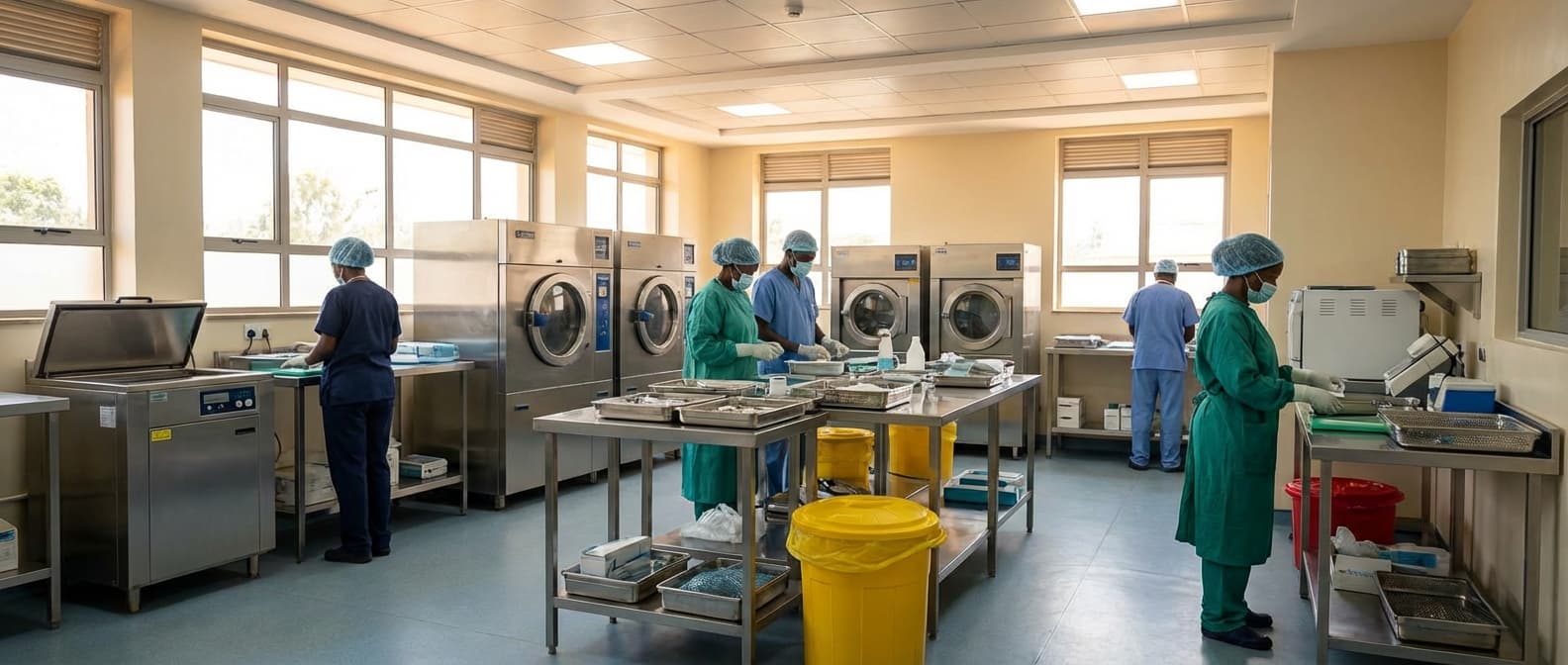
Medical Equipment Decontamination Service (Pre-Repair/Pre-Relocation) in Zimbabwe
Engineering Excellence & Technical Support
Medical Equipment Decontamination Service (Pre-Repair/Pre-Relocation) High-standard technical execution following OEM protocols and local regulatory frameworks.
Advanced Decontamination Protocols
Our pre-repair and pre-relocation decontamination service in Zimbabwe utilizes state-of-the-art protocols, employing EPA-approved disinfectants and validated sterilization techniques. We ensure complete eradication of biohazards, viruses, and bacteria from medical equipment, safeguarding technicians and preventing cross-contamination. Our rigorous processes meet international safety standards, providing peace of mind for your healthcare facility.
Specialized Equipment Handling & Validation
We offer meticulous decontamination for a wide range of medical equipment, from complex imaging systems to delicate surgical instruments. Our trained technicians are proficient in handling sensitive components and specialized machinery. Post-decontamination, we provide comprehensive validation reports, confirming the efficacy of our cleaning processes and ensuring equipment is safe and ready for repair or relocation without compromise.
On-Site & Mobile Decontamination Solutions
Recognizing the critical nature of medical equipment uptime, we provide flexible on-site and mobile decontamination services across Zimbabwe. Our rapid response teams are equipped to perform comprehensive cleaning at your facility, minimizing disruption to your operations. This efficiency ensures your equipment can be serviced or moved promptly and safely, maintaining continuity of patient care.
What Is Medical Equipment Decontamination Service (Pre-repair/pre-relocation) In Zimbabwe?
Medical Equipment Decontamination Service (Pre-Repair/Pre-Relocation) in Zimbabwe refers to the specialized process of thoroughly cleaning, disinfecting, and often sterilizing medical devices prior to their transport for repair or relocation. This service is critical for ensuring bio-safety throughout the equipment's lifecycle, mitigating the risk of cross-contamination between healthcare facilities, repair depots, and new operational environments. The decontamination process aims to eliminate or reduce microbial load to a level that renders the equipment safe for handling by technicians, transport personnel, and end-users in its next location.
| Who Needs the Service? | Typical Use Cases | Key Benefits |
|---|---|---|
| Hospitals and Clinics (Public & Private) | Equipment requiring off-site repair (e.g., imaging systems, surgical instruments, laboratory analyzers). | Prevents pathogen transmission to repair technicians and facilities. |
| Diagnostic Laboratories | Relocation of laboratory equipment between departments or to new facilities. | Ensures a sterile environment for sensitive diagnostic procedures at the new location. |
| Medical Equipment Manufacturers & Distributors | Return of equipment for servicing or upgrades. | Maintains product integrity and safety standards during transit and servicing. |
| Government Health Institutions & NGOs | Decommissioning and relocation of equipment from closed facilities. | Facilitates safe and compliant transfer of assets. |
| Third-Party Medical Equipment Maintenance Providers | Receiving equipment for repair or refurbishment. | Protects their workforce and infrastructure from biohazards. |
| Medical Equipment Rental Companies | Return of equipment after rental periods for servicing or re-deployment. | Guarantees hygiene and safety for subsequent renters. |
Key Aspects of Medical Equipment Decontamination Service (Pre-Repair/Pre-Relocation) in Zimbabwe
- Scope of Service: Encompasses the physical removal of organic matter (blood, tissue, bodily fluids), chemical disinfection using EPA-approved or equivalent agents, and potentially high-level disinfection or sterilization depending on the equipment type and its intended use. This includes internal components where accessible and external surfaces.
- Regulatory Compliance: Adherence to national health and safety regulations, as well as international standards (e.g., ISO 13485, CDC guidelines) pertaining to medical device reprocessing and biosafety.
- Documentation: Provision of detailed service reports, including decontamination methods employed, chemicals used, efficacy verification (where applicable), and chain of custody documentation for traceability.
- Personnel Training: Performed by trained and certified technicians with expertise in biosafety protocols, chemical handling, and the specific decontamination requirements of various medical device categories.
- Waste Management: Proper disposal of contaminated materials and cleaning agents in accordance with environmental regulations.
- Equipment Suitability Assessment: Determination of the appropriate decontamination method based on the material composition, design, and intended use of the medical equipment.
Who Needs Medical Equipment Decontamination Service (Pre-repair/pre-relocation) In Zimbabwe?
Decontaminating medical equipment before repairs or relocation in Zimbabwe is a critical step to ensure the safety of technicians, patients, and the environment. This service is essential for preventing the spread of infections and hazardous materials. Several types of facilities and departments within Zimbabwe's healthcare sector rely heavily on this specialized service.
| Customer Type | Specific Departments Requiring Service | Reasons for Decontamination (Pre-Repair/Pre-Relocation) | ||||||||||
|---|---|---|---|---|---|---|---|---|---|---|---|---|
| Hospitals (Public & Private) | Operating Theatres (OTs) | Infection Control | Intensive Care Units (ICUs) | Sterilization Units | Emergency Departments (ERs) | Central Sterile Supply Departments (CSSDs) | Oncology Units | Pathology/Histopathology Labs | Preventing cross-contamination of pathogens (e.g., MRSA, C. difficile) and hazardous residues (e.g., chemotherapy drugs) to repair technicians and new environments. | Ensuring safe handling and transport of biohazardous materials. | Compliance with health and safety regulations. | Maintaining equipment functionality by removing interfering biological matter. |
| Clinics and Health Centers | General Outpatient Departments | Maternity Wards | Minor Procedure Rooms | Preventing the spread of common infections during repairs or moves. | Protecting staff from potential exposure to patient bodily fluids. | |||||||
| Diagnostic Laboratories | Microbiology Labs | Hematology Labs | Biochemistry Labs | Molecular Biology Labs | Handling of potentially infectious biological samples (blood, tissue, cultures). | Decontamination is vital before equipment is sent for calibration or repair to protect laboratory staff and the integrity of the samples. | Ensuring no residual biohazards remain when moving equipment between lab sections. | |||||
| Research Institutions | Biotechnology Labs | Medical Research Facilities | Handling of genetically modified organisms (GMOs), infectious agents, or hazardous chemicals. | Decontamination prevents accidental release of research materials and ensures technician safety during servicing. | ||||||||
| Surgical Centers | Operating Rooms | Post-Anesthesia Care Units (PACUs) | Focus on sterile environments; pre-repair decontamination is crucial to maintain sterility principles during equipment downtime and subsequent reintroduction. | |||||||||
| Dental Practices | Dental Chairs | X-ray Machines | Sterilization Equipment | Preventing transmission of oral pathogens and bodily fluids to dental technicians. | ||||||||
| Veterinary Clinics | Surgical Suites | Diagnostic Imaging | If shared with human healthcare equipment or dealing with zoonotic diseases. | Ensuring safety for technicians when handling equipment that may have been exposed to animal pathogens. | ||||||||
| Medical Equipment Suppliers/Manufacturers | Service & Repair Centers | Returned Goods Departments | Receiving and handling of equipment that may have been used in various clinical settings. | Protecting their own staff from potential biohazards before they can assess or repair the equipment. | Ensuring equipment is safe to be refurbished or resold. |
Target Customers and Departments for Medical Equipment Decontamination Service (Pre-Repair/Pre-Relocation) in Zimbabwe
- Hospitals (Public and Private)
- Clinics and Health Centers
- Diagnostic Laboratories
- Research Institutions
- Surgical Centers
- Dental Practices
- Veterinary Clinics (for shared equipment or specific biohazardous waste handling)
- Medical Equipment Suppliers and Manufacturers (for returned or refurbished equipment)
Medical Equipment Decontamination Service (Pre-repair/pre-relocation) Process In Zimbabwe
This document outlines the comprehensive workflow for the Medical Equipment Decontamination Service (Pre-Repair/Pre-Relocation) in Zimbabwe. This service is crucial for ensuring the safety of personnel and the environment during the handling, repair, or relocation of potentially biohazardous medical equipment. The process is designed to be efficient, compliant with national health and safety regulations, and to provide a clear audit trail.
| Phase | Step | Description | Key Actors | Deliverables/Outcomes |
|---|---|---|---|---|
| Phase 1: Inquiry and Initial Assessment | 1.1 Initial Contact | Client (hospital, clinic, biomedical workshop) contacts the decontamination service provider with a request for decontamination of medical equipment prior to repair or relocation. | Client, Decontamination Service Provider | Acknowledgement of inquiry, basic understanding of equipment type and quantity. |
| Phase 1: Inquiry and Initial Assessment | 1.2 Information Gathering | Provider requests detailed information about the equipment: type, model, intended use, known contamination risks, location, and urgency. | Client, Decontamination Service Provider | Detailed equipment list, risk assessment information. |
| Phase 1: Inquiry and Initial Assessment | 1.3 Preliminary Risk Assessment | Provider conducts a preliminary risk assessment based on the gathered information to determine the required decontamination protocols and safety measures. | Decontamination Service Provider | Initial understanding of decontamination complexity and resource needs. |
| Phase 2: Quotation and Agreement | 2.1 Site/Equipment Visit (if necessary) | For complex cases or large quantities, a site visit may be conducted to visually inspect the equipment and its environment. | Decontamination Service Provider | Accurate assessment of scope and logistical requirements. |
| Phase 2: Quotation and Agreement | 2.2 Costing and Quotation | Provider prepares a detailed quotation outlining the scope of work, decontamination methods, chemicals to be used, timeline, and cost. | Decontamination Service Provider | Formal quotation presented to the client. |
| Phase 2: Quotation and Agreement | 2.3 Client Review and Approval | Client reviews the quotation and requests any necessary clarifications. Upon agreement, the client provides formal approval. | Client, Decontamination Service Provider | Signed agreement/purchase order. |
| Phase 3: Scheduling and Preparation | 3.1 Service Scheduling | A mutually convenient date and time for the decontamination service is scheduled. | Client, Decontamination Service Provider | Confirmed service date and time. |
| Phase 3: Scheduling and Preparation | 3.2 Pre-Service Communication | Provider confirms logistics, access requirements, and any client responsibilities (e.g., equipment accessibility, power supply). | Decontamination Service Provider | Clear communication plan for the service day. |
| Phase 3: Scheduling and Preparation | 3.3 Resource Mobilization | Provider assembles necessary personnel, decontamination equipment, approved chemicals, Personal Protective Equipment (PPE), and waste disposal containers. | Decontamination Service Provider | All required resources are ready for deployment. |
| Phase 4: On-site Decontamination Execution | 4.1 Site Preparation and Safety Briefing | Upon arrival, the team establishes a safe work zone, posts warning signs, and conducts a safety briefing with on-site personnel. | Decontamination Team, Client Personnel | Safe work environment established, awareness of potential hazards. |
| Phase 4: On-site Decontamination Execution | 4.2 Equipment Decontamination | The team executes the agreed-upon decontamination procedures using appropriate chemicals and methods (e.g., surface disinfection, steam sterilization, manual wiping). This includes internal and external surfaces as per risk assessment. | Decontamination Team | Equipment is visibly clean and rendered safe from biohazards. |
| Phase 4: On-site Decontamination Execution | 4.3 Contaminated Waste Management | All contaminated materials (wipes, disposables) are collected in designated biohazard bags/containers and properly sealed. | Decontamination Team | Segregated and sealed biohazardous waste. |
| Phase 4: On-site Decontamination Execution | 4.4 Verification and Quality Check | The team conducts a visual inspection and, if applicable, uses rapid testing methods to verify the effectiveness of the decontamination process. | Decontamination Team | Confirmation of decontamination efficacy. |
| Phase 5: Post-Decontamination and Documentation | 5.1 Waste Disposal | Contaminated waste is transported by a licensed waste management company to an approved disposal facility in accordance with Zimbabwean regulations. | Decontamination Team, Licensed Waste Management Company | Proper and documented disposal of biohazardous waste. |
| Phase 5: Post-Decontamination and Documentation | 5.2 Final Site Clearance | The work area is cleared, and any residual cleaning is performed. The decontamination team demobilizes. | Decontamination Team | Worksite returned to its original condition. |
| Phase 5: Post-Decontamination and Documentation | 5.3 Service Report Generation | A comprehensive service report is generated, detailing the equipment decontaminated, methods used, chemicals employed, date, time, personnel involved, and waste disposal information. | Decontamination Service Provider | Official Decontamination Service Report. |
| Phase 5: Post-Decontamination and Documentation | 5.4 Client Handover and Payment | The service report is submitted to the client. Invoicing and final payment are processed. | Decontamination Service Provider, Client | Completed service, client satisfaction, financial closure. |
Medical Equipment Decontamination Service Workflow (Pre-Repair/Pre-Relocation)
- Phase 1: Inquiry and Initial Assessment
- Phase 2: Quotation and Agreement
- Phase 3: Scheduling and Preparation
- Phase 4: On-site Decontamination Execution
- Phase 5: Post-Decontamination and Documentation
Medical Equipment Decontamination Service (Pre-repair/pre-relocation) Cost In Zimbabwe
The cost of medical equipment decontamination services in Zimbabwe, particularly for pre-repair or pre-relocation purposes, can vary significantly. This service is crucial for ensuring the safety of technicians, the integrity of the equipment, and compliance with health regulations. The pricing is influenced by several key factors, including the type and complexity of the equipment, the extent of contamination, the required turnaround time, and the specific service provider's operational costs and expertise. Generally, these services are charged on a per-item basis or sometimes by the hour, depending on the scope of work. While exact figures are dynamic and depend on the specific vendor, a general understanding of pricing factors and potential ranges in the local currency (Zimbabwean Dollar - ZWL) can be established.
| Equipment Category | Indicative Cost Range (ZWL - Zimbabwean Dollar) | Notes |
|---|---|---|
| Small Diagnostic/Monitoring Equipment (e.g., Stethoscopes, BP Monitors, Glucometers) | 5,000 - 15,000 ZWL | Standard disinfection protocols, relatively quick turnaround. |
| Mid-Sized Laboratory/Therapeutic Equipment (e.g., Centrifuges, Incubators, Autoclaves) | 15,000 - 50,000 ZWL | May involve more thorough cleaning of internal components and specialized disinfectants. |
| Large Imaging/Surgical Equipment (e.g., X-ray Machines, Ultrasound Probes, Minor Surgical Instruments) | 50,000 - 200,000+ ZWL | Complex decontamination processes, potentially requiring specialized equipment and multiple stages. Specific probes or components might have separate pricing. |
| Very Large/Complex Systems (e.g., MRI, CT Scanners, Ventilators - critical components) | Negotiated / Quote-Based | Highly specialized, extensive protocols, requiring dedicated teams and advanced technology. Often priced on a per-project basis. |
| Specialized Hazardous Material Decontamination (e.g., Radioactive, Highly Infectious) | Quote-Based (Significant Premium) | Requires highly trained personnel, specialized containment, and disposal procedures. Costs can escalate rapidly. |
Key Factors Influencing Medical Equipment Decontamination Costs in Zimbabwe:
- Type and Size of Equipment: Larger, more complex medical devices (e.g., MRI machines, CT scanners, surgical robots) will naturally incur higher decontamination costs than smaller items (e.g., stethoscopes, blood pressure monitors, basic laboratory equipment). The intricate internal components and extensive surfaces of larger equipment require more time and specialized cleaning agents.
- Nature and Level of Contamination: The type of contaminant (e.g., routine biological, hazardous chemical, radioactive) and the degree of contamination significantly impact the cost. Dealing with highly infectious pathogens or hazardous materials requires more rigorous protocols, specialized personal protective equipment (PPE), and disposal procedures, all of which add to the overall expense.
- Decontamination Method: The chosen decontamination method plays a vital role. This can range from manual cleaning and disinfection with approved chemicals to more advanced methods like steam sterilization, UV-C germicidal irradiation, or even fumigation for certain types of equipment. Advanced methods often require specialized equipment and expertise, leading to higher costs.
- Turnaround Time (Urgency): Expedited decontamination services, required for urgent repairs or relocation deadlines, typically command a premium. Providers may need to allocate additional resources and adjust their schedules to meet tight timelines.
- Provider's Expertise and Certification: Reputable decontamination service providers with specialized training, certified technicians, and adherence to international standards will likely charge more due to their investment in quality and safety.
- Location and Logistics: The geographical location of the equipment needing decontamination and the service provider's base can influence costs due to travel time, transportation of specialized equipment, and associated logistical challenges.
- Required Documentation and Reporting: Some clients may require detailed reports of the decontamination process, including certificates of sterilization or disinfection. The generation of such documentation can add to the service fee.
Affordable Medical Equipment Decontamination Service (Pre-repair/pre-relocation) Options
Ensuring medical equipment is decontaminated before repair or relocation is crucial for preventing the spread of infections and protecting technicians. Our Affordable Medical Equipment Decontamination Service offers cost-effective solutions through value bundles and strategic cost-saving measures. This service provides a vital step in the lifecycle of your medical devices, minimizing risks and ensuring operational readiness.
| Value Bundle Name | Description | Included Services | Ideal For | Estimated Cost Savings |
|---|---|---|---|---|
| Basic Decon & Prep | Essential decontamination for standard equipment. | Surface cleaning, visual inspection for bioburden, basic disinfection of external surfaces. | Low-risk equipment (e.g., non-invasive monitoring devices, standard wheelchairs). | 10-15% compared to individual service bookings. |
| Advanced Decon & Audit | Comprehensive decontamination with detailed documentation. | All services in Basic Decon & Prep, plus enzymatic cleaning for crevices, antimicrobial fogging (where applicable), and a decontamination checklist report. | Moderate-risk equipment (e.g., diagnostic imaging accessories, patient monitoring systems). | 15-20% compared to individual service bookings. |
| Specialized Bio-Decon | Targeted decontamination for high-risk bioburden or sensitive equipment. | All services in Advanced Decon & Audit, plus specialized high-level disinfection or sterilization (if required and feasible), and detailed bioburden testing report. | High-risk equipment (e.g., invasive procedure instruments, equipment with known biohazard exposure). | 20-25% compared to individual service bookings. |
| Bulk Service Agreement | Pre-paid decontamination for a set volume of equipment over a period. | Customizable based on facility needs, with priority scheduling and dedicated account management. | Hospitals, clinics, and large medical centers with regular equipment turnover. | Up to 30% based on volume and contract duration. |
Why Decontaminate Before Repair/Relocation?
- Infection Control: Prevents the transmission of pathogens to repair technicians, new users, or during relocation.
- Technician Safety: Protects healthcare professionals handling the equipment.
- Compliance: Meets regulatory and accreditation standards.
- Equipment Integrity: Removes potential contaminants that could interfere with repairs or performance.
- Reduced Risk: Minimizes liability for your facility.
Verified Providers In Zimbabwe
In Zimbabwe's evolving healthcare landscape, identifying reliable and qualified medical providers is paramount for ensuring quality care. Verified providers represent a crucial benchmark, signifying that healthcare professionals and institutions have met rigorous standards of expertise, ethics, and patient safety. Among these, Franance Health stands out as a leader, consistently demonstrating a commitment to excellence. Their credentials not only reflect adherence to regulatory requirements but also a dedication to superior patient outcomes and a patient-centric approach. Choosing a verified provider like Franance Health offers peace of mind, knowing you are entrusting your well-being to professionals who are demonstrably competent and committed to the highest standards of medical practice.
| Credential/Aspect | Franance Health's Commitment | Why it Matters to Patients |
|---|---|---|
| Professional Licensure | All Franance Health practitioners are fully licensed and registered with relevant Zimbabwean medical boards. | Ensures practitioners meet the basic legal and professional requirements to practice medicine. |
| Specialized Expertise | Franance Health actively recruits and retains specialists with advanced training and certifications. | Provides access to highly skilled professionals for complex medical needs and specialized treatments. |
| Ethical Practice | Franance Health fosters a culture of integrity, emphasizing patient rights, privacy, and respect. | Builds trust and confidence by ensuring patients are treated with dignity and their well-being is the top priority. |
| Patient Safety Protocols | Rigorous safety checks, infection control measures, and adherence to best practices are integrated into all services. | Minimizes the risk of medical errors or complications, leading to safer and more effective care. |
| Commitment to Innovation | Franance Health invests in continuing education and adopts evidence-based practices and technologies. | Ensures patients benefit from the latest advancements in medical knowledge and treatment options. |
| Patient-Centric Approach | Franance Health focuses on understanding individual patient needs and providing personalized care plans. | Leads to a more positive and effective healthcare experience, with treatments tailored to individual circumstances. |
Key Credentials of Verified Providers & Why Franance Health Excels
- Professional Licensure and Registration: All verified providers must hold valid licenses and be registered with the relevant Zimbabwean medical councils (e.g., Medical and Dental Practitioners Council of Zimbabwe). Franance Health ensures all its practitioners are not only licensed but also maintain ongoing professional development.
- Specialized Training and Certification: Beyond basic qualifications, verified providers often possess specialized training and certifications in their respective fields. Franance Health prioritizes practitioners with advanced skills and up-to-date certifications to offer the most effective treatments.
- Adherence to Ethical Standards: Verified providers are bound by strict ethical codes of conduct. Franance Health upholds the highest ethical principles, emphasizing patient confidentiality, informed consent, and compassionate care.
- Commitment to Patient Safety: Robust safety protocols and quality assurance measures are hallmarks of verified providers. Franance Health implements comprehensive patient safety initiatives, minimizing risks and optimizing patient care processes.
- Continuous Professional Development (CPD): The medical field is constantly advancing. Verified providers engage in ongoing learning to stay abreast of the latest research and techniques. Franance Health actively encourages and supports CPD for all its staff, ensuring they are at the forefront of medical innovation.
- Patient Feedback and Outcomes: While not always publicly displayed, verified providers often have mechanisms for tracking patient feedback and outcomes. Franance Health is committed to gathering patient feedback to continuously improve its services and achieve excellent health outcomes.
Scope Of Work For Medical Equipment Decontamination Service (Pre-repair/pre-relocation)
This Scope of Work (SOW) outlines the requirements for medical equipment decontamination services to be performed prior to repair or relocation. The objective is to ensure the equipment is rendered safe for handling by technicians and personnel at the repair facility or new location, minimizing the risk of biological contamination and cross-contamination.
| Service Element | Description | Standard Specifications & Requirements | Acceptance Criteria |
|---|---|---|---|
| Initial Assessment & Classification | Upon arrival at the equipment's current location, the service provider will visually inspect and, if necessary, interview the requesting party to classify the equipment's contamination risk (e.g., low, medium, high based on known usage and potential biohazards). | Visual inspection of equipment for visible soil, fluids, or debris. Information gathering on the equipment's typical use (e.g., diagnostic imaging, surgical, general ward). | Accurate classification of contamination risk documented. |
| Pre-cleaning (if required) | Removal of gross contamination (e.g., bulk fluids, visible debris) to facilitate effective disinfection/sterilization. | Use of appropriate disposable cleaning materials (wipes, absorbent pads). Gentle mechanical removal. Avoidance of high-pressure spraying that could aerosolize contaminants. | Equipment visually free of gross contamination. |
| Decontamination Procedure | Application of approved disinfectants or sterilants to all external surfaces of the equipment that may have come into contact with patients or potentially infectious materials. | Use of EPA-registered, hospital-grade disinfectants or sterilants appropriate for the equipment's material composition and the identified risk level. Contact time and concentration as per manufacturer instructions and regulatory guidelines (e.g., CDC, FDA). Coverage of all accessible surfaces, including controls, cables, and connectors. | All accessible external surfaces treated according to manufacturer and regulatory guidelines. Verification of proper contact time. Absence of visible residue from cleaning agents (unless intended for material protection). |
| Drying | Ensuring the equipment is thoroughly dried to prevent microbial growth and potential damage to electrical components. | Air drying or drying with clean, lint-free cloths. Avoidance of excessive heat that could damage sensitive components. | Equipment is visibly dry to the touch. |
| Packaging & Labeling | Secure packaging of the decontaminated equipment to maintain its integrity during transport and clearly label it as decontaminated. | Use of appropriate, clean packaging materials (e.g., plastic sheeting, bubble wrap). Clear labeling with 'DECONTAMINATED' and equipment identification (serial number, model number). | Equipment is securely packaged. Labeling is clear, legible, and accurate. |
| Waste Management | Proper disposal of all contaminated materials generated during the decontamination process, adhering to local, state, and federal regulations. | Segregation of biohazardous waste. Use of approved waste containers. Documentation of disposal through licensed waste management contractors. | All contaminated waste is disposed of according to regulatory requirements. Appropriate manifests are provided. |
| Documentation & Certification | Issuance of a Decontamination Certificate for each equipment and a detailed log of services performed. | Certificate includes equipment details, date of service, service provider information, and confirmation of adherence to SOW. Log includes specific actions, materials, and personnel. | Complete and accurate Decontamination Certificates and service logs provided for all serviced equipment. |
Technical Deliverables
- Decontamination Certificate for each piece of equipment, confirming successful completion of services according to this SOW and relevant standards.
- Detailed log of decontamination activities performed for each equipment, including date, time, technician name, chemicals used, and any observations.
- Waste disposal manifests for any hazardous materials generated during the decontamination process.
Service Level Agreement For Medical Equipment Decontamination Service (Pre-repair/pre-relocation)
This Service Level Agreement (SLA) outlines the response times and uptime guarantees for the medical equipment decontamination service provided by [Your Company Name] (hereinafter referred to as 'Provider') to [Client Name] (hereinafter referred to as 'Client') for pre-repair and pre-relocation decontamination processes. This SLA is effective as of [Start Date] and remains in effect until [End Date], unless otherwise terminated by either party in accordance with the Master Service Agreement.
| Service Event | Priority Level | Response Time Target | Decontamination Completion Target | Uptime Guarantee (N/A for this service) |
|---|---|---|---|---|
| Pre-Repair Decontamination Request (Routine) | Standard | Within 24 business hours of notification | Within 48 business hours of scheduled pickup | N/A |
| Pre-Repair Decontamination Request (Urgent - e.g., infectious agent suspected) | High | Within 8 business hours of notification | Within 24 business hours of scheduled pickup | N/A |
| Pre-Relocation Decontamination Request (Scheduled) | Standard | Within 48 business hours of notification | Within 72 business hours of scheduled pickup | N/A |
| Pre-Relocation Decontamination Request (Emergency - e.g., immediate move) | Critical | Within 12 business hours of notification | Within 36 business hours of scheduled pickup | N/A |
Scope of Service
- Decontamination of medical equipment prior to scheduled repairs at an authorized service center.
- Decontamination of medical equipment prior to relocation to a new facility or storage.
- Provision of certified decontamination reports for all serviced equipment.
- Adherence to all relevant infection control and safety protocols.
- Utilization of approved decontamination agents and processes.
Frequently Asked Questions

Ready when you are
Let's scope your Medical Equipment Decontamination Service (Pre-Repair/Pre-Relocation) in Zimbabwe project in Zimbabwe.

Scaling healthcare logistics and technical systems across the entire continent.