
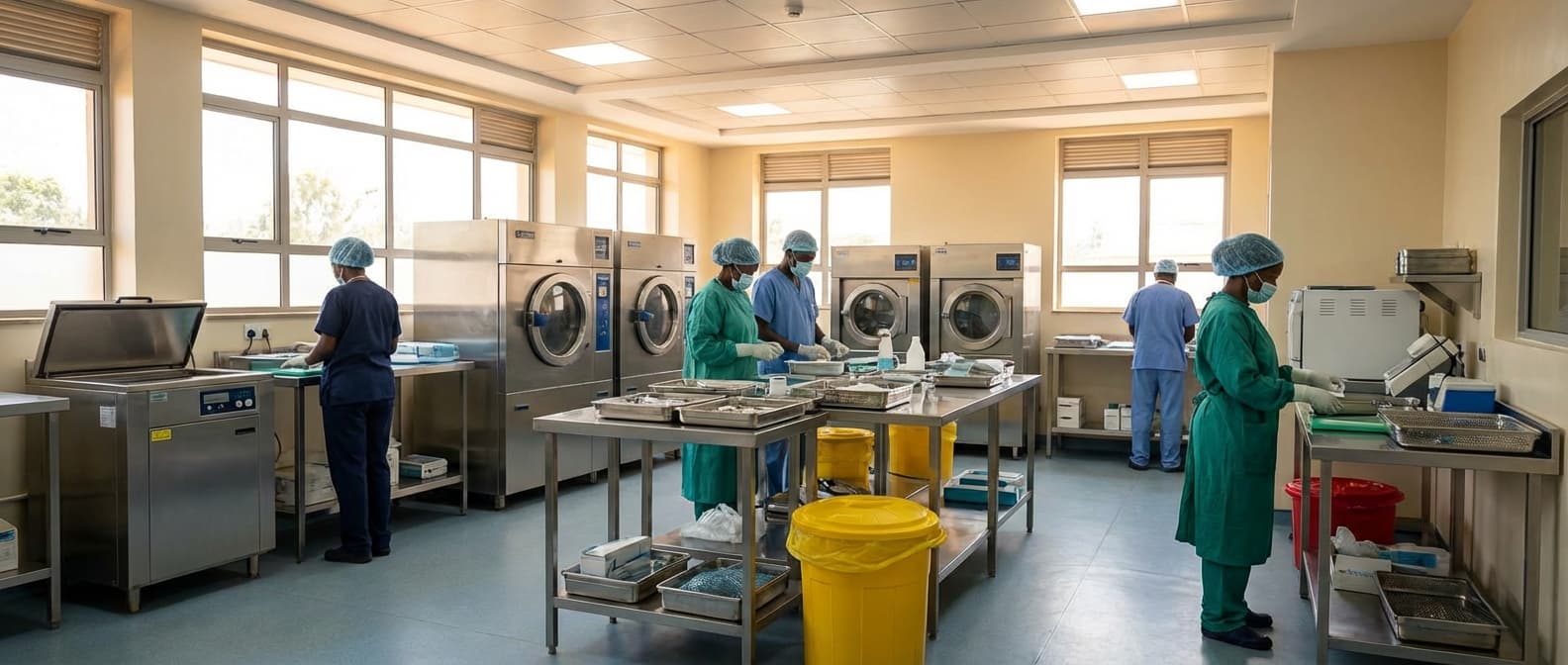
Infection-Control Readiness Support Service for Reusable Equipment in Zimbabwe
Engineering Excellence & Technical Support
Infection-Control Readiness Support Service for Reusable Equipment High-standard technical execution following OEM protocols and local regulatory frameworks.
Advanced Decontamination Protocols
Implementing WHO-compliant, multi-stage decontamination protocols leveraging the latest in chemical and thermal disinfection technologies for all reusable medical equipment, ensuring zero microbial cross-contamination risk.
Real-time Equipment Traceability
Utilizing a robust RFID-based tracking system for every piece of reusable equipment, providing real-time data on sterilization cycles, maintenance history, and location, thus guaranteeing accountability and immediate identification for audits.
Certified Specialist Training Programs
Delivering comprehensive, hands-on training for healthcare personnel on proper handling, cleaning, disinfection, and sterilization techniques, certified by international infection control bodies, to build a sustainable culture of safety.
What Is Infection-control Readiness Support Service For Reusable Equipment In Zimbabwe?
Infection-Control Readiness Support Service (ICRSS) for Reusable Equipment in Zimbabwe is a specialized consultancy and technical assistance program designed to ensure healthcare facilities maintain robust infection prevention and control (IPC) practices specifically for medical devices and equipment that are intended for multiple patient uses after proper reprocessing. This service focuses on the entire lifecycle of reusable medical equipment, from acquisition and sterilization to storage, handling, and disposal, aiming to prevent healthcare-associated infections (HAIs) by minimizing the risk of microbial contamination and transmission.
| Service Component | Target Audience | Typical Use Cases |
|---|---|---|
| Policy and Protocol Development/Review | Hospitals (public and private), Clinics, Dental Practices, Surgical Centers, Laboratories | Establishment of new reprocessing units, Revision of outdated IPC guidelines, Introduction of new reusable medical devices. |
| Infrastructure and Equipment Assessment | Healthcare facilities with limited resources, Facilities undergoing upgrades or expansion, Facilities experiencing recurrent equipment failures. | Assessing the suitability of a new clinic's sterilization unit, Evaluating the performance of an existing autoclave, Identifying the need for new reprocessing machinery. |
| Staff Training and Competency Assessment | All healthcare professionals involved in direct patient care and equipment reprocessing (nurses, technicians, biomedical engineers, doctors). | Onboarding new staff, Refresher courses for existing staff, Training on advanced sterilization techniques, Addressing identified knowledge gaps or performance issues. |
| Supply Chain Management for Reprocessing Supplies | Procurement departments, Central sterile supply departments (CSSDs), Clinical departments responsible for managing supplies. | Developing specifications for sterilant procurement, Validating the efficacy of new disinfectants, Ensuring the availability of appropriate packaging materials. |
| Monitoring and Auditing | Quality assurance departments, IPC committees, Facility management. | Regular internal audits of the CSSD, Monitoring sterilization cycle parameters, Auditing adherence to cleaning protocols for surgical instruments. |
| Guideline Adherence and Regulatory Compliance | Healthcare facility administrators, IPC officers, Regulatory bodies. | Ensuring compliance with upcoming national IPC regulations, Preparing for external regulatory inspections, Harmonizing local practices with international standards. |
Key Components of ICRSS for Reusable Equipment:
- Policy and Protocol Development/Review: Establishing or refining facility-specific policies and standard operating procedures (SOPs) for the decontamination, cleaning, disinfection, sterilization, storage, and use of reusable medical equipment, adhering to national and international guidelines.
- Infrastructure and Equipment Assessment: Evaluating the adequacy of physical infrastructure (e.g., dedicated reprocessing areas, ventilation) and the functionality, calibration, and maintenance status of reprocessing equipment (e.g., autoclaves, washer-disinfectors, ultrasonic cleaners).
- Staff Training and Competency Assessment: Designing and delivering targeted training modules for healthcare personnel involved in the handling and reprocessing of reusable equipment, covering principles of microbiology, IPC practices, proper use of reprocessing technologies, and competency verification.
- Supply Chain Management for Reprocessing Supplies: Advising on the procurement and quality assurance of cleaning agents, disinfectants, sterilants, packaging materials, and biological/chemical indicators.
- Waste Management Integration: Ensuring that waste generated during the reprocessing of reusable equipment is managed according to established protocols to prevent secondary contamination.
- Monitoring and Auditing: Developing and implementing systems for routine monitoring of reprocessing processes (e.g., cycle parameters, indicator results) and conducting periodic audits to assess compliance and identify areas for improvement.
- Root Cause Analysis and Corrective Action Planning: Assisting facilities in investigating and addressing deviations or failures in the reprocessing system that could lead to infection risks.
- Guideline Adherence and Regulatory Compliance: Ensuring that all reprocessing activities align with the Zimbabwe Ministry of Health and Child Care (MOHCC) guidelines, relevant national standards, and international best practices (e.g., WHO, CDC).
Who Needs Infection-control Readiness Support Service For Reusable Equipment In Zimbabwe?
The Infection-Control Readiness Support Service for Reusable Equipment in Zimbabwe aims to bolster the safe and effective reprocessing of medical devices. This service is crucial for healthcare facilities to prevent the transmission of healthcare-associated infections (HAIs) and ensure patient safety. By providing expert guidance, training, and potentially resources, the service helps facilities achieve and maintain optimal infection prevention and control (IPC) standards for reusable equipment, from sterilization and disinfection to storage and handling. This is particularly vital in resource-constrained settings like Zimbabwe, where robust IPC practices are paramount to public health.
| Department/Role | Specific Needs Addressed | Impact of Support Service |
|---|---|---|
| Infection Prevention and Control (IPC) Department/Officers | Developing and implementing standardized reprocessing protocols; training staff; monitoring compliance; auditing practices; troubleshooting reprocessing failures; ensuring availability of necessary consumables and equipment. | Enhanced capacity to manage and oversee reusable equipment reprocessing; reduction in reprocessing errors; improved surveillance and control of HAIs. |
| Sterilization and Central Sterile Supply Department (CSSD) Staff | Training on proper cleaning, disinfection, and sterilization techniques for various equipment types; understanding of sterilization monitoring and validation; safe handling and storage of sterile items; maintenance of reprocessing equipment. | Increased competency and confidence in reprocessing procedures; consistent achievement of sterilization parameters; reduced risk of equipment failure and patient harm. |
| Nursing Staff (especially in Operating Theatres, Maternity, and Wards) | Correct procedures for handling contaminated equipment; understanding of the flow of reusable items; appropriate use of personal protective equipment (PPE) during handling; proper storage of clean and sterile equipment in their units. | Reduced risk of exposure to infectious agents for healthcare workers and patients; improved patient safety through the availability of correctly reprocessed equipment. |
| Medical and Surgical Staff | Understanding the importance of proper decontamination at the point of use; ensuring equipment is appropriately prepared for transport to CSSD; timely return of used equipment. | Facilitated workflow for CSSD; reduction in the risk of cross-contamination at the point of use; increased availability of properly reprocessed instruments for procedures. |
| Biomedical Engineering Department | Maintenance and repair of reprocessing equipment (e.g., autoclaves, washer-disinfectors); calibration of equipment; ensuring equipment functionality and safety. | Reliable and properly functioning reprocessing equipment; reduced downtime; enhanced efficiency and safety of sterilization processes. |
| Procurement and Logistics Department | Guidance on sourcing appropriate cleaning agents, disinfectants, and sterilization supplies; ensuring adequate stock levels; selecting and maintaining reprocessing equipment. | Access to appropriate and effective reprocessing supplies; cost-effective procurement strategies; well-maintained and functional reprocessing infrastructure. |
| Healthcare Facility Management and Administration | Ensuring adequate resources (staff, space, budget) for effective reprocessing; policy development and enforcement related to reusable equipment; overall accountability for patient safety and infection control. | Improved overall infection control posture; enhanced patient safety; compliance with national and international IPC guidelines; demonstration of commitment to quality healthcare. |
Target Customers & Departments
- Hospitals (Public and Private)
- Clinics and Health Centers
- Surgical Centers
- Dental Practices
- Maternity Units
- Laboratories
- Non-Governmental Organization (NGO) Healthcare Providers
- Ministry of Health and Child Care Facilities
Infection-control Readiness Support Service For Reusable Equipment Process In Zimbabwe
This document outlines the workflow for the Infection-Control Readiness Support Service for Reusable Equipment Processes in Zimbabwe, covering the entire journey from initial inquiry to the successful execution of support.
| Stage | Description | Key Activities | Responsible Party | Deliverables/Outputs | Timeline (Typical) |
|---|---|---|---|---|---|
| Inquiry & Needs Assessment | Initial contact from a healthcare facility or relevant authority expressing interest in the support service. This stage involves understanding their specific needs regarding reusable equipment infection control. | Receive and acknowledge inquiry, conduct initial needs assessment (interviews, site visit if necessary), identify specific challenges, scope of work. | Service Provider (Inquiry Contact), Healthcare Facility Representative | Needs Assessment Report, Scope Definition | 1-2 weeks |
| Proposal Development & Submission | Based on the assessed needs, the service provider develops a comprehensive proposal detailing the proposed interventions, methodology, timelines, and costs. | Develop detailed work plan, outline proposed interventions (training, guideline development, equipment assessment, etc.), define key personnel, prepare costings, submit formal proposal. | Service Provider (Proposal Team) | Formal Proposal Document | 2-4 weeks |
| Contracting & Agreement | Upon acceptance of the proposal, a formal contract is established outlining the terms, conditions, payment schedule, and deliverables. | Negotiate contract terms, finalize pricing, draft and sign Service Level Agreement (SLA) or Memorandum of Understanding (MOU). | Service Provider (Legal/Management), Healthcare Facility (Procurement/Legal) | Signed Contract/SLA/MOU | 1-3 weeks |
| Planning & Mobilization | Detailed operational planning and mobilization of resources (personnel, materials, equipment) for the on-site execution. | Develop detailed activity schedule, assign roles and responsibilities, procure necessary training materials, schedule travel and accommodation, pre-visit communication with the facility. | Service Provider (Project Manager/Team Lead) | Detailed Work Plan, Mobilization Checklist | 1-2 weeks |
| On-site Execution | The core of the service where interventions are delivered at the healthcare facility. | Conduct training sessions, assess current practices, review and update SOPs, provide technical guidance on equipment reprocessing, demonstrate best practices. | Service Provider (Consultants/Trainers), Healthcare Facility Staff | Completed Training Sessions, Assessment Findings, Draft SOPs (if applicable) | Variable (depending on scope, typically 1-4 weeks) |
| Reporting & Documentation | Comprehensive reporting of activities undertaken, findings, recommendations, and progress. | Compile all assessment data, document training attendance and feedback, draft interim and final reports, include action plans and recommendations. | Service Provider (Reporting Team) | Interim Reports, Final Report with Recommendations | 1-2 weeks (post-execution) |
| Follow-up & Evaluation | Assessing the impact of the support and providing further guidance or adjustments as needed. | Conduct follow-up visits (if contracted), review implementation of recommendations, gather feedback on effectiveness, conduct impact evaluation. | Service Provider (Project Manager/Evaluator), Healthcare Facility Representative | Follow-up Report, Evaluation Summary | Variable (scheduled post-execution, e.g., 1-3 months) |
| Closure & Archival | Formal closure of the project and secure archival of all project-related documentation. | Finalize all deliverables, obtain client sign-off, submit final invoice, archive all project documentation (reports, contracts, training materials) for future reference. | Service Provider (Project Manager/Admin) | Project Closure Report, Archived Records | 1 week |
Workflow Stages
- Inquiry & Needs Assessment
- Proposal Development & Submission
- Contracting & Agreement
- Planning & Mobilization
- On-site Execution
- Reporting & Documentation
- Follow-up & Evaluation
- Closure & Archival
Infection-control Readiness Support Service For Reusable Equipment Cost In Zimbabwe
This document outlines the critical infection control support services for reusable medical equipment in Zimbabwe, focusing on pricing factors and estimated cost ranges in the local currency (Zimbabwean Dollar - ZWL). Ensuring the safety and efficacy of reusable equipment is paramount in healthcare settings, directly impacting patient outcomes and preventing healthcare-associated infections (HAIs). The services discussed are essential for maintaining operational integrity and regulatory compliance.
Pricing Factors:
The cost of infection-control readiness support services for reusable equipment in Zimbabwe is influenced by several key factors:
- Scope of Services: The breadth and depth of services required, ranging from basic cleaning and disinfection to comprehensive sterilization validation, auditing, and staff training.
- Type and Volume of Equipment: The complexity of the reusable medical devices (e.g., surgical instruments, endoscopes, anesthesia equipment) and the total quantity needing support. More intricate or specialized equipment often requires more advanced and costly processes.
- Frequency of Service: The regularity with which support is needed. This could be daily, weekly, monthly, or on-demand.
- Location of Facility: Geographic location within Zimbabwe can impact logistics and travel costs for service providers.
- Provider Expertise and Certification: The qualifications, experience, and any relevant certifications of the service provider. Specialized knowledge in specific sterilization methods (e.g., autoclaving, chemical sterilization) or equipment types can command higher fees.
- Materials and Consumables: The cost of detergents, disinfectants, sterilizing agents, packaging materials, and biological/chemical indicators used during the process.
- Technology and Equipment Used by Provider: Whether the provider utilizes advanced automated cleaning systems, specialized testing equipment, or manual methods.
- Training Component: The extent and duration of staff training provided on proper handling, cleaning, disinfection, and sterilization protocols.
- Auditing and Reporting: The inclusion of comprehensive audits, documentation, and reporting on infection control compliance and equipment status.
- Urgency of Need: Emergency or same-day services may incur premium charges.
Estimated Cost Ranges (Zimbabwean Dollar - ZWL):
It is important to note that these are estimated ranges and actual costs may vary significantly based on the interplay of the above factors. Providers may offer package deals or custom quotes.
- Basic Cleaning and Disinfection Assessment/Guidance: This could involve reviewing existing protocols, providing guidance on appropriate disinfectants, and initial visual inspection. (ZWL 50,000 - ZWL 150,000 per assessment/consultation)
- On-site Training Sessions (per session, half-day): Focused training on specific equipment or sterilization methods for healthcare staff. (ZWL 70,000 - ZWL 200,000)
- Routine Sterilization Monitoring (e.g., BIs, CIs - per batch/cycle): Cost of biological and chemical indicators for individual sterilization loads. (ZWL 15,000 - ZWL 50,000 per indicator)
- Comprehensive Auditing and Validation (per facility/department): Includes protocol review, equipment checks, environmental monitoring, and detailed reporting. (ZWL 250,000 - ZWL 800,000+)
- Equipment-Specific Deep Cleaning and Disinfection (e.g., Endoscopes - per item): For highly specialized equipment requiring meticulous processes. (ZWL 100,000 - ZWL 400,000+ per item)
- Managed Service Contracts (Monthly/Quarterly): For ongoing support, including regular audits, training refreshers, and troubleshooting. These are highly variable but could range from (ZWL 500,000 - ZWL 5,000,000+ per month, depending on facility size and services).
Factors influencing the range include:
- Number of staff to be trained.
- Complexity of the equipment being serviced.
- Frequency of audits and validation checks.
- Travel and accommodation costs for remote facilities.
Healthcare facilities in Zimbabwe are strongly advised to obtain detailed quotes from multiple reputable service providers to ensure they secure the most cost-effective and appropriate infection-control support for their reusable equipment.
| Service Type | Estimated Cost Range (ZWL) | Notes |
|---|---|---|
| Basic Cleaning & Disinfection Assessment/Guidance | 50,000 - 150,000 | Per assessment/consultation; focuses on protocol review and advice. |
| On-site Training Sessions (Half-Day) | 70,000 - 200,000 | Per session; covers specific equipment or sterilization methods. |
| Sterilization Monitoring (Indicators per Cycle) | 15,000 - 50,000 | Cost per biological/chemical indicator used per sterilization load. |
| Comprehensive Auditing & Validation | 250,000 - 800,000+ | Per facility/department; includes detailed review, monitoring, and reporting. |
| Specialized Equipment Deep Cleaning (e.g., Endoscopes) | 100,000 - 400,000+ | Per item; for high-risk, complex reusable medical devices. |
| Managed Service Contracts (Monthly/Quarterly) | 500,000 - 5,000,000+ | Highly variable; depends on facility size, volume of equipment, and service level. |
Key Pricing Factors for Infection-Control Readiness Support Services
- Scope of Services (Basic to Comprehensive)
- Type and Volume of Reusable Equipment
- Frequency of Service Delivery
- Geographic Location of Healthcare Facility
- Provider's Expertise, Experience, and Certifications
- Cost of Consumables (Disinfectants, Sterilants, Indicators)
- Technology and Equipment Utilized by the Service Provider
- Inclusion of Staff Training and Capacity Building
- Auditing, Documentation, and Reporting Requirements
- Urgency and Turnaround Time for Service Provision
Affordable Infection-control Readiness Support Service For Reusable Equipment Options
Our Affordable Infection-Control Readiness Support Service for Reusable Equipment is designed to empower healthcare facilities with robust infection prevention strategies without breaking the budget. We offer flexible value bundles and implement cost-saving strategies throughout the service lifecycle, ensuring your reusable equipment is always safe and compliant. This service focuses on optimizing cleaning, disinfection, sterilization, and tracking processes to minimize the risk of healthcare-associated infections (HAIs) while maximizing resource utilization.
| Cost-Saving Strategy | Description | Impact on Value |
|---|---|---|
| Preventative Maintenance Focus | Proactive maintenance schedules for sterilization and cleaning equipment to prevent costly breakdowns and downtime. Reduces emergency repair costs. | Increases equipment lifespan, minimizes operational disruptions, and lowers long-term capital expenditure. |
| Optimized Reagent & Consumable Usage | Implementing best practices for the use of cleaning agents, disinfectants, and sterilization consumables to reduce waste and ensure efficacy. Bulk purchasing opportunities. | Direct reduction in operational expenses through efficient resource utilization and negotiated pricing. |
| Staff Training & Competency Enhancement | Well-trained staff make fewer errors, leading to reduced reprocessing failures, instrument damage, and reprocessing cycle times. Empowers staff to identify issues early. | Minimizes rework, reduces instrument replacement costs, and improves overall departmental efficiency and throughput. |
| Workflow Streamlining & Automation | Analyzing and optimizing workflows to eliminate bottlenecks and reduce manual touchpoints. Leveraging technology where appropriate for efficiency gains. | Shortens turnaround times for critical equipment, increases staff productivity, and reduces the need for overtime or additional staffing. |
| Data-Driven Decision Making | Utilizing data from tracking systems and process monitoring to identify areas for improvement, reduce waste, and forecast needs. Performance benchmarking. | Enables targeted interventions, better resource allocation, and continuous improvement, leading to sustained cost savings. |
| Standardized Protocols & Best Practices | Adopting widely accepted and evidence-based protocols for cleaning, disinfection, and sterilization ensures consistency and reduces the risk of non-compliance. | Minimizes the risk of regulatory fines, re-processing due to non-compliance, and potential lawsuits associated with HAIs. |
Key Service Components & Value Bundles
- {"title":"Core Readiness Assessment & Planning","description":"Initial evaluation of current practices, equipment inventory, and staff training. Development of customized infection control plans tailored to your facility's specific needs and equipment types."}
- {"title":"Training & Competency Development","description":"Comprehensive training programs for staff on best practices for cleaning, disinfection, sterilization, and handling of reusable equipment. Includes competency assessments and ongoing refreshers."}
- {"title":"Process Optimization & Workflow Analysis","description":"Streamlining of cleaning, disinfection, and sterilization workflows to improve efficiency, reduce turnaround times, and minimize potential for errors. Implementation of lean methodologies."}
- {"title":"Equipment Maintenance & Compliance Monitoring","description":"Regular checks and calibration of sterilization equipment, adherence to manufacturer's guidelines, and documentation for regulatory compliance. Proactive identification of maintenance needs."}
- {"title":"Traceability & Documentation Solutions","description":"Implementation of robust tracking systems for reusable equipment, ensuring proper lifecycle management and facilitating audits and investigations. Includes digital record-keeping."}
- {"title":"Basic Bundle","description":"Includes Core Readiness Assessment & Planning and Training & Competency Development."}
- {"title":"Standard Bundle","description":"Includes all elements of the Basic Bundle, plus Process Optimization & Workflow Analysis."}
- {"title":"Premium Bundle","description":"Includes all elements of the Standard Bundle, plus Equipment Maintenance & Compliance Monitoring and Traceability & Documentation Solutions."}
- {"title":"Customizable Add-ons","description":"Options for advanced data analytics, specific equipment deep dives, or emergency response planning."}
Verified Providers In Zimbabwe
In Zimbabwe's evolving healthcare landscape, discerning patients seek assurance of quality and reliability in their medical providers. Verified providers offer this crucial trust, ensuring that practitioners meet stringent standards of skill, ethics, and regulatory compliance. Franance Health stands at the forefront of this movement, meticulously vetting its network of healthcare professionals to guarantee an exceptional patient experience. This commitment to verification goes beyond mere certification; it encompasses a thorough evaluation of qualifications, experience, patient feedback, and adherence to best practices, making Franance Health credentials a hallmark of excellence.
| Verification Component | Franance Health Standard | Benefit to Patients |
|---|---|---|
| Medical Qualifications | Mandatory validation of degrees and licenses from recognized institutions. | Assurance of formally trained and authorized medical professionals. |
| Specialization and Expertise | Verification of specialization credentials and areas of practice. | Access to doctors with specific knowledge and skills for complex health needs. |
| Professional Conduct | Review of disciplinary records and adherence to ethical guidelines. | Protection against unethical practices and commitment to patient well-being. |
| Patient Testimonials | Collection and analysis of anonymous patient feedback. | Insight into real-world patient experiences and satisfaction levels. |
| Continuing Professional Development (CPD) | Confirmation of active participation in ongoing medical education. | Ensures providers are up-to-date with the latest medical advancements and treatments. |
Why Franance Health Credentials Represent the Best Choice for Verified Providers in Zimbabwe:
- Rigorous Qualification and Experience Verification: Franance Health ensures all listed providers possess legitimate medical degrees, certifications, and substantial practical experience in their respective fields.
- Commitment to Ethical Practice: Providers are assessed for their adherence to professional ethics and patient-centered care principles.
- Patient Safety and Quality Assurance: A robust system of ongoing monitoring and patient feedback mechanisms are in place to maintain high standards of care.
- Regulatory Compliance: Franance Health confirms that all its network providers comply with the Health Professions Authority (HPA) and other relevant Zimbabwean regulatory bodies.
- Access to a Diverse Network: Patients benefit from access to a wide range of specialists and general practitioners, all meeting Franance Health's stringent verification criteria.
- Enhanced Patient Trust and Confidence: The Franance Health mark of verification provides an invaluable layer of trust, allowing patients to make informed healthcare decisions with confidence.
Scope Of Work For Infection-control Readiness Support Service For Reusable Equipment
This Scope of Work (SOW) outlines the requirements for providing Infection-Control Readiness Support Services for Reusable Equipment. The service aims to ensure that healthcare facilities have robust protocols and practices in place to safely process and manage reusable medical equipment, thereby preventing healthcare-associated infections (HAIs). This SOW details the technical deliverables and standard specifications expected from the service provider.
| Deliverable | Description | Standard Specifications / Requirements | Timeline (Indicative) |
|---|---|---|---|
| Initial Site Assessment Report | Comprehensive evaluation of current reusable equipment reprocessing practices, including workflows, staff competency, and available resources. | Report to include findings, photographic evidence, and preliminary risk assessment. Based on WHO guidelines for infection prevention and control of healthcare-associated infections in health facilities (Second Global Report) and relevant national/local regulations. | Week 1-2 |
| Gap Analysis and Recommendations Report | Detailed analysis of identified gaps against best practices and regulatory requirements, with actionable recommendations. | Recommendations to cover specific areas such as cleaning protocols, disinfection efficacy, sterilization validation, environmental controls, staff training needs, and equipment upgrades. Adherence to AAMI (Association for the Advancement of Medical Instrumentation) standards and CDC (Centers for Disease Control and Prevention) guidelines. | Week 3-4 |
| Revised/New Standard Operating Procedures (SOPs) | Development or refinement of SOPs for the entire lifecycle of reusable equipment, from point-of-use cleaning to storage. | SOPs must be clear, concise, evidence-based, and include detailed steps for: pre-cleaning, manual cleaning, mechanical cleaning, disinfection (high-level, intermediate, low-level), sterilization (steam, EtO, H2O2, etc.), leak testing, drying, inspection, packaging, storage, and transport. Must align with manufacturer's instructions for use (IFU) for each device and equipment. | Week 5-8 |
| Training Materials and Sessions | Development and delivery of comprehensive training modules for all relevant staff. | Modules to cover IPC principles, specific SOPs, correct use of reprocessing equipment and chemicals, hazard identification, and competency assessment. Training to be interactive, evidence-based, and tailored to different staff roles. Certification of attendees upon successful completion. | Week 9-12 |
| Equipment and Facility Layout Recommendations | Guidance on selecting appropriate reprocessing equipment, supplies, and optimizing the physical layout of reprocessing areas. | Recommendations to be based on throughput, types of equipment processed, space availability, and infection control principles (e.g., unidirectional workflow). Consideration of energy efficiency and maintenance requirements. | Week 7-9 |
| Quality Assurance Program Framework | Development of a framework for monitoring and evaluating the effectiveness of reusable equipment reprocessing. | Framework to include methods for process monitoring (e.g., biological indicators, chemical indicators, process parameter checks), outcome monitoring (e.g., HAI surveillance data), regular audits, root cause analysis, and corrective action plans. Benchmarking against national/international standards. | Week 10-13 |
| Compliance and Regulatory Guidance Document | A summary document outlining relevant national and international regulations, standards, and guidelines. | Document to cover requirements from bodies such as FDA, EPA, OSHA, Joint Commission, and relevant ISO standards (e.g., ISO 13485, ISO 17665). | Week 11-14 |
| Final Report and Implementation Plan | A comprehensive report summarizing all findings, implemented changes, training outcomes, and a roadmap for ongoing improvement. | Report to include metrics for success, identified risks, and a sustainable plan for continuous quality improvement. Includes a handover of all developed documentation and training materials. | Week 15-16 |
Key Objectives
- Assess current infection prevention and control (IPC) practices for reusable equipment.
- Identify gaps in protocols, training, and infrastructure related to reusable equipment processing.
- Develop and/or refine Standard Operating Procedures (SOPs) for cleaning, disinfection, and sterilization.
- Provide recommendations for equipment, supplies, and facility layout to optimize the reprocessing workflow.
- Deliver training programs for healthcare personnel involved in reusable equipment management.
- Assist in the development and implementation of a quality assurance program for reusable equipment reprocessing.
- Provide guidance on regulatory compliance and best practices.
- Facilitate continuous improvement in reusable equipment infection control.
Service Level Agreement For Infection-control Readiness Support Service For Reusable Equipment
This Service Level Agreement (SLA) outlines the response times and uptime guarantees for the Infection-Control Readiness Support Service for Reusable Equipment. This service ensures that critical reusable medical equipment is maintained at the highest standards of infection control, minimizing the risk of healthcare-associated infections (HAIs).
| Service Level | Description | Target Response Time | Uptime Guarantee | Remedy for Failure |
|---|---|---|---|---|
| Priority 1: Critical Equipment Failure/Outage (Risk of immediate patient harm) | Urgent support required for an immediate threat to patient safety due to a critical reusable equipment processing failure or lack of readiness. | 15 minutes (from acknowledged request) | 99.9% during scheduled operational hours | 10% service credit for each 1-hour interval of downtime exceeding the guaranteed uptime. Expedited deployment of expert personnel. |
| Priority 2: High-Impact Disruption (Significant operational impact) | Support needed for issues affecting multiple pieces of critical reusable equipment or a significant operational workflow, but not posing an immediate, severe patient harm risk. | 1 hour (from acknowledged request) | 99.5% during scheduled operational hours | 5% service credit for each 2-hour interval of downtime exceeding the guaranteed uptime. |
| Priority 3: Routine Support/Consultation (Non-urgent) | Requests for guidance, training, protocol review, or non-critical equipment processing inquiries. | 4 business hours (from acknowledged request) | 98.0% during scheduled operational hours | No service credit, but commitment to address the issue within the next business day. |
Key Service Components and Definitions
- Infection-Control Readiness Support Service: The provision of expertise, guidance, and technical assistance to ensure that reusable medical equipment is properly cleaned, disinfected, sterilized, and managed in accordance with established infection control protocols and regulatory requirements.
- Critical Reusable Equipment: Medical equipment that, if not properly processed, poses a significant risk of transmitting infections to patients and healthcare personnel. Examples include surgical instruments, endoscopes, ventilators, and dialysis equipment.
- Downtime: Any period during which the Infection-Control Readiness Support Service is unavailable or unable to provide the agreed-upon support levels, impacting the readiness and availability of critical reusable equipment.
- Response Time: The maximum allowable time from the initiation of a support request to the commencement of active support by the service provider.
- Uptime Guarantee: The percentage of scheduled operational time during which the Infection-Control Readiness Support Service is available and functional.
Frequently Asked Questions

Ready when you are
Let's scope your Infection-Control Readiness Support Service for Reusable Equipment in Zimbabwe project in Zimbabwe.

Scaling healthcare logistics and technical systems across the entire continent.