
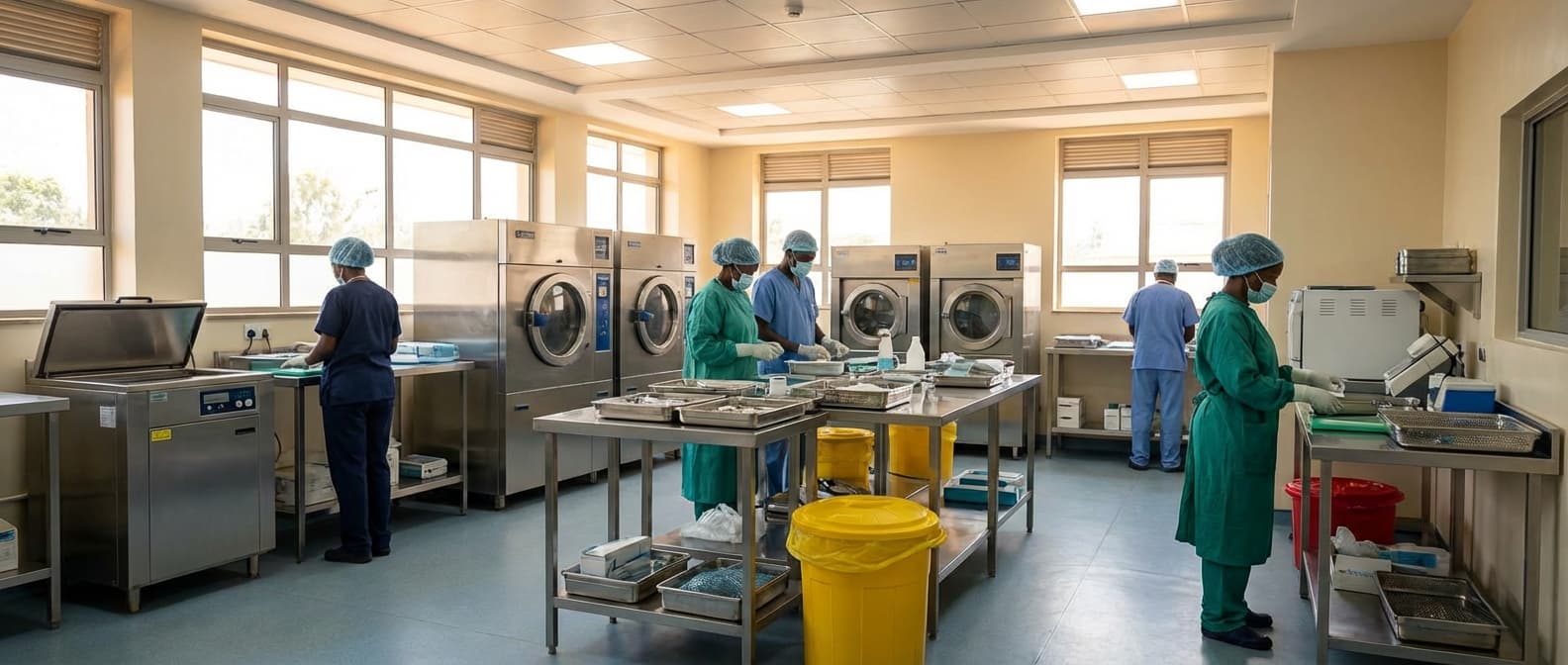
Autoclave Validation Support Service in Zimbabwe
Engineering Excellence & Technical Support
Autoclave Validation Support Service High-standard technical execution following OEM protocols and local regulatory frameworks.
Expert Autoclave Validation Services
Ensure the reliability and efficacy of your sterilization processes with our comprehensive autoclave validation services. We adhere to international standards (e.g., ISO 13485, FDA guidelines) to provide documented evidence of your autoclave's performance, guaranteeing effective microbial inactivation and patient safety in Zimbabwe's healthcare facilities.
Data-Driven Performance Verification
Leverage our cutting-edge validation techniques and advanced monitoring equipment. We conduct rigorous cycle testing, thermal mapping, and biological/chemical indicator challenges to generate precise, actionable data. This ensures your autoclaves consistently meet stringent regulatory requirements and operational efficiency for medical device reprocessing and laboratory sterilization in Zimbabwe.
Regulatory Compliance & Risk Mitigation
Navigate Zimbabwe's evolving healthcare regulations with confidence. Our specialized validation support service helps you achieve and maintain compliance, reducing the risk of non-conformance and associated penalties. We provide detailed, auditable reports crucial for inspections and quality assurance, safeguarding your institution's reputation and patient care.
What Is Autoclave Validation Support Service In Zimbabwe?
Autoclave Validation Support Service in Zimbabwe refers to a specialized technical service provided to ensure that steam sterilization equipment (autoclaves) in various healthcare, research, and industrial settings are functioning correctly and consistently achieving the required sterilization parameters. This involves a rigorous, documented process of testing and verification to confirm that the autoclave can effectively eliminate or inactivate all viable microorganisms, including spores, from medical devices, laboratory equipment, or other materials.
| Who Needs Autoclave Validation Support? | Typical Use Cases |
|---|---|
| Healthcare Facilities: Hospitals, clinics, dental practices, veterinary clinics, and surgical centers where reusable medical and dental instruments require sterilization. | Sterilization of surgical instruments, dental tools, endoscopes, glassware, and other medical supplies. |
| Research Laboratories: Biomedical research labs, microbiology labs, and biotechnology facilities that sterilize laboratory equipment, culture media, and disposable items. | Sterilization of glassware, media, disposable plasticware, and laboratory equipment used in research and experimental procedures. |
| Pharmaceutical and Biotechnology Companies: Manufacturing facilities involved in the production of pharmaceuticals and biologics, requiring sterilization of equipment and materials. | Sterilization of production equipment, packaging materials, and components in GMP (Good Manufacturing Practice) environments. |
| Food and Beverage Industry: Facilities that utilize autoclaves for sterilization purposes, though less common than in healthcare or research. | Sterilization of certain food products or processing equipment where high-level sterilization is mandated. |
| Waste Management and Decontamination Services: Facilities that process infectious waste. | Decontamination of biohazardous waste prior to disposal. |
Key Aspects of Autoclave Validation Support Service:
- Installation Qualification (IQ): Verifying that the autoclave is installed according to the manufacturer's specifications and relevant regulatory requirements. This includes checking power, water, and drainage connections, as well as environmental conditions.
- Operational Qualification (OQ): Testing the autoclave's operational capabilities within its specified range. This involves performing cycles with specific temperature, pressure, and time parameters to ensure they are met consistently and accurately.
- Performance Qualification (PQ): Demonstrating that the autoclave can consistently sterilize a challenging load under normal operating conditions. This is typically achieved using biological indicators (BIs) and chemical indicators (CIs) placed within the load to confirm the absence of viable microorganisms.
- Revalidation: Periodic re-testing of the autoclave to ensure continued compliance with validation parameters, usually conducted annually or after significant maintenance or repairs.
- Documentation and Reporting: Comprehensive documentation of all test procedures, results, and deviations, culminating in a validation report that serves as evidence of compliance for regulatory bodies.
- Calibration: Ensuring that critical measuring instruments within the autoclave (e.g., temperature sensors, pressure gauges) are accurately calibrated against traceable standards.
Who Needs Autoclave Validation Support Service In Zimbabwe?
In Zimbabwe, organizations and departments that rely on sterilized equipment and materials for critical operations will benefit significantly from Autoclave Validation Support Services. This service ensures that autoclaves are functioning correctly and consistently achieving the required sterilization parameters, which is paramount for safety, regulatory compliance, and operational efficiency. Without proper validation, there's a risk of ineffective sterilization, leading to contamination, patient harm, and costly reprocessing or product recalls.
| Customer Type | Key Departments/Areas | Why Validation is Crucial |
|---|---|---|
| Hospitals and Healthcare Facilities | Operating Theatres, Central Sterile Supply Department (CSSD), Intensive Care Units (ICUs), Emergency Departments, Dental Wards, Outpatient Clinics | Patient safety, prevention of hospital-acquired infections (HAIs), compliance with healthcare regulations (e.g., Ministry of Health and Child Care guidelines), assurance of surgical instrument sterility. |
| Laboratories (Research, Diagnostic, Industrial) | Microbiology Labs, Molecular Biology Labs, Chemistry Labs, Pathology Labs, Quality Control Labs | Ensuring sterility of media, reagents, glassware, and equipment to prevent contamination of experiments and diagnostic tests, maintaining data integrity, regulatory compliance for specific industries. |
| Pharmaceutical Manufacturers | Sterile Production Units, Quality Assurance (QA) / Quality Control (QC) Departments | Ensuring sterility of drug products, vials, stoppers, and manufacturing equipment, meeting Good Manufacturing Practice (GMP) standards, preventing product recalls due to microbial contamination, patient safety. |
| Food and Beverage Processing Plants | Quality Control Labs, Production Lines (for sterilization of packaging or specific ingredients) | Ensuring the sterility of food packaging, specific ingredients, or processing equipment to prevent spoilage and foodborne illnesses, meeting food safety standards (e.g., HACCP principles). |
| Dental Clinics | Sterilization Rooms, Dental Instrument Handling Areas | Patient safety, prevention of cross-contamination, compliance with dental professional standards, ensuring the sterility of dental instruments and handpieces. |
| Veterinary Clinics and Hospitals | Surgical Suites, Diagnostic Labs, Sterilization Areas | Animal welfare, prevention of disease transmission, ensuring the sterility of surgical instruments and diagnostic equipment. |
| Educational Institutions | Biology Labs, Chemistry Labs, Medical Training Facilities | Ensuring safe and effective practical sessions for students, maintaining the integrity of scientific experiments, providing a safe learning environment. |
| Cosmetic and Personal Care Product Manufacturers | Sterilization of Packaging, QA/QC Labs | Ensuring the microbial safety of cosmetic products, preventing contamination of packaging materials, meeting consumer safety expectations. |
| Waste Management and Sterilization Facilities | Medical Waste Sterilization Units | Safe disposal of infectious medical waste, compliance with environmental and public health regulations, preventing the spread of pathogens. |
Target Customers and Departments in Zimbabwe Requiring Autoclave Validation Support Service
- Hospitals and Healthcare Facilities
- Laboratories (Research, Diagnostic, Industrial)
- Pharmaceutical Manufacturers
- Food and Beverage Processing Plants
- Dental Clinics
- Veterinary Clinics and Hospitals
- Educational Institutions with Science Departments
- Cosmetic and Personal Care Product Manufacturers
- Waste Management and Sterilization Facilities
Autoclave Validation Support Service Process In Zimbabwe
This document outlines the typical workflow for Autoclave Validation Support Services in Zimbabwe, from initial client inquiry to the final execution of validation activities. The process is designed to be systematic, ensuring compliance with relevant standards and regulatory requirements for medical and laboratory equipment.
| Phase | Key Activities | Deliverables/Outcomes | Responsible Party | Timeline (Indicative) |
|---|---|---|---|---|
| Phase 1: Inquiry & Initial Consultation |
| Understanding of client needs, preliminary scope of work, initial advice. | Client & Service Provider | 1-2 business days |
| Phase 2: Quotation & Contract Negotiation |
| Formal quotation/proposal, signed service agreement. | Service Provider & Client | 2-5 business days |
| Phase 3: Planning & Preparation |
| Approved validation protocols, scheduled appointment, validated equipment. | Service Provider | 3-7 business days (prior to execution) |
| Phase 4: Execution of Validation |
| Raw validation data, observations during testing, initial pass/fail indications. | Service Provider (Validation Technicians) | 1-3 days per autoclave (depending on complexity) |
| Phase 5: Reporting & Documentation |
| Final Autoclave Validation Report, certificates, and supporting documentation. | Service Provider & Client | 3-7 business days (after execution) |
| Phase 6: Follow-up & Revalidation |
| Recommendations for improvement, planned revalidation schedule. | Service Provider & Client | Ongoing/As needed |
Autoclave Validation Support Service Process
- Phase 1: Inquiry & Initial Consultation
- Phase 2: Quotation & Contract Negotiation
- Phase 3: Planning & Preparation
- Phase 4: Execution of Validation
- Phase 5: Reporting & Documentation
- Phase 6: Follow-up & Revalidation
Autoclave Validation Support Service Cost In Zimbabwe
The cost of autoclave validation support services in Zimbabwe is influenced by several key factors, leading to a range of pricing structures. These factors are essential for service providers to assess the scope of work and for clients to understand the value they receive.
Key Pricing Factors:
- Number and Type of Autoclaves: Larger facilities with multiple autoclaves, or those with varied autoclave types (e.g., pre-vacuum, gravity displacement, high-pressure), will generally incur higher costs due to increased validation points and complexity.
- Scope of Validation: Full validation typically includes Installation Qualification (IQ), Operational Qualification (OQ), and Performance Qualification (PQ). The extent to which each of these phases is required will impact the overall price. Some clients may only require re-validation or specific performance tests.
- Facility Size and Complexity: The physical layout of the facility, accessibility to the autoclaves, and any specific environmental controls or infrastructure requirements can influence the time and resources needed for validation, thereby affecting the cost.
- Frequency of Validation: Regulatory requirements or internal quality management systems dictate the frequency of validation (e.g., annually, bi-annually). More frequent validations might benefit from package deals or retainers.
- Regulatory Compliance Needs: Different industries (e.g., healthcare, pharmaceuticals, research laboratories) have varying stringent regulatory requirements. Adherence to specific standards like ISO 13485, Good Manufacturing Practices (GMP), or local health regulations can necessitate more detailed testing and documentation, leading to higher costs.
- Service Provider's Expertise and Reputation: Established service providers with a proven track record, specialized equipment, and highly trained technicians may command higher prices due to the reliability and quality of their services.
- Geographical Location: Travel and accommodation costs for the validation team to reach the client's facility within Zimbabwe can add to the overall expense. Remote locations might incur additional charges.
- Documentation and Reporting Requirements: The level of detail and customization required in the validation reports can also influence the cost. Comprehensive reports that meet specific regulatory body expectations will take more time to prepare.
- Additional Services: Some providers might offer bundled services such as preventative maintenance, repairs, or operator training alongside validation, which would increase the total cost but offer added value.
Estimated Pricing Ranges (in Zimbabwean Dollars - ZWL):
It is crucial to note that these are estimates and can fluctuate significantly based on the aforementioned factors. It is always recommended to obtain detailed quotes from multiple reputable service providers.
- Basic Re-validation (e.g., for a single, standard autoclave): ZWL 15,000 - ZWL 35,000
- Full Validation (IQ, OQ, PQ for a single, standard autoclave): ZWL 40,000 - ZWL 80,000
- Multi-Autoclave Validation (e.g., 3-5 autoclaves, more complex systems): ZWL 100,000 - ZWL 250,000+
- Annual Service Contracts (including validation and preventative maintenance): Pricing varies widely, often negotiated based on the number and type of equipment, typically ranging from ZWL 50,000 to ZWL 200,000+ annually.
| Service Type | Estimated Price Range (ZWL) |
|---|---|
| Basic Re-validation (single standard autoclave) | 15,000 - 35,000 |
| Full Validation (IQ, OQ, PQ - single standard autoclave) | 40,000 - 80,000 |
| Multi-Autoclave Validation (e.g., 3-5 autoclaves, complex systems) | 100,000 - 250,000+ |
| Annual Service Contracts (validation + maintenance) | 50,000 - 200,000+ (negotiable) |
Factors Influencing Autoclave Validation Support Service Costs in Zimbabwe
- Number and Type of Autoclaves
- Scope of Validation (IQ, OQ, PQ)
- Facility Size and Complexity
- Frequency of Validation
- Regulatory Compliance Needs (e.g., healthcare, pharma)
- Service Provider's Expertise and Reputation
- Geographical Location within Zimbabwe
- Documentation and Reporting Requirements
- Inclusion of Additional Services (e.g., maintenance, training)
Affordable Autoclave Validation Support Service Options
Navigating the complexities of autoclave validation can be a significant undertaking for any healthcare facility, laboratory, or manufacturing plant. Ensuring your sterilization equipment operates effectively and complies with regulatory standards is paramount. This service aims to provide accessible and affordable autoclave validation support, offering flexible solutions to meet diverse needs and budgets. We understand that cost is a major consideration, and our approach is built around delivering exceptional value through transparent pricing, customizable service packages, and strategic cost-saving measures.
| Value Bundle Option | Key Inclusions | Target User | Estimated Cost-Saving Benefit | |
|---|---|---|---|---|
| Basic Compliance Validation | Essential performance qualification (PQ) tests, cycle development review, basic documentation package. | Facilities needing annual or routine validation to meet baseline regulatory requirements. | Up to 15% savings compared to ad-hoc testing; ensures compliance, avoiding fines. | Can be bundled with initial purchase or annual maintenance. |
| Comprehensive Validation & IQ/OQ/PQ | Includes Installation Qualification (IQ), Operational Qualification (OQ), and Performance Qualification (PQ) testing, detailed report generation, and on-site training for basic troubleshooting. | New autoclave installations, facilities undergoing significant process changes, or those requiring full documented validation. | Up to 20% savings compared to purchasing services individually; reduces risk of installation errors and ensures immediate operational efficiency. | Recommended for new equipment or major upgrades. |
| Preventative Maintenance & Validation Synergy | Combines scheduled preventative maintenance with validation testing, offering a unified service visit. | Facilities prioritizing equipment longevity and continuous operational readiness. | Up to 25% savings on combined services; minimizes downtime, prevents costly repairs, and ensures consistent validation status. | Ideal for facilities with multi-year service agreements. |
| Remote Monitoring & Support Package | Includes periodic remote data review of validation parameters and on-call remote troubleshooting for minor issues. | Facilities with established validation protocols looking for proactive oversight and reduced on-site visits for minor issues. | Savings on travel costs and technician time; faster resolution of minor issues, reducing potential for extended downtime. | Best suited for facilities with reliable internal systems and established validation procedures. |
Understanding Our Value-Based Autoclave Validation Support
- Comprehensive Validation Packages: We offer a range of pre-defined validation packages designed to cover essential testing and documentation requirements. These bundles provide a structured and cost-effective way to ensure your autoclave meets all necessary standards.
- Customizable Service Bundles: Recognizing that no two facilities are alike, we allow for the customization of our validation services. You can tailor a package to include only the specific tests and documentation you require, avoiding unnecessary costs.
- Tiered Service Levels: Our offerings are structured into tiered levels, from essential compliance checks to more in-depth validation and ongoing monitoring. This allows you to select the service level that best matches your operational needs and budget constraints.
- On-Demand Support & Consultation: Beyond scheduled validations, we offer on-demand support for troubleshooting, minor adjustments, or consultation on best practices, ensuring you have expert assistance when you need it without a recurring commitment.
- Proactive Maintenance Integration: By integrating validation with proactive maintenance schedules, we help prevent potential equipment failures that could lead to costly downtime and re-validation expenses.
- Digital Documentation & Reporting: We provide clear, concise, and digital documentation of all validation processes and results. This streamlined approach reduces printing costs and facilitates easy retrieval and auditing.
- Experienced & Certified Technicians: Our team consists of highly trained and certified technicians who possess extensive knowledge of various autoclave types and validation protocols, ensuring accurate and efficient service.
- Flexible Scheduling Options: We work with your operational schedule to minimize disruption, offering flexible appointment times to fit your facility's workflow, potentially avoiding overtime or weekend charges.
Verified Providers In Zimbabwe
In Zimbabwe's evolving healthcare landscape, the assurance of quality and trustworthiness is paramount. Patients and healthcare seekers are increasingly looking for verified providers who demonstrate a commitment to excellence, ethical practice, and patient well-being. This is where Franance Health emerges as a leading name, setting a benchmark for verified healthcare services in the nation.
| Credential/Attribute | Franance Health Assurance | Benefit to Patients |
|---|---|---|
| Accreditation | Mandatory adherence to recognized medical standards | Ensures quality and safety of care |
| Practitioner Licensing & Qualifications | Verified through official bodies | Guarantees competence and expertise of healthcare professionals |
| Patient Feedback & Satisfaction | Regularly monitored and incorporated | Promotes continuous improvement in service delivery |
| Ethical Compliance | Strict adherence to medical ethics and regulations | Upholds patient rights and fair treatment |
| Technological Advancement | Focus on facilities with modern medical equipment | Enhances diagnostic accuracy and treatment efficacy |
Franance Health Credentials & Why They Represent the Best Choice:
- {"title":"Rigorous Accreditation & Certification","description":"Franance Health partners exclusively with healthcare facilities and professionals who have undergone stringent accreditation processes by recognized national and international bodies. This ensures adherence to the highest standards of medical practice, patient safety, and operational efficiency."}
- {"title":"Transparent Practitioner Verification","description":"Every doctor, specialist, and allied health professional associated with Franance Health is meticulously vetted. This includes verification of their medical licenses, qualifications, specialization credentials, and professional conduct records, offering patients complete peace of mind."}
- {"title":"Commitment to Patient-Centric Care","description":"Beyond certifications, Franance Health emphasizes providers who demonstrate a genuine dedication to patient-centered care. This includes excellent communication, empathy, ethical treatment, and a focus on achieving the best possible health outcomes for individuals."}
- {"title":"Advanced Technology & Infrastructure","description":"Verified Franance Health providers are equipped with modern medical technology and maintain state-of-the-art facilities, enabling accurate diagnosis, effective treatment, and a comfortable patient experience."}
- {"title":"Ethical Medical Practices","description":"Franance Health champions providers who uphold the strictest ethical medical codes, ensuring that patients receive honest advice, fair pricing, and treatments that are medically necessary and in their best interest."}
- {"title":"Seamless Access & Navigation","description":"By providing a curated list of verified providers, Franance Health simplifies the process of finding trusted healthcare services. Their platform allows users to easily search, compare, and book appointments with confidence."}
Scope Of Work For Autoclave Validation Support Service
This Scope of Work (SOW) outlines the services to be provided for Autoclave Validation Support. The objective is to ensure that the autoclave(s) operate within validated parameters, meeting all applicable regulatory and company-specific requirements for sterilization efficacy. This includes performing Installation Qualification (IQ), Operational Qualification (OQ), and Performance Qualification (PQ) activities. The technical deliverables will consist of comprehensive reports, data logs, and calibration certificates. Standard specifications for the validation process will adhere to industry best practices and relevant guidelines such as those from the FDA (Food and Drug Administration), ISO (International Organization for Standardization), and EU GMP (European Good Manufacturing Practice).
| Deliverable Type | Description | Standard Specification Reference |
|---|---|---|
| IQ Report | Document detailing the installation verification, including equipment identification, traceability of components, and verification of utility connections (e.g., power, water, steam). | Manufacturer's Installation Manual, relevant industry standards (e.g., ISO 17665-1). |
| OQ Report | Document detailing operational verification tests, including range checks, alarm functions, cycle parameter verification, and system integrity tests. Includes raw data logs for each test. | Manufacturer's Operating Manual, process-specific critical parameters, relevant industry standards (e.g., ISO 17665-1). |
| PQ Report | Document detailing the validation of sterilization cycles under representative load conditions. Includes biological indicator (BI) and/or chemical indicator (CI) results, cycle data logs, and analysis of effectiveness. | Product/load characterization, sterilization cycle development, relevant industry standards (e.g., ISO 17665-1, FDA guidance on sterilization). |
| Calibration Certificates | Current and valid calibration certificates for all critical instruments used during the validation process (e.g., temperature probes, pressure transducers, data loggers). | NIST traceable calibration, ISO 17025 accredited laboratories (if applicable). |
| Validation Protocol | The detailed plan outlining the scope, objectives, responsibilities, and procedures for IQ, OQ, and PQ. This document serves as the blueprint for the validation activities. | Company's Validation Master Plan (VMP), relevant regulatory guidelines. |
| Standard Operating Procedures (SOPs) | Copies of relevant, approved SOPs for the operation, maintenance, and calibration of the autoclave, as well as for the validation process itself. | Company's Quality Management System (QMS) requirements. |
Key Validation Phases
- Installation Qualification (IQ): Verifies that the autoclave is installed correctly according to manufacturer's specifications and that all necessary utilities are available and functioning properly.
- Operational Qualification (OQ): Verifies that the autoclave operates consistently within its defined operating ranges and performs all intended functions as specified. This phase includes a series of tests under various operating conditions.
- Performance Qualification (PQ): Verifies that the autoclave consistently performs its intended sterilization cycles effectively and reliably under normal operating conditions and with representative loads. This often involves multiple successful runs of the validated cycle.
Service Level Agreement For Autoclave Validation Support Service
This Service Level Agreement (SLA) outlines the response times and uptime guarantees for the Autoclave Validation Support Service provided by [Your Company Name] to [Client Name]. This SLA aims to ensure the reliable and efficient operation of your autoclave validation processes. It defines the expected levels of service and the remedies available in case of service failures.
| Service Component | Response Time (Business Hours) | Uptime Guarantee | Escalation Procedure |
|---|---|---|---|
| Proactive Monitoring & Alerts | 1 hour for critical alerts, 4 hours for non-critical alerts | 99.5% availability of monitoring systems | Automated alerts trigger support ticket creation. If no acknowledgement within 30 mins, senior technician is notified. |
| Scheduled Validation Support Visits | As per agreed schedule (e.g., quarterly, annually) | N/A (scheduled) | Rescheduling requests must be submitted at least 48 hours in advance. Missed appointments by [Your Company Name] will result in a discount on the next scheduled visit. |
| On-Demand Technical Assistance (Validation Failures) | 2 business hours for remote diagnosis, 8 business hours for on-site dispatch (within a 50-mile radius) | 98.0% success rate for resolving validation failures within 24 business hours of initial contact | Initial contact via phone or email. If resolution not achieved within 4 hours remotely, on-site dispatch is initiated. Critical failures requiring immediate attention will be prioritized. |
| Routine Calibration & Preventative Maintenance | As per agreed schedule (e.g., annual) | N/A (scheduled) | Client will be notified 2 weeks prior to scheduled maintenance. Access to equipment must be provided. |
| Software Updates & Patch Management | Within 48 business hours of notification, during scheduled maintenance windows where possible | N/A (scheduled, but system stability is paramount) | Updates will be communicated to the client at least 7 days in advance, with proposed implementation times. Downtime during updates will be minimized and scheduled to avoid critical operational periods. |
Key Service Components
- Proactive monitoring of validation systems.
- Scheduled validation support visits.
- On-demand technical assistance for validation failures.
- Routine calibration and preventative maintenance checks.
- Software updates and patch management for validation equipment.
Frequently Asked Questions

Ready when you are
Let's scope your Autoclave Validation Support Service in Zimbabwe project in Zimbabwe.

Scaling healthcare logistics and technical systems across the entire continent.