
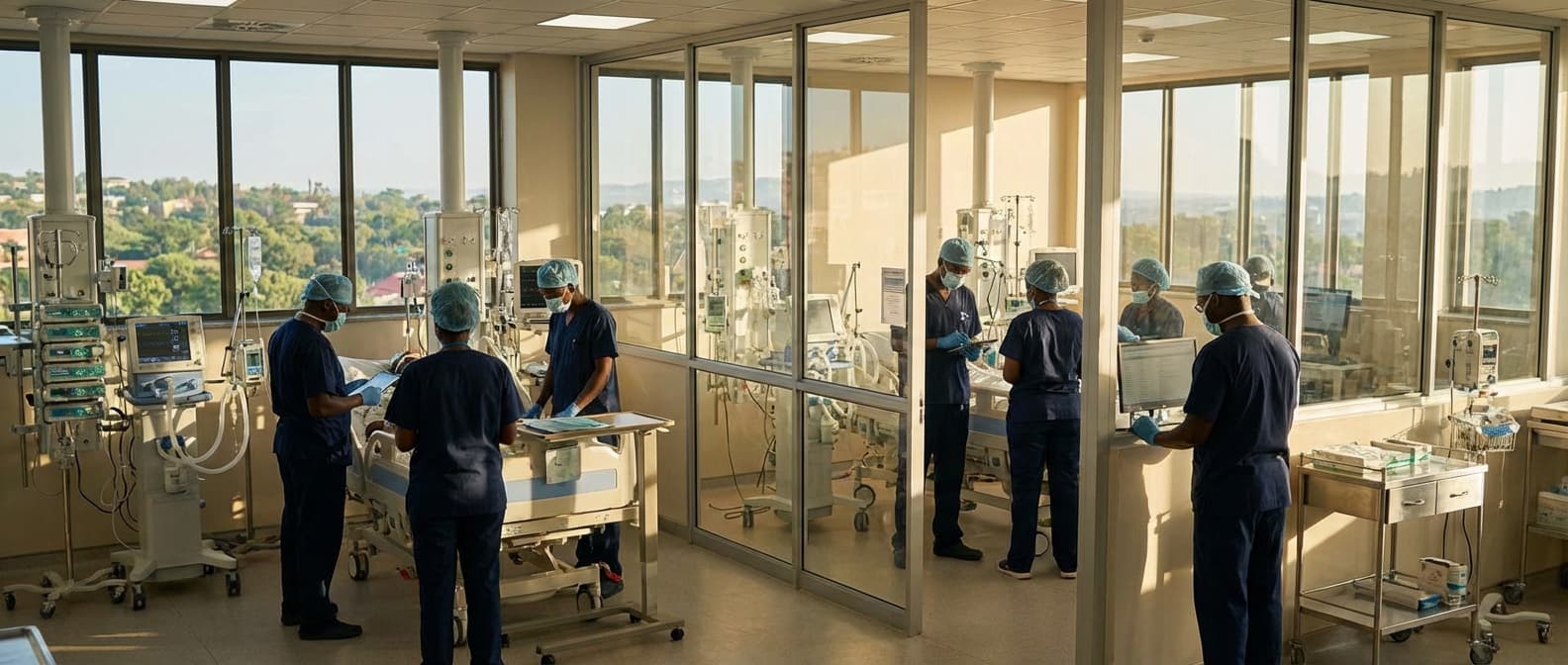
Ventilator Fleet Management & PM in Zimbabwe
Engineering Excellence & Technical Support
Preventive maintenance and fleet management for ICU ventilators High-standard technical execution following OEM protocols and local regulatory frameworks.
Proactive Ventilation Maintenance Schedule Optimization
Implementing a data-driven preventive maintenance (PM) schedule for Zimbabwe's national ventilator fleet, leveraging real-time usage data and predictive analytics to minimize unexpected downtime and ensure consistent patient readiness. This includes sensor-based monitoring of critical components and intelligent alerts for upcoming service needs.
Rapid Response Mobile Maintenance Units Deployment
Establishing a network of strategically located mobile maintenance units across Zimbabwe, equipped with essential parts and trained technicians. These units are designed for rapid deployment to remote healthcare facilities, significantly reducing travel time for critical ventilator repairs and ensuring minimal disruption to patient care.
Centralized Fleet Performance & Inventory Management Platform
Deploying a cloud-based platform for real-time tracking of ventilator location, operational status, and PM history across Zimbabwe. This centralized system enables efficient inventory management of spare parts, facilitates data analysis for performance trends, and supports informed decision-making for resource allocation and fleet expansion.
What Is Ventilator Fleet Management & Pm In Zimbabwe?
Ventilator Fleet Management & Preventative Maintenance (PM) in Zimbabwe refers to the comprehensive lifecycle management of mechanical ventilators owned or operated by healthcare institutions or other entities. This service encompasses the strategic acquisition, deployment, operational monitoring, proactive maintenance, repair, calibration, and eventual decommissioning of ventilator equipment to ensure their optimal functionality, safety, and cost-effectiveness. The core objective is to maximize the availability and reliability of these critical medical devices, thereby supporting patient care and operational continuity within the Zimbabwean healthcare landscape. This involves a systematic approach to manage the entire fleet, from initial procurement through to end-of-life disposal, with a strong emphasis on scheduled preventative maintenance to mitigate the risk of unexpected failures.
| Who Needs Ventilator Fleet Management & PM in Zimbabwe? | Typical Use Cases |
|---|---|
| Public Hospitals and Central Hospitals: Government-owned facilities with large patient loads and diverse medical needs require robust management of their ventilator fleets to ensure continuous availability for critical care. | University Teaching Hospitals: These institutions often have advanced equipment and serve as centers of excellence, demanding high reliability and precision from their ventilators for both patient care and medical training. |
| Private Hospitals and Clinics: For-profit healthcare providers invest in modern equipment and require efficient management to maintain a competitive edge and ensure patient satisfaction. | Missionary and Non-Governmental Organization (NGO) Hospitals: Facilities often operating in resource-constrained environments benefit from managed fleets to maximize the lifespan and utilization of expensive equipment, often supported by external funding. |
| National Referral Centers: Specialized centers focusing on critical care, trauma, or specific respiratory conditions necessitate a highly functional and readily available ventilator inventory. | Emergency Response and Disaster Preparedness Units: Government agencies or humanitarian organizations responsible for disaster response require well-maintained ventilators for rapid deployment during health emergencies and pandemics. |
| Medical Equipment Suppliers and Service Providers: Companies specializing in the sale and maintenance of medical equipment may offer comprehensive fleet management services to their clients. | Healthcare Regulatory Bodies: While not directly managing fleets, these bodies set the standards and often oversee the compliance of healthcare providers with maintenance and safety protocols. |
| Research Institutions: Facilities conducting clinical research requiring precise mechanical ventilation support. | COVID-19 Response Initiatives: During the pandemic, managing and maintaining a surge capacity of ventilators was paramount for public health. |
Key Components of Ventilator Fleet Management & PM in Zimbabwe
- Asset Tracking and Inventory Management: Maintaining a detailed, real-time inventory of all ventilators, including make, model, serial number, purchase date, warranty status, location, and maintenance history.
- Preventative Maintenance (PM) Scheduling and Execution: Developing and adhering to a rigorous PM schedule based on manufacturer recommendations, usage patterns, and regulatory requirements. This includes routine inspections, cleaning, functional tests, calibration, and replacement of wear-and-tear parts.
- Corrective Maintenance and Repair: Promptly addressing equipment malfunctions and breakdowns through efficient troubleshooting, diagnosis, and repair by qualified technicians, ensuring minimal downtime.
- Calibration and Performance Verification: Regularly calibrating ventilators to ensure they deliver precise and accurate therapeutic settings, critical for patient safety and treatment efficacy. This includes verification of delivered tidal volume, pressure, flow, and oxygen concentrations.
- Training and Competency Assessment: Providing ongoing training for biomedical engineers, technicians, and clinical staff on the proper operation, basic troubleshooting, and care of various ventilator models.
- Spare Parts Management: Establishing a robust system for procuring, storing, and managing essential spare parts to facilitate timely repairs and PM activities.
- Regulatory Compliance: Ensuring all fleet management activities and equipment adhere to national health regulations, standards, and guidelines relevant to medical device maintenance and patient safety in Zimbabwe.
- Performance Monitoring and Reporting: Implementing systems to track key performance indicators (KPIs) such as uptime, mean time between failures (MTBF), mean time to repair (MTTR), and PM compliance rates. Regular reporting to stakeholders is crucial.
- Budgeting and Cost Management: Developing and managing budgets for acquisition, maintenance, repair, and consumables, optimizing resource allocation for the ventilator fleet.
- End-of-Life Planning and Disposal: Strategically planning for the decommissioning and responsible disposal or refurbishment of ventilators at the end of their service life, in compliance with environmental and health regulations.
Who Needs Ventilator Fleet Management & Pm In Zimbabwe?
Ventilator fleet management and preventative maintenance (PM) are crucial for ensuring the reliability and optimal performance of these life-saving medical devices. In Zimbabwe, where healthcare resources can be stretched, a robust system for managing and maintaining ventilators is not just beneficial, but essential. This service ensures that when a patient critically needs a ventilator, it is functional, safe, and ready to use, minimizing downtime and preventing potential failures during crucial procedures. Proactive PM also extends the lifespan of expensive equipment, reducing the need for premature replacement and thus conserving valuable capital.
| Target Customer/Department | Key Needs/Challenges | Benefits of Fleet Management & PM |
|---|---|---|
| Public Hospitals (Ministry of Health and Child Care) | Limited budgets, aging equipment, scarcity of trained biomedical engineers, high patient volumes, need for standardized maintenance protocols. | Ensured availability of critical life support, reduced repair costs, extended equipment lifespan, compliance with national health standards, improved patient outcomes. |
| Private Hospitals and Clinics | High operational costs, need for premium patient care, brand reputation, return on investment for expensive equipment, potential for rapid technological upgrades. | Maintained high service quality, minimized patient care interruptions, optimized asset utilization, predictable maintenance expenses, preserved investment value. |
| Referral and Tertiary Centers | Complex and specialized ventilation needs, diverse range of ventilator models, high usage rates, requirement for cutting-edge technology, advanced troubleshooting needs. | Guaranteed operational readiness for complex cases, efficient management of a diverse fleet, timely access to specialized technical support, enhanced diagnostic capabilities. |
| NGOs and Humanitarian Organizations | Resource-constrained environments, remote locations, need for cost-effective and reliable solutions, rapid deployment capabilities. | Ensured consistent healthcare delivery in underserved areas, maximized impact of donated equipment, reduced logistical burdens for maintenance, fostered self-sufficiency through training. |
| Biomedical Engineering Departments | Workload management, spare parts inventory, calibration and testing schedules, training needs for new equipment, adherence to safety regulations. | Streamlined maintenance workflow, optimized spare parts stock, improved accuracy of calibrations, enhanced technician skills, ensured regulatory compliance and patient safety. |
| Intensive Care Units (ICUs) / Critical Care Units (CCUs) | 24/7 operational demands, immediate need for functional ventilators, potential for equipment failure during critical moments, staff reliance on equipment. | Minimized critical equipment downtime, enhanced patient safety during ventilation, ensured consistent therapy delivery, reduced staff stress and workload related to equipment issues. |
| Anesthesiology Departments | Integration with surgical procedures, need for precise ventilation control, sterile environment requirements, equipment availability for scheduled and emergency surgeries. | Seamless integration into surgical workflows, assured equipment availability for all procedures, maintained optimal ventilation settings for patient safety, reduced surgical delays. |
Who Needs Ventilator Fleet Management & PM in Zimbabwe?
- Hospitals (public and private)
- Referral Centers
- District Hospitals
- Mission Hospitals
- Private Clinics with critical care units
- Government Health Ministries and Agencies
- Non-Governmental Organizations (NGOs) involved in healthcare delivery
- Tertiary and Specialized Medical Centers
- Emergency Medical Services (EMS)
Ventilator Fleet Management & Pm Process In Zimbabwe
This document outlines the workflow for Ventilator Fleet Management and Preventive Maintenance (PM) processes within Zimbabwe. It covers the entire lifecycle from the initial inquiry for ventilator services or repairs to the successful execution and closure of the maintenance task. The process is designed to ensure the optimal performance, longevity, and availability of the ventilator fleet.
| Phase | Stage | Description | Responsible Party | Key Activities | Outputs/Deliverables | Dependencies | System/Tool Used |
|---|---|---|---|---|---|---|---|
| Inquiry & Identification | Initial Request/Notification | A ventilator requires maintenance, repair, or scheduled PM. | Hospital Biomedical Engineering Dept. / User Department | Report malfunction, request PM schedule, or identify need for service. | Service Request Form / PM Schedule Notification | Presence of malfunctioning unit or scheduled PM date. | Hospital's internal reporting system / Email |
| Inquiry & Identification | Triage & Prioritization | Assessing the urgency and impact of the request. | Hospital Biomedical Engineering Dept. / MoHCC (for critical cases) | Evaluate severity of malfunction, impact on patient care, and resource availability. | Prioritized Service Request / Work Order Assignment | Completion of Initial Request/Notification. | Hospital's internal reporting system / Ticketing system |
| Planning & Approval | Service Provider Identification | Selecting the appropriate qualified service provider for the specific ventilator model. | Hospital Biomedical Engineering Dept. / MoHCC (for approved vendor lists) | Consulting approved vendor lists, checking service contracts, or soliciting bids if necessary. | Identified Service Provider | Completed Triage & Prioritization. | Approved Vendor Database / Procurement Records |
| Planning & Approval | Scope of Work & Quotation | Defining the required maintenance/repair tasks and obtaining cost estimates. | Approved Service Provider | Conducting initial assessment (if possible remotely), detailing parts and labor, providing quotation. | Detailed Quotation / Service Proposal | Identified Service Provider, understanding of the issue. | Service Provider's Quotation System / Email |
| Planning & Approval | Budgetary & Management Approval | Securing the necessary funds and formal authorization for the service. | Hospital Finance Department / Hospital Management / MoHCC | Reviewing quotation against budget, obtaining financial approval, issuing Purchase Order (PO). | Approved Quotation / Issued Purchase Order | Received Detailed Quotation / Service Proposal. | Hospital Financial System / Procurement Portal |
| Execution | Scheduling & Logistics | Coordinating the service visit and ensuring necessary resources are available. | Hospital Biomedical Engineering Dept. / Approved Service Provider | Scheduling technician visit, confirming access, arranging for necessary tools and PPE. | Confirmed Service Schedule / Technician Briefing | Approved Quotation / Issued Purchase Order. | Hospital Calendar / Communication Platform |
| Execution | On-Site Service/Repair | The service provider performs the maintenance or repair on the ventilator. | Approved Service Provider / Technician | Performing diagnostics, replacing parts, conducting calibration, testing functionality. | Completed Service Report / Test Results | Confirmed Service Schedule / Availability of parts (if required). | Technician's Diagnostic Tools / Manufacturer's Software |
| Execution | Quality Check & Handover | Verifying the successful completion of the service and reintegrating the ventilator into use. | Hospital Biomedical Engineering Dept. / Service Provider | Reviewing service report, performing independent testing, user acceptance. | Signed Service Completion Form / Updated Asset Record | Completed Service Report / Test Results. | Hospital Biomedical Engineering Department's Checklist |
| Closure & Documentation | Invoice Processing & Payment | Settling the financial obligations for the service provided. | Hospital Finance Department / Procurement Department | Receiving and verifying invoice against PO and service completion, processing payment. | Payment Confirmation / Closed PO | Signed Service Completion Form / Verified Invoice. | Hospital Financial System |
| Closure & Documentation | Record Keeping & Analysis | Updating inventory systems and analyzing service data for trend identification. | Hospital Biomedical Engineering Dept. / MoHCC (for fleet-wide analysis) | Updating ventilator maintenance logs, asset management system, generating PM compliance reports, analyzing failure patterns. | Updated Asset Register / Performance Reports | Payment Confirmation / Closed PO, Completed Service Reports. | Inventory Management System / Fleet Management Software / Data Analysis Tools |
Key Stakeholders Involved
- Ministry of Health and Child Care (MoHCC)
- Hospital Biomedical Engineering Departments
- Approved Ventilator Service Providers/Technicians
- Procurement Department (for parts/new units)
- Logistics and Transport Department
- Inventory Management System
Ventilator Fleet Management & Pm Cost In Zimbabwe
Managing ventilator fleets and their preventative maintenance (PM) in Zimbabwe involves a complex interplay of factors that influence pricing. The cost of ventilator fleet management and PM is not a fixed figure but rather a dynamic range influenced by various considerations. These include the type and age of the ventilators, the complexity of the PM tasks, the availability of spare parts, the expertise of the service technicians, geographical location within Zimbabwe, and the service provider's business model. The Zimbabwean economy, with its unique currency dynamics and import challenges, further shapes these costs, often leading to prices quoted in USD with conversion rates significantly impacting the local currency (ZWL) expenditure.
| Service Category | Estimated Price Range (USD per unit/year) | Estimated Price Range (ZWL per unit/year) - Indicative |
|---|---|---|
| Basic Preventative Maintenance (Annual Check-up, Calibration, Filter Replacement) | USD 200 - USD 500 | ZWL 140,000 - ZWL 350,000 (based on approx. 700 ZWL/USD) |
| Comprehensive Preventative Maintenance (Includes all basic tasks + deeper inspection, component testing, software updates) | USD 500 - USD 1,200 | ZWL 350,000 - ZWL 840,000 (based on approx. 700 ZWL/USD) |
| Full Fleet Management & PM Contract (Includes regular PM, unscheduled repairs, loaner units, reporting, proactive monitoring) | USD 1,000 - USD 3,000+ per unit/year (depending on scope and number of units) | ZWL 700,000 - ZWL 2,100,000+ per unit/year (based on approx. 700 ZWL/USD) |
| Emergency Repair Call-out (Labor + Parts) | USD 150 - USD 500+ (highly variable based on issue and parts) | ZWL 105,000 - ZWL 350,000+ (based on approx. 700 ZWL/USD) |
| Cost of Critical Spare Parts (e.g., Sensors, Valves, Batteries) | USD 50 - USD 500+ per part | ZWL 35,000 - ZWL 350,000+ per part (based on approx. 700 ZWL/USD) |
Key Pricing Factors for Ventilator Fleet Management & PM in Zimbabwe
- Ventilator Type and Technology: High-end, technologically advanced ventilators will naturally have higher PM costs due to specialized components and software. Older, simpler models might be cheaper to maintain but could also be more prone to breakdowns.
- Age and Condition of Ventilators: Older ventilators often require more frequent and extensive maintenance, increasing PM costs. The overall condition also plays a role – a well-maintained fleet will incur lower reactive maintenance costs.
- Scope of Preventative Maintenance: The frequency and depth of PM (e.g., basic check-ups vs. comprehensive overhauls, specific calibration requirements) directly impact the labor and parts required.
- Availability and Cost of Spare Parts: Sourcing genuine and compatible spare parts in Zimbabwe can be a significant challenge and expense, especially for imported equipment. This includes import duties, shipping costs, and currency fluctuations.
- Technician Expertise and Training: Highly skilled and specialized biomedical engineers are essential for ventilator maintenance. Their salaries, ongoing training, and certifications contribute to the overall cost.
- Geographical Location: Service calls to remote areas in Zimbabwe will incur higher travel and logistical costs compared to urban centers.
- Service Provider's Business Model: Different providers may offer tiered service packages (e.g., basic, premium, comprehensive) with varying price points. In-house vs. outsourced maintenance also impacts cost structure.
- Warranty Status: Ventilators still under manufacturer warranty might have PM covered or subsidized, significantly reducing out-of-pocket expenses.
- Currency Exchange Rates: As most specialized medical equipment and parts are imported, the prevailing USD to ZWL exchange rate has a dramatic impact on the final cost in local currency. Volatility in these rates creates uncertainty.
- Service Level Agreements (SLAs): Contracts outlining response times, uptime guarantees, and the scope of services will influence the pricing. More robust SLAs generally command higher fees.
Affordable Ventilator Fleet Management & Pm Options
Optimizing your ventilator fleet is crucial for patient care and financial health. This guide explores affordable fleet management and preventative maintenance (PM) options, focusing on value bundles and actionable cost-saving strategies. By strategically managing your equipment, you can extend its lifespan, reduce repair costs, and ensure readiness when you need it most.
| Cost-Saving Strategy | Description | Potential Impact |
|---|---|---|
| Proactive Preventative Maintenance (PM) | Regularly scheduled maintenance to identify and address potential issues before they lead to costly breakdowns. Adhering to manufacturer guidelines is key. | Reduces unexpected repair costs, extends equipment lifespan, minimizes downtime. |
| Negotiate Service Contracts | Don't accept the first offer. Compare pricing and service levels from multiple vendors. Consider bundled options that align with your needs. | Lower overall service expenditure, better terms and conditions. |
| Internal Biomedical Team Training | Invest in training your in-house biomedical staff on routine PM and minor repairs for common ventilator models. This reduces reliance on third-party technicians for basic tasks. | Significant reduction in service call fees and labor costs. |
| Strategic Replacement Cycles | Develop a plan for replacing aging equipment based on usage, repair history, and technological advancements, rather than waiting for complete failure. | Avoids catastrophic repair costs, improves patient safety and efficiency. |
| Consignment Parts Inventory | Work with vendors to maintain a small stock of critical parts on consignment, reducing the need for large upfront inventory purchases and ensuring availability. | Lower capital expenditure on parts, faster repair times. |
| Remote Monitoring & Diagnostics | Leverage technology for remote monitoring of ventilator performance. This can help in early detection of issues and reduce the need for on-site visits. | Reduced technician travel costs, quicker issue resolution. |
| Equipment Standardization | Where possible, standardize on fewer ventilator models. This simplifies training, PM, parts inventory, and service contracts. | Streamlined operations, bulk purchasing discounts, reduced complexity. |
| Leasing vs. Purchasing Analysis | Evaluate whether leasing or purchasing is more cost-effective based on your organization's financial model, usage patterns, and upgrade cycles. | Potentially lower upfront costs, predictable monthly expenses, easier technology upgrades. |
Key Value Bundles for Ventilator Fleet Management & PM
- {"title":"Comprehensive Maintenance Contracts","description":"Bundled service agreements that cover routine PM, unscheduled repairs, parts, and sometimes even loaner equipment. These provide predictable budgeting and ensure expert technicians are readily available."}
- {"title":"Extended Warranties & Service Plans","description":"Post-warranty coverage that offers a defined period of protection against unexpected repair costs. Often bundled with PM services for added value."}
- {"title":"Asset Management Software Integration","description":"Software solutions that track equipment location, usage, maintenance history, and compliance. Bundling this with PM services streamlines workflows and improves data-driven decision-making."}
- {"title":"Consumables & Parts Packages","description":"Agreements that include discounted pricing on essential consumables (filters, circuits, etc.) and a stock of commonly needed replacement parts, often integrated with PM visits."}
- {"title":"Training & Education Bundles","description":"Packages that include training for your biomedical staff on specific ventilator models and their maintenance, reducing reliance on external service providers for basic tasks."}
Verified Providers In Zimbabwe
In Zimbabwe's evolving healthcare landscape, identifying and trusting verified providers is paramount. Franance Health stands out as a beacon of reliability and quality, offering a comprehensive suite of services backed by stringent credentialing processes. This commitment to verification ensures that patients receive safe, effective, and ethical medical care. When seeking healthcare services in Zimbabwe, understanding what makes a provider 'verified' and why Franance Health excels in this regard is crucial for making informed decisions.
| Aspect of Verification | Franance Health's Approach | Patient Benefit |
|---|---|---|
| Professional Licensing | Thorough checks of all medical licenses and certifications with relevant regulatory bodies. | Ensures providers are legally qualified and authorized to practice. |
| Educational Background | Verification of academic qualifications from accredited institutions. | Confirms a strong foundation in medical knowledge and training. |
| Clinical Experience | Review of work history, references, and evidence of successful patient outcomes. | Guarantees practical expertise and a proven track record. |
| Reputation and Ethics | Collection of peer reviews, disciplinary records, and patient feedback. | Identifies providers with a strong ethical compass and positive professional standing. |
| Facility Standards | Assessment of infrastructure, equipment, and adherence to safety protocols for partner facilities. | Ensures a safe and well-equipped environment for treatment. |
Why Franance Health is the Best Choice for Verified Healthcare in Zimbabwe
- Rigorous Credentialing and Verification: Franance Health partners exclusively with healthcare professionals and facilities that undergo thorough background checks, license verifications, and peer reviews. This ensures all listed providers meet the highest standards of competence and ethical practice.
- Commitment to Patient Safety: By prioritizing verified providers, Franance Health directly contributes to improved patient safety. Patients can have confidence that they are being treated by qualified individuals who adhere to established medical protocols and guidelines.
- Access to Quality Care: Verification means access to well-equipped facilities and experienced medical practitioners. Franance Health's network is curated to offer a wide range of specialized services, ensuring that patients can find the care they need, when they need it.
- Transparency and Trust: The process of verification fosters transparency. Franance Health makes this information accessible, building trust between patients and healthcare providers. This eliminates the guesswork and anxiety often associated with seeking medical attention.
- Upholding Ethical Standards: Franance Health's commitment extends beyond technical qualifications. They ensure that their verified providers uphold the highest ethical standards, prioritizing patient well-being and confidentiality.
- Continuous Quality Improvement: The verification process is not a one-time event. Franance Health maintains ongoing monitoring and review of its partners to ensure continued adherence to quality standards and to adapt to evolving medical best practices.
- Empowering Patients: By clearly identifying verified providers, Franance Health empowers patients to make confident choices, leading to better health outcomes and a more positive healthcare experience.
Scope Of Work For Ventilator Fleet Management & Pm
This Scope of Work (SOW) outlines the requirements for comprehensive Ventilator Fleet Management and Preventative Maintenance (PM) services. The objective is to ensure the optimal performance, reliability, and safety of the entire ventilator fleet throughout its lifecycle. This includes proactive maintenance, repairs, inventory management, and adherence to established technical specifications and industry standards.
| Section | Description | Key Deliverables | Standard Specifications/Reference |
|---|---|---|---|
| Fleet Inventory Management | Establish and maintain a comprehensive inventory of all ventilators, including model, serial number, purchase date, location, and maintenance history. | Accurate and up-to-date digital inventory database. | Manufacturer's documentation, hospital asset management system. |
| Preventative Maintenance (PM) Program | Develop and execute a scheduled PM program based on manufacturer recommendations and best practices to ensure optimal performance and identify potential issues early. | Completed PM checklists for each unit. | Manufacturer's PM schedule and guidelines, AAMI standards, relevant ISO standards. |
| Corrective Maintenance & Repair Services | Provide prompt and efficient repair services for all ventilator malfunctions and failures, utilizing qualified technicians and genuine parts. | Timely repair of malfunctioning units. | Manufacturer's service manuals, diagnostic procedures, industry best practices for repair. |
| Calibration and Performance Verification | Regular calibration and performance verification of all ventilators to ensure accurate delivery of prescribed parameters. | Calibration certificates for each unit. | Manufacturer's calibration procedures, NIST traceable calibration equipment, relevant clinical guidelines. |
| Parts and Consumables Management | Manage inventory of critical spare parts and consumables, ensuring availability while optimizing stock levels to reduce costs. | Maintained inventory of critical parts and consumables. | Manufacturer's recommended spare parts list, minimum/maximum stock level calculations, vendor management. |
| Documentation and Reporting | Maintain detailed records of all maintenance, repairs, calibrations, and parts used. Provide regular reports on fleet status, PM compliance, and repair trends. | Comprehensive maintenance logs. | Regulatory reporting requirements (e.g., FDA), internal reporting templates, historical performance data analysis. |
| Technical Training and Competency | Ensure all personnel involved in fleet management and PM are adequately trained and certified on the specific ventilator models. | Records of technician training and certifications. | Manufacturer's training programs, industry-recognized certifications. |
| Regulatory Compliance | Ensure all activities comply with relevant healthcare regulations, safety standards, and manufacturer guidelines. | Compliance with all applicable regulations. | FDA regulations, Joint Commission standards, local health authority requirements. |
Key Objectives
- Maximize ventilator uptime and availability for patient care.
- Ensure the safe and effective operation of all ventilators.
- Minimize the total cost of ownership for the ventilator fleet.
- Maintain compliance with regulatory requirements and manufacturer recommendations.
- Provide accurate and timely data for fleet performance analysis and decision-making.
Service Level Agreement For Ventilator Fleet Management & Pm
This Service Level Agreement (SLA) outlines the terms and conditions for Ventilator Fleet Management and Preventative Maintenance (PM) services provided by [Service Provider Name] to [Client Name]. It details the response times for service requests and the uptime guarantees for the managed ventilator fleet.
| Issue Severity | Definition | Target Response Time | Target Resolution Time (from Response) | Uptime Guarantee |
|---|---|---|---|---|
| Critical Failure | Complete and immediate cessation of ventilator function requiring urgent intervention. | 1 Hour (24/7) | 4 Hours | 99.5% |
| Functional Issue (Urgent) | Problem affecting performance, requires prompt attention but not immediate life support risk. | 4 Business Hours | 8 Business Hours | 99.0% |
| Functional Issue (Standard) | Problem requiring attention within normal business hours, no immediate impact on patient care. | 8 Business Hours | 48 Business Hours | 98.5% |
| Preventative Maintenance (PM) | Scheduled maintenance as per manufacturer guidelines and agreed schedule. | Scheduled per agreed plan | As per scheduled duration | N/A (Proactive maintenance prevents downtime) |
Key Definitions
- Ventilator Fleet: All ventilators owned or managed by the Client and covered under this SLA.
- Preventative Maintenance (PM): Scheduled maintenance activities performed on ventilators to ensure optimal performance and prevent failures.
- Critical Failure: A complete and immediate cessation of ventilator function requiring urgent intervention to sustain patient life.
- Functional Issue: A problem with the ventilator that affects its performance but does not immediately render it inoperable, potentially impacting patient care.
- Response Time: The maximum time allowed for a qualified technician to acknowledge and begin working on a reported issue.
- Resolution Time: The maximum time allowed to fully resolve a reported issue and restore the ventilator to full operational status.
- Uptime Guarantee: The minimum percentage of time the ventilator fleet is expected to be fully operational and available for use.
Frequently Asked Questions

Ready when you are
Let's scope your Ventilator Fleet Management & PM in Zimbabwe project in Zimbabwe.

Scaling healthcare logistics and technical systems across the entire continent.