
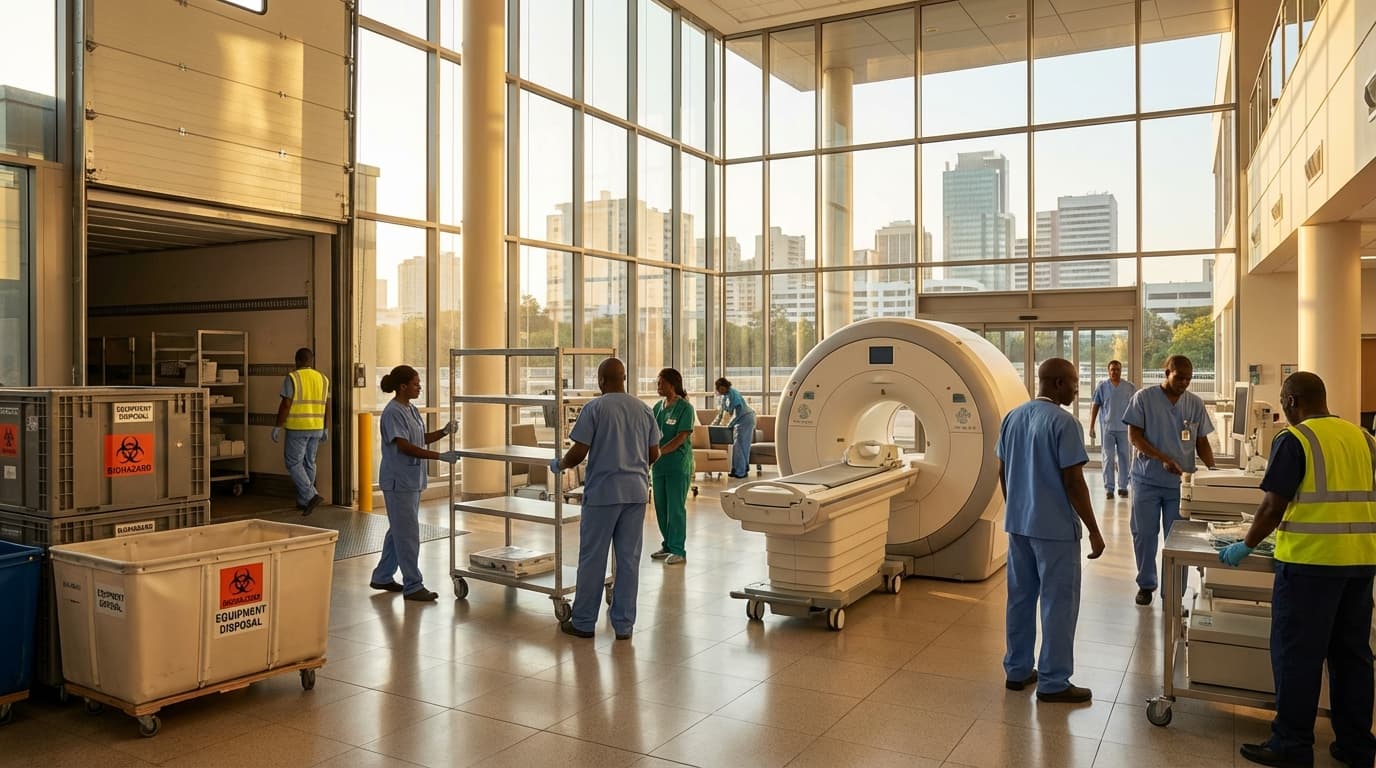
Medical Equipment Relocation Service (Move & Re-Install) in Zimbabwe
Engineering Excellence & Technical Support
Medical Equipment Relocation Service (Move & Re-Install) High-standard technical execution following OEM protocols and local regulatory frameworks.
Specialized Handling of Sensitive Instruments
Our trained technicians are experts in the meticulous handling and transport of delicate medical equipment, from high-precision lab analyzers to sensitive imaging machines. We utilize climate-controlled vehicles and custom-fitted packaging to ensure zero compromise on calibration and performance during transit within Zimbabwe.
Seamless Re-Installation & Calibration
Beyond just moving, we provide comprehensive re-installation services. Our certified engineers will meticulously set up, test, and calibrate your medical equipment at the new Zimbabwe location, ensuring full operational readiness and adherence to all safety and regulatory standards, minimizing downtime for your critical healthcare services.
End-to-End Project Management & Logistics
We offer end-to-end project management for your medical equipment relocation across Zimbabwe. This includes detailed site surveys, optimized route planning, secure transportation, and efficient installation scheduling, all managed by a dedicated project manager to ensure a smooth, predictable, and disruption-free transition for your facility.
What Is Medical Equipment Relocation Service (Move & Re-install) In Zimbabwe?
Medical Equipment Relocation Service (Move & Re-Install) in Zimbabwe refers to a specialized logistical undertaking involving the meticulous planning, physical transportation, and subsequent functional reinstallation of medical devices and apparatus. This service encompasses the entire lifecycle of moving sensitive, often high-value and complex, healthcare technology from one location to another within Zimbabwe. It is not merely a matter of standard freight forwarding; rather, it necessitates a deep understanding of the specific technical requirements, calibration needs, and regulatory compliance associated with medical equipment. The service aims to minimize downtime, prevent damage, and ensure the operational integrity of the relocated equipment upon recommissioning at the new site.
| Who Needs the Service | Typical Use Cases | ||||
|---|---|---|---|---|---|
| Hospitals & Healthcare Facilities: Relocating entire departments (e.g., radiology, pathology, operating theatres), transferring equipment between facilities, or upgrading to new premises. | Specialized Clinics & Diagnostic Centers: Moving imaging equipment (MRI, CT scanners, X-ray machines), laboratory analyzers, surgical suites, and intensive care units. | Research & Development Institutions: Transferring specialized scientific instruments and laboratory apparatus with critical performance requirements. | Government Health Agencies: Relocating equipment for public health initiatives, mobile clinics, or disaster relief operations. | Medical Equipment Manufacturers & Distributors: Moving demonstration units, providing installation services at client sites, or transferring inventory during facility changes. | Private Practice Physicians: Relocating imaging equipment, surgical tools, or diagnostic machinery for new office locations. |
| Facility Renovation or Expansion: Moving equipment temporarily during construction or permanently as part of a new layout. | Mergers & Acquisitions: Consolidating or transferring assets between healthcare entities. | Technological Upgrades: Replacing older equipment and moving functional units to secondary locations or sale. | Disaster Recovery & Business Continuity: Relocating essential medical equipment from damaged facilities to temporary operational sites. | Establishing New Healthcare Facilities: Installing and commissioning equipment in newly constructed hospitals, clinics, or diagnostic centers. | Sale or Transfer of Ownership: Ensuring equipment is safely disconnected, transported, and reinstalled for a new owner or at a different branch. |
Service Components
- Pre-Relocation Assessment & Planning: Comprehensive site surveys, equipment inventory, risk assessment, development of detailed move plans, and coordination with stakeholders.
- Deinstallation & Disassembly: Professional disconnection of power, data, and fluid lines. Careful disassembly of multi-component systems, ensuring proper documentation of connections and configurations.
- Specialized Packing & Cratińg: Utilization of bespoke, anti-static, shock-absorbent, and climate-controlled packaging materials and custom-built crates to protect sensitive components from environmental hazards and mechanical stress during transit.
- Secure Transportation: Employment of purpose-built, climate-controlled, and vibration-dampened transport vehicles. Adherence to strict loading/unloading protocols and real-time tracking of shipments.
- Reinstallation & Reassembly: Precise reassembly of disassembled equipment, reconnecting all necessary systems according to manufacturer specifications and original configurations.
- Calibration & Performance Testing: Post-installation verification and calibration of equipment to ensure adherence to manufacturer's specifications and performance standards. This may involve software calibration and physical adjustment.
- Functional Verification & Certification: Comprehensive testing of all equipment functions to confirm operational readiness. Issuance of post-installation reports and, where applicable, certifications of functionality.
- Operator Training & Handover: Briefing of on-site technical and clinical staff on newly reinstalled equipment, including any operational adjustments or maintenance considerations.
Who Needs Medical Equipment Relocation Service (Move & Re-install) In Zimbabwe?
Relocating specialized medical equipment is a complex and often delicate process. It requires not only physical transportation but also expert knowledge of installation, calibration, and testing to ensure the equipment functions optimally and safely. This is where a dedicated Medical Equipment Relocation Service (Move & Re-Install) becomes indispensable in Zimbabwe.
| Target Customer Segment | Typical Departments Requiring Service | Reasons for Relocation |
|---|---|---|
| Hospitals (Public and Private) | Radiology, Cardiology, Intensive Care Units (ICU), Operating Theatres, Laboratories, Oncology, Rehabilitation Centers | Renovations, upgrades, expansion projects, inter-departmental transfers, replacement of old equipment, setting up new facilities. |
| Clinics and Health Centers | General Practice, Diagnostic Imaging (if applicable), Minor Procedure Rooms | Upgrading facilities, expanding services, relocating to a new site, replacing outdated equipment. |
| Diagnostic Laboratories | Pathology, Microbiology, Biochemistry, Hematology, Molecular Diagnostics | Facility expansion, technological upgrades, inter-lab transfers, ensuring optimal testing environment, moving to a new laboratory space. |
| Surgical Centers | Operating Rooms, Recovery Rooms, Sterilization Units | Renovations, re-configuration of surgical suites, installation of new surgical platforms, relocation to a larger facility. |
| Research Institutions | Specific research labs (e.g., bio-medical, pharmaceutical), imaging facilities for research | Setting up new research projects, upgrading equipment for advanced studies, relocating laboratories, inter-institutional collaborations. |
| Medical Training Facilities | Simulation labs, anatomy departments, practical training rooms | Curriculum updates, equipping new training facilities, upgrading simulation equipment, moving to larger campus areas. |
| Government Health Ministries and Agencies | Public health facilities under their purview, national laboratories | National health infrastructure development, equipping new public hospitals, standardizing equipment across regions, disaster response preparedness. |
| Non-Governmental Organizations (NGOs) in Healthcare | Mobile clinics, community health centers, specialized treatment facilities | Establishing new health programs, relocating operational bases, donating or receiving equipment, setting up temporary medical facilities. |
| Private Medical Practitioners | Specialized clinics (e.g., dental, physiotherapy, ophthalmology) | Relocating practice, upgrading to advanced diagnostic or treatment equipment, expanding services. |
| Manufacturers and Distributors | Showrooms, demonstration centers, service depots | Product launches, trade shows, relocating inventory, setting up new service centers, delivering and installing for clients. |
Who Needs Medical Equipment Relocation Service (Move & Re-Install) in Zimbabwe?
- Hospitals (Public and Private)
- Clinics and Health Centers
- Diagnostic Laboratories
- Surgical Centers
- Research Institutions
- Medical Training Facilities
- Government Health Ministries and Agencies
- Non-Governmental Organizations (NGOs) involved in healthcare
- Private Medical Practitioners with specialized equipment
- Manufacturers and Distributors of Medical Equipment
Medical Equipment Relocation Service (Move & Re-install) Process In Zimbabwe
This document outlines the comprehensive workflow for a Medical Equipment Relocation Service (Move & Re-Install) in Zimbabwe, covering the process from initial inquiry to the final execution and handover. The service focuses on ensuring the safe, efficient, and compliant relocation of medical devices, minimizing downtime and disruption for healthcare facilities.
| Stage | Description | Key Activities | Responsible Parties | Deliverables/Outcomes | Zimbabwe Specific Considerations |
|---|---|---|---|---|---|
| The client contacts the relocation service provider with a request to move medical equipment. | Receive inquiry, gather initial equipment details (type, quantity, current/new location), understand urgency and specific needs. | Client, Relocation Service Provider (RSP) Sales/Consultant | Understanding of scope, preliminary feasibility. | Establish communication channels, note potential import/export regulations if crossing borders within Zimbabwe (though unlikely for internal moves). |
| Detailed assessment and development of a comprehensive relocation plan and cost estimate. | Site survey (current and new location), detailed equipment inventory, risk assessment, develop relocation strategy, create detailed quotation (including labor, materials, insurance, transport, re-installation, testing, calibration). | RSP Technical Team, Project Manager, Client Representative | Detailed relocation plan, risk mitigation strategies, accurate quotation, agreed timeline. | Factor in accessibility of sites, power requirements at new location, availability of specialized tools/personnel locally. |
| All necessary preparations are made before the physical move begins. | Obtain necessary permits/approvals (if any), schedule logistics (transport, personnel), procure packing materials, communicate plan to all stakeholders, ensure insurance coverage is in place. | RSP Project Manager, Logistics Coordinator, Client | Ready for physical relocation, minimized disruption to ongoing operations. | Coordinate with hospital administration for access and scheduling, ensure any necessary power supply upgrades or modifications at the new site are complete. |
| Safe and secure deconstruction and packaging of medical equipment. | De-installation by qualified technicians, careful dismantling, protective packaging (anti-static, shock-absorbent), labeling for correct re-assembly. | RSP Technicians, Engineers, Specialized Movers | Equipment is safely disassembled and protected for transit. | Ensure technicians are familiar with specific makes and models. Use local, high-quality packing materials. |
| Secure and timely transit of equipment from the old to the new location. | Loading onto specialized vehicles, securement during transit, adherence to route and schedule, real-time tracking (if available). | RSP Logistics Team, Drivers, Specialized Transport Company | Equipment arrives at the new location intact and on schedule. | Select reliable local transport companies with experience handling delicate cargo. Plan routes considering road conditions and potential delays. |
| Reassembly and setup of equipment at the new site. | Unpacking, reassembly according to manufacturer specifications, connection to utilities (power, data, water), initial configuration. | RSP Technicians, Engineers, IT Support (if applicable) | Equipment is physically in place and connected. | Verify that all necessary infrastructure (power outlets, ventilation, plumbing) is in place and meets specifications. |
| Ensuring the equipment functions correctly and accurately. | Functional testing, performance checks, calibration to manufacturer standards, diagnostic tests. | RSP Biomedical Engineers, Manufacturer Representatives (if required) | Certified operational and calibrated equipment. | Engage with local accredited calibration services if specialized equipment requires it. Ensure calibration certificates are recognized locally. |
| Educating the end-users on the re-installed equipment and formal transfer of responsibility. | User training on operation and maintenance, demonstration of features, provision of documentation, formal handover to the client. | RSP Trainers, Biomedical Engineers, Client Staff | Client staff are trained, and equipment is formally handed over. | Provide training in local languages where appropriate. Ensure training materials are clear and accessible. |
| Ongoing assistance and support after the relocation is complete. | Follow-up checks, troubleshooting, addressing any issues that arise, warranty on services rendered. | RSP Project Manager, Technical Support | Client satisfaction, resolution of any post-relocation concerns. | Establish clear communication channels for post-relocation support and response times. |
Medical Equipment Relocation Workflow in Zimbabwe
- Phase 1: Inquiry and Initial Assessment
- Phase 2: Planning and Quotation
- Phase 3: Pre-Relocation Preparation
- Phase 4: Dismantling and Packing
- Phase 5: Transportation
- Phase 6: Re-Installation and Configuration
- Phase 7: Testing and Calibration
- Phase 8: Training and Handover
- Phase 9: Post-Relocation Support
Medical Equipment Relocation Service (Move & Re-install) Cost In Zimbabwe
Relocating medical equipment in Zimbabwe involves specialized handling due to the sensitive nature and often significant value of these items. The cost for a "Move & Re-Install" service is not fixed and depends on a variety of factors that influence the overall price. These factors range from the complexity of the equipment itself to the distance of the relocation and the specific services required.
| Equipment Category (Examples) | Estimated Price Range (ZWL) | Notes |
|---|---|---|
| Small Diagnostic Tools (e.g., Stethoscopes, Blood Pressure Monitors, Otoscopes) | 1,500 - 5,000 | Primarily packing and transport costs. |
| Mid-Size Equipment (e.g., Examination Tables, ECG Machines, Small Centrifuges) | 4,000 - 15,000 | May involve some basic disassembly/reassembly. |
| Larger General Equipment (e.g., Hospital Beds, Autoclaves, Small Incubators) | 10,000 - 30,000 | Requires more careful handling and potentially specialized dollies/lifts. |
| Complex Imaging & Diagnostic Machines (e.g., X-ray Units, Ultrasounds) | 30,000 - 100,000+ | Significant disassembly, specialized packing, and expert reinstallation/calibration are critical. |
| High-End, Very Large Machines (e.g., MRI, CT Scanners) | 100,000 - 500,000+ | Involves extensive planning, specialized engineering, heavy lifting, and certified technicians. Often requires custom transport solutions. |
Key Factors Influencing Medical Equipment Relocation Costs in Zimbabwe:
- Type and Size of Equipment: Larger, heavier, and more complex machinery (e.g., MRI machines, CT scanners, X-ray units) will naturally incur higher costs due to specialized lifting equipment, more personnel, and longer disassembly/reassembly times. Smaller items like examination tables or basic diagnostic tools are generally less expensive to move.
- Dismantling and Reassembly Complexity: Some medical equipment requires intricate dismantling and precise reassembly by trained technicians. This labor-intensive process significantly adds to the cost. The level of expertise needed for reinstallation (e.g., calibration, testing) will also influence pricing.
- Distance of Relocation: The physical distance between the old and new locations is a primary cost driver. Longer distances mean increased transportation costs (fuel, vehicle wear and tear, driver time), and potentially overnight stays for the moving crew.
- Accessibility and Site Conditions: Difficult access to either the pickup or delivery location (e.g., narrow doorways, upper floors without elevators, unpaved roads, congested urban areas) can increase labor time and require specialized equipment, leading to higher costs. The condition of the new site and the need for any modifications to facilitate installation also play a role.
- Insurance and Risk Management: Comprehensive insurance for high-value medical equipment during transit is crucial. The cost of this insurance will be factored into the overall service fee, especially for very expensive or delicate items.
- Specialized Handling and Packing: Medical equipment often requires specific packing materials and techniques to prevent damage during transit. This includes climate-controlled transport for certain devices, shock-absorbing materials, and custom crating. The cost of these specialized supplies and labor will add to the overall price.
- Number of Items: The more pieces of equipment being moved, the higher the overall cost will be, as it increases labor, transportation, and time requirements.
- Urgency of the Move: Expedited services or moving during off-peak hours might command a premium.
- Service Provider's Reputation and Expertise: Established companies with a proven track record in handling medical equipment, certified technicians, and specialized vehicles may charge more, reflecting their reliability and expertise.
Affordable Medical Equipment Relocation Service (Move & Re-install) Options
Relocating medical equipment can be a complex and costly undertaking. Our Affordable Medical Equipment Relocation Service (Move & Re-Install) is designed to provide a seamless, secure, and budget-friendly solution for your needs. We understand the critical nature of medical devices and ensure they are handled with the utmost care throughout the entire process. From initial assessment and packing to transportation and professional re-installation, our expert team minimizes downtime and potential risks. We offer flexible service packages and cost-saving strategies to make this essential service accessible for all healthcare providers.
| Value Bundle Name | Description | Ideal For | Key Features | Estimated Price Range (USD) |
|---|---|---|---|---|
| Essential Move | A streamlined relocation service for standard medical equipment. | Small clinics, private practices, or individual unit moves. | Standard packing, transportation, basic re-installation. | $500 - $2,000 per unit |
| Comprehensive Care Package | Includes advanced protection and detailed re-installation for sensitive equipment. | Hospitals, diagnostic centers, research labs with high-value equipment. | Custom crating, specialized handling, calibration checks, IT integration support. | $1,500 - $5,000+ per unit |
| Project Management Bundle | End-to-end relocation management for large-scale or complex facility moves. | Hospital expansions, clinic network consolidations, entire department moves. | Dedicated project manager, site surveys, phased relocation planning, full documentation. | Custom quote based on project scope |
Key Services Included:
- Professional assessment of equipment and site preparation.
- Specialized packing and crating materials to ensure maximum protection.
- Secure, climate-controlled transportation with GPS tracking.
- Experienced technicians for careful dismantling and re-assembly.
- On-site re-installation and calibration verification.
- Coordination with your IT and facilities teams.
- Post-move support and troubleshooting.
Verified Providers In Zimbabwe
In Zimbabwe's evolving healthcare landscape, identifying trusted and accredited medical providers is paramount. Franance Health stands out as a premier choice, distinguished by its rigorous credentialing process and unwavering commitment to patient well-being. This commitment ensures that all affiliated providers meet the highest standards of medical excellence, ethical practice, and patient care. Choosing a Franance Health-verified provider means opting for assurance, quality, and a healthcare experience that prioritizes your health and safety above all else.
| Benefit for Patients | Franance Health Verification Ensures | Example of Credential |
|---|---|---|
| Peace of Mind | Trustworthy and competent medical care. | Verification of medical degree and license from a recognized institution. |
| Quality Treatment | Access to the latest medical knowledge and techniques. | Confirmation of specialist board certifications and relevant experience. |
| Patient Safety | Adherence to strict safety protocols and ethical guidelines. | Background checks and review of professional conduct records. |
| Reliable Referrals | Guidance to the most suitable specialists for specific needs. | Membership in accredited professional medical associations. |
Why Franance Health Credentials Matter:
- Rigorous Vetting Process: Franance Health employs a comprehensive evaluation of medical professionals, scrutinizing their qualifications, experience, and professional standing.
- Adherence to International Standards: Providers are expected to meet or exceed global benchmarks for medical practice and patient safety.
- Commitment to Ethical Practice: Franance Health ensures that all verified providers uphold the highest ethical principles in their patient interactions and treatments.
- Continuous Professional Development: Affiliated doctors and specialists are encouraged and often required to engage in ongoing learning to stay abreast of medical advancements.
- Patient-Centric Approach: Credentials reflect a provider's dedication to a compassionate, understanding, and patient-focused care model.
- Access to Quality Healthcare: By choosing Franance Health-verified providers, patients gain access to a network of highly competent and trustworthy medical professionals across Zimbabwe.
Scope Of Work For Medical Equipment Relocation Service (Move & Re-install)
This Scope of Work (SOW) outlines the requirements for the relocation and re-installation of medical equipment. The service includes the safe disconnection, transportation, and re-installation of specified medical devices at the designated new location. This document details the technical deliverables and standard specifications to ensure the successful completion of the project.
| Phase | Activity | Technical Deliverables | Standard Specifications / Notes |
|---|---|---|---|
| Planning & Preparation | Site Survey & Assessment | Detailed equipment inventory, site condition report, risk assessment, move plan, and communication protocol. | Includes assessment of access routes, power requirements, environmental conditions (temperature, humidity), and structural integrity at both locations. Verification of equipment serial numbers against provided lists. |
| Planning & Preparation | Equipment Tagging & Documentation | Unique asset tags affixed to each item, pre-move condition photographs, and documented equipment status. | Tags should be durable and non-damaging to equipment surfaces. Photographs to document pre-move condition and any existing cosmetic imperfections. |
| Disconnection & Decommissioning | Safe Disconnection | De-energized equipment, disconnection of all ancillary lines (e.g., gas, water, data), and removal of consumables. | Performed by qualified technicians. Follow manufacturer's recommended shutdown procedures. Ensure proper containment and disposal of any hazardous materials (e.g., refrigerants, cleaning agents). |
| Disconnection & Decommissioning | Packaging & Protection | Custom-fit protective packaging, shock-absorbing materials, and secure crating for sensitive equipment. | Use of anti-static materials for electronic components. Equipment must be protected from physical shock, vibration, moisture, and extreme temperatures during transit. Specific packaging requirements for imaging equipment (e.g., X-ray tubes). |
| Transportation | Secure Loading & Transit | Environmentally controlled transport vehicle, secure bracing and strapping of equipment, and GPS tracking. | Vehicles must be equipped with climate control and air-ride suspension for sensitive items. Adherence to all transportation regulations for medical devices. |
| Transportation | Unloading & Positioning | Careful unloading and placement of equipment in designated areas at the new facility. | Use of appropriate lifting equipment (e.g., forklifts, pallet jacks, cranes) based on equipment weight and size. Avoidance of excessive tilting or jarring. |
| Re-installation | Re-assembly & Connection | Reconnection of all ancillary lines, power, and network cables according to manufacturer specifications. | Performed by qualified technicians with experience in the specific equipment types. Verification of correct cable routing and connections. |
| Re-installation | Calibration & Configuration | Equipment calibration to factory settings and configuration of operational parameters as per user requirements. | Calibration to be performed by certified technicians. Configuration settings to be confirmed with hospital biomedical engineering department or designated personnel. |
| Testing & Validation | Functional Testing | Pre-use and post-use functional tests, including all operational modes and safety checks. | Includes but not limited to: power-on tests, system diagnostics, image quality checks (for imaging devices), performance tests, and safety feature verification. |
| Testing & Validation | Performance Verification | Validation of equipment performance against baseline specifications and clinical requirements. | May involve simulated patient scenarios or use of phantoms. Documented results of all tests performed. |
| Testing & Validation | Safety Certification | Confirmation that all safety features are operational and compliant with relevant standards. | Electrical safety testing, radiation safety checks (where applicable), and verification of alarm systems. |
| Handover & Documentation | Post-Move Report | Comprehensive report detailing all activities, equipment status, test results, and any deviations or issues encountered. | Includes photographic evidence of re-installed equipment, signed acceptance forms, and updated asset records. |
| Handover & Documentation | Training (Optional) | Brief operational overview for key personnel on any changes or new functionalities post-re-installation. | As agreed upon with the client. Focus on basic operation and troubleshooting. |
Key Objectives
- Ensure the safe and secure disconnection, packing, and transportation of all identified medical equipment.
- Minimize downtime and disruption to clinical operations at both the origin and destination sites.
- Re-install equipment according to manufacturer specifications and regulatory requirements.
- Perform functional testing and validation to confirm equipment operability and safety post-re-installation.
- Document all activities and provide a comprehensive handover.
Service Level Agreement For Medical Equipment Relocation Service (Move & Re-install)
This Service Level Agreement (SLA) outlines the guaranteed response times and uptime for the Medical Equipment Relocation Service (Move & Re-Install), provided by [Your Company Name] to [Client Name]. This SLA is an addendum to the Master Services Agreement (MSA) dated [MSA Date].
| Service Element | Definition | Response Time Guarantee | Escalation Protocol | Uptime Guarantee |
|---|---|---|---|---|
| Pre-Move Assessment & Planning | Initial site visit and consultation to assess equipment, facility requirements, and develop a detailed relocation plan. | Within 3 business days of request confirmation. | Level 1: Account Manager. Level 2: Operations Director (within 1 business day). | N/A (Planning phase). |
| Equipment De-installation | Safe and professional disconnection and disassembly of medical equipment at the origin site. | As per agreed-upon project schedule in the relocation plan. | Level 1: On-site Project Manager. Level 2: Senior Technical Lead (within 2 hours). | N/A (De-installation phase). |
| Secure Transportation | Safe and secure transit of medical equipment from the origin site to the destination site, adhering to all transportation regulations. | As per agreed-upon project schedule in the relocation plan. | Level 1: Logistics Coordinator. Level 2: Fleet Manager (within 1 hour). | N/A (Transit phase). |
| Equipment Re-installation | Professional reassembly and installation of medical equipment at the destination site, according to manufacturer specifications and client requirements. | As per agreed-upon project schedule in the relocation plan. | Level 1: On-site Project Manager. Level 2: Senior Technical Lead (within 2 hours). | N/A (Re-installation phase). |
| Initial System Verification & Testing (Post Re-installation) | Functional testing and verification of all re-installed equipment to ensure operational readiness. | Within 4 hours of completion of re-installation for each major equipment piece. | Level 1: Lead Technician. Level 2: Senior Technical Lead (within 1 hour). | N/A (Verification phase). |
| Critical Issue Response (Post Re-installation) | Addressing of any critical operational failures or performance degradation of re-installed equipment that directly impacts patient care. | 1 hour for initial acknowledgement and 4 hours for on-site technician dispatch (if required and feasible). | Level 1: Service Desk. Level 2: Operations Manager (within 30 minutes). Level 3: Senior Technical Director (within 1 hour). | 99.9% Uptime for the first 72 hours post-reinstallation, assuming no external environmental or power issues. Uptime is defined as the equipment being fully functional and available for its intended clinical use. |
| Non-Critical Issue Response (Post Re-installation) | Addressing of non-critical issues or performance optimizations required after initial verification. | 4 business hours for acknowledgement and 2 business days for on-site technician dispatch (if required). | Level 1: Service Desk. Level 2: Operations Manager (within 2 business hours). | N/A (Not directly impacting critical uptime). |
| Documentation & Handover | Provision of a detailed relocation report, including confirmation of successful re-installation, testing results, and any recommendations. | Within 5 business days of project completion. | Level 1: Project Manager. Level 2: Account Manager (within 2 business days). | N/A (Documentation phase). |
Service Objectives
- To ensure minimal disruption to patient care and clinical operations during the relocation process.
- To guarantee rapid response to critical issues post-reinstallation.
- To provide clear metrics for service performance and accountability.
Frequently Asked Questions

Ready when you are
Let's scope your Medical Equipment Relocation Service (Move & Re-Install) in Zimbabwe project in Zimbabwe.

Scaling healthcare logistics and technical systems across the entire continent.