
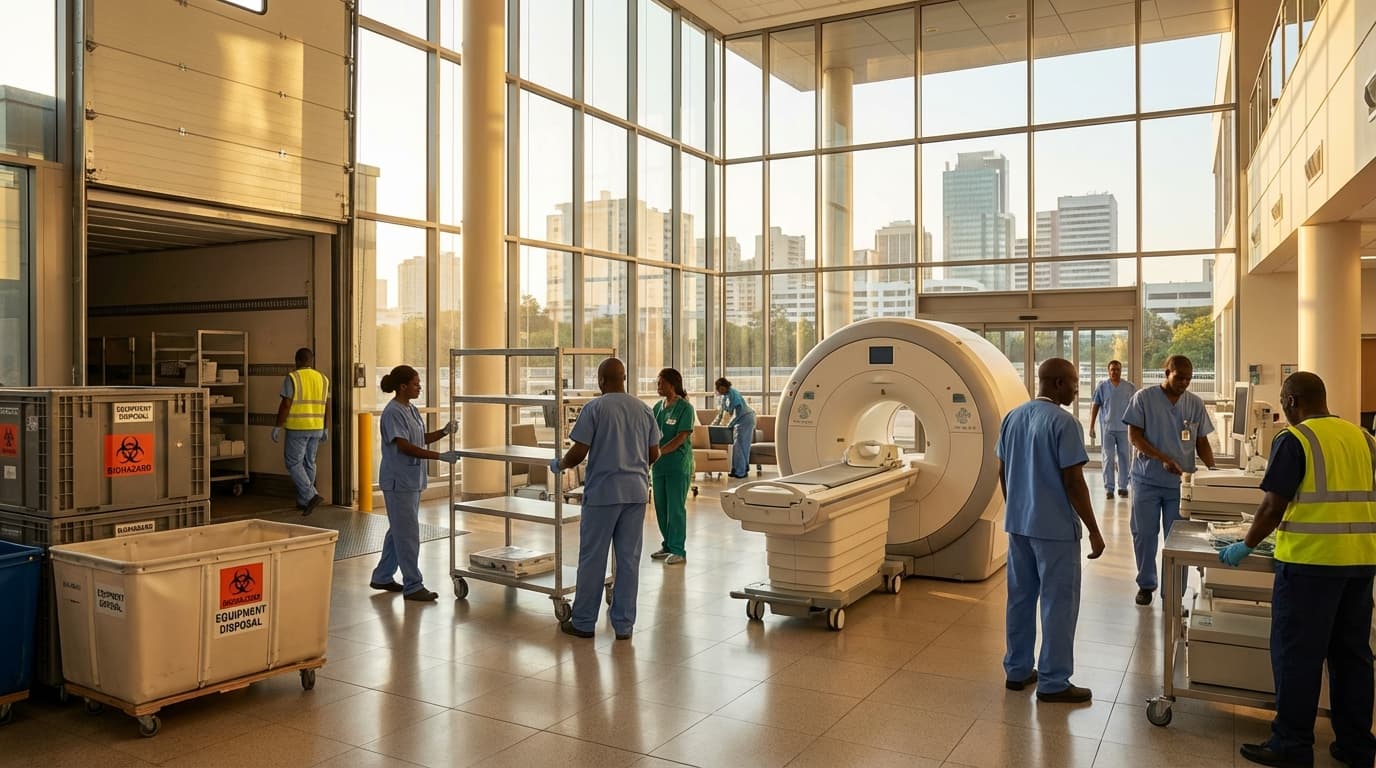
Heavy Medical Equipment De-Installation Service (MRI/CT/Cath Lab) in Zimbabwe
Engineering Excellence & Technical Support
Heavy Medical Equipment De-Installation Service (MRI/CT/Cath Lab) High-standard technical execution following OEM protocols and local regulatory frameworks.
Precision MRI De-Installation
Our expert technicians are certified in the meticulous de-installation of MRI scanners, ensuring safe and compliant removal of superconducting magnets and sensitive RF shielding without compromising equipment integrity or facility infrastructure. We meticulously document every step for a seamless handover.
CT Scanner Relocation Specialists
We offer specialized de-installation services for CT scanners of all makes and models. Our team employs advanced rigging techniques and environmental controls to manage the delicate gantry and table systems, guaranteeing protection against vibration and contamination during relocation.
Cath Lab Integration & De-Installation
Our comprehensive de-installation for Cath Labs goes beyond the imaging systems. We expertly dismantle and manage complex interventional suites, including X-ray generators, imaging chains, patient tables, and associated infrastructure, ensuring compliance with international safety standards and efficient logistics within Zimbabwe.
What Is Heavy Medical Equipment De-installation Service (Mri/ct/cath Lab) In Zimbabwe?
Heavy Medical Equipment De-Installation Service (MRI/CT/Cath Lab) in Zimbabwe refers to the specialized process of safely and systematically dismantling, disconnecting, and preparing large, complex medical imaging and interventional equipment such as Magnetic Resonance Imaging (MRI) scanners, Computed Tomography (CT) scanners, and Cardiac Catheterization (Cath Lab) systems for relocation, disposal, or upgrading. This service is critical due to the intricate nature of these devices, their significant weight, sensitive components, and stringent safety protocols required during their disassembly.
| Who Needs It? | Typical Use Cases: | ||||
|---|---|---|---|---|---|
| Hospitals and Diagnostic Imaging Centers in Zimbabwe: Public, private, and mission-based healthcare facilities operating these sophisticated medical systems. | Equipment Relocation: When a hospital or clinic is moving to a new facility or relocating within an existing one. | System Upgrades: Replacing an older MRI, CT, or Cath Lab system with a newer, more advanced model. | Decommissioning and Disposal: When equipment reaches the end of its operational life and needs to be retired and disposed of responsibly. | Inter-facility Transfer: Moving equipment between different branches or sister hospitals within a healthcare network. | Sale or Purchase of Used Equipment: Facilitating the transfer of ownership and physical movement of pre-owned medical imaging systems. |
What the Service Involves:
- Site Assessment and Planning: Thorough evaluation of the equipment's location, access routes, power requirements, cooling systems, and structural considerations. Development of a detailed de-installation plan.
- Disconnection and Isolation: Safe disconnection of all electrical, data, water, and cooling lines. Isolation of power and other utilities to prevent hazards.
- Component Disassembly: Systematic dismantling of the equipment into manageable sections. This often involves specialized tools and techniques for superconducting magnets (MRI), X-ray tube assemblies (CT), and other high-precision components.
- Cabling and Plumbing Management: Careful labeling, bundling, and securing of all cables and plumbing to facilitate re-installation.
- Shielding Removal: If applicable, the removal and safe handling of radiation shielding (e.g., lead lining) associated with CT scanners.
- Crating and Packaging: Secure packaging and crating of individual components to protect them from damage during transit.
- Logistical Coordination: Planning and execution of the physical removal from the site, often requiring specialized lifting equipment and transportation.
- Decommissioning Documentation: Provision of necessary documentation for regulatory compliance and asset management.
- Environmental Compliance: Adherence to environmental regulations regarding the handling and disposal of potentially hazardous materials.
Who Needs Heavy Medical Equipment De-installation Service (Mri/ct/cath Lab) In Zimbabwe?
Heavy medical equipment, such as MRI scanners, CT scanners, and Cath Labs, are complex and highly specialized machines. Their de-installation is not a DIY task; it requires meticulous planning, expert handling, and adherence to strict safety and regulatory protocols. This service is crucial for facilities undergoing renovations, relocations, upgrades, or decommissioning of old equipment. Identifying the right clients and departments within Zimbabwe is key to understanding the demand for this specialized service.
| Customer Type | Key Departments/Units Involved | Reasons for De-Installation |
|---|---|---|
| Public Hospitals & Healthcare Systems | Radiology Department, Cardiology Department, Diagnostic Imaging Centers | Equipment upgrades, facility renovations, relocation of services, decommissioning of old units, system replacements. |
| Private Hospitals & Specialist Clinics | Radiology, Cardiology, Interventional Radiology, Diagnostic Imaging | Technology upgrades, clinic relocation, service consolidation, equipment retirement, partnership changes. |
| University Teaching Hospitals & Research Institutions | Radiology, Cardiology, Medical Research Labs, Biomedical Engineering | Advancement in research technology, updating teaching facilities, replacement of outdated research equipment, curriculum changes. |
| Government Health Ministries & Agencies | Procurement Departments, Health Infrastructure Planning, National Medical Stores | Centralized decommissioning projects, resource redistribution, facility rationalization, national health equipment audits. |
| Medical Equipment Suppliers & Manufacturers (Local Agents) | Field Service Departments, Installation & Decommissioning Teams | Facilitating client transitions, end-of-lease returns, equipment repatriation, managing warranty/service agreements. |
| Medical Equipment Leasing Companies | Asset Management, Contracts & Returns Department | End of lease terms, equipment upgrades by lessees, asset recovery. |
| Demolition & Renovation Companies (Specialized) | Project Management, Site Survey Teams | Preparing sites for renovation or demolition, ensuring safe removal of high-value assets before structural work. |
Target Customers and Departments in Zimbabwe Requiring Heavy Medical Equipment De-Installation (MRI/CT/Cath Lab)
- {"title":"Public Hospitals & Healthcare Systems","description":"These institutions are often the primary providers of advanced medical imaging and interventional services to the general population. They are more likely to possess and require the de-installation of large, expensive equipment due to ongoing upgrades, maintenance, or facility expansions."}
- {"title":"Private Hospitals & Specialist Clinics","description":"Private healthcare providers often invest in cutting-edge technology to offer specialized services and attract patients. They may need de-installation services for various reasons, including equipment replacement, clinic relocation, or consolidation of services."}
- {"title":"University Teaching Hospitals & Research Institutions","description":"These facilities not only provide patient care but also engage in medical research and training. De-installation of legacy equipment is common as they upgrade to newer models for research purposes or as part of curriculum updates."}
- {"title":"Government Health Ministries & Agencies","description":"Government bodies responsible for national health infrastructure may oversee the allocation, procurement, and decommissioning of medical equipment across various public health facilities. They might commission de-installation services for large-scale projects or when consolidating resources."}
- {"title":"Medical Equipment Suppliers & Manufacturers (Local Agents)","description":"While not directly operating the equipment, local agents or distributors of MRI, CT, and Cath Lab systems often facilitate the installation and de-installation process on behalf of their clients. They may contract specialized de-installation services to ensure a smooth transition."}
- {"title":"Medical Equipment Leasing Companies","description":"Companies that lease medical equipment to healthcare facilities will require de-installation services when a lease agreement ends or when equipment is being returned or replaced."}
- {"title":"Demolition & Renovation Companies (Specialized)","description":"While general demolition companies might handle structural removal, those specializing in healthcare facility renovations or closures will require specialized de-installation services for sensitive medical equipment before any demolition or significant structural changes occur."}
Heavy Medical Equipment De-installation Service (Mri/ct/cath Lab) Process In Zimbabwe
This document outlines the comprehensive workflow for the heavy medical equipment de-installation service, specifically focusing on MRI, CT scanners, and Cath Lab systems, within Zimbabwe. The process is designed to be meticulous, safe, and efficient, ensuring minimal disruption and compliance with all relevant regulations.
| Phase | Key Activities | Deliverables/Outcomes | Responsible Parties |
|---|---|---|---|
| Client contacts de-installation service provider with equipment details (type, model, serial number, location, reason for de-installation). Provider conducts preliminary remote assessment based on provided information. | Understanding of client's needs, initial equipment feasibility assessment. | Client, De-installation Service Provider (Sales/Technical Team) |
| On-site visit by a technical team to assess the equipment's physical condition, surrounding infrastructure (power, cooling, access routes), safety hazards, and existing documentation. Detailed de-installation plan is developed, including timelines, required resources, and safety protocols. | Detailed site assessment report, comprehensive de-installation plan, risk assessment matrix, resource allocation plan. | De-installation Service Provider (Technical Lead, Engineers) |
| Based on the site survey and plan, a detailed quotation is provided to the client outlining costs, scope of work, payment terms, and project timeline. Upon agreement, a formal contract is signed. | Formal quotation, signed service contract, agreed-upon payment schedule. | De-installation Service Provider (Sales/Contracts Team), Client |
| Service provider secures necessary permits (if any). Procurement of specialized tools, safety equipment, and consumables. Coordination with the client for power isolation, access arrangements, and final checks. If applicable, communication with equipment manufacturer for any specific protocols. | Permits obtained, all necessary tools and equipment ready, site secured, power isolation confirmed. | De-installation Service Provider (Project Manager, Procurement), Client |
| Systematic and safe de-energizing, disconnection, and dismantling of the medical equipment by certified technicians following the approved de-installation plan and manufacturer guidelines. Careful handling of sensitive components. | Equipment safely dismantled and ready for rigging, internal system integrity maintained where possible. | De-installation Service Provider (Certified Technicians, Engineers) |
| Detailed planning for the safe lifting, maneuvering, and loading of heavy equipment components onto transport vehicles. Coordination with specialized rigging and transportation partners. Compliance with local transport regulations in Zimbabwe. | Rigging plan, transportation logistics confirmed, appropriate transport vehicles secured. | De-installation Service Provider (Project Manager, Logistics Team), Specialized Rigging & Transport Partners |
| Comprehensive documentation of the de-installation process, including photographs, checklists, and completion certificates. Formal handover of the de-installed equipment and related documentation to the client or designated party. | De-installation completion report, photographic evidence, handover certificate. | De-installation Service Provider (Project Manager, Technical Lead), Client |
| Addressing any immediate post-de-installation queries or concerns from the client. Providing advice on storage or onward transportation. Finalizing any outstanding administrative tasks. | Client satisfaction confirmed, project closure. | De-installation Service Provider (Project Manager, Customer Support) |
De-Installation Service Workflow: MRI/CT/Cath Lab in Zimbabwe
- Inquiry & Initial Assessment
- Site Survey & Planning
- Quotation & Contractual Agreement
- Pre-De-Installation Preparation
- Equipment De-Installation Execution
- Rigging & Transportation Planning
- De-Installation Documentation & Handover
- Post-De-Installation Support
Heavy Medical Equipment De-installation Service (Mri/ct/cath Lab) Cost In Zimbabwe
De-installing heavy medical equipment like MRI scanners, CT scanners, and Cath Labs in Zimbabwe is a complex and specialized service that requires skilled technicians, specialized tools, and adherence to strict safety protocols. The cost is not a fixed figure and can vary significantly based on several crucial factors. These factors influence the overall effort, time, and resources required, directly impacting the final price.
Key pricing factors include:
- Equipment Type and Size: Larger and more intricate machines like high-field MRI scanners or advanced CT scanners will naturally incur higher de-installation costs than smaller, simpler equipment. The number of components and their complexity also play a role.
- Accessibility and Site Conditions: The ease with which the equipment can be reached within the healthcare facility is a major determinant. Tight spaces, multiple floors, narrow doorways, or the need for specialized lifting equipment (cranes, hoists) due to challenging site layouts will increase costs. Structural modifications that might be required to remove components from the building also add to the expense.
- Dismantling Complexity: The extent to which the equipment needs to be disassembled is a direct cost driver. Some machines may require extensive component breakdown, while others might be removed in larger sections. The need for specialized tools or techniques for delicate disconnections (e.g., cooling systems, high-voltage components) will also influence pricing.
- Technician Expertise and Team Size: Highly specialized technicians with proven experience in de-installing specific types of medical imaging equipment are essential. The number of technicians required on-site will depend on the scale and complexity of the de-installation, impacting labor costs.
- Travel and Logistics: If the de-installation service requires technicians to travel to remote locations within Zimbabwe, or if specialized transport is needed for the dismantled components, these logistical costs will be factored into the overall price.
- Time Sensitivity/Urgency: If the de-installation needs to be completed within a short timeframe (e.g., due to facility upgrades or relocation deadlines), rush fees or overtime rates may apply.
- Decommissioning and Certification: Some services may include basic decommissioning procedures or require certification of the de-installation process, adding to the cost. The proper handling and disposal/packaging of hazardous materials (like refrigerants) associated with some equipment also contribute.
- Ancillary Services: Clients might opt for additional services such as temporary storage of equipment, packaging for transit, or preliminary site preparation, which will be priced separately.
Estimated Cost Ranges in Zimbabwean Dollars (ZWL):
Given the variability of the factors above, providing exact figures is challenging. However, based on industry trends and the complexity involved, de-installation services for heavy medical equipment in Zimbabwe can range significantly. These estimates are for the de-installation service only and do not include transportation, re-installation, or any potential facility modifications.
It is highly recommended to obtain detailed quotes from multiple reputable service providers for accurate pricing.
| Equipment Type | Estimated De-Installation Cost Range (ZWL) | Notes |
|---|---|---|
| CT Scanner (Mid-Range) | 50,000 - 150,000+ | Excludes complex site issues or extensive disassembly. |
| CT Scanner (High-End/Large Bore) | 100,000 - 300,000+ | Higher complexity, potentially larger components. |
| MRI Scanner (Low-Field) | 80,000 - 200,000+ | Requires careful handling of magnets and RF shielding. |
| MRI Scanner (High-Field) | 150,000 - 500,000+ | Significant weight, helium management (if applicable), complex cryogenics. |
| Cath Lab | 70,000 - 250,000+ | Involves multiple components including X-ray tubes, patient tables, and imaging systems. |
Key Factors Influencing Heavy Medical Equipment De-Installation Costs in Zimbabwe
- Equipment Type and Size (MRI, CT, Cath Lab Complexity)
- Site Accessibility and Structural Limitations
- Extent of Dismantling Required
- Technician Skill Level and Team Composition
- Travel, Logistics, and Transportation Needs
- Project Urgency and Timeline Demands
- Decommissioning, Certification, and Waste Management
- Optional Ancillary Services (Packaging, Storage)
Affordable Heavy Medical Equipment De-installation Service (Mri/ct/cath Lab) Options
Navigating the de-installation of heavy medical equipment like MRI, CT scanners, and Cath Labs can be a complex and costly undertaking. Our service aims to provide affordable and efficient solutions tailored to your needs. We understand the critical nature of these procedures and the importance of minimizing downtime and expenditure. This guide outlines our service options, explains the value of our bundled packages, and details cost-saving strategies you can leverage when choosing our de-installation expertise.
| Value Bundle | Included Services | Key Benefits | Cost-Saving Aspect |
|---|---|---|---|
| Bundled Efficiency | De-installation, basic packaging, and site cleanup. | Streamlined process, reduced administrative overhead, and a tidier workspace. | By combining essential services, we reduce coordination time and offer a competitive package price. |
| Project Management Package | De-installation, detailed inventory, condition reporting, and basic logistics coordination. | Enhanced transparency, reduced risk of equipment damage during transit, and smoother handover. | Proactive management minimizes unforeseen issues, preventing costly delays and disputes. |
| Full Relocation Integration | De-installation, expert packaging, coordination with movers, and on-site supervision. | Minimizes your involvement, ensures equipment integrity, and reduces the risk of damage during the entire move. | Our integrated approach leverages economies of scale and minimizes the need for multiple separate contracts, leading to overall savings. |
Our Affordable De-Installation Service Options
- Basic De-Installation: This package covers the essential disconnection, disassembly, and preparation of the equipment for transport. It's ideal for clients who have their own logistics or warehousing solutions in place.
- Standard De-Installation & Site Prep: Includes basic de-installation plus minor site restoration, such as sealing conduit openings and basic wall patching. This option ensures a cleaner handover of the space.
- Comprehensive De-Installation & Logistics Support: Our most popular package, offering full de-installation, secure packaging, and coordination with your chosen logistics partners. We can also provide basic inventory and condition reporting.
- Full-Service De-Installation & Relocation: This premium package encompasses everything in the comprehensive option, along with on-site project management, coordination of multiple vendors, and detailed documentation for seamless equipment relocation.
Verified Providers In Zimbabwe
In the realm of healthcare, especially when seeking specialized or urgent medical attention, identifying verified and reputable providers is paramount. In Zimbabwe, navigating this landscape can be challenging. Franance Health emerges as a distinguished entity, setting a benchmark for quality and reliability. Their rigorous credentialing process and commitment to patient-centric care make them an outstanding choice for individuals and families seeking dependable healthcare services.
| Provider Type | Key Verification Criteria | Franance Health Assurance |
|---|---|---|
| Doctors (GPs & Specialists) | Medical council registration, valid practicing license, peer reviews, professional qualifications, malpractice insurance (where applicable). | Verified qualifications and active licenses, access to peer-reviewed performance data, and adherence to ethical medical practice guidelines. |
| Hospitals & Clinics | Accreditation from relevant health bodies, patient safety protocols, infrastructure assessment, staff qualifications, infection control measures. | Partnerships with accredited facilities, regular audits of operational standards, and a focus on patient safety and experience. |
| Diagnostic Laboratories | Accreditation from national and international bodies, quality control systems, qualified technicians, equipment calibration and maintenance. | Collaboration with certified laboratories, ensuring accuracy and reliability of diagnostic results through stringent quality checks. |
| Pharmacies | Pharmacy council registration, licensed pharmacists, proper storage and dispensing protocols, drug authenticity verification. | Affiliation with registered pharmacies, ensuring access to legitimate and safely dispensed medications. |
Why Franance Health Stands Out:
- Rigorous Credentialing Process: Franance Health employs a stringent vetting procedure for all its affiliated healthcare providers. This ensures that only qualified, licensed, and experienced professionals are part of their network.
- Specialized Network: They offer access to a diverse range of medical specialists, from general practitioners to highly specialized surgeons and diagnosticians, catering to a wide spectrum of health needs.
- Focus on Patient Well-being: Beyond technical qualifications, Franance Health prioritizes providers who demonstrate empathy, strong communication skills, and a genuine commitment to patient comfort and recovery.
- Streamlined Access to Care: Their platform simplifies the process of finding and connecting with verified healthcare professionals, reducing the stress and uncertainty often associated with seeking medical help.
- Commitment to Ethical Practices: Franance Health upholds the highest ethical standards in healthcare delivery, ensuring transparency and integrity in all their dealings.
- Continuous Quality Assurance: They are dedicated to ongoing monitoring and evaluation of their providers to maintain consistently high standards of care.
Scope Of Work For Heavy Medical Equipment De-installation Service (Mri/ct/cath Lab)
This Scope of Work (SOW) outlines the requirements for the de-installation of heavy medical equipment, specifically MRI, CT scanners, and Cath Labs, from their current locations within the facility. The service includes all necessary labor, equipment, and procedures to safely and efficiently disconnect, dismantle (if applicable), and prepare the equipment for transportation. The goal is to ensure the equipment is de-installed in a manner that preserves its integrity and facilitates a smooth transition for subsequent relocation or storage. Standard industry practices and safety protocols will be strictly adhered to throughout the process. Detailed technical deliverables are specified to ensure clarity and successful execution of the de-installation services.
| Equipment Type | De-installation Standards & Specifications | Key Considerations | Ancillary Systems |
|---|---|---|---|
| MRI Scanner (e.g., 1.5T, 3T) | Safe disconnection of cryogen supply (if applicable) and associated plumbing. Isolation of superconducting magnet power. Removal of RF shielding. Dismantling of patient table and gradient coils as per manufacturer guidelines. Ensuring magnet quench procedures (if applicable) are followed by certified personnel. | Magnet quench safety protocols. Weight and center of gravity considerations for heavy components. RF shielding integrity and removal. Shielded room access and egress planning. | RF cables, patient table motors, gradient coil power, cryogen lines, acoustic noise reduction systems, patient monitoring interfaces. |
| CT Scanner (e.g., Single Slice, Multi-Slice) | Safe disconnection of high-voltage power supply. Isolation of X-ray tube cooling systems (water/air). Removal of gantry components and patient table. Disconnection of all data and control cabling. Secure storage of delicate components like detectors. | High-voltage safety. Cooling system management. Radiation safety during disconnection. Weight distribution and stability of components during dismantling. Detector sensitivity and handling. | High-voltage power cables, X-ray tube cooling lines, patient table drive systems, data acquisition units, network cables, power distribution units. |
| Cath Lab (Angiography System) | Safe disconnection of high-voltage generator. Isolation of X-ray tube cooling systems. Dismantling of C-arm, patient table, and detector assemblies. Removal of console and imaging system components. Disconnection of all associated fluid and data lines. | High-voltage safety. Cooling system management. Radiation safety. Weight and maneuverability of large components like the C-arm. Precision of detector alignment and handling. Fluid management for cooling systems. | High-voltage power cables, X-ray tube cooling lines, hydraulic/pneumatic lines, patient table drive systems, imaging console, workstations, detector power and data interfaces, image acquisition hardware. |
Technical Deliverables
- Comprehensive de-installation plan outlining methodology, timeline, personnel, and safety procedures.
- Fully de-installed medical equipment, disconnected from all power, data, and ancillary systems.
- All removed ancillary equipment, cabling, and consumables inventoried and labeled.
- Photographic and/or video documentation of the de-installation process, especially critical disconnection points and the state of the equipment post-de-installation.
- Confirmation of site remediation, including removal of any debris and restoration of the immediate de-installation area to a safe and clean condition.
- Post-de-installation site survey report confirming the condition of the facility after removal.
Service Level Agreement For Heavy Medical Equipment De-installation Service (Mri/ct/cath Lab)
This Service Level Agreement (SLA) outlines the performance standards and guarantees for the de-installation of heavy medical equipment, specifically Magnetic Resonance Imaging (MRI) scanners, Computed Tomography (CT) scanners, and Cardiac Catheterization (Cath Lab) systems. This SLA aims to ensure minimal disruption and efficient service delivery during the de-installation process.
| Service Component | Response Time Guarantee | Uptime Guarantee (During Service Window) | Definition |
|---|---|---|---|
| Initial Contact & Assessment | Within 4 business hours of service request submission | N/A | Time from confirmed receipt of service request to initial contact with the client for information gathering and assessment of the equipment and site. |
| On-Site Arrival for De-installation Planning | Within 2 business days of initial contact (for non-emergency), or as agreed for emergency | N/A | Time from initial contact to on-site presence of qualified technicians for detailed site survey, equipment inspection, and planning of the de-installation procedure. |
| Scheduled De-installation Commencement | As per mutually agreed schedule, typically within 5-10 business days of successful planning | 98% uptime during the agreed de-installation window (excluding scheduled downtime for client-provided resources or unforeseen external factors) | Time from the agreed start of the de-installation to the actual commencement of the physical de-installation work by the service provider's team. Uptime guarantee refers to the availability of the service provider's technicians and equipment for the scheduled task. |
| De-installation Completion | Within the agreed-upon project timeline (e.g., X days for MRI, Y days for CT) | N/A | Time from commencement to the successful and safe de-installation of the equipment as per agreed scope. This excludes any delays caused by the client, facility issues, or regulatory requirements not known at the time of planning. |
| Post-De-installation Support | Within 8 business hours for critical issues | N/A | Availability of support for any questions or minor issues arising immediately after the completion of the de-installation within the agreed warranty period (e.g., 7 days). |
Key Equipment Covered
- Magnetic Resonance Imaging (MRI) Scanners
- Computed Tomography (CT) Scanners
- Cardiac Catheterization (Cath Lab) Systems
Frequently Asked Questions

Ready when you are
Let's scope your Heavy Medical Equipment De-Installation Service (MRI/CT/Cath Lab) in Zimbabwe project in Zimbabwe.

Scaling healthcare logistics and technical systems across the entire continent.