
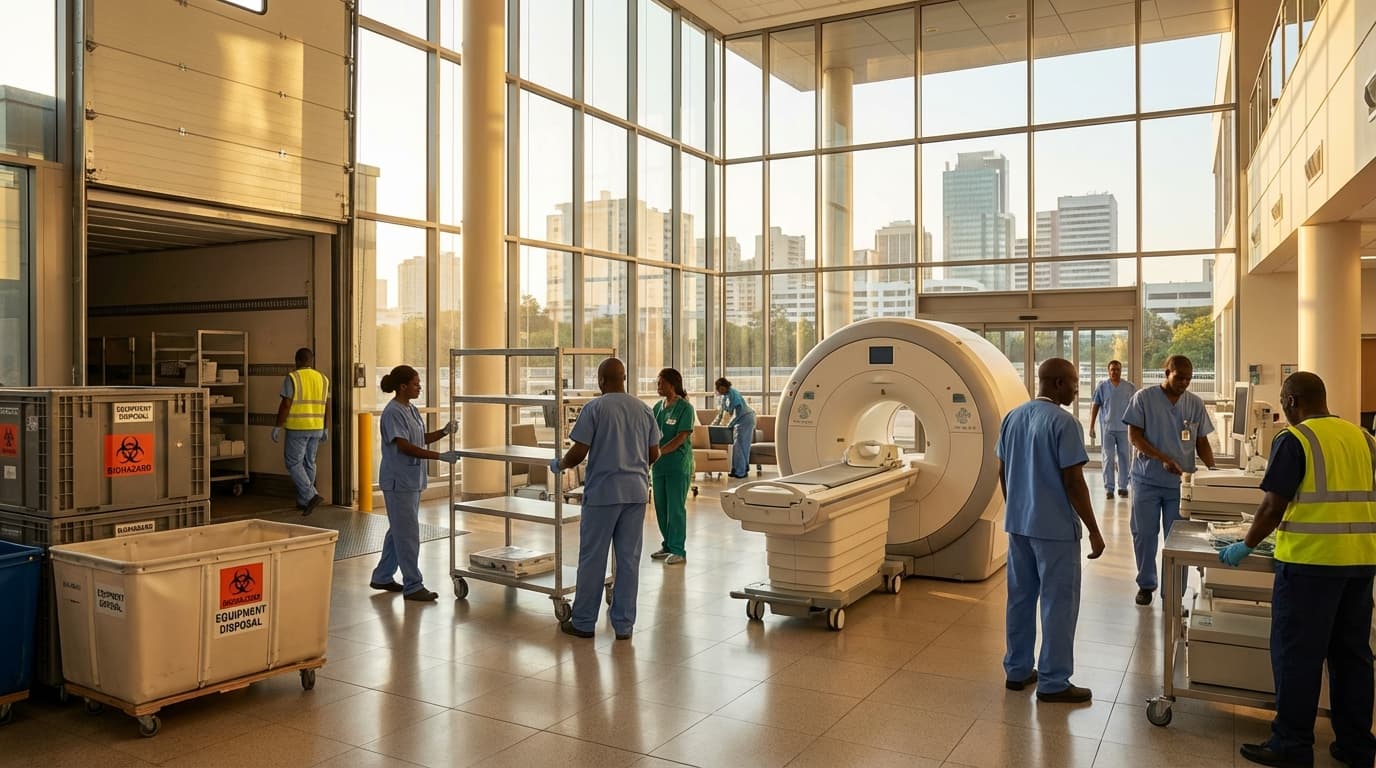
Decommissioning Service for Medical Devices in Zimbabwe
Engineering Excellence & Technical Support
Decommissioning Service for Medical Devices High-standard technical execution following OEM protocols and local regulatory frameworks.
Expert Medical Device Decommissioning
We provide comprehensive, end-to-end decommissioning services for all types of medical devices in Zimbabwe. Our trained technicians ensure safe and compliant removal, data sanitization, and environmental disposal, adhering to international standards and local regulations.
Secure Data Sanitization & Destruction
Protecting patient data is paramount. We employ advanced data sanitization and destruction methods for medical devices with integrated storage, guaranteeing complete data erasure and preventing unauthorized access or breaches in line with privacy laws.
Environmentally Responsible Disposal
Our decommissioning process prioritizes environmental sustainability. We ensure that all decommissioned medical devices are disposed of responsibly, with a focus on recycling and proper handling of hazardous materials, minimizing ecological impact within Zimbabwe.
What Is Decommissioning Service For Medical Devices In Zimbabwe?
Decommissioning of medical devices in Zimbabwe refers to the formal and documented process of retiring a medical device from clinical use and its associated environment. This service ensures that the device is no longer operational, its data is appropriately managed or securely disposed of, and it is removed from inventory and regulatory oversight in a safe and compliant manner. The primary objective is to prevent unauthorized use, protect patient confidentiality, and ensure environmental safety. This service is critical for healthcare facilities, manufacturers, and distributors operating within Zimbabwe's regulatory framework.
| Who Needs Decommissioning Service? | Typical Use Cases | |||||
|---|---|---|---|---|---|---|
| Hospitals and Clinics (Public & Private) | End-of-life replacement of imaging equipment (X-ray, CT, MRI). | Upgrades to surgical or laboratory instrumentation. | Closure or relocation of healthcare facilities. | Devices no longer supported by the manufacturer or parts are unavailable. | Removal of outdated or non-functional diagnostic tools. | Devices affected by recalls or obsolescence. |
| Medical Device Manufacturers and Distributors | Recalling and retiring obsolete or superseded models. | Managing returned devices that are beyond repair or refurbishment. | Disposing of demonstration or prototype units. | Clearing warehouse stock of discontinued product lines. | ||
| Government and Non-Governmental Organizations (NGOs) | Disposal of surplus or donated equipment no longer needed or functional. | Managing medical supplies from phased-out programs. | Equipping or de-equipping health centers during project cycles. | |||
| Research and Educational Institutions | Retiring laboratory equipment after research projects conclude. | Upgrading training facilities with newer models. |
Key Aspects of Medical Device Decommissioning Service in Zimbabwe
- Technical Assessment and Verification: Evaluating the device's operational status, identifying any remaining functionality, and confirming the necessity for decommissioning.
- Data Sanitization and Destruction: Implementing secure methods for erasing or destroying any stored patient data, diagnostic information, or proprietary software to comply with privacy regulations (e.g., POPIA equivalent).
- Physical Disassembly and Disposal: Safely dismantling the device, segregating components (including hazardous materials), and ensuring disposal adheres to national environmental regulations and waste management protocols.
- Documentation and Record Keeping: Generating comprehensive reports detailing the decommissioning process, including dates, responsible parties, methods employed, and disposal certificates. This documentation is crucial for audit trails and regulatory compliance.
- Regulatory Compliance: Ensuring all decommissioning activities meet the requirements set by the Medicines Control Authority of Zimbabwe (MCAZ) and other relevant national authorities.
- Environmental Stewardship: Managing the disposal of device components, particularly those containing hazardous substances (e.g., mercury, radioactive isotopes), in an environmentally responsible manner, often involving specialized waste handlers.
- Asset Retirement: Formally removing the device from the organization's asset register and inventory management systems.
- Site Remediation (if applicable): In cases where a device was integrated into a facility's infrastructure, this may involve restoring the area to its original state.
- Training and Certification: Ensuring personnel involved in the decommissioning process are adequately trained and certified for specific tasks, especially concerning hazardous materials and data destruction.
Who Needs Decommissioning Service For Medical Devices In Zimbabwe?
Decommissioning services for medical devices in Zimbabwe are crucial for ensuring responsible disposal, data security, and regulatory compliance. This process is essential for a variety of healthcare providers and organizations that utilize medical equipment. The primary goal of decommissioning is to render a medical device permanently unusable and inoperable, preventing any future use and safeguarding sensitive patient information that may be stored within the device. This also involves the secure removal or destruction of all data before disposal or recycling.
| Target Customer Type | Key Departments Requiring Decommissioning | Reasons for Decommissioning |
|---|---|---|
| Hospitals (Public and Private) | IT Department, Biomedical Engineering Department, Radiology, Pathology, Surgical Departments, Administration | Equipment upgrades, End-of-life for devices, Data security breaches prevention, Regulatory compliance for disposal, Environmental protection |
| Clinics and Health Centers | Clinic Management, Nursing Staff, Technical Support (if applicable) | Facility closure or relocation, Device replacement due to age or malfunction, Maintaining patient data privacy |
| Diagnostic Laboratories | Laboratory Management, Quality Assurance Department, IT Department | Technological advancements requiring new equipment, Device obsolescence, Ensuring integrity of diagnostic data |
| Medical Research Institutions | Research Leads, IT Department, Administration | Completion of research projects, Equipment no longer needed for specific studies, Protecting proprietary research data |
| Government Health Ministries and Agencies | Procurement Department, Asset Management, Public Health Programs | Fleet replacement, Disposal of outdated or unserviceable government-owned equipment, Public health surveillance equipment |
Target Customers for Medical Device Decommissioning Services in Zimbabwe:
- Hospitals (Public and Private)
- Clinics and Health Centers
- Diagnostic Laboratories
- Medical Research Institutions
- Pharmaceutical Companies (with R&D or quality control equipment)
- Government Health Ministries and Agencies
- Medical Equipment Suppliers and Distributors (for end-of-life management)
- Non-Governmental Organizations (NGOs) with health programs
Decommissioning Service For Medical Devices Process In Zimbabwe
The decommissioning of medical devices in Zimbabwe is a critical process that ensures public health and environmental safety. It involves the safe and proper retirement of medical equipment from active service, preventing misuse and minimizing hazardous waste. This process is governed by regulatory bodies and requires adherence to specific protocols from the initial inquiry to the final disposal or repurposing.
| Stage | Description | Key Activities | Responsible Parties | Output/Outcome |
|---|---|---|---|---|
| The process begins when a healthcare facility or individual identifies a medical device that needs to be decommissioned. This stage involves understanding the client's needs and initial consultation. | Client contacts service provider to inquire about decommissioning services. Discussion of device type, quantity, and general condition. Provision of preliminary information on service offerings and requirements. | Healthcare Facility/Owner, Decommissioning Service Provider | Initial understanding of decommissioning needs, preliminary quotation/service scope. |
| A detailed assessment of the device(s) is conducted to determine the best decommissioning strategy, considering safety, regulatory compliance, and potential for repurposing. | Site visit (if necessary) for physical inspection. Detailed inventory of devices. Identification of potential hazards (e.g., radioactive materials, biohazards, sharps). Development of a comprehensive decommissioning plan, including timelines and resource allocation. Risk assessment and mitigation planning. | Decommissioning Service Provider, Healthcare Facility (for access) | Detailed decommissioning plan, risk assessment report, resource allocation, proposed timeline. |
| Formal approval is sought from relevant regulatory authorities before proceeding with the actual decommissioning activities. | Submission of decommissioning plan and required documentation to relevant regulatory bodies (e.g., Ministry of Health and Child Care, Environmental Management Agency). Obtaining necessary permits and licenses for the planned decommissioning activities. | Decommissioning Service Provider, Regulatory Authorities | Approved decommissioning plan, necessary permits/licenses. |
| This is the core stage where the medical device is safely deactivated, dismantled, and prepared for disposal or repurposing according to the approved plan and regulatory guidelines. | Safe shutdown and disconnection of the device. Removal of any hazardous components or materials (e.g., batteries, refrigerants, chemical agents). Physical dismantling or modification of the device to render it non-functional and unusable. Cleaning and decontamination procedures. | Decommissioning Service Provider, Trained Technicians | Deactivated and disassembled medical device, safely removed hazardous components. |
| The decommissioned device and its components are managed responsibly, either through environmentally sound disposal or through safe repurposing/recycling. | Segregation of waste streams (hazardous vs. non-hazardous). Transportation of waste to approved disposal facilities or recycling centers. Collaboration with licensed waste management contractors. If applicable, preparation of devices for donation or sale as repurposed equipment (after thorough decontamination and disabling of critical functions). | Decommissioning Service Provider, Licensed Waste Management Contractors, Recycling Facilities | Properly disposed waste, certified recycled materials, or safely repurposed devices. |
| Comprehensive records are maintained throughout the process, and a final report is provided to the client and relevant authorities. | Recording all activities, materials used, and disposal methods. Issuance of certificates of decommissioning and disposal. Preparation of a final decommissioning report detailing the entire process, including waste manifests and compliance with regulations. Archiving of all relevant documentation. | Decommissioning Service Provider, Healthcare Facility | Final decommissioning report, certificates of decommissioning/disposal, comprehensive audit trail. |
Decommissioning Service for Medical Devices Process in Zimbabwe: Workflow
- Inquiry & Consultation
- Assessment & Planning
- Decommissioning Authorization
- Execution of Decommissioning
- Waste Management & Disposal/Repurposing
- Documentation & Reporting
Decommissioning Service For Medical Devices Cost In Zimbabwe
Decommissioning medical devices in Zimbabwe involves a comprehensive process that includes safe removal, data sanitization, environmental disposal, and proper documentation. The cost associated with these services is influenced by several key factors. Understanding these factors is crucial for healthcare facilities when budgeting for this essential but often overlooked aspect of medical equipment lifecycle management. Pricing in Zimbabwe is predominantly in the local currency, the Zimbabwean Dollar (ZWL), with some service providers potentially quoting or accepting USD for specialized services or imported disposal materials. The specific rates can fluctuate due to economic conditions, inflation, and the availability of specialized disposal contractors.
| Device Category (Examples) | Estimated Cost Range (ZWL) | Notes |
|---|---|---|
| Small Diagnostic Equipment (e.g., ECG Machines, Pulse Oximeters, BP Monitors) | 5,000 - 25,000 ZWL | Generally straightforward, minimal data. Costs can increase if specialized disposal is needed. |
| Medium Laboratory Analyzers (e.g., basic chemistry analyzers, hematology machines) | 15,000 - 75,000 ZWL | May involve hazardous reagents or delicate components. Data sanitization is usually required. |
| Patient Monitoring Systems (e.g., multi-parameter monitors, ventilators) | 20,000 - 100,000 ZWL | Requires careful handling of electronics and potential data storage. Some components might be recyclable. |
| Large Imaging Equipment (e.g., X-ray machines, Ultrasound machines - non-MRI/CT) | 50,000 - 250,000+ ZWL | Significant physical dismantling, potential for hazardous materials (e.g., lead shielding, older cooling fluids). Transportation is a major factor. |
| Complex Diagnostic/Therapeutic Equipment (e.g., Dialysis Machines, Endoscopy Towers) | 30,000 - 150,000 ZWL | Involves intricate electronics, fluid systems, and data. Disposal of specific components may be regulated. |
| Major Imaging Systems (e.g., MRI, CT Scanners) | 200,000 - 1,000,000+ ZWL | Extremely complex, often involve hazardous materials (e.g., refrigerants, superconducting magnets), significant dismantling, specialized transportation, and strict data destruction protocols. Costs can vary wildly based on size and specific technologies. |
| General Office/Ancillary Medical Furniture (e.g., examination beds, trolleys) | 2,000 - 15,000 ZWL | Relatively low cost, often handled through general waste management or recycling. |
Key Pricing Factors for Medical Device Decommissioning in Zimbabwe:
- Type and Complexity of the Device: Larger, more complex, or specialized medical equipment (e.g., MRI machines, CT scanners, large laboratory analyzers) will generally incur higher decommissioning costs than simpler devices (e.g., basic patient monitors, examination tables). This is due to the specialized knowledge, tools, and time required for disassembly, de-installation, and disposal.
- Condition and Age of the Device: Devices that are heavily integrated, require extensive dismantling, or are in poor working condition might lead to increased labor and material costs for safe removal and disposal.
- Data Security and Sanitization Requirements: Medical devices often store sensitive patient data. The need for robust data sanitization (e.g., physical destruction of storage media, secure wiping to industry standards) adds to the cost, requiring specialized equipment and certified processes.
- Hazardous Materials: The presence of hazardous materials (e.g., mercury in older equipment, refrigerants in cooling systems, radioactive components in some imaging devices) necessitates specialized handling, transportation, and disposal procedures, which are invariably more expensive due to regulatory compliance and specialized waste management.
- Volume of Devices: A larger number of devices to be decommissioned simultaneously might lead to economies of scale for the service provider, potentially resulting in a lower per-unit cost, though the overall project cost will be higher.
- Transportation and Logistics: The distance of the healthcare facility from the disposal site, accessibility of the site for heavy machinery, and the need for specialized transport vehicles will impact the overall cost.
- Environmental Disposal Method: The method of disposal (e.g., recycling, incineration, landfill) will influence costs. Environmentally responsible disposal, particularly for hazardous materials, is often more expensive but is increasingly mandated.
- Certification and Documentation: The requirement for certified decommissioning reports, certificates of destruction, and compliance with local and international regulations will add to administrative and procedural costs.
- Service Provider Expertise and Reputation: Highly experienced and certified service providers may command higher fees, reflecting their specialized knowledge, insurance, and adherence to best practices. Conversely, less experienced providers might offer lower quotes but with potential risks.
- Regulatory Compliance: Adherence to Zimbabwean environmental regulations and healthcare waste management guidelines adds to the operational cost for the decommissioning service provider.
Affordable Decommissioning Service For Medical Devices Options
Navigating the decommissioning of medical devices requires a strategic approach to ensure compliance, data security, and cost-effectiveness. This guide outlines affordable decommissioning service options, focusing on value bundles and cost-saving strategies.
| Service Component | Description | Cost-Saving Impact |
|---|---|---|
| Secure Data Destruction | Wiping or physical destruction of all stored data (PHI, patient records) to prevent breaches. | Essential for HIPAA compliance, avoiding hefty fines. Bundling can reduce per-device cost. |
| Physical Device Destruction/Refurbishment | Safe and environmentally sound disposal of devices, or refurbishment for resale/reuse. | Refurbishment can recoup costs. Bundled disposal often includes economies of scale. |
| Chain of Custody Documentation | Detailed records tracking the device from pickup to final disposition. | Crucial for audits and compliance. Bundles ensure consistent documentation across all devices. |
| Environmental Disposal & Recycling | Adherence to environmental regulations for hazardous materials and electronic waste. | Avoids penalties. Bundled services can incorporate efficient, eco-friendly logistics. |
| Compliance Reporting | Providing necessary documentation for regulatory bodies and internal records. | Ensures all legal requirements are met. Included in bundles for a complete solution. |
| Bulk Decommissioning Discounts | Negotiating lower per-unit costs when decommissioning a large volume of devices. | Direct cost reduction through volume. Often the core of value bundles. |
| Refurbishment and Resale Programs | Partnering with vendors who can refurbish and resell usable equipment. | Generates revenue to offset decommissioning costs. Offered as part of comprehensive service packages. |
| Strategic Scheduling | Planning decommissioning during off-peak times or as part of larger equipment lifecycle management. | Can reduce labor costs and logistical challenges. Bundles can align with facility schedules. |
Understanding Value Bundles and Cost-Saving Strategies
- {"title":"What are Value Bundles in Medical Device Decommissioning?","description":"Value bundles are comprehensive service packages that combine multiple decommissioning tasks into a single, often discounted, offering. Instead of paying for each service individually, healthcare facilities can opt for a bundle that addresses their specific needs, leading to predictable costs and streamlined logistics."}
- {"title":"Key Components of a Value Bundle","description":"Typical components include secure data destruction, physical device destruction or refurbishment, chain of custody documentation, environmental disposal, and compliance reporting. Bundles can be tailored for different device types (e.g., imaging equipment, patient monitors) or service levels (e.g., basic, advanced)."}
- {"title":"Benefits of Value Bundles","description":"Bundles offer a consolidated pricing structure, simplify vendor management, ensure all necessary compliance steps are covered, and often provide a lower overall cost compared to ad-hoc service calls. They also facilitate better planning and budgeting."}
- {"title":"Cost-Saving Strategies for Decommissioning","description":"Beyond bundles, several strategies can reduce overall decommissioning expenses. These include proactive planning, maximizing asset value through refurbishment and resale, negotiating long-term contracts, and leveraging vendor expertise for optimal disposal methods."}
- {"title":"Importance of Vendor Selection","description":"Choosing a reputable decommissioning service provider is crucial. Look for vendors with proven track records, relevant certifications (e.g., HIPAA compliance, R2/e-Stewards for electronics), transparent pricing, and the ability to offer flexible solutions and value bundles."}
Verified Providers In Zimbabwe
In Zimbabwe's evolving healthcare landscape, identifying truly verified and trustworthy providers is paramount. Patients and healthcare professionals alike seek assurance of quality, ethical practice, and adherence to regulatory standards. Franance Health stands out as a leading platform committed to this verification process, ensuring that the providers listed on their platform meet rigorous criteria. This dedication not only simplifies the search for reliable healthcare but also elevates the overall standard of care accessible to Zimbabweans.
| Provider Type | Franance Health Verification Criteria | Why it's the Best Choice |
|---|---|---|
| Doctors (General Practitioners & Specialists) | Valid medical license, proof of specialist certification (where applicable), clean disciplinary record, affiliation with accredited medical institutions. | Ensures access to qualified and experienced medical professionals who have met stringent educational and ethical standards, leading to accurate diagnoses and effective treatment plans. |
| Nurses & Midwives | Registered Nurse/Midwife license from the Zimbabwe Nursing Council, valid practicing certificate, confirmation of relevant training and experience. | Guarantees that healthcare services are delivered by competent and compassionate nursing professionals who are up-to-date with best practices in patient care and public health. |
| Pharmacies | Registered pharmacy license from the Pharmaceutical Society of Zimbabwe, evidence of proper storage and dispensing protocols, qualified pharmacist in charge. | Provides assurance of access to legitimate medications, dispensed by licensed pharmacists, ensuring patient safety and efficacy of prescribed treatments. |
| Laboratories & Diagnostic Centers | Accreditation from relevant health bodies (e.g., Ministry of Health), qualified laboratory personnel, adherence to quality control standards, up-to-date equipment. | Confirms that diagnostic tests are performed accurately and reliably by trained professionals using calibrated equipment, leading to precise results crucial for effective medical management. |
| Hospitals & Clinics | Operating license from the Ministry of Health, evidence of qualified medical and administrative staff, adherence to safety and hygiene standards, patient feedback mechanisms. | Offers peace of mind that facilities are well-equipped, staffed by competent professionals, and committed to providing a safe and effective healthcare environment for all patients. |
Why Franance Health Credentials Matter
- Rigorous Vetting Process: Franance Health employs a multi-faceted vetting system that goes beyond basic registration, examining qualifications, experience, and compliance with national health regulations.
- Commitment to Quality: The platform prioritizes providers who demonstrate a consistent commitment to high-quality patient care, ethical conduct, and continuous professional development.
- Enhanced Patient Trust: By clearly displaying verified credentials, Franance Health fosters an environment of trust, empowering patients to make informed decisions about their healthcare.
- Streamlined Access: Franance Health simplifies the often-complex process of finding qualified healthcare professionals, connecting users with verified providers quickly and efficiently.
- Regulatory Compliance: Providers listed on Franance Health are checked for their adherence to the standards set by Zimbabwe's Ministry of Health and Child Care and other relevant regulatory bodies.
Scope Of Work For Decommissioning Service For Medical Devices
This Scope of Work (SOW) outlines the requirements for decommissioning services for medical devices. The primary objective is to ensure the safe, secure, and compliant removal of medical devices from service, including data sanitization, physical removal, and disposal/recycling. This document details the technical deliverables and standard specifications expected from the service provider.
| Category | Deliverable | Standard Specification | Acceptance Criteria |
|---|---|---|---|
| Data Sanitization | Data Erasure Report | Wipe data using industry-standard algorithms (e.g., DoD 5220.22-M, NIST 800-88) to a verifiable level. Secure erasure methods for all storage media (HDD, SSD, internal memory). | Certificate of Data Erasure for each device, confirming successful sanitization. No recoverable patient or proprietary data found on media. |
| Physical Removal | Asset Inventory and Manifest | Detailed inventory of all devices to be decommissioned, including serial numbers, model numbers, and location. Secure transportation methods to prevent damage and unauthorized access. | Accurate and complete asset manifest matching the pre-decommissioning inventory. Devices received at destination without damage. |
| Disposal/Recycling | Certificate of Destruction/Recycling | Environmentally sound disposal or recycling in accordance with local, state, and federal regulations. Prioritize recycling of valuable components. Documentation of downstream disposal partners. | Certificate of Destruction/Recycling for each device, specifying method (e.g., shredding, smelting, recycling). Proof of compliance with environmental regulations. |
| Compliance & Documentation | Decommissioning Report | Comprehensive report detailing all activities performed, including dates, personnel involved, sanitization methods, disposal methods, and any deviations from the SOW. Compliance with all applicable privacy and environmental laws. | Report submitted within [X] days of project completion. All claims of compliance substantiated by documentation. |
| Project Management | Project Plan & Status Updates | Detailed project plan outlining timelines, resource allocation, and communication protocols. Regular status updates ([Weekly/Bi-weekly]) provided to the client. | Project plan approved by the client prior to commencement. Status updates delivered on time and are informative. |
Key Deliverables and Specifications
- Secure data sanitization of all devices storing patient or proprietary information.
- Physical removal and transportation of decommissioned devices.
- Environmentally responsible disposal or recycling of devices.
- Compliance with relevant regulatory standards (e.g., HIPAA, GDPR, local environmental regulations).
- Detailed asset tracking and reporting throughout the decommissioning process.
- On-site assessment and planning prior to decommissioning commencement.
- Post-decommissioning certification and documentation.
Service Level Agreement For Decommissioning Service For Medical Devices
This Service Level Agreement (SLA) outlines the response times and uptime guarantees for the Decommissioning Service for Medical Devices provided by [Your Company Name] (hereinafter referred to as "Service Provider") to [Client Company Name] (hereinafter referred to as "Client"). This SLA is incorporated by reference into the Master Services Agreement (MSA) between the parties.
| Service Component | Priority Level | Response Time (Business Hours) | Resolution Time (Business Hours) | Uptime Guarantee |
|---|---|---|---|---|
| Decommissioning Service Core Operations | Critical | 1 Hour | 4 Business Hours | 99.9% (excluding Scheduled Maintenance) |
| Decommissioning Service Core Operations | High | 2 Business Hours | 8 Business Hours | 99.9% (excluding Scheduled Maintenance) |
| Decommissioning Service Core Operations | Medium | 4 Business Hours | 24 Business Hours | 99.9% (excluding Scheduled Maintenance) |
| Reporting and Certification Generation | High | 4 Business Hours | 12 Business Hours | 99.5% (excluding Scheduled Maintenance) |
| Client Support Inquiry (non-incident) | Low | 8 Business Hours | 48 Business Hours | N/A |
Definitions
- Decommissioning Service: The complete process of safely and securely rendering a medical device non-operational, including data sanitization, physical destruction (if applicable), and certification of disposal, in accordance with regulatory requirements.
- Critical Incident: Any event that significantly impacts the Service Provider's ability to perform the Decommissioning Service, including but not limited to, hardware failures, software malfunctions directly affecting service delivery, or unavailability of critical personnel.
- Scheduled Maintenance: Pre-planned downtime for routine system updates, upgrades, or maintenance activities. Client will be notified at least [Number] business days in advance.
- Response Time: The maximum time allowed for the Service Provider to acknowledge and begin actively working on a reported incident after it has been officially logged.
- Resolution Time: The maximum time allowed for the Service Provider to resolve a reported incident and restore the Decommissioning Service to its agreed-upon performance levels.
- Uptime Guarantee: The percentage of time the Decommissioning Service is available and functional, excluding Scheduled Maintenance.
Frequently Asked Questions

Ready when you are
Let's scope your Decommissioning Service for Medical Devices in Zimbabwe project in Zimbabwe.

Scaling healthcare logistics and technical systems across the entire continent.