
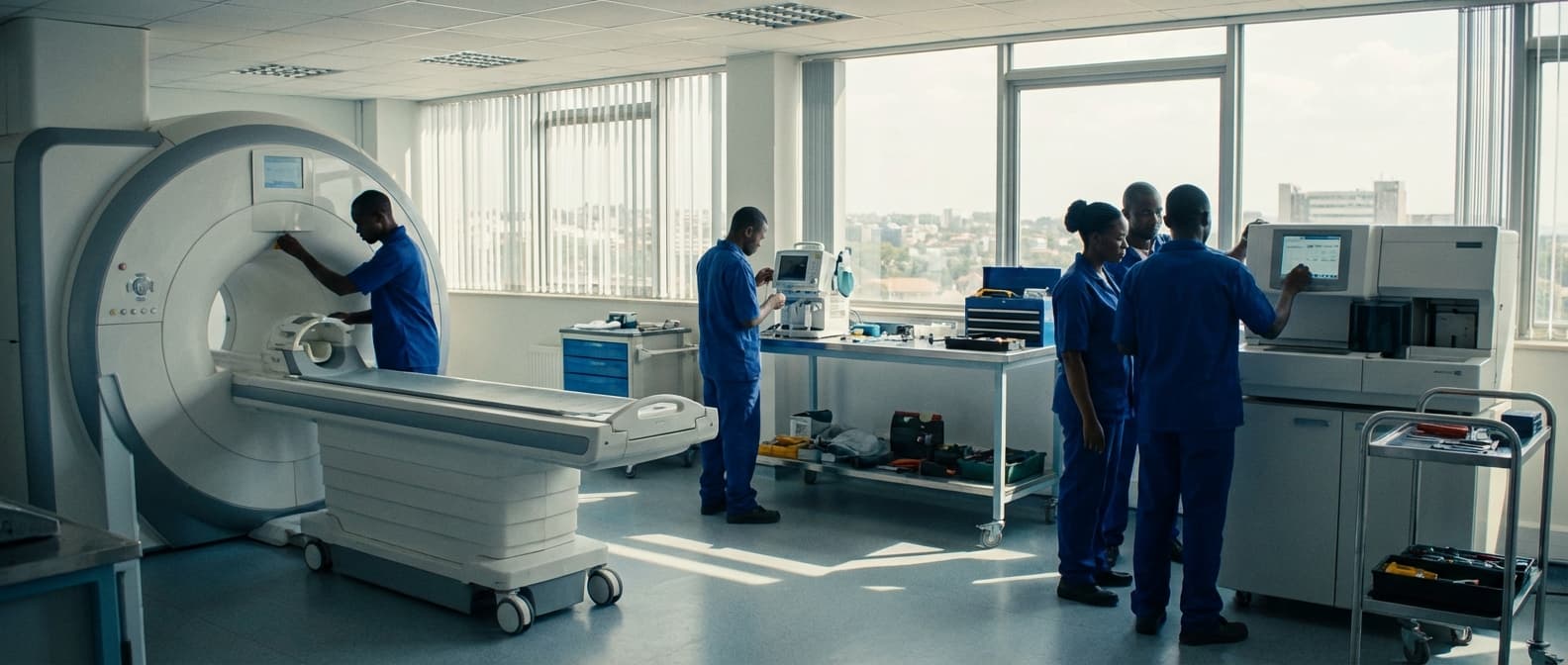
Uptime, Downtime & Root-Cause Analysis Reporting Service in Zimbabwe
Engineering Excellence & Technical Support
Uptime, Downtime & Root-Cause Analysis Reporting Service High-standard technical execution following OEM protocols and local regulatory frameworks.
Proactive Uptime Monitoring
Leverage real-time, AI-powered Uptime monitoring across your Zimbabwean infrastructure. Our service detects anomalies and performance degradations before they impact users, ensuring maximum availability and minimizing business disruption.
Granular Downtime Insights
Receive detailed and actionable Downtime reports specific to your Zimbabwe-based operations. We pinpoint the exact duration, affected services, and user impact of outages, enabling swift recovery and informed decision-making.
Automated Root-Cause Analysis
Go beyond simply identifying downtime. Our advanced Root-Cause Analysis engine automatically pinpoints the underlying technical issues within your Zimbabwean IT environment, providing clear, concise explanations and actionable remediation steps.
What Is Uptime, Downtime & Root-cause Analysis Reporting Service In Zimbabwe?
Uptime, Downtime & Root-Cause Analysis (RCA) Reporting Service in Zimbabwe is a critical IT service focused on the continuous monitoring, measurement, and documentation of system availability and performance. This service aims to minimize service interruptions (downtime) and promptly identify the underlying causes of any such disruptions. By employing robust monitoring tools and methodologies, the service provides detailed reports that enable organizations to understand their system's reliability, optimize operational efficiency, and implement proactive measures to prevent future incidents. The core components include real-time system health checks, incident logging, performance metric collection, and post-incident RCA to determine the originating fault.
| Stakeholder/Entity | Need for Service | Typical Use Cases |
|---|---|---|
| Businesses reliant on IT infrastructure (e.g., Telecommunications, Banking, E-commerce, Government Agencies): | To ensure continuous service delivery, maintain customer trust, comply with service level agreements (SLAs), and minimize financial losses due to outages. | Monitoring network availability, server health, application responsiveness, online transaction processing success rates, and cloud service performance. Performing RCA for failed payment gateways or website outages. |
| Managed Service Providers (MSPs) and IT Outsourcing Companies: | To fulfill contractual obligations with clients, demonstrate value, optimize resource allocation, and proactively identify and resolve issues before they impact clients. | Monitoring client servers, networks, and applications. Reporting on uptime SLAs to clients. Conducting RCA for client-specific incidents to prevent recurrence and improve service quality. |
| Critical Infrastructure Operators (e.g., Power Utilities, Water Supply, Transportation): | To ensure the uninterrupted operation of essential services, safeguard public safety, and maintain national security. | Monitoring SCADA systems, control room applications, communication networks, and critical infrastructure components. RCA for disruptions in service delivery that could have widespread consequences. |
| Software Development and DevOps Teams: | To validate application stability in production, identify performance bottlenecks, and rapidly diagnose and fix bugs or deployment failures. | Monitoring application performance in live environments, tracking error rates, and identifying the root cause of crashes or performance degradation post-deployment. Using RCA to refine CI/CD pipelines. |
| Cloud Service Consumers: | To verify the availability and performance of cloud-hosted applications and services, and to have data to support claims or requests to cloud providers. | Monitoring uptime of SaaS applications, IaaS resources, and PaaS platforms. Documenting downtime for SLA breach claims or performance optimization discussions with cloud vendors. |
Key Components of the Service:
- Uptime Monitoring: Continuous surveillance of system availability and accessibility from various vantage points.
- Downtime Tracking: Precise recording of the duration, frequency, and impact of service outages.
- Performance Metrics Collection: Gathering data on key performance indicators (KPIs) such as latency, throughput, and error rates.
- Alerting and Notification: Configurable alerts triggered by predefined thresholds or detected anomalies.
- Incident Management Integration: Seamless integration with existing IT service management (ITSM) workflows for incident lifecycle tracking.
- Root-Cause Analysis (RCA): Structured investigation to identify the fundamental reasons behind incidents, employing techniques like the '5 Whys' or fault tree analysis.
- Reporting and Visualization: Generation of comprehensive reports and dashboards illustrating uptime percentages, downtime incidents, performance trends, and RCA findings.
- Trend Analysis: Identification of recurring patterns and systemic issues over time to inform strategic improvements.
Who Needs Uptime, Downtime & Root-cause Analysis Reporting Service In Zimbabwe?
In today's increasingly digital landscape, ensuring the continuous availability of critical IT systems and infrastructure is paramount for business success. Downtime, whether planned or unplanned, can lead to significant financial losses, reputational damage, and decreased productivity. For organizations operating in Zimbabwe, a robust Uptime, Downtime & Root-Cause Analysis Reporting Service is not just a luxury, but a necessity for maintaining operational efficiency, competitive advantage, and customer satisfaction.
| Industry/Sector | Primary Target Customers | Key Departments Benefiting |
|---|---|---|
| Financial Services (Banking, Insurance, Microfinance) | Banks, Insurance Companies, Investment Firms, Mobile Money Operators | IT Operations, Risk Management, Compliance, Customer Service, Treasury |
| Telecommunications | Mobile Network Operators, Internet Service Providers | Network Operations Center (NOC), Engineering, IT Infrastructure, Customer Support |
| E-commerce & Retail | Online Retailers, Large Retail Chains with Online Presence | IT Operations, E-commerce Management, Logistics, Marketing |
| Manufacturing | Factories, Industrial Plants with Automated Systems | Production Management, Plant Operations, IT Support, Maintenance |
| Mining | Mining Companies with Remote Operations & Data Management | Operations Management, IT Infrastructure, Safety & Security, Exploration |
| Healthcare | Hospitals, Clinics, Diagnostic Laboratories | IT Department, Hospital Administration, Clinical Operations, Records Management |
| Government & Public Sector | Government Ministries, Parastatals, Municipalities | IT Departments, Service Delivery Units, Administrative Offices |
| Education | Universities, Colleges, Large School Groups | IT Services, Academic Administration, Student Support |
| Logistics & Transportation | Freight Forwarders, Passenger Transport Companies, Supply Chain Providers | Operations, Fleet Management, IT Support, Customer Service |
| Small and Medium Enterprises (SMEs) | Any SME with a significant reliance on IT for daily operations | General Management, Operations, IT Support (if outsourced or in-house) |
Target Customers and Departments in Zimbabwe:
- Businesses across all sectors relying on digital infrastructure.
- Organizations where IT systems are mission-critical for operations.
- Companies experiencing frequent or prolonged IT disruptions.
- Organizations seeking to optimize IT resource allocation and investment.
- Businesses aiming to improve customer trust and loyalty through reliable service delivery.
Uptime, Downtime & Root-cause Analysis Reporting Service Process In Zimbabwe
This document outlines the workflow for the Uptime, Downtime & Root-Cause Analysis Reporting Service in Zimbabwe, detailing the process from initial customer inquiry to the final execution and delivery of reports. This service aims to provide comprehensive analysis of system availability and identify the underlying causes of any disruptions, enabling organizations to improve their operational resilience and minimize future downtime.
| Stage | Description | Key Activities | Deliverables | Responsible Parties |
|---|---|---|---|---|
| Inquiry & Service Scoping | Initial contact from a client seeking the Uptime, Downtime & Root-Cause Analysis Reporting Service. | Understanding client's specific needs, systems to be monitored, scope of analysis, and desired reporting frequency. Clarifying existing infrastructure and potential data sources. Initial assessment of complexity. | Needs assessment document, preliminary scope of work. | Client, Service Provider (Sales/Technical Representative) |
| Proposal & Agreement | Formalizing the service offering based on the inquiry and scoping. | Developing a detailed proposal outlining services, methodologies, timelines, pricing, and terms & conditions. Negotiating and finalizing the service agreement/contract. | Formal proposal, signed service agreement/contract. | Service Provider (Sales/Management), Client (Procurement/Management) |
| Data Collection & Monitoring Setup | Establishing the foundation for data gathering and analysis. | Identifying and configuring data sources (logs, performance metrics, error reports). Installing and configuring monitoring tools (if applicable). Defining key performance indicators (KPIs) for uptime and downtime. Setting up data collection agents or APIs. Ensuring data security and privacy. | Configured monitoring tools, established data pipelines, defined KPIs. | Service Provider (Technical Team), Client (IT Operations/System Administrators) |
| Analysis & Diagnosis | The core of the service: identifying and investigating downtime incidents. | Continuously monitoring system performance and availability. Detecting and logging downtime events. Collecting relevant data preceding, during, and after downtime. Applying diagnostic techniques (log analysis, correlation, pattern recognition) to identify root causes. Documenting findings for each incident. | Downtime incident logs, preliminary root-cause hypotheses, collected raw data. | Service Provider (Analysis Team), Client (IT Operations/System Administrators - for input/verification) |
| Report Generation | Compiling the findings into comprehensive reports. | Structuring the report to include an executive summary, overall uptime/downtime statistics, detailed analysis of each incident (including timeline, impact, and identified root cause), and supporting data visualizations. Tailoring reports to client's specified format and frequency. | Uptime/Downtime Reports, Root-Cause Analysis Reports. | Service Provider (Analysis Team/Reporting Specialist) |
| Report Presentation & Review | Presenting the findings to the client for discussion and validation. | Scheduling and conducting a presentation of the generated reports. Explaining findings in detail, answering questions, and facilitating discussion. Obtaining client feedback and validation of the analysis. | Presentation slides, meeting minutes, confirmed report accuracy. | Service Provider (Analysis Team/Account Manager), Client (Management/Relevant Stakeholders) |
| Recommendations & Follow-up | Providing actionable insights and ensuring client satisfaction. | Formulating specific, actionable recommendations for preventing recurrence of identified downtime causes. Providing guidance on implementing these recommendations. Conducting follow-up reviews to assess the impact of implemented changes and address any ongoing concerns. Offering ongoing support and continuous improvement services. | Actionable recommendations document, follow-up meeting reports, service improvement proposals. | Service Provider (Analysis Team/Consultants), Client (Management/Operations Team) |
Service Workflow Stages
- Inquiry & Service Scoping
- Proposal & Agreement
- Data Collection & Monitoring Setup
- Analysis & Diagnosis
- Report Generation
- Report Presentation & Review
- Recommendations & Follow-up
Uptime, Downtime & Root-cause Analysis Reporting Service Cost In Zimbabwe
Providing reliable uptime, downtime, and root-cause analysis (RCA) reporting services is crucial for businesses in Zimbabwe to maintain operational efficiency and minimize disruptions. The cost of these services is influenced by several key factors, leading to a range of pricing in local currency (Zimbabwean Dollar - ZWL). These factors include the complexity of the IT infrastructure being monitored, the volume of data to be analyzed, the required reporting frequency, the level of customization needed for reports, the expertise and reputation of the service provider, and the service level agreements (SLAs) in place. Smaller businesses with simpler IT setups will generally incur lower costs compared to large enterprises with extensive and intricate networks. Similarly, real-time monitoring and immediate RCA will command a premium over scheduled, periodic reporting.
| Service Tier/Scope | Estimated Monthly Cost (ZWL) | Typical Features |
|---|---|---|
| Basic Monitoring & Reporting (Small Businesses) | 15,000 - 45,000 | Core uptime/downtime tracking for essential services, standard weekly/monthly reports, basic root cause identification. |
| Standard Monitoring & Reporting (Medium Businesses) | 40,000 - 120,000 | Comprehensive monitoring of multiple systems, daily/weekly reports, detailed RCA with suggested remediation, performance trend analysis. |
| Advanced Monitoring & Reporting (Large Enterprises) | 100,000 - 300,000+ | Full-spectrum infrastructure monitoring, real-time alerts, advanced RCA with historical data correlation, proactive issue prediction, customized dashboards and SLAs, dedicated support. |
| Ad-hoc Root Cause Analysis Project | 5,000 - 25,000 per incident (depending on complexity) | One-off investigation into specific incidents to identify root causes and provide detailed recommendations. |
Key Pricing Factors for Uptime, Downtime & Root-Cause Analysis Reporting Services in Zimbabwe
- Infrastructure Complexity: The number of servers, applications, network devices, and cloud services to be monitored. More complex environments require more sophisticated tools and expertise.
- Data Volume and Granularity: The sheer amount of data generated by the IT systems and the level of detail required in the analysis. Higher volumes and finer granularity increase processing and storage costs.
- Reporting Frequency: Daily, weekly, monthly, or on-demand reporting. More frequent reporting generally incurs higher costs.
- Customization Requirements: Standardized reports vs. tailor-made reports with specific metrics, dashboards, and visualizations. Customization adds development and implementation time.
- Service Provider Expertise and Reputation: Experienced providers with a proven track record often charge more due to their reliability and quality of service.
- Service Level Agreements (SLAs): Guaranteed uptime, response times for incidents, and resolution times. More stringent SLAs typically lead to higher pricing.
- Tools and Technology Used: The sophistication and licensing costs of the monitoring and analytics software employed by the service provider.
- On-site vs. Remote Services: The need for on-site presence for troubleshooting or initial setup can influence costs.
- Integration with Existing Systems: The effort required to integrate the reporting service with a client's existing IT management tools.
Affordable Uptime, Downtime & Root-cause Analysis Reporting Service Options
Many businesses struggle with ensuring continuous service availability while keeping operational costs in check. This can be particularly challenging when addressing system downtime and performing thorough root-cause analysis. Fortunately, a range of service options exists to provide affordable uptime monitoring, downtime alerts, and detailed root-cause analysis reporting. These services offer significant value through carefully constructed value bundles and strategic cost-saving approaches.
| Value Bundle Type | Key Inclusions | Target Audience | Cost-Saving Strategy | Estimated Price Range (Monthly) |
|---|---|---|---|---|
| Basic Uptime Essentials | Core uptime checks, basic downtime alerts, limited historical data. | Small businesses, startups, monitoring essential services. | Focuses on critical alerts, reduces feature bloat. | $10 - $50 |
| Pro Performance Monitoring | Advanced uptime checks, real-time alerts, performance metrics, basic RCA, moderate historical data. | Growing businesses, IT departments managing multiple services. | Bundles monitoring with foundational analysis, prevents small issues escalating. | $50 - $200 |
| Enterprise Reliability Suite | Comprehensive uptime & synthetic monitoring, RUM, advanced RCA with expert review, extensive historical data, API access, dedicated support. | Large enterprises, mission-critical applications, complex IT infrastructures. | Holistic approach to preventing downtime and speeding up recovery, proactive optimization. | $200 - $1000+ |
| Customizable Solutions | Tailored monitoring, alerting, and RCA based on specific business needs. | Businesses with unique requirements or specific compliance needs. | Pay only for what you need, avoids paying for unused features. | Variable (quote-based) |
Key Service Components for Affordable Uptime and Downtime Reporting
- Uptime Monitoring: Real-time checks on the availability of critical applications, websites, and servers from multiple geographic locations.
- Downtime Alerts: Instant notifications via email, SMS, or integrations with collaboration tools when services become unavailable.
- Performance Metrics: Tracking key indicators like response times, error rates, and resource utilization to proactively identify potential issues.
- Root-Cause Analysis (RCA) Reports: Detailed investigations into the underlying reasons for downtime incidents, including logs, event timelines, and recommended solutions.
- Historical Data & Trend Analysis: Storing performance and downtime data to identify patterns, predict future issues, and optimize system health.
- Synthetic Monitoring: Simulating user journeys to test application functionality and performance from an end-user perspective.
- Real User Monitoring (RUM): Collecting data on actual user interactions to understand their experience and pinpoint performance bottlenecks.
Verified Providers In Zimbabwe
In Zimbabwe's evolving healthcare landscape, identifying reliable and accredited medical service providers is paramount. Verified providers offer a guarantee of quality, safety, and adherence to established medical standards. Franance Health stands out as a premier entity in this regard, offering a comprehensive suite of credentials and services that position them as the best choice for healthcare needs in Zimbabwe.
| Credential/Aspect | Franance Health's Commitment |
|---|---|
| Regulatory Approval: | Fully licensed and approved by the Ministry of Health and Child Care, Zimbabwe, and relevant professional medical councils. |
| Professional Licensing: | All medical practitioners are verified as licensed and in good standing with their respective professional bodies (e.g., Medical and Dental Practitioners Council of Zimbabwe). |
| Quality Management Systems: | Implementation of robust quality assurance and control protocols to maintain high standards in all service delivery aspects. |
| Ethical Practice Standards: | Adherence to a strict code of ethics, prioritizing patient confidentiality, dignity, and informed consent. |
| Infrastructure Standards: | Facilities are designed and maintained to meet safety and hygiene regulations, ensuring a secure environment for patients and staff. |
| Continuing Professional Development: | Active engagement in ongoing training and development for all healthcare professionals to ensure up-to-date knowledge and skills. |
Why Franance Health is Your Best Choice:
- Accreditation and Regulatory Compliance: Franance Health rigorously adheres to all national and international healthcare regulations. Their facilities and services undergo regular inspections and certifications, ensuring they meet the highest standards of patient care and safety.
- Qualified Medical Professionals: The organization boasts a team of highly skilled and experienced doctors, nurses, specialists, and support staff. All practitioners are licensed and registered with relevant Zimbabwean medical boards, bringing expertise across a wide range of medical disciplines.
- State-of-the-Art Facilities and Technology: Franance Health invests in modern medical equipment and infrastructure. This commitment to technological advancement ensures accurate diagnostics, effective treatments, and improved patient outcomes.
- Patient-Centric Approach: A core principle of Franance Health is providing compassionate and personalized care. They prioritize patient well-being, comfort, and clear communication throughout the entire healthcare journey.
- Comprehensive Service Offerings: From primary care and specialized treatments to diagnostic services and emergency care, Franance Health offers a holistic approach to healthcare, catering to diverse medical needs.
- Commitment to Continuous Improvement: The organization is dedicated to staying at the forefront of medical innovation. They engage in ongoing training for their staff and regularly review and update their protocols to incorporate best practices.
Scope Of Work For Uptime, Downtime & Root-cause Analysis Reporting Service
This document outlines the Scope of Work (SOW) for a Uptime, Downtime & Root-Cause Analysis Reporting Service. The service aims to provide comprehensive and actionable insights into system availability, identify the underlying causes of service disruptions, and offer recommendations for improvement. The technical deliverables and standard specifications are detailed below to ensure clarity and adherence to best practices.
| Deliverable | Description | Frequency/Trigger | Format | Standard Specifications |
|---|---|---|---|---|
| Uptime/Downtime Report | Comprehensive report detailing system availability metrics, including total uptime, total downtime, and individual incident durations. | Weekly, Monthly, Quarterly (configurable) | PDF, CSV | Metrics to include: Uptime Percentage (%), Downtime Percentage (%), Total Uptime (hours/minutes), Total Downtime (hours/minutes), Mean Time Between Failures (MTBF), Mean Time To Repair (MTTR). Data must be aggregated from defined monitoring tools. |
| Downtime Incident Report | Detailed analysis of each significant downtime event, including start time, end time, duration, impact assessment, and affected services. | Per incident (threshold-based, e.g., > 15 minutes downtime) | PDF, HTML | Report must include: Incident ID, Start Timestamp, End Timestamp, Duration, Affected System(s)/Service(s), Severity Level (e.g., Critical, Major, Minor), Business Impact Assessment (qualitative and quantitative where possible), User-facing impact. |
| Root Cause Analysis (RCA) Report | In-depth investigation into the underlying cause of downtime incidents, including contributing factors, timeline of events, and lessons learned. | Per significant downtime incident (as defined in Downtime Incident Report) | PDF, DOCX | Report must include: Incident Summary, Timeline of Events, Root Cause Identification (e.g., hardware failure, software bug, human error, network issue), Contributing Factors, Immediate Remediation Actions Taken, Long-term Recommendations/Preventative Measures, Owners of Recommendations, Target Completion Dates. |
| Executive Summary Dashboard | High-level overview of system availability and recent major incidents, tailored for executive stakeholders. | Monthly, Quarterly (configurable) | Web-based dashboard, PDF | Key performance indicators (KPIs) including overall uptime %, number of critical/major incidents, MTTR trends. Visualizations such as trend charts and status indicators. |
| Recommendations Log | A centralized repository for all proposed preventative measures and remediation strategies identified through RCA, with status tracking. | Ongoing, updated with each RCA | Excel, Web-based tool | Columns must include: Recommendation ID, Incident ID (if applicable), Description, Proposed Action, Owner, Status (e.g., Open, In Progress, Completed, Deferred), Target Date, Actual Completion Date, Verification Method. |
Key Service Objectives
- Accurately track and report on system uptime and downtime percentages.
- Identify the root cause of all significant downtime events.
- Provide clear, concise, and actionable reports on downtime incidents.
- Propose preventative measures and remediation strategies.
- Contribute to continuous improvement of system reliability and performance.
Service Level Agreement For Uptime, Downtime & Root-cause Analysis Reporting Service
This Service Level Agreement (SLA) outlines the guaranteed uptime, acceptable downtime, and the process for Root-Cause Analysis (RCA) reporting for the Uptime, Downtime & Root-Cause Analysis Reporting Service provided by [Your Company Name] (hereinafter referred to as 'Provider') to [Client Company Name] (hereinafter referred to as 'Client').
| Service Component/Metric | Service Level Objective (SLO) | Measurement Period | Client Remedy/Credit |
|---|---|---|---|
| Service Uptime | 99.9% | Calendar Month | 5% Service Credit for every 1 hour of Unscheduled Downtime exceeding the guaranteed 0.1% (approx. 43 minutes per month). |
| Response Time (Critical Incidents) | 15 minutes | From alert generation | Not directly tied to credit, but impacts RCA timeliness. |
| Response Time (Major Incidents) | 30 minutes | From alert generation | Not directly tied to credit, but impacts RCA timeliness. |
| Response Time (Minor Incidents) | 60 minutes | From alert generation | Not directly tied to credit, but impacts RCA timeliness. |
| Root-Cause Analysis (RCA) Report Delivery | Within 48 business hours of Incident resolution (for Critical/Major Incidents) | Post-Incident | 2% Service Credit for each delay of 24 business hours. |
Key Definitions
- Service: The Uptime, Downtime & Root-Cause Analysis Reporting Service, which monitors the availability of specified systems and generates reports, including incidents and their root causes.
- Uptime: The percentage of time the Service is operational and accessible to the Client as measured over a calendar month.
- Downtime: The percentage of time the Service is unavailable, not accessible, or not performing within the specified response times, as measured over a calendar month.
- Scheduled Downtime: Planned maintenance or upgrades that are announced in advance to the Client.
- Unscheduled Downtime: Any Downtime that is not Scheduled Downtime.
- Incident: Any event that causes the Service to experience Downtime or degrade performance significantly.
- Root-Cause Analysis (RCA): A process to identify the fundamental reason for an Incident, enabling preventative measures.
- Response Time: The time elapsed from when an alert is generated by the monitoring system to when the Provider's support team begins active investigation.
- Resolution Time: The time elapsed from when an alert is generated to when the Incident is resolved, and the Service is restored to normal operation.
Frequently Asked Questions

Ready when you are
Let's scope your Uptime, Downtime & Root-Cause Analysis Reporting Service in Zimbabwe project in Zimbabwe.

Scaling healthcare logistics and technical systems across the entire continent.