
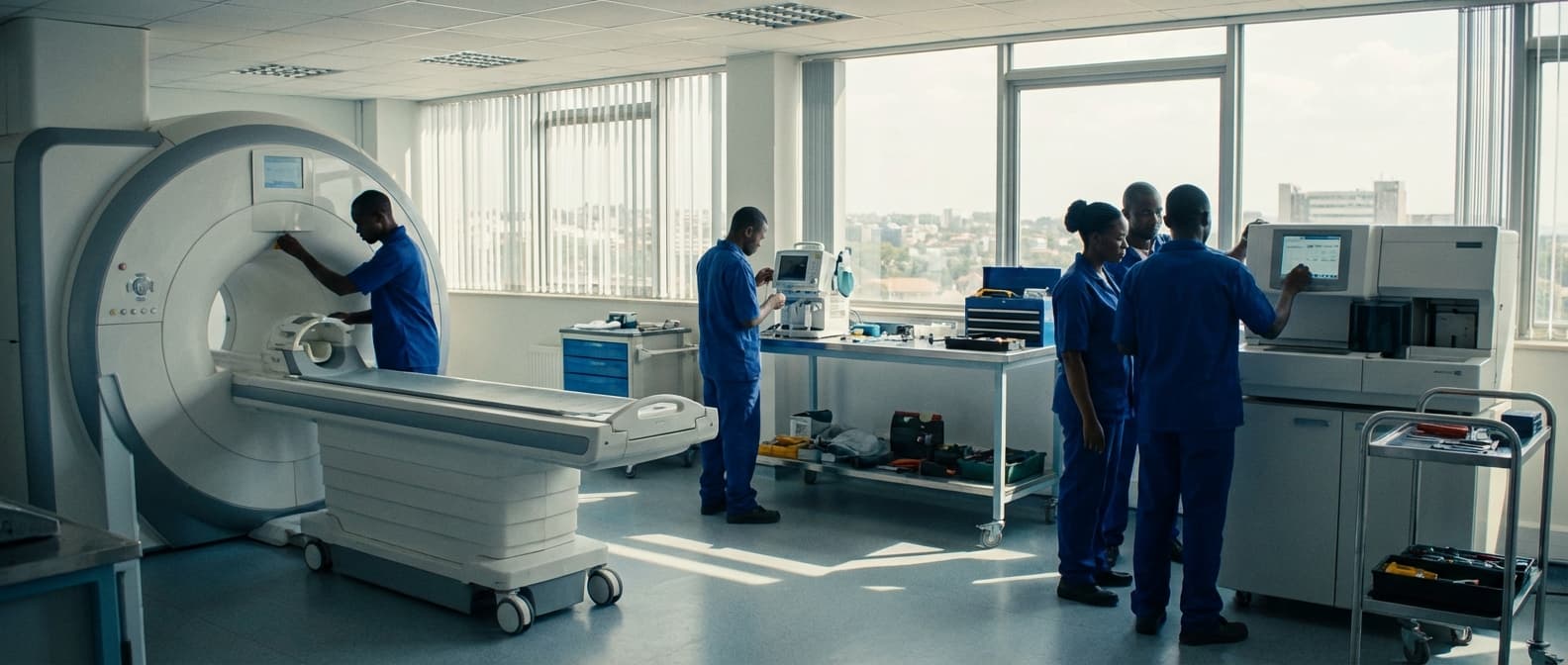
Planned Shutdown Coordination Service for Critical Equipment in Zimbabwe
Engineering Excellence & Technical Support
Planned Shutdown Coordination Service for Critical Equipment High-standard technical execution following OEM protocols and local regulatory frameworks.
Precision Shutdown Scheduling
Leveraging advanced scheduling tools and historical data, our service meticulously plans and synchronizes critical equipment shutdowns to minimize operational impact and maximize uptime across Zimbabwe's key industries. We ensure every component is accounted for, from pre-shutdown checks to post-maintenance verification.
Robust Risk Mitigation Protocols
Our comprehensive risk assessment framework identifies potential hazards associated with planned shutdowns. We implement stringent safety protocols and contingency plans, ensuring the well-being of personnel and the integrity of critical assets throughout the entire coordination process in Zimbabwe.
Optimized Resource Allocation & Integration
We streamline the coordination of internal teams, external contractors, and necessary resources. Our service ensures efficient material procurement, equipment staging, and task sequencing, leading to reduced downtime and cost-effectiveness for critical equipment maintenance in Zimbabwe.
What Is Planned Shutdown Coordination Service For Critical Equipment In Zimbabwe?
The Planned Shutdown Coordination Service for Critical Equipment in Zimbabwe is a specialized operational and logistical framework designed to manage and optimize the scheduled deactivation of vital industrial and infrastructure machinery. This service ensures that essential equipment, the failure or interruption of which would result in significant economic, safety, or public service disruption, is taken offline for maintenance, upgrade, or replacement in a controlled, efficient, and risk-mitigated manner. It encompasses the entire lifecycle of a planned shutdown, from initial planning and scheduling to execution, restoration of service, and post-shutdown analysis. The core objective is to minimize downtime, reduce operational impact, and prevent unforeseen failures, thereby safeguarding the integrity and reliability of critical assets.
| Service Recipient Profile | Rationale for Service Engagement | Typical Use Cases in Zimbabwe |
|---|---|---|
| Power Generation & Distribution Utilities: National power utility (ZESA Holdings) and independent power producers (IPPs). | Ensuring grid stability, preventing widespread blackouts, maintaining generation capacity, and complying with operational standards for critical generation units (turbines, generators, transformers) and transmission infrastructure. | Scheduled maintenance of thermal or hydro power plant units, replacement of high-voltage transformers, rehabilitation of substations, overhaul of critical switchgear. |
| Mining & Mineral Processing Companies: Large-scale mining operations (e.g., platinum, gold, chrome). | Minimizing production losses, maintaining asset integrity of heavy machinery, ensuring safety in hazardous environments, and meeting production targets for critical processing equipment. | Overhaul of crushers, mills, conveyor systems, smelters, and processing plant components. Planned maintenance of mine hoisting systems and ventilation equipment. |
| Industrial Manufacturing Plants: Food and beverage, cement, textiles, chemical, and fertilizer producers. | Sustaining production output, preventing quality degradation, ensuring plant safety, and maintaining competitiveness through optimized operational uptime of core manufacturing lines and machinery. | Planned maintenance of production lines (e.g., bottling plants, weaving looms), overhaul of critical pumps, compressors, and heat exchangers, and replacement of aging machinery. |
| Water & Wastewater Treatment Facilities: Municipal and industrial water treatment plants. | Ensuring continuous supply of potable water, maintaining public health standards through effective wastewater management, and prolonging the lifespan of essential treatment machinery. | Maintenance of pumps, filtration systems, aeration equipment, and disinfection units. Rehabilitation of clarifiers and sludge processing machinery. |
| Telecommunications Infrastructure Providers: Mobile network operators and fixed-line providers. | Maintaining network availability, preventing service disruptions, and ensuring the reliability of core network equipment and power supply systems for transmission towers and data centers. | Scheduled maintenance of base station power systems, upgrading core network routers and switches, and planned maintenance of data center cooling and power infrastructure. |
| Heavy Transport & Logistics: Rail operators, port authorities. | Ensuring the operational readiness of critical infrastructure such as locomotives, railway lines, port cranes, and cargo handling equipment to maintain the flow of goods and commodities. | Scheduled maintenance of railway infrastructure, overhaul of locomotives, and repair/replacement of port handling equipment. |
Key Components of the Service:
- Strategic Planning & Risk Assessment: Involves identifying critical equipment, assessing potential impacts of downtime, and developing comprehensive shutdown strategies. This includes defining objectives, scope, and success criteria for the shutdown.
- Detailed Scheduling & Sequencing: Creating a granular timeline for all shutdown activities, including isolation, draining, disassembly, repair/replacement, reassembly, testing, and recommissioning. This often involves complex dependencies and critical path analysis.
- Resource Mobilization & Management: Coordinating the allocation and deployment of skilled personnel (internal and external), specialized tools, equipment, and materials required for the shutdown. This includes managing vendor contracts and supply chains.
- Safety & Environmental Management: Implementing rigorous safety protocols, permit-to-work systems, hazard identification, risk mitigation strategies, and environmental compliance measures throughout the shutdown process.
- Stakeholder Communication & Coordination: Facilitating clear and continuous communication among all relevant parties, including operational teams, maintenance departments, engineering, management, regulatory bodies, and potentially affected external entities (e.g., utility providers, neighboring industries).
- Execution Oversight & Monitoring: Supervising the shutdown activities in real-time, ensuring adherence to the plan, managing deviations, and resolving emergent issues promptly.
- Testing & Commissioning: Conducting thorough functional and performance testing of equipment post-maintenance to verify operational readiness and safety before returning to service.
- Post-Shutdown Review & Documentation: Analyzing the shutdown's effectiveness, identifying lessons learned, documenting all activities and outcomes for future reference and continuous improvement.
Who Needs Planned Shutdown Coordination Service For Critical Equipment In Zimbabwe?
Planned shutdown coordination services are crucial for organizations in Zimbabwe that rely on critical equipment to maintain operational efficiency, safety, and regulatory compliance. These services ensure that scheduled maintenance, repairs, and upgrades to essential machinery are executed smoothly, minimizing disruption and maximizing asset lifespan. Without proper coordination, unplanned downtime can lead to significant financial losses, safety hazards, and reputational damage. This service is particularly vital for industries where continuous operation is paramount and the impact of equipment failure is severe.
| Target Customer Segment | Key Departments Involved | Examples of Critical Equipment |
|---|---|---|
| Mining Sector | Operations, Maintenance, Engineering, Safety, Environmental | Crushers, Conveyor Belts, Mills, Hoists, Generators, Ventilation Systems |
| Power Generation and Distribution Utilities | Generation, Transmission, Distribution, Maintenance, Operations | Turbines, Boilers, Generators, Transformers, Switchgear, Substations |
| Manufacturing and Industrial Plants | Production, Maintenance, Engineering, Quality Control, Health & Safety | Production Lines, CNC Machines, Furnaces, Boilers, Packaging Equipment, Robotics |
| Telecommunications Companies | Network Operations, Infrastructure Maintenance, Engineering | Base Stations, Data Centers, Switching Equipment, Power Systems, Fiber Optic Networks |
| Water and Sanitation Authorities | Operations, Maintenance, Engineering, Treatment Plant Management | Pumps, Filtration Systems, Treatment Units, Generators, Distribution Networks |
| Healthcare Facilities | Facilities Management, Biomedical Engineering, IT, Operations | Medical Imaging Equipment (MRI, CT Scanners), Sterilizers, HVAC Systems, Generators, IT Servers |
| Transportation and Logistics Providers | Fleet Management, Maintenance, Operations, IT | Fleet Vehicles (Heavy Duty Trucks, Buses), Warehousing Equipment, IT Systems, Railway Infrastructure (if applicable) |
Target Customers in Zimbabwe Requiring Planned Shutdown Coordination Service
- Mining Sector
- Power Generation and Distribution Utilities
- Manufacturing and Industrial Plants
- Telecommunications Companies
- Water and Sanitation Authorities
- Healthcare Facilities (Hospitals and Clinics)
- Transportation and Logistics Providers
- Oil and Gas Refineries (if applicable)
- Food and Beverage Processing Plants
- Commercial Agriculture Operations with Mechanized Equipment
Planned Shutdown Coordination Service For Critical Equipment Process In Zimbabwe
This document outlines the workflow for the Planned Shutdown Coordination Service for Critical Equipment in Zimbabwe, guiding clients from their initial inquiry through the successful execution of planned equipment shutdowns.
| Stage | Description | Key Activities | Deliverables/Outcomes | Stakeholders Involved |
|---|---|---|---|---|
| Inquiry & Consultation | The initial contact from a client seeking planned shutdown services for their critical equipment. | Client submits an inquiry (email, phone, web form). Initial discussion to understand client needs, equipment type, and desired shutdown scope. Service offering overview and preliminary discussion of feasibility. | Understanding of client requirements. Initial agreement on scope of discussion. Potential for a formal proposal. | Client (Operations Manager, Maintenance Manager, Plant Manager). Service Provider (Business Development Manager, Technical Lead). |
| Assessment & Planning | Detailed evaluation of the client's equipment and requirements to develop a comprehensive shutdown plan. | Site visit or remote assessment of critical equipment. Gathering of technical specifications, maintenance history, and operational data. Identification of potential risks and dependencies. Development of preliminary shutdown objectives and scope. Creation of a preliminary project plan and budget. | Detailed understanding of equipment and operational environment. Risk assessment report. Draft shutdown scope document. Preliminary project plan and budget. | Client (Engineering Team, Maintenance Team, Operations Team). Service Provider (Project Manager, Technical Specialists, Safety Officer). |
| Coordination & Scheduling | Developing a detailed, synchronized plan and schedule for all shutdown activities, ensuring minimal disruption. | Finalization of shutdown scope and objectives. Detailed work breakdown structure (WBS) creation. Development of a master shutdown schedule with critical path analysis. Identification and scheduling of all required resources (personnel, tools, materials, external contractors). Coordination with internal client departments (e.g., production, safety). Obtaining necessary permits and regulatory approvals. | Approved shutdown scope and objectives. Detailed master shutdown schedule. Resource allocation plan. Permit and approval documentation. | Client (All relevant departments). Service Provider (Project Manager, Schedulers, Discipline Leads). External Stakeholders (Regulators, suppliers). |
| Pre-Shutdown Preparations | Ensuring all necessary resources and preparations are in place before the shutdown commences. | Procurement and delivery of all required materials and spare parts. Mobilization of internal and external personnel. Pre-shutdown safety briefings and training. Equipment isolation and lockout/tagout (LOTO) procedures preparation. Site setup and staging of tools and equipment. Final confirmation of all logistics. | All required materials and spares on-site. Mobilized and briefed workforce. Established LOTO procedures. Ready staging areas. | Client (Logistics, Procurement, Safety). Service Provider (Procurement, Logistics, Site Supervisors, Safety Officer). |
| Shutdown Execution | The active phase where the planned maintenance, repairs, or upgrades are carried out on critical equipment. | Implementation of the detailed shutdown schedule. Performance of all planned maintenance, repair, and upgrade activities. Real-time monitoring of progress and resource utilization. On-the-fly problem-solving and decision-making. Strict adherence to safety protocols and procedures. Daily progress reporting and communication. | Completion of planned maintenance/repair/upgrade tasks. Operational equipment ready for restart. Daily progress reports. | Client (Operations, Maintenance). Service Provider (Project Manager, Supervisors, Technicians, Safety Officers). |
| Post-Shutdown Activities & Reporting | Concluding the shutdown, verifying work, and providing comprehensive documentation. | Equipment testing and commissioning. Final inspections and quality checks. Demobilization of personnel and equipment. Waste management and site cleanup. Development of a comprehensive shutdown report (including lessons learned). Client review and sign-off. Final invoicing and project closure. | Tested and commissioned equipment. Completed shutdown report. Client sign-off. Project closure documentation. | Client (Operations, Maintenance, Finance). Service Provider (Project Manager, Technical Leads, Finance). |
Workflow Stages
- Inquiry & Consultation
- Assessment & Planning
- Coordination & Scheduling
- Pre-Shutdown Preparations
- Shutdown Execution
- Post-Shutdown Activities & Reporting
Planned Shutdown Coordination Service For Critical Equipment Cost In Zimbabwe
Coordinating planned shutdowns for critical equipment in Zimbabwe involves a specialized service designed to minimize disruption and maximize efficiency. This service typically encompasses meticulous planning, risk assessment, resource allocation, communication management, and post-shutdown analysis. The cost of such a service is influenced by several factors, leading to a range of pricing structures. Understanding these determinants is crucial for businesses budgeting for this essential maintenance activity.
| Service Component/Complexity | Estimated Cost Range (ZWL) | Notes |
|---|---|---|
| Basic Shutdown Planning (Small-scale, low complexity, <1 week) | 15,000 - 40,000 | Covers essential planning, basic communication, and scheduling for less critical equipment. |
| Standard Shutdown Coordination (Medium-scale, moderate complexity, 1-2 weeks) | 40,000 - 100,000 | Includes detailed risk assessment, resource management, stakeholder communication, and on-site supervision. |
| Advanced Shutdown Management (Large-scale, high complexity, >2 weeks, specialized equipment) | 100,000 - 300,000+ | Comprehensive project management, advanced risk mitigation, specialized technical oversight, extensive reporting, and contingency planning. |
| On-site Coordination Team (per day, per coordinator) | 2,000 - 8,000 | Variable based on experience and specialization. May include per diem allowances. |
| Consultation and Advisory Services (hourly) | 500 - 2,000 | For specific advice or review of existing shutdown plans. |
Key Pricing Factors for Planned Shutdown Coordination Services in Zimbabwe
- Scope and Complexity of the Shutdown: The number of equipment units, the interdependencies between them, and the criticality of the operations being affected directly impact the planning effort and, therefore, the cost.
- Duration of the Shutdown: Longer shutdown periods require more extensive coordination, potentially involving more personnel and extended project management oversight.
- Level of Expertise Required: Specialized technical knowledge for specific equipment (e.g., power generation, mining machinery, complex industrial plants) will necessitate higher-skilled, and thus more expensive, coordination teams.
- Geographical Location: Accessibility of the site and the need for travel and accommodation for the coordination team can add to the overall cost.
- Required Resources and Personnel: The number of coordinators, technicians, safety officers, and other support staff needed during the shutdown directly affects labor costs.
- Technology and Tools Utilized: Advanced project management software, communication platforms, and diagnostic tools can enhance efficiency but may incur additional licensing or rental fees.
- Risk Assessment and Contingency Planning: The depth of risk analysis and the development of robust contingency plans add to the planning phase's intensity and cost.
- Client-Specific Requirements: Customization of the service to meet unique client needs, such as specific reporting formats or integration with existing internal systems, can influence pricing.
- Market Demand and Supplier Competition: The number of available service providers and the overall demand for these services in the Zimbabwean market can influence pricing dynamics.
Affordable Planned Shutdown Coordination Service For Critical Equipment Options
Our Affordable Planned Shutdown Coordination Service is designed to minimize downtime and maximize efficiency for your critical equipment maintenance. We offer flexible value bundles tailored to your specific needs, ensuring you receive comprehensive support without overspending. Our focus is on proactive planning, streamlined execution, and post-shutdown analysis to deliver significant cost savings through reduced unplanned outages, optimized resource allocation, and extended equipment lifespan. We understand the importance of budgeting and provide transparent pricing models to empower your decision-making.
| Cost-Saving Strategy | Description | Impact on Planned Shutdowns |
|---|---|---|
| Minimized Unplanned Outages: | By meticulously planning and executing scheduled maintenance, we prevent unexpected equipment failures that lead to costly emergency repairs and production losses. | Direct reduction in lost production revenue and emergency service fees. |
| Optimized Resource Allocation: | We ensure the right personnel, equipment, and materials are available at the right time, preventing delays and reducing idle time for your workforce and assets. | Lower labor costs due to efficient scheduling and reduced overtime. Better utilization of specialized equipment. |
| Extended Equipment Lifespan: | Proactive and thorough maintenance identified through our coordination reduces wear and tear, preventing premature component failure and extending the operational life of your critical assets. | Deferred capital expenditure for premature equipment replacement. Reduced maintenance costs over the long term. |
| Streamlined Vendor Management: | We facilitate seamless integration and communication with third-party vendors, ensuring timely service delivery and adherence to project schedules without costly coordination breakdowns. | Reduced delays caused by vendor-related issues. Improved accountability and performance from external service providers. |
| Enhanced Safety and Compliance: | Our robust safety protocols and compliance management minimize the risk of accidents and non-compliance, avoiding costly fines, legal fees, and potential shutdowns due to safety violations. | Prevention of accident-related costs (medical, insurance, lost productivity) and regulatory penalties. |
Key Value Bundles for Planned Shutdown Coordination
- Core Coordination Bundle: Includes essential planning, scheduling, resource identification, and basic on-site supervision for planned maintenance events. Ideal for routine shutdowns.
- Proactive Optimization Bundle: Builds upon the Core Bundle with advanced risk assessment, critical path analysis, detailed scope development, and pre-shutdown readiness checks to identify and mitigate potential issues before they arise.
- Comprehensive Turnaround Bundle: Our most extensive offering, encompassing all aspects of Proactive Optimization plus enhanced safety management, vendor integration, real-time progress monitoring, and detailed post-shutdown performance reporting. Suited for complex, multi-discipline turnarounds.
- Customizable Solution: We work with you to create a unique bundle of services that perfectly matches your operational requirements and budget constraints.
Verified Providers In Zimbabwe
In Zimbabwe's healthcare landscape, identifying trustworthy and qualified medical practitioners is paramount. This is where verified providers, particularly those with strong credentials like Franance Health, stand out. Franance Health's commitment to excellence and rigorous verification processes ensure patients receive high-quality care. This document outlines why selecting verified providers, with Franance Health as a prime example, is the most advantageous decision for your health needs.
| Franance Health Credential | What it Means for Patients | Why it's the Best Choice |
|---|---|---|
| Licensed Medical Professionals: All Franance Health providers are fully licensed by the Medical and Dental Practitioners Council of Zimbabwe (MDPCZ) or relevant governing bodies. | Ensures practitioners have met the minimum educational and professional requirements to practice medicine legally and ethically. | Guarantees you are being treated by a qualified and regulated medical professional, safeguarding against unqualified individuals. |
| Specialized Training and Certifications: Providers often possess advanced degrees, specializations, and ongoing professional development certifications. | Indicates a deeper level of expertise in specific medical fields, leading to more accurate diagnoses and effective treatments for complex conditions. | Allows you to access the best possible care tailored to your specific health needs, from general practitioners to highly specialized surgeons. |
| Peer Review and Performance Monitoring: Franance Health may engage in peer review processes and monitor provider performance to maintain high standards. | Ensures that providers are consistently delivering excellent patient care and adhering to best practices in medicine. | Provides assurance that you will receive up-to-date, evidence-based medical care and that the provider is committed to continuous improvement. |
| Ethical Conduct and Professionalism: A commitment to upholding the highest ethical standards and professional conduct is a core tenet. | Ensures that patient rights are respected, confidentiality is maintained, and care is delivered with empathy and integrity. | Builds a foundation of trust and respect between patient and provider, crucial for a positive healthcare experience. |
| Commitment to Patient-Centric Care: Focus on understanding and addressing individual patient needs and preferences. | Means your treatment plan will be personalized and discussed with you, empowering you to make informed decisions about your health. | Leads to a more satisfactory and effective healthcare journey, with a focus on your overall well-being and recovery. |
Why Choose Verified Providers like Franance Health?
- Enhanced Patient Safety: Verified providers undergo stringent background checks, including verification of medical licenses, certifications, and educational qualifications. This minimizes the risk of encountering unqualified or fraudulent practitioners.
- Guaranteed Quality of Care: Credentialing processes often assess a provider's experience, specialization, and adherence to ethical standards. This ensures you are in the hands of competent and skilled professionals.
- Improved Patient Outcomes: Access to verified, high-quality healthcare directly correlates with better health outcomes. You can be more confident in the diagnostic accuracy and treatment effectiveness.
- Peace of Mind: Knowing you are choosing a provider who has met established standards offers significant peace of mind, allowing you to focus on your recovery and well-being.
- Access to Specialized Expertise: Verified providers are often recognized for their specific areas of expertise, allowing you to find the right specialist for your unique medical condition.
- Transparency and Accountability: Verified providers are accountable to regulatory bodies and credentialing organizations. This transparency fosters trust and ensures a higher level of professionalism.
Scope Of Work For Planned Shutdown Coordination Service For Critical Equipment
This document outlines the Scope of Work (SOW) for the Planned Shutdown Coordination Service for Critical Equipment. The service aims to ensure the safe, efficient, and timely execution of planned shutdowns for critical operational equipment, minimizing downtime and associated risks. This SOW details the responsibilities of the service provider, the technical deliverables expected, and the standard specifications to be adhered to throughout the coordination process.
| Technical Deliverable | Description | Standard Specification/Format | Acceptance Criteria |
|---|---|---|---|
| Shutdown Execution Plan (SEP) | A detailed document outlining the complete scope, schedule, resource allocation, and risk mitigation strategies for the planned shutdown. | Microsoft Project or similar project management software; PDF format. | Approved by client's project manager; includes all identified critical tasks, dependencies, and milestones. |
| Risk Assessment and Mitigation Report | Identifies potential hazards and risks associated with the shutdown activities and proposes mitigation measures. | Standard risk assessment matrix format; PDF format. | All identified critical risks have documented mitigation strategies; safety recommendations are clearly defined. |
| Stakeholder Communication Matrix | Defines communication channels, frequencies, and responsibilities for all involved parties. | Excel spreadsheet or similar; PDF format. | Clearly outlines who communicates what, to whom, and when. |
| Work Permit and Isolation Log | Records all issued work permits, isolation certificates, and verification steps. | Digital logbook or dedicated software; summary report in Excel/PDF. | All required permits and isolations are documented; verification is confirmed by authorized personnel. |
| Daily/Weekly Progress Reports | Updates on shutdown progress, key achievements, encountered issues, and planned activities. | Standard report template (Word/PDF); daily reports submitted via email by EOD, weekly reports by COB Friday. | Reports are timely, accurate, and provide a clear overview of progress and challenges. |
| Post-Shutdown Review Report | Analysis of the shutdown performance, identification of lessons learned, and recommendations for future shutdowns. | Word/PDF format; includes quantitative and qualitative analysis. | Identifies at least three actionable recommendations for improvement; client sign-off on findings. |
| Spare Parts and Material Management Report | Inventory of spare parts and materials used, consumed, and remaining; including reconciliation with initial plan. | Excel/PDF format; clearly itemizes parts, quantities, and status. | Accurate reconciliation of all managed parts and materials; deviation report for significant variances. |
| Safety Compliance Audit Report (if applicable) | An assessment of adherence to safety procedures and regulations during the shutdown. | Standard audit checklist and report format; PDF format. | Identifies any non-compliance issues and outlines corrective actions. |
Key Activities and Responsibilities
- Develop comprehensive shutdown plans, including scope, timelines, resources, and risk assessments.
- Coordinate with all relevant stakeholders (operations, maintenance, safety, engineering, third-party vendors).
- Manage the issuance and tracking of work permits and isolation procedures.
- Oversee and direct on-site activities during the shutdown period.
- Ensure adherence to safety protocols and environmental regulations.
- Facilitate communication and reporting throughout the shutdown process.
- Conduct post-shutdown reviews and lessons learned sessions.
- Manage spare parts and material procurement for planned activities.
- Coordinate logistics for personnel, equipment, and consumables.
- Ensure compliance with all contractual obligations and service level agreements.
Service Level Agreement For Planned Shutdown Coordination Service For Critical Equipment
This Service Level Agreement (SLA) outlines the terms and conditions for the Planned Shutdown Coordination Service for Critical Equipment. It defines response times for critical events and uptime guarantees for the coordination platform.
| Service Component | Response Time Target (Acknowledgement) | Downtime Exclusion | Uptime Guarantee (Monthly) |
|---|---|---|---|
| Planned Shutdown Coordination Platform | 15 minutes for Critical Incidents | Scheduled maintenance windows (communicated 7 days in advance) | 99.9% |
| Emergency Notification System (part of Coordination Platform) | 5 minutes for Critical Incidents | Scheduled maintenance windows (communicated 7 days in advance) | 99.95% |
| Coordination Support (during scheduled shutdown windows) | Immediate (within 5 minutes of active shutdown start) | N/A | N/A |
Definitions
- Critical Equipment: Equipment identified as essential for business operations, whose downtime would result in significant financial loss or operational disruption.
- Planned Shutdown: A scheduled interruption of service for maintenance, upgrades, or repairs to Critical Equipment.
- Coordination Platform: The software and systems utilized to manage and communicate planned shutdowns, including scheduling, notification, and status tracking.
- Downtime: The period during which the Coordination Platform is unavailable and not functioning as intended.
- Response Time: The maximum time allowed to acknowledge and begin addressing a reported incident.
- Uptime Guarantee: The minimum percentage of time the Coordination Platform is expected to be available.
Frequently Asked Questions

Ready when you are
Let's scope your Planned Shutdown Coordination Service for Critical Equipment in Zimbabwe project in Zimbabwe.

Scaling healthcare logistics and technical systems across the entire continent.