
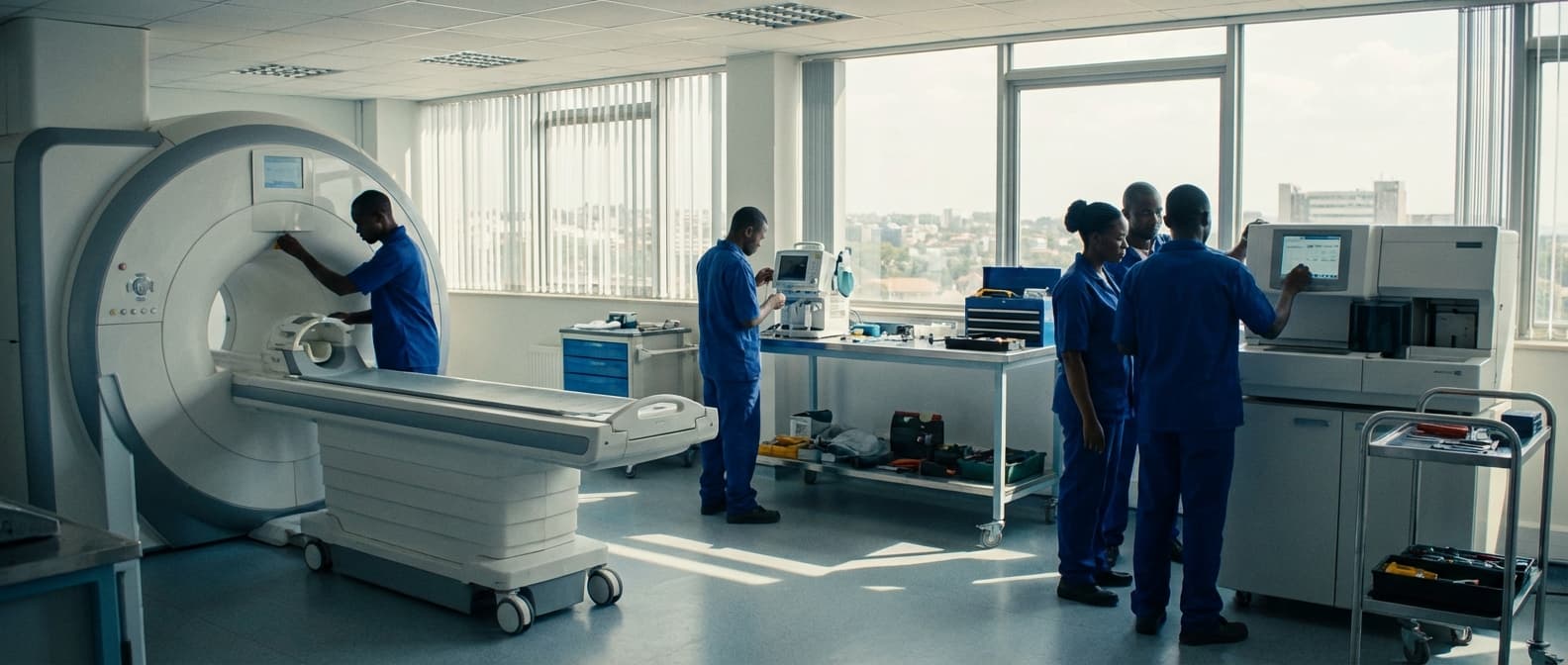
Comprehensive Maintenance Contract (CMC) Management Service (Parts & Labor) in Zimbabwe
Engineering Excellence & Technical Support
Comprehensive Maintenance Contract (CMC) Management Service (Parts & Labor) High-standard technical execution following OEM protocols and local regulatory frameworks.
Uninterrupted Operations with Proactive Parts & Labor
Leverage our comprehensive CMC to ensure your critical assets in Zimbabwe are always operational. We guarantee timely access to genuine spare parts and skilled technical labor, minimizing downtime and maximizing productivity through scheduled and emergency maintenance.
Predictive Maintenance & Cost Optimization
Go beyond reactive repairs. Our CMC utilizes advanced diagnostics and data analytics to predict potential failures before they occur. This proactive approach in Zimbabwe significantly reduces unexpected repair costs, extends equipment lifespan, and optimizes your operational budget.
Guaranteed Service Level Agreements (SLAs) & Risk Mitigation
Gain peace of mind with our robust CMC in Zimbabwe, backed by clearly defined Service Level Agreements. We assume responsibility for parts and labor costs, mitigating your financial risk and ensuring consistent, high-quality maintenance that adheres to international standards.
What Is Comprehensive Maintenance Contract (Cmc) Management Service (Parts & Labor) In Zimbabwe?
Comprehensive Maintenance Contract (CMC) Management Service (Parts & Labor) in Zimbabwe refers to a specialized service offering that involves the outsourced administration, execution, and oversight of maintenance agreements for a client's assets, encompassing both the provision of necessary spare parts and the labor required for repairs and preventative upkeep. This service aims to streamline and optimize the maintenance lifecycle of various equipment and infrastructure, ensuring operational continuity, cost predictability, and adherence to service level agreements (SLAs) within the Zimbabwean economic and regulatory landscape. The core function is to delegate the complexities of managing multiple maintenance contracts, supplier relationships, parts procurement, and skilled labor deployment to a professional service provider.
| Who Needs This Service? | Typical Use Cases | ||||||||
|---|---|---|---|---|---|---|---|---|---|
| Businesses with Critical Assets: Organizations whose operations are heavily reliant on the continuous functioning of machinery, equipment, or infrastructure. This includes sectors where downtime incurs significant financial losses or safety risks. | Manufacturing Plants: Managing maintenance for production lines, machinery, and industrial equipment (e.g., CNC machines, conveyor systems, packaging equipment). | Mining Operations: Maintaining heavy-duty equipment such as excavators, haul trucks, crushers, and processing machinery, often in remote locations. | Telecommunications Companies: Ensuring the uptime of network infrastructure, base stations, and associated hardware. | Power Generation and Distribution Utilities: Overseeing the maintenance of turbines, generators, transformers, and grid infrastructure. | Commercial Real Estate & Facilities Management: Managing the maintenance of HVAC systems, elevators, building management systems, and electrical infrastructure in large commercial buildings and complexes. | Healthcare Institutions: Maintaining critical medical equipment such as MRI scanners, CT scanners, X-ray machines, and laboratory equipment to ensure patient care continuity. | Transportation & Logistics Companies: Maintaining fleets of vehicles, warehousing equipment, and logistical machinery. | Agricultural Enterprises: Managing the upkeep of farm machinery, irrigation systems, and processing equipment. | Government & Public Sector Entities: Overseeing the maintenance of infrastructure, vehicles, and specialized equipment used by public services. |
What Comprehensive Maintenance Contract (CMC) Management Service (Parts & Labor) Involves:
- Contractual Administration: Managing the lifecycle of existing CMCs, including renewal negotiation, performance monitoring against contractual obligations, and compliance with Zimbabwean legislation pertaining to service agreements.
- Preventative Maintenance Scheduling & Execution: Developing and implementing proactive maintenance plans to minimize downtime and extend asset lifespan, utilizing qualified technicians and ensuring the availability of specified parts.
- Corrective Maintenance & Repair Management: Coordinating emergency and planned repairs, including the sourcing of authentic and compatible spare parts, scheduling qualified technicians, and overseeing the repair process to completion.
- Parts Inventory Management: Maintaining an optimal stock of critical spare parts, forecasting demand, managing procurement, ensuring quality control, and adhering to import regulations in Zimbabwe.
- Labor Resource Management: Sourcing, vetting, and deploying skilled and certified technicians, whether in-house or through third-party subcontractors, ensuring they possess the requisite expertise for specific equipment.
- Performance Monitoring & Reporting: Tracking key performance indicators (KPIs) such as Mean Time Between Failures (MTBF), Mean Time To Repair (MTTR), equipment availability, and cost per maintenance event, providing regular reports to the client.
- Budget Management & Cost Optimization: Developing and managing maintenance budgets, identifying opportunities for cost savings through efficient parts procurement, labor utilization, and preventative strategies.
- Risk Mitigation: Implementing strategies to reduce operational risks associated with equipment failure, including asset obsolescence management and proactive identification of potential failure points.
- Vendor Management: Establishing and managing relationships with original equipment manufacturers (OEMs) and independent parts suppliers, ensuring competitive pricing and reliable delivery.
- Technical Support & Troubleshooting: Providing expert technical advice and on-site support for diagnosing and resolving complex equipment issues.
Who Needs Comprehensive Maintenance Contract (Cmc) Management Service (Parts & Labor) In Zimbabwe?
In Zimbabwe, comprehensive maintenance contract (CMC) management services, encompassing both parts and labor, are essential for organizations that rely heavily on the continuous and efficient operation of their critical assets. These services ensure that equipment is kept in optimal working condition, minimizing downtime, extending lifespan, and ultimately protecting significant investments. Without proper management of these contracts, businesses risk unexpected breakdowns, escalating repair costs, and a decline in productivity. Therefore, identifying the right target customers and their relevant departments is crucial for CMC management service providers in Zimbabwe.
| Customer Segment | Key Equipment/Assets Managed | Primary Need for CMC Management | Relevant Departments |
|---|---|---|---|
| Industrial Manufacturers | Production machinery, processing equipment, heavy machinery, automated systems | Minimizing production downtime, ensuring operational efficiency, managing spare parts inventory, extending equipment lifespan. | Operations, Maintenance, Engineering, Procurement, Finance |
| Energy & Utilities | Generators, turbines, transformers, water pumps, distribution networks, control systems | Ensuring uninterrupted service delivery, preventing catastrophic failures, regulatory compliance, managing complex infrastructure. | Operations, Maintenance, Engineering, Asset Management, Finance |
| Healthcare Institutions | Medical imaging equipment (MRI, CT scanners), surgical equipment, laboratory analyzers, hospital infrastructure (HVAC, generators) | Patient safety, minimizing diagnostic delays, ensuring equipment reliability, compliance with healthcare regulations. | Maintenance, Biomedical Engineering, Facilities Management, Procurement, Finance |
| Telecommunications Companies | Base stations, network equipment, data centers, power backup systems | Ensuring network uptime, maintaining service quality, managing vast and distributed assets, preventing data loss. | Operations, Network Maintenance, IT, Procurement, Finance |
| Financial Institutions | ATMs, servers, data center infrastructure, security systems, HVAC | Ensuring transaction availability, data security, business continuity, customer service reliability. | IT Operations, Facilities Management, Security, Procurement, Finance |
| Government/Public Sector | Vehicles, machinery (e.g., road construction), IT infrastructure, specialized scientific equipment | Ensuring public service delivery, efficient resource allocation, managing public assets, transparency in spending. | Procurement, Operations, Fleet Management, IT, Finance |
| Commercial Enterprises | Fleet vehicles, HVAC systems, IT servers, specialized retail equipment | Optimizing operational costs, ensuring business continuity, maintaining customer satisfaction. | Operations, Facilities Management, IT, Fleet Management, Procurement |
Target Customers and Departments for CMC Management Services in Zimbabwe
- {"items":["Large-scale Industrial Manufacturers (e.g., mining, agriculture processing, food & beverage, textiles)","Energy and Utilities Providers (e.g., power generation, water treatment)","Healthcare Institutions (e.g., hospitals, clinics, diagnostic centers)","Telecommunications Companies","Financial Institutions (e.g., banks with extensive ATM networks and data centers)","Government and Public Sector Organizations (e.g., transport authorities, research institutions)","Large Commercial Enterprises with specialized equipment (e.g., fleet management, data centers, HVAC systems)","Educational Institutions with advanced laboratories and IT infrastructure"],"title":"Target Customers"}
- {"items":["Operations Department","Maintenance Department","Facilities Management","Procurement/Purchasing Department","Finance Department","IT Department","Engineering Department","Risk Management","Asset Management"],"title":"Relevant Departments within Target Organizations"}
Comprehensive Maintenance Contract (Cmc) Management Service (Parts & Labor) Process In Zimbabwe
This document outlines the comprehensive workflow for managing Comprehensive Maintenance Contracts (CMC) that include both parts and labor in Zimbabwe. It covers the entire lifecycle of a CMC, from initial client inquiry to contract execution and ongoing service delivery.
| Stage | Description | Key Activities | Responsible Party/Department | Deliverables/Outcomes |
|---|---|---|---|---|
| Inquiry & Initial Consultation | Receiving and understanding the client's initial interest in CMC services. | Responding to inquiries, gathering preliminary information, scheduling initial meetings. | Sales/Business Development, Client Representative | Understanding of client needs, initial interest confirmation. |
| Needs Assessment & Site Survey | Detailed evaluation of the client's assets, operational environment, and specific maintenance requirements. | Site visits, asset inventory, risk assessment, identification of critical components, discussion of service level agreements (SLAs). | Technical Team, Site Surveyors, Client Representative | Detailed asset list, understanding of operational context, identified maintenance needs. |
| Proposal Generation & Negotiation | Developing a tailored CMC proposal based on the needs assessment, including scope, pricing, and terms. | Cost estimation (parts & labor), defining service levels, drafting proposal document, presenting to client, negotiating terms and pricing. | Commercial Team, Technical Team, Sales/Business Development, Client Representative | Detailed CMC proposal, agreed-upon scope of work, pricing structure. |
| Contract Finalization & Signing | Formalizing the agreement between the service provider and the client. | Legal review of contract, final negotiation, signing of CMC agreement, payment of initial fees/deposit. | Legal Department, Management, Client Representative | Signed CMC contract, commencement of services. |
| Onboarding & Asset Registration | Integrating the client and their assets into the service provider's management system. | Setting up client account, registering all contracted assets in the CMMS (Computerized Maintenance Management System), assigning unique asset IDs, defining maintenance parameters. | Operations Team, IT/System Administrator, Technical Team | Client onboarded, assets registered in CMMS, baseline data established. |
| Preventive Maintenance Scheduling | Proactive planning and execution of routine maintenance to prevent breakdowns. | Developing PM schedules based on asset type, usage, and manufacturer recommendations, assigning tasks to technicians, ensuring availability of necessary parts. | Operations Team, Planning Department, Technical Team | Scheduled PM tasks, optimized maintenance plans. |
| Reactive Maintenance (Breakdown) Management | Responding to and resolving unexpected equipment failures or performance issues. | Receiving breakdown calls/notifications, diagnosing the issue, dispatching technicians, coordinating parts and labor, ensuring rapid response within SLA. | Service Desk/Helpdesk, Operations Team, Technical Team | Minimized downtime, resolved breakdowns, satisfied client. |
| Parts Procurement & Inventory Management | Ensuring the availability of required spare parts for both preventive and reactive maintenance. | Forecasting parts needs, managing inventory levels (stocking critical spares), identifying reliable suppliers, negotiating purchase agreements, quality control of parts. | Procurement Department, Stores/Inventory Management, Technical Team | Adequate spare parts inventory, efficient procurement process, reduced lead times. |
| Labor Management & Technician Deployment | Effectively managing the technical workforce for optimal service delivery. | Scheduling technician availability, assigning tasks based on skill sets and location, providing necessary training and tools, performance monitoring of technicians. | Operations Team, HR Department, Technical Team Leaders | Skilled and available technicians, efficient task allocation. |
| Service Execution & Reporting | Performing maintenance tasks and documenting all activities. | Carrying out planned and unplanned maintenance, using CMMS for recording all interventions (parts used, labor hours, findings), generating service reports for the client. | Technical Team, Operations Team, Service Desk/Helpdesk | Completed maintenance tasks, comprehensive service reports, audit trail of activities. |
| Performance Review & Contract Renewal/Termination | Assessing the overall effectiveness of the CMC and deciding on future engagement. | Reviewing service performance against SLAs, client satisfaction surveys, financial performance analysis, discussions on contract renewal, renegotiation, or termination. | Management, Sales/Business Development, Client Representative | Contractual outcomes evaluated, informed decision on contract continuation. |
Key Stages of CMC Management Process
- Inquiry & Initial Consultation
- Needs Assessment & Site Survey
- Proposal Generation & Negotiation
- Contract Finalization & Signing
- Onboarding & Asset Registration
- Preventive Maintenance Scheduling
- Reactive Maintenance (Breakdown) Management
- Parts Procurement & Inventory Management
- Labor Management & Technician Deployment
- Service Execution & Reporting
- Performance Review & Contract Renewal/Termination
Comprehensive Maintenance Contract (Cmc) Management Service (Parts & Labor) Cost In Zimbabwe
Managing Comprehensive Maintenance Contracts (CMCs) for parts and labor in Zimbabwe involves a range of costs influenced by several critical factors. A CMC is a crucial service agreement that covers both the repair and replacement of parts, as well as the labor required for maintaining a specific asset, such as machinery, vehicles, or IT equipment. The pricing for these services is not static and can vary significantly based on the complexity of the asset, its age, usage intensity, the service provider's reputation, and the scope of coverage included in the contract. Understanding these elements is key for businesses to budget effectively and ensure the longevity and optimal performance of their assets.
| Asset Category | Typical Annual CMC Cost Range (ZWL) | Key Considerations |
|---|---|---|
| Small Office Equipment (Printers, Laptops) | 10,000 - 40,000 | Covers common part failures, basic labor. Often based on unit count. |
| Light Commercial Vehicles (Fleet) | 50,000 - 200,000+ per vehicle | Includes routine servicing, replacement of wear-and-tear parts (brakes, filters), labor. Varies by vehicle model and usage. |
| Industrial Machinery (e.g., Manufacturing, Mining) | 200,000 - 1,500,000+ per machine | Complex systems, expensive specialized parts, highly skilled labor. Critical for uptime. Scope of coverage is paramount. |
| IT Infrastructure (Servers, Network Gear) | 150,000 - 1,000,000+ per system | Depends on redundancy, hardware value, warranty status. May include remote support, on-site visits, and parts replacement. |
| Specialized Medical Equipment | 300,000 - 2,000,000+ per unit | High-value, safety-critical, requires certified technicians and specific parts. Regulatory compliance is key. |
Key Pricing Factors for CMC Services in Zimbabwe:
- Asset Type and Complexity: The nature of the equipment being maintained is a primary driver of cost. High-value, specialized, or complex machinery (e.g., industrial manufacturing equipment, large-scale IT infrastructure) will naturally incur higher CMC costs than simpler assets like standard office furniture or basic IT peripherals. The availability and cost of specialized parts and the expertise required for their maintenance are significant considerations.
- Age and Condition of the Asset: Older assets or those in poor condition typically require more frequent and extensive maintenance. This increases the likelihood of parts needing replacement and the need for more labor hours, leading to higher contract prices. Conversely, newer assets in good condition may command lower CMC fees.
- Usage Intensity and Operating Environment: Assets used heavily or in harsh environments (e.g., dusty industrial sites, extreme weather conditions) are subject to greater wear and tear. This necessitates more proactive maintenance and a higher probability of breakdowns, thus increasing CMC costs. The expected operational hours or cycles of the equipment are also factored in.
- Scope of Coverage: The breadth of services included in the CMC directly impacts the price. A comprehensive contract covering scheduled preventive maintenance, unscheduled repairs, emergency call-outs, replacement of all parts (including consumables), and potentially even software updates or upgrades will be more expensive than a basic contract focusing on preventive checks and labor only.
- Service Provider's Reputation and Expertise: Established and reputable service providers with a proven track record, highly skilled technicians, and a robust support network often charge a premium for their services. Their reliability and the quality of their work can justify higher costs for businesses prioritizing minimal downtime.
- Response Time and Availability Guarantees: Contracts that guarantee rapid response times for breakdowns or provide 24/7 availability of technicians will typically have higher fees. The criticality of the asset to business operations often dictates the need for such premium service levels.
- Geographical Location: While less of a factor for centrally located services, if the asset is in a remote area, transportation costs for technicians and parts can influence the overall CMC price.
- Included Parts (Genuine vs. Aftermarket): Contracts that specify the use of genuine manufacturer parts will generally be more expensive than those allowing for high-quality aftermarket alternatives. The cost of genuine parts is often higher but may offer better longevity and performance.
- Contract Duration: Longer-term CMC agreements may sometimes offer slightly lower annual costs due to the provider's ability to better forecast and manage resources. However, this needs to be balanced against the risk of rising part costs over extended periods.
- Downtime Penalties/Service Level Agreements (SLAs): Contracts with stringent SLAs and associated penalties for failing to meet them (e.g., for downtime) can increase the overall cost as the provider factors in the risk and potential financial impact.
Affordable Comprehensive Maintenance Contract (Cmc) Management Service (Parts & Labor) Options
This document outlines affordable Comprehensive Maintenance Contract (CMC) management service options, focusing on both parts and labor. We aim to provide clarity on value bundles and effective cost-saving strategies to ensure your equipment remains operational and your budget is protected. A well-managed CMC is crucial for minimizing downtime, extending equipment lifespan, and avoiding unexpected repair expenses. Our service is designed to be transparent and flexible, allowing you to select the level of coverage that best suits your operational needs and financial considerations.
| Value Bundle | Description | Key Features | Cost-Saving Strategies Incorporated |
|---|---|---|---|
| Basic Care | Essential preventive maintenance and limited breakdown coverage. | Annual preventive maintenance checks, priority response for breakdowns, inclusion of common wear-and-tear parts (e.g., filters, belts). | Focus on preventing minor issues from becoming major problems, predictable budgeting for routine maintenance. |
| Standard Plus | Enhanced preventive maintenance with broader parts and labor coverage for common issues. | Semi-annual preventive maintenance, inclusion of a wider range of standard replacement parts (e.g., seals, small electronic components), guaranteed response times for all breakdowns. | Proactive identification of potential failures, reduction in emergency repair costs through pre-emptive part replacement, optimized technician scheduling. |
| Premium All-Inclusive | Full-spectrum coverage with unlimited breakdown support and comprehensive parts replacement. | Quarterly preventive maintenance, 24/7 emergency support, all parts (excluding consumables if specified), priority access to certified technicians, remote diagnostics. | Maximum uptime assurance, elimination of unpredictable repair costs, potential for extended equipment lifespan through best-practice maintenance, bulk purchasing of parts by the service provider. |
| Customized Solutions | Tailored to specific equipment types, usage patterns, and risk tolerance. | Flexible combination of services based on client needs, tiered parts and labor coverage options, SLA customization. | Pay only for what you need, alignment of coverage with actual operational risk, negotiation of volume discounts on parts and services. |
Key Components of a Comprehensive Maintenance Contract (CMC)
- Preventive Maintenance: Scheduled inspections, cleaning, lubrication, and replacement of worn parts to prevent breakdowns.
- Corrective Maintenance (Breakdown Repairs): Unscheduled repairs due to equipment failure, including necessary parts and skilled labor.
- Parts Coverage: Specifies whether all parts, specific critical parts, or only consumable parts are included.
- Labor Coverage: Defines the scope of labor, including on-site visits, technician time, and emergency call-outs.
- Response Time Guarantees: Sets Service Level Agreements (SLAs) for on-site presence and repair initiation after a breakdown is reported.
- Software Updates & Patches: For sophisticated equipment, this can include updates to firmware and operating systems.
- Remote Diagnostics & Support: Initial troubleshooting and support provided without a physical site visit.
Verified Providers In Zimbabwe
In Zimbabwe's evolving healthcare landscape, identifying trusted and credentialed providers is paramount for ensuring quality and reliable medical services. Franance Health stands out as a beacon of excellence, offering a comprehensive network of healthcare professionals and facilities that have undergone rigorous verification. Their commitment to transparency and patient well-being makes them the premier choice for individuals seeking dependable healthcare solutions.
| Provider Type | Verification Aspects | Why Franance Health is the Best Choice |
|---|---|---|
| Doctors (GPs & Specialists) | Medical Council Registration, Post-graduate qualifications, Hospital affiliations, Criminal record checks | Ensures access to licensed and experienced medical professionals, reducing the risk of malpractice and guaranteeing competent diagnosis and treatment. |
| Hospitals & Clinics | Ministry of Health accreditation, Infrastructure and equipment standards, Infection control protocols, Staff qualifications | Guarantees safe and well-equipped medical facilities, adhering to national safety and hygiene standards for optimal patient outcomes. |
| Laboratories | National testing and calibration certifications, Quality control measures, Staff expertise, Equipment calibration records | Ensures accurate and reliable diagnostic testing, crucial for effective treatment planning and disease management. |
| Pharmacies | Pharmacy Council licensing, Medication dispensing protocols, Storage and handling of drugs, Qualified pharmacists | Provides access to genuine and safely stored medications, dispensed by qualified professionals, safeguarding patient health. |
| Ancillary Services (e.g., Physiotherapy, Radiology) | Professional body accreditation, Practitioner qualifications, Equipment safety and maintenance | Offers specialized therapeutic and diagnostic services from verified practitioners, contributing to comprehensive healthcare. |
Franance Health Credentials: What Sets Them Apart
- Rigorous Verification Process: Franance Health implements a multi-stage verification protocol for all affiliated providers. This includes checking medical licenses, professional certifications, educational backgrounds, and practice histories.
- Adherence to International Standards: Providers within the Franance Health network are expected to meet and often exceed internationally recognized healthcare standards, ensuring a high level of care.
- Continuous Quality Assurance: Franance Health actively monitors the performance and patient feedback of its network, ensuring consistent quality and identifying areas for improvement.
- Specialized Expertise: The network boasts a diverse range of specialists across various medical disciplines, guaranteeing access to expert care for a wide spectrum of health needs.
- Patient-Centric Approach: Franance Health prioritizes patient satisfaction and safety, fostering an environment where trust and open communication are fundamental.
- Technological Integration: Many Franance Health providers leverage modern medical technology and digital health solutions to enhance diagnostic accuracy and treatment effectiveness.
Scope Of Work For Comprehensive Maintenance Contract (Cmc) Management Service (Parts & Labor)
This Scope of Work (SOW) outlines the requirements for a Comprehensive Maintenance Contract (CMC) Management Service, encompassing both parts and labor, for a defined set of assets. The service provider will be responsible for ensuring the optimal performance, reliability, and longevity of the assets through proactive, reactive, and preventive maintenance activities. This includes, but is not limited to, planning, scheduling, execution, reporting, and inventory management of spare parts and labor resources.
| Technical Deliverable | Standard Specification / Description | Key Performance Indicator (KPI) | |
|---|---|---|---|
| Maintenance Plan & Schedule | Detailed plan outlining PM activities, frequencies, and resource allocation for each asset type, aligned with manufacturer recommendations and operational requirements. Schedule to be shared quarterly and updated monthly. | On-time execution of planned PM activities (>= 98%) | |
| Preventive Maintenance Reports | Post-PM reports detailing activities performed, parts replaced, labor hours, technician's assessment, and any recommendations for further action. Reports to be submitted within 48 hours of completion. | Timely submission of PM reports (>= 99%) | |
| Corrective Maintenance (CM) Response & Resolution | Defined Service Level Agreements (SLAs) for response and resolution times for different criticality levels of breakdowns. Proactive communication regarding estimated repair times and progress. | Mean Time To Respond (MTTR) within SLA for critical failures (e.g., < 2 hours) | Mean Time To Repair (MTTR) within SLA for critical failures (e.g., < 8 hours) |
| CM Reports | Detailed reports for each CM incident, including fault diagnosis, repair actions taken, parts used, labor hours, and root cause analysis (if applicable). Reports to be submitted within 24 hours of repair completion. | On-time submission of CM reports (>= 99%) | |
| Spare Parts Inventory Management | Establishment and maintenance of an optimal spare parts inventory to minimize downtime. Includes forecasting, procurement, warehousing, stock-keeping, and reconciliation. Defined reorder points and safety stock levels. | Inventory accuracy (>= 98%) | Parts availability for critical spares (>= 95%) |
| Spare Parts Usage Report | Regular reports detailing spare parts consumption, costs, and inventory levels. Reports to be provided monthly. | Reduction in unplanned downtime due to parts unavailability | |
| Technical Support & Troubleshooting | Availability of qualified technical support personnel to assist with troubleshooting and problem-solving, including remote assistance and on-site visits when necessary. | First-call resolution rate for technical queries (>= 70%) | |
| Asset Performance Monitoring & Reporting | Continuous monitoring of asset performance against predefined benchmarks. Regular reports on asset uptime, efficiency, energy consumption, and overall health. Monthly and quarterly performance review meetings. | Asset uptime (>= 98%) | Asset efficiency as per benchmark (>= 95%) |
| Service Log & History | Maintenance of a comprehensive digital log of all maintenance activities, repairs, part replacements, and associated costs for each asset, accessible to the client. | Complete and accurate service history for all assets | |
| Compliance & Safety Audit Reports | Regular internal audits to ensure adherence to all safety protocols, environmental regulations, and manufacturer guidelines. Reports to be provided quarterly. | Zero safety incidents during maintenance operations | |
| Skilled Labor Force & Training Records | Provision of adequately trained and certified technicians. Records of all training and certifications to be maintained and made available upon request. | Technician certification adherence to manufacturer standards | |
| Emergency Response Plan | A documented plan for responding to critical equipment failures and emergencies, including escalation procedures and communication protocols. | Successful execution of emergency response procedures |
Key Service Components
- Contract Administration & Management
- Preventive Maintenance (PM) Planning & Execution
- Corrective Maintenance (CM) & Breakdown Support
- Spare Parts Management & Inventory Control
- Technical Support & Troubleshooting
- Reporting & Performance Analysis
- Resource Management (Labor & Equipment)
- Compliance & Safety Management
Service Level Agreement For Comprehensive Maintenance Contract (Cmc) Management Service (Parts & Labor)
This Service Level Agreement (SLA) outlines the response times and uptime guarantees for the Comprehensive Maintenance Contract (CMC) Management Service, covering both parts and labor. This SLA aims to ensure minimal disruption to operations and timely resolution of any maintenance-related issues.
| Severity Level | Definition | Response Time Target (Business Hours) | Resolution Time Target (Business Hours) | Uptime Guarantee (Critical Systems) |
|---|---|---|---|---|
| Critical (Level 1) | Complete system failure or severe operational disruption impacting core business functions. | 1 Hour | 4 Business Hours | 99.9% |
| High (Level 2) | Significant degradation of performance or functionality, impacting a key business process but not causing complete outage. | 2 Hours | 8 Business Hours | 99.5% |
| Medium (Level 3) | Minor performance issues or non-critical functionality impacted, with workarounds available. | 4 Business Hours | 2 Business Days | 99.0% |
| Low (Level 4) | Cosmetic issues, minor non-functional defects, or requests for information/guidance. | 8 Business Hours | 5 Business Days | N/A (Not directly impacting operational uptime) |
Key Performance Indicators (KPIs) and Guarantees
- Response Time: The time elapsed from the moment a service request is formally logged (via the designated portal or agreed-upon communication channel) until the initial acknowledgment and assessment by the CMC Management Service provider.
- Resolution Time: The time elapsed from the moment a service request is formally logged until the issue is fully resolved, including parts replacement and labor completion, to the satisfaction of the client.
- Uptime Guarantee: The minimum percentage of time that critical systems and equipment covered by the CMC are operational and performing within specified parameters.
- Severity Levels: Service requests will be categorized based on their impact on operations. The definitions below are illustrative and may be further detailed in the main CMC contract.
- Escalation Procedures: Clearly defined steps for escalating unresolved issues to higher levels of support or management within the CMC Management Service provider.
- Reporting: Regular reports will be provided detailing service request status, resolution times, and uptime performance.
Frequently Asked Questions

Ready when you are
Let's scope your Comprehensive Maintenance Contract (CMC) Management Service (Parts & Labor) in Zimbabwe project in Zimbabwe.

Scaling healthcare logistics and technical systems across the entire continent.