
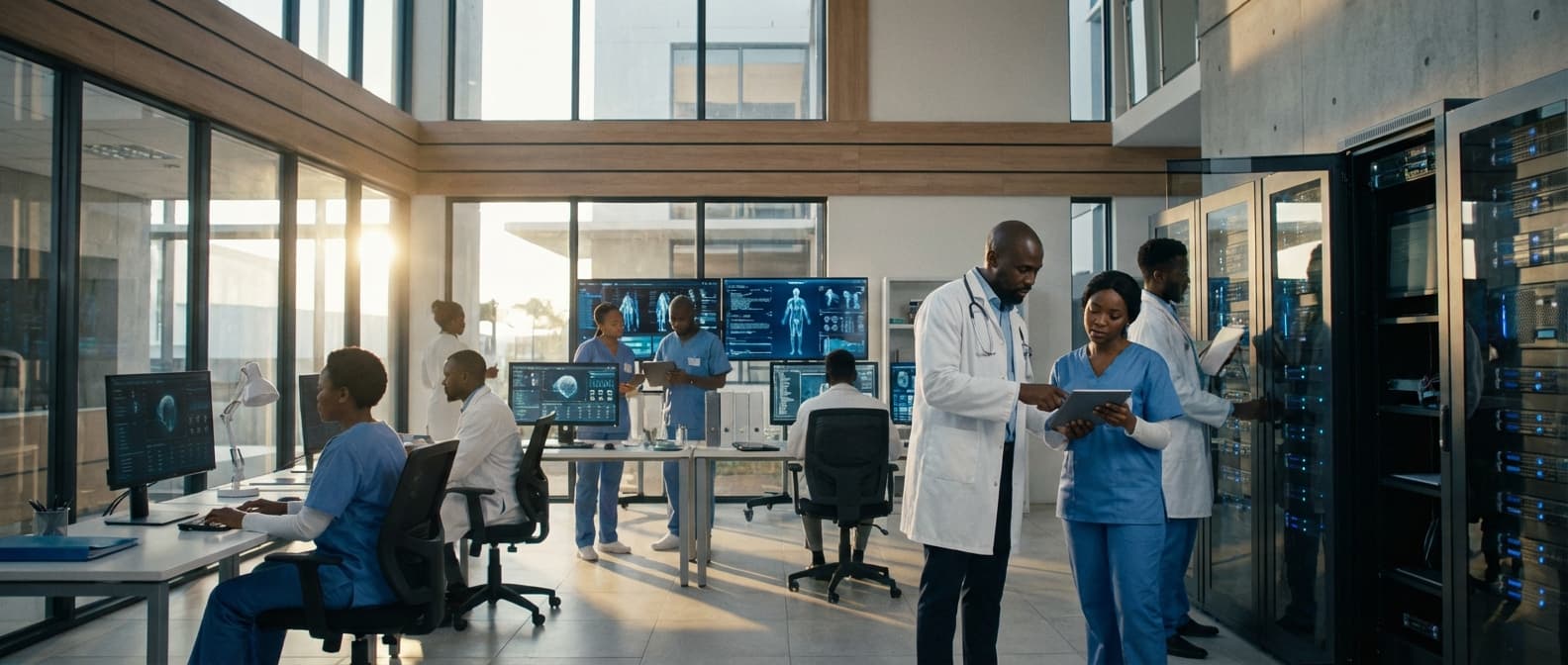
Tele-Radiology in Zimbabwe
Engineering Excellence & Technical Support
24/7 access to certified radiologists providing rapid, accurate remote interpretation of diagnostic imaging studies. High-standard technical execution following OEM protocols and local regulatory frameworks.
Bridging Geographic Divides
Leveraging advanced tele-radiology platforms, we connect rural clinics across Zimbabwe to specialist radiologists, ensuring timely and accurate diagnostic imaging regardless of location. This dramatically reduces the need for patients to travel long distances for critical interpretations.
Secure & Scalable PACS Infrastructure
Our robust Picture Archiving and Communication System (PACS) securely stores and transmits high-resolution medical images. Cloud-based solutions enable seamless access for radiologists and referring physicians, offering scalability and ensuring data integrity and patient confidentiality.
AI-Powered Diagnostic Augmentation
We integrate cutting-edge Artificial Intelligence (AI) algorithms to assist radiologists in detecting subtle abnormalities in X-rays, CT scans, and MRIs. This enhances diagnostic accuracy, reduces turnaround times, and supports our specialists in prioritizing urgent cases for immediate attention.
What Is Tele-radiology In Zimbabwe?
Tele-radiology in Zimbabwe refers to the practice of transmitting radiological images (such as X-rays, CT scans, and MRIs) from a healthcare facility in Zimbabwe to a radiologist located elsewhere, often in a different geographical location, for interpretation and reporting. This service leverages telecommunications technology to bridge the gap in specialist radiology expertise, particularly in regions with limited access to qualified radiologists. The core components involve image acquisition at the local site, secure digital transmission of these images, and remote interpretation by a radiologist who then generates a diagnostic report. This report is subsequently transmitted back to the referring physician for clinical decision-making and patient management.
| Who Needs Tele-Radiology in Zimbabwe? | Typical Use Cases | |||||||
|---|---|---|---|---|---|---|---|---|
| Rural and remote healthcare facilities lacking on-site radiologists. | Emergency department consultations for acute conditions requiring urgent radiological assessment (e.g., stroke, trauma). | Hospitals with limited radiology staffing, leading to long turnaround times for interpretations. | Specialized imaging interpretations (e.g., advanced neuroimaging, complex musculoskeletal cases) where local expertise is scarce. | Post-operative monitoring and follow-up imaging. | Public health initiatives requiring widespread screening and diagnostic capabilities. | Medical facilities seeking to expand their diagnostic service offerings without significant capital investment in local radiology personnel. | Patients in underserved areas who would otherwise face significant travel burdens and delays for radiological examinations. | Teleradiology can support the interpretation of routine diagnostic imaging such as chest X-rays, abdominal ultrasounds, and bone imaging, especially in general hospitals and clinics. |
Key Aspects of Tele-Radiology in Zimbabwe
- Image Acquisition: Capturing diagnostic-quality radiological images at a remote or underserved healthcare facility.
- Digital Transmission: Secure and efficient transfer of image files (e.g., DICOM format) over a network (internet or dedicated links).
- Remote Interpretation: A qualified radiologist, situated off-site, reviews the transmitted images.
- Report Generation: The remote radiologist produces a comprehensive diagnostic report, detailing findings and recommendations.
- Report Delivery: The report is securely transmitted back to the referring physician for integration into patient care.
- Quality Assurance: Implementing protocols to ensure the diagnostic accuracy and reliability of interpretations.
Who Needs Tele-radiology In Zimbabwe?
Tele-radiology, the remote interpretation of medical images, offers a transformative solution for healthcare in Zimbabwe. With a significant shortage of skilled radiologists and a widespread need for advanced diagnostic imaging, tele-radiology can bridge the gap, ensuring timely and accurate diagnoses for a larger population. This service can be particularly impactful in rural and underserved areas where access to specialized medical expertise is limited. By leveraging tele-radiology, Zimbabwe can enhance its healthcare infrastructure, improve patient outcomes, and reduce the burden on existing medical professionals.
| Customer/Department | Specific Needs Addressed by Tele-Radiology | Key Benefits |
|---|---|---|
| Hospitals (Public and Private) | Overcoming radiologist shortages, providing 24/7 coverage for emergency cases, facilitating sub-specialty interpretations (e.g., neuro-radiology, pediatric radiology), managing increased imaging workloads. | Improved diagnostic turnaround time, enhanced diagnostic accuracy, reduced radiologist burnout, cost-effectiveness through shared resources. |
| District and Rural Clinics | Providing access to diagnostic imaging interpretation where no local radiologists are available, enabling early detection and management of diseases, reducing the need for patient travel to urban centers. | Increased access to care in remote areas, improved patient outcomes, reduced healthcare disparities, empowerment of local healthcare providers. |
| Specialized Medical Centers (e.g., Oncology, Cardiology) | Facilitating expert interpretation of complex scans related to specific diseases, supporting multidisciplinary team discussions with timely radiological input, access to niche sub-specialists. | Enhanced diagnostic precision for complex conditions, improved treatment planning, better patient management through specialized expertise. |
| Emergency Departments | Rapid interpretation of critical imaging (e.g., CT scans for stroke or trauma) to enable immediate life-saving interventions, even during off-hours or when on-call radiologists are unavailable. | Faster emergency response, reduced mortality and morbidity, improved patient safety. |
| Outpatient Clinics | Efficient turnaround for routine imaging studies, allowing for quicker diagnosis and treatment initiation, freeing up in-house radiologists for more complex cases. | Streamlined patient care pathways, improved patient satisfaction through shorter waiting times, optimized utilization of local radiology resources. |
| Diagnostic Imaging Centers | Augmenting existing radiologist capacity, providing specialized interpretations that may not be available in-house, ensuring consistent quality across multiple sites. | Increased throughput, expanded service offerings, consistent and high-quality diagnostic reports. |
| Research Institutions | Access to a larger pool of interpreted images for research studies, facilitating collaborative research projects, enabling advanced image analysis. | Advancement of medical knowledge, support for clinical trials, innovation in diagnostic imaging techniques. |
Target Customers & Departments for Tele-Radiology in Zimbabwe:
- Hospitals (Public and Private)
- District and Rural Clinics
- Specialized Medical Centers
- Emergency Departments
- Outpatient Clinics
- Diagnostic Imaging Centers
- Research Institutions
Tele-radiology Process In Zimbabwe
Tele-radiology, also known as teleradiology, involves the transmission of radiological patient images (such as X-rays, CT scans, and MRIs) from one location to another for the purpose of interpretation by a radiologist. This technology is particularly valuable in bridging geographical gaps, improving access to specialized medical expertise, and enhancing the efficiency of diagnostic services, especially in areas with a shortage of radiologists. In Zimbabwe, the implementation of tele-radiology aims to address these challenges and improve healthcare delivery across the nation.
| Stage | Description | Key Actors | Technology/Tools Used | Challenges (Zimbabwe Context) |
|---|---|---|---|---|
| A healthcare professional (doctor, clinician) at a peripheral health facility identifies a need for radiological imaging or interpretation. This could be for diagnosis, follow-up, or consultation. | Referring Clinician, Nurse | Patient Record, Referral Form (often paper-based initially) | Lack of awareness of tele-radiology services, inconsistent referral protocols, potential for miscommunication. |
| Radiological images are captured at the referring facility using imaging equipment (X-ray machines, CT scanners, ultrasound machines). Images are then prepared for transmission, which may involve anonymization and conversion into a digital format. | Radiographer, Technologist | X-ray machines, CT scanners, Ultrasound machines, PACS (Picture Archiving and Communication System) if available, DICOM (Digital Imaging and Communications in Medicine) format. | Limited availability and outdated imaging equipment, inconsistent image quality, lack of DICOM-compliant equipment at all facilities, unreliable power supply for equipment. |
| The digital radiological images are securely transmitted from the referring facility to a central tele-radiology hub or directly to a radiologist. This is a critical stage that relies on robust and reliable communication infrastructure. | Technologist, IT Support | Internet connectivity (broadband, mobile data), VPN (Virtual Private Network), secure cloud-based platforms, specialized tele-radiology software. | Poor and inconsistent internet connectivity in many rural and even some urban areas, high data costs, cybersecurity concerns, lack of standardized transmission protocols across facilities. |
| A qualified radiologist, often located in a different geographical area (possibly even outside Zimbabwe if local capacity is stretched), receives the images. They review the images, analyze them, and provide a diagnostic interpretation. | Radiologist | Workstation with high-resolution monitor, tele-radiology software for image viewing and manipulation, PACS viewer. | Shortage of qualified radiologists within Zimbabwe, workload of existing radiologists, potential for delays due to time zone differences if international radiologists are involved. |
| The radiologist dictates or types a comprehensive diagnostic report based on their interpretation. This report is then transmitted back to the referring healthcare facility. | Radiologist, Transcriptionist (if applicable) | Speech recognition software, word processing software, secure email or tele-radiology platform for report transmission. | Delays in report generation, potential for transcription errors, ensuring secure and timely delivery of reports. |
| The referring clinician receives the radiological report and integrates it with the patient's clinical information to make informed decisions about diagnosis, treatment, and patient management. Follow-up imaging or consultations may be initiated based on the report. | Referring Clinician, Specialist Physician | Patient Management System, Electronic Health Records (if available), direct communication channels (phone, secure messaging). | Ensuring the referring clinician understands the report, facilitating communication between radiologist and referring clinician for clarification, integration of reports into patient records. |
Tele-Radiology Workflow in Zimbabwe
- Inquiry and Referral
- Image Acquisition and Preparation
- Image Transmission
- Radiologist Interpretation
- Report Generation and Transmission
- Actionable Insights and Follow-up
Tele-radiology Cost In Zimbabwe
Tele-radiology services in Zimbabwe are becoming increasingly accessible, offering a vital solution for improving diagnostic capabilities, especially in remote or underserved areas. The cost of these services is influenced by several factors, including the complexity of the scan, the urgency of the report, the expertise of the radiologist, and the provider's operational costs. While precise, universally published price lists are uncommon, understanding these influencing factors can help estimate potential expenditures in local currency (Zimbabwean Dollar - ZWL).
| Imaging Modality (Typical) | Estimated Price Range (ZWL) | Notes |
|---|---|---|
| Plain X-ray (e.g., Chest X-ray, Bone X-ray) | 150 - 500 ZWL | Price can vary based on the number of views and complexity. |
| Ultrasound (Abdomen, Pelvis, Musculoskeletal) | 250 - 700 ZWL | Specialized ultrasounds (e.g., Doppler, fetal) may be higher. |
| CT Scan (e.g., Head, Chest, Abdomen) | 800 - 2500 ZWL | Depends heavily on the scan area, number of slices, and contrast administration. |
| MRI Scan (e.g., Brain, Spine, Joints) | 1500 - 4000+ ZWL | Generally the most expensive due to equipment and scan time. Contrast administration will increase cost. |
| Urgent/STAT Reporting Surcharge | 50 - 200 ZWL (additional) | Applied on top of the base report cost. |
Key Pricing Factors for Tele-Radiology in Zimbabwe:
- Type of Imaging Modality: Different imaging techniques like X-ray, Ultrasound, CT scans, and MRI scans have varying associated costs due to equipment, processing, and interpretation complexity.
- Scan Complexity and Number of Views: A simple chest X-ray will be less expensive than a complex multi-slice CT scan of the abdomen or multiple views of a skeletal structure.
- Urgency of Reporting: Expedited or STAT (emergency) reports are typically charged at a premium compared to routine reporting.
- Radiologist's Specialization and Experience: Highly specialized radiologists (e.g., neuroradiologists, pediatric radiologists) or those with extensive experience may command higher fees.
- Provider's Infrastructure and Technology: Tele-radiology providers invest in secure PACS (Picture Archiving and Communication System) and Teleradiology platforms, which contribute to their operational costs and are reflected in pricing.
- Volume of Cases: For healthcare facilities sending a high volume of cases, providers might offer discounted rates or package deals.
- Geographic Location of the Referring Facility: While tele-radiology aims to bridge distances, sometimes factors related to data transmission or initial setup in very remote areas could indirectly influence cost.
- Reporting Turnaround Time: Standard reporting times will have a base price, with faster turnaround times incurring additional charges.
Affordable Tele-radiology Options
Tele-radiology offers significant cost savings and improved access to expert interpretation of medical images. This is achieved through various strategies, including vendor pricing models like value bundles and the inherent efficiencies of remote work. Understanding these options allows healthcare providers to make informed decisions and optimize their radiology services.
| Cost-Saving Strategy | Description | Benefit |
|---|---|---|
| Eliminate Overhead | Reduces the need for physical office space, equipment, and administrative staff for in-house radiology departments. | Significant reduction in operational expenses. |
| On-Demand Expertise | Access subspecialist interpretations only when needed, avoiding the cost of full-time subspecialists. | Cost-effective access to a wider range of expertise. |
| Improved Efficiency | Radiologists can work remotely, often with better focus and fewer interruptions, leading to faster turnaround times. | Increased radiologist productivity and potentially faster patient diagnosis. |
| 24/7 Coverage | Provides round-the-clock reporting capabilities without the high cost of staffing multiple shifts of in-house radiologists. | Enhanced patient care and reduced physician burnout for in-house staff. |
| Scalability | Easily scale reporting services up or down based on patient volume without significant capital investment or staff changes. | Flexibility to manage fluctuating workloads efficiently. |
| Reduced Travel Costs | Eliminates travel expenses for locum tenens radiologists or for referring physicians to consult with radiologists. | Direct savings on travel and accommodation. |
| Optimized Workflow | Streamlined reporting processes and direct integration with existing EMR/PACS systems can reduce manual work. | Reduced administrative burden and potential for fewer errors. |
Key Value Bundle Components in Tele-Radiology
- Per-Study Pricing: A fixed cost for each radiologist report generated. This is straightforward and predictable for high-volume practices.
- Subscription Models: A recurring fee (monthly or annual) for a set volume of studies or unlimited access within defined parameters. Offers budget stability.
- Tiered Pricing: Costs vary based on the complexity of the study (e.g., X-ray vs. MRI), turnaround time requirements, or subspecialty expertise needed.
- Hybrid Models: Combinations of the above, often with a base subscription fee for essential services and per-study charges for add-ons or overflow.
- Technology & Software Included: Some bundles incorporate the cost of PACS integration, viewer software, and IT support, simplifying implementation.
- Dedicated Radiologist Access: For larger contracts, a dedicated team of radiologists or a specific subspecialist may be part of the bundle.
- Quality Assurance & Peer Review: Integrated processes for ensuring report accuracy and radiologist performance can be a bundled service.
- Training & Support: Onboarding, ongoing training for staff, and technical support are often included.
Verified Providers In Zimbabwe
In Zimbabwe's evolving healthcare landscape, access to verified and trustworthy medical providers is paramount. Franance Health stands out as a beacon of reliability, meticulously vetting its network of healthcare professionals and facilities. This commitment to credentialing ensures that patients receive high-quality care from qualified and reputable sources, making Franance Health the premier choice for those seeking dependable medical services.
| Category | Franance Health's Assurance | Patient Benefit |
|---|---|---|
| Medical Doctors | Verified qualifications, valid practicing licenses, and a history of ethical conduct. | Access to experienced and legitimate medical specialists for accurate diagnosis and treatment. |
| Specialists | Thorough review of specialist certifications, postgraduate training, and areas of expertise. | Consultation with highly skilled professionals in specific medical fields for complex conditions. |
| Hospitals & Clinics | Assessment of licensing, infrastructure, equipment, hygiene standards, and patient care protocols. | Treatment in safe, well-equipped, and professionally managed healthcare facilities. |
| Pharmacies | Verification of operating licenses, dispensing protocols, and the authenticity of medications. | Reliable access to prescribed medications from trustworthy pharmacies. |
Why Franance Health Credentials Matter
- Rigorous Verification Process: Franance Health implements a stringent vetting process for all its affiliated providers.
- Qualified Professionals: Ensuring all practitioners hold legitimate licenses and certifications.
- Reputable Facilities: Partnering with healthcare institutions that meet established quality and safety standards.
- Patient Safety First: Prioritizing patient well-being through the selection of only the most competent and ethical providers.
- Enhanced Trust: Building confidence in the healthcare system by offering access to a curated list of verified experts.
Scope Of Work For Tele-radiology
This Scope of Work (SOW) outlines the requirements for providing tele-radiology services. It details the technical deliverables, standard specifications, and expected performance metrics necessary to ensure high-quality, efficient, and secure remote diagnostic imaging interpretation. The objective is to establish a framework for a tele-radiology partnership that supports [Client Name]'s commitment to patient care and operational excellence.
| Category | Deliverable/Specification | Description | Standard/Requirement | Measurement/Verification |
|---|---|---|---|---|
| Image Transmission | DICOM Image Transfer | Secure and encrypted transmission of DICOM images from client's imaging modalities to tele-radiology platform. | DICOM 3.0 compliance, TLS 1.2+ encryption, HL7 for study metadata. | Successful transmission rates > 99.9%, confirmed by PACS logs and audit trails. |
| Image Transmission | Data Security | Protection of patient health information (PHI) during transmission and storage. | HIPAA/GDPR compliant encryption at rest and in transit, access controls, audit logging. | Regular security audits, penetration testing, confirmation of compliance certifications. |
| Interpretation Services | Radiologist Qualifications | Interpretation of radiological studies by board-certified or equivalent radiologists with relevant subspecialty expertise. | Minimum of [X] years of experience, subspecialty certifications (e.g., Neuroradiology, Musculoskeletal), active medical licenses in relevant jurisdictions. | Verification of credentials, CV review, ongoing peer review of reports. |
| Interpretation Services | Report Turnaround Time (TAT) | Timely delivery of radiology reports for different study priorities. | Routine: [Y] business hours; Urgent: [Z] business hours; STAT: [A] business hours (from study acquisition completion). | Automated TAT tracking in the reporting system, regular performance reports. |
| Interpretation Services | Report Content | Comprehensive and accurate radiology reports including findings, impressions, and recommendations. | Adherence to standard reporting templates, inclusion of relevant clinical history, clear and concise language, appropriate use of medical terminology. | Peer review of reports, client feedback surveys, QA audits. |
| System Integration | PACS/EHR Integration | Seamless integration of the tele-radiology platform with client's PACS and EHR systems for order entry, image retrieval, and report delivery. | HL7 v2.x/FHIR integration for orders and results, DICOM WADO/Query/Retrieve for images. | Successful message exchange validation, end-to-end workflow testing. |
| System Integration | Platform Availability | High availability of the tele-radiology platform and associated services. | Uptime SLA of [B]% (e.g., 99.95%), redundant infrastructure, disaster recovery plan. | Monitoring of platform uptime, regular reporting on service availability. |
| Quality Assurance | Quality Control (QC) Process | Systematic review of interpretations and reports to ensure accuracy and consistency. | Random sample review of reports by senior radiologists, peer review process, root cause analysis for discrepancies. | Monthly QC reports, tracking of discrepancy rates. |
| Quality Assurance | Key Performance Indicators (KPIs) | Metrics to monitor the performance of tele-radiology services. | TAT adherence, report accuracy, radiologist availability, client satisfaction scores, system uptime. | Monthly performance reports, regular review meetings. |
| Support and Training | Technical Support | Availability of technical support for system troubleshooting and issue resolution. | 24/7/365 support with defined response and resolution times for critical incidents. | Helpdesk ticketing system, defined escalation procedures, incident resolution tracking. |
| Support and Training | User Training | Training for client's IT and clinical staff on the use of the tele-radiology platform and workflows. | Initial and ongoing training sessions, user manuals, online resources. | Training session attendance records, user feedback on training effectiveness. |
Key Deliverables
- Secure and reliable transmission of DICOM images and associated patient data.
- Accurate and timely interpretation of radiological studies by qualified radiologists.
- Generation of comprehensive, clear, and concise radiology reports.
- Integration with client's Picture Archiving and Communication System (PACS) and Electronic Health Record (EHR) systems.
- Robust IT infrastructure to support seamless data flow and communication.
- Real-time and on-demand reporting capabilities for urgent cases.
- Continuous quality assurance and performance monitoring.
- Training and support for client staff on tele-radiology workflows and systems.
- Adherence to all relevant regulatory and compliance standards (e.g., HIPAA, GDPR).
Service Level Agreement For Tele-radiology
This Service Level Agreement (SLA) outlines the guaranteed performance standards for the tele-radiology services provided by [Your Company Name] to [Client Name]. It defines the responsibilities of both parties regarding service availability, response times for critical events, and the metrics used to measure performance.
| Service Component | Uptime Guarantee | Response Time (Critical Findings) | Response Time (Routine Cases) |
|---|---|---|---|
| Tele-Radiology Platform | 99.9% | N/A | N/A |
| Radiologist Interpretation Queue | 99.9% | Within [Number] minutes | Within [Number] hours |
| Image Archiving and Retrieval | 99.9% | N/A | N/A |
Key Performance Indicators (KPIs) and Guarantees
- Uptime Guarantee: The tele-radiology platform and associated services will be available and operational for a minimum of 99.9% of the time, excluding scheduled maintenance.
- Scheduled Maintenance: [Your Company Name] will provide at least [Number] days' notice for any scheduled maintenance that may impact service availability. Maintenance will be performed during off-peak hours whenever possible.
- Response Time for Critical Findings: For emergent or critical findings identified in radiology studies, a radiologist's report will be delivered within [Number] minutes of the study being made available for interpretation.
- Response Time for Routine Cases: For routine radiology studies, a radiologist's report will be delivered within [Number] hours of the study being made available for interpretation.
- System Availability Monitoring: [Your Company Name] will continuously monitor the availability of its tele-radiology platform and supporting infrastructure.
Frequently Asked Questions

Ready when you are
Let's scope your Tele-Radiology in Zimbabwe project in Zimbabwe.

Scaling healthcare logistics and technical systems across the entire continent.