
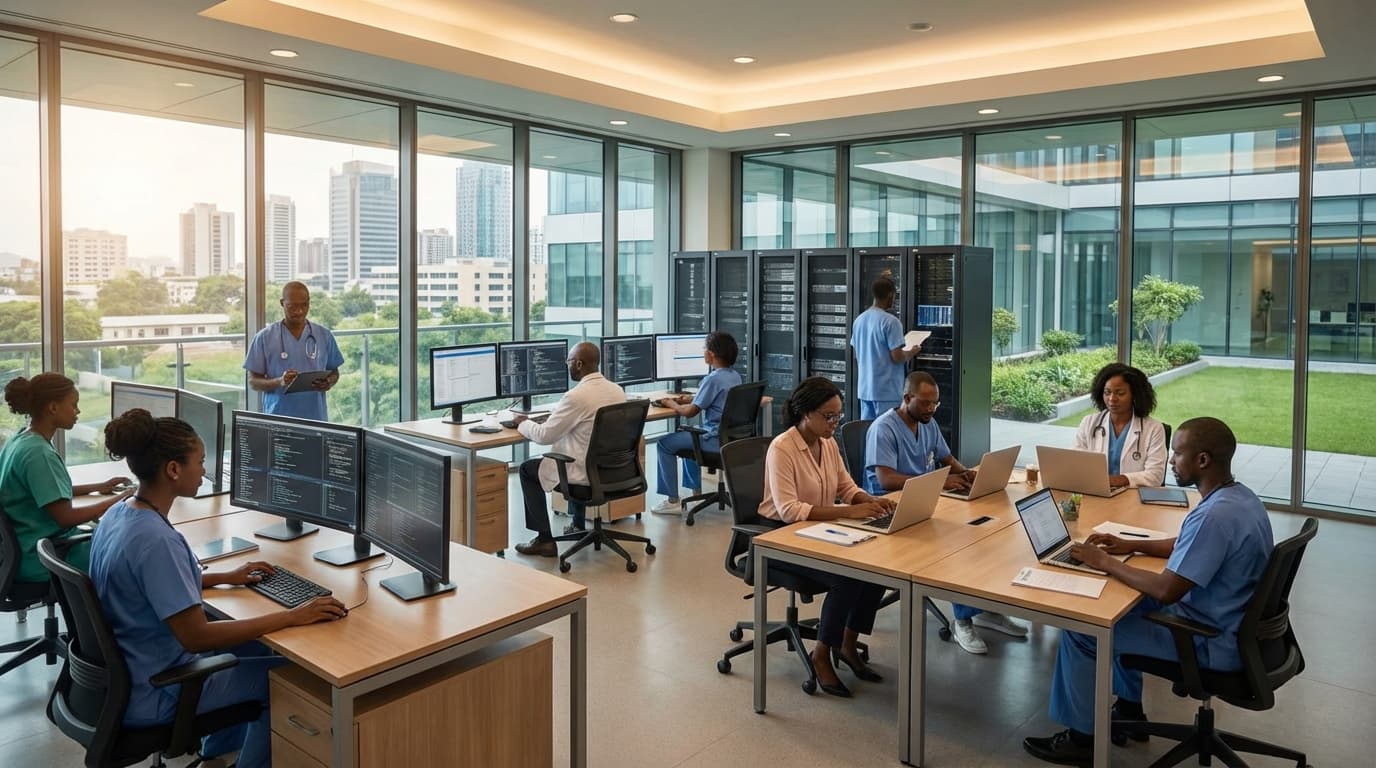
Radiology Reader & Reporting Support in Zimbabwe
Engineering Excellence & Technical Support
Remote radiology reading and reporting services High-standard technical execution following OEM protocols and local regulatory frameworks.
AI-Powered Diagnostic Assistance
Leveraging advanced AI algorithms to flag potential abnormalities and provide preliminary interpretations, enhancing radiologist efficiency and diagnostic accuracy in Zimbabwe's diverse healthcare settings.
Secure Cloud-Based Reporting Platform
A robust and secure cloud platform enabling seamless report generation, storage, and sharing of radiology findings, overcoming geographical barriers and improving collaboration among healthcare professionals across Zimbabwe.
Remote Training & Quality Assurance
Providing continuous remote training modules and quality assurance tools for radiologists and technologists in Zimbabwe, ensuring adherence to international best practices and skill development in a challenging environment.
What Is Radiology Reader & Reporting Support In Zimbabwe?
Radiology Reader & Reporting Support in Zimbabwe refers to the provision of specialized services that augment the capabilities of local radiologists and healthcare facilities in interpreting medical imaging studies and generating comprehensive diagnostic reports. This service is crucial in regions where there may be a shortage of sub-specialist radiologists, advanced imaging technologies, or the need for enhanced diagnostic accuracy and efficiency. It leverages remote access to medical images and advanced AI-powered tools, alongside human expertise, to deliver high-quality interpretations and reports in a timely manner. The objective is to improve patient care outcomes by ensuring accurate and prompt diagnosis, facilitating appropriate treatment planning, and optimizing the utilization of imaging resources.
| Who Needs It? | Typical Use Cases | |||||||
|---|---|---|---|---|---|---|---|---|
| Hospitals and Clinics in Zimbabwe: Particularly those with limited access to on-site sub-specialist radiologists or facing high imaging volumes. | Second Opinion Services: Providing an independent review of complex or critical imaging studies to confirm diagnoses or offer alternative interpretations. | Teleradiology Services: Facilitating the outsourcing of radiology interpretation to remote experts, especially for after-hours coverage or specialized examinations. | Rural Healthcare Facilities: Bridging the gap in diagnostic imaging expertise in underserved areas. | Training and Education Institutions: Supporting the learning and development of local radiology residents and technologists through access to expert interpretations and feedback. | Emergency Departments: Ensuring rapid interpretation of critical scans (e.g., head CT for stroke, chest X-ray for pulmonary embolism) to expedite treatment initiation. | Specialized Medical Centers: Requiring expert interpretation for niche imaging modalities or specific disease pathologies (e.g., advanced neuroimaging, pediatric radiology). | Radiology Departments Facing Staff Shortages: Supplementing existing radiology staff to manage workload and maintain efficient reporting turnaround times. | Diagnostic Imaging Centers: Seeking to enhance their service offering by providing access to a wider range of sub-specialty interpretations. |
Key Components of Radiology Reader & Reporting Support
- Remote Image Interpretation: Allowing qualified radiologists to access and interpret medical images (X-ray, CT, MRI, Ultrasound, etc.) from a remote location, irrespective of geographical constraints.
- AI-powered Diagnostic Assistance: Employing Artificial Intelligence algorithms to pre-screen images, detect potential abnormalities, highlight areas of interest, and generate preliminary findings to assist human readers.
- Sub-specialty Expertise: Providing access to radiologists with specific expertise in various sub-specialties (e.g., neuroradiology, musculoskeletal radiology, abdominal imaging, mammography) to address complex cases.
- Quality Assurance and Peer Review: Implementing a system for quality control, including peer review of interpretations and reports, to ensure accuracy and adherence to international standards.
- Turnaround Time (TAT) Optimization: Reducing report turnaround times through efficient workflow management, automation, and a network of available readers.
- Interoperability and Data Security: Ensuring seamless integration with existing Picture Archiving and Communication Systems (PACS) and Electronic Health Records (EHRs), with robust data security and privacy protocols.
- Report Generation and Customization: Producing standardized, yet customizable, radiology reports that are clear, concise, and clinically relevant.
Who Needs Radiology Reader & Reporting Support In Zimbabwe?
Radiology Reader & Reporting Support services are crucial for improving diagnostic accuracy, workflow efficiency, and patient outcomes in Zimbabwe's healthcare system. These services leverage remote radiology expertise to assist local radiologists and healthcare facilities, especially in areas facing a shortage of specialized medical professionals or overwhelming workloads. The primary goal is to ensure timely and accurate interpretation of medical images, thereby enabling better treatment decisions.
| Customer Type | Key Departments/Needs | Specific Challenges Addressed |
|---|---|---|
| Public Hospitals | Radiology Department, Emergency Department, Surgical Wards, Internal Medicine, Oncology | Shortage of sub-specialist radiologists, high workload, limited access to advanced interpretation skills, need for second opinions. |
| Private Hospitals | Radiology Department, Outpatient Clinics, Specialist Consultation Services | Improving turnaround times for reports, ensuring consistent quality of interpretation, managing fluctuating patient demand, niche specialty coverage (e.g., neuroradiology, interventional radiology). |
| Rural Clinics & District Hospitals | General Radiology, Basic Diagnostic Imaging (X-ray, Ultrasound) | Absence of on-site radiologists, reliance on general practitioners for preliminary interpretation, delayed diagnosis due to lack of specialized reading, limited access to sub-specialty imaging interpretation. |
| Specialized Diagnostic Centers | Radiology (CT, MRI, Mammography), Cardiology, Neurology, Orthopedics | Need for expert interpretation of complex imaging modalities, quality assurance for reporting, specialized reporting in areas like cardiac MRI or advanced neuroimaging. |
| Government Health Programs | Public Health Surveillance, Tuberculosis Screening Programs, Maternal and Child Health Initiatives | Scalable reporting solutions for mass screening, ensuring standardized reporting quality across public facilities, supporting remote areas with limited diagnostic infrastructure. |
Target Customers and Departments in Zimbabwe
- {"title":"Hospitals (Public and Private)","description":"Hospitals are the primary beneficiaries, offering a wide range of medical services that rely heavily on diagnostic imaging. They often face challenges with specialist availability and high patient volumes."}
- {"title":"Clinics and Diagnostic Centers","description":"Smaller healthcare facilities, including rural clinics and specialized diagnostic centers, may lack in-house radiology specialists and can benefit significantly from remote reading and reporting services to extend their diagnostic capabilities."}
- {"title":"Government Health Ministries and Public Health Initiatives","description":"Government bodies can partner to improve the quality and accessibility of radiology services across the public healthcare network, particularly in underserved regions. This can support national health strategies and disease screening programs."}
- {"title":"Non-Governmental Organizations (NGOs) and Charitable Organizations","description":"Organizations involved in providing healthcare in remote or resource-limited areas can utilize these services to ensure that their beneficiaries receive accurate and timely diagnostic interpretations."}
- {"title":"Medical Training Institutions","description":"Teaching hospitals and medical schools can use these services for educational purposes, allowing trainees to learn from a broader pool of expert interpretations and case studies."}
Radiology Reader & Reporting Support Process In Zimbabwe
The Radiology Reader & Reporting Support Process in Zimbabwe outlines the systematic approach to managing and fulfilling radiology interpretation requests. This workflow ensures that patient imaging studies are accurately read, interpreted, and reported by qualified radiologists, facilitating timely diagnosis and treatment planning. The process begins with an inquiry from a referring clinician and concludes with the delivery of a finalized radiology report.
| Stage | Description | Key Actors | Key Outputs | Potential Challenges |
|---|---|---|---|---|
| Inquiry & Request Initiation | A referring clinician identifies the need for a radiological examination and initiates a request, often through an electronic health record (EHR) system or a paper-based form. | Referring Clinician, Patient | Completed Request Form (Digital/Paper), Patient Demographics | Incomplete or inaccurate referral information, patient no-shows. |
| Image Acquisition | The patient undergoes the specified radiological imaging procedure (e.g., X-ray, CT scan, MRI) at a radiology facility. | Radiographer/Technologist, Patient | Acquired Medical Images (Digital/Film) | Equipment malfunction, poor image quality due to patient movement or technical issues. |
| Image Transmission & Triage | Acquired images are transmitted electronically to a Picture Archiving and Communication System (PACS) or prepared for physical transport. A designated administrator or senior radiologist may triage urgent cases. | Radiographer/Technologist, PACS Administrator, Senior Radiologist (for triage) | Digital Images in PACS, Worklist of Cases | Network connectivity issues, PACS downtime, delays in image upload. |
| Radiologist Assignment & Interpretation | A radiologist is assigned a case based on availability, subspecialty, and workload. The radiologist reviews the patient's clinical history and interprets the images, identifying abnormalities and making diagnoses. | Radiologist, PACS Administrator (for assignment) | Preliminary Findings, Diagnostic Interpretation | High workload, limited availability of subspecialists, complex or rare cases. |
| Report Generation | The radiologist dictates or types a comprehensive radiology report detailing the findings, impression, and recommendations, using a Radiology Information System (RIS) or dictation software. | Radiologist, Medical Transcriptionist (if applicable) | Draft Radiology Report | Dictation errors, transcription inaccuracies, time pressure. |
| Report Review & Approval | In some settings, a senior radiologist or a peer may review and approve the generated report to ensure accuracy, completeness, and adherence to standards. | Senior Radiologist, Radiologist | Finalized & Approved Radiology Report | Delays in review, disagreements on interpretation, administrative bottlenecks. |
| Report Distribution | The finalized report is distributed to the referring clinician, typically electronically via EHR integration or through a secure portal. Paper copies may also be provided. | Radiology Department Staff, IT Support | Final Radiology Report | EHR integration issues, lost reports, delays in transmission. |
| Record Keeping & Archiving | All radiology reports and associated images are securely stored and archived in accordance with legal and institutional requirements for future reference and audits. | PACS Administrator, IT Support, Archives Staff | Archived Images and Reports | Storage limitations, data security breaches, long-term archiving costs. |
Workflow Stages
- Inquiry & Request Initiation
- Image Acquisition
- Image Transmission & Triage
- Radiologist Assignment & Interpretation
- Report Generation
- Report Review & Approval
- Report Distribution
- Record Keeping & Archiving
Radiology Reader & Reporting Support Cost In Zimbabwe
The cost of radiology reader and reporting support in Zimbabwe is a critical factor for healthcare providers, influencing the accessibility and affordability of diagnostic imaging services. These costs are influenced by several dynamic factors, making it challenging to provide exact, fixed figures. However, understanding the pricing components and general ranges is essential for budgeting and service procurement.
| Service Type | Typical Price Range (ZWL) | Notes |
|---|---|---|
| Basic X-ray Interpretation (Per Study) | 2,000 - 7,500 ZWL | Varies by complexity and provider. May be part of a package. |
| CT Scan Interpretation (Per Study) | 5,000 - 15,000 ZWL | Depends on the number of sequences and complexity of findings. |
| MRI Scan Interpretation (Per Study) | 7,000 - 20,000 ZWL | Higher costs due to scan duration and complexity. Specialized sequences add to the price. |
| Ultrasound Interpretation (Per Study) | 3,000 - 9,000 ZWL | Can vary based on the area examined (e.g., abdominal, obstetric). |
| Teleradiology Reporting (Outsourced, Per Study) | USD 20 - USD 70 (converted to ZWL) | Prices often quoted in USD. Conversion rates and provider reputation are key. |
| Dedicated Radiologist Support (Monthly Retainer) | 100,000 - 500,000+ ZWL | For institutions requiring consistent on-demand reporting. Highly variable based on hours/volume. |
Key Pricing Factors for Radiology Reader & Reporting Support in Zimbabwe
- Technology & Infrastructure: The sophistication of the PACS (Picture Archiving and Communication System) and RIS (Radiology Information System) used, along with the quality of imaging equipment, impacts the overall cost. Advanced AI-powered reading software or complex integration requirements can drive up expenses.
- Service Provider Model: Whether services are provided by in-house radiologists, outsourced teleradiology companies (local or international), or a hybrid model significantly affects pricing. Teleradiology, especially from overseas, might introduce currency exchange rate volatility and higher operational overhead.
- Report Turnaround Time (TAT): The urgency of reporting can be a major differentiator. Standard reporting typically has a longer TAT and is less expensive than STAT (immediate) or expedited reporting, which requires dedicated radiologist attention.
- Volume of Studies: Larger healthcare institutions or networks with a higher volume of radiology studies may negotiate bulk discounts. Conversely, smaller clinics with infrequent imaging may face higher per-study costs.
- Radiologist Specialization & Expertise: Reporting by sub-specialists (e.g., neuroradiology, musculoskeletal radiology) often commands higher fees due to their specialized knowledge and the limited availability of such experts.
- Complexity of Cases: Routine interpretations (e.g., basic X-rays) are generally cheaper than complex interpretations of MRI or CT scans, especially those involving intricate pathologies or requiring comparison with previous studies.
- Geographic Location within Zimbabwe: While less pronounced for teleradiology, local service providers might adjust pricing based on operational costs in different urban or rural settings.
- Contractual Agreements: The terms of the service agreement, including the duration, scope of services, and service level agreements (SLAs), will impact the pricing. Long-term contracts might offer more stability and potentially lower rates.
- Currency Fluctuations & Inflation: Given Zimbabwe's economic landscape, the Zimbabwean Dollar (ZWL) is subject to fluctuations. Many international teleradiology providers may price their services in USD, necessitating currency conversion and exposing clients to exchange rate risks. Local providers may also adjust ZWL pricing to account for inflation and the cost of imported consumables or equipment maintenance.
- Additional Services: Some providers might bundle reporting with additional services like quality assurance, peer review, or training, which would increase the overall cost.
Affordable Radiology Reader & Reporting Support Options
Radiology practices and healthcare providers are increasingly seeking cost-effective solutions for radiology reading and reporting. This involves exploring options that provide high-quality diagnostic services without incurring the prohibitive costs of in-house staffing or traditional teleradiology contracts. This document outlines affordable radiology reader and reporting support options, focusing on value bundles and cost-saving strategies.
| Strategy/Option | Description | Value Proposition | Cost-Saving Mechanism | Considerations |
|---|---|---|---|---|
| Value Bundles (e.g., Packaged Reads) | Pre-paid packages of radiology reads or reporting services, often with tiered pricing based on volume and turnaround time (TAT) requirements. | Predictable costs, bulk discounts, guaranteed TATs for routine cases, potential for dedicated subspecialty support within the bundle. | Reduced per-case cost through volume commitment; avoids per-dictation fees; streamlined billing and payment. | Requires accurate volume forecasting; commitment to a specific provider; may not be flexible for highly fluctuating volumes. |
| On-Demand Teleradiology (Pay-per-Read) | Utilizing teleradiology services on an as-needed basis for specific modalities, subspecialties, or during peak times/staff shortages. | Access to a broad range of subspecialists without permanent overhead; flexibility to scale up or down as needed; reduces strain on internal staff. | Only pay for services rendered; avoids fixed salary and benefits costs; efficient use of internal resources. | Can become expensive with very high volumes; TATs may vary; requires careful selection of reliable providers. |
| Subspecialty Overflow | Outsourcing specific subspecialty reads (e.g., neuro, MSK, cardiac) to dedicated teleradiology groups when internal subspecialist capacity is exceeded. | Ensures timely and expert reads for complex cases; maintains high diagnostic accuracy; prevents delays in patient care. | Leverages external expertise without hiring expensive in-house subspecialists; cost-effective for managing occasional or periodic overflow. | Requires integration with internal workflow; clear communication protocols; quality assurance processes. |
| AI-Powered Diagnostic Tools | Integrating Artificial Intelligence (AI) software to assist radiologists in identifying abnormalities, automating measurements, and generating preliminary reports. | Improved efficiency and accuracy; reduces radiologist fatigue; aids in prioritizing critical findings; standardizes reporting. | Reduces time per read, allowing radiologists to handle higher volumes; can decrease the need for additional human readers for certain tasks. | Initial investment in software; need for validation and ongoing oversight; regulatory compliance; AI is an assistive tool, not a replacement for radiologists. |
| Hybrid Teleradiology Models | Combining in-house reading for routine cases with outsourced teleradiology for subspecialty reads, overnight coverage, or overflow. | Balances cost-effectiveness with internal control; leverages existing infrastructure while accessing external expertise; optimizes radiologist workflow. | Maximizes efficiency of in-house staff; reduces costs associated with 24/7 coverage; targeted outsourcing. | Requires strong coordination and communication between internal and external teams; robust IT infrastructure. |
| Offshore/Nearshore Reading Services | Engaging teleradiology providers located in regions with lower labor costs, while maintaining necessary quality and compliance standards. | Significant cost savings on reading fees; access to a large pool of radiologists; potential for extended hours of coverage. | Lower per-read costs compared to domestic services; ability to cover off-peak hours at reduced rates. | Requires rigorous quality control and credentialing; communication challenges (time zones, language); data security and HIPAA compliance are paramount. |
| Flexible TAT Agreements | Negotiating tiered turnaround times based on urgency, with lower costs for routine or non-urgent studies. | Cost savings on studies that do not require immediate reporting; allows prioritization of critical cases. | Reduced cost for longer TATs; more economical for studies with flexible reporting windows. | Requires clear definition of urgency levels and strict adherence to TATs for critical studies. |
Affordable Radiology Reader & Reporting Support Options
- On-Demand Teleradiology Services
- Subspecialty Overflow Reading
- AI-Powered Diagnostic Assistance
- Hybrid Teleradiology Models
- Offshore/Nearshore Reading Services
- Peer Review and Quality Assurance
Verified Providers In Zimbabwe
In the dynamic landscape of healthcare in Zimbabwe, identifying reliable and accredited providers is paramount for ensuring quality and trustworthy medical services. Franance Health has emerged as a leading name, distinguishing itself through its unwavering commitment to rigorous credentialing and patient-centered care. This commitment translates into a higher standard of service, offering patients peace of mind and confidence in their healthcare journey. Understanding the "why" behind Franance Health's accreditation and the benefits it offers is crucial for anyone seeking the best in Zimbabwean healthcare.
| Franance Health Accreditation Aspects | Benefits for Patients in Zimbabwe |
|---|---|
| Adherence to National Health Regulatory Authority (NHRA) Guidelines | Ensures compliance with Zimbabwe's legal and professional healthcare standards, guaranteeing safe and appropriate medical services. |
| International Healthcare Accreditation (e.g., Joint Commission International - JCI, if applicable or pursued) | Indicates a commitment to global best practices in patient care, safety, and operational efficiency, offering world-class healthcare standards locally. |
| Verification of Medical Staff Qualifications and Licensing | Provides assurance that all doctors, nurses, and allied health professionals are fully qualified, licensed, and experienced in their respective fields. |
| Robust Infection Control Protocols | Minimizes the risk of healthcare-associated infections, ensuring a safer treatment environment for all patients. |
| Patient Rights and Grievance Mechanisms | Empowers patients by clearly outlining their rights and providing accessible channels for feedback and resolution of concerns. |
| Quality Management Systems and Performance Monitoring | Demonstrates a proactive approach to identifying and addressing areas for improvement, leading to consistently high-quality care. |
| Commitment to Continuous Professional Development (CPD) for Staff | Ensures that healthcare professionals remain updated with the latest medical advancements and techniques, leading to better patient outcomes. |
Why Franance Health Credentials Matter:
- Rigorous Accreditation Standards: Franance Health adheres to stringent national and international standards for healthcare facility accreditation. This involves comprehensive evaluations of operational protocols, patient safety measures, clinical efficacy, and staff qualifications.
- Qualified and Licensed Professionals: All medical practitioners associated with Franance Health undergo thorough verification of their licenses, certifications, and professional backgrounds. This ensures that patients are treated by competent and experienced healthcare providers.
- Patient Safety and Quality Assurance: Accreditation signifies a deep commitment to patient safety. Franance Health implements robust quality assurance programs, continuous monitoring of patient outcomes, and adherence to best practices in infection control and medical procedures.
- Ethical Practice and Transparency: Verified providers uphold high ethical standards in their practice, promoting transparency in billing, treatment options, and patient rights. Franance Health is dedicated to fostering trust through open communication and ethical conduct.
- Access to Advanced Medical Technologies: Certified institutions often demonstrate a commitment to investing in and utilizing up-to-date medical equipment and technologies, leading to more accurate diagnoses and effective treatments.
- Continuous Improvement: The accreditation process is not a one-time event but a cycle of continuous improvement. Franance Health actively engages in ongoing assessments and training to maintain and elevate its service delivery.
- Enhanced Patient Trust and Confidence: Ultimately, the credentials held by Franance Health build trust. Patients can be assured that they are receiving care from an institution that has been independently verified for its quality and reliability.
Scope Of Work For Radiology Reader & Reporting Support
This Scope of Work (SOW) outlines the requirements for Radiology Reader & Reporting Support services. The service provider will be responsible for providing qualified radiologists to interpret medical images and generate comprehensive diagnostic reports. The focus is on ensuring high-quality, timely, and accurate radiological interpretations to support clinical decision-making and patient care.
| Technical Deliverable | Description | Standard Specification / Requirement | Quality Assurance Metric |
|---|---|---|---|
| Radiology Image Interpretation | Review and interpretation of various medical imaging modalities (e.g., X-ray, CT, MRI, Ultrasound, Mammography). | Interpretation performed by board-certified or fellowship-trained radiologists with relevant subspecialty expertise. Compliance with ACR, RSNA, and local regulatory guidelines. DICOM compliance for image handling. | Accuracy of interpretation (measured by correlation with gold standards, peer review results). |
| Diagnostic Radiology Report | Creation of detailed and comprehensive reports based on image interpretation. | Reports to include findings, impressions, and recommendations. Standardized reporting templates to be utilized where applicable. Reports to be written in clear, professional medical English. Secure electronic report delivery. | Clarity and completeness of the report. Adherence to TAT for report generation and delivery (e.g., routine, STAT). Percentage of reports requiring revision. |
| Communication of Critical Findings | Prompt notification to referring physicians of urgent or critical findings. | Defined protocol for critical finding communication (e.g., phone call, secure messaging) with documented verification of receipt. Thresholds for critical findings to be mutually agreed upon. | Percentage of critical findings communicated within the agreed-upon TAT. Documentation of communication. |
| Data Security and Privacy | Ensuring the security and privacy of all patient health information (PHI). | Full compliance with HIPAA (or equivalent regional regulations). Secure data transmission and storage. Access controls and audit trails for all systems. Regular security training for personnel. | Zero data breaches or privacy violations. Successful completion of regular security audits. |
| Integration and Workflow | Seamless integration with the client's PACS and RIS systems. | Ability to receive studies and transmit reports electronically via established HL7/DICOM standards. Minimal disruption to existing clinical workflows. Provision of necessary IT support for integration. | Successful and stable data exchange. Uptime and reliability of integration points. |
| Continuing Medical Education (CME) | Radiologists maintaining current knowledge and skills. | Verification of active medical licenses and board certifications. Evidence of ongoing CME activities as per professional and regulatory requirements. | Valid licenses and certifications for all reading physicians. Compliance with all accreditation and regulatory standards. |
Key Objectives
- Provide on-demand or scheduled radiology reading services.
- Generate clear, concise, and actionable diagnostic reports.
- Adhere to established medical imaging standards and best practices.
- Ensure timely turnaround times (TAT) for report delivery.
- Maintain strict patient data confidentiality and security.
- Collaborate with referring physicians and clinical teams as needed.
Service Level Agreement For Radiology Reader & Reporting Support
This Service Level Agreement (SLA) outlines the performance expectations and guarantees for the Radiology Reader & Reporting Support services provided by [Your Company Name] to [Client Name]. This SLA covers response times for critical issues and uptime guarantees for the reporting platform.
| Issue Priority | Initial Response Time | Resolution Target | Uptime Guarantee |
|---|---|---|---|
Key Service Definitions
- {"title":"Critical Issue","description":"A Critical Issue is defined as an event that prevents radiologists from accessing or utilizing the reporting platform, or results in the inability to generate or submit radiology reports, significantly impacting patient care and clinical workflow."}
- {"title":"High Priority Issue","description":"A High Priority Issue is defined as an event that significantly degrades the performance of the reporting platform, causing delays in report generation or impacting the usability of specific features, but does not completely prevent access or functionality."}
- {"title":"Normal Priority Issue","description":"A Normal Priority Issue is defined as a non-critical problem, feature request, or question that does not immediately impact reporting capabilities or patient care."}
- {"title":"Reporting Platform Uptime","description":"The percentage of time the reporting platform is available and operational for users to access and utilize its core functionalities."}
Frequently Asked Questions

Ready when you are
Let's scope your Radiology Reader & Reporting Support in Zimbabwe project in Zimbabwe.

Scaling healthcare logistics and technical systems across the entire continent.