
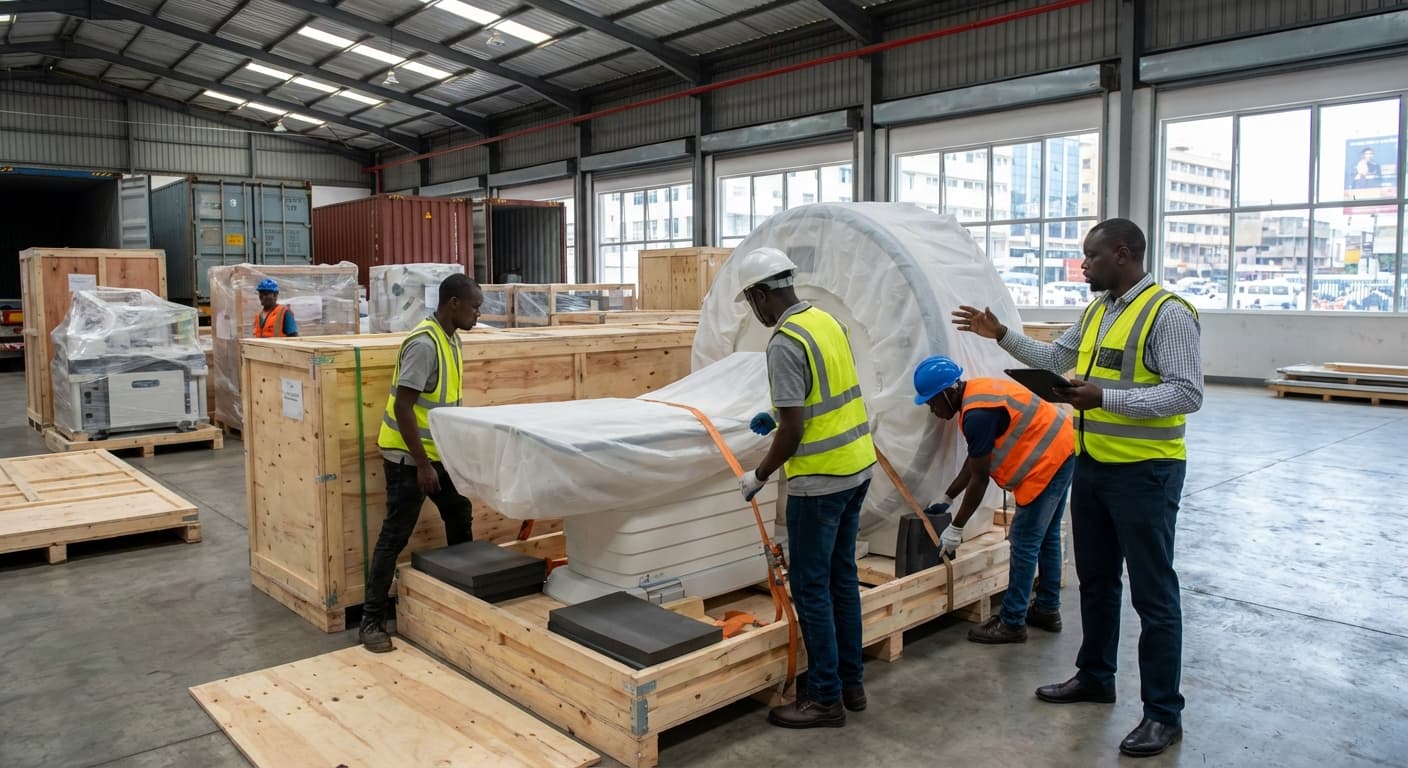
Packaging & Crating Supervision Service for Medical Equipment in Zimbabwe
Engineering Excellence & Technical Support
Packaging & Crating Supervision Service for Medical Equipment High-standard technical execution following OEM protocols and local regulatory frameworks.
Temperature & Humidity Controlled Environment
Our specialized crating facilities in Zimbabwe maintain precise temperature and humidity levels, ensuring critical medical equipment remains within optimal environmental parameters throughout the packaging and crating process, preventing degradation and preserving functionality.
Anti-Static & Shock-Absorbent Packaging Solutions
We employ advanced anti-static materials and custom-engineered shock-absorbent cushioning systems to protect sensitive medical devices from electrostatic discharge and physical impacts during transit, safeguarding delicate components and ensuring operational integrity upon arrival.
Regulatory Compliance & Documentation
Our expert supervision ensures all packaging and crating procedures for medical equipment strictly adhere to international (e.g., ISO, IATA) and local Zimbabwean regulations, providing comprehensive documentation for seamless customs clearance and complete traceability.
What Is Packaging & Crating Supervision Service For Medical Equipment In Zimbabwe?
Packaging and Crating Supervision Service for Medical Equipment in Zimbabwe refers to the oversight and quality control of the processes involved in preparing sensitive and often high-value medical devices for transit. This specialized service ensures that equipment is protected from physical damage, environmental degradation, and potential contamination throughout its supply chain journey, from the point of manufacture or storage to its final destination within Zimbabwe. It encompasses meticulous attention to packaging materials, methods, and the structural integrity of crating to meet stringent industry standards and regulatory requirements specific to healthcare goods.
| Who Needs This Service? | Typical Use Cases | ||||
|---|---|---|---|---|---|
| Manufacturers of Medical Equipment: Both domestic and international manufacturers shipping to Zimbabwe. | Importers and Distributors of Medical Devices: Companies bringing new or replacement equipment into Zimbabwe. | Healthcare Facilities (Hospitals, Clinics, Laboratories): When relocating large-scale equipment, receiving sensitive diagnostic machinery, or shipping items for repair/calibration. | Logistics and Freight Forwarding Companies: Specializing in healthcare supply chains, requiring expert oversight for high-value medical shipments. | Government and Non-Governmental Organizations (NGOs): Procuring and distributing medical equipment for public health initiatives or disaster relief. | |
| Shipping of High-Value Diagnostic Imaging Equipment: (e.g., MRI, CT scanners, X-ray machines) requiring specialized shock and vibration protection. | Transportation of Sterile Surgical Instruments and Implants: Demanding stringent protection against contamination and physical damage. | Relocation of Laboratory Equipment: (e.g., centrifuges, incubators, analytical instruments) often sensitive to environmental changes and physical stress. | Dispatch of Pharmaceutical Manufacturing Machinery: Requiring precise handling and protection from environmental factors. | International shipments of new medical technology: Ensuring it arrives in optimal condition for immediate deployment. | Local distribution of medical devices within Zimbabwe: Particularly for sensitive or oversized equipment. |
Key Components of Packaging & Crating Supervision:
- Material Selection Verification: Ensuring the use of appropriate, high-quality, and often sterile packaging materials (e.g., anti-static films, vibration-dampening foam, moisture-barrier bags) suitable for the specific medical equipment's sensitivity and environmental conditions.
- Methodology Oversight: Monitoring the implementation of approved packaging techniques, including proper cushioning, bracing, shock absorption, and void filling to prevent movement and impact stress.
- Crating Construction and Sealing: Supervising the assembly and reinforcement of wooden or specialized crates, verifying their strength, load-bearing capacity, and secure closure to prevent ingress of dust, moisture, and pests.
- Labeling and Documentation Compliance: Ensuring accurate and compliant labeling with relevant hazard symbols, handling instructions (e.g., 'Fragile,' 'This Way Up,' 'Handle with Care'), serial numbers, destination information, and compliance markings (e.g., CE, FDA if applicable).
- Environmental Control Monitoring: Where applicable, overseeing measures to control temperature, humidity, and static electricity during the packaging process.
- Inventory and Asset Tracking Integration: Verifying that the correct equipment is packaged and accurately documented for tracking purposes.
- Quality Assurance Inspections: Conducting pre-shipment inspections of packaged and crated items to identify and rectify any deviations from specifications or potential vulnerabilities.
- Compliance with International and Local Standards: Ensuring adherence to relevant ISO, ASTM, IATA (for air freight), and any specific Zimbabwean regulations pertaining to the transport of medical devices.
Who Needs Packaging & Crating Supervision Service For Medical Equipment In Zimbabwe?
Packaging and crating supervision for medical equipment is a specialized service critical for ensuring the safe, compliant, and efficient transportation of sensitive and valuable medical devices. In Zimbabwe, this service is particularly vital for a range of organizations and departments that handle the procurement, installation, and maintenance of medical equipment. This ensures equipment arrives in optimal condition, preventing damage during transit, and adhering to international and local regulations. The target customers are those who understand the inherent risks and high stakes associated with moving medical technology, from basic consumables to complex diagnostic and surgical machinery. Proper supervision mitigates financial losses due to damaged goods, delays in healthcare service delivery, and potential breaches of sterile or calibrated environments.
| Customer Type | Key Departments Involved | Reason for Supervision |
|---|---|---|
| Hospitals (Public/Private) | Biomedical Engineering, Procurement, Logistics | Preventing damage to sensitive equipment, ensuring functionality upon installation, compliance with healthcare standards. |
| Government Ministries & Agencies | Procurement & Supplies, Health Infrastructure | Large-scale distribution, cost-effectiveness, ensuring equipment reaches remote health centers in good condition. |
| NGOs & International Aid Organizations | Logistics, Operations, Program Implementation | Managing complex supply chains, ensuring critical equipment for humanitarian efforts arrives safely and on time. |
| Private Clinics & Diagnostic Centers | Clinic Management, Technical Staff | Protecting high-value diagnostic and treatment equipment, maintaining calibration and accuracy. |
| Manufacturers & Suppliers | Sales, Logistics, After-Sales Service | Ensuring customer satisfaction, protecting brand reputation, mitigating transit damage claims. |
| Research & Academic Institutions | Laboratory Management, Procurement | Safeguarding delicate scientific instruments, ensuring research integrity. |
| Veterinary Clinics | Clinic Management, Technical Staff | Protecting specialized animal health equipment, ensuring diagnostic accuracy. |
Target Customers and Departments for Medical Equipment Packaging & Crating Supervision in Zimbabwe:
- {"item":"Hospitals (Public and Private)","description":"This includes major public hospitals like Parirenyatwa Group of Hospitals and United Bulawayo Hospitals, as well as private facilities across the country. Departments within hospitals that would benefit include: \n- Procurement/Purchasing Department: Responsible for acquiring new equipment. \n- Biomedical Engineering Department: Oversees the maintenance, repair, and installation of all medical equipment. \n- Logistics/Warehouse Department: Manages the receiving and storage of supplies and equipment. \n- Clinical Departments (e.g., Radiology, Surgery, ICU): Require specialized handling for their specific equipment during relocation or upgrades."}
- {"item":"Government Ministries & Agencies","description":"Including the Ministry of Health and Child Care, which procures and distributes equipment to public health facilities nationwide. Key departments involved are: \n- Procurement and Supplies Department: Manages large-scale equipment acquisition. \n- Health Infrastructure Department: Oversees the setup and upgrading of health facilities. \n- Disease Control Units: May require specialized packaging for sensitive diagnostic equipment for outbreaks or research."}
- {"item":"Non-Governmental Organizations (NGOs) & International Aid Organizations","description":"Organizations like the World Health Organization (WHO), UNICEF, Médecins Sans Frontières (MSF), and local health-focused NGOs frequently import and distribute medical equipment. Their operational departments benefiting are: \n- Logistics and Operations Departments: Crucial for managing the flow of aid and equipment. \n- Program Implementation Teams: Directly involved with the deployment of equipment to project sites. \n- Procurement Departments: Responsible for acquiring necessary medical supplies and machinery."}
- {"item":"Private Clinics and Diagnostic Centers","description":"Smaller, specialized medical facilities that invest in advanced diagnostic and treatment equipment. Departments that would utilize this service are: \n- Clinic Management/Administration: For overall equipment upgrades and moves. \n- Technical Staff: Involved in the setup and operation of specialized equipment."}
- {"item":"Medical Equipment Manufacturers & Suppliers (Local & International)","description":"Companies that sell and distribute medical equipment in Zimbabwe. While they may have in-house capabilities, external supervision ensures adherence to specific client requirements and local transport challenges. Departments benefiting are: \n- Sales and Logistics Departments: Ensuring their products reach customers safely. \n- After-Sales Service Departments: For equipment returns or relocation services."}
- {"item":"Research and Academic Institutions","description":"Universities and research bodies that utilize sophisticated medical equipment for teaching and research purposes. Departments include: \n- Laboratory Management: For sensitive lab equipment. \n- Procurement Departments: For acquiring new research machinery. \n- Facility Management: For equipment moves within campuses."}
- {"item":"Veterinary Clinics and Animal Health Organizations","description":"Specialized facilities that also require careful handling of veterinary diagnostic and surgical equipment. Departments involved: \n- Clinic Management: For equipment upgrades. \n- Technical Staff: For specialized equipment setup."}
Packaging & Crating Supervision Service For Medical Equipment Process In Zimbabwe
Our Packaging & Crating Supervision Service for Medical Equipment in Zimbabwe ensures the safe and compliant handling of your valuable assets. We meticulously manage the entire process, from the initial inquiry to the final execution, guaranteeing that your medical equipment is protected throughout its journey. Our team of experienced supervisors oversees every detail, adhering to international best practices and local regulations.
| Stage | Description | Key Activities | Deliverables/Outcomes |
|---|---|---|---|
| Inquiry & Initial Consultation | Client reaches out with requirements for medical equipment packaging and crating supervision in Zimbabwe. Understanding the scope and specific needs. | Initial contact, discussion of equipment type, quantity, destination, timeline, and specific handling requirements. Providing preliminary information and quotation. | Clear understanding of client needs, confirmed service scope, and initial quotation. |
| Site Assessment & Planning | On-site evaluation of the equipment and facility to develop a tailored packaging and crating strategy. | Physical inspection of equipment for size, weight, fragility, and special handling needs. Assessing the packing environment and available resources. Developing a detailed packing plan, including materials, methods, and timelines. Risk assessment and mitigation planning. | Detailed packing and crating plan, material list, resource allocation, and agreed-upon schedule. |
| Material Sourcing & Preparation | Ensuring all necessary high-quality packaging materials are procured and prepared according to the plan. | Sourcing of appropriate crates (e.g., ISPM-15 compliant wooden crates), cushioning materials (foam, bubble wrap), desiccant packs, moisture barriers, and securing hardware. Quality inspection of all materials. Pre-fabrication or modification of crates as needed. | Readiness of all required, high-quality packaging materials. |
| Supervised Packaging & Crating | Direct oversight and execution of the packaging and crating process by our experienced supervisors. | Guiding and monitoring the correct assembly of crates. Ensuring proper cushioning and support for equipment. Securely fixing equipment within crates to prevent movement. Application of moisture barriers and desiccant where necessary. Clear labeling of crates with contents, handling instructions, and destination information. Implementing anti-tamper measures if required. | Safely and securely packaged medical equipment in robust crates, ready for transit. |
| Documentation & Quality Assurance | Thorough documentation of the process and rigorous quality checks to ensure compliance and client satisfaction. | Taking photographs and videos of the packing process. Creating detailed packing lists and inventory. Conducting final inspection of all crates for structural integrity and adherence to the plan. Ensuring all relevant compliance marks and labels are affixed. Generating a final supervision report. | Comprehensive documentation of the packing process, including photographic evidence. Verified quality and compliance of all packaged items. Final supervision report for client records. |
| Handover & Post-Service | Formal handover of the packaged equipment to the client or their designated transport provider, and post-service follow-up. | Presenting the final supervision report and all documentation to the client. Briefing the client or their representatives on any critical handling instructions. Confirming successful completion of services. Addressing any post-service queries or feedback. | Client confirmation of satisfactory service delivery. All documentation provided to the client. Ensured smooth transition of packaged equipment. |
Workflow from Inquiry to Execution:
- Inquiry & Initial Consultation:
- Site Assessment & Planning:
- Material Sourcing & Preparation:
- Supervised Packaging & Crating:
- Documentation & Quality Assurance:
- Handover & Post-Service:
Packaging & Crating Supervision Service For Medical Equipment Cost In Zimbabwe
The cost of packaging and crating supervision services for medical equipment in Zimbabwe can vary significantly based on several key factors. These factors influence the complexity of the packaging, the level of expertise required for supervision, and the overall scope of the project. Understanding these elements is crucial for obtaining accurate quotes and budgeting effectively. Specialized packaging and crating are essential for protecting sensitive and high-value medical equipment during transit, ensuring it arrives at its destination in optimal condition. The supervision service adds an extra layer of assurance by ensuring that the packaging and crating processes adhere to international standards and specific client requirements.
| Service Component | Estimated Cost Range (ZWL) | Notes |
|---|---|---|
| Basic Packaging Material & Labor (per cubic meter) | 1,500 - 4,000 | Excludes specialized supervision; includes standard plywood, foam, strapping. |
| Specialized Crating (e.g., ISPM-15 compliant, reinforced) | 2,500 - 7,000 | Per cubic meter, depending on material strength and construction complexity. |
| General Supervision (per hour) | 500 - 1,200 | For ensuring correct procedures are followed. May vary based on supervisor experience. |
| Technical Supervision (per hour) | 800 - 2,000 | For complex equipment requiring specialized knowledge. Includes verification of internal packing and shock/vibration mitigation. |
| Dunnage & Cushioning Materials (custom) | 300 - 1,500 | Per cubic meter, depending on the type and quantity of specialized cushioning needed (e.g., anti-static, anti-microbial). |
| Humidity Control (e.g., desiccants, vapor barrier) | 200 - 800 | Per shipment, depending on size and expected transit conditions. |
| Marking & Labeling (specialized) | 100 - 500 | For fragile, directional, or hazardous material labels, including ISO symbols. |
| Site Survey & Consultation | 1,000 - 3,000 | One-time fee for assessing needs and providing recommendations. |
| Project Management Fee (percentage of total) | 5% - 15% | For complex projects involving multiple shipments or extensive coordination. |
| Minimum Service Charge | 5,000 - 15,000 | Most providers will have a minimum fee to cover mobilization and basic setup. |
Key Factors Influencing Packaging & Crating Supervision Costs:
- Type and Size of Medical Equipment: Larger, heavier, or more intricate equipment requires more robust packaging materials and specialized handling. The complexity of the equipment's internal components also dictates the level of care and supervision needed. For example, supervision for a CT scanner will be more involved than for a standard laboratory centrifuge.
- Value of the Equipment: Higher-value equipment often necessitates enhanced security measures and specialized insurance, which can increase the overall cost of supervision. The potential for loss or damage justifies a more rigorous oversight process.
- Destination and Transit Method: Whether the equipment is being shipped domestically or internationally, and the mode of transport (air, sea, road), will impact packaging requirements. International shipments, for instance, often require ISPM-15 compliant crates (heat-treated wood) to prevent the spread of pests, adding to material costs and the complexity of the supervision process.
- Required Packaging Standards and Certifications: Compliance with specific industry standards (e.g., UN packaging for hazardous medical materials) or client-mandated specifications will influence the materials used and the level of supervision required to ensure adherence. Certifications like those for vibration dampening or extreme temperature resistance add to the cost.
- Dunnage and Cushioning Materials: The selection of appropriate internal protective materials (foam, anti-static bags, humidity indicators) is critical. The cost of these materials and the expertise to determine their suitability contribute to the overall price.
- Special Handling Requirements: Equipment that is sensitive to shock, vibration, temperature, or humidity will need specialized packaging solutions. Supervisors must be knowledgeable in overseeing these specific protective measures.
- Duration and Intensity of Supervision: The number of hours or days required for supervision, the number of supervisors needed, and the level of their expertise (e.g., general supervision vs. specialized technical oversight) directly impact labor costs.
- Logistical Complexity: The location of the packaging site, accessibility, and any specific site requirements can affect the logistical planning and associated costs for the supervision team.
- Insurance Requirements: The level of insurance required for the packaged equipment during transit will be factored into the service cost.
- Customs and Regulatory Compliance: For international shipments, supervisors may need to ensure that packaging complies with the destination country's customs regulations, especially for any materials used in the packaging.
Affordable Packaging & Crating Supervision Service For Medical Equipment Options
Our Affordable Packaging & Crating Supervision Service for Medical Equipment is designed to provide expert oversight throughout the critical packaging and crating process. This ensures your sensitive and valuable medical devices are protected during transit, minimizing the risk of damage and costly delays. We offer flexible value bundles and cost-saving strategies tailored to your specific needs.
| Cost-Saving Strategy | Description | Benefit |
|---|---|---|
Value Bundles
- {"title":"Basic Protection Bundle","description":"Ideal for less sensitive equipment or when a higher level of internal cushioning is already planned. Includes on-site supervision during packaging and crating, ensuring proper material selection and application according to basic industry standards."}
- {"title":"Standard Care Bundle","description":"Our most popular option, offering a balanced approach. Includes Basic Protection features plus supervision of custom crating design, vibration dampening techniques, and environmental control considerations (e.g., humidity). Verification of shock-watch/tilt-watch indicator application."}
- {"title":"Premium Security Bundle","description":"For highly sensitive, high-value, or fragile medical equipment. Encompasses Standard Care features with added supervision for specialized packaging materials, advanced shock and vibration mitigation, secure locking mechanisms for crates, and detailed photographic documentation at every stage. Includes a post-shipment damage assessment consultation."}
- {"title":"Customizable Solution","description":"We can tailor a bundle to your exact project requirements, combining elements from the above bundles or creating unique service packages."}
Verified Providers In Zimbabwe
In Zimbabwe's evolving healthcare landscape, identifying trustworthy and qualified medical providers is paramount for ensuring quality care. This document outlines the significance of verified providers and specifically highlights Franance Health, detailing their credentials and the compelling reasons why they stand out as the optimal choice for individuals seeking reliable healthcare services.
| Franance Health Credential | Significance and Benefit to Patients | Why This Makes Them the Best Choice |
|---|---|---|
| Fully Licensed and Registered Professionals | All Franance Health practitioners hold current and valid licenses and registrations with the relevant Zimbabwean medical regulatory bodies (e.g., Medical and Dental Practitioners Council of Zimbabwe, General Nursing Council of Zimbabwe). This ensures they have met the minimum educational, ethical, and professional requirements to practice. | This fundamental credential guarantees that you are receiving care from legally recognized and accountable medical professionals, assuring a baseline of competence and adherence to professional standards. |
| Commitment to Continuous Professional Development (CPD) | Franance Health actively encourages and supports its healthcare providers in ongoing training, workshops, and educational programs. This keeps them abreast of the latest medical advancements, treatments, and best practices. | Their dedication to CPD ensures you benefit from the most current and effective medical knowledge and techniques, leading to better diagnostic accuracy and treatment efficacy. |
| Adherence to Ethical Standards and Patient Rights | Franance Health places a strong emphasis on upholding the highest ethical principles in healthcare, including patient confidentiality, informed consent, and compassionate care. They have clear protocols in place to ensure patient rights are respected. | This commitment provides peace of mind, knowing your privacy is protected and you will be treated with dignity and respect, fostering a trusting patient-provider relationship. |
| Rigorous Selection and Vetting Process | Beyond basic licensing, Franance Health employs a thorough vetting process for all its affiliated providers. This may include background checks, verification of qualifications, and potentially peer reviews. | This extra layer of scrutiny ensures that Franance Health only partners with the most competent and reputable medical professionals, offering an elevated level of assurance. |
| Focus on Patient-Centric Care | Franance Health's model is built around understanding and addressing individual patient needs. They aim to provide personalized care plans and ensure accessibility to various healthcare services. | Their patient-centric approach means you receive care tailored to your specific situation, leading to more effective management of your health and a more positive overall healthcare experience. |
| Integration of Technology and Modern Practices | Franance Health often leverages modern healthcare technologies and efficient administrative processes, streamlining appointments, record-keeping, and communication. | This integration leads to greater convenience, reduced waiting times, and a more efficient healthcare journey for you, allowing providers to focus more on your medical needs. |
Why Verified Providers Matter in Zimbabwe
- Patient Safety and Quality Assurance: Verified providers undergo rigorous checks, ensuring they meet established standards for competence, ethics, and safety, directly benefiting patient well-being.
- Trust and Reliability: Verification builds confidence, assuring patients that they are engaging with legitimate and qualified professionals, reducing the risk of malpractice or inadequate care.
- Access to Specialized Expertise: Verified directories often highlight specialists, making it easier for patients to find the right expert for their specific medical needs.
- Improved Healthcare Outcomes: When patients access verified and competent providers, the likelihood of accurate diagnoses, effective treatments, and positive health outcomes increases significantly.
- Navigating the Healthcare System: In a complex system, verification simplifies the process of finding appropriate care, saving time and reducing stress for patients.
Scope Of Work For Packaging & Crating Supervision Service For Medical Equipment
This Scope of Work (SOW) defines the services required for the supervision of packaging and crating of medical equipment, ensuring that the process adheres to industry best practices, client-specific requirements, and technical specifications to prevent damage during transit and storage. The service includes overseeing the selection of appropriate packaging materials, proper cushioning, secure bracing, environmental protection, and final crating for various types of medical equipment, from delicate laboratory instruments to larger diagnostic systems.
| Technical Deliverable | Description | Standard Specification / Requirement |
|---|---|---|
| Packaging Plan Document | A comprehensive document outlining the packaging strategy for each equipment type, including materials, methods, and protective measures. | ISO 11607 (Packaging for terminally sterilized medical devices - Part 1 & 2, applicable principles), ASTM D3951 (Standard Practice for Commercial Packaging), Client's internal packaging standards, specific equipment manufacturer recommendations. |
| Material Selection Verification | Confirmation that all packaging materials (e.g., foams, bubble wrap, anti-static bags, desiccants, VCI paper, lumber) are appropriate for the equipment and its intended transit environment. | MIL-DTL-10699 (Packaging Materials, Volatile Corrosion Inhibitor, Paper, Impregnated, Greaseproof), ASTM D3332 (Standard Test Methods for Mechanical-Impact Resistance of Films and Sheeting), FDA regulations for medical device packaging materials (if applicable). |
| Crating Design & Construction | Inspection of crate design and construction to ensure it provides adequate structural support, protection from external forces, and ease of handling. | IPPC ISPM 15 (International Standards for Phytosanitary Measures, regarding wood packaging material), ASTM D4169 (Standard Practice for Performance Testing of Shipping Containers and Systems), Client's specified crate design standards, weight-bearing capacity calculations. |
| Shock & Vibration Mitigation | Verification of the correct application of cushioning materials and bracing techniques to absorb shock and vibration during transit. | ASTM D4003 (Standard Test Methods for Vibration Test Products), ASTM D7187 (Standard Test Method for Measuring the Response of Rigid and Semi-Rigid Packages to Mechanical Shock when Oriented Vertically), ISTA (International Safe Transit Association) testing procedures. |
| Environmental Protection | Ensuring measures are in place to protect equipment from moisture, temperature fluctuations, dust, and static discharge. | ASTM D4263 (Standard Test Method for Indicating Moisture in Concrete by the Plastic Sheet Method), ASTM D1730 (Standard Practice for Making and Stirring Paint Films), MIL-STD-3010 (Test Procedures for Packaging Materials). |
| Labeling & Marking | Confirmation that all crates are correctly labeled with necessary handling instructions, destination information, warnings, and identification marks. | ISO 780 (Packaging - Graphical symbols for handling), IATA (International Air Transport Association) Dangerous Goods Regulations (if applicable), client-specific labeling requirements, shipping carrier requirements. |
| Pre-Shipment Inspection Report | A formal report documenting the completed packaging and crating process, including any observations, deviations, and a recommendation for shipment. | Client's standard inspection report template, photographic evidence of the packaging process and final product, sign-off by authorized personnel. |
| Damage Assessment (if applicable) | If damage occurs, a thorough assessment of the packaging's role in the damage and recommendations for improvement. | Root cause analysis methodologies, comparative analysis of packaging effectiveness. |
Key Responsibilities of the Packaging & Crating Supervisor
- Develop and implement detailed packaging plans based on equipment type, fragility, environmental considerations, and transportation methods.
- Supervise and guide on-site packaging teams, ensuring adherence to established procedures and safety protocols.
- Verify the correct selection and application of all packaging materials, including cushioning, void fill, moisture barriers, and anti-static agents.
- Oversee the proper bracing and securing of equipment within crates to prevent movement and impact damage.
- Ensure that all environmental protection measures (e.g., humidity control, temperature monitoring) are correctly implemented.
- Inspect and approve final crating for structural integrity, proper labeling, and compliance with shipping regulations.
- Maintain detailed records of the packaging process, including materials used, procedures followed, and any deviations or issues encountered.
- Conduct pre-shipment inspections and provide a sign-off report before the equipment is dispatched.
- Liaise with the client's project managers, logistics teams, and vendors to ensure seamless coordination.
- Identify and report any potential risks or non-conformities related to packaging and crating.
- Provide training or on-the-job guidance to personnel involved in the packaging process as needed.
Service Level Agreement For Packaging & Crating Supervision Service For Medical Equipment
This Service Level Agreement (SLA) outlines the response times and uptime guarantees for the Packaging & Crating Supervision Service for Medical Equipment provided by [Your Company Name] (hereinafter referred to as "Provider") to [Client Company Name] (hereinafter referred to as "Client"). This SLA is an integral part of the Master Service Agreement between the Provider and the Client.
| Service Component | Response Time Guarantee | Uptime Guarantee | Notes |
|---|---|---|---|
| Acknowledgement of Service Request | Within 2 business hours of receipt of a confirmed service request. | N/A (This is a reactive service) | Acknowledged via email or phone. Service request must be submitted at least [Number] business days in advance for standard scheduling. |
| On-Site Supervision Availability (Scheduled) | N/A (On-site presence is scheduled as per request) | 99.5% availability during scheduled service hours. | Scheduled service hours are defined in the respective Order Form. Uptime refers to the availability of the supervisor to perform the contracted supervision tasks during the scheduled window. |
| Urgent Service Request (Unscheduled, within agreed-upon emergency protocols) | Within 4 business hours for initial contact and assessment, followed by a proposed on-site arrival time. | N/A (This is a reactive service) | Emergency protocols and associated fees will be defined in a separate addendum or contract amendment. Availability for urgent requests is subject to resource availability. |
| Reporting of Issues During Supervision | Immediate verbal notification to Client's designated representative on-site. | N/A | Formal written report to follow within 24 business hours of completion of supervision. |
| Post-Supervision Debrief | Within 4 business hours of supervision completion, if requested by the Client. | N/A | To discuss observations and provide clarification. |
Scope of Service
- Supervision of packaging processes for medical equipment to ensure proper protection during transit.
- Verification of crating compliance with industry standards and specific project requirements.
- On-site presence during packing and crating operations as per scheduled service requests.
- Documentation of packaging and crating procedures.
- Reporting of any deviations or issues identified during the supervision process.
Frequently Asked Questions

Ready when you are
Let's scope your Packaging & Crating Supervision Service for Medical Equipment in Zimbabwe project in Zimbabwe.

Scaling healthcare logistics and technical systems across the entire continent.