
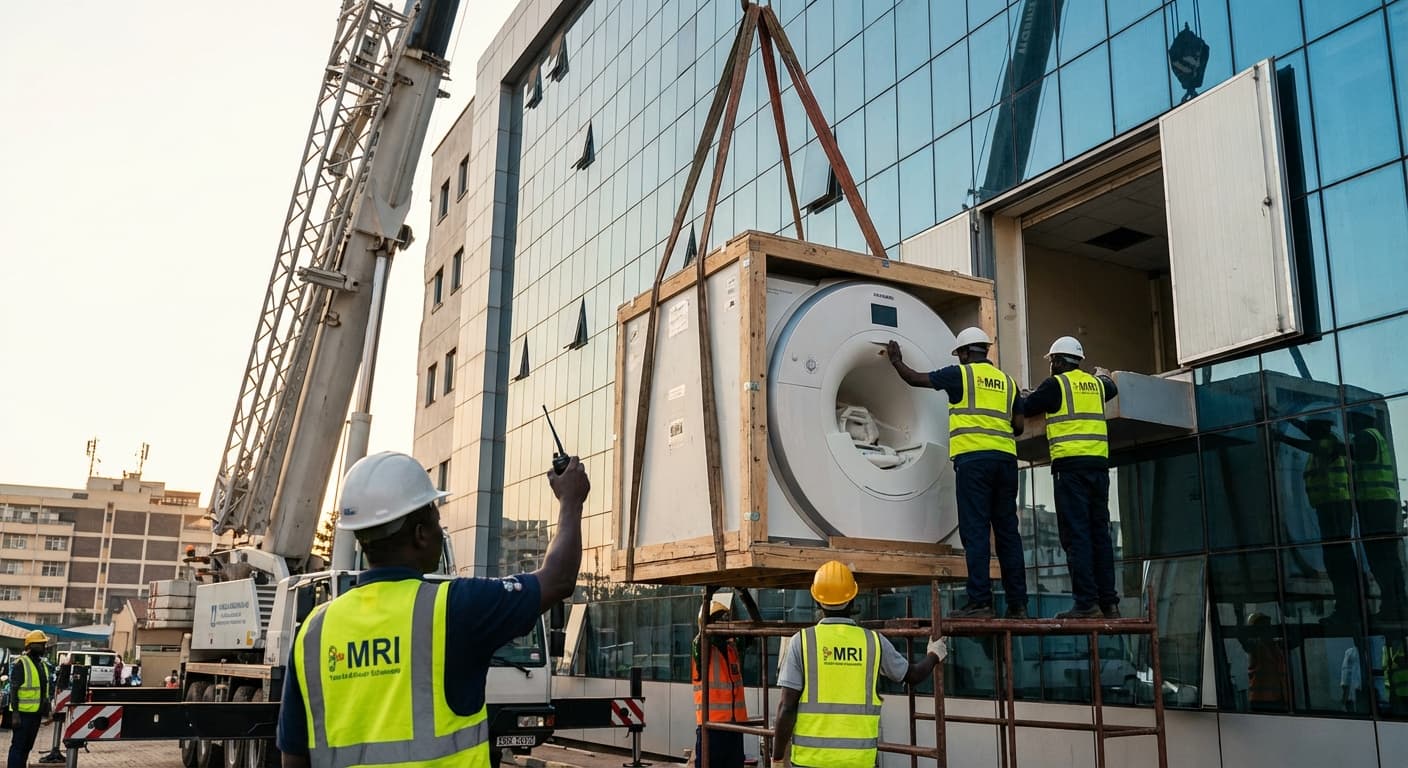
Cranage & Rigging Supervision Service in Zimbabwe
Engineering Excellence & Technical Support
Cranage & Rigging Supervision Service High-standard technical execution following OEM protocols and local regulatory frameworks.
Precision Lift Planning & Execution
Leveraging advanced simulation software and expert analysis, we design and oversee complex lifts, ensuring optimal load distribution, clearance management, and safety protocols, minimizing risk for critical infrastructure projects across Zimbabwe.
Certified Rigging Safety & Compliance
Our Zimbabwe-based supervisors are fully certified in international rigging standards, enforcing rigorous pre-lift inspections, load testing, and adherence to all local and industry safety regulations, safeguarding personnel and assets on every project.
Logistics & Route Optimization for Heavy Transport
We provide expert supervision for the safe and efficient transport of oversized and heavy equipment across Zimbabwe's diverse terrain, meticulously planning routes, coordinating permits, and managing escorts to ensure timely and secure delivery.
What Is Cranage & Rigging Supervision Service In Zimbabwe?
Cranage and Rigging Supervision Service in Zimbabwe refers to the specialized oversight and management of lifting and moving heavy or oversized loads using cranes and associated rigging equipment. This service is crucial for ensuring the safe, efficient, and compliant execution of complex lifting operations. It involves a team of qualified and experienced supervisors who possess in-depth knowledge of rigging principles, load calculations, equipment capabilities, site-specific hazards, and relevant safety regulations. The primary objective is to mitigate risks, prevent accidents, and optimize the lifting process from planning to completion.
| Who Needs Cranage & Rigging Supervision? | Typical Use Cases | ||
|---|---|---|---|
| Construction Companies (Infrastructure, Buildings) | Erection of structural steel and precast concrete elements. | Installation of heavy machinery and equipment. | Placement of large building components (e.g., HVAC units, façade panels). |
| Mining and Resources Sector | Installation and removal of heavy mining equipment (e.g., crushers, conveyors, draglines). | Handling of large ore bodies or equipment during maintenance shutdowns. | Offloading and placement of transformers and other electrical components. |
| Industrial Manufacturing and Processing Plants | Installation of new machinery and production lines. | Dismantling and relocation of plant equipment. | Maintenance and repair operations requiring the lifting of heavy components. |
| Energy Sector (Power Generation, Oil & Gas) | Installation of turbines, generators, and associated heavy components. | Offloading and positioning of large pipes and structural elements. | Maintenance of offshore or onshore facilities requiring specialized lifting. |
| Port and Logistics Operations | Loading and unloading of heavy cargo from ships. | Movement of oversized project cargo within port facilities. | Handling of heavy industrial goods. |
| Specialized Project Management Firms | Overseeing complex, multi-faceted lifting operations as part of larger projects. | ||
| Any organization undertaking a lifting operation involving significant risk or complexity. |
Key Components of Cranage & Rigging Supervision
- Pre-lift planning and assessment: Detailed analysis of the load, lift path, environmental conditions, and available equipment.
- Rigging design and selection: Specification of appropriate rigging hardware (slings, shackles, spreader bars, etc.) based on load weight, configuration, and lifting points.
- Crane selection and inspection: Ensuring the correct crane capacity, reach, and configuration are chosen and that the equipment is in good working order.
- On-site supervision and execution: Direct oversight of the rigging crew, crane operator, and the entire lifting operation in real-time.
- Communication and coordination: Establishing clear communication protocols between all parties involved in the lift.
- Load stabilization and securement: Ensuring the load is properly balanced and secured throughout the lifting and movement process.
- Site hazard identification and control: Identifying and mitigating potential risks such as overhead obstructions, ground conditions, and personnel proximity.
- Compliance verification: Ensuring all operations adhere to Zimbabwean safety regulations, international standards (e.g., ASME, LOLER), and client-specific procedures.
- Post-lift review and reporting: Documenting the operation, identifying lessons learned, and preparing incident reports if necessary.
Who Needs Cranage & Rigging Supervision Service In Zimbabwe?
Cranage & Rigging Supervision Services in Zimbabwe are essential for projects and operations that involve the safe and efficient lifting, moving, and positioning of heavy, oversized, or delicate loads. These services are not a niche requirement but rather a critical component for a diverse range of industries operating within Zimbabwe. The need arises from the inherent risks associated with heavy lifting, the complexity of coordinating multiple lifting operations, and the specialized knowledge required to ensure structural integrity and personnel safety. Companies and departments that engage in construction, mining, manufacturing, infrastructure development, energy projects, and logistics are prime candidates for these vital services.
| Target Customer Category | Key Departments/Functions Requiring Service | Specific Needs/Examples |
|---|---|---|
| Construction Companies | Project Management, Site Operations, Health & Safety, Engineering | Lifting pre-fabricated modules, concrete beams, structural steel, heavy machinery installation. |
| Mining Operations | Plant & Equipment Maintenance, Mine Operations, Safety Department, Engineering | Installation & removal of heavy mining equipment (crushers, mills, haul trucks), dewatering pumps, structural components. |
| Manufacturing Plants | Production Management, Maintenance, Engineering, Logistics | Installation of new machinery, relocation of heavy production lines, handling of large components during assembly, maintenance shutdowns. |
| Infrastructure Development Authorities | Project Engineering, Construction Management, Site Supervisors, Quality Control | Bridge construction (lifting girders), dam construction (placement of heavy components), road construction (placement of large culverts). |
| Energy Sector (Power Generation & Transmission) | Project Engineering, Site Management, Electrical & Mechanical Departments, Safety | Installation of turbines, generators, transformers, large piping systems, power line pylons, and associated equipment. |
| Oil & Gas Companies | Project Management, Engineering, Construction, Maintenance, HSE | Installation of processing equipment, tanks, pipelines, offshore platform components (where applicable), and maintenance activities. |
| Port & Logistics Operators | Operations Management, Warehouse Management, Terminal Operations, Safety | Loading and unloading of oversized cargo from ships, placement of heavy containers, managing container cranes and specialized lifting equipment. |
| Heavy Equipment Rental Companies | Fleet Management, Operations, Sales | Ensuring safe loading, unloading, and positioning of their rented cranes and heavy lifting equipment on client sites. |
| Industrial Maintenance & Turnaround Services | Maintenance Planning, Project Execution, Site Supervisors, Safety Officers | Facilitating complex maintenance tasks during plant shutdowns requiring precise lifting and maneuvering of heavy components. |
| Specialized Project Management Firms | Project Directors, Site Managers, Technical Consultants, Safety Managers | Overseeing complex, multi-faceted projects that inherently involve significant lifting and rigging operations across various industries. |
Target Customers & Departments for Cranage & Rigging Supervision Service in Zimbabwe
- Construction Companies
- Mining Operations
- Manufacturing Plants
- Infrastructure Development Authorities
- Energy Sector (Power Generation & Transmission)
- Oil & Gas Companies
- Port & Logistics Operators
- Heavy Equipment Rental Companies
- Industrial Maintenance & Turnaround Services
- Specialized Project Management Firms
Cranage & Rigging Supervision Service Process In Zimbabwe
The Cranage & Rigging Supervision Service Process in Zimbabwe outlines the comprehensive workflow undertaken from the initial client inquiry to the successful execution and completion of a lifting and rigging operation. This process ensures safety, efficiency, and compliance with all relevant Zimbabwean regulations and international best practices.
| Stage | Description | Key Activities | Deliverables/Outcomes | Responsible Party |
|---|---|---|---|---|
| Client identifies a need for cranage and rigging supervision. | Receive client request, discuss basic project needs, understand general scope. | Initial understanding of client requirements, preliminary project feasibility assessment. | Client, Service Provider |
| Detailed understanding of the lifting operation and its environment. | Analyze load weight/dimensions, lift height/radius, environmental factors (wind, ground conditions), site access, and any obstructions. Conduct site visit if necessary. | Detailed scope of work document, load charts analysis, site survey report. | Service Provider, Client (for access and information) |
| Formal documentation of safety procedures for the lift. | Identify all potential hazards, assess risks, and develop detailed step-by-step procedures for safe execution. Include emergency procedures. | Approved Risk Assessment and Method Statement (RAMS) document. | Service Provider (Supervision Team) |
| Ensuring the right tools for the job are used and are safe. | Select appropriate crane(s), rigging gear (slings, shackles, spreaders, etc.) based on load and lift plan. Verify all equipment is certified, inspected, and in good working condition. | Equipment list with certifications, pre-use inspection records. | Service Provider (Supervision Team, Equipment Provider) |
| Assigning the right expertise to manage the operation. | Appoint qualified and experienced personnel including: Lifting Supervisor, Riggers, Crane Operator(s), Signal Person(s), HSE Officer (if required). | Team roster with qualifications and certifications. | Service Provider (Management, Supervision Team) |
| Ensuring all personnel are aware of the plan and safety protocols. | Conduct a thorough briefing session covering the RAMS, communication protocols, roles and responsibilities, and any specific site hazards. All team members must acknowledge understanding. | Signed toolbox talk register, confirmed understanding of the lift plan. | Service Provider (Lifting Supervisor) |
| The actual performance of the lifting operation. | Direct and supervise all lifting activities. Monitor load stability, clearances, communication, and adherence to the RAMS. Make real-time adjustments as needed. | Successful and safe completion of the lift according to the plan. | Service Provider (Supervision Team, Operational Crew) |
| Documentation and analysis of the completed operation. | Conduct a debrief with the team. Document the lift, including any deviations, incidents, or near misses. Prepare a final report. | Post-operation report, incident reports (if any), lessons learned document. | Service Provider (Supervision Team, Management) |
| Safe removal of equipment and formal closure of the service. | Safely demobilize all equipment from the site. Obtain formal sign-off from the client confirming satisfaction with the service provided. | Site cleared, client acceptance form/sign-off. | Service Provider (Supervision Team, Management), Client |
| Financial settlement of the service provided. | Prepare and submit final invoice based on agreed rates and services rendered. Process payment according to contract terms. | Final invoice, payment confirmation. | Service Provider (Administration/Finance), Client |
Cranage & Rigging Supervision Service Workflow
- Inquiry & Initial Consultation: Client expresses need for cranage and rigging supervision services.
- Scope Definition & Site Assessment: Detailed understanding of the lifting requirements, load characteristics, and site conditions.
- Risk Assessment & Method Statement (RAMS) Development: Identification of potential hazards and development of safe operating procedures.
- Equipment Selection & Verification: Choosing appropriate cranes, rigging gear, and ensuring their certification and suitability.
- Personnel Deployment: Assigning qualified and experienced supervisors, riggers, and crane operators.
- Pre-Operation Briefing & Toolbox Talk: Reviewing the RAMS and confirming understanding with the operational team.
- Execution of Lift: Supervising and managing all aspects of the lifting operation.
- Post-Operation Review & Reporting: Documenting the operation, any incidents, and lessons learned.
- Demobilization & Client Sign-off: Safely removing equipment and obtaining client approval.
- Invoicing & Payment: Finalizing the billing and payment process.
Cranage & Rigging Supervision Service Cost In Zimbabwe
Cranage and rigging supervision services are crucial for the safe and efficient execution of heavy lifting operations in Zimbabwe. The cost of these services is influenced by a variety of factors, leading to a range of pricing in the local currency (Zimbabwean Dollar - ZWL). Understanding these factors is essential for accurate budgeting and project planning.
Key Pricing Factors:
- Complexity of the Lift: Simple lifts requiring standard rigging and minimal supervision will naturally be less expensive than complex lifts involving intricate rigging arrangements, multiple crane movements, or lifts in confined or hazardous spaces. The weight and dimensions of the object being lifted are primary determinants of complexity.
- Duration of the Project: Costs are typically calculated on an hourly, daily, or project basis. Longer projects requiring continuous supervision will incur higher overall costs. Some providers may offer discounted rates for extended engagements.
- Type and Size of Equipment Used: The supervision cost can be indirectly influenced by the size and type of cranes and rigging equipment being managed. Larger, more specialized equipment often demands higher levels of expertise and therefore commands higher supervision fees.
- Level of Supervision Required: The intensity and qualification of the supervision staff play a significant role. A single, experienced rigging supervisor will have a different rate than a team of supervisors and safety officers overseeing a large-scale operation.
- Skill and Experience of Personnel: Highly qualified and experienced rigging supervisors and lift planners, often certified and with a proven track record, will command higher rates due to their expertise and ability to mitigate risks effectively.
- Geographic Location within Zimbabwe: While not always a primary driver, remote locations or areas with logistical challenges for accessing skilled personnel or specialized equipment might see slightly higher costs due to travel and accommodation expenses.
- Specific Industry Requirements: Certain industries, such as mining, construction, or manufacturing, may have stringent safety regulations and unique operational demands that require specialized supervision, impacting the overall cost.
- Insurance and Liability: The cost of insurance and the liability assumed by the supervision service provider can also be factored into their pricing structure.
- Emergency or Out-of-Hours Services: Projects requiring immediate attention or occurring outside standard working hours will typically incur premium charges.
Pricing Ranges in Zimbabwean Dollars (ZWL):
It's important to note that these are indicative ranges and can fluctuate based on the specific service provider, market conditions, and the negotiation of the contract. For accurate quotes, direct engagement with service providers is recommended.
For a standard, straightforward lift requiring one experienced rigging supervisor for a single day (8-10 hours), the cost could range from ZWL 15,000 to ZWL 40,000. For more complex operations, multi-day projects, or when a higher level of supervision (e.g., a team of supervisors and safety officers) is needed, daily rates can escalate to ZWL 50,000 to ZWL 150,000 or more. For extensive projects spanning weeks or months, providers will typically offer project-based quotes, which can be significantly higher depending on the scope and duration.
When seeking quotes, be prepared to provide detailed information about the lift, including the weight and dimensions of the load, the site conditions, the planned lifting method, and the duration of the operation. This will enable service providers to offer a more accurate and competitive pricing proposal.
| Service Type/Scope | Estimated Daily Cost (ZWL) | Estimated Project-Based Cost (ZWL) |
|---|---|---|
| Single Experienced Supervisor (Standard Lift, 8-10 hours) | 15,000 - 40,000 | N/A (typically daily rate applies) |
| Multiple Supervisors/Safety Officers (Complex Lift, 8-10 hours) | 50,000 - 150,000+ | N/A (typically daily rate applies) |
| Extended Project (Weeks/Months - e.g., Construction Site) | Variable (daily rates may apply) | Customized Quote (Significant depending on scope, duration, and personnel) |
Factors Influencing Cranage & Rigging Supervision Service Costs in Zimbabwe
- Complexity of the lift (weight, dimensions, maneuverability)
- Duration of the project (hourly, daily, project-based)
- Type and size of cranes and rigging equipment
- Level and intensity of supervision required
- Skill, experience, and certifications of personnel
- Geographic location and logistical challenges
- Specific industry safety regulations and operational demands
- Insurance coverage and liability
- Urgency and scheduling (emergency or out-of-hours services)
Affordable Cranage & Rigging Supervision Service Options
When seeking affordable cranage and rigging supervision services, understanding how to leverage value bundles and implement cost-saving strategies is crucial. This approach ensures you receive comprehensive support without overspending. Value bundles often combine essential services like equipment rental, operator fees, and supervisory personnel into a single package, offering a more predictable and often discounted rate compared to sourcing each component individually. Cost-saving strategies extend beyond bundled pricing and involve smart planning, efficient execution, and informed decision-making throughout the project lifecycle.
| Service Component | Potential Value Bundle Inclusion | Cost-Saving Strategy Example |
|---|---|---|
| Crane Rental | Daily/Weekly/Monthly Rate | Matching crane capacity to exact lift requirements; off-peak scheduling. |
| Rigging Crew Labor | Hourly/Project Rate | Ensuring crew is fully trained and experienced to maximize efficiency; clear communication of lift sequence. |
| Supervision | Included in package or separate hourly rate | Engaging a supervisor with a proven track record in efficient lift planning and execution; proactive problem-solving. |
| Equipment Hire (slings, shackles, etc.) | Included in daily rate or separate charge | Using appropriately rated and well-maintained rigging gear; avoiding unnecessary rental of specialized equipment. |
| Mobilization & Demobilization | Often a fixed fee or included in overall project cost | Efficient site preparation to minimize setup time; coordinating multiple lifts to reduce frequency of mobilization. |
| Safety Compliance & Planning | Integral to all services | Thorough pre-lift inspections and risk assessments to prevent incidents and associated costs; utilizing digital lift planning tools. |
Key Value Bundle Components & Cost-Saving Strategies
- Comprehensive Project Assessment: Thoroughly understanding the scope of work, including weight, dimensions, lift locations, and accessibility, allows for accurate equipment selection and reduces the risk of costly overestimation or last-minute changes.
- Bundled Service Packages: Negotiating for package deals that include crane rental, certified rigging crews, and experienced supervision can lead to significant savings and streamlined coordination.
- Off-Peak Scheduling: Utilizing services during less busy periods or times of lower demand (e.g., weekdays instead of weekends, early morning or late evening shifts) can often result in reduced hourly rates.
- Equipment Optimization: Selecting the right type and size of crane for the job, rather than opting for a larger, more expensive unit than necessary, is a fundamental cost-saving measure. Similarly, ensuring rigging equipment is appropriately sized and rated minimizes risk and potential damage.
- Experienced Supervision: Engaging qualified and experienced rigging supervisors is not just about safety; it's also about efficiency. Their expertise can prevent errors, optimize lift plans, and reduce downtime, ultimately saving money.
- Long-Term Contract Discounts: For recurring or extended projects, negotiating longer-term contracts can unlock volume discounts and preferential rates.
- Pre-Mobilization Planning & Site Preparation: Investing time in detailed planning and ensuring the site is adequately prepared (clearance, ground stability) before the crane arrives minimizes on-site setup time and potential delays.
- Package Insurance & Liability: Inquire about bundled insurance options that might be more cost-effective than securing separate policies for different service components.
- Clear Communication & Collaboration: Maintaining open and consistent communication with the service provider throughout the project helps to address issues proactively and avoid costly misunderstandings or rework.
Verified Providers In Zimbabwe
In Zimbabwe's evolving healthcare landscape, discerning patients seek assurance in the quality and reliability of medical services. Verified providers represent a crucial benchmark for trust, ensuring that healthcare professionals and facilities meet stringent standards. Franance Health stands out as a premier example of such a commitment, offering a comprehensive suite of services backed by unwavering credentials. Their dedication to patient well-being, ethical practices, and continuous improvement positions them as a leading choice for individuals and families prioritizing their health.
| Area of Expertise | Franance Health's Advantage | Why it Matters for Patients |
|---|---|---|
| Medical Professionals | Rigorous selection, continuous training, and board certifications. | Access to highly competent doctors and specialists ensuring accurate diagnoses and effective treatments. |
| Facility Standards | State-of-the-art infrastructure, adherence to hygiene regulations, and advanced equipment. | Safe, comfortable, and technologically advanced environment for all medical procedures and consultations. |
| Patient Care | Emphasis on empathy, clear communication, and personalized treatment strategies. | A supportive and understanding healthcare experience tailored to individual needs and concerns. |
| Ethical Practice | Unwavering commitment to medical ethics, patient confidentiality, and transparent billing. | Trustworthy and reliable healthcare provider that prioritizes patient interests above all else. |
Key Credentials and Strengths of Franance Health:
- Accreditation by recognized health authorities in Zimbabwe and internationally.
- Highly qualified and experienced medical professionals with specialized training.
- Adherence to rigorous patient safety protocols and quality management systems.
- Commitment to transparent pricing and ethical medical practices.
- Investment in advanced medical technology and equipment.
- Focus on patient-centered care and personalized treatment plans.
- Strong track record of successful patient outcomes and satisfaction.
Scope Of Work For Cranage & Rigging Supervision Service
This Scope of Work (SOW) outlines the services required for Cranage and Rigging Supervision. The objective is to ensure safe, efficient, and compliant execution of all lifting and rigging operations, adhering to industry best practices and project-specific requirements. The service includes pre-lift planning, on-site supervision, equipment inspection, personnel competency verification, risk assessment, and incident investigation as needed. The focus is on minimizing risks associated with heavy lifting and ensuring the integrity of the load and surrounding environment. Standard specifications for equipment, personnel qualifications, and operational procedures are detailed to ensure a consistent and high level of service.
| Technical Deliverable | Description | Standard Specification / Reference |
|---|---|---|
| Pre-Lift Plan Review | Review and approval of detailed lift plans, including load charts, rigging configurations, environmental factors, and exclusion zones. | Project-specific lift plan template, ISO 23853 (Crane Operations - Planning and Supervision), OSHA 1926 Subpart CC. |
| Daily Toolbox Talks | Conducting pre-shift safety briefings with all personnel involved in lifting operations. | Project safety manual, site-specific safety plan. |
| On-Site Supervision Report | Daily reports detailing activities performed, observations, any incidents, and corrective actions taken. | Standard daily report template, project reporting requirements. |
| Equipment Inspection Checklist | Pre-use and periodic inspection records for all lifting gear (slings, shackles, hooks, spreader bars, etc.) and cranes. | Manufacturer's recommendations, API RP 2D (Operations and Equipment Used in Offshore Mobile Drilling Units), LEEA standards (Lifting Equipment Engineers Association). |
| Personnel Competency Records | Verification of certifications and qualifications for crane operators, riggers, signal persons, and supervisors. | NCCCO certification (National Commission for the Certification of Crane Operators), local regulatory requirements (e.g., HSE in UK). |
| Risk Assessment Matrix | Documented identification and assessment of hazards associated with specific lifts, and proposed mitigation strategies. | Project risk management plan, HAZID/HAZOP studies. |
| Incident Investigation Report | Thorough investigation and reporting of any accidents, near misses, or unsafe conditions encountered during lifting operations. | Project incident reporting procedures, OSHA investigation guidelines. |
| Lift Completion Certificate | Formal documentation confirming that a specific lift was executed safely and according to the approved plan. | Project-specific certificate template. |
Key Service Components
- Pre-Lift Planning and Review
- On-Site Supervision and Execution Monitoring
- Rigging and Lifting Equipment Inspection
- Personnel Competency and Training Verification
- Risk Assessment and Mitigation
- Communication and Coordination
- Emergency Response and Incident Management
- Documentation and Reporting
Service Level Agreement For Cranage & Rigging Supervision Service
This Service Level Agreement (SLA) outlines the commitments regarding response times and uptime guarantees for the Cranage & Rigging Supervision Service provided by [Your Company Name] to [Client Company Name].
| Service Component | Response Time (Non-Emergency) | Response Time (Emergency) | Uptime Guarantee |
|---|---|---|---|
| Initial Request for Service (Scheduling) | Within 24 business hours to confirm availability and preliminary requirements. | Within 4 business hours to confirm availability and preliminary requirements. | N/A (Scheduling is an initial interaction) |
| Lift Plan Review/Approval | Within 48 business hours of receiving complete documentation. | Within 12 business hours of receiving complete documentation. | N/A (Applies to document turnaround, not continuous service) |
| On-Site Supervision (Scheduled) | As per agreed-upon schedule. Attendance confirmed 24 hours prior. | As per agreed-upon schedule. Attendance confirmed 4 hours prior (priority dispatch). | 99.9% of scheduled on-site supervision time. |
| Emergency Call-Out (Unscheduled, Urgent Need) | N/A | On-site within 4 hours of confirmation of emergency and location, subject to availability and travel conditions. | N/A (Emergency calls are assessed case-by-case for feasibility) |
| Post-Operation Debriefing/Reporting | Within 24 business hours of operation completion. | Within 12 business hours of operation completion. | N/A (Applies to report delivery) |
Service Scope
- On-site supervision during scheduled lifting and rigging operations.
- Development and review of lift plans and rigging procedures.
- Pre-operation equipment inspections and certification checks.
- Real-time monitoring and communication during operations.
- Post-operation debriefing and incident reporting (if applicable).
Frequently Asked Questions

Ready when you are
Let's scope your Cranage & Rigging Supervision Service in Zimbabwe project in Zimbabwe.

Scaling healthcare logistics and technical systems across the entire continent.