
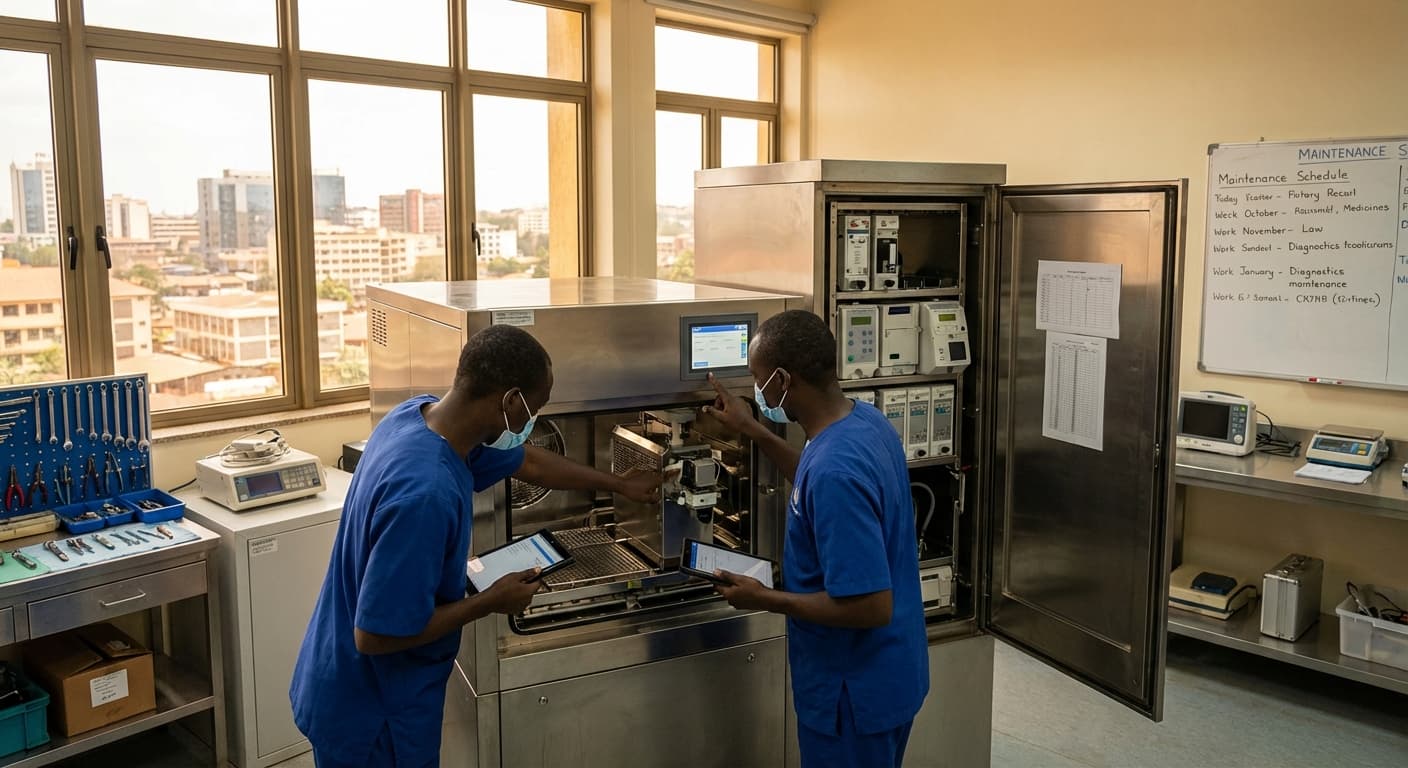
Total Cost of Ownership (TCO) & Lifecycle Budgeting Service in Zimbabwe
Engineering Excellence & Technical Support
Total Cost of Ownership (TCO) & Lifecycle Budgeting Service High-standard technical execution following OEM protocols and local regulatory frameworks.
Optimised Asset Lifecycle Costing
Leverage advanced analytics to forecast and minimise the Total Cost of Ownership (TCO) for all your assets across their entire lifecycle in Zimbabwe. Our service meticulously accounts for acquisition, operation, maintenance, disposal, and potential resale values, ensuring predictable and manageable expenditure.
Strategic Lifecycle Budgeting & Financial Planning
Develop robust, long-term lifecycle budgets that align with your organisation's strategic objectives in Zimbabwe. We provide detailed financial forecasting, including capital expenditure planning, operational cost optimisation, and risk mitigation strategies to safeguard your financial stability.
Predictive Maintenance & Efficiency Integration
Integrate predictive maintenance strategies and operational efficiency improvements directly into your TCO and lifecycle budgeting. By proactively addressing potential issues and optimising resource utilisation, we help reduce unexpected costs and extend asset lifespan, significantly enhancing return on investment.
What Is Total Cost Of Ownership (Tco) & Lifecycle Budgeting Service In Zimbabwe?
Total Cost of Ownership (TCO) and Lifecycle Budgeting (LCB) services in Zimbabwe refer to a comprehensive financial management methodology focused on evaluating the complete economic impact of an asset or system over its entire operational lifespan. TCO encompasses all direct and indirect costs associated with an asset, from initial acquisition through to disposal. LCB extends this by integrating TCO principles into the strategic financial planning and budgeting processes, ensuring that long-term financial commitments are accurately anticipated and managed. This service is crucial for making informed investment decisions, optimizing resource allocation, and mitigating unforeseen expenditures within the Zimbabwean economic context, which may involve unique fiscal policies, import duties, and currency fluctuations.
| Who Needs TCO & Lifecycle Budgeting Services? | Typical Use Cases | ||||||||
|---|---|---|---|---|---|---|---|---|---|
| Corporations and Large Enterprises in Zimbabwe: Particularly those with significant capital expenditures in IT infrastructure, manufacturing equipment, fleet vehicles, or real estate. They require strategic financial planning to optimize long-term profitability and competitive advantage. | Strategic Procurement: Evaluating bids for new enterprise resource planning (ERP) systems, telecommunications networks, or industrial machinery to select the most cost-effective option over its lifespan, not just the initial purchase price. | Asset Management: Developing long-term maintenance and replacement strategies for critical infrastructure like power generation equipment, water treatment plants, or transportation assets. | Public Sector and Government Agencies: For the acquisition and management of public infrastructure (roads, bridges, public transport), defense equipment, or public IT systems, ensuring fiscal responsibility and value for taxpayer money. | Financial Institutions: Assessing the TCO of core banking systems, ATM networks, and other technology investments to manage operational expenses and risk effectively. | Non-Governmental Organizations (NGOs) and Development Agencies: For managing donor-funded projects involving the procurement of durable goods, vehicles, or operational infrastructure, ensuring sustainability and maximizing impact. | Small and Medium-sized Enterprises (SMEs) in Growth Phases: As they scale operations and consider significant investments in machinery, technology, or vehicles, understanding TCO can prevent future financial strain. | Business Expansion Planning: Calculating the financial implications of expanding operations, including the costs of new facilities, equipment, and supporting infrastructure over their respective lifecycles. | Sustainability and Environmental Impact Assessment: Incorporating the long-term costs associated with energy efficiency, waste disposal, and compliance with environmental regulations into the budgeting process. | Mergers and Acquisitions (M&A): Assessing the TCO of combined asset portfolios to identify potential cost synergies or liabilities. |
Key Components of TCO & Lifecycle Budgeting Services
- Acquisition Costs: Initial purchase price, shipping, installation, and setup.
- Operating Costs: Energy consumption, consumables, labor, maintenance, and repairs.
- Upgrade and Enhancement Costs: Costs associated with improvements or modifications during the asset's life.
- Downtime Costs: Lost productivity or revenue due to system failures or planned outages.
- Disposal Costs: Decommissioning, removal, environmental remediation, and residual value assessment.
- Financing Costs: Interest, fees, and depreciation if applicable.
- Risk Assessment: Identification and quantification of potential financial risks over the lifecycle.
Who Needs Total Cost Of Ownership (Tco) & Lifecycle Budgeting Service In Zimbabwe?
In Zimbabwe, organizations across various sectors are increasingly recognizing the strategic importance of understanding and managing the full financial implications of their assets and projects. Total Cost of Ownership (TCO) and Lifecycle Budgeting (LCB) services provide a comprehensive framework to move beyond initial purchase prices and account for all associated costs throughout an asset's or project's entire lifespan. This includes acquisition, operation, maintenance, upgrades, and eventual disposal. By adopting TCO and LCB, businesses in Zimbabwe can make more informed investment decisions, optimize resource allocation, mitigate financial risks, and achieve greater operational efficiency and long-term profitability.
| Target Customer Type | Key Departments Benefiting |
|---|---|
| Manufacturing & Industrial Companies | Operations, Maintenance, Procurement, Finance, Engineering |
| Mining Sector | Asset Management, Maintenance, Operations, Finance, Procurement, Projects |
| Telecommunications Companies | Network Operations, Infrastructure Management, Procurement, Finance, IT |
| Energy & Utilities (Power, Water) | Asset Management, Operations & Maintenance, Finance, Engineering, Capital Projects |
| Construction & Infrastructure Development | Project Management, Finance, Procurement, Engineering, Operations |
| Financial Institutions (for asset-heavy operations) | Facilities Management, IT Infrastructure, Procurement, Finance |
| Government Ministries & Parastatals | Procurement, Finance, Public Works, Infrastructure Development, IT, Transport |
| Logistics & Transportation Companies | Fleet Management, Maintenance, Operations, Finance, Procurement |
| Agriculture & Agribusiness (large-scale operations) | Farm Management, Equipment Maintenance, Procurement, Finance |
Who Needs TCO & Lifecycle Budgeting Service in Zimbabwe?
- Businesses looking to optimize capital expenditure and operational expenditure.
- Organizations aiming to improve asset performance and reduce downtime.
- Companies seeking to implement sustainable procurement practices.
- Entities facing regulatory requirements or audit demands related to asset management and financial planning.
- Those interested in accurate forecasting and budgeting for long-term projects.
- Sectors heavily reliant on physical assets or infrastructure.
Total Cost Of Ownership (Tco) & Lifecycle Budgeting Service Process In Zimbabwe
This document outlines the typical workflow for providing Total Cost of Ownership (TCO) and Lifecycle Budgeting services within the Zimbabwean context, from initial client inquiry to final service execution and reporting. This process is designed to be comprehensive, ensuring all relevant costs and future expenditures are identified, analyzed, and managed effectively for clients' assets and projects.
| Phase | Key Activities | Deliverables | Zimbabwean Context Considerations |
|---|---|---|---|
| Client contacts the service provider with a need for TCO/Lifecycle Budgeting services. Initial meeting to understand client objectives, the asset(s)/project(s) in question, and preliminary concerns. | Understanding of client needs, preliminary assessment of project complexity. | Understanding of common Zimbabwean business challenges (e.g., limited access to specialized software, local regulatory frameworks). |
| Detailed discussions to define the exact scope of work, including specific assets, the lifecycle period, cost categories to be included, desired level of detail, and reporting requirements. Development of a formal proposal with methodology, timeline, and fees. | Defined Scope of Work (SOW), Detailed Proposal, Fee Structure. | Considering local currency volatility and the impact on long-term cost projections. Awareness of import duties and local taxes affecting asset acquisition and maintenance costs. |
| Client reviews and approves the proposal. Negotiation of terms and conditions. Signing of the service agreement/contract. | Signed Service Agreement/Contract. | Ensuring legal compliance with Zimbabwean contract law. Clear payment terms, considering local economic conditions. |
| Gathering all relevant historical and current data related to the asset(s) or project(s). This includes procurement costs, operational data, maintenance records, repair history, energy consumption, disposal costs, etc. Identification of all relevant assets within the scope. | Comprehensive dataset of asset information, Identified asset register. | Challenges in accessing historical data from older systems. Reliance on local vendors for specific operational data. Physical inspection of assets may be required due to limited digital records. |
| Identifying and categorizing all costs across the lifecycle. This includes Capital Expenditure (CAPEX), Operational Expenditure (OPEX) (e.g., labor, materials, energy, consumables), maintenance, repairs, upgrades, disposal, and any associated indirect costs. | Detailed cost breakdown by category and asset, Cost categorization matrix. | Accurate estimation of inflation rates and their impact on future costs. Understanding of local labor costs and availability of specialized skills for maintenance. |
| Analyzing the collected data using appropriate TCO methodologies. Developing financial models to calculate the TCO for each asset/project over its defined lifecycle. This often involves discounted cash flow (DCF) analysis for future costs. | TCO model(s), Calculated TCO values for each asset/project. | Using appropriate discount rates that reflect local economic conditions and risk. Scenario analysis for varying economic forecasts and currency fluctuations. |
| Translating TCO findings into a comprehensive lifecycle budget. Forecasting future expenditure requirements, including capital replacements, ongoing maintenance, and operational costs. Identifying potential cost-saving opportunities. | Lifecycle budget report, Future expenditure forecasts, Cost optimization recommendations. | Incorporating potential government policy changes that may affect future costs (e.g., environmental regulations, import/export policies). |
| Compiling a detailed report summarizing the TCO analysis, lifecycle budget, key findings, risks, and recommendations. Presenting the findings to the client stakeholders in a clear and understandable manner. | Final TCO and Lifecycle Budgeting Report, Presentation slides. | Tailoring the report format and language to suit the client's organizational culture and technical understanding. Providing insights into local market benchmarks where applicable. |
| Assisting the client in implementing the recommendations from the TCO analysis and lifecycle budget. This could involve establishing new budgeting processes, procurement strategies, or maintenance schedules. Setting up monitoring mechanisms to track actual costs against the budget. | Implementation plan, Monitoring framework, Initial performance reports. | Facilitating introductions to local suppliers or service providers who can support implementation. Advising on best practices for asset management within the Zimbabwean operational landscape. |
| Periodically reviewing the TCO model and lifecycle budget against actual performance. Identifying variances and recommending adjustments to optimize future costs and financial planning. This phase ensures the ongoing relevance and effectiveness of the TCO and budgeting strategy. | Performance review reports, Updated TCO models/budgets, Optimization recommendations. | Adapting to evolving economic conditions and technological advancements in Zimbabwe. Incorporating lessons learned from local implementation challenges. |
Total Cost of Ownership (TCO) & Lifecycle Budgeting Service Process in Zimbabwe
- Inquiry & Initial Consultation
- Scope Definition & Proposal Development
- Agreement & Contract Finalization
- Data Collection & Asset Identification
- Cost Identification & Categorization
- Data Analysis & TCO Modeling
- Lifecycle Budgeting & Forecasting
- Reporting & Presentation
- Implementation Support & Monitoring
- Review & Optimization
Total Cost Of Ownership (Tco) & Lifecycle Budgeting Service Cost In Zimbabwe
The Total Cost of Ownership (TCO) and Lifecycle Budgeting service is crucial for businesses in Zimbabwe to understand the true cost of their assets, from acquisition through to disposal. This comprehensive approach helps in making informed financial decisions, optimizing resource allocation, and identifying potential cost savings over the entire lifespan of an asset or project. Understanding and implementing TCO and lifecycle budgeting allows organizations to move beyond initial purchase prices and consider all associated expenses, including operational, maintenance, energy, disposal, and even training costs. In Zimbabwe, several factors influence the pricing of these services, reflecting the unique economic landscape.
| Service Component / Project Type | Estimated Pricing Range (ZWL) | Estimated Pricing Range (USD - indicative) | Notes |
|---|---|---|---|
| Initial Consultation & Scoping (Per Hour/Day) | ZWL 3,000 - ZWL 8,000+ | $30 - $80+ | Covers initial discussions, understanding needs, and defining project scope. |
| TCO Analysis for Small to Medium Assets (e.g., Fleet of vehicles, IT infrastructure for SME) | ZWL 30,000 - ZWL 100,000+ | $300 - $1,000+ | Typically involves analysis of 5-15 assets over a 3-7 year lifecycle. Data collection may be more straightforward. |
| TCO Analysis for Large Assets/Projects (e.g., Industrial machinery, Building construction, Major IT system rollout) | ZWL 100,000 - ZWL 500,000+ | $1,000 - $5,000+ | Requires in-depth analysis of multiple cost categories, longer lifecycles (10-20+ years), and significant data integration. |
| Lifecycle Budgeting for a Department/Business Unit | ZWL 75,000 - ZWL 300,000+ | $750 - $3,000+ | Focuses on budgeting for all operational and capital expenditures within a specific unit over a defined period. |
| Comprehensive TCO & Lifecycle Budgeting Program Development (for an organization) | ZWL 250,000 - ZWL 1,000,000+ (and upwards) | $2,500 - $10,000+ (and upwards) | Includes developing methodologies, training staff, implementing software, and establishing ongoing processes for the entire organization. |
| On-site Data Collection/Assessment (Daily Rate) | ZWL 5,000 - ZWL 15,000+ | $50 - $150+ | In addition to the core service fee, for physical site visits and data gathering. |
Key Pricing Factors for TCO & Lifecycle Budgeting Services in Zimbabwe
- Scope and Complexity of the Project/Asset: A detailed TCO analysis for a large-scale industrial plant will naturally be more expensive than for a fleet of vehicles or a single IT system.
- Data Availability and Quality: The ease with which historical data (purchase records, maintenance logs, energy consumption, etc.) can be accessed and is of good quality significantly impacts the effort required by the service provider.
- Duration of the Lifecycle: Analyzing a 3-year lifecycle will be less resource-intensive than a 20-year lifecycle, which requires longer-term forecasting and assumption-building.
- Number and Types of Assets Included: A service covering multiple asset classes (e.g., buildings, machinery, IT, vehicles) will involve more complex methodologies and data aggregation.
- Level of Detail Required: The granularity of the analysis (e.g., down to individual component costs vs. broader category costs) will influence the time and expertise needed.
- Consultant Expertise and Experience: Highly experienced and specialized consultants will command higher fees, reflecting their proven track record and ability to deliver valuable insights.
- Methodology and Tools Employed: The sophistication of the analytical models and software used by the service provider can also affect pricing.
- Reporting and Presentation Requirements: The extent and format of the final report, including presentations and recommendations, will be factored into the cost.
- Geographic Location (within Zimbabwe): While less significant for remote consultations, on-site assessments or data collection in remote areas might incur additional travel and accommodation costs.
- Economic Volatility and Currency Fluctuations: The Zimbabwean economic environment, characterized by inflation and currency fluctuations (e.g., USD, ZWL), directly impacts pricing strategies and can lead to price adjustments.
- Urgency of the Request: Expedited services may come at a premium.
Affordable Total Cost Of Ownership (Tco) & Lifecycle Budgeting Service Options
Our Affordable Total Cost of Ownership (TCO) & Lifecycle Budgeting services are designed to provide businesses with comprehensive financial visibility and strategic cost management throughout the entire lifespan of their assets and projects. We focus on identifying hidden costs, optimizing expenditures, and ensuring long-term financial health. Our approach goes beyond initial purchase price to encompass all direct and indirect costs, from acquisition and operation to maintenance, upgrades, and eventual disposal. By offering tailored value bundles and implementing effective cost-saving strategies, we empower our clients to make informed decisions, mitigate financial risks, and maximize their return on investment.
| Value Bundle | Description | Key Benefits | Typical Cost-Saving Strategies | |
|---|---|---|---|---|
| Essentials TCO Package | Focuses on core TCO calculation and initial cost identification for key assets. | Provides fundamental cost awareness, budget setting for immediate needs. | Standardized procurement best practices, bulk purchasing discounts. | Negotiation of favorable supplier terms, identification of immediate efficiency gains. |
| Integrated Lifecycle Budgeting | Encompasses TCO analysis across the entire asset/project lifecycle, including operational and maintenance costs. | Enables proactive financial planning, better resource allocation, reduced unforeseen expenses. | Preventative maintenance programs, energy efficiency upgrades, optimized inventory management. | Lean process implementation, employee training for operational efficiency, waste reduction initiatives. |
| Strategic TCO Optimization | Advanced analysis incorporating risk management, technology refresh planning, and long-term strategic financial modeling. | Maximizes ROI, minimizes long-term financial exposure, supports strategic decision-making. | Technology lifecycle management, strategic outsourcing evaluation, predictive maintenance adoption. | Total Quality Management (TQM) integration, supply chain optimization, end-of-life asset recovery and recycling strategies. |
Key Components of Our TCO & Lifecycle Budgeting Services
- TCO Analysis: Detailed assessment of all costs associated with an asset or project over its lifecycle.
- Lifecycle Costing: Forecasting and managing costs from inception to retirement.
- Value Bundles: Packaged service offerings designed for specific business needs and budget levels.
- Cost-Saving Strategy Development: Identification and implementation of opportunities for cost reduction.
- Risk Assessment & Mitigation: Evaluating potential financial risks and developing strategies to address them.
- Budget Forecasting & Planning: Accurate prediction and allocation of funds for long-term projects.
- Performance Tracking & Reporting: Continuous monitoring of costs against budget and providing actionable insights.
Verified Providers In Zimbabwe
In Zimbabwe's evolving healthcare landscape, identifying verified providers is crucial for ensuring quality care and peace of mind. Franance Health stands out as a beacon of trust, offering a network of credentialed healthcare professionals and facilities. Their rigorous vetting process ensures that all listed providers meet the highest standards of medical expertise, ethical practice, and patient safety. This commitment to verification empowers patients to make informed decisions about their health, knowing they are choosing services from reputable and qualified sources. By prioritizing transparency and accountability, Franance Health simplifies the search for reliable healthcare in Zimbabwe.
| Provider Type | Verification Criteria | Benefits of Choosing Franance Health Verified Providers |
|---|---|---|
| Doctors (Specialists & General Practitioners) | Medical Council of Zimbabwe registration, specialist board certification, proven experience, clean disciplinary record. | Access to highly qualified and experienced medical professionals, assurance of ethical practice and patient safety, specialized care tailored to your needs. |
| Hospitals & Clinics | Ministry of Health and Child Care accreditation, adherence to national healthcare standards, quality management systems, state-of-the-art equipment, qualified medical staff. | Treatment in accredited facilities, access to modern medical technology, consistently high standards of care, a safe and well-equipped environment for treatment. |
| Laboratories & Diagnostic Centers | Medical Laboratory and Clinical Scientists Council of Zimbabwe registration, ISO certification (where applicable), quality control procedures, up-to-date equipment and technology. | Accurate and reliable diagnostic results, use of advanced testing methodologies, timely reporting of results, confidence in the diagnostic process. |
| Pharmacies | Pharmaceutical Society of Zimbabwe registration, licensed premises, qualified pharmacists, proper storage and dispensing practices. | Access to genuine and safe medications, professional dispensing advice, assurance of drug quality and efficacy, a trustworthy source for your prescriptions. |
| Dentists & Dental Clinics | Health Professions Authority registration, specialist qualifications (where applicable), adherence to dental practice standards, sterile and modern facilities. | High-quality dental care from licensed professionals, advanced dental treatments, a safe and comfortable dental environment, improved oral health outcomes. |
Why Franance Health is the Best Choice for Verified Providers in Zimbabwe:
- Rigorous Credentialing: Franance Health employs a multi-stage verification process that scrutinizes qualifications, licenses, certifications, and professional history of all listed providers.
- Commitment to Quality: They ensure providers adhere to established medical best practices, ethical guidelines, and patient-centered care principles.
- Patient Safety Focus: Franance Health prioritizes the safety and well-being of patients by only associating with providers who demonstrate a strong commitment to safe medical procedures and protocols.
- Comprehensive Network: Access a wide range of healthcare professionals and facilities across various specialities, all thoroughly vetted and verified.
- Transparency and Trust: Franance Health provides clear information about provider credentials, fostering trust and enabling informed decision-making for patients.
- Convenience: Their platform simplifies the process of finding reliable healthcare, saving patients valuable time and reducing stress.
Scope Of Work For Total Cost Of Ownership (Tco) & Lifecycle Budgeting Service
This Scope of Work (SOW) outlines the services to be provided for a comprehensive Total Cost of Ownership (TCO) and Lifecycle Budgeting study. The objective is to provide a holistic understanding of all costs associated with an asset, system, or project from acquisition through disposal, enabling informed strategic decision-making and effective financial planning.
| Phase | Key Activities | Technical Deliverables | Standard Specifications |
|---|---|---|---|
| Phase 1: Project Initiation & Planning | Define project scope, objectives, and key stakeholders. Identify the asset/system/project to be analyzed. Gather initial documentation and data sources. Establish project timeline and communication protocols. | Project Charter Stakeholder Register Initial Data Inventory Project Management Plan | Project Charter adhering to [Industry Standard Template, e.g., PMI PMBOK] Stakeholder analysis based on [Power/Interest Grid or similar] Data inventory includes source, format, and accessibility of information. |
| Phase 2: Data Collection & Validation | Collect all relevant cost data across the entire lifecycle. Categorize costs (e.g., acquisition, operation, maintenance, disposal). Validate data accuracy and completeness. Establish data validation procedures. | Comprehensive Cost Database Data Validation Report | Cost Database structured according to TCO/Lifecycle Budgeting best practices (e.g., ISO 55000 principles). Data validation methods include cross-referencing, expert review, and statistical analysis. |
| Phase 3: TCO Modeling & Analysis | Develop TCO models based on collected data and defined lifecycle stages. Analyze cost drivers and perform sensitivity analysis. Identify key cost assumptions and their impact. Benchmark against industry standards or comparable assets/systems. | TCO Model(s) Cost Driver Analysis Report Sensitivity Analysis Report Benchmarking Report | TCO Model developed using [Specified Software/Methodology, e.g., Excel, specialized TCO software, Monte Carlo simulation]. Analysis based on [e.g., Pareto Principle, Root Cause Analysis]. Benchmarking against [e.g., industry average, competitor data, historical performance]. |
| Phase 4: Lifecycle Budgeting Framework Development | Develop a multi-year lifecycle budget based on TCO analysis. Forecast future expenses and funding requirements. Identify potential budget risks and mitigation strategies. Establish budget tracking and reporting mechanisms. | Lifecycle Budget (multi-year) Budget Risk Assessment Report Budget Management Plan | Lifecycle Budget formatted for [e.g., financial planning, capital expenditure requests]. Risk assessment uses [e.g., qualitative/quantitative risk matrix]. Budget Management Plan outlines reporting frequency, KPIs, and variance analysis procedures. |
| Phase 5: Reporting & Recommendations | Compile all findings into a comprehensive report. Provide actionable recommendations for cost optimization, risk mitigation, and strategic investment. Present findings to stakeholders. | Final TCO & Lifecycle Budgeting Report Executive Summary Presentation Deck | Report structure includes: Executive Summary, Methodology, TCO Analysis, Lifecycle Budget, Recommendations, Appendices. Recommendations are SMART (Specific, Measurable, Achievable, Relevant, Time-bound). |
| Phase 6: Knowledge Transfer & Training | Provide training on TCO concepts and lifecycle budgeting principles. Handover all developed models, databases, and documentation. Ensure the client has the capability to maintain and update the TCO/budgeting framework. | Training Materials User Manuals Final Project Documentation | Training modules tailored to client's needs and existing skillsets. User manuals provide clear instructions for using and updating models and databases. |
Service Objectives
- Establish a clear and comprehensive understanding of all direct and indirect costs associated with the asset/system/project over its entire lifecycle.
- Develop a robust lifecycle budgeting framework to forecast and manage expenses, ensuring financial preparedness.
- Identify cost drivers and potential areas for cost optimization and efficiency improvements.
- Provide data-driven insights to support investment decisions, risk assessment, and strategic planning.
- Facilitate alignment between operational requirements and financial objectives.
- Ensure compliance with relevant financial regulations and reporting standards.
Service Level Agreement For Total Cost Of Ownership (Tco) & Lifecycle Budgeting Service
This Service Level Agreement (SLA) outlines the response times and uptime guarantees for the Total Cost of Ownership (TCO) & Lifecycle Budgeting Service. It is designed to ensure the reliable and consistent delivery of our TCO and lifecycle budgeting services, providing our clients with the confidence that their financial planning and analysis needs will be met.
| Service Component / Incident Severity | Uptime Guarantee | Response Time Target (Business Hours) | Target Resolution Time (Business Hours) |
|---|---|---|---|
| Core Service Availability (All functionalities) | 99.5% | N/A (Continuous Monitoring) | N/A (Monitoring & Proactive Resolution) |
| Severity 1: Critical Outage (Service completely unavailable) | N/A | 1 Business Hour | 4 Business Hours |
| Severity 2: Major Degradation (Significant impact on core functionality, workaround may exist) | N/A | 2 Business Hours | 8 Business Hours |
| Severity 3: Minor Degradation (Limited impact, core functionality largely unaffected) | N/A | 4 Business Hours | 2 Business Days |
| Feature Request / General Inquiry | N/A | 1 Business Day | 3 Business Days |
| Scheduled Maintenance | N/A | Advance Notification (minimum 48 hours) | N/A |
Service Definitions
- TCO & Lifecycle Budgeting Service: Refers to the comprehensive suite of services provided, including but not limited to, data collection, analysis, forecasting, reporting, and strategic advisory related to the total cost of ownership and lifecycle budgeting for client assets and projects.
- Uptime: The percentage of time the TCO & Lifecycle Budgeting Service is available and operational to the client for intended use, excluding scheduled maintenance.
- Response Time: The maximum time allowed for the service provider to acknowledge and begin addressing a reported incident or request.
- Resolution Time: The maximum time allowed for the service provider to resolve a reported incident or fulfill a request, measured from the time of initial acknowledgment.
- Scheduled Maintenance: Pre-planned periods during which the TCO & Lifecycle Budgeting Service may be unavailable for updates, upgrades, or other necessary maintenance activities. Clients will be notified in advance of any scheduled maintenance.
Frequently Asked Questions

Ready when you are
Let's scope your Total Cost of Ownership (TCO) & Lifecycle Budgeting Service in Zimbabwe project in Zimbabwe.

Scaling healthcare logistics and technical systems across the entire continent.