
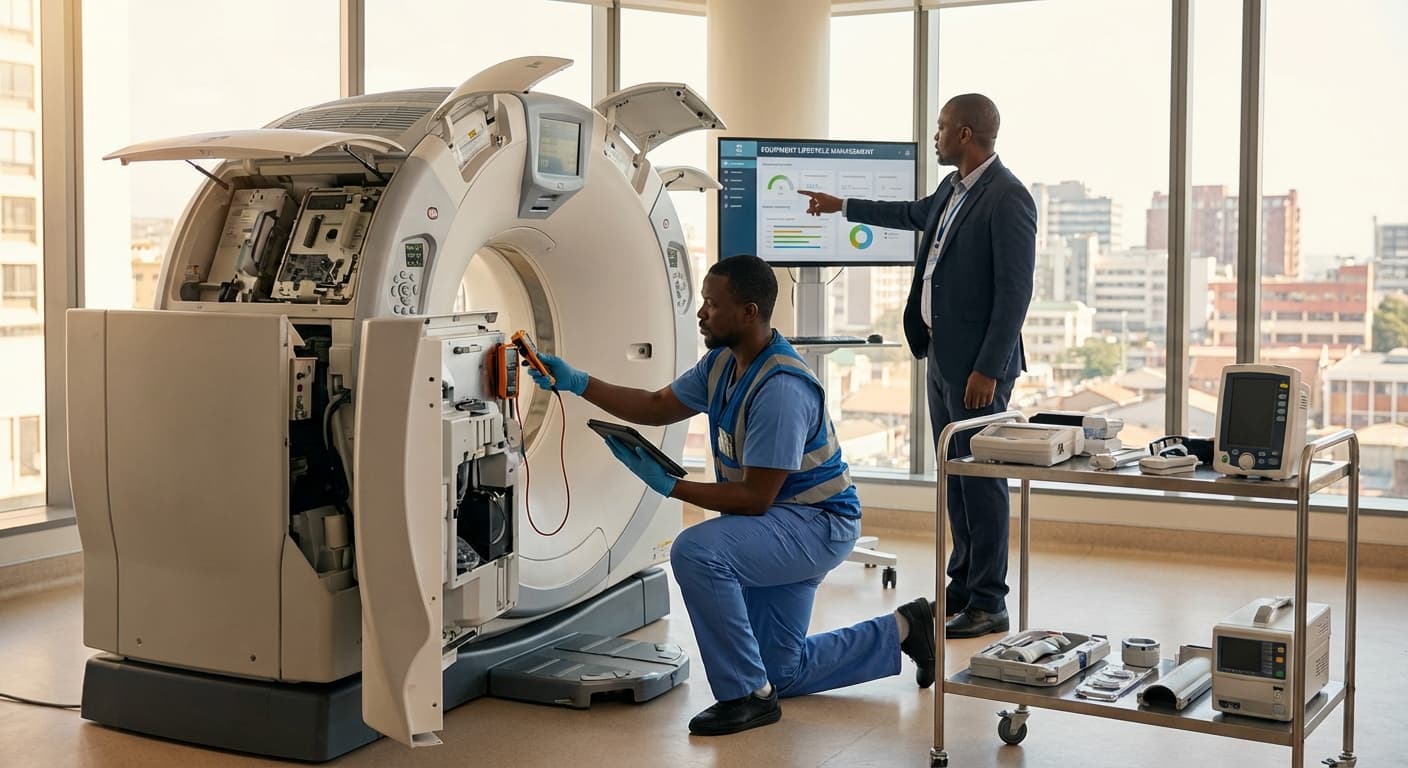
Equipment Replacement Planning & Obsolescence Strategy Service in Zimbabwe
Engineering Excellence & Technical Support
Equipment Replacement Planning & Obsolescence Strategy Service High-standard technical execution following OEM protocols and local regulatory frameworks.
Predictive Analytics for Asset Lifespan
Leverage advanced predictive analytics to forecast equipment remaining useful life (RUL) and identify critical assets nearing end-of-life, enabling proactive replacement scheduling and minimizing disruptive downtime. This ensures optimal resource allocation and avoids costly emergency purchases.
Obsolescence Risk Assessment & Mitigation
Conduct comprehensive obsolescence risk assessments across your equipment portfolio, identifying components and systems facing manufacturer discontinuations or declining support. We develop tailored mitigation strategies including stocking, redesign, or strategic upgrades to maintain operational continuity.
Vendor-Agnostic Sourcing & Negotiation
Our service provides vendor-agnostic sourcing for replacement equipment and critical spares, leveraging our extensive network to secure competitive pricing and lead times. We empower you to negotiate favorable terms, ensuring cost-effectiveness and access to the best available technologies for your Zimbabwean operations.
What Is Equipment Replacement Planning & Obsolescence Strategy Service In Zimbabwe?
Equipment Replacement Planning & Obsolescence Strategy Service in Zimbabwe refers to a comprehensive approach designed to proactively manage the lifecycle of critical industrial and commercial assets. It involves the systematic evaluation of existing equipment to determine optimal replacement schedules, mitigating the risks and costs associated with obsolescence. This service goes beyond simple maintenance, incorporating technological forecasting, economic analysis, and strategic decision-making to ensure operational continuity, cost-effectiveness, and competitive advantage for Zimbabwean enterprises.
| Who needs this service? | Typical Use Cases | ||||||||
|---|---|---|---|---|---|---|---|---|---|
| Manufacturing and Industrial Sector: Companies operating factories, processing plants, and heavy machinery where equipment downtime and obsolescence can have significant financial and operational repercussions. Examples include food and beverage, mining, textiles, and chemical industries. | Energy and Utilities: Power generation plants, water treatment facilities, and distribution networks that rely on aging infrastructure and must ensure reliability and efficiency. This includes planning for the replacement of turbines, transformers, and control systems. | Transportation and Logistics: Companies managing large fleets of vehicles, specialized equipment (e.g., cargo handling machinery at ports), or railway infrastructure that require strategic replacement to maintain operational capacity and safety. | Agricultural Sector: Large-scale commercial farms with specialized machinery and irrigation systems that need timely upgrades to enhance productivity and adapt to changing environmental conditions or crop types. | Telecommunications and IT Infrastructure: Organizations managing critical network hardware, data centers, and communication systems where rapid technological advancements necessitate proactive obsolescence management. | Healthcare Sector: Hospitals and clinics requiring reliable medical equipment, from imaging machines to laboratory instruments, where obsolescence can impact diagnostic accuracy and patient care. | Government and Public Sector: Municipalities and national agencies responsible for maintaining public infrastructure such as roads, bridges, water systems, and public transport, which often have long asset lifecycles and require strategic planning for renewal. | |||
| Mitigating unexpected failures and costly emergency repairs of critical machinery. | Reducing operational inefficiencies caused by outdated or underperforming equipment. | Ensuring compliance with evolving safety and environmental regulations by replacing non-compliant assets. | Optimizing capital expenditure by scheduling replacements at the most economically advantageous time. | Gaining a competitive edge through the adoption of advanced technologies that improve productivity and quality. | Developing long-term asset management strategies aligned with business growth objectives. | Enhancing the reliability and uptime of essential services, particularly in sectors like energy and utilities. | Securing the supply chain by ensuring continued access to spare parts and manufacturer support for critical equipment. | Facilitating informed decision-making regarding asset divestment, refurbishment, or replacement. | Planning for the integration of new technologies and minimizing disruption during transition periods. |
What this service involves:
- Asset Inventory and Condition Assessment: Detailed cataloging of all relevant equipment, including its age, operational status, maintenance history, and current condition. This often involves physical inspections, performance testing, and data analysis from SCADA/CMMS systems.
- Obsolescence Risk Assessment: Identification and quantification of risks associated with outdated technology. This includes assessing the availability of spare parts, the existence of skilled technicians, manufacturer support, regulatory compliance, and the potential for performance degradation or safety hazards.
- Technological Forecasting and Trend Analysis: Researching emerging technologies and industry best practices to understand future performance requirements and potential disruptive innovations that could render current equipment obsolete prematurely.
- Life Cycle Costing (LCC) and Total Cost of Ownership (TCO) Analysis: Evaluating the complete cost profile of equipment over its entire lifespan, encompassing acquisition, operation, maintenance, and eventual disposal or replacement. This allows for informed financial planning and ROI calculations.
- Development of Replacement Strategies: Formulating detailed plans for equipment retirement and acquisition, including timelines, budget allocations, procurement processes, and integration strategies for new assets.
- Risk Mitigation and Contingency Planning: Developing strategies to address potential disruptions caused by equipment failure or obsolescence, such as establishing robust maintenance protocols for aging assets, sourcing alternative suppliers for critical components, or developing interim solutions.
- Documentation and Reporting: Providing clear, actionable reports that detail findings, analyses, recommendations, and the strategic roadmap for equipment management.
Who Needs Equipment Replacement Planning & Obsolescence Strategy Service In Zimbabwe?
In Zimbabwe, the need for Equipment Replacement Planning & Obsolescence Strategy Services is critical for organizations across various sectors aiming to maintain operational efficiency, mitigate risks, and optimize financial resources. Proactive planning prevents costly breakdowns, ensures compliance, and maximizes the lifespan and value of assets. This service is essential for businesses that rely heavily on machinery, technology, and infrastructure.
| Target Customer Type | Key Departments Benefiting | Primary Needs & Benefits |
|---|---|---|
| Manufacturing & Industrial Companies | Operations, Maintenance, Engineering, Finance, Procurement | Minimizing downtime, optimizing production output, reducing maintenance costs, ensuring product quality, managing spare parts inventory, capital expenditure planning. |
| Mining Operations | Maintenance, Engineering, Operations, Procurement, Safety, Finance | Ensuring safety of heavy machinery, maximizing extraction efficiency, reducing operational disruptions, managing lifespan of specialized equipment, strategic procurement of replacements. |
| Telecommunications Providers | Network Operations, Engineering, IT, Procurement, Finance | Maintaining network reliability and performance, planning for technology upgrades, managing end-of-life network equipment, cybersecurity considerations, optimizing capital investment. |
| Energy & Utilities | Operations, Maintenance, Engineering, Asset Management, Finance | Ensuring continuous service delivery, preventing infrastructure failures, compliance with regulations, long-term asset planning for power plants and distribution networks, risk mitigation. |
| Healthcare Institutions | Biomedical Engineering, IT, Procurement, Facilities Management, Finance | Ensuring availability of critical medical equipment, patient safety, compliance with medical device regulations, managing depreciation and replacement cycles, optimizing healthcare delivery. |
| Transportation & Logistics | Fleet Management, Maintenance, Operations, Procurement, Safety, Finance | Ensuring fleet availability and reliability, reducing operational costs, maintaining safety standards, planning for vehicle/aircraft replacements, optimizing fuel efficiency. |
| Construction & Infrastructure | Project Management, Fleet Management, Procurement, Maintenance, Finance | Maximizing utilization of heavy machinery, minimizing project delays due to equipment failure, planning for upgrades, managing depreciation and resale value of equipment. |
| Agricultural Sector | Farm Management, Operations, Maintenance, Procurement, Finance | Ensuring operational continuity during planting and harvesting seasons, maximizing yield through reliable machinery, managing cost of farm equipment, planning for technological advancements. |
| Government & Public Sector | Procurement, Asset Management, Maintenance, IT, Finance, Departmental Operations | Ensuring public service delivery continuity, responsible use of taxpayer funds, compliance with procurement regulations, managing long-term infrastructure assets, national security considerations. |
| Financial Institutions | IT, Operations, Facilities Management, Procurement, Finance | Maintaining secure and reliable IT infrastructure (servers, data centers), ensuring ATM network uptime, compliance with data protection regulations, planning for technology refresh cycles. |
Target Customers in Zimbabwe:
- Manufacturing & Industrial Companies
- Mining Operations
- Telecommunications Providers
- Energy & Utilities (Power Generation, Water Treatment)
- Healthcare Institutions (Hospitals, Clinics)
- Transportation & Logistics (Airlines, Railways, Fleet Management)
- Construction & Infrastructure Development
- Agricultural Sector (Large-scale farming operations, processing plants)
- Government & Public Sector Agencies (Defense, Municipalities)
- Financial Institutions (Data Centers, ATM Networks)
Equipment Replacement Planning & Obsolescence Strategy Service Process In Zimbabwe
This document outlines the Equipment Replacement Planning & Obsolescence Strategy Service process implemented in Zimbabwe, detailing the workflow from initial client inquiry to the final execution of the strategy.
| Stage | Description | Key Activities | Deliverables | Responsible Party |
|---|---|---|---|---|
| Inquiry & Initial Consultation | The client expresses interest in the service, leading to an initial discussion to understand their broad needs and objectives. | Receive inquiry, schedule initial meeting, understand client's context (industry, size, existing equipment portfolio). | Understanding of client's general needs, identification of potential service scope. | Client, Service Provider |
| Needs Assessment & Data Collection | A detailed understanding of the client's current equipment situation, including age, condition, performance, maintenance history, and business impact. | Conduct site visits, interviews with key personnel, review maintenance logs, inventory existing equipment, gather operational data, understand obsolescence risks. | Comprehensive equipment inventory, condition assessment reports, operational performance data, identified obsolescence risks. | Service Provider, Client (providing access & information) |
| Analysis & Strategy Development | Analysis of collected data to identify critical equipment, obsolescence trends, cost-benefit of replacements, and potential risks. | Perform life cycle cost analysis, obsolescence forecasting, risk assessment, evaluate replacement options (repair, upgrade, replace), identify strategic alternatives. | Obsolescence risk register, cost-benefit analysis for replacement scenarios, prioritized equipment replacement roadmap. | Service Provider |
| Proposal & Agreement | Presentation of findings and the proposed strategy to the client, followed by negotiation and formal agreement. | Develop and present a detailed proposal outlining the recommended strategy, timelines, costs, and expected benefits. Negotiate terms and finalize service agreement. | Formal proposal document, signed service agreement, detailed project plan. | Service Provider, Client |
| Implementation Planning | Detailed planning for the execution of the agreed-upon replacement strategy. | Develop procurement plans, vendor selection criteria, project timelines, resource allocation, installation and commissioning schedules, training plans. | Detailed implementation plan, procurement strategy, risk mitigation plan for implementation. | Service Provider (with client input) |
| Execution & Monitoring | The actual implementation of the equipment replacement plan, including procurement, installation, and commissioning. | Procure new equipment, manage vendor contracts, oversee installation and commissioning, conduct initial testing and validation, monitor progress against the plan. | New equipment installed and operational, updated asset register, project progress reports. | Service Provider, Vendors, Client (for site access & approvals) |
| Review & Optimization | Post-implementation review to assess the effectiveness of the strategy and identify areas for continuous improvement. | Evaluate actual costs vs. budgeted costs, assess operational performance of new equipment, gather client feedback, identify lessons learned. | Post-implementation review report, recommendations for future planning and optimization. | Service Provider, Client |
| Reporting & Documentation | Providing comprehensive documentation and reports to the client throughout and at the conclusion of the service. | Regular progress reports, final project report, updated equipment lifecycle management documentation, knowledge transfer documentation. | Comprehensive project documentation, final reports, updated asset management records. | Service Provider |
Key Stages of the Service Process
- Inquiry & Initial Consultation
- Needs Assessment & Data Collection
- Analysis & Strategy Development
- Proposal & Agreement
- Implementation Planning
- Execution & Monitoring
- Review & Optimization
- Reporting & Documentation
Equipment Replacement Planning & Obsolescence Strategy Service Cost In Zimbabwe
Planning for equipment replacement and developing an obsolescence strategy is a critical, yet often overlooked, aspect of operational efficiency and cost management for businesses in Zimbabwe. This service helps organizations proactively manage their asset lifecycle, mitigate risks associated with aging or outdated equipment, and ensure optimal resource allocation. The cost of such a service in Zimbabwe is influenced by a variety of factors, leading to a range of pricing that can vary significantly between providers and the scope of work.
| Service Component / Scope | Estimated Price Range (USD) | Estimated Price Range (ZWL - at current approx. exchange rate) |
|---|---|---|
| Initial Assessment & Data Gathering (Small to Medium Business, focused scope e.g., IT hardware) | $800 - $2,500 | ZWL 11,200 - ZWL 35,000 |
| Comprehensive Equipment Audit & Obsolescence Strategy Development (Medium to Large Business, diverse assets) | $3,000 - $10,000 | ZWL 42,000 - ZWL 140,000 |
| Full Lifecycle Management & Strategic Planning (Large Enterprise, multiple sites, complex operations) | $10,000 - $30,000+ | ZWL 140,000 - ZWL 420,000+ |
| Development of Replacement Cost Models & Financial Projections (Add-on service) | $500 - $2,000 | ZWL 7,000 - ZWL 28,000 |
| Risk Assessment & Mitigation Planning (Add-on service) | $500 - $1,500 | ZWL 7,000 - ZWL 21,000 |
| Ongoing Monitoring & Strategy Review (Per annum retainer) | 10% - 20% of initial project cost | 10% - 20% of initial project cost |
Key Pricing Factors for Equipment Replacement Planning & Obsolescence Strategy Services in Zimbabwe
- Scope and Complexity of the Project: The number of assets to be evaluated, the diversity of equipment types (e.g., manufacturing machinery, IT infrastructure, vehicles, specialized medical equipment), and the depth of analysis required will directly impact the cost. A comprehensive audit of an entire factory will naturally be more expensive than a focused IT hardware obsolescence study.
- Data Availability and Quality: The ease of access to accurate and up-to-date information on existing equipment (age, condition, maintenance history, performance data, purchase cost) is crucial. If significant data collection and validation are required, this will increase service costs.
- Level of Detail and Customization: The extent to which the strategy needs to be tailored to the specific needs and operational context of the client. Generic recommendations will be less costly than highly customized plans with detailed financial modeling, risk assessments, and implementation roadmaps.
- Provider's Expertise and Reputation: Established consulting firms or specialized engineering companies with a proven track record and in-depth knowledge of various industries in Zimbabwe will typically command higher fees.
- Duration of the Engagement: Longer-term engagements that involve ongoing monitoring, regular reviews, and support for implementation will naturally be more expensive than one-off planning studies.
- Geographic Location of Operations: If the client has multiple sites across Zimbabwe, the logistics involved in site visits, data collection, and stakeholder consultations can add to the overall cost.
- Technology and Tools Used: The sophistication of the analytical tools, software, and methodologies employed by the service provider can influence pricing. Advanced modeling and simulation software may incur higher licensing or development costs.
- Reporting and Deliverable Requirements: The format, depth, and number of reports or presentations required will also factor into the cost. Detailed business cases, financial projections, and risk mitigation plans require more time and expertise to develop.
Affordable Equipment Replacement Planning & Obsolescence Strategy Service Options
Our Affordable Equipment Replacement Planning & Obsolescence Strategy Service is designed to provide businesses with a proactive approach to managing their assets, ensuring optimal performance, minimizing downtime, and controlling costs associated with equipment upgrades and end-of-life management. We offer flexible value bundles and proven cost-saving strategies to tailor a solution that fits your unique operational needs and budget.
| Cost-Saving Strategy | Description | Benefit | Applicable Bundle(s) |
|---|---|---|---|
Value Bundles
- {"title":"Essential Planning Bundle","description":"Ideal for businesses starting their asset management journey. Includes basic replacement forecasting, identification of immediate obsolescence risks, and a foundational obsolescence mitigation plan."}
- {"title":"Growth Strategy Bundle","description":"For expanding businesses seeking to optimize their asset lifecycle. Enhances the Essential Bundle with advanced predictive analytics for replacement, a comprehensive obsolescence risk assessment, and proactive sourcing strategies for replacement parts and equipment."}
- {"title":"Comprehensive Lifecycle Bundle","description":"Our most robust offering for organizations prioritizing long-term operational efficiency and cost control. Integrates advanced lifecycle costing, complete obsolescence management with last-time buy recommendations, and strategic partnerships for discounted bulk purchasing and disposal."}
- {"title":"Customizable Solution","description":"We understand that every business is different. Work with our experts to design a personalized bundle that addresses your specific equipment types, industry regulations, and financial objectives."}
Verified Providers In Zimbabwe
In Zimbabwe's growing healthcare landscape, identifying trustworthy and qualified medical professionals is paramount. Verified Providers, and specifically Franance Health, are emerging as key players in ensuring patients have access to high-quality care. This document outlines what it means to be a verified provider, the credentials Franance Health possesses, and why these factors make them a leading choice for healthcare services in Zimbabwe.
| Franance Health Credentials | Significance for Patients |
|---|---|
| Certified Medical Professionals: Franance Health employs doctors, nurses, and specialists who are fully licensed and registered with the Medical Council of Zimbabwe and other relevant professional bodies. | Ensures that all practitioners meet the minimum legal and professional requirements to practice medicine, guaranteeing a baseline of competency and accountability. |
| Specialized Training & Expertise: Many Franance Health practitioners have undergone advanced training and fellowships in specific medical disciplines (e.g., cardiology, pediatrics, general surgery). | Provides patients with access to highly skilled professionals for complex medical conditions, leading to more accurate diagnoses and effective treatment plans. |
| Commitment to Quality Assurance: Franance Health implements rigorous internal quality control measures and peer review processes. | Guarantees consistent delivery of high-standard medical services and a proactive approach to identifying and addressing any potential areas for improvement. |
| Patient-Centric Approach: The organization fosters a culture that prioritizes patient comfort, clear communication, and shared decision-making. | Promotes a positive and empowering healthcare experience, where patients feel respected, informed, and actively involved in their treatment journey. |
| Use of Modern Medical Technology: Franance Health invests in up-to-date medical equipment and diagnostic tools. | Enables more precise diagnostics, minimally invasive procedures, and the application of cutting-edge treatment modalities, leading to better patient outcomes. |
What Constitutes a Verified Provider?
- Professional Licensing and Registration: All verified providers must hold current and valid licenses from the relevant regulatory bodies in Zimbabwe, such as the Medical Council of Zimbabwe.
- Educational and Training Qualifications: They possess recognized academic degrees and specialized training in their respective medical fields from accredited institutions.
- Experience and Competence: Verified providers have a proven track record of successful patient care, demonstrating their practical skills and knowledge.
- Adherence to Ethical Standards: They are committed to upholding the highest ethical principles in medical practice, prioritizing patient well-being and confidentiality.
- Continuous Professional Development: To maintain their verification, providers engage in ongoing training and education to stay abreast of the latest medical advancements.
Scope Of Work For Equipment Replacement Planning & Obsolescence Strategy Service
This Scope of Work (SOW) outlines the services to be provided for Equipment Replacement Planning and Obsolescence Strategy. The objective is to develop a comprehensive, data-driven strategy that ensures the reliable and cost-effective operation of critical equipment throughout its lifecycle, minimizing the risks associated with obsolescence and unplanned failures. This involves a thorough assessment of the current equipment inventory, prediction of future needs, and the establishment of a proactive replacement and maintenance framework.
| Technical Deliverable | Description | Standard Specifications/Key Considerations |
|---|---|---|
| Equipment Inventory Database | A centralized, structured database containing detailed information on all relevant equipment. | Includes: Asset ID, manufacturer, model, serial number, purchase date, installation date, location, criticality rating, maintenance history, performance data, warranty information, obsolescence status. |
| Obsolescence Risk Assessment Report | Analyzes the current and projected obsolescence risks for the equipment fleet. | Identifies components/systems nearing end-of-life support, availability of spare parts, vendor support, and regulatory compliance risks. Uses industry standards for obsolescence categorization (e.g., Low, Medium, High). |
| Remaining Useful Life (RUL) Models | Data-driven models to predict the remaining operational life of key equipment assets. | Utilizes statistical methods, predictive analytics, machine learning (if applicable), and historical failure data. Models should be validated with expert input. Reporting includes confidence intervals. |
| Equipment Replacement Plan (ERP) | A strategic document detailing planned equipment replacements over a defined timeframe (e.g., 5-10 years). | Prioritizes replacements based on criticality, RUL, obsolescence risk, performance degradation, and TCO. Includes recommended replacement timelines, budget estimates, and phasing. |
| Total Cost of Ownership (TCO) Analysis Reports | Detailed analysis of the full cost associated with owning and operating each equipment asset. | Includes: Acquisition cost, installation, maintenance (preventive and corrective), spare parts, energy consumption, downtime costs, and disposal costs. Analysis should be conducted per asset category and overall fleet. |
| Obsolescence Mitigation Strategies Document | Proactive strategies to address identified obsolescence risks. | Includes: Recommendations for redesign, re-engineering, last-time buy (LTB) planning for critical spares, identification of alternative suppliers/technologies, and contingency plans. |
| Implementation Roadmap | A phased plan for executing the recommendations of the ERP and Obsolescence Mitigation Strategies. | Defines key milestones, responsibilities, resource requirements, timelines, and dependencies. Includes risk mitigation for the implementation itself. |
| Key Performance Indicator (KPI) Dashboard | A set of defined metrics to track the effectiveness of the replacement and obsolescence strategy. | Examples: Percentage of critical assets with up-to-date RUL, reduction in unplanned downtime due to obsolescence, adherence to replacement budget, forecast accuracy. Data visualization to support decision-making. |
Key Service Components
- Current State Assessment of Equipment Inventory
- Obsolescence Risk Identification & Prioritization
- Remaining Useful Life (RUL) Estimation & Forecasting
- Development of Equipment Replacement Strategy
- Total Cost of Ownership (TCO) Analysis
- Obsolescence Management & Mitigation Plan
- Implementation Roadmap & Change Management Support
- Training & Knowledge Transfer
Service Level Agreement For Equipment Replacement Planning & Obsolescence Strategy Service
This Service Level Agreement (SLA) outlines the response times and uptime guarantees for the Equipment Replacement Planning & Obsolescence Strategy Service. This service focuses on proactive identification of end-of-life equipment, assessment of obsolescence risks, and the development of strategic replacement and upgrade plans to ensure business continuity and optimize IT investments.
| Service Component | Response Time (Business Hours) | Uptime Guarantee |
|---|---|---|
| Initial Risk Assessment & Analysis Report | 5 business days | N/A (Project-based deliverable) |
| Strategic Replacement Plan Development | 10 business days (following data submission) | N/A (Project-based deliverable) |
| Ad-hoc Obsolescence Query & Consultation | 2 business hours | N/A (Consultation service) |
| Automated Monitoring & Alerting System | N/A (Continuous monitoring) | 99.5% |
| Reporting Portal Availability | N/A (Continuous availability) | 99.8% |
| Escalation for Critical Obsolescence Threats | 1 business hour | N/A (Emergency response) |
Service Scope
- Proactive monitoring of equipment lifecycles.
- Identification and categorization of potential obsolescence risks.
- Development of equipment replacement and upgrade roadmaps.
- Recommendation of alternative solutions and technologies.
- Cost-benefit analysis for replacement strategies.
- Regular reporting on equipment status and obsolescence trends.
- Consultation on best practices for IT asset lifecycle management.
Frequently Asked Questions

Ready when you are
Let's scope your Equipment Replacement Planning & Obsolescence Strategy Service in Zimbabwe project in Zimbabwe.

Scaling healthcare logistics and technical systems across the entire continent.