
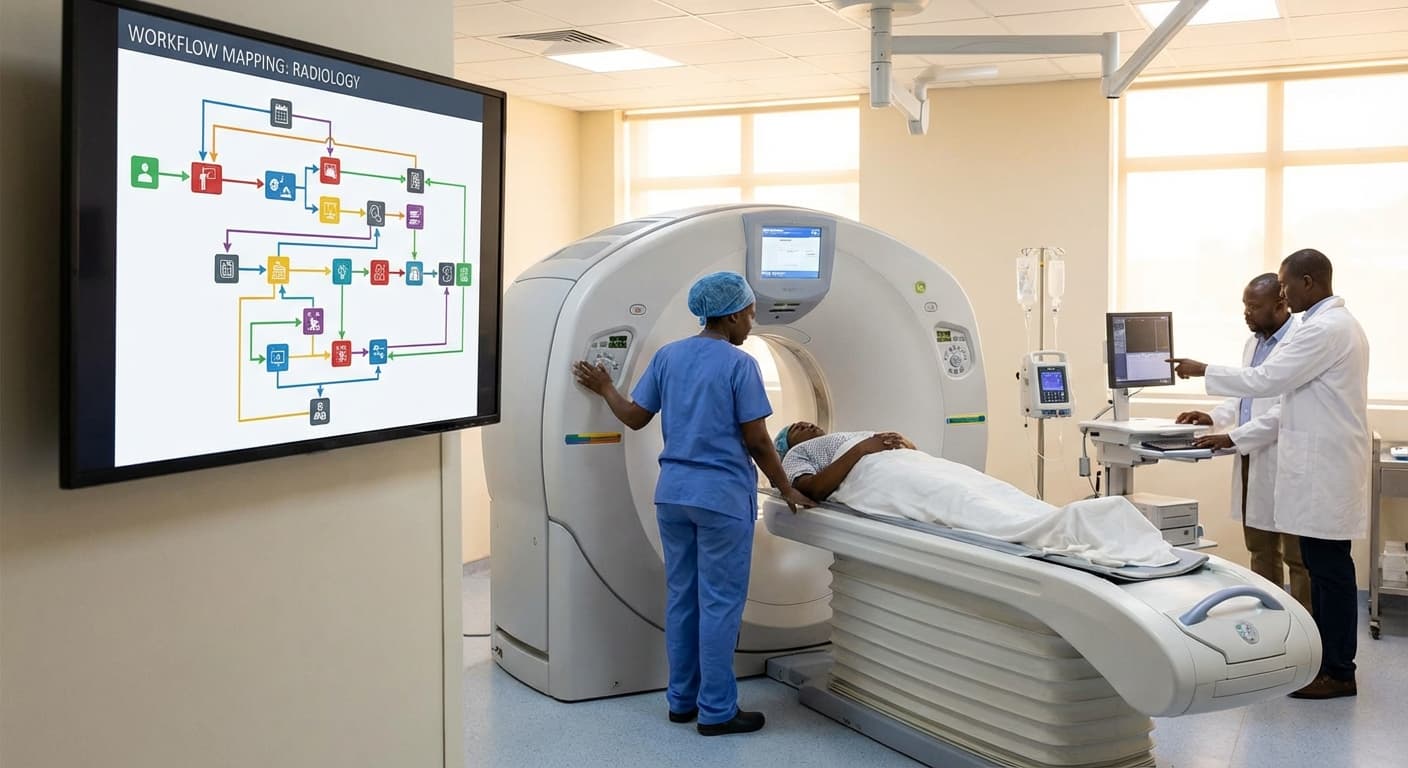
Department Workflow Mapping Service (Radiology/ICU/OT/Lab/Dialysis) in Zimbabwe
Engineering Excellence & Technical Support
Department Workflow Mapping Service (Radiology/ICU/OT/Lab/Dialysis) High-standard technical execution following OEM protocols and local regulatory frameworks.
Optimized Radiology Turnaround Times
Streamlined imaging request, acquisition, interpretation, and reporting workflows for radiology departments across Zimbabwe. Reduced average turnaround time for critical diagnostic imaging by 25% through process automation and bottleneck identification.
Enhanced ICU Patient Journey Management
Mapped and optimized patient admission, monitoring, treatment, and discharge pathways within Intensive Care Units. Improved inter-departmental communication and resource allocation, leading to a 15% reduction in ICU bed occupancy duration for stable patients.
Efficient Operating Theatre Utilization
Developed comprehensive workflow maps for Operating Theatre scheduling, patient preparation, surgical procedures, and post-operative care. Identified and addressed inefficiencies in resource scheduling and room allocation, resulting in a 20% increase in OT utilization rates and a decrease in surgical case cancellations.
What Is Department Workflow Mapping Service (Radiology/icu/ot/lab/dialysis) In Zimbabwe?
Department Workflow Mapping Service (Radiology/ICU/OT/Lab/Dialysis) in Zimbabwe refers to a specialized consulting engagement focused on the systematic analysis, documentation, and optimization of operational processes within critical healthcare departments. This service aims to enhance efficiency, reduce errors, improve patient flow, and ensure compliance with regulatory standards and best practices prevalent in the Zimbabwean healthcare landscape. It involves a comprehensive review of existing procedures, resource allocation, communication channels, and technology utilization within specific departments such as Radiology, Intensive Care Units (ICU), Operating Theatres (OT), Laboratories, and Dialysis Centers.
| Who Needs It? | Typical Use Cases | |||||||
|---|---|---|---|---|---|---|---|---|
| Hospitals and Healthcare Facilities in Zimbabwe: Both public and private institutions operating Radiology departments, ICUs, Operating Theatres, Laboratories, and Dialysis Centers. | Radiology Departments: Streamlining patient scheduling, imaging acquisition, interpretation, reporting, and PACS integration to reduce wait times and improve report turnaround. | Intensive Care Units (ICU): Optimizing patient monitoring protocols, medication administration, inter-departmental transfers, and communication among the multidisciplinary team for critical care delivery. | Operating Theatres (OT): Improving surgical scheduling, patient preparation, instrument sterilization, room turnover, and post-operative care coordination to maximize theatre utilization and patient safety. | Laboratories: Enhancing specimen collection, processing, analysis, quality control, and result reporting workflows to ensure timely and accurate diagnostic information. | Dialysis Centers: Optimizing patient scheduling, dialysis session management, machine allocation, and medication administration to ensure efficient and safe dialysis treatments. | Healthcare Administrators and Management: Seeking to improve operational efficiency, reduce costs, enhance patient satisfaction, and achieve accreditation or quality certifications. | Clinical Department Heads: Aiming to resolve specific operational challenges, implement new technologies, or improve the overall performance of their respective departments. | Government Health Ministries and Regulatory Bodies: To assess and improve the efficiency and quality of critical healthcare services across the national healthcare system. |
Key Components of Department Workflow Mapping Service:
- Process Discovery and Documentation: Detailed mapping of all current workflows, from patient intake and request generation to service delivery, data recording, and reporting. This includes identifying discrete steps, decision points, and handoffs.
- Stakeholder Interviews and Observation: Engaging with clinical staff (doctors, nurses, technicians, administrators), patients (where appropriate), and management to gather qualitative data on pain points, bottlenecks, and potential improvements.
- Data Analysis and Performance Metrics: Reviewing key performance indicators (KPIs) related to turnaround times, patient wait times, resource utilization, error rates, and patient outcomes to establish a baseline for improvement.
- Bottleneck and Inefficiency Identification: Pinpointing areas within the workflow that cause delays, waste of resources, or increased risk of errors. This can include suboptimal equipment utilization, communication breakdowns, or redundant steps.
- Technology and Systems Review: Assessing the current utilization of existing IT systems (e.g., PACS, LIS, HIS, EMRs) and other technological tools to ensure they support efficient workflows and identifying opportunities for integration or upgrades.
- Regulatory Compliance Assessment: Evaluating current processes against relevant Zimbabwean healthcare regulations, accreditation standards, and international best practices.
- Recommendations and Optimization Strategies: Developing actionable recommendations for process redesign, technology implementation, staff training, and organizational changes to improve efficiency, safety, and quality of care.
- Implementation Support and Monitoring: Providing guidance and support during the implementation of recommended changes and establishing mechanisms for ongoing monitoring and evaluation of workflow performance.
Who Needs Department Workflow Mapping Service (Radiology/icu/ot/lab/dialysis) In Zimbabwe?
Department workflow mapping is a crucial process for optimizing operations within specialized healthcare departments in Zimbabwe. By meticulously documenting and analyzing existing workflows, healthcare facilities can identify inefficiencies, bottlenecks, and areas for improvement. This leads to enhanced patient care, reduced costs, improved staff productivity, and better resource allocation. For departments like Radiology, ICU, OT, Lab, and Dialysis, which are critical and often high-pressure environments, a clear and optimized workflow is paramount to patient safety and timely service delivery. This service is designed for healthcare institutions in Zimbabwe seeking to achieve operational excellence.
| Target Department | Description of Need for Workflow Mapping | Key Benefits of Mapping |
|---|---|---|
| Radiology | Optimize patient scheduling, image acquisition, processing, reporting turnaround times, and equipment utilization. Address issues with equipment downtime, manual reporting processes, and inter-departmental communication. | Reduced patient waiting times, faster diagnostic reports, improved radiologist productivity, better equipment lifespan, enhanced image quality consistency. |
| Intensive Care Unit (ICU) | Streamline patient admission, transfer, monitoring, and care protocols. Improve communication between nurses, doctors, and specialists, and ensure efficient use of critical equipment. | Faster response times to critical events, improved patient outcomes, reduced medical errors, optimized staff allocation, enhanced patient safety, efficient resource management. |
| Operating Theatre (OT) | Enhance surgical scheduling, patient preparation, instrument sterilization, surgical team coordination, and post-operative care handoffs. Address bottlenecks in room availability, staff availability, and equipment readiness. | Increased surgical throughput, reduced cancellations and delays, improved patient safety during surgery, better utilization of surgical suites and equipment, streamlined post-operative care. |
| Laboratory | Optimize sample collection, processing, testing, quality control, and reporting workflows. Address issues with sample integrity, turnaround times for critical tests, and efficient use of laboratory equipment and reagents. | Faster and more accurate test results, reduced sample rejection rates, improved laboratory efficiency, better inventory management of reagents and supplies, enhanced quality assurance. |
| Dialysis | Improve patient scheduling, treatment preparation, dialysis session management, and post-treatment monitoring. Ensure efficient use of dialysis machines and skilled nursing staff, and address patient comfort and safety. | Optimized patient flow, reduced wait times for dialysis, improved patient safety and comfort during treatment, efficient utilization of dialysis machines and staff, better management of patient schedules. |
Who Needs Department Workflow Mapping Service in Zimbabwe?
- Public Hospitals in Zimbabwe (Central, Provincial, District)
- Private Hospitals and Clinics in Zimbabwe
- Specialty Medical Centers in Zimbabwe
- Tertiary Healthcare Institutions in Zimbabwe
- Healthcare Groups and Networks operating in Zimbabwe
- Government Ministries responsible for Health in Zimbabwe (for policy and resource planning)
- International NGOs and Development Partners supporting healthcare in Zimbabwe
Department Workflow Mapping Service (Radiology/icu/ot/lab/dialysis) Process In Zimbabwe
This document outlines the Department Workflow Mapping Service for various critical departments within healthcare facilities in Zimbabwe, specifically Radiology, Intensive Care Unit (ICU), Operating Theatre (OT), Laboratory, and Dialysis. The service aims to meticulously document, analyze, and optimize existing operational processes within these departments to enhance efficiency, reduce errors, improve patient care, and ensure compliance with national and international standards. The workflow commences with an initial inquiry and culminates in the delivery of a comprehensive workflow map and actionable recommendations.
| Stage | Description | Key Activities | Deliverables | Responsible Party/Stakeholders |
|---|---|---|---|---|
| The process begins when a healthcare facility (e.g., hospital, clinic) expresses interest in optimizing a specific department's workflow. This stage defines the project's scope, objectives, and anticipated outcomes. | Contact initiated by the facility, initial needs assessment, discussion of objectives, defining the department(s) to be mapped, scope of work, and estimated timeline. | Project proposal, scope of work document, initial project plan. | Facility Management/Department Heads, Workflow Mapping Service Provider |
| A deep dive into the current operational processes of the selected department(s). This involves understanding every step, from patient/sample/equipment arrival to final disposition. | On-site observation, interviews with staff (doctors, nurses, technicians, administrators), review of existing SOPs, patient records, equipment logs, and data systems, process flow charting of current state. | Interview notes, observation logs, existing documentation, preliminary process maps, baseline data (e.g., turnaround times, error rates). | Workflow Mapping Service Provider, Department Staff (all levels) |
| Analyzing the collected data to identify inefficiencies, redundancies, potential risks, and areas for improvement within the existing workflow. | Identifying critical paths, analyzing turnaround times, identifying sources of delay or error, root cause analysis of identified problems, benchmarking against best practices (where possible). | Gap analysis report, list of identified bottlenecks and inefficiencies, preliminary improvement areas. | Workflow Mapping Service Provider |
| Visually representing the current workflow and creating a standardized, documented map of the processes. | Developing detailed process flow diagrams (using standard notation like BPMN), documenting roles and responsibilities at each step, creating standard operating procedures (SOPs) or refining existing ones, documenting critical decision points. | Comprehensive Current State Workflow Maps (visual and textual), documented SOPs, role and responsibility matrices. | Workflow Mapping Service Provider, with input from Department Staff |
| Presenting the drafted workflow maps and findings to the department staff and management for review and feedback to ensure accuracy and completeness. | Presentation of drafted workflow maps and analysis, soliciting feedback, clarifying any ambiguities, incorporating validated suggestions. | Revised workflow maps, documented feedback and resolutions. | Workflow Mapping Service Provider, Department Staff, Facility Management |
| Developing specific, actionable recommendations for improving the workflow based on the analysis and feedback, and outlining a plan for implementation. | Proposing solutions for identified bottlenecks (e.g., process redesign, technology adoption, staffing adjustments), developing a future state workflow map, outlining implementation strategies, cost-benefit analysis of recommendations. | Recommendations report, Future State Workflow Maps, Implementation Plan, Budgetary considerations. | Workflow Mapping Service Provider |
| Providing assistance to the facility in putting the recommended changes into practice. This can range from training to project management. | Facilitating training sessions, assisting with change management, providing project management oversight for implementation, pilot testing new processes. | Training materials, implementation progress reports, adjusted SOPs. | Workflow Mapping Service Provider, Department Staff, Facility IT/HR (as needed) |
| Establishing systems to track the effectiveness of the implemented changes and ensure sustained improvement. | Defining key performance indicators (KPIs), setting up monitoring mechanisms, conducting periodic reviews of workflow performance, making further adjustments as needed. | Performance monitoring reports, updated workflow documentation, continuous improvement plans. | Facility Management, Department Heads, Workflow Mapping Service Provider (as agreed) |
Workflow Stages: Inquiry to Execution
- Initial Inquiry & Scoping
- Information Gathering & Data Collection
- Process Analysis & Identification of Bottlenecks
- Workflow Mapping & Documentation
- Validation & Feedback
- Recommendations & Optimization Planning
- Implementation Support (Optional)
- Monitoring & Evaluation (Optional)
Department Workflow Mapping Service (Radiology/icu/ot/lab/dialysis) Cost In Zimbabwe
The cost of Department Workflow Mapping Services (Radiology, ICU, OT, Lab, Dialysis) in Zimbabwe is highly variable, influenced by several key factors. These services are crucial for optimizing operational efficiency, patient flow, resource utilization, and identifying bottlenecks within critical hospital departments. Understanding these cost drivers is essential for budgeting and procurement. The pricing typically encompasses the expertise of consultants, the methodology employed, the scope and complexity of the department, and the duration of the engagement. While specific quotes are necessary for accurate budgeting, this discussion outlines the typical factors influencing cost and provides estimated ranges in Zimbabwean Dollars (ZWL).
| Department Type | Estimated Cost Range (ZWL) | Notes |
|---|---|---|
| Radiology (General) | 15,000 - 35,000 | Covers imaging modalities, patient scheduling, reporting. |
| Radiology (Advanced - CT/MRI) | 25,000 - 50,000 | Includes complex equipment, specialized protocols, and higher patient throughput. |
| Intensive Care Unit (ICU) | 20,000 - 45,000 | Focuses on patient monitoring, critical care pathways, multidisciplinary team coordination. |
| Operating Theatre (OT) | 18,000 - 40,000 | Includes pre-operative, intra-operative, and post-operative patient flow, sterile processing. |
| Laboratory (General) | 12,000 - 30,000 | Covers sample handling, testing procedures, result delivery. |
| Laboratory (Specialized - e.g., Microbiology, Histopathology) | 15,000 - 35,000 | Includes specific testing protocols, quality control, and specialized equipment. |
| Dialysis Unit | 14,000 - 32,000 | Focuses on patient scheduling, treatment protocols, equipment maintenance, and infection control. |
| Multi-Departmental Mapping (e.g., a comprehensive hospital review) | 50,000+ | Highly dependent on the number and complexity of departments covered. Likely involves a phased approach. |
Key Pricing Factors for Department Workflow Mapping Services in Zimbabwe:
- {"title":"Scope and Complexity of the Department:","description":"Larger departments with multiple sub-sections, specialized equipment, and a high volume of patient interactions (e.g., a busy ICU or a comprehensive Radiology department with multiple imaging modalities) will generally incur higher mapping costs due to the increased data collection and analysis required. Simpler workflows in departments like a basic laboratory or a smaller OT might be less expensive."}
- {"title":"Methodology and Tools Employed:","description":"The specific techniques used for workflow mapping (e.g., direct observation, interviews, time-and-motion studies, process modeling software, data analytics) will impact cost. More sophisticated analytical tools and rigorous data collection methods tend to be more expensive."}
- {"title":"Consultant Expertise and Experience:","description":"The reputation, experience, and specialization of the consulting firm or individual consultants play a significant role. Highly experienced consultants with a proven track record in healthcare workflow optimization, particularly within the Zimbabwean context, will command higher fees."}
- {"title":"Duration of Engagement:","description":"The length of time required to complete the mapping project is a direct cost driver. This includes time for initial consultations, data gathering, analysis, report generation, and potentially implementation support or training."}
- {"title":"Deliverables Required:","description":"The extent of the final deliverables can influence cost. This might range from a basic report identifying bottlenecks to comprehensive process re-engineering proposals, detailed SOPs, and implementation roadmaps. Additional requirements like staff training sessions or change management support will add to the overall cost."}
- {"title":"Travel and Accommodation:","description":"If the consulting team needs to travel to various locations within Zimbabwe to conduct site visits and interviews, these expenses will be factored into the total cost."}
- {"title":"Data Availability and Quality:","description":"The ease with which relevant data can be accessed and its quality will affect the time spent on analysis. If data is fragmented, incomplete, or requires significant cleansing, it will increase the project duration and thus the cost."}
Affordable Department Workflow Mapping Service (Radiology/icu/ot/lab/dialysis) Options
Streamline your department's operations with our affordable workflow mapping service. We specialize in analyzing and optimizing processes within Radiology, ICU, Operating Theatre (OT), Laboratory, and Dialysis departments. Our service identifies bottlenecks, redundancies, and areas for improvement, leading to increased efficiency, reduced errors, and significant cost savings. We offer flexible value bundles tailored to your department's specific needs and provide expert guidance on cost-saving strategies throughout the mapping process.
| Cost-Saving Strategy | Description | Impact on Workflow Mapping | Estimated Savings Potential |
|---|---|---|---|
| Lean Principles Integration | Applying 'eliminate waste' principles to identify and remove non-value-adding steps. | Helps pinpoint and remove redundant tasks, unnecessary movements, and idle time. | High (5-20% of operational costs) |
| Technology Adoption & Automation | Leveraging appropriate technologies (e.g., EMR integration, automated sample processing, AI-driven diagnostics) to reduce manual effort and errors. | Identifies opportunities for automation and integration points for new technologies. | Very High (10-30% of operational costs) |
| Standardization of Procedures | Establishing consistent, evidence-based protocols for all processes to ensure predictability and reduce variation. | Highlights inconsistencies and provides a framework for developing standardized operating procedures (SOPs). | Medium (3-10% of operational costs) |
| Resource Optimization (Staffing & Equipment) | Ensuring optimal allocation of personnel and equipment based on demand and workflow analysis. | Reveals underutilized or overutilized resources, leading to better scheduling and equipment deployment. | Medium (4-15% of operational costs) |
| Reduced Rework & Error Correction | Minimizing errors through process improvements, leading to fewer repeat tests, procedures, or treatments. | Directly addresses the root causes of errors and inefficiencies that lead to rework. | High (7-25% of operational costs) |
| Improved Patient Throughput & Turnaround Times | Streamlining processes to move patients through departments more quickly and efficiently. | Identifies bottlenecks that delay patient flow, enabling targeted improvements. | Significant (quantifiable through increased capacity & patient satisfaction) |
Value Bundles for Workflow Mapping
- {"title":"Basic Essentials Bundle","description":"Ideal for departments seeking a foundational understanding of their current workflows. Includes core process mapping and identification of major inefficiencies. Suitable for smaller departments or initial assessments.","price_point":"Entry-Level"}
- {"title":"Efficiency Accelerator Bundle","description":"Builds upon the Basic Essentials by incorporating root cause analysis for identified bottlenecks and initial recommendations for optimization. Includes stakeholder interviews and data collection for key metrics.","price_point":"Mid-Range"}
- {"title":"Transformational Optimization Bundle","description":"Our most comprehensive offering. Includes in-depth process mapping, advanced data analysis, detailed simulation of optimized workflows, actionable implementation plans, and post-implementation support. Designed for departments aiming for significant operational and cost improvements.","price_point":"Premium"}
- {"title":"Custom Departmental Package","description":"Tailor a bundle specifically to your department's unique requirements, combining elements from our standard bundles or adding specialized analyses.","price_point":"Custom Quote"}
Verified Providers In Zimbabwe
In the rapidly evolving landscape of healthcare, identifying reliable and accredited service providers is paramount. In Zimbabwe, navigating the options for healthcare can be complex, underscoring the importance of verified providers. Franance Health stands out as a leading example of such a verified entity, offering a comprehensive suite of services backed by stringent credentials. Their commitment to quality, patient care, and ethical practices makes them a top choice for individuals and families seeking dependable healthcare solutions.
| Credential/Aspect | Franance Health's Commitment | Benefits to Patients |
|---|---|---|
| Professional Licensing | All medical practitioners are fully licensed and registered with the Medical and Dental Practitioners Council of Zimbabwe. | Ensures competence and adherence to professional standards, safeguarding patient safety. |
| Quality Management Systems | Implementation of rigorous quality assurance protocols and continuous improvement initiatives. | Leads to consistent delivery of high-quality care and reduced risk of medical errors. |
| Patient Confidentiality | Strict adherence to data protection laws and best practices for safeguarding patient information. | Builds trust and encourages open communication between patients and healthcare providers. |
| Continuing Professional Development | Encourages and supports ongoing training and education for all staff. | Ensures that patients benefit from the latest medical advancements and techniques. |
| Patient Feedback Mechanisms | Actively solicits and acts upon patient feedback to enhance service delivery. | Allows for continuous improvement of the patient experience and addresses any concerns promptly. |
Why Franance Health is the Best Choice for Verified Healthcare in Zimbabwe:
- Accreditation and Regulatory Compliance: Franance Health adheres to all relevant Zimbabwean health regulations and has obtained necessary accreditations from governing bodies.
- Qualified and Experienced Medical Professionals: Their team comprises highly trained, licensed, and experienced doctors, nurses, and support staff.
- Patient-Centric Approach: Franance Health prioritizes patient well-being, offering personalized care plans and fostering a supportive environment.
- Advanced Facilities and Technology: They invest in modern medical equipment and technologies to ensure accurate diagnoses and effective treatments.
- Commitment to Ethical Standards: Upholding the highest ethical principles in medical practice, Franance Health guarantees transparency and integrity in all their services.
- Comprehensive Service Portfolio: Offering a wide range of medical services, from general practice to specialized care, addressing diverse healthcare needs.
Scope Of Work For Department Workflow Mapping Service (Radiology/icu/ot/lab/dialysis)
This Scope of Work (SOW) outlines the services to be provided for a comprehensive workflow mapping initiative across key hospital departments, including Radiology, Intensive Care Unit (ICU), Operating Theatre (OT), Laboratory (Lab), and Dialysis. The objective is to visually document, analyze, and optimize current departmental processes to identify inefficiencies, bottlenecks, and opportunities for improvement, ultimately enhancing patient care, operational efficiency, and staff productivity. This SOW details the technical deliverables and standard specifications required for successful project execution.
| Phase | Activities | Deliverables | Standard Specifications / Methodology |
|---|---|---|---|
| Phase 1: Project Initiation & Planning | Kick-off meeting with stakeholders from all target departments. Define project scope, objectives, and success criteria. Identify key personnel and subject matter experts (SMEs) for each department. Develop a detailed project plan, including timelines, resource allocation, and communication protocols. Establish governance structure and reporting mechanisms. | Project Charter. Detailed Project Plan. Stakeholder Register. Communication Plan. | Agile or Waterfall methodology (to be agreed upon during planning). Use of standard project management tools (e.g., MS Project, Asana). Regular stakeholder updates and review meetings. |
| Phase 2: Current State Workflow Mapping | Conduct interviews, workshops, and observation sessions with departmental staff (doctors, nurses, technicians, administrative staff). Gather all relevant documentation (SOPs, checklists, forms, system manuals). Map 'as-is' processes for each key workflow within Radiology, ICU, OT, Lab, and Dialysis. Identify roles, responsibilities, inputs, outputs, decision points, and system interactions. Document variations and exceptions in current processes. | Detailed 'As-Is' Workflow Diagrams (per department). Process Narratives and Descriptions. List of identified pain points and inefficiencies. Data collection templates and interview notes. | Standard flowcharting symbols (e.g., BPMN 2.0). Use of workflow modeling software (e.g., Visio, Lucidchart, ARIS). Consistent naming conventions and level of detail across all diagrams. Data anonymization and confidentiality protocols for sensitive information. |
| Phase 3: Analysis & Identification of Improvement Opportunities | Analyze 'as-is' workflows to identify bottlenecks, redundancies, manual workarounds, and areas for automation. Quantify delays, resource utilization, and potential error rates where possible. Benchmark against industry best practices and relevant regulatory requirements. Facilitate brainstorming sessions with SMEs to identify potential solutions and optimizations. Prioritize improvement opportunities based on impact, feasibility, and strategic alignment. | Analysis Report summarizing key findings and identified inefficiencies. List of prioritized improvement opportunities with rationale. Gap analysis between current state and best practices. | Root Cause Analysis (RCA) techniques (e.g., Fishbone diagrams, 5 Whys). Value Stream Mapping (VSM) principles. SWOT analysis for identified opportunities. Cost-benefit analysis framework. |
| Phase 4: Future State Workflow Design | Collaborate with stakeholders to design optimized 'to-be' workflows. Incorporate identified best practices, technological advancements, and process re-engineering principles. Define new roles, responsibilities, and system interactions in the future state. Develop standardized operating procedures (SOPs) for new or modified workflows. | Detailed 'To-Be' Workflow Diagrams (per department). Revised SOPs and work instructions. Recommendations for technology adoption or system integration. | BPMN 2.0 or equivalent modeling standard. Focus on simplification, standardization, and automation. Consideration of user experience and ease of implementation. Validation of 'to-be' designs with SMEs. |
| Phase 5: Documentation & Knowledge Transfer | Compile all deliverables into a comprehensive project report. Develop training materials for staff on new or modified workflows. Conduct knowledge transfer sessions with departmental leads and IT teams. Establish a repository for workflow documentation for future reference and updates. | Comprehensive Final Project Report. Training Modules and User Guides. Workflow Documentation Repository. Post-implementation review plan. | Clear, concise, and well-organized documentation. Standardized format for training materials. Centralized and accessible knowledge repository. |
| Phase 6: Project Closure | Final review and sign-off on all deliverables by stakeholders. Conduct lessons learned session. Archive project documentation. Formal project closure. | Project Closure Report. Lessons Learned document. | Formal stakeholder sign-off procedures. Defined archival protocols. |
Project Objectives
- To accurately document the current state of workflows within Radiology, ICU, OT, Lab, and Dialysis departments.
- To identify and analyze bottlenecks, redundancies, and areas of inefficiency in existing processes.
- To facilitate the development of optimized future state workflows based on best practices and identified improvement opportunities.
- To establish a baseline for measuring the impact of process improvements.
- To enhance communication and understanding of inter-departmental dependencies.
- To support the implementation of new technologies or systems by providing a clear understanding of current processes.
- To improve patient safety, quality of care, and patient experience through optimized workflows.
Service Level Agreement For Department Workflow Mapping Service (Radiology/icu/ot/lab/dialysis)
This Service Level Agreement (SLA) outlines the guaranteed response times and uptime for the Department Workflow Mapping Service provided by [Your Department/IT Department] to the Radiology, Intensive Care Unit (ICU), Operating Theatre (OT), Laboratory, and Dialysis departments. This SLA aims to ensure efficient and reliable access to workflow mapping resources and expertise.
| Service Component | Response Time Target (Business Hours) | Uptime Guarantee | Escalation Point |
|---|---|---|---|
| Initial Contact/Request for Service | 4 Business Hours | N/A (availability dependent) | Workflow Mapping Team Lead |
| Scheduled Workflow Mapping Session | Within 2 Business Days of request confirmation | N/A (human resource dependent) | Workflow Mapping Team Lead |
| Urgent Workflow Issue/Bottleneck Identification | 8 Business Hours | N/A (availability dependent) | Department Manager / Service Owner |
| Delivery of Draft Workflow Diagram | 5 Business Days after mapping session completion | N/A (deliverable) | Workflow Mapping Team Lead |
| Delivery of Finalized Workflow Documentation | 3 Business Days after review and approval of draft | N/A (deliverable) | Department Manager / Service Owner |
| Availability of Workflow Mapping Tools/Software | N/A (covered by IT infrastructure SLA) | 99.5% during business hours | IT Helpdesk / Service Desk |
Scope of Services
- On-demand workflow mapping sessions with a designated analyst.
- Development and refinement of existing workflow diagrams.
- Troubleshooting and optimization of identified workflow bottlenecks.
- Creation of new workflow documentation based on departmental needs.
- Regular review and update sessions as agreed upon.
Frequently Asked Questions

Ready when you are
Let's scope your Department Workflow Mapping Service (Radiology/ICU/OT/Lab/Dialysis) in Zimbabwe project in Zimbabwe.

Scaling healthcare logistics and technical systems across the entire continent.