
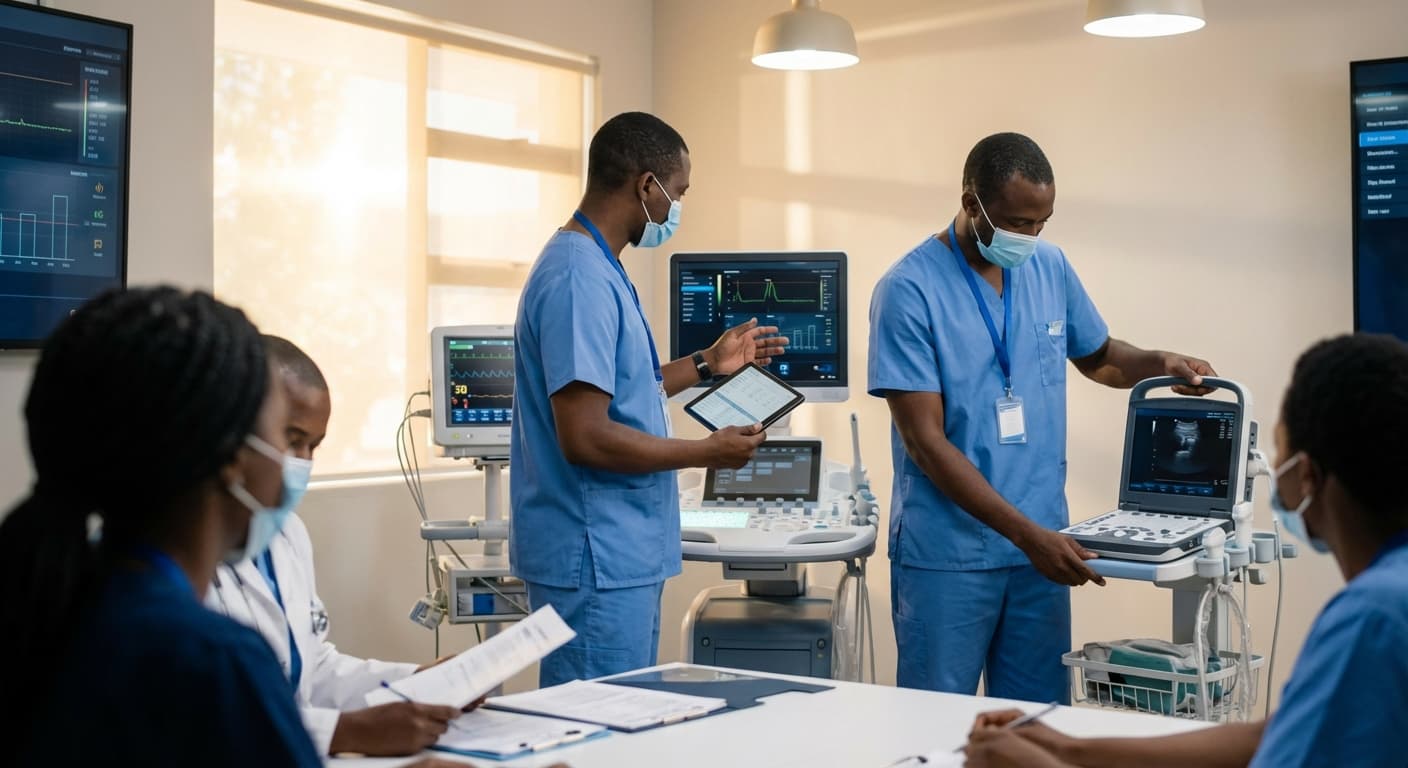
Clinical Needs Assessment for Medical Equipment in Zimbabwe
Engineering Excellence & Technical Support
Clinical Needs Assessment for Medical Equipment High-standard technical execution following OEM protocols and local regulatory frameworks.
Optimized Medical Equipment Distribution
Leveraging data analytics to map existing medical equipment distribution networks and identify critical gaps in rural and underserved areas of Zimbabwe. This ensures efficient allocation and timely delivery of essential medical devices, improving healthcare access.
Prioritizing Diagnostic Imaging Upgrades
Conducting a comprehensive needs assessment for diagnostic imaging equipment, focusing on areas with high prevalence of communicable and non-communicable diseases. This includes evaluating existing infrastructure, training needs, and maintenance capacity to recommend targeted upgrades for improved patient diagnosis and treatment outcomes.
Sustainable Workforce Training & Equipment Integration
Integrating medical equipment needs assessment with healthcare workforce training programs. This involves identifying equipment requiring specialized skills for operation and maintenance, and developing training modules to ensure local healthcare professionals can effectively utilize and sustain the newly acquired medical technologies.
What Is Clinical Needs Assessment For Medical Equipment In Zimbabwe?
A Clinical Needs Assessment for Medical Equipment in Zimbabwe is a systematic process of evaluating the current and future requirements for medical devices and technologies within healthcare facilities and the broader health system. This assessment aims to identify gaps between existing equipment provision and the clinical needs of the patient population, considering disease prevalence, treatment protocols, service delivery models, and technological advancements. The objective is to ensure that healthcare providers have access to appropriate, functional, and cost-effective equipment that supports high-quality patient care and optimizes resource allocation.
| Who Needs This Service? | Typical Use Cases | |||||
|---|---|---|---|---|---|---|
| Ministry of Health and Child Care (MoHCC): To inform national health strategies, develop procurement plans, and allocate resources effectively across the public health sector. | Public Hospitals and Clinics: To identify specific equipment shortages or obsolescence in district, provincial, and central hospitals, as well as primary healthcare centers. | Non-Governmental Organizations (NGOs) and Faith-Based Organizations (FBOs): To ensure their health facilities are adequately equipped to deliver their mandated services and align with national health priorities. | International Development Partners and Donors: To guide their funding decisions and ensure investments in medical equipment are aligned with identified needs and contribute to sustainable health system strengthening. | Medical Equipment Suppliers and Manufacturers: To understand market demands, identify opportunities for product placement, and tailor their offerings to the specific requirements of the Zimbabwean healthcare landscape. | Healthcare Facility Administrators and Management: To justify budget requests for new equipment, optimize existing asset utilization, and improve operational efficiency. | |
| Establishing New Healthcare Facilities or Services: Determining the essential equipment required for a newly built clinic, a specialized unit (e.g., ICU, oncology), or a new diagnostic service. | Upgrading Existing Facilities: Assessing the need for replacing outdated or malfunctioning equipment with modern, more efficient technologies to improve diagnostic accuracy and treatment outcomes. | Responding to Public Health Emergencies: Identifying critical equipment needs during outbreaks of diseases (e.g., ventilators for respiratory illnesses, diagnostic kits for emerging pathogens). | Implementing New Treatment Protocols or Guidelines: Ensuring that healthcare providers have the necessary equipment to deliver new or updated treatment regimens. | Optimizing Equipment Utilization and Maintenance: Assessing whether existing equipment is being used effectively and identifying needs for improved maintenance and repair infrastructure to reduce downtime. | Planning for Infrastructure Development Projects: Integrating equipment needs into the design and construction of new health facilities or the renovation of existing ones. | Supporting Health Sector Reforms: Aligning equipment provision with broader policy changes aimed at improving access, equity, and quality of healthcare services. |
Key Components of a Clinical Needs Assessment
- Infrastructure Evaluation: Assessing the existing physical infrastructure (e.g., power supply, space, environmental controls) to determine compatibility with new or upgraded equipment.
- Clinical Workflow Analysis: Understanding the current patient pathways and medical procedures to identify how equipment integrates into and impacts clinical operations.
- Equipment Inventory and Condition Assessment: Cataloging existing medical equipment, its functional status, maintenance history, and utilization rates.
- Gap Analysis: Comparing the existing equipment inventory against established clinical guidelines, national health priorities, and projected service demands.
- Technology Scouting and Validation: Identifying and evaluating emerging medical technologies relevant to the identified needs, considering factors like efficacy, safety, and sustainability.
- Cost-Benefit Analysis: Evaluating the economic implications of acquiring new equipment, including purchase price, installation, training, maintenance, and operational costs.
- Training and Human Resource Needs: Assessing the availability of skilled personnel to operate, maintain, and repair the required equipment.
- Procurement and Logistics Planning: Developing strategies for the acquisition, delivery, installation, and commissioning of identified equipment.
- Sustainability and Maintenance Strategy: Developing plans for ongoing maintenance, calibration, repair, and eventual replacement of equipment.
Who Needs Clinical Needs Assessment For Medical Equipment In Zimbabwe?
Clinical needs assessments for medical equipment in Zimbabwe are crucial for ensuring that healthcare facilities have the right tools to provide effective patient care. These assessments identify gaps in existing equipment, prioritize essential needs based on disease prevalence and service demands, and inform procurement decisions. This strategic approach maximizes the impact of limited healthcare budgets and improves health outcomes across the nation.
| Department/Unit | Key Equipment Needs Examples | Purpose of Assessment |
|---|---|---|
| Maternity & Neonatal | Incubators, phototherapy units, ultrasound machines, fetal monitors | Improving maternal and child survival rates. |
| Surgical Units | Anesthesia machines, surgical lights, operating tables, laparoscopic equipment, sterilization units | Enhancing surgical capacity and reducing post-operative complications. |
| Emergency Departments | Defibrillators, ventilators, trauma kits, diagnostic imaging (portable X-ray) | Providing immediate life-saving interventions. |
| Diagnostic Imaging (Radiology) | X-ray machines, CT scanners, MRI scanners, ultrasound machines | Facilitating accurate diagnosis of a wide range of conditions. |
| Laboratory Services | Microscopes, centrifuges, automated analyzers (hematology, biochemistry) | Enabling accurate and efficient diagnostic testing. |
| Cardiology | ECG machines, echocardiography machines, stress test equipment | Diagnosing and managing cardiovascular diseases. |
| Oncology | Chemotherapy infusion pumps, radiation therapy equipment (if applicable), diagnostic tools | Supporting cancer treatment and management. |
| Infectious Diseases Control | Biosafety cabinets, PCR machines, rapid diagnostic test kits | Facilitating diagnosis, monitoring, and control of infectious outbreaks. |
| Outpatient Departments | Diagnostic tools (e.g., otoscopes, ophthalmoscopes), basic examination equipment | Providing essential primary healthcare services. |
| Pediatrics | Pediatric ventilators, specialized infant monitoring equipment, age-appropriate diagnostic tools | Addressing the specific health needs of children. |
Target Customers and Departments for Clinical Needs Assessment in Zimbabwe
- {"title":"Public Hospitals","description":"These are the primary healthcare providers, often facing the greatest resource constraints. A thorough needs assessment helps them optimize their limited budgets and prioritize equipment for critical departments."}
- {"title":"Rural Health Centers","description":"Often serving remote populations with limited access to advanced medical facilities, these centers require essential equipment for primary care, maternal health, and basic diagnostics. Needs assessments ensure they receive appropriate tools for their context."}
- {"title":"District Hospitals","description":"These act as referral centers for rural clinics and provide a broader range of services. Needs assessments help them acquire equipment to support more complex procedures and diagnostics."}
- {"title":"Provincial and Central Hospitals","description":"As apex institutions, these hospitals offer specialized care. Needs assessments are vital for identifying and acquiring advanced diagnostic and therapeutic equipment to support super-specialties and tertiary care."}
- {"title":"University Teaching Hospitals","description":"These facilities are involved in training healthcare professionals and conducting research. Needs assessments are critical for ensuring they have state-of-the-art equipment for both clinical practice and educational purposes."}
- {"title":"Mission Hospitals","description":"These privately run, often non-profit, hospitals play a significant role in healthcare delivery, particularly in underserved areas. Needs assessments help them align their equipment with community health needs."}
- {"title":"Non-Governmental Organizations (NGOs) Involved in Healthcare","description":"Many NGOs implement health programs and provide medical services. Needs assessments ensure their interventions are supported by appropriate and functional equipment."}
- {"title":"Ministry of Health and Child Care (MoHCC)","description":"The MoHCC, as the governing body, utilizes needs assessments to inform national health strategies, resource allocation, and procurement plans to address country-wide equipment deficits."}
Clinical Needs Assessment For Medical Equipment Process In Zimbabwe
This document outlines the workflow for a Clinical Needs Assessment for Medical Equipment in Zimbabwe, detailing the process from initial inquiry to the final execution and deployment of assessed equipment. The process is designed to ensure that medical equipment procurement aligns with the identified clinical needs of healthcare facilities across the country, promoting efficient resource allocation and improved patient care. It involves multiple stakeholders, including healthcare professionals, Ministry of Health and Child Care (MoHCC) officials, and equipment suppliers.
| Stage | Key Activities | Responsible Parties (Examples) | Key Deliverables |
|---|---|---|---|
| Inquiry and Initiation | Formal request, initial review, assignment of assessor | Healthcare Facility, MoHCC | Approved assessment request |
| Planning and Preparation | Define scope, form team, develop tools, logistics | Assessment Team Lead, MoHCC | Assessment plan, data collection tools |
| Data Collection | Site visits, interviews, observations, inventory, needs documentation | Assessment Team, Healthcare Staff | Raw data, equipment inventory, documented needs |
| Data Analysis and Needs Prioritization | Gap analysis, needs prioritization, specification development, cost estimation | Assessment Team, Clinical Advisors | Prioritized list of equipment, technical specifications, cost estimates |
| Report Generation and Validation | Draft report, stakeholder review, final report | Assessment Team Lead, MoHCC, Stakeholders | Clinical Needs Assessment Report |
| Procurement Planning and Approval | Procurement strategy, budget allocation, tender document prep | MoHCC Procurement Unit, MoHCC Finance | Approved procurement plan, tender documents |
| Procurement and Supply | Tendering, supplier evaluation, contract award, order placement, logistics | MoHCC Procurement Unit, Suppliers | Procured medical equipment |
| Installation, Training, and Commissioning | Installation, testing, commissioning, user training | Suppliers, Biomedical Engineers, Healthcare Staff | Installed and commissioned equipment, trained users |
| Post-Installation Monitoring and Evaluation | Performance monitoring, maintenance, impact assessment, feedback | MoHCC, Healthcare Facility Management, Biomedical Engineers | Monitoring reports, user feedback, evaluation findings |
Workflow Stages and Key Activities
- {"title":"Stage 1: Inquiry and Initiation","activities":["Initiating Entity: A healthcare facility, district health office, provincial health directorate, or the MoHCC can initiate the assessment.","Formal Request: A formal written request is submitted to the designated authority (e.g., MoHCC's Medical Engineering Department or Procurement Unit), clearly stating the purpose and scope of the assessment.","Initial Review: The request is reviewed to confirm its legitimacy, alignment with national health priorities, and availability of resources for the assessment.","Assignment: If approved, a lead assessor or assessment team is assigned."],"description":"The process begins with a formal request or identification of a need for a clinical needs assessment."}
- {"title":"Stage 2: Planning and Preparation","activities":["Define Scope and Objectives: Clearly delineate the specific healthcare facility/department, types of clinical services, and the intended outcomes of the assessment.","Form Assessment Team: Assemble a multidisciplinary team with expertise in clinical practice, medical engineering, health economics, and procurement.","Develop Assessment Tools: Create or adapt standardized questionnaires, checklists, interview guides, and data collection forms tailored to the Zimbabwean context.","Identify Stakeholders: Map all relevant stakeholders, including clinicians, hospital administrators, biomedical engineers, technicians, and potential suppliers.","Logistics and Scheduling: Plan travel arrangements, meeting schedules, and timelines for data collection, analysis, and reporting."],"description":"Detailed planning and preparation are crucial for a comprehensive and effective assessment."}
- {"title":"Stage 3: Data Collection","activities":["Site Visits: The assessment team conducts site visits to the designated healthcare facility.","Interviews and Consultations: Engage in in-depth interviews with clinical staff (doctors, nurses, specialists), department heads, and administrators to understand their current practices, challenges, and unmet needs.","Observation: Observe clinical workflows, patient management processes, and the existing use of medical equipment.","Inventory and Condition Assessment: Document the existing medical equipment inventory, including its age, condition, functionality, and maintenance status.","Needs Documentation: Record specific equipment requirements, including technical specifications, quantity, and essential features based on clinical protocols and patient demographics.","Ancillary Needs: Assess the need for consumables, spare parts, training, and maintenance support for proposed equipment."],"description":"This stage involves gathering information directly from the healthcare facility."}
- {"title":"Stage 4: Data Analysis and Needs Prioritization","activities":["Data Consolidation: Aggregate and organize all collected data from interviews, observations, and inventory checks.","Gap Analysis: Compare current equipment and capabilities with the identified clinical needs and national standards.","Needs Prioritization: Rank the identified equipment needs based on factors such as impact on patient care, urgency, cost-effectiveness, alignment with national health strategies, and availability of resources.","Technical Specification Development: Develop detailed technical specifications for each prioritized piece of equipment, ensuring compatibility and interoperability.","Cost Estimation: Estimate the procurement, installation, training, and ongoing maintenance costs for the prioritized equipment."],"description":"Collected data is analyzed to identify and prioritize equipment needs."}
- {"title":"Stage 5: Report Generation and Validation","activities":["Draft Report: Prepare a detailed draft report outlining the assessment methodology, findings, identified needs, prioritized list of equipment, technical specifications, and cost estimations.","Stakeholder Review: Circulate the draft report to key stakeholders (including the initiating facility, MoHCC, and potentially clinical advisory groups) for feedback and validation.","Refinement: Incorporate feedback and make necessary revisions to the report.","Final Report: Produce the final Clinical Needs Assessment Report."],"description":"A comprehensive report is compiled and validated by stakeholders."}
- {"title":"Stage 6: Procurement Planning and Approval","activities":["Procurement Strategy: Develop a procurement strategy based on the prioritized needs and available budget, considering national procurement guidelines and policies.","Budget Allocation: Secure budget allocation for the procurement of the assessed equipment.","Formal Approval: Obtain formal approval for the procurement from the relevant authorities within the MoHCC.","Tender Document Preparation: Prepare tender documents or request for proposals (RFPs) based on the detailed technical specifications in the assessment report."],"description":"The needs assessment report forms the basis for procurement decisions."}
- {"title":"Stage 7: Procurement and Supply","activities":["Tendering Process: Initiate the tendering process according to government procurement regulations.","Supplier Evaluation: Evaluate bids received from suppliers based on technical compliance, price, and after-sales support.","Contract Award: Award the contract to the selected supplier(s).","Order Placement: Place orders for the medical equipment.","Quality Assurance: Ensure quality control during manufacturing and before shipment.","Logistics and Importation: Manage transportation, customs clearance, and importation of the equipment."],"description":"The process of acquiring the medical equipment."}
- {"title":"Stage 8: Installation, Training, and Commissioning","activities":["Site Preparation: Ensure the healthcare facility is ready for installation (e.g., power supply, space, ventilation).","Delivery and Unpacking: Receive and inspect the delivered equipment.","Installation: Professional installation of the medical equipment by the supplier or authorized technicians.","Testing and Commissioning: Rigorous testing and commissioning of the equipment to ensure it functions according to specifications.","User Training: Comprehensive training for clinical and technical staff on the operation, maintenance, and troubleshooting of the new equipment.","Handover: Formal handover of the installed and commissioned equipment to the healthcare facility."],"description":"Ensuring the equipment is operational and staff are trained."}
- {"title":"Stage 9: Post-Installation Monitoring and Evaluation","activities":["Performance Monitoring: Monitor the performance and utilization of the newly acquired equipment over time.","Maintenance and Support: Ensure ongoing maintenance and technical support are provided as per contractual agreements.","Impact Assessment: Evaluate the impact of the new equipment on clinical outcomes, patient flow, and staff efficiency.","Feedback Collection: Gather feedback from users on the equipment's performance and any challenges encountered.","Future Planning: Use lessons learned from this cycle to inform future needs assessments and equipment planning."],"description":"Assessing the effectiveness and utilization of the acquired equipment."}
Clinical Needs Assessment For Medical Equipment Cost In Zimbabwe
This document outlines a clinical needs assessment for medical equipment costs in Zimbabwe, focusing on the pricing factors and typical ranges in the local currency (Zimbabwean Dollar - ZWL). The availability and cost of medical equipment are critical for effective healthcare delivery, and understanding these elements is crucial for resource allocation, procurement strategies, and ensuring access to essential medical technologies.
Several factors significantly influence the pricing of medical equipment in Zimbabwe:
- Importation Costs: A substantial portion of medical equipment is imported, leading to added expenses for shipping, customs duties, import taxes, and other port charges. Fluctuations in international exchange rates against the ZWL directly impact these costs.
- Supplier Margins: Local distributors and suppliers factor in their operational costs, including warehousing, marketing, sales, and profit margins, which are added to the landed cost of the equipment.
- Brand and Quality: Reputable international brands known for reliability and advanced features generally command higher prices than generic or less established brands. The quality of materials, technological sophistication, and expected lifespan of the equipment are key determinants.
- Technology and Features: Equipment with the latest technological advancements, sophisticated diagnostic capabilities, or specialized functionalities will be more expensive than simpler or older models.
- Warranty and After-Sales Support: Comprehensive warranties, installation services, training for clinical staff, and ongoing maintenance contracts contribute to the overall price. The availability and responsiveness of local technical support are also factored in.
- Economic Stability and Inflation: Zimbabwe has experienced periods of high inflation, which can lead to rapid price increases. The volatility of the ZWL and its purchasing power significantly affect the local currency price of imported goods.
- Supply Chain Disruptions: Global and local supply chain issues can impact availability and lead to price surges due to scarcity.
- Volume Discounts: Larger procurement orders from government or large healthcare institutions may benefit from bulk purchase discounts offered by suppliers.
- Currency Exchange Rate Volatility: As the ZWL's exchange rate against major currencies like the USD fluctuates, the ZWL price of imported equipment will also change, often on a daily basis. This makes long-term budgeting challenging.
| Equipment Category | Typical ZWL Price Range (Indicative) | Notes |
|---|---|---|
| Basic Diagnostic Equipment (e.g., Stethoscope, Sphygmomanometer, Otoscope) | 15,000 - 75,000 ZWL | Prices vary by brand and build quality. Digital versions are pricier. |
| Benchtop Laboratory Equipment (e.g., Centrifuge, Microscope) | 150,000 - 750,000 ZWL | Factors include magnification, features, and automation level. High-end research microscopes can exceed this. |
| Basic Ultrasound Machines | 800,000 - 3,000,000 ZWL | Entry-level to mid-range portable units. Higher-end machines for specialized imaging are significantly more. |
| Patient Monitors (Basic) | 750,000 - 2,500,000 ZWL | Monitors basic vital signs. Advanced units with more parameters and connectivity are costlier. |
| Electrocardiogram (ECG) Machines (12-Lead) | 500,000 - 1,500,000 ZWL | Portable and basic digital units. High-resolution and interpretation features increase price. |
| X-ray Machines (Mobile/Basic Stationary) | 5,000,000 - 25,000,000 ZWL | Entry-level to mid-range systems. Digital radiography (DR) and advanced imaging suites are substantially more expensive. |
| Anesthesia Machines (Basic) | 7,000,000 - 30,000,000 ZWL | Basic mechanical ventilators and vaporizers. Modern electronic anesthesia workstations are much higher. |
| Operating Theatre Lights (Basic) | 1,000,000 - 5,000,000 ZWL | Standard LED or halogen lights. More advanced, articulated, and integrated systems are pricier. |
| Hospital Beds (Manual) | 200,000 - 750,000 ZWL | Basic manual adjustment beds. Electric beds are significantly more expensive. |
| Defibrillators (Manual/AED) | 500,000 - 2,000,000 ZWL | Automated External Defibrillators (AEDs) are on the lower end, while manual defibrillators with pacing are more. |
| Ventilators (Basic ICU) | 8,000,000 - 40,000,000 ZWL | Entry-level to mid-range ICU ventilators. Advanced modes and portability increase cost. |
| Dental Chairs (Basic Set) | 2,000,000 - 8,000,000 ZWL | Includes chair, light, and basic instrument delivery. Integrated units and advanced features are higher. |
Key Pricing Factors for Medical Equipment in Zimbabwe
- Importation Costs (shipping, duties, taxes)
- Supplier Margins and Operational Expenses
- Brand Reputation and Equipment Quality
- Technological Sophistication and Features
- Warranty, Installation, and After-Sales Support
- Economic Stability and Inflationary Pressures
- Supply Chain Reliability and Availability
- Volume of Procurement (Discounts)
- Currency Exchange Rate Fluctuations (ZWL vs. USD/EUR)
Affordable Clinical Needs Assessment For Medical Equipment Options
This document outlines a strategy for conducting affordable clinical needs assessments for medical equipment, focusing on identifying the most suitable and cost-effective options. A thorough assessment is crucial to ensure that procured equipment aligns with clinical requirements, enhances patient care, and represents a sound financial investment. We will explore the concept of 'value bundles' and detail various cost-saving strategies applicable throughout the equipment acquisition and lifecycle.
| Concept | Explanation | Cost-Saving Application |
|---|---|---|
| Value Bundles | A package of medical equipment and related services (e.g., installation, training, maintenance, consumables) offered by a vendor at a potentially discounted price compared to purchasing items individually. These bundles are designed to streamline procurement and ensure compatibility and support. | Negotiate bundled pricing to achieve economies of scale. Ensure the bundle includes all essential components and services to avoid hidden costs. Consider the long-term value and support provided within the bundle. |
| Strategic Sourcing | Developing and implementing a plan to procure goods and services efficiently and cost-effectively. This involves market research, supplier relationship management, and understanding global supply chains. | Research multiple vendors and compare pricing and offerings. Leverage group purchasing organizations (GPOs) for aggregated buying power. Explore refurbished or remanufactured equipment options where appropriate and safe. |
| Leasing vs. Purchasing | Evaluating whether to lease equipment for a fixed period or purchase it outright. Leasing can offer lower upfront costs and easier upgrades, while purchasing provides long-term asset ownership. | Analyze the TCO for both leasing and purchasing over the expected lifecycle of the equipment. Leasing can be advantageous for rapidly evolving technologies or when capital is limited. Consider residual values and end-of-lease buy-out options. |
| Standardization | Implementing a policy to standardize on specific models or brands of medical equipment across the organization. This reduces training complexity, simplifies maintenance, and can lead to volume discounts. | Negotiate better pricing with vendors for committing to higher volumes of standardized equipment. Reduce inventory costs for spare parts and consumables. |
| Preventive Maintenance Programs | Regularly scheduled maintenance to identify and address potential issues before they lead to breakdowns or performance degradation. | Negotiate favorable terms for multi-year service contracts. In-house maintenance teams can reduce reliance on external service providers, but require investment in training and tools. Early detection of issues minimizes costly emergency repairs. |
| Technology Assessment | Evaluating the technological maturity and projected obsolescence of equipment. Choosing equipment with proven reliability and a longer lifespan can be more cost-effective. | Avoid cutting-edge technologies that may have unproven reliability or quickly become obsolete. Focus on robust, proven solutions that meet current and near-future clinical needs. |
| Consumables Management | Efficiently managing the procurement and utilization of disposable supplies associated with medical equipment. | Negotiate bulk discounts on frequently used consumables. Implement inventory management systems to prevent overstocking and expiry. Explore alternative, cost-effective consumable suppliers. |
Key Components of an Affordable Clinical Needs Assessment
- Define Clear Clinical Objectives: What specific patient care needs will the equipment address? What are the desired clinical outcomes?
- Assess Current Infrastructure and Workflow: How will the new equipment integrate with existing systems and processes? Are there any limitations or requirements?
- Identify User Requirements: Engage clinicians and end-users to understand their operational needs, ease of use, and desired features.
- Evaluate Technical Specifications: Determine the essential technical capabilities and performance standards required for effective operation.
- Consider Future Scalability and Adaptability: Will the equipment support future growth or changes in clinical practice?
- Analyze Total Cost of Ownership (TCO): Beyond the initial purchase price, include costs for installation, training, maintenance, consumables, and eventual decommissioning.
Verified Providers In Zimbabwe
In Zimbabwe's evolving healthcare landscape, identifying trusted and verified providers is paramount for individuals seeking quality medical services. Franance Health stands out as a beacon of reliability, offering a comprehensive network of credentialed healthcare professionals and facilities. Their rigorous verification process ensures that every provider within their network meets stringent standards of expertise, ethical conduct, and patient care. This commitment to quality makes Franance Health the optimal choice for those prioritizing their well-being and seeking assurance in their healthcare decisions.
| Provider Type | Key Verification Criteria | Franance Health Assurance |
|---|---|---|
| Doctors (General & Specialist) | Medical Council of Zimbabwe registration, specialist board certification, peer review, evidence of continuous professional development. | Guaranteed to be licensed, qualified, and practicing ethically. Access to top-tier medical expertise. |
| Hospitals & Clinics | Ministry of Health and Child Care accreditation, adherence to safety protocols, infection control standards, patient satisfaction metrics. | Ensures facilities meet high standards for safety, hygiene, and quality of care delivery. |
| Pharmacies | Pharmaceutical Society of Zimbabwe license, proper storage and dispensing practices, authentic medication sourcing. | Confirms access to genuine medications dispensed by regulated and trustworthy pharmacies. |
| Diagnostic Laboratories | Accreditation from relevant health authorities, adherence to quality control procedures, qualified laboratory personnel. | Provides confidence in the accuracy and reliability of diagnostic test results. |
Why Franance Health is Your Best Choice for Verified Providers:
- Rigorous Credentialing Process: Franance Health meticulously vets all healthcare providers, ensuring they possess valid licenses, relevant qualifications, and a proven track record of excellence.
- Commitment to Patient Safety and Quality: Their verification standards are designed to prioritize patient well-being, focusing on providers who adhere to best practices and ethical guidelines.
- Comprehensive Network: Access a wide array of specialists, general practitioners, and medical facilities across Zimbabwe, all pre-verified for your peace of mind.
- Transparency and Trust: Franance Health fosters transparency in healthcare by clearly indicating verified providers, empowering you to make informed choices.
- Enhanced Healthcare Experience: By choosing Franance Health, you gain access to a network of professionals dedicated to delivering superior care and a positive patient experience.
Scope Of Work For Clinical Needs Assessment For Medical Equipment
This Scope of Work (SOW) outlines the requirements for a comprehensive clinical needs assessment for medical equipment. The assessment will identify current and future equipment requirements across various clinical departments, considering factors such as patient volume, technological advancements, clinical pathways, and budget constraints. The objective is to ensure the procurement and deployment of appropriate, high-quality medical equipment that aligns with the organization's strategic goals and enhances patient care delivery. This SOW details the technical deliverables, standard specifications, and the process for conducting the assessment.
| Deliverable | Description | Format/Standard Specification | Timeline (Indicative) |
|---|---|---|---|
| Current State Equipment Inventory Report | Detailed list of all existing medical equipment, including make, model, serial number, purchase date, warranty status, condition, and location. | Microsoft Excel or CSV format. Standardized data fields for all entries. | Week 2 |
| Clinical Workflow Analysis Documentation | Detailed documentation of current clinical workflows for key patient journeys within each department, highlighting equipment usage and potential bottlenecks. | Microsoft Word or PDF. Includes process maps, flowcharts, and narrative descriptions. | Week 4 |
| Unmet Needs and Gaps Report | Identification and prioritization of clinical needs not currently met by existing equipment, or areas where equipment is outdated or insufficient. | Microsoft Word or PDF. Categorized by department and clinical impact. | Week 6 |
| Future Equipment Requirements & Recommendations | A comprehensive list of recommended new equipment, including justification, estimated costs, and alignment with strategic objectives. | Microsoft Word or PDF. Includes technical specifications (see below), estimated budget, and ROI analysis (where applicable). | Week 8 |
| Prioritized Procurement Plan | A phased plan for equipment acquisition, considering budget, clinical urgency, and implementation complexity. | Microsoft Excel or Project file. Includes procurement timelines, vendor evaluation criteria, and resource allocation. | Week 9 |
| Risk Assessment & Mitigation Strategy | Identification of potential risks associated with new equipment procurement and deployment, along with proposed mitigation strategies. | Microsoft Word or PDF. Includes identified risks, likelihood, impact, and mitigation actions. | Week 9 |
| Final Needs Assessment Report | A consolidated report encompassing all findings, recommendations, and proposed plans. This report will serve as the foundation for the medical equipment procurement strategy. | Microsoft Word or PDF. Includes an executive summary, detailed findings, recommendations, and appendices. | Week 10 |
Key Areas of the Clinical Needs Assessment
- Departmental equipment inventory and condition assessment.
- Analysis of current clinical workflows and patient pathways.
- Identification of unmet clinical needs and opportunities for improvement.
- Evaluation of technological trends and potential impact on equipment selection.
- Assessment of maintenance, service, and training requirements.
- Development of prioritized equipment procurement plans.
- Consideration of interoperability and integration with existing IT systems.
Service Level Agreement For Clinical Needs Assessment For Medical Equipment
This Service Level Agreement (SLA) outlines the commitment for providing Clinical Needs Assessments for Medical Equipment, focusing on response times for new assessments and critical issues, and guaranteeing uptime for the assessment platform. This SLA applies to all parties involved in the clinical needs assessment process for medical equipment.
| Service Area | Metric | Target | Measurement Frequency | Escalation Path |
|---|---|---|---|---|
| Clinical Needs Assessment Process | Response Time for New Assessment Requests | Within 4 business hours | Daily | Assigned Project Manager > Service Delivery Manager |
| Clinical Needs Assessment Process | Response Time for Critical Issues (e.g., system outage impacting assessment delivery) | Within 1 business hour | As needed (upon identification) | Assigned Project Manager > Service Delivery Manager > Director of Clinical Operations |
| Assessment Platform | Platform Uptime Guarantee | 99.5% during business hours (Monday-Friday, 8 AM - 6 PM local time) | Monthly | Service Delivery Manager > IT Operations Manager |
| Clinical Needs Assessment Process | Assessment Completion Target | 10 business days from request submission (for standard assessments) | Per assessment | Assigned Project Manager > Service Delivery Manager |
Key Performance Indicators (KPIs)
- Response Time for New Assessment Requests: The time taken to acknowledge and begin processing a new request for a clinical needs assessment.
- Response Time for Critical Issues: The time taken to acknowledge and begin addressing urgent issues impacting the assessment process.
- Platform Uptime Guarantee: The percentage of time the clinical needs assessment platform is available and operational.
- Assessment Completion Target: The targeted timeframe for delivering a completed clinical needs assessment report.
Frequently Asked Questions

Ready when you are
Let's scope your Clinical Needs Assessment for Medical Equipment in Zimbabwe project in Zimbabwe.

Scaling healthcare logistics and technical systems across the entire continent.