
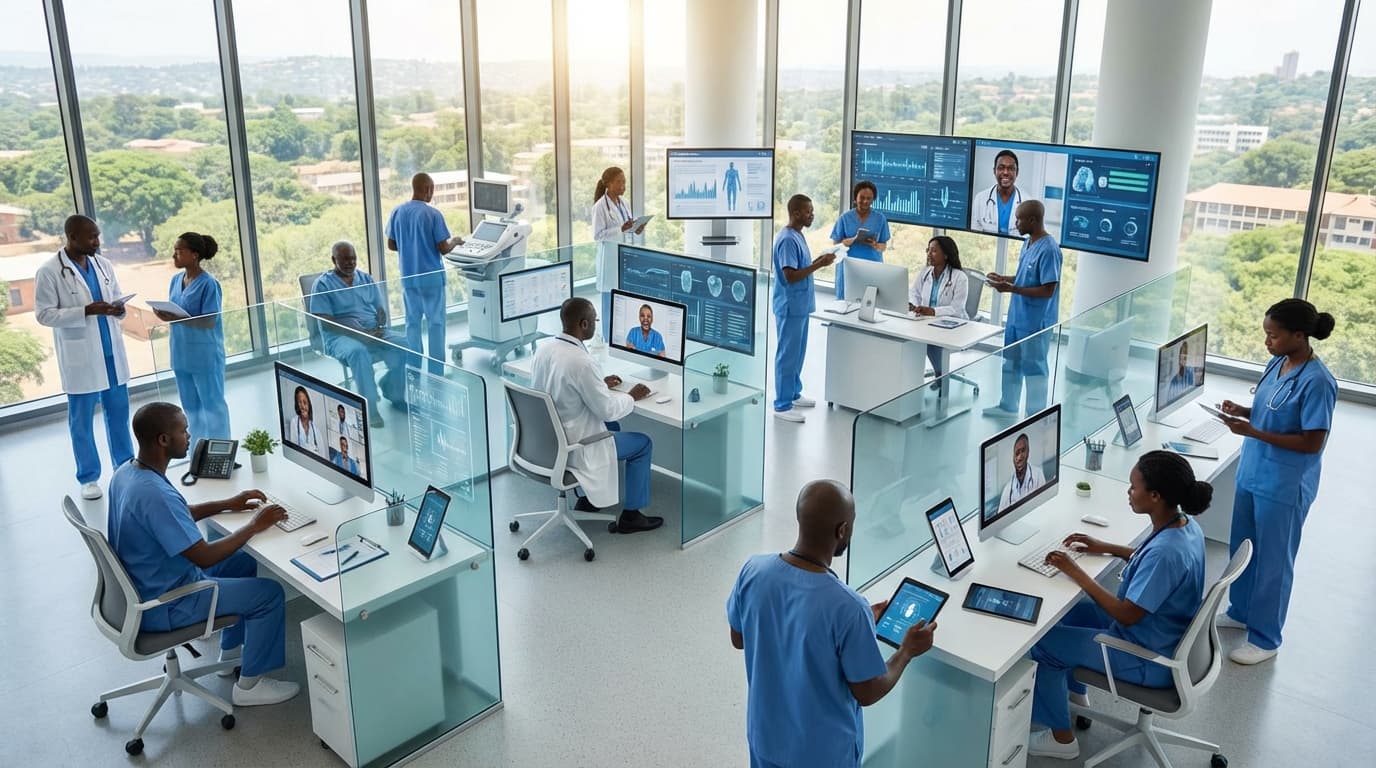
PACS/RIS Migration & Integration in Zimbabwe
Engineering Excellence & Technical Support
Data migration, interoperability and workflow integration for imaging IT. High-standard technical execution following OEM protocols and local regulatory frameworks.
Cloud-Native PACS/RIS Deployment
Successfully migrated and integrated legacy PACS/RIS systems to a scalable, cloud-native infrastructure. This offers enhanced accessibility, improved data security, and reduced on-premise hardware dependency for healthcare providers across Zimbabwe, enabling remote access and collaboration.
Seamless Interoperability with Existing EMRs
Designed and implemented robust APIs for seamless integration of the new PACS/RIS solution with existing Electronic Medical Record (EMR) systems in Zimbabwean hospitals. This ensures a unified patient data experience, reducing data silos and improving diagnostic workflow efficiency.
Secure Data Migration & Archiving Strategy
Developed and executed a comprehensive strategy for secure, high-volume data migration from disparate PACS/RIS systems to a centralized, modern data repository. Implemented advanced encryption and access control mechanisms to ensure compliance with data privacy regulations and long-term data integrity for Zimbabwean healthcare institutions.
What Is Pacs/ris Migration & Integration In Zimbabwe?
PACS/RIS migration and integration in Zimbabwe refers to the strategic process of transferring and interconnecting Picture Archiving and Communication Systems (PACS) and Radiology Information Systems (RIS) within or between healthcare facilities. This service is crucial for modernizing radiology workflows, enhancing data accessibility, and improving diagnostic efficiency. It involves the careful planning, execution, and validation of moving existing radiology images, reports, and associated patient data from legacy PACS/RIS platforms to new, often cloud-based or unified systems. Integration focuses on establishing seamless interoperability between different PACS/RIS instances, or with other healthcare IT systems like Electronic Health Records (EHRs), enabling a holistic view of patient information. This process is technically complex, requiring expertise in data extraction, transformation, loading (ETL), network configuration, security protocols, and adherence to international healthcare interoperability standards (e.g., DICOM, HL7).
| Who Needs PACS/RIS Migration & Integration? | Typical Use Cases | ||||||
|---|---|---|---|---|---|---|---|
| Hospitals and Clinics: Healthcare facilities of all sizes implementing new PACS/RIS or upgrading existing ones to enhance diagnostic imaging services. | Consolidating Multiple Radiology Departments: Merging or centralizing radiology operations from several branches or facilities into a single, unified PACS/RIS for improved management and access. | Transitioning to Cloud-Based Solutions: Migrating on-premise PACS/RIS to cloud platforms for scalability, accessibility, and reduced IT infrastructure overhead. | Integrating with Electronic Health Records (EHRs): Enabling bidirectional data flow between PACS/RIS and EHR systems, providing clinicians with immediate access to images and reports within the patient's electronic chart. | Upgrading Legacy Systems: Replacing outdated PACS/RIS that are no longer supported, lack modern features, or pose security risks. | Regional Health Networks: Establishing interconnected PACS/RIS across a network of facilities to facilitate remote consultations, specialist access, and efficient patient referral. | Improving Disaster Recovery & Business Continuity: Implementing robust data backup and redundancy strategies as part of the migration process. | Research and Teaching Institutions: Centralizing imaging data for research purposes and for training radiology residents and medical students. |
Key Components of PACS/RIS Migration & Integration
- Data Extraction & Cleansing: Extracting data from existing PACS/RIS, including DICOM images, metadata, and HL7-compliant reports, and cleansing it to ensure accuracy and consistency for migration.
- System Architecture Design: Designing the target PACS/RIS architecture, considering scalability, security, performance, and compliance requirements.
- Data Transformation & Loading (ETL): Transforming extracted data into the format required by the new system and loading it efficiently and accurately.
- Interoperability Configuration: Configuring interfaces using standards like DICOM and HL7 to ensure seamless communication between the new PACS/RIS and other clinical systems (e.g., EHR, LIS).
- Workflow Redesign: Optimizing radiology workflows within the new system to leverage its capabilities and improve operational efficiency.
- Testing & Validation: Rigorous testing of all migrated data, system functionality, and integrated interfaces to ensure data integrity and system performance.
- User Training & Support: Providing comprehensive training to radiology staff and IT personnel on the new system and offering ongoing support.
- Security & Compliance Implementation: Ensuring robust security measures are in place and that the system adheres to relevant data privacy regulations (e.g., HIPAA, POPI Act where applicable).
Who Needs Pacs/ris Migration & Integration In Zimbabwe?
In Zimbabwe's evolving healthcare landscape, the need for modern Picture Archiving and Communication Systems (PACS) and Radiology Information Systems (RIS) is becoming increasingly critical. These integrated systems are essential for streamlining radiology workflows, improving diagnostic accuracy, enhancing patient care, and facilitating seamless data management. The adoption and integration of PACS/RIS are not merely technological upgrades but strategic imperatives for healthcare providers aiming to compete, innovate, and deliver superior healthcare services.
| Target Customer Type | Relevant Departments | Key Needs & Benefits of PACS/RIS |
|---|---|---|
| Public Hospitals | Radiology Department, IT Department, Administration, Clinical Departments (e.g., Cardiology, Oncology, Neurology) | Improved patient flow, reduced waiting times for reports, enhanced collaboration between radiologists and clinicians, better resource allocation, compliance with national health standards, potential for remote consultations/second opinions. |
| Private Hospitals | Radiology Department, IT Department, Administration, Patient Services, Billing Department | Competitive advantage through advanced imaging services, increased operational efficiency, enhanced patient satisfaction, secure data storage and retrieval, simplified billing processes, integration with Electronic Health Records (EHRs). |
| Specialized Diagnostic Imaging Centers | Radiology Department, Technologists, Radiologists, IT Department, Management | Optimized workflow for high-volume imaging, efficient image sharing and storage, robust reporting tools, scalability to accommodate growing patient loads, potential for sub-specialty reporting. |
| Clinics with Advanced Imaging Capabilities | Radiology Department (if applicable), Referring Physicians, IT Support | Seamless integration of imaging into patient care pathways, faster turnaround for diagnostic reports, improved communication with referring physicians, ability to offer a wider range of diagnostic services. |
| Research Institutions | Research Departments, Radiology Department, IT Department, Data Analysts | Facilitated access to anonymized imaging data for research, advanced image analysis tools, secure data archiving for longitudinal studies, potential for collaborative research projects with other institutions. |
| Government Health Ministries | Health Information Management, Public Health Surveillance, Policy Planning Departments | Centralized data for disease surveillance and public health monitoring, evidence-based policy making, resource planning and allocation for imaging services across the nation, potential for national-level quality assurance of radiology services. |
Who Needs PACS/RIS Migration & Integration in Zimbabwe?
- Hospitals (both public and private)
- Specialized Diagnostic Imaging Centers
- Clinics with advanced imaging capabilities
- Research Institutions utilizing medical imaging data
- Government Health Ministries (for data aggregation and policy making)
Pacs/ris Migration & Integration Process In Zimbabwe
This document outlines the typical workflow for a PACS/RIS migration and integration project within the Zimbabwean healthcare landscape. It covers the entire process from the initial inquiry from a healthcare facility to the successful execution and post-implementation support.
| Phase | Key Activities | Deliverables | Responsible Parties |
|---|---|---|---|
| Inquiry & Initial Contact | Express interest, gather preliminary info, introduce vendors | Initial meeting minutes, preliminary requirements list | Healthcare Facility, Vendor |
| Needs Assessment & Requirements Gathering | Analyze infrastructure, identify functionalities, define workflows, assess data | Detailed requirements document, gap analysis report | Healthcare Facility, Vendor |
| Solution Design & Vendor Selection | Propose solutions, evaluate proposals, conduct demos, negotiate contracts | Vendor proposal, signed contract, SLA | Vendor, Healthcare Facility |
| Project Planning & Kick-off | Develop project plan, allocate resources, establish communication | Project charter, detailed project plan, communication matrix | Project Managers (Facility & Vendor) |
| Infrastructure Preparation & Procurement | Install servers, network, power backup; configure network | Installed and configured hardware, stable network connectivity | IT Department (Facility), Vendor Technical Team |
| Software Installation & Configuration | Install PACS/RIS, configure settings, integrate modalities & hospital systems | Configured PACS/RIS software, functional DICOM & HL7 interfaces | Vendor Technical Team |
| Data Migration | Extract, cleanse, transform, validate, and migrate legacy data | Migrated and verified historical imaging and RIS data | Vendor Data Migration Team, Facility IT |
| Testing & Validation | Perform unit, integration, and UAT; validate workflows | Test reports, UAT sign-off, defect log | Vendor QA Team, End-Users (Facility), IT Department |
| Training & Capacity Building | Train radiologists, technologists, IT, administrators | Trained users, user manuals, training materials | Vendor Trainers, Facility IT Staff |
| Go-Live & Deployment | Cutover to new system, provide on-site support, monitor performance | Live PACS/RIS system, initial support logs | Vendor Implementation Team, Facility Operations Team |
| Post-Implementation Support & Optimization | Provide ongoing support, perform updates, monitor & optimize system | Support tickets resolved, system performance reports, optimization plan | Vendor Support Team, Facility IT Department |
PACS/RIS Migration & Integration Workflow
- 1. Inquiry & Initial Contact:
- Healthcare facility expresses interest in upgrading or implementing a PACS/RIS.
- Initial discussions to understand their current infrastructure, pain points, and desired outcomes.
- Gathering preliminary information on facility size, number of departments, imaging modalities, user base, and budget.
- Introduction to potential vendors or solution providers.
- 2. Needs Assessment & Requirements Gathering:
- Detailed analysis of the facility's existing IT infrastructure, network capabilities, and hardware.
- Identification of specific PACS/RIS functionalities required (e.g., reporting tools, AI integration, HL7 compatibility, interoperability with existing EMRs/HIS).
- Understanding existing workflows for radiology departments and how the new system will be integrated.
- Defining user roles and permissions.
- Assessing data migration needs (volume, format, complexity of legacy data).
- Identifying potential challenges and risks unique to the Zimbabwean context (e.g., internet connectivity, power stability, local IT expertise).
- 3. Solution Design & Vendor Selection:
- Based on the needs assessment, vendors propose tailored PACS/RIS solutions.
- Evaluation of proposals, including software features, hardware requirements, implementation plan, training, support, and cost.
- Demonstrations and site visits to reference facilities (if possible).
- Due diligence on vendor reputation, financial stability, and experience in similar projects.
- Negotiation of contracts, Service Level Agreements (SLAs), and pricing.
- 4. Project Planning & Kick-off:
- Formal project initiation with a dedicated project manager from both the vendor and the healthcare facility.
- Development of a detailed project plan, including timelines, milestones, resource allocation, and communication protocols.
- Establishing a steering committee or project oversight group.
- Initial project kick-off meeting to align all stakeholders on objectives and expectations.
- 5. Infrastructure Preparation & Procurement:
- Procuring and installing necessary hardware (servers, workstations, network equipment, storage).
- Ensuring robust and reliable internet connectivity, potentially involving satellite solutions or dedicated lines where feasible.
- Implementing backup power solutions (UPS, generators) to mitigate power outages.
- Network configuration and security hardening.
- 6. Software Installation & Configuration:
- Installation of the PACS and RIS software on procured servers and workstations.
- Configuration of system settings, user accounts, roles, and permissions.
- Integration with existing imaging modalities (CT, MRI, X-ray, Ultrasound) using DICOM standards.
- Setting up HL7 interfaces for communication with other hospital systems (HIS, EMR, LIS).
- Configuring reporting templates and workflow rules.
- 7. Data Migration:
- Extracting legacy data from old PACS/RIS or archives.
- Data cleansing, transformation, and validation to ensure compatibility with the new system.
- Performing test migrations to identify and resolve issues.
- Executing the full data migration, often in phases to minimize disruption.
- Verification of migrated data integrity.
- 8. Testing & Validation:
- Unit testing of individual components and functionalities.
- Integration testing to ensure seamless interaction between PACS, RIS, modalities, and other hospital systems.
- User Acceptance Testing (UAT) by end-users (radiologists, technicians, administrators) to validate workflows and functionality against requirements.
- Performance testing to ensure system responsiveness and stability under expected load.
- 9. Training & Capacity Building:
- Comprehensive training for all user groups (radiologists, technologists, IT staff, administrators).
- Training programs tailored to specific roles and responsibilities.
- Hands-on training sessions with real-world scenarios.
- Development of user manuals and documentation.
- Focus on training local IT personnel for ongoing support and maintenance.
- 10. Go-Live & Deployment:
- Phased or full cutover to the new PACS/RIS system.- Intensive on-site support from the vendor during the initial go-live period.- Continuous monitoring of system performance and user feedback.- Troubleshooting and immediate issue resolution.- 11. Post-Implementation Support & Optimization:
- Ongoing technical support and maintenance as per the SLA.- Regular system updates and patches.- Performance monitoring and optimization.- Refinement of workflows based on user feedback and operational experience.- Periodic system audits and reviews.- Continuous training for new staff and advanced features.- Evaluation of ROI and benefits realization.
Pacs/ris Migration & Integration Cost In Zimbabwe
Migrating and integrating a Picture Archiving and Communication System (PACS) and Radiology Information System (RIS) in Zimbabwe involves a complex set of costs influenced by various factors. These systems are crucial for modern healthcare institutions, enabling efficient storage, retrieval, and management of medical images and patient data, respectively. The pricing in Zimbabwe is subject to the prevailing economic conditions, currency fluctuations, and the specific requirements of the healthcare facility.
Key pricing factors include the size and complexity of the existing infrastructure, the volume of data to be migrated, the chosen vendor and their service offerings (on-premises vs. cloud-based), the level of customization required for workflows and reporting, the need for hardware upgrades (servers, workstations, network infrastructure), integration with existing Electronic Health Records (EHR) or Hospital Information Systems (HIS), and ongoing support and maintenance contracts. Import duties, local taxation, and the availability of skilled IT personnel for implementation and support also play a significant role.
Given the economic landscape in Zimbabwe, costs are often quoted in USD, with conversions to the local currency (Zimbabwean Dollar - ZWL) based on the prevailing interbank or parallel market rates, which can introduce considerable variability. Therefore, it's essential to obtain detailed quotes from multiple vendors and understand the currency conversion mechanisms used. The ranges provided below are estimates and can vary significantly.
| Cost Component | Estimated Range (USD) | Estimated Range (ZWL - Approximate Conversion) |
|---|---|---|
| Software Licensing (PACS/RIS) | $10,000 - $50,000+ | 3,600,000 - 18,000,000+ (at ~360 ZWL/USD) |
| Implementation & Customization Services | $5,000 - $30,000+ | 1,800,000 - 10,800,000+ (at ~360 ZWL/USD) |
| Data Migration Services | $3,000 - $20,000+ | 1,080,000 - 7,200,000+ (at ~360 ZWL/USD) |
| Hardware (Servers, Storage, Network) | $8,000 - $40,000+ | 2,880,000 - 14,400,000+ (at ~360 ZWL/USD) |
| Workstations & Diagnostic Monitors | $2,000 - $10,000+ per workstation | 720,000 - 3,600,000+ per workstation (at ~360 ZWL/USD) |
| Integration with EHR/HIS | $4,000 - $25,000+ | 1,440,000 - 9,000,000+ (at ~360 ZWL/USD) |
| Training | $2,000 - $10,000+ | 720,000 - 3,600,000+ (at ~360 ZWL/USD) |
| Annual Support & Maintenance | 15-25% of initial software cost annually | Varies based on annual software cost (at ~360 ZWL/USD) |
| Contingency (5-15%) | $3,000 - $20,000+ | 1,080,000 - 7,200,000+ (at ~360 ZWL/USD) |
| Total Estimated Project Cost (Small to Medium Facility) | $37,000 - $175,000+ | 13,320,000 - 63,000,000+ (at ~360 ZWL/USD) |
| Total Estimated Project Cost (Large Facility/Complex Needs) | $100,000 - $500,000+ | 36,000,000 - 180,000,000+ (at ~360 ZWL/USD) |
Key Pricing Factors for PACS/RIS Migration & Integration in Zimbabwe
- System Scope and Complexity: Number of departments, imaging modalities, and users.
- Data Migration Volume: Size of the existing image and data archive.
- Vendor Choice: Reputable international vs. local vendors, on-premises vs. cloud solutions.
- Customization Needs: Specific workflow adaptations, reporting templates, and integrations.
- Hardware Requirements: Servers, storage, network upgrades, workstations, and diagnostic monitors.
- Integration with Existing Systems: EHR/HIS, laboratory systems, billing systems.
- Training and Support: Initial user training, ongoing technical support, and maintenance.
- Implementation Services: Project management, installation, configuration, and testing.
- Licensing Model: Perpetual licenses vs. subscription-based (SaaS).
- Import Duties & Taxation: Applicable taxes and tariffs on imported hardware and software.
- Currency Fluctuations: Impact of ZWL volatility on USD-denominated costs.
- Local IT Expertise: Availability and cost of skilled personnel for implementation and maintenance.
Affordable Pacs/ris Migration & Integration Options
Migrating and integrating a Picture Archiving and Communication System (PACS) and Radiology Information System (RIS) can be a significant undertaking, but it doesn't have to break the bank. This document explores affordable PACS/RIS migration and integration options, focusing on value bundles and cost-saving strategies. By carefully planning and leveraging these approaches, healthcare organizations can achieve a seamless transition and optimize their imaging IT infrastructure without compromising on essential functionality or performance.
| Value Bundle Component | Description | Cost-Saving Strategy/Benefit |
|---|---|---|
| Core PACS Functionality Bundle | Includes essential image viewing, storage, retrieval, and basic manipulation tools for radiologists and referring physicians. | Focuses on core needs, avoiding unnecessary advanced features that inflate costs. Scalable to accommodate growth. |
| Integrated RIS Module | Combines patient scheduling, dictation, reporting, billing, and workflow management with PACS. Can be a modular add-on. | Streamlines operations, reduces manual data entry, and minimizes the need for separate systems, leading to administrative cost savings. |
| Basic Integration Services | Includes standard HL7 interfaces for EMR/EHR integration, basic modality worklist connectivity, and initial data migration assistance. | Covers essential interoperability without extensive custom development. Pre-built connectors reduce integration time and costs. |
| Cloud Hosting & Management | Offloads hardware acquisition, maintenance, and IT infrastructure management to a cloud provider. | Reduces capital expenditure, ongoing IT support costs, and provides predictable operational expenses. Offers scalability and disaster recovery. |
| Standard Training Package | Includes online resources, basic live training sessions, and user manuals for core functionalities. | Empowers users to adopt the system efficiently, reducing reliance on costly one-on-one support and minimizing errors. |
| Data Migration & Archiving Optimization | Services for migrating existing imaging data and implementing efficient archival strategies. | Reduces storage costs by identifying and archiving/deleting redundant or old data. Streamlines the migration process, minimizing downtime and associated costs. |
| Post-Implementation Support (Tiered) | Offers different levels of support based on organizational needs and budget, from essential troubleshooting to proactive monitoring. | Allows for cost control by selecting the appropriate support level. Tiered options prevent overspending on services not immediately required. |
Key Considerations for Affordable PACS/RIS Migration & Integration:
- Define Clear Project Scope and Requirements: Understanding your precise needs prevents scope creep, a major cost driver.
- Phased Migration Approach: Breaking down the migration into manageable stages can spread costs and minimize disruption.
- Leverage Cloud-Based Solutions: Often more cost-effective than on-premise hardware and maintenance.
- Consider Open-Source or Hybrid Models: Explore solutions that offer flexibility and reduce vendor lock-in.
- Prioritize Essential Features: Identify 'must-have' functionalities versus 'nice-to-have' to manage budget effectively.
- Negotiate Vendor Contracts Carefully: Understand licensing, support, and implementation costs upfront.
- Data Archiving and De-duplication: Optimize data storage to reduce costs.
- Training and Change Management: Allocate budget for proper user training to ensure efficient adoption and reduce support overhead.
Verified Providers In Zimbabwe
In the dynamic landscape of healthcare in Zimbabwe, identifying reliable and qualified providers is paramount for ensuring quality patient care. Verified providers offer a level of assurance that stems from adherence to stringent standards, rigorous credentialing processes, and a commitment to ethical practice. Among these, Franance Health stands out as a beacon of excellence, consistently demonstrating a dedication to superior healthcare delivery. Their credentials reflect a deep understanding of medical best practices, a commitment to patient well-being, and an unwavering focus on professional development.
| Credentialing Aspect | Franance Health's Approach | Benefit to Patients |
|---|---|---|
| Licensing and Certification Verification | Thorough checks of all medical licenses and certifications against relevant regulatory bodies. | Ensures providers are legally authorized and qualified to practice. |
| Educational and Training Background | Verification of academic qualifications and specialized training from accredited institutions. | Guarantees a strong foundational and specialized knowledge base. |
| Professional Experience Assessment | Evaluation of past clinical experience and performance records. | Confirms practical expertise and a history of successful patient management. |
| Continuing Medical Education (CME) Compliance | Mandatory participation in and documentation of CME activities. | Keeps practitioners updated with the latest medical knowledge and techniques. |
| Peer Review and Performance Monitoring | Ongoing assessment of clinical performance through peer review processes. | Promotes consistent quality of care and identifies areas for improvement. |
| Adherence to Ethical Guidelines | Strict adherence to professional codes of conduct and ethical medical practices. | Ensures patient safety, privacy, and respectful treatment. |
Why Franance Health Represents the Best Choice:
- Rigorous Credentialing and Verification: Franance Health undergoes extensive vetting processes, ensuring all affiliated healthcare professionals possess the necessary qualifications, licenses, and certifications. This meticulous approach guarantees that patients receive care from competent and authorized practitioners.
- Commitment to Continuous Professional Development: The organization actively encourages and supports its healthcare providers in staying abreast of the latest medical advancements, research, and treatment protocols. This ensures patients benefit from cutting-edge medical knowledge and techniques.
- Adherence to Ethical Standards and Best Practices: Franance Health upholds the highest ethical standards in healthcare. This commitment translates into patient-centered care, respect for patient rights, and transparent communication, fostering trust and confidence.
- Comprehensive Range of Services: Franance Health offers a broad spectrum of medical services, catering to diverse healthcare needs. This integrated approach allows for seamless patient journeys and coordinated care across various specialties.
- Patient-Centric Approach: The core philosophy at Franance Health revolves around the patient. They prioritize understanding individual needs, providing compassionate care, and empowering patients to make informed decisions about their health.
- Proven Track Record of Excellence: Through consistent delivery of high-quality care and positive patient outcomes, Franance Health has established a strong reputation for reliability and trustworthiness within Zimbabwe's healthcare sector.
Scope Of Work For Pacs/ris Migration & Integration
This Scope of Work (SOW) outlines the requirements for the successful migration and integration of the existing Picture Archiving and Communication System (PACS) and Radiology Information System (RIS) to a new, consolidated platform. The project aims to enhance operational efficiency, improve data integrity, and ensure seamless interoperability between PACS, RIS, and other relevant healthcare IT systems. The SOW details the technical deliverables, standard specifications, and project phases involved in achieving these objectives.
| Technical Deliverable | Description | Standard Specifications / Requirements |
|---|---|---|
| New PACS/RIS Platform Deployment | Installation and configuration of the selected PACS and RIS software on designated hardware or cloud infrastructure. | Compliance with industry standards (e.g., HL7, DICOM), adherence to hardware/software vendor specifications, and security best practices. |
| Data Migration Strategy & Execution | Development and execution of a comprehensive plan for migrating all legacy PACS/RIS data (images, reports, patient demographics) to the new platform. | Data integrity validation, minimal downtime strategy, rollback plan, adherence to data privacy regulations (e.g., HIPAA, GDPR). |
| Integration with existing HIS/EMR | Establishing seamless bi-directional communication between the new PACS/RIS and the hospital's Health Information System (HIS) or Electronic Medical Record (EMR) system. | HL7 v2.x or FHIR compliance, order entry, patient demographic synchronization, results reporting, ADT messages. |
| Integration with other IT Systems | Connecting the new PACS/RIS with other relevant systems such as billing systems, dictation software, and departmental workstations. | API documentation review, custom interface development as needed, secure data exchange protocols. |
| User Interface (UI) & User Experience (UX) Customization | Tailoring the PACS/RIS user interfaces to meet specific departmental workflows and user preferences. | Intuitive design, role-based access controls, configurable dashboards, adherence to accessibility standards. |
| Workflow Optimization | Analyzing and re-engineering existing radiology workflows to leverage the capabilities of the new PACS/RIS. | Process mapping, stakeholder consultations, identification of efficiency gains, implementation of automation where feasible. |
| Security & Access Control Configuration | Implementing robust security measures and role-based access controls to protect sensitive patient data. | Authentication, authorization, audit trails, encryption (in transit and at rest), compliance with cybersecurity frameworks. |
| Reporting & Analytics Module Setup | Configuring the reporting and analytics capabilities of the new system to generate performance metrics and clinical insights. | Customizable report templates, real-time dashboards, data export capabilities, integration with business intelligence tools. |
| Training Materials & Delivery | Development of comprehensive training documentation and delivery of training sessions for all user groups (radiologists, technologists, administrators). | User manuals, quick reference guides, hands-on training sessions, Train-the-Trainer programs. |
| System Documentation | Creation of detailed technical and user documentation for the new PACS/RIS environment. | System architecture diagrams, configuration guides, troubleshooting manuals, disaster recovery plans. |
| Testing Strategy & Execution | Development and execution of a comprehensive testing plan, including unit testing, integration testing, user acceptance testing (UAT), and performance testing. | Test case development based on requirements, defect tracking and resolution, sign-off procedures. |
| Disaster Recovery & Business Continuity Plan | Development and implementation of a robust disaster recovery and business continuity plan for the PACS/RIS. | Regular backups, failover mechanisms, documented recovery procedures, testing of DR/BC plans. |
Project Phases and Key Activities
- Phase 1: Planning & Design
- Phase 2: Development & Configuration
- Phase 3: Data Migration
- Phase 4: Integration & Testing
- Phase 5: Deployment & Go-Live
- Phase 6: Post-Go-Live Support & Optimization
Service Level Agreement For Pacs/ris Migration & Integration
This Service Level Agreement (SLA) outlines the response times and uptime guarantees for the PACS/RIS Migration and Integration project. It defines the expected service levels, measurement methodologies, and remedies in the event of non-compliance. This SLA applies to all critical services supporting the PACS/RIS system during the migration and integration phases, as well as the initial post-go-live period.
| Service Component | Criticality Level | Response Time Guarantee (within business hours) | Resolution Time Guarantee (within business hours) | Uptime Guarantee (monthly) |
|---|---|---|---|---|
| PACS Application Availability | Critical | 30 minutes | 4 hours | 99.9% |
| RIS Application Availability | Critical | 30 minutes | 4 hours | 99.9% |
| Image Archiving and Retrieval | Critical | 15 minutes (acknowledgement) | 2 hours | 99.9% |
| Data Integration/Synchronization | High | 1 hour | 8 business hours | 99.5% |
| Report Generation | Medium | 2 business hours | 24 business hours | 99.0% |
| User Access/Authentication | Critical | 15 minutes | 2 hours | 99.9% |
Scope of Services Covered
- PACS Application Availability
- RIS Application Availability
- Image Archiving and Retrieval Performance
- Data Integration and Synchronization (RIS-PACS, EHR-PACS, etc.)
- Report Generation and Distribution
- User Access and Authentication
Frequently Asked Questions

Ready when you are
Let's scope your PACS/RIS Migration & Integration in Zimbabwe project in Zimbabwe.

Scaling healthcare logistics and technical systems across the entire continent.