
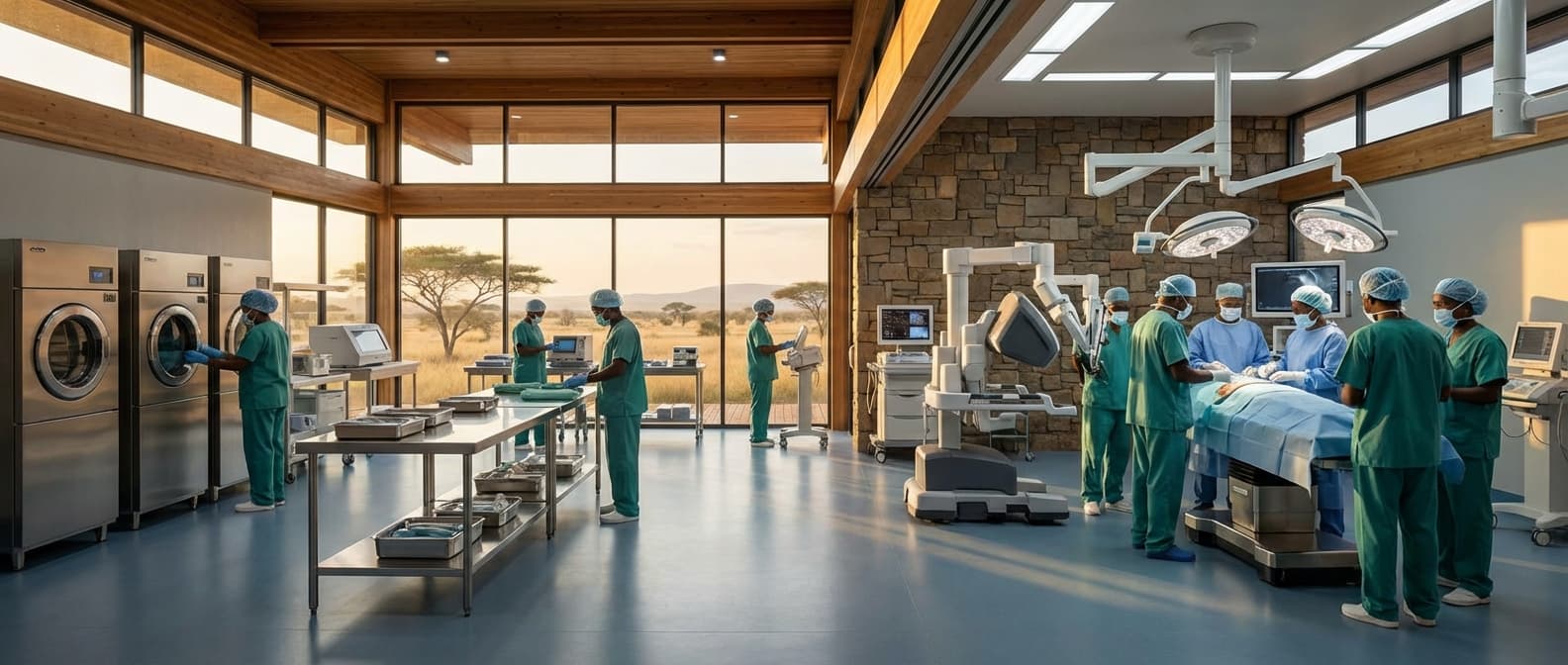
Operating Theatre Turnkey Build in Zimbabwe
Engineering Excellence & Technical Support
Complete OR design, equipment integration and commissioning High-standard technical execution following OEM protocols and local regulatory frameworks.
Integrated Medical Gas Systems
Provision and installation of fully compliant medical gas pipeline systems, including oxygen, medical air, vacuum, and nitrous oxide, with robust alarm and monitoring capabilities for enhanced patient safety and operational efficiency within the operating theatre.
Advanced HVAC & Air Filtration
Implementation of sophisticated High-Efficiency Particulate Air (HEPA) filtered HVAC systems designed to maintain sterile environments, precise temperature and humidity control, and optimal airflow patterns, critical for minimizing infection risk and supporting complex surgical procedures.
State-of-the-Art Control Systems Integration
Seamless integration of all operating theatre technologies, including lighting, imaging, communication, and environmental controls, into a centralized, intuitive digital platform for centralized management and enhanced surgical team workflow.
What Is Operating Theatre Turnkey Build In Zimbabwe?
An Operating Theatre Turnkey Build in Zimbabwe refers to the comprehensive provision of a complete, fully functional operating theatre suite from initial design and planning through construction, fit-out, and commissioning. This service is delivered by a single contractor or consortium, offering a single point of accountability for all aspects of the project. It encompasses not only the structural and architectural elements but also the integration of specialized medical equipment, sterile environments, utility systems, and ancillary facilities required for surgical procedures. The objective is to deliver a ready-to-operate surgical environment, minimizing the burden on the client.
| Who Needs It? | Typical Use Cases | ||||
|---|---|---|---|---|---|
| Hospitals and Healthcare Facilities: Both public and private hospitals seeking to upgrade existing facilities or establish new surgical departments. | New Hospital Construction: As a core component of a newly built healthcare institution. | Expansion or Renovation Projects: When existing operating theatres require modernization or expansion to meet increased demand or incorporate new surgical technologies. | Specialized Surgical Centers: Clinics focused on specific surgical disciplines (e.g., cardiology, orthopaedics, ophthalmology) requiring dedicated, state-of-the-art surgical environments. | Government Health Ministries or Agencies: For the establishment or upgrading of public healthcare infrastructure in various regions. | Mining and Industrial Companies: Companies operating in remote areas that require on-site medical facilities capable of handling surgical emergencies. |
| Establishing New Surgical Capacity: To meet growing patient demand for elective and emergency surgical procedures. | Replacing Aging Infrastructure: To upgrade outdated and non-compliant operating theatre facilities with modern, safe, and efficient ones. | Implementing Advanced Surgical Techniques: To accommodate specialized equipment and workflows required for minimally invasive surgery, robotic surgery, or complex interventions. | Improving Infection Control: To ensure adherence to the highest standards of asepsis and reduce the incidence of hospital-acquired infections. | Ensuring Regulatory Compliance: To meet evolving national and international healthcare facility standards and accreditation requirements. | Accelerated Project Delivery: To expedite the commissioning of a functional operating theatre suite, minimizing downtime and revenue loss. |
Key Components of an Operating Theatre Turnkey Build:
- Design and Planning: Architectural and engineering design, including space allocation, workflow optimization, and compliance with international and national healthcare standards (e.g., infection control, radiation protection, ventilation requirements).
- Civil Works and Construction: Demolition (if applicable), new construction, structural modifications, wall finishes (antimicrobial, impact-resistant), flooring (seamless, antistatic), ceiling installations, and door systems.
- Mechanical, Electrical, and Plumbing (MEP) Systems: Installation of HVAC systems with HEPA filtration and laminar airflow, medical gas pipelines (oxygen, medical air, vacuum, nitrous oxide), specialized electrical systems (uninterruptible power supply, generator backup, emergency lighting), water supply and drainage, and waste management systems.
- Specialized Equipment Installation: Integration of surgical lights, booms (anaesthesia, surgical), operating tables, X-ray viewers, imaging equipment (e.g., C-arms), patient monitoring systems, and communication systems.
- Sterile Environment Control: Implementation of positive pressure differentials, airlocks, and air change rates to maintain asepsis.
- Ancillary Facilities: Construction and fit-out of anaesthesia bays, scrub areas, sterile processing departments (if integrated), changing rooms, and recovery areas.
- Commissioning and Validation: Rigorous testing and performance verification of all installed systems and equipment to ensure compliance with design specifications and operational readiness.
- Training and Handover: Provision of operational and maintenance training for the client's staff and formal handover of the completed facility.
Who Needs Operating Theatre Turnkey Build In Zimbabwe?
Operating Theatre Turnkey Builds in Zimbabwe are crucial for healthcare facilities aiming to establish state-of-the-art surgical environments, ensuring patient safety, infection control, and operational efficiency. These comprehensive solutions encompass design, construction, equipping, and commissioning of operating theatres, delivering a fully functional unit ready for immediate use. This eliminates the complexities and time delays associated with managing multiple contractors and suppliers, making it an attractive option for entities prioritizing rapid deployment and high-quality surgical infrastructure.
| Target Customer Type | Typical Departments/Needs Served | Key Benefits of Turnkey Build |
|---|---|---|
| Public Hospitals | General Surgery, Obstetrics & Gynecology, Orthopedics, Emergency Surgery, Pediatrics. | Rapid upgrade of outdated facilities, increased surgical capacity, improved infection control, compliance with modern standards, reduced administrative burden. |
| Private Hospitals and Clinics | All surgical specialties (e.g., Laparoscopic Surgery, Cardiology, Neurology, Plastic Surgery, Urology). | Competitive advantage through advanced facilities, faster project completion, predictable costs, access to latest medical technology, enhanced patient experience. |
| Specialized Surgical Centers | Cardiothoracic Surgery, Neurosurgery, Orthopedic Surgery, Bariatric Surgery, Transplant Surgery. | Customized design for specific procedures, integration of highly specialized equipment, optimal workflow for complex surgeries, provision of sterile environments. |
| Mission and NGO Hospitals | General Surgery, Obstetrics & Gynecology, Emergency Medicine, Trauma Care. | Cost-effective solutions, efficient use of donor funding, quick deployment of essential surgical services, improved healthcare access for vulnerable populations. |
| Medical Training Institutions | Simulation labs, observation theatres, teaching theatres for various surgical disciplines. | Creation of realistic training environments, exposure to modern surgical technology, development of skilled healthcare professionals, adherence to educational standards. |
Target Customers and Departments for Operating Theatre Turnkey Builds in Zimbabwe
- Public Hospitals: Government-owned hospitals across Zimbabwe, particularly those in need of modernization or expansion of their surgical capacity. This includes provincial, district, and central hospitals. They may be looking to upgrade existing theatres or build new ones to cater to a growing patient population and evolving medical needs.
- Private Hospitals and Clinics: For-profit healthcare providers seeking to offer advanced surgical services and maintain a competitive edge. These facilities often require specialized theatres for various surgical disciplines and prioritize a quick return on investment through efficient operational setups.
- Specialized Surgical Centers: Dedicated centers focusing on specific surgical specialties like cardiology, orthopedics, neurosurgery, or ophthalmology. These centers demand highly customized and technologically advanced operating theatres to support complex procedures.
- Mission and Non-Governmental Organization (NGO) Hospitals: Healthcare facilities run by religious organizations or NGOs that provide essential medical services to underserved communities. Turnkey solutions can be particularly beneficial for these organizations, offering a streamlined approach to building critical surgical infrastructure with limited internal project management resources.
- Medical Training Institutions: Universities and colleges with medical schools that require modern operating theatres for training surgeons, anesthetists, nurses, and other surgical support staff. These facilities need to simulate real-world surgical environments for effective education and skill development.
Operating Theatre Turnkey Build Process In Zimbabwe
Embarking on a turnkey operating theatre (OT) build in Zimbabwe involves a structured, multi-stage process designed to deliver a fully functional and compliant medical facility. This workflow ensures that every aspect, from initial concept to final handover, is meticulously managed. The process typically begins with a client's inquiry and culminates in the operational readiness of the new OT.
| Phase | Key Activities | Deliverables |
|---|---|---|
| 1. Inquiry & Consultation | Needs assessment, scope definition, budget discussion, site identification. | Client requirements brief, initial project scope document. |
| 2. Site Assessment & Feasibility | Site inspection, utility checks, regulatory review, risk assessment. | Feasibility report, preliminary site analysis. |
| 3. Conceptual Design | Space planning, architectural layout, preliminary equipment selection, budget refinement. | Conceptual drawings, initial 3D renders, refined budget. |
| 4. Detailed Design & Engineering | Development of architectural, structural, MEP, and specialized system designs. | Full set of engineering drawings, specifications, Bill of Quantities (BoQ). |
| 5. Procurement & Supply Chain | Sourcing materials, equipment, and components; vendor management; logistics. | Procurement orders, delivery schedules, quality control reports. |
| 6. Construction & Civil Works | Site preparation, foundation, structural work, building shell, utility installation. | Completed building structure, installed basic services. |
| 7. Interior Fit-out & Finishes | Installation of hygienic walls, floors, ceilings, lighting, doors, cabinetry. | Completed interior surfaces, integrated lighting, specialized finishes. |
| 8. Medical Equipment Installation | Installation of OT lights, booms, tables, imaging, monitoring, etc. | Professionally installed and connected medical equipment. |
| 9. Testing, Commissioning & Validation | System checks, performance testing, compliance verification, calibration. | Commissioning reports, validation certificates, test results. |
| 10. Training & Handover | Staff training on equipment/systems, final inspections, documentation transfer. | Trained staff, O&M manuals, warranties, compliance documents, final handover. |
| 11. Post-Handover Support | Ongoing maintenance, troubleshooting, spare parts management (if contracted). | Service level agreements, maintenance logs, support tickets. |
Operating Theatre Turnkey Build Process in Zimbabwe - Workflow Stages
- 1. Initial Inquiry & Consultation: The process starts when a healthcare provider (hospital, clinic, etc.) expresses interest and submits an inquiry. This is followed by in-depth consultations to understand the client's specific needs, including the type of surgeries planned, patient volume, desired equipment, budget, and timeline.
- 2. Site Assessment & Feasibility Study: A thorough assessment of the proposed construction site is conducted. This includes evaluating existing infrastructure, structural integrity, utility availability (water, electricity, medical gases), accessibility, and compliance with local building codes and regulations in Zimbabwe. A feasibility report is generated.
- 3. Conceptual Design & Space Planning: Based on the consultations and site assessment, a conceptual design and detailed space plan are developed. This involves architectural drawings, layout optimization for workflow efficiency, infection control considerations, and preliminary selection of major medical equipment and finishes.
- 4. Detailed Design & Engineering: This stage involves the creation of comprehensive architectural, structural, mechanical, electrical, and plumbing (MEP) drawings. It also includes the detailed engineering of specialized systems like HVAC (crucial for sterile environments), medical gas pipelines, lighting, and power distribution, adhering to international and local standards.
- 5. Procurement & Supply Chain Management: Once designs are approved, the procurement of all materials, equipment, and specialized OT components begins. This involves sourcing from reliable local and international suppliers, ensuring quality, compliance, and timely delivery to the Zimbabwe site. Supply chain management is critical to avoid delays.
- 6. Construction & Civil Works: This is the physical execution phase. It includes site preparation, foundation laying, structural erection, wall construction, roofing, and installation of all necessary building services (electrical, plumbing, HVAC, medical gases). Strict quality control measures are implemented throughout.
- 7. Interior Fit-out & Finishes: After the core structure is complete, the interior fit-out commences. This involves installing specialized OT finishes such as anti-bacterial wall claddings, seamless flooring, hygienic ceiling systems, integrated lighting, and cabinetry. Infection control and ease of cleaning are paramount.
- 8. Medical Equipment Installation & Integration: All procured medical equipment, including surgical lights, booms, tables, imaging systems, and monitoring devices, are installed and meticulously integrated with the building's services. This requires specialized technicians and adherence to manufacturer specifications.
- 9. Testing, Commissioning & Validation: Before handover, all systems and equipment undergo rigorous testing and commissioning. This includes verifying the functionality of HVAC, medical gases, electrical systems, and all installed equipment. Validation ensures that the OT meets all performance and safety standards.
- 10. Training & Handover: The client's medical and technical staff receive comprehensive training on the operation and maintenance of all installed equipment and systems. Following successful training and final inspections, the fully functional operating theatre is formally handed over to the client, along with all relevant documentation (manuals, warranties, compliance certificates).
- 11. Post-Handover Support & Maintenance (Optional): Many turnkey providers offer ongoing support, maintenance services, and troubleshooting to ensure the long-term optimal performance of the operating theatre.
Operating Theatre Turnkey Build Cost In Zimbabwe
Constructing a state-of-the-art operating theatre in Zimbabwe is a significant undertaking, with costs influenced by a multitude of factors. The "turnkey" nature of these projects implies a comprehensive solution, from initial design and civil works to the installation of specialized medical equipment and finishes. Local currency (Zimbabwean Dollar - ZWL) pricing is subject to considerable volatility due to economic conditions, inflation, and foreign currency exchange rates, which heavily impact the cost of imported materials and equipment. Therefore, while providing price ranges is challenging, understanding the contributing elements is crucial for accurate budgeting.
| Category | Estimated ZWL Range (per sq meter, indicative) | Notes |
|---|---|---|
| Basic Fit-out (Civil works, standard finishes, basic services) | ZWL 3,000,000 - ZWL 7,000,000 | Excludes specialized medical equipment. Highly dependent on material choices. |
| Mid-Range Operating Theatre (Good quality finishes, standard medical equipment, basic HVAC) | ZWL 7,000,000 - ZWL 15,000,000 | Includes moderately priced equipment. Prices are highly variable. |
| Advanced/Turnkey Operating Theatre (High-end finishes, comprehensive medical equipment, laminar flow, advanced HVAC, medical gases) | ZWL 15,000,000+ | This category represents a significant investment, with costs potentially reaching ZWL 50,000,000 or more depending on the scope and sophistication of the equipment. A substantial portion will be for imported medical equipment which is priced in USD and converted to ZWL at prevailing rates. |
| Medical Equipment (per theatre, indicative) | ZWL 10,000,000 - ZWL 50,000,000+ | This is a broad estimate. A single advanced surgical light or anesthesia machine can cost upwards of ZWL 5,000,000. Complex imaging systems will be significantly higher. |
Key Pricing Factors for Operating Theatre Turnkey Builds in Zimbabwe
- Size and Complexity: The overall square footage of the operating theatre suite, including pre-operative, intra-operative, and post-operative areas, directly impacts material and labor costs. The number of theatres, their specific functions (e.g., general surgery, cardiac, orthopedic), and the complexity of the required services (e.g., laminar flow, specialized lighting) will also drive costs.
- Quality of Finishes and Materials: High-grade, durable, and infection-control-compliant materials are essential for operating theatres. This includes specialized flooring (e.g., anti-static, seamless epoxy), wall finishes (e.g., anti-microbial panels), ceiling systems, and doors. The choice between local and imported materials significantly affects price.
- Medical Equipment: This is often the largest cost component. The type, brand, and quantity of surgical equipment (tables, lights, anesthesia machines, patient monitors, imaging systems like C-arms, electrosurgical units), sterilization equipment, and supporting infrastructure (e.g., medical gas systems) are critical determinants.
- Specialized Services and Infrastructure: Installation of medical gas pipelines (oxygen, medical air, vacuum), advanced ventilation and air filtration systems (HVAC, HEPA filters for laminar flow), backup power generators, specialized electrical installations, and robust IT infrastructure add substantial costs.
- Architectural and Engineering Design: Professional design services, including architectural planning, structural engineering, and specialized mechanical, electrical, and plumbing (MEP) design for medical facilities, are necessary and contribute to the overall budget.
- Project Management and Labor: Efficient project management is vital for timely and cost-effective completion. Labor costs, including skilled tradespeople and technicians for specialized installations, will vary based on availability and prevailing rates.
- Regulatory Compliance and Approvals: Adhering to local health regulations, building codes, and obtaining necessary permits and certifications can incur fees and require specific design considerations that impact cost.
- Location and Site Conditions: The geographical location within Zimbabwe can influence transportation costs for materials and labor. Existing site conditions might require additional civil works, excavation, or foundation strengthening, adding to the expense.
- Contingency: Given the economic landscape, including a substantial contingency fund (typically 10-20% of the total project cost) is highly recommended to account for unforeseen issues, price fluctuations, and scope changes.
Affordable Operating Theatre Turnkey Build Options
For healthcare facilities looking to establish or expand operating theatre capacity without exorbitant upfront costs, affordable turnkey build options offer a viable solution. These packages are designed to provide a complete, ready-to-use operating room, encompassing all essential components and infrastructure. The key to affordability lies in the strategic bundling of services and equipment, coupled with smart cost-saving strategies implemented throughout the design, procurement, and construction phases. Understanding value bundles and cost-saving measures is crucial for making informed decisions and maximizing budget efficiency while ensuring a safe and functional surgical environment.
| Value Bundle Component | Description | Cost-Saving Strategy Alignment |
|---|---|---|
| Pre-Designed Layouts & Specifications | Offering a range of pre-engineered, compliant layouts that can be adapted to specific needs. | Reduces architectural and design consultancy fees, shortens design timelines. |
| Bulk Procurement Agreements | Leveraging pre-negotiated contracts with suppliers for common operating theatre equipment and materials. | Achieves lower unit costs through volume purchasing power. |
| Integrated Project Management | A single point of contact responsible for all aspects of the build, from design to handover. | Minimizes coordination issues, reduces potential for delays and associated cost overruns. |
| Phased Implementation Options | Allowing facilities to choose a core package with the ability to add advanced features or equipment in later stages. | Spreads capital expenditure, allowing for immediate operational readiness and future upgrades as budget allows. |
| Efficient Material Sourcing | Focusing on durable, cost-effective materials that meet regulatory requirements without unnecessary premium features. | Lower material costs, reduced waste, and longer lifespan leading to lower lifecycle costs. |
| Simplified Workflow Integration | Designing the space to accommodate standard surgical workflows, avoiding complex or bespoke modifications. | Reduces custom engineering and installation complexities, leading to lower labor and material expenses. |
Key Components of Affordable Operating Theatre Turnkey Builds
- Modular Construction: Prefabricated units reduce on-site construction time and labor costs.
- Standardized Equipment Packages: Bundling essential surgical lights, tables, and anesthesia machines from specific, reliable manufacturers can lead to volume discounts.
- Integrated HVAC and Sterilization Systems: Pre-designed and installed systems streamline the process and ensure compliance.
- Essential Medical Gas Pipelines: Pre-fitted medical gas outlets and piping systems.
- Basic Infection Control Features: Including easy-to-clean surfaces, appropriate ventilation, and sealed joints.
- Essential Electrical and IT Infrastructure: Pre-wired power, data, and communication points.
- Basic Interior Finishes: Durable and easily maintainable materials that meet healthcare standards.
Verified Providers In Zimbabwe
In Zimbabwe's evolving healthcare landscape, identifying trusted and qualified medical providers is paramount. Franance Health stands out as a beacon of reliability, offering a curated network of verified professionals and facilities. Their rigorous credentialing process ensures that every provider within their network meets the highest standards of medical expertise, ethical practice, and patient care. Choosing a Franance Health verified provider means gaining access to quality healthcare backed by thorough vetting, giving you peace of mind and confidence in your medical decisions.
| Credential Aspect | Franance Health Verification Standard | Benefit to Patients |
|---|---|---|
| Medical Licenses & Certifications | Confirmed and up-to-date with relevant Zimbabwean medical boards. | Ensures providers have met the fundamental requirements for practicing medicine. |
| Professional Experience | Thorough review of educational background and years of practice. | Guarantees access to experienced practitioners with a proven track record. |
| Reputation & References | Checks with professional bodies and patient feedback where applicable. | Provides assurance of ethical conduct and positive patient experiences. |
| Specialty Competency | Verification of specific training and certifications for specialized fields. | Ensures you are matched with a provider skilled in your specific medical concern. |
| Adherence to Ethical Standards | Evaluation of past conduct and commitment to professional ethics. | Upholds patient trust and ensures care is delivered with integrity. |
Why Franance Health Verified Providers are the Best Choice:
- Rigorous Vetting Process: Franance Health employs a comprehensive credentialing system that scrutinizes qualifications, experience, licensing, and disciplinary history.
- Commitment to Quality: They partner with providers who demonstrate a consistent dedication to delivering excellent patient outcomes and adhering to best medical practices.
- Patient-Centric Approach: Verified providers are known for their compassionate care, effective communication, and focus on patient well-being.
- Access to Specialists: Their network includes a wide range of specialists, ensuring you can find the right expertise for your specific health needs.
- Peace of Mind: By choosing a Franance Health verified provider, you eliminate the guesswork and ensure you are receiving care from reputable and competent professionals.
Scope Of Work For Operating Theatre Turnkey Build
This Scope of Work (SOW) outlines the requirements for a turnkey operating theatre (OT) build. It encompasses all phases from initial design and planning through to construction, installation of medical equipment, commissioning, and handover. The objective is to deliver a fully functional, state-of-the-art operating theatre that meets all relevant international and local standards for healthcare facilities. This SOW also details the expected technical deliverables and standard specifications for all components and systems.
| Category | Technical Deliverables | Standard Specifications/Requirements |
|---|---|---|
| Design and Planning | Detailed Architectural Drawings | ISO 14644 (Cleanrooms), HTM 02-01 (Medical Gases), local building codes, infection control guidelines (e.g., CDC, WHO). |
| Design and Planning | MEP Design Schematics | ASHRAE standards, local electrical codes, fire safety regulations (e.g., NFPA). |
| Design and Planning | Medical Gas System Design | HTM 02-01, ISO 7396 series, UNI EN 737 series. |
| Design and Planning | Ventilation and Air Conditioning (HVAC) Design | Positive pressure, HEPA filtration (ISO Class 7 or better within OT), controlled temperature and humidity (e.g., 20-24°C, 40-60% RH), air changes per hour (minimum 20, with 10 fresh air). |
| Design and Planning | Lighting Design (General and Surgical) | Illuminance levels as per standards (e.g., 500-1000 lux general, 1000-1500+ lux surgical field), glare reduction, color rendering index (CRI) >90. |
| Design and Planning | Acoustic Design Plan | Noise levels below 45 dBA within the OT during operation. |
| Design and Planning | Equipment Layout and Integration Plan | Ergonomic placement, access for maintenance, compatibility with OT infrastructure. |
| Civil and Structural Works | Room Construction and Enclosure | Seamless walls, coved flooring, anti-bacterial and anti-static materials, radiolucent/radiopaque considerations where applicable. |
| Civil and Structural Works | Door Systems | Hermetically sealing automatic sliding doors, vision panels, lead shielding if required for radiology. |
| Civil and Structural Works | Floor and Wall Finishes | Seamless, non-porous, chemical-resistant, and durable (e.g., epoxy resin, vinyl sheeting with heat-welded seams). |
| Civil and Structural Works | Ceiling Systems | Smooth, washable, non-shedding, flush-mounted, accommodating for light fixtures and air diffusers. |
| MEP Systems Installation | Electrical Distribution and Power | Uninterruptible Power Supply (UPS) for critical equipment, medical-grade power outlets, surge protection, isolated power systems. |
| MEP Systems Installation | HVAC System Installation | Cleanroom-grade air handling units (AHUs), HEPA filters, pressure monitoring, temperature/humidity controls, redundant systems. |
| MEP Systems Installation | Plumbing and Drainage | Medical-grade water supply, waste disposal systems, connection to building drainage, floor gullies with anti-odor traps. |
| Medical Gas Systems Installation | Medical Gas Pipelines | Purified air, oxygen, medical vacuum, nitrous oxide, etc., manufactured from medical-grade materials, leak-tested and pressure-tested to standards. |
| Medical Gas Systems Installation | Gas Outlets and Alarm Systems | Compliant with ISO 9170-1, color-coded, quick-connect fittings, audible and visual alarms for pressure deviations. |
| Specialized OT Finishes | Laminar Flow / Air Filtration Systems | HEPA filtered air delivered in a unidirectional flow over the surgical field. |
| Specialized OT Finishes | Integrated Ceiling Systems | Modular ceiling panels incorporating lighting, gas outlets, electrical sockets, and monitor mounts. |
| Specialized OT Finishes | Antimicrobial Surfaces | Incorporation of antimicrobial agents in wall, floor, and ceiling materials. |
| Lighting and AV Systems Integration | Surgical Lighting Systems | High-intensity, shadowless, adjustable surgical lights with camera integration capabilities. |
| Lighting and AV Systems Integration | General Lighting | Dimmable, glare-free lighting for general illumination. |
| Lighting and AV Systems Integration | Audio-Visual Equipment | High-definition displays, cameras, recording systems, and communication interfaces for remote consultation and training. |
| Medical Equipment Installation and Integration | Anesthesia Machines | Calibration and connection to medical gas and power. |
| Medical Equipment Installation and Integration | Surgical Tables | Positioning, stability, and integration with surgical lights. |
| Medical Equipment Installation and Integration | Electrosurgical Units (ESUs) | Connection to power and grounding, safety checks. |
| Medical Equipment Installation and Integration | Monitoring Equipment | Connection to patient and central monitoring systems. |
| Testing and Commissioning | Airflow and Pressure Tests | Verification of HEPA filter efficiency, pressure differentials, and air change rates. |
| Testing and Commissioning | Medical Gas System Tests | Pressure, leak, and purity tests for all gases. |
| Testing and Commissioning | Electrical System Tests | Insulation resistance, continuity, functional tests, UPS performance. |
| Testing and Commissioning | Lighting System Tests | Illuminance measurements, color temperature verification. |
| Testing and Commissioning | Noise Level Measurements | Verification of acoustic performance. |
| Testing and Commissioning | Integration of all systems | Functional testing of all interconnected systems and equipment. |
| Training and Handover | Operation and Maintenance Manuals | Comprehensive documentation for all installed systems and equipment. |
| Training and Handover | User Training | Training for clinical and technical staff on the operation and maintenance of the OT and its equipment. |
| Training and Handover | As-Built Drawings | Updated drawings reflecting the final installed configuration. |
| Training and Handover | Certificate of Completion and Handover | Formal documentation signifying project completion and acceptance. |
| Post-Construction Support | Defect Liability Period (DLP) | As per contract terms, typically 12-24 months. |
| Post-Construction Support | Warranty Support | Warranty on all materials and equipment as per manufacturer and contractor agreements. |
Key Project Phases
- Design and Planning
- Civil and Structural Works
- MEP (Mechanical, Electrical, and Plumbing) Systems Installation
- Medical Gas Systems Installation
- Specialized OT Finishes
- Lighting and AV Systems Integration
- Medical Equipment Installation and Integration
- Testing and Commissioning
- Training and Handover
- Post-Construction Support
Service Level Agreement For Operating Theatre Turnkey Build
This Service Level Agreement (SLA) outlines the response times and uptime guarantees for the operation of the turnkey built operating theatre. It is designed to ensure maximum availability and efficient resolution of any issues that may arise post-completion and handover.
| System/Service | Severity Level | Response Time (from Acknowledgment) | Resolution Time Target | Uptime Guarantee |
|---|---|---|---|---|
| Critical Systems (HVAC, Medical Gases, Power) | Level 1 (Complete Outage) | 1 hour | 4 hours | 99.9% |
| Critical Systems (HVAC, Medical Gases, Power) | Level 2 (Partial Failure impacting safety/functionality) | 2 hours | 8 hours | 99.9% |
| Surgical Lighting | Level 1 (Complete Failure) | 30 minutes | 2 hours | 99.5% |
| Anesthesia Machines | Level 1 (Complete Failure) | 30 minutes | 2 hours | 99.5% |
| Operating Tables | Level 1 (Complete Failure) | 30 minutes | 2 hours | 99.5% |
| Electrosurgical Units | Level 1 (Complete Failure) | 30 minutes | 2 hours | 99.5% |
| Other Medical Equipment (as per contract) | Level 1 (Complete Failure) | 1 hour | 4 hours | 99.0% |
| General Infrastructure (non-critical) | Level 3 (Minor issue) | 4 business hours | 2 business days | N/A (covered by standard warranty/maintenance) |
Key Definitions
- Operating Theatre Turnkey Build: Refers to the complete construction and equipping of a functional operating theatre, from initial design to final handover, including all necessary infrastructure, medical equipment, and systems.
- Critical System: Any component or system whose failure would directly prevent or severely impede the ability to perform surgical procedures. This includes, but is not limited to, HVAC systems with HEPA filtration, medical gas supply, surgical lighting, anesthesia machines, operating tables, and electrosurgical units.
- Service Request: A formal notification from the Client to the Service Provider detailing a problem, malfunction, or need for assistance related to the Operating Theatre Turnkey Build.
- Downtime: The period during which a Critical System or the entire Operating Theatre is unavailable for use due to a malfunction or scheduled maintenance.
- Response Time: The maximum allowable time from the moment a Service Request is acknowledged by the Service Provider to the commencement of investigation or remedial action.
- Resolution Time: The maximum allowable time from the commencement of investigation to the restoration of normal operation of the affected system.
- Uptime Guarantee: The minimum percentage of time that Critical Systems and the overall Operating Theatre are expected to be available for use.
Frequently Asked Questions

Ready when you are
Let's scope your Operating Theatre Turnkey Build in Zimbabwe project in Zimbabwe.

Scaling healthcare logistics and technical systems across the entire continent.