
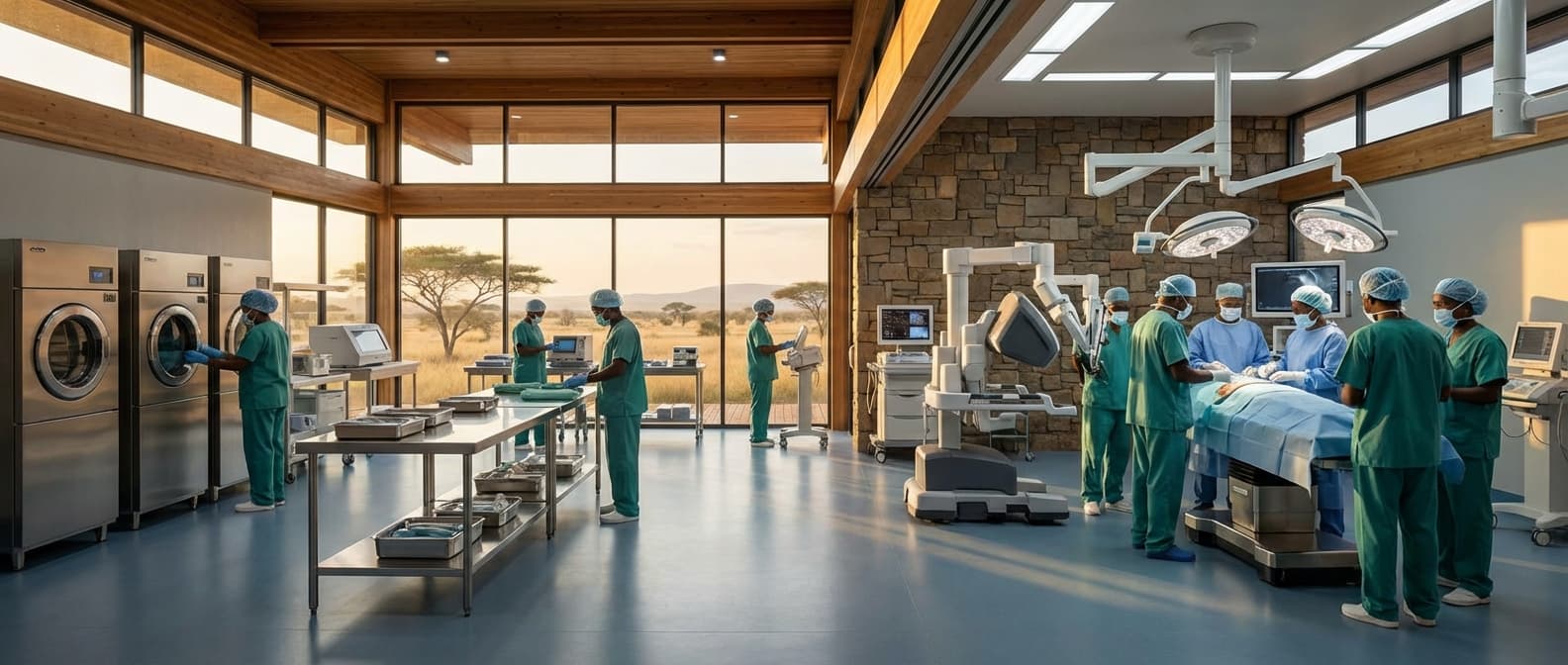
Medical Gas System Design & Installation in Zimbabwe
Engineering Excellence & Technical Support
Medical gas pipeline systems: O2, N2O, air, vacuum High-standard technical execution following OEM protocols and local regulatory frameworks.
Advanced Medical Gas Pipeline Design
Leveraging AI-driven simulation and adherence to international standards (e.g., ISO 7396), we design medical gas pipeline systems that optimize flow rates, minimize pressure drops, and ensure unparalleled purity for critical medical applications across Zimbabwean healthcare facilities.
Precision Installation & Commissioning
Our certified technicians employ state-of-the-art installation techniques and rigorous pressure testing, leak detection, and gas purity verification protocols to guarantee the safe and compliant commissioning of all medical gas systems, meeting the unique environmental and logistical challenges of Zimbabwe.
Integrated Safety & Monitoring Solutions
Implementing intelligent alarm systems and remote monitoring capabilities, we provide Zimbabwean hospitals with real-time oversight of medical gas supply, pressure, and purity, enabling proactive maintenance and ensuring uninterrupted patient care in line with best global practices.
What Is Medical Gas System Design & Installation In Zimbabwe?
Medical Gas System Design & Installation in Zimbabwe refers to the comprehensive process of planning, engineering, and physically constructing the infrastructure required to safely and efficiently deliver medical gases to healthcare facilities. This encompasses the selection and integration of gas sources (e.g., liquid oxygen tanks, medical air compressors, vacuum pumps), distribution pipelines (typically copper), control panels, pressure regulators, alarms, outlets, and emergency backup systems. The design phase focuses on ensuring compliance with relevant national and international standards (e.g., ISO 7396, HTM 02-01, and Zimbabwean Ministry of Health and Child Care guidelines), optimizing gas purity and flow rates, and mitigating potential hazards. Installation involves skilled technicians and engineers adhering to strict protocols to prevent leaks, cross-contamination, and ensure the long-term reliability of the system.
| Who Needs Medical Gas System Design & Installation? | Typical Use Cases & Applications | ||
|---|---|---|---|
| Hospitals (public and private) | Operating theatres for anaesthesia and respiratory support (e.g., oxygen, medical air, nitrous oxide) | Intensive Care Units (ICUs) and High Dependency Units (HDUs) for ventilation and oxygen therapy | Emergency departments for resuscitation and immediate patient care |
| Specialized Clinics (e.g., surgical centres, renal dialysis units) | General wards for routine oxygen administration and respiratory treatments | Paediatric and neonatal wards requiring precise gas mixtures and controlled environments | Laboratories requiring specific gas mixtures for analytical equipment (though distinct from medical gas supply) |
| Ambulance services and emergency medical response centres (for mobile units) | Post-operative recovery areas | Dental clinics (for nitrous oxide sedation) | |
| Research institutions conducting medical-related studies | Veterinary hospitals (often with adapted systems) |
Key Components and Processes of Medical Gas System Design & Installation
- System Design: Architectural and engineering planning, including pipeline routing, manifold selection, alarm integration, and specification of all components.
- Source Selection & Sizing: Determining the appropriate type and capacity of medical gas sources (e.g., bulk liquid oxygen, medical air compressors, nitrogen generators, vacuum pumps) based on facility demand.
- Pipeline Installation: Expert installation of high-purity medical-grade copper piping, adhering to stringent brazing and jointing techniques to ensure leak-tightness.
- Gas Outlets & Control Panels: Provision and installation of standardized medical gas outlets for various gases (e.g., O2, medical air, vacuum, N2O, CO2) and integrated control panels with pressure monitoring and alarm systems.
- Alarm Systems: Design and implementation of audible and visual alarm systems to alert staff to critical pressure deviations or gas supply failures.
- Purge & Testing: Thorough purging of pipelines with inert gases to remove contaminants, followed by rigorous pressure testing, leak detection, and gas purity analysis.
- Commissioning & Handover: System validation, performance testing, and comprehensive documentation handover to the facility's maintenance staff.
- Compliance & Standards: Adherence to relevant national (Zimbabwean Ministry of Health and Child Care) and international standards for medical gas installations.
Who Needs Medical Gas System Design & Installation In Zimbabwe?
Designing and installing reliable medical gas systems is crucial for modern healthcare facilities. In Zimbabwe, a range of institutions and their specific departments stand to benefit significantly from expert medical gas system services. These systems are not merely for oxygen; they encompass a suite of gases essential for patient care, from anesthesia to specialized treatments. Investing in properly designed and installed systems ensures patient safety, operational efficiency, and compliance with healthcare standards.
| Customer Type | Key Departments/Areas Requiring Medical Gas Systems | ||||||||||||
|---|---|---|---|---|---|---|---|---|---|---|---|---|---|
| Hospitals (Public and Private) | Operating Theatres/Surgical Suites | Intensive Care Units (ICU) | High Dependency Units (HDU) | Emergency Departments/Casualty | Recovery Rooms | Maternity Wards | Neonatal Intensive Care Units (NICU) | Pediatric Wards | General Wards | Pulmonary/Respiratory Clinics | Anesthesia Departments | Laboratories (for specific gas applications) | Outpatient Clinics (for oxygen therapy needs) |
| Surgical Centers and Clinics | Operating Rooms | Recovery Areas | |||||||||||
| Specialized Medical Facilities | Dialysis Centers (Nitrous Oxide for specific procedures) | Rehabilitation Centers (Oxygen therapy) | Endoscopy Suites (Nitrous Oxide) | ||||||||||
| Emergency Medical Services (EMS) | Ambulances (on-board oxygen systems) | Emergency Response Bases | |||||||||||
| Veterinary Hospitals and Clinics | Operating Rooms | Recovery Areas | Kennels/Intensive Care Units (for oxygen therapy) |
Target Customers and Departments in Zimbabwe Requiring Medical Gas System Design & Installation:
- Hospitals (Public and Private)
- Surgical Centers and Clinics
- Specialized Medical Facilities (e.g., Dialysis Centers, Rehabilitation Centers)
- Emergency Medical Services (EMS) providers
- Veterinary Hospitals and Clinics
Medical Gas System Design & Installation Process In Zimbabwe
Designing and installing medical gas systems in Zimbabwe is a multi-stage process that demands strict adherence to national and international standards for patient safety and system integrity. The workflow typically begins with an initial inquiry from a healthcare facility, followed by a comprehensive design phase, procurement of materials, meticulous installation, rigorous testing and commissioning, and finally, a handover with ongoing maintenance considerations. Each step is critical to ensuring the reliable and safe delivery of essential medical gases.
| Stage | Description | Key Activities | Key Stakeholders | Zimbabwean Considerations |
|---|---|---|---|---|
| Inquiry & Initial Consultation | The process begins with a healthcare facility (hospital, clinic) expressing interest in a new medical gas system or an upgrade. | Understanding client requirements, budget, and timeline. Preliminary discussion on gas types and system scope. | Healthcare Facility Management, Engineering Department, Potential Installer/Designer. | Understanding the specific needs of Zimbabwean healthcare facilities, including the common gas requirements (e.g., Oxygen, Medical Air, Vacuum, Nitrous Oxide). |
| Site Survey & Needs Assessment | A thorough evaluation of the existing infrastructure and future requirements at the facility. | Detailed site inspection, assessment of space for plant rooms, pipe routing, outlet locations, and existing utilities. Quantifying gas demands. | Installer/Designer, Facility Engineers, Clinical Staff. | Assessing the availability and condition of existing infrastructure (e.g., power, ventilation for plant rooms). Understanding the planned expansion of the facility. |
| System Design & Specification | Developing detailed engineering drawings and specifications for the entire medical gas system. | Creating P&IDs (Piping and Instrumentation Diagrams), pipe sizing calculations, selection of medical gas equipment (compressors, vacuum pumps, manifolds, regulators), alarm systems, and outlet specifications. Compliance with relevant standards (e.g., BS EN standards, SANS standards where applicable). | Design Engineers, Project Managers, Specialist Consultants. | Ensuring the design adheres to locally available technologies and spare parts. Considering power stability and potential backup power solutions. |
| Regulatory Approvals & Compliance | Obtaining necessary permits and ensuring the design meets all relevant health, safety, and building regulations. | Submitting design documents to local authorities (e.g., Ministry of Health and Child Care, local council building departments) for review and approval. Compliance checks. | Designers, Project Managers, Facility Management, Local Authorities. | Navigating the specific approval processes and timelines within Zimbabwe. Engaging with relevant regulatory bodies early in the design phase. |
| Procurement & Material Sourcing | Acquiring all necessary equipment, piping, fittings, and consumables for the installation. | Tendering process for equipment, sourcing high-quality medical-grade materials, ensuring traceability and certification of all components. | Procurement Department, Project Managers, Installers. | Identifying reliable local and international suppliers. Managing import duties and logistics for specialized medical gas equipment and materials. |
| Installation & Civil Works | The physical construction and assembly of the medical gas system. | Installation of gas sources (e.g., oxygen concentrators, cylinders), piping networks within walls and ceilings, medical gas outlets, alarm panels, and associated infrastructure. Conducting necessary civil works for plant rooms, trenches, etc. | Qualified Medical Gas Installers, Plumbers, Electricians, Civil Contractors. | Ensuring skilled labor is available for specialized medical gas installations. Adapting installation methods to local building practices and environmental conditions. |
| Testing, Purging & Commissioning | Rigorous verification of the system's performance, safety, and functionality before handover. | Pressure testing, leak detection, flushing and purging of pipelines to remove contaminants, analysis of gas purity, flow rate verification, and functionality testing of all components and alarm systems. | Commissioning Engineers, Installers, Facility Engineers, Independent Testers. | Ensuring testing procedures align with international standards and that qualified personnel conduct the tests. Availability of specialized testing equipment. |
| Training & Handover | Transferring knowledge and responsibility for the system to the healthcare facility's staff. | Training facility maintenance staff on system operation, routine checks, troubleshooting, and emergency procedures. Providing comprehensive documentation, including as-built drawings, manuals, and warranties. | Installers, Commissioning Engineers, Facility Maintenance Staff, Clinical Users. | Providing training in accessible formats and languages relevant to the facility's staff. Ensuring long-term support is clearly defined. |
| Post-Installation Support & Maintenance | Ongoing support and maintenance to ensure the system's continued reliability and safety. | Scheduled preventative maintenance, corrective maintenance for any issues, supply of spare parts, and periodic system inspections. This often involves a service agreement. | Installation Company, Facility Maintenance Team, Service Engineers. | Establishing reliable local maintenance contracts and ensuring a consistent supply of spare parts. Planning for future upgrades and modifications as the facility evolves. |
Medical Gas System Design & Installation Workflow in Zimbabwe
- Inquiry & Initial Consultation
- Site Survey & Needs Assessment
- System Design & Specification
- Regulatory Approvals & Compliance
- Procurement & Material Sourcing
- Installation & Civil Works
- Testing, Purging & Commissioning
- Training & Handover
- Post-Installation Support & Maintenance
Medical Gas System Design & Installation Cost In Zimbabwe
Designing and installing a medical gas system in Zimbabwe involves a complex interplay of factors that significantly influence the overall cost. These systems are critical for patient care, requiring specialized materials, skilled labor, stringent safety standards, and adherence to local regulations. The cost can vary widely depending on the size and complexity of the facility, the types of gases required, the chosen equipment suppliers, and the specific installation challenges faced. This discussion will delve into the primary pricing factors and provide estimated cost ranges in local currency (Zimbabwean Dollar - ZWL), acknowledging that these are indicative and subject to market fluctuations.
| System Component/Service | Estimated Cost Range (ZWL) | Notes |
|---|---|---|
| Basic Single-Gas System (Small Clinic/Ward) | 25,000 - 75,000 | Includes a few outlets for oxygen and vacuum, basic central supply (e.g., medical oxygen cylinders or small concentrator), piping, and installation. May exclude advanced alarm systems. |
| Multi-Gas System (Medium Hospital Wing/ICU) | 75,000 - 250,000 | Multiple gases (O2, Air, Vacuum), numerous outlets, a more robust central plant (e.g., larger compressors, potentially liquid oxygen tank), advanced alarms, and integrated control panels. |
| Comprehensive System (Large Hospital/Specialized Unit) | 250,000 - 1,000,000+ | All required gases, extensive outlet coverage, high-capacity central plant (liquid oxygen, high-pressure air compressors), sophisticated monitoring and alarm systems, advanced safety features, and full compliance with international standards. |
| Design & Engineering Fees | 5,000 - 50,000+ | Varies based on system complexity, project size, and the experience of the design firm. |
| Central Plant Equipment (e.g., Oxygen Concentrator/Compressor) | 15,000 - 150,000+ | Highly dependent on capacity, technology, and brand. Liquid oxygen tanks have significant upfront costs but lower running costs. |
| Piping & Fittings (per meter) | 50 - 250 | Primarily copper piping, cost influenced by diameter and fittings required. |
| Medical Gas Outlets (each) | 200 - 800 | Includes wall plate, valve, and connector. Varies by gas type and standard. |
| Alarm Systems (per zone) | 1,000 - 10,000 | From simple audible alarms to sophisticated digital monitoring systems. |
| Labor & Installation (estimated percentage of total cost) | 30% - 50% | This is a significant portion, reflecting the specialized nature of the work. |
| Testing, Commissioning & Certification | 2,000 - 20,000+ | Essential for ensuring system integrity and safety. Costs can increase for more rigorous international standards. |
Key Pricing Factors for Medical Gas System Design & Installation in Zimbabwe
- System Complexity and Scope: The number of medical gases required (e.g., oxygen, medical air, vacuum, nitrous oxide), the number of outlets per ward or room, and the overall size of the facility (number of beds, operating theaters, ICUs) are primary cost drivers. Larger and more complex systems naturally incur higher expenses.
- Type and Quality of Materials: The cost of medical-grade piping (typically copper), valves, regulators, alarms, control panels, and outlet points varies based on material quality, brand reputation, and adherence to international standards (e.g., ISO, HTM). Higher quality, durable materials often come with a premium but offer greater longevity and safety.
- Central Plant Equipment: The cost of the central supply source for each gas is a significant component. This includes oxygen generators or liquid oxygen tanks, air compressors, vacuum pumps, and nitrous oxide supply systems. The capacity and technology of this equipment will heavily impact the price.
- Labor Costs and Expertise: Medical gas system installation requires specialized technicians with specific certifications and experience. The prevailing labor rates for skilled engineers, pipefitters, and project managers in Zimbabwe, coupled with the duration of the project, contribute substantially to the overall cost.
- Regulatory Compliance and Certifications: Adhering to Zimbabwean health and safety regulations, as well as potentially international standards, involves costs associated with design review, testing, commissioning, and certification. This ensures the system is safe and functional.
- Site Conditions and Installation Challenges: The existing infrastructure of the healthcare facility can impact installation costs. Factors like accessibility, the need for extensive civil works (e.g., trenching, wall penetrations), and the logistics of transporting materials to remote locations can increase expenses.
- Project Management and Design Fees: Professional design services from qualified medical gas system engineers are essential for ensuring an efficient, safe, and compliant system. Project management fees for overseeing the entire installation process also contribute to the cost.
- Maintenance and After-Sales Support: While not strictly installation costs, the initial contract may include provisions for maintenance, spare parts, and training, which are factored into the overall project budget.
- Supplier and Manufacturer: The choice of suppliers and manufacturers for medical gas equipment and components can significantly influence pricing. Local availability, import duties, and the negotiation power of the contractor will play a role.
- Inflation and Currency Fluctuations: Zimbabwe has experienced significant inflation and currency volatility. Costs are heavily influenced by the prevailing exchange rate of the ZWL against major international currencies (USD, EUR) from which many specialized components are imported.
Affordable Medical Gas System Design & Installation Options
Designing and installing a medical gas system can be a significant investment for healthcare facilities. Fortunately, various affordable options and cost-saving strategies exist to make this essential infrastructure accessible. Understanding value bundles and exploring different approaches can lead to substantial savings without compromising safety or functionality. This guide outlines key considerations for affordable medical gas system design and installation, focusing on maximizing value and minimizing expenditure.
| Value Bundle Option | Description | Cost-Saving Strategy |
|---|---|---|
| Basic System Package | Includes essential medical gases (e.g., oxygen, medical air) and a standard number of outlets for general patient care areas. Often utilizes common materials and straightforward design. | Focus on essential services: Avoids customization for specialized needs initially, reducing upfront costs. Standardized components: Leverages economies of scale for commonly used parts. |
| Modular Design Bundle | Pre-fabricated units or modules containing gas outlets, alarms, and shut-off valves that can be easily installed. Allows for phased expansion. | Reduced on-site labor: Minimizes installation time and associated labor costs. Streamlined installation: Faster project completion leads to lower project management expenses. |
| Phased Installation & Expansion | Designing a system that can be installed in phases, starting with critical areas and expanding as the facility grows or budget allows. | Spreads capital expenditure: Aligns costs with current needs and available funding. Future-proofing: Built-in capacity for expansion avoids costly retrofitting later. |
| Energy-Efficient Equipment Integration | Incorporating energy-efficient medical air compressors, vacuum pumps, and other components into the system design. | Lower operational costs: Reduces electricity consumption over the system's lifespan, leading to long-term savings. Potential for grants/incentives: Some regions offer incentives for energy-efficient installations. |
| All-Inclusive Design, Supply, and Install | A comprehensive package where a single vendor handles the entire process from initial design and engineering to material procurement and final installation and commissioning. | Simplified project management: Reduces coordination efforts and potential for miscommunication. Potential for bulk discounts: Vendors may offer better pricing for full project scope. |
Key Considerations for Affordable Medical Gas Systems
- Needs Assessment: Accurately determining the required medical gases (oxygen, medical air, vacuum, etc.) and their flow rates for current and future needs is crucial to avoid overspending on unnecessary capacity.
- System Scope Definition: Clearly defining the scope of the project, including the number of outlets, zones, and specialized areas, helps in accurate budgeting and prevents scope creep.
- Material Selection: Choosing appropriate materials for piping, valves, and outlets that meet regulatory standards while offering cost-effectiveness is vital. Exploring options like copper, stainless steel, and their respective grades can impact budget.
- Installation Methodologies: Evaluating different installation techniques, such as pre-fabrication and modular designs, can streamline the process and reduce on-site labor costs.
- Vendor Selection & Negotiation: Thoroughly researching and obtaining competitive bids from multiple qualified vendors is essential. Negotiating contracts based on clear specifications and delivery timelines can yield significant savings.
- Long-Term Maintenance Planning: Incorporating cost-effective maintenance plans from the outset can prevent costly emergency repairs and ensure system longevity.
Verified Providers In Zimbabwe
In the rapidly evolving healthcare landscape of Zimbabwe, ensuring access to reliable and high-quality medical services is paramount. "Verified Providers in Zimbabwe" aims to highlight organizations that meet stringent standards, offering peace of mind to individuals seeking exceptional care. Franance Health stands out as a leading example, demonstrating a deep commitment to patient well-being through its robust credentials and comprehensive approach to healthcare delivery. Their dedication to excellence makes them a top choice for those prioritizing health and safety.
| Credential/Aspect | Franance Health's Commitment | Benefit to Patients |
|---|---|---|
| Accreditation Standards | Meets and exceeds national/international benchmarks. | Ensures adherence to best practices in safety and quality. |
| Staff Expertise | Employs highly qualified and continuously trained professionals. | Provides access to expert medical opinions and advanced care. |
| Technological Investment | Utilizes modern medical equipment and diagnostic tools. | Facilitates accurate diagnoses and effective treatment plans. |
| Patient Experience | Prioritizes personalized care, communication, and comfort. | Leads to greater patient satisfaction and trust. |
| Service Breadth | Offers a comprehensive range of medical services. | Conveniently addresses a wide array of healthcare needs. |
| Ethical Conduct | Operates with unwavering integrity and transparency. | Guarantees trustworthy and respectful medical care. |
Franance Health Credentials and Why They Represent the Best Choice:
- Accreditation and Certifications: Franance Health adheres to national and international healthcare accreditation standards, ensuring that their facilities and services meet rigorous quality benchmarks. This commitment to external validation underscores their dedication to patient safety and clinical excellence.
- Highly Qualified Medical Professionals: The organization boasts a team of experienced and board-certified doctors, nurses, and allied health professionals. Continuous training and professional development ensure they are at the forefront of medical advancements.
- State-of-the-Art Facilities and Technology: Franance Health invests in modern medical equipment and infrastructure, enabling accurate diagnoses and effective treatments. This commitment to technological advancement translates into better patient outcomes.
- Patient-Centric Approach: A core philosophy at Franance Health is placing the patient at the center of care. This includes personalized treatment plans, clear communication, and a focus on patient comfort and privacy.
- Comprehensive Service Offerings: From primary care to specialized treatments, Franance Health provides a wide spectrum of medical services, catering to diverse healthcare needs under one roof.
- Commitment to Ethical Practices: Upholding the highest ethical standards in medical practice is a cornerstone of Franance Health's operations, fostering trust and integrity in all patient interactions.
- Community Engagement and Health Education: Beyond clinical services, Franance Health actively engages with the community, promoting health awareness and preventive care initiatives, contributing to a healthier Zimbabwe.
Scope Of Work For Medical Gas System Design & Installation
This Scope of Work outlines the requirements for the comprehensive design and installation of a medical gas system. It covers all phases from conceptual design to final commissioning and handover, ensuring compliance with relevant industry standards and regulations. The project aims to deliver a safe, reliable, and efficient medical gas system that meets the operational needs of the healthcare facility.
| Technical Deliverable | Description | Applicable Standard/Reference |
|---|---|---|
| Design Drawings (Schematic, Layout, Isometrics) | Detailed drawings showing piping routes, equipment locations, valve configurations, and terminal units. | NFPA 99, NFPA 70, Local Building Codes, Manufacturer's Recommendations |
| Equipment Schedule | Detailed list of all medical gas equipment, including make, model, specifications, and performance data. | NFPA 99, Manufacturer's Data Sheets |
| Piping Specifications | Detailed requirements for medical-grade piping materials, jointing methods, installation procedures, and supports. | ASTM B88, ASTM B819, NFPA 99 |
| Alarm and Monitoring Specifications | Requirements for the medical gas alarm panel, sensors, audible/visual alarms, and remote monitoring capabilities. | NFPA 99, Manufacturer's Specifications |
| Testing and Commissioning Plan | Detailed procedures for flushing, purging, pressure testing, leak testing, performance testing, and validation. | NFPA 99, NFPA 70, Manufacturer's Recommendations |
| As-Built Drawings | Final drawings reflecting the actual installed system, including any deviations from the original design. | Project Requirements, Client Specifications |
| Operation & Maintenance (O&M) Manuals | Comprehensive manuals covering system operation, maintenance procedures, troubleshooting, and emergency protocols. | NFPA 99, Manufacturer's Manuals |
| Manufacturer's Data Sheets & Warranties | Documentation for all installed equipment, including technical specifications and warranty information. | Manufacturer's Documentation |
| Final Inspection and Test Reports | Documentation of all tests performed, including results, certifications, and sign-offs. | NFPA 99, Regulatory Requirements |
| Training Materials and Records | Materials used for training facility staff and records of training sessions conducted. | Project Requirements |
Key Project Phases and Activities
- 1. Design Phase:
* **1.1. Conceptual Design:** Understanding facility requirements, identifying gases to be supplied, determining pressure and flow rates, and preliminary system layout.* **1.2. Schematic Design:** Developing detailed system schematics, including piping routes, valve locations, alarm points, and terminal units.* **1.3. Design Development:** Refining the design, selecting appropriate materials and equipment, coordinating with other building systems (HVAC, electrical, structural), and preparing detailed drawings and specifications.* **1.4. Construction Documentation:** Producing final construction drawings, detailed equipment schedules, submittal requirements, and comprehensive technical specifications.- 2. Procurement and Fabrication Phase:
* **2.1. Equipment Procurement:** Sourcing and procuring all necessary medical gas equipment, including generators, compressors, vacuum pumps, regulators, alarms, manifolds, and piping.* **2.2. Material Procurement:** Procuring certified medical-grade piping, fittings, valves, and other associated materials.* **2.3. Fabrication (if applicable):** Pre-fabrication of modular components or pipe spools in a controlled environment.- 3. Installation Phase:
* **3.1. Piping Installation:** Installation of medical gas piping in accordance with approved drawings and specifications, ensuring proper jointing, support, and protection.* **3.2. Equipment Installation:** Installation of all medical gas equipment, including connection to power and control systems.* **3.3. Terminal Unit Installation:** Installation of gas outlets, flowmeters, suction regulators, and other patient care connection points.* **3.4. Alarm and Monitoring System Installation:** Installation and integration of the medical gas alarm and monitoring system.- 4. Testing, Commissioning, and Validation Phase:
* **4.1. System Flushing and Purging:** Cleaning and purging of all piping to remove contaminants.* **4.2. Pressure Testing:** Verifying the integrity of the piping system under pressure.* **4.3. Leak Testing:** Detecting and sealing any leaks in the system.* **4.4. Performance Testing:** Verifying that the system operates at the specified pressures, flow rates, and alarm thresholds.* **4.5. Gas Purity Testing:** Ensuring the purity of supplied medical gases meets regulatory standards.* **4.6. Commissioning:** Functional testing of the entire system and all its components.* **4.7. Validation:** Formal confirmation that the system meets all design and operational requirements and is fit for purpose.- 5. Training and Handover Phase:
* **5.1. Operator Training:** Training facility staff on the operation and maintenance of the medical gas system.* **5.2. Documentation Handover:** Providing all design documents, as-built drawings, O&M manuals, testing reports, and warranties.* **5.3. Final Acceptance:** Formal acceptance of the completed project by the client.
Service Level Agreement For Medical Gas System Design & Installation
This Service Level Agreement (SLA) outlines the response times and uptime guarantees for the design and installation of medical gas systems provided by [Your Company Name] to [Client Name]. This SLA aims to ensure the efficient and reliable operation of critical medical gas infrastructure.
| Service Type | Response Time (Critical Failure) | Response Time (Major Failure) | Resolution Target (Critical Failure) | Resolution Target (Major Failure) | Uptime Guarantee |
|---|---|---|---|---|---|
| Design & Planning Phase: | N/A | N/A | N/A | N/A | N/A |
| Initial Design Review & Feedback | N/A | N/A | Within 2 business days of submission | N/A | N/A |
| Design Revisions based on feedback | N/A | N/A | Within 3 business days of feedback receipt | N/A | N/A |
| Installation Phase: | N/A | N/A | N/A | N/A | N/A |
| On-site Support during Installation | Immediate (during scheduled installation window) | Immediate (during scheduled installation window) | N/A | N/A | N/A |
| Addressing Installation Issues (Critical) | Within 4 hours of notification | N/A | Within 24 hours of notification | N/A | N/A |
| Addressing Installation Issues (Major) | N/A | Within 8 business hours of notification | N/A | Within 48 business hours of notification | N/A |
| Post-Installation & Commissioning: | N/A | N/A | N/A | N/A | N/A |
| Critical Failure (during commissioning) | Within 2 hours of notification | N/A | Within 12 hours of notification | N/A | N/A |
| Major Failure (during commissioning) | N/A | Within 6 business hours of notification | N/A | Within 36 business hours of notification | N/A |
| System Uptime Guarantee (Post-Commissioning - for the first 12 months) | N/A | N/A | N/A | N/A | 99.9% Uptime (excluding scheduled maintenance and force majeure events) |
Key Definitions
- Critical Failure: A situation where the medical gas system is completely inoperable or a significant component failure poses an immediate risk to patient safety. This includes loss of supply for vital gases like oxygen, medical air, or nitrous oxide.
- Major Failure: A situation where a medical gas system component is malfunctioning, leading to a degradation of service but not a complete loss of supply. This could include pressure fluctuations, alarm malfunctions, or partial loss of a non-vital gas.
- Minor Failure: A situation where a non-critical component of the medical gas system is malfunctioning or there is an aesthetic issue that does not impact the operational integrity or patient safety.
- Scheduled Maintenance: Pre-planned and communicated maintenance activities conducted to ensure the optimal performance and longevity of the medical gas system.
- Emergency Support: Support services provided outside of standard business hours to address Critical Failures.
- Standard Business Hours: [Specify your company's standard business hours, e.g., Monday to Friday, 9:00 AM to 5:00 PM, excluding public holidays].
Frequently Asked Questions

Ready when you are
Let's scope your Medical Gas System Design & Installation in Zimbabwe project in Zimbabwe.

Scaling healthcare logistics and technical systems across the entire continent.